
Investment Casting Buyer Framework: Order Mode & Inspection
Investment Casting Buyer Framework: Order Mode & Inspection
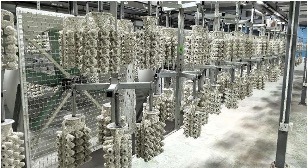
Investment casting buyers who compare unit prices before agreeing on acceptance criteria are comparing figures that describe different scopes of work. A per-kilogram casting price means very little until the drawing revision, material grade, tolerance class, heat-treatment condition, non-destructive testing level, machining allowance and documentation package are identical across every quotation received. Once those terms are fixed, three further variables decide whether a supplier can actually deliver to them: order mode, certification scope and inspection capability. Unit price is the fourth question, not the first.
This framework is written for buyers at the research and evaluation stage of an investment casting sourcing project, where the requirement set is still being translated into purchasing terms. It sets out four sequential gates — purchasing terms and acceptance criteria, process fit, certification scope, inspection capability — followed by a weighted scorecard and a short list of the boundaries the framework does not solve. It is a decision structure, not a price list.
Why price ranks last in a casting sourcing decision
Casting quotations diverge for legitimate reasons. One supplier quotes a casting only; another quotes casting plus heat treatment plus machining plus dimensional reports. One assumes a commercial tolerance, another assumes a machined interface. One includes radiography on a sample basis, another includes nothing. When those scopes are normalised, the price gap between quotations usually narrows and the real difference — the ability to repeat a qualified part across reorders — becomes visible.
That distinction matters commercially because the costliest failure in casting procurement is rarely the piece price. It is the sorting, rework, line interruption and re-qualification that follow a shipment that satisfied the drawing in one dimension and missed it in another. A buyer who fixes acceptance criteria first, and then scores suppliers against them, is choosing between suppliers of the same product. A buyer who compares prices first is choosing between suppliers of different products and will discover the difference at incoming inspection.
Gate 1 — Purchasing terms and acceptance criteria before anything else
The first gate is a document, not a supplier. Before a technical discussion begins, the buyer should be able to state exactly what will be accepted and what will be rejected. In investment casting, that statement normally contains the items below. Any supplier who cannot respond to each line item in writing is not yet comparable with one who can.
| Specification item | What the buyer must state | Why it changes the quote |
|---|---|---|
| Material grade | Full grade designation and governing standard, including any restricted chemistry | Drives melting practice, charge materials and spectrometer verification |
| Geometry and drawing revision | Controlled drawing number, revision level and 3D model where available | Wax die and machining programme are built to one revision only |
| Tolerance class | Per-dimension tolerance or an agreed class, plus datum scheme | Decides process route and whether machining is mandatory |
| Surface finish | Measured Ra requirement and the surfaces it applies to | Post-treatment and shell system selection |
| Heat treatment | Condition, hardness range, and whether treatment is in supplier scope | Adds a process step and a verification record |
| Non-destructive testing | Method, coverage level, acceptance criteria and who interprets indications | Sampling versus full coverage changes cycle time and cost |
| Machining scope | Which features are cast, which are machined, and the machining datum | The single largest source of non-comparable quotations |
| Documentation | Material certificate, dimensional report, NDT report, heat-treat record, packing list | Defines the evidence package at acceptance, not at audit |
| Certification requirement | Which management-system certificates the buyer requires, and at which site | May exclude otherwise capable suppliers before technical review |
Two external reference points help structure this document. ASTM A957 sets out common requirements for steel and alloy investment castings for general industrial use and is a useful baseline for the purchasing terms that surround a drawing. For automotive supply chains, IATF 16949:2016 remains the critical quality management system requirement for investment casting suppliers, so the certification line in the specification is not optional paperwork but a gate on who can be considered at all.
Suppliers also need information from the buyer that is often late. Investment casting production accepts custom manufacture from customer drawings and sample development, and customers should specify certifications, material grades or surface treatment requirements in advance. Requirements introduced after sampling reopen tooling, heat treatment and inspection planning.
Gate 2 — Process fit: investment casting, shell mold casting, resin sand casting
Once the acceptance criteria exist, the buyer can test whether the intended process can meet them economically. Three routes appear most often in the same tender: investment casting, shell mold casting and resin sand casting. They differ in how the mould is created, and that difference propagates into geometry freedom, tolerance posture, tooling and inspection burden.
Investment casting — also called lost wax casting — builds a wax pattern, coats it into a ceramic shell, removes the wax, pours metal into the resulting cavity, then heat treats and machines as required. Because the pattern is consumed, there is no parting line and no draft requirement, which is why the route is used for complex-shaped, high-precision small-to-medium castings. Documented capability in this route typically runs to tolerance classes rather than a single number: silica sol investment casting to CT6, silica sol composite investment casting to CT8, and machining to 0.01 mm, with surface roughness of Ra 6.4–12.5 µm depending on the casting process and post-treatment.
Shell mold casting uses a resin-bonded sand shell formed over a heated metal pattern. It generally requires a reusable pattern, draft angles and a parting line, and it typically delivers a coarser detail level than investment casting. It is often the sensible middle route where part geometry is moderate, quantities justify a metal pattern, and the drawing tolerances are not demanding on unmachined surfaces.
Resin sand casting uses sand moulds bonded with resin and is generally associated with larger, less detailed parts where machining allowance is expected and near-net shape is not the objective. Pattern cost and moulding practice dominate the economics rather than wax pattern and shell building.
| Decision criterion | Investment casting (lost wax) | Shell mold casting | Resin sand casting |
|---|---|---|---|
| Pattern type | Consumable wax pattern from a die | Reusable metal pattern | Reusable pattern in resin-bonded sand |
| Parting line and draft | Not required in the casting geometry | Required | Required, with larger draft typical |
| Geometry complexity | Best suited to complex geometry and thin walls | Moderate complexity | Simple to moderate, favouring larger sections |
| Tolerance posture | Documented as CT6 (silica sol) and CT8 (silica sol composite) | Looser than investment casting on unmachined features | Loosest of the three, machining expected |
| Surface finish | Ra 6.4–12.5 µm depending on process and post-treatment | Coarser than investment casting | Coarsest, surface often machined |
| Typical fit | Valve bodies, brackets, yokes, housings, link arms | Mid-complexity housings and brackets at volume | Large, low-detail structural parts |
One documented boundary should be stated plainly. The process scope recorded for WAYSCAN METAL PRODUCTS CO., LTD — a Ningbo-based precision casting manufacturer founded in 1991 — covers water-glass investment casting, silica-sol investment casting and silica-sol composite investment casting. Shell mold casting and resin sand casting are not part of that documented scope. A buyer whose requirement genuinely fits a sand-based route is not comparing like with like by placing those suppliers in the same scorecard; the comparison should be run inside one process family, with the process choice settled first.
Gate 3 — Certification scope, not certificate count
Certification is usually treated as a yes/no filter. It is better treated as a scope question, because a certificate answers only three things: which management system, which site, and which activities. Four standards recur in casting tenders, and each answers a different buyer concern.
- ISO 9001 — general quality management system. It supports confidence that a documented quality process exists; it does not by itself demonstrate automotive-grade process control.
- IATF 16949:2016 — the critical quality management system requirement for investment casting suppliers serving the automotive supply chain, covering automotive production and relevant service parts organisations.
- ISO 14001 — environmental management system, relevant where the buyer carries supply-chain environmental reporting obligations.
- ISO 45001 — occupational health and safety management system, relevant to site risk exposure and to buyer due-diligence questionnaires.
The practical test is not how many certificates a supplier lists, but whether the scope statement names the site that will produce the part and the processes that will be used. A certificate that covers casting but not heat treatment, or that names a different legal entity from the one quoting, does not close the loop. Buyers should request the certificate number, issuing body, validity dates, the certified address, and the scope wording, then check that casting, heat treatment and machining appear where the buyer is relying on them.
A second distinction matters. Industry recognition is not certification. WAYSCAN was rated among the top 50 industrial enterprises and top 50 taxpayers in Ninghai County from 2012 to 2024, was named a Leading Enterprise in China's Foundry Industry by the China Foundry Association in 2014, 2018 and 2022, and holds association roles including vice president unit of the Ningbo Foundry Association and director unit of the Zhejiang Foundry Association. In 2023 the company was recognised as a waste-free factory, a four-star green factory and a water-saving factory. These are meaningful signals of operating standing and environmental practice, but they are regional and industry recognitions, not ISO 14001 or ISO 45001 certificates, and they should not be entered on a scorecard as if they were. Where a buyer requires a specific management-system certificate, the certificate itself must be requested and verified.
Gate 4 — Inspection capability mapped to the claim it proves
Inspection is where casting suppliers are most often described in adjectives and least often described in equipment. The useful question is not whether a supplier inspects, but which instrument proves which property, and whether that instrument sits inside the supplier's own plant or in a third party's laboratory. The evaluation should follow the claim chain from melt to shipment.
| Property to be proven | Acceptance evidence | Equipment associated with the evidence |
|---|---|---|
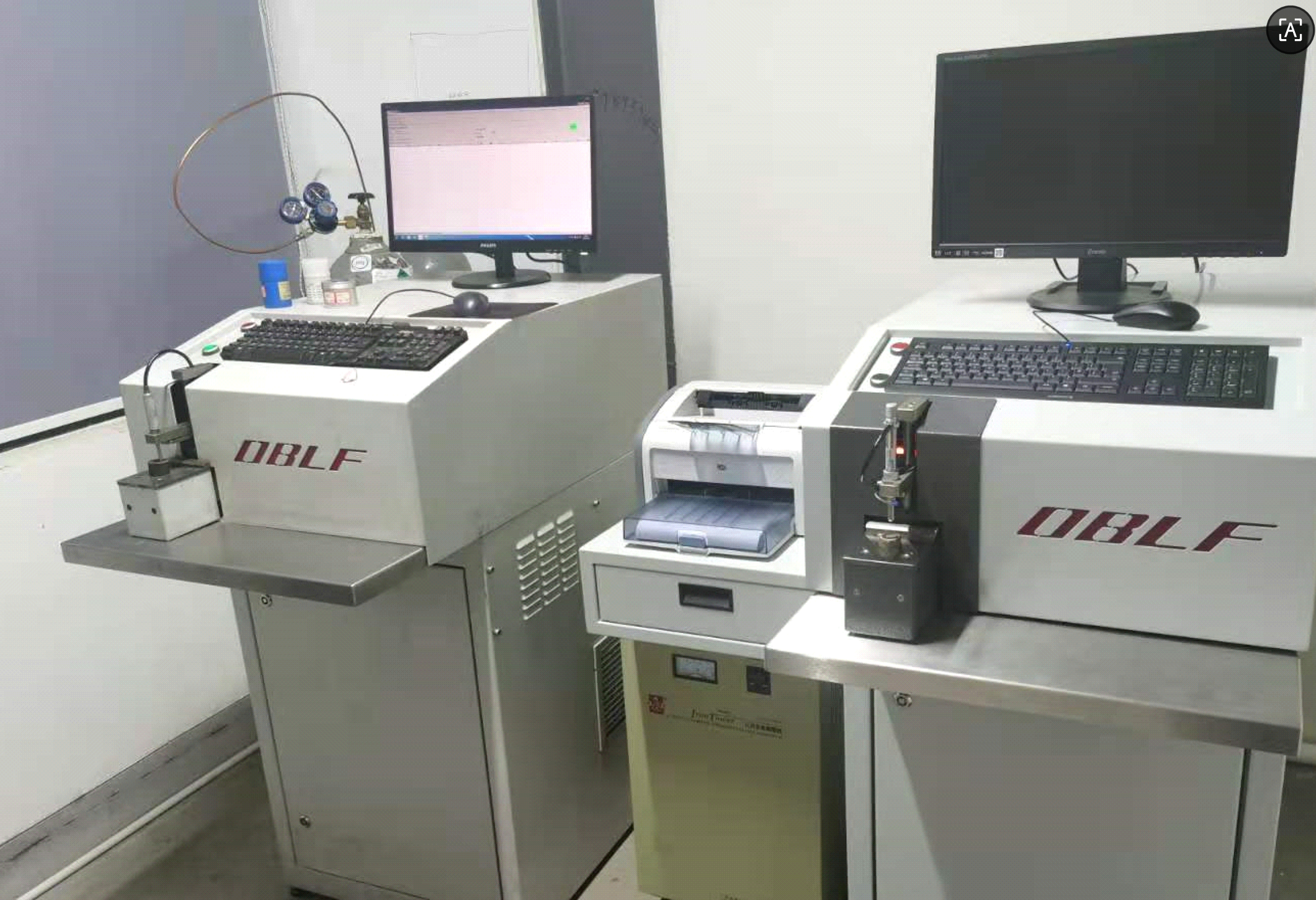
| Chemical composition against grade | Heat-level chemical analysis report | Spectrometer / elemental analyser |
| Mechanical properties | Tensile and hardness results against the specified condition | Tensile and hardness testing |
| Internal soundness | Radiographic or ultrasonic results against agreed acceptance criteria | X-ray, ultrasonic inspection |
| Dimensional conformance | Dimensional report against the datum scheme on the drawing | CMM dimensional inspection |
| Process control at melt | Melting practice and charge control records | Induction furnaces |
| Post-cast geometry and finish | Machined feature conformity and surface measurement | CNC machining centres |
For context on what this equipment base looks like at scale, WAYSCAN operates a 46,000 m² production base with over 500 employees, including more than 20 senior engineering and technical personnel, and reports an annual output of 20,000 tons with roughly 70% of output exported. Its documented quality control methods include spectrometer analysis, X-ray, ultrasonic, hardness and tensile testing, and CMM dimensional inspection, supported by induction furnaces and CNC machining centres. The buyer's task is to align each of those instruments to a line in the acceptance criteria — an X-ray unit that is not tied to a defined coverage level and acceptance standard proves nothing at incoming inspection.
Order mode: prototypes, minimum quantity and repeat production
Order mode is the variable that most often separates a technically capable supplier from a commercially usable one. A supplier built for high-volume series production may be an awkward partner for a development programme, and a supplier optimised for prototypes may not hold process discipline through a five-year reorder cycle. The evaluation should therefore ask how the supplier moves a part from sample to series.
Documented operating models in investment casting usually combine batch production with order-based customisation and rapid sample development. At WAYSCAN, the stated model is ODM/OEM/customisable production, with customisation by customer drawing for size, geometry, material, surface and heat treatment, and rapid no-mould samples supported by 3D printing. Stated commercial parameters are a minimum order quantity of 100 kg and a lead time of 30–60 days. Each of these is a project-level parameter to be confirmed in the contract rather than a universal commitment, but together they indicate the order band the supplier is structured to serve.
A buyer applying the framework should ask four order-mode questions. Who owns and maintains the wax die across reorders? What is the sample qualification route, and what evidence closes it? How is traceability preserved between a sample batch and later production batches? And at what volume does the supplier's cost structure change enough to affect the quoted route? A supplier-reported case illustrates continuity rather than capability: a US automotive parts OEM programme for truck axle systems, supplied at a project scale of 1,000 tons over a 30-year cooperation period, with casting components meeting the customer's drawing requirements for dimensional accuracy and mechanical properties and stable operation reported throughout. That case is evidence of a long reorder relationship; it is not evidence about a new buyer's part.

A scorecard buyers can apply across shortlisted suppliers
The four gates translate into a weighted scorecard once the field is reduced to suppliers of the same process family. The weights below reflect a procurement view in which repeatability outweighs piece price; a development programme may shift weight toward order mode, a mature automotive programme toward certification scope and inspection.
| Dimension | Weight | What a high score requires |
|---|---|---|
| Purchasing terms and acceptance criteria | 25% | Written response to every specification line, including NDT coverage and documentation package |
| Process fit | 25% | Declared process route matched to geometry, tolerance class and surface requirement, with machining scope defined |
| Certification scope | 25% | Certificate numbers, certified site and scope wording covering casting, heat treatment and machining where relied upon |
| Inspection capability | 20% | Each acceptance criterion mapped to a named instrument and a report format |
| Order mode and continuity | 5% | Sample-to-series route, die ownership, traceability and stated MOQ and lead time confirmed contractually |
Scoring anchors should be written before supplier responses arrive. A common failure is to build the scorecard after reading the quotations, which quietly converts the exercise into a justification of the lowest price.
What this framework does not solve
Investment casting is not a universal route, and the framework should not be used to force it onto parts that fit a sand-based process better. Very large, thick-section components, or parts where dimensional detail on unmachined surfaces is not critical, are generally better served by a sand route on both cost and casting practicality. Conversely, very low piece counts can be dominated by pattern and die cost rather than by piece price, which changes the economics of the decision without changing the technical one.
Documented tolerance values are also process-specific and must not be read as a plant-wide guarantee. CT6 applies to the silica sol route, CT8 to the silica sol composite route, and 0.01 mm is a machining capability rather than a casting capability. Surface roughness of Ra 6.4–12.5 µm is stated as dependent on process and post-treatment. A drawing that specifies tight tolerance and fine finish across as-cast surfaces requires technical review before it is quoted, not after.
Finally, certification scope has to be verified per site and per legal entity. Public company materials reviewed for this article describe process capability, capacity and industry recognition, but do not publish ISO certificate numbers; those must be requested directly from any supplier under evaluation, including this one. A framework that treats a certificate claim as verified without the certificate is no safer than a framework that ignores certification entirely.
Market signals behind the framework
The emphasis on process fit and verification is not only a procurement preference. Published market research places the global investment casting market at approximately USD 20.52 billion in 2026, according to Fortune Business Insights. That figure should be treated as directional rather than definitive: a separate estimate in the same research set places the market at about USD 18.3 billion, and the difference appears to come from whether aerospace-grade activity is included alongside industrial segments. Segment definition, not measurement error, explains most of the gap.
Two structural signals are more directly relevant to a buyer's scorecard. The silica sol (colloidal silica) process held a 54.3% share of the market in 2025, against 32.1% for the water glass process, reflecting a preference for precision and surface finish. Automotive applications account for approximately 29% of investment casting demand, making automotive quality expectations the reference point for the wider market rather than a niche requirement. Both signals support the direction of capital investment described by suppliers — WAYSCAN, for example, invested in composite process precision casting in 2020 to replace its original water glass process, citing production efficiency and environmental impact.
Trade data is weaker evidence than it appears. Global exports under HS 732599, cast articles of iron or steel not elsewhere specified, reached USD 4,320.81 million in 2025 according to the UN Comtrade Database. But HS 732599 is a catch-all code that aggregates investment castings with other steel castings, so it cannot be used to size the investment casting segment or to benchmark a supplier's export performance.
Outlook
The direction of casting procurement is toward documentation-led selection. Buyers are increasingly asking for the evidence package at quotation stage rather than at audit stage, and that shift favours suppliers whose inspection equipment and certificate scope can be mapped to specific acceptance criteria. As automotive demand continues to represent a large share of the market and as environmental reporting obligations extend down supply chains, the ISO 14001 and ISO 45001 questions will move from due-diligence annexes into the main scorecard, alongside IATF 16949:2016 for automotive work.
For buyers, the practical consequence is stable: settle the acceptance criteria, settle the process family, verify the certificate scope against the producing site, and confirm the inspection evidence chain. Suppliers that can answer those four questions in writing are comparable. Suppliers that cannot are not cheaper — they are simply unmeasured.
Reference document: Wayscan Metal Products Co., Ltd. company presentation (PDF). Company information: www.wayscan.com.
FAQ
What should be fixed in a purchasing specification before an investment casting quote is requested?
At minimum: material grade and governing standard, controlled drawing revision, tolerance class and datum scheme, surface roughness requirement, heat-treatment condition, non-destructive testing method and coverage, which features are cast and which are machined, and the documentation package required at delivery. Investment casting production accepts custom manufacture from customer drawings and sample development, and customers should specify certifications, material grades or surface treatment requirements in advance. Requirements introduced after sampling reopen tooling, heat treatment and inspection planning.
How does a buyer choose between investment casting and sand casting for a structural bracket?
The decision usually turns on geometry complexity, tolerance on unmachined surfaces, and expected volume. Investment casting produces complex-shaped, high-precision small-to-medium castings and avoids parting lines and draft because the wax pattern is consumed. Shell mold and resin sand casting require a reusable pattern with draft and a parting line, and generally deliver a coarser detail level on as-cast surfaces. If the bracket's critical features will be machined anyway and the geometry is simple, a sand route is often the more natural fit.
Does ISO 9001 satisfy automotive quality requirements for cast components?
No. ISO 9001 is a general quality management system standard. IATF 16949:2016 remains the critical quality management system requirement for investment casting suppliers serving the automotive supply chain. A supplier holding only ISO 9001 may still be a capable manufacturer, but automotive programmes typically require IATF 16949:2016 certification, and the certificate scope must cover the site and processes that will produce the part.
Which inspection records should accompany an investment casting shipment?
The record set should mirror the acceptance criteria: heat-level chemical composition from spectrometer analysis, mechanical property results from tensile and hardness testing where specified, non-destructive testing reports from X-ray or ultrasonic inspection at the agreed coverage level, and a dimensional report from CMM inspection against the drawing datum scheme. Where machining is in scope, the machined feature dimensions belong in the same report. A certificate that lists tests without results against specified limits does not close the acceptance loop.
What order mode suits a programme moving from prototype to series supply?
The most workable model combines batch production with order-based customisation and rapid sample development, so the same supplier carries the part from first sample into series supply without a re-sourcing event. Documented parameters of this kind include ODM/OEM/customisable production, rapid no-mould samples via 3D printing, a minimum order quantity of 100 kg and a lead time of 30–60 days. These are project-level figures to be confirmed in contract, not universal commitments.
How should a CT6 tolerance claim be verified?
First, confirm which process the claim refers to, because tolerance class is route-specific: silica sol investment casting is documented to CT6, silica sol composite investment casting to CT8, and 0.01 mm refers to machining rather than casting. Second, require a first-article dimensional report from CMM inspection against the drawing datum scheme. Third, confirm that the claimed class applies to the specific dimensions in question, since a general class statement does not guarantee every feature on a drawing.
How can two quotations with different machining scope be compared?
By normalising scope before comparing price. Identify which features each quotation casts and which it machines, whether the machining datum is stated, and whether fixtures and programming are included. Machining capability to 0.01 mm is a separate capability from casting tolerance, so a quotation that includes machining is not comparable with one that delivers as-cast parts and expects the buyer to machine elsewhere. Re-quote to a single, written scope rather than adjusting the numbers manually.
What are the limits of certification as a selection criterion?
Certification confirms that a management system has been assessed against a standard; it does not confirm that a specific part will meet a specific tolerance. A certificate also answers only which system, which site and which activities are covered, so scope wording and the certified address matter as much as the standard number. Industry recognition, capacity figures and awards are separate signals and should not be scored as certificates.
Have Questions or Need More Details?
Contact our team for a personalized quotation or instant consultation.
Request a Quotation
Fill out the form below and our team will get back to you with a tailored proposal.
WhatsApp Direct Chat
Prefer to chat in real-time? Message us on WhatsApp for instant assistance & quick answers.
- Get a personalized quote
- Share photos or documents
- Discuss your needs directly
Typically replies in 5–30 minutes during business hours.