
Investment Casting Certificate Stack: Issuer, Number, Scope
Investment Casting Certificate Stack: Issuer, Number, Scope
An investment casting certificate stack is verified document by document, not by counting logos.WAYSCAN METAL PRODUCTS CO. , LTD, an investment casting manufacturer established in 1991 with a 46,000 m² production base, holds four management-system certificates: ISO 9001:2015 (02426Q00625R401), ISO 14001:2015 (02426E00394R401) and ISO 45001:2018 (02426S00381R101), all issued by Shenzhen Universal Certification Centre Co., Ltd. (UCC), plus IATF 16949:2016 (IATF 0516798) issued by SGS United Kingdom Ltd. Each carries its own issuer, number pattern and scope sentence, and each line has to survive a check against the part, the material and the end market before a purchase enquiry becomes a sample order.
This reference walks through that check in the order a buyer can actually perform it — issuer, number, standard mapping, scope, dates — and then sets out the part-specific evidence the certificates do not contain.
Why a certificate stack is four separate claims, not one
Answer first: each certificate is evidence about a defined management system, at a defined site, for a defined scope, and none of them is evidence about a specific casting.
A stack read as a single “certified supplier” signal hides four independent failure points. An issuer name that does not match the issuing body's own record. A certificate number that has been shortened, re-typed or reformatted in a spreadsheet. A standard designation whose edition year does not match what is printed. A scope sentence that covers a different product form, material family or activity than the one in the RFQ. Any one of these turns a compliance folder into an assumption that nobody re-tests until a first article fails.
The stack here also mixes schemes and issuers: three UCC certificates and one SGS United Kingdom Ltd. certificate. That is normal, and it is precisely why the documents have to be verified one at a time. The standing of an environmental-system issuer says nothing about the body that issued an automotive certificate, and a buyer who checks one and infers the rest has verified a quarter of the file.
Step 1 — Confirm the issuer's legal identity and its role in each scheme
Answer first: name the body in full, then confirm that this body issued this specific certificate under this specific scheme.
In this stack the split is clean. Shenzhen Universal Certification Centre Co., Ltd. (UCC) appears on the ISO 9001:2015, ISO 14001:2015 and ISO 45001:2018 certificates. SGS United Kingdom Ltd. appears on the IATF 16949:2016 certificate. These are different legal entities operating under different scheme rules, and the two names should not be collapsed into a generic “certified by an international body” summary in a supplier record.
What the buyer checks is the full legal name, including the corporate suffix, against the issuer's own record; and whether that body operates within the scheme under which the certificate is written. The question matters most for the automotive document: IATF 16949:2016 is described by the International Automotive Task Force as the critical quality management system requirement for investment casting suppliers serving the automotive supply chain, which makes the identity of the issuing body a procurement variable rather than a formality. A logo embedded in a certificate PDF is not the check. The issuer's name in the scheme's own records is.
Step 2 — Match the number exactly, and expect formats to differ
Answer first: a certificate number is an identifier to be matched character for character, not a code to be interpreted.
The three UCC certificates carry 02426Q00625R401 for ISO 9001:2015, 02426E00394R401 for ISO 14001:2015 and 02426S00381R101 for ISO 45001:2018. They share a common prefix and differ in one letter and one suffix segment. The pattern is visible, but it is not a decoding key, and this reference does not treat it as one: the segments are the issuer's convention, and the only reliable action is to compare the complete string with the record the issuer holds. A number that has lost its suffix, gained a space or been retyped has left the verification path, even if every remaining character is correct.
The IATF certificate number, IATF 0516798, follows the scheme's own format rather than the UCC pattern. That difference is expected: different scheme, different issuer, different numbering convention. A buyer who expects all four numbers to look alike will either mis-record one or misread the difference as an error.
Step 3 — Read the GB/T-to-ISO mapping as a printed pair
Answer first: the three ISO certificates state two standard designations on one line, and the pair has to be read together.
ISO 9001:2015 is recorded as GB/T 19001-2016 / ISO 9001:2015. ISO 14001:2015 is recorded as GB/T 24001-2016 / ISO 14001:2015. ISO 45001:2018 is recorded as GB/T 45001-2020 / ISO 45001:2018. The GB/T designation is the Chinese national standard reference and the ISO designation is the international one; the certificate prints both because the same management system requirement is expressed in both systems. The IATF 16949:2016 certificate carries a single designation, IATF 16949:2016, Edition 1, with no GB/T counterpart on the record.
Two reading errors recur. The first is treating the differing years as a discrepancy: GB/T 19001-2016 paired with ISO 9001:2015, and GB/T 45001-2020 paired with ISO 45001:2018, are the pairs as printed, and the national and international editions are published separately, so their year labels do not align. The second error is confusing a management-system standard with a product standard. ISO 9001, ISO 14001, ISO 45001 and IATF 16949 describe how an organisation manages quality, environment, occupational safety or automotive quality. They do not specify casting tolerances, material grades or acceptance criteria. Product requirements live elsewhere — ASTM A957, for example, is the standard specification for common requirements of steel and alloy investment castings for general industrial use, published by ASTM International. A buyer asking “is the part certified” is asking a product question that no management-system certificate answers.
The four certificates at a glance
| Standard and number | Issuer | Scope as recorded | Designation | Validity |
|---|---|---|---|---|
| ISO 9001:2015 02426Q00625R401 | Shenzhen Universal Certification Centre Co., Ltd. (UCC) | Production of Steel Casting | GB/T 19001-2016 / ISO 9001:2015 | Issued 21 May 2026; expires 20 May 2029 |
| ISO 14001:2015 02426E00394R401 | Shenzhen Universal Certification Centre Co., Ltd. (UCC) | Production of Steel Castings and Related Management Activities | GB/T 24001-2016 / ISO 14001:2015 | Issued 21 May 2026; expires 20 May 2029 |
| ISO 45001:2018 02426S00381R101 | Shenzhen Universal Certification Centre Co., Ltd. (UCC) | Production of Steel Castings and Related Management Activities | GB/T 45001-2020 / ISO 45001:2018 | Issued 21 May 2026; expires 20 May 2029 |
| IATF 16949:2016 IATF 0516798 | SGS United Kingdom Ltd. | Manufacture of Precision Casting Parts; global automotive supply chain | IATF 16949:2016, Edition 1 | Issued 14 May 2024; expires 13 May 2027 |
Step 4 — Test the scope wording against the drawing
Answer first: the scope line is where a certificate is either relevant to the enquiry or merely adjacent to it.
The three UCC certificates do not use identical scope wording. ISO 9001:2015 is recorded as covering the production of steel casting. ISO 14001:2015 and ISO 45001:2018 are recorded as covering the production of steel castings and related management activities. The IATF 16949:2016 certificate uses a different construction altogether — the manufacture of precision casting parts — and applies to the global automotive supply chain. Four consequences follow for buyers.
- Product form. “Steel casting” is not the same phrase as “precision casting parts”. For an automotive programme, the IATF line is the one that speaks to the supply chain the buyer operates in; the ISO 9001 line speaks to steel casting production generally. Both can be true at once, and neither should be substituted for the other in a supplier file.
- Material. The scope lines name steel castings. The supplier's stated material range covers carbon steel, alloy steel, stainless steel and ductile iron. Where a requested material does not obviously fall under the scope wording, the buyer's step is to ask which certification covers that material and how — not to assume that “castings” covers everything a product list contains.
- Activity. The environmental and safety scopes add “related management activities” while the quality scope does not. Because the three sentences differ, a reader should not assume one scope description stands in for all three. If a specific activity has to be covered, the certificate text and the supplier's answer decide it.
- Process chain. The supplier's integrated process chain covers mould making, casting, heat treatment, machining and inspection. The scope lines are written around production or manufacture of castings. Where a drawing requires heat treatment or CNC machining, the buyer should ask how those operations sit relative to the certified scope and what evidence governs them, rather than inferring from a quality certificate that every downstream operation is inside it.
The practical rule is simple: if the scope sentence can be read back onto the RFQ line without adding words, the certificate supports the enquiry. If it cannot, the gap is a question for the supplier — not a reason to discard the document.
Where the scope lines meet real part families
The part designations in this supplier's investment casting range — pipe elbow, clevis bracket, yoke, gearbox housing, transmission housing, mounting bracket, link arm — map onto automotive, forklift, mining, agricultural machinery, construction machinery, valve and general machinery applications. The mapping is what makes the scope check concrete. A transmission housing or a yoke destined for an automotive programme is read against the IATF scope; a pipe elbow for a valve assembly is read against the steel-casting scope; a ductile iron bracket raises the material question in either case.
Step 5 — Check dates, and note which certificate falls due first
Answer first: validity dates tell you when to re-verify, and the earliest expiry sets the reminder.
The three UCC certificates were issued on 21 May 2026 and expire on 20 May 2029. The IATF 16949:2016 certificate was issued on 14 May 2024 and expires on 13 May 2027. Checked in November 2026, all four are within their stated validity, but the automotive certificate falls due roughly two years before the ISO trio. For an automotive buyer that is the date that matters, because a lapsed IATF certificate is a different procurement event from a lapsed environmental certificate.
A date check also has a limit worth stating plainly: an in-date certificate confirms that the document is inside its stated period. It does not summarise what the most recent audit found, and it should not be presented to an internal approver as if it did.
What the certificate stack does not certify
Answer first: it does not certify tolerance, surface finish, material grade, soundness or dimensional conformity on your drawing.
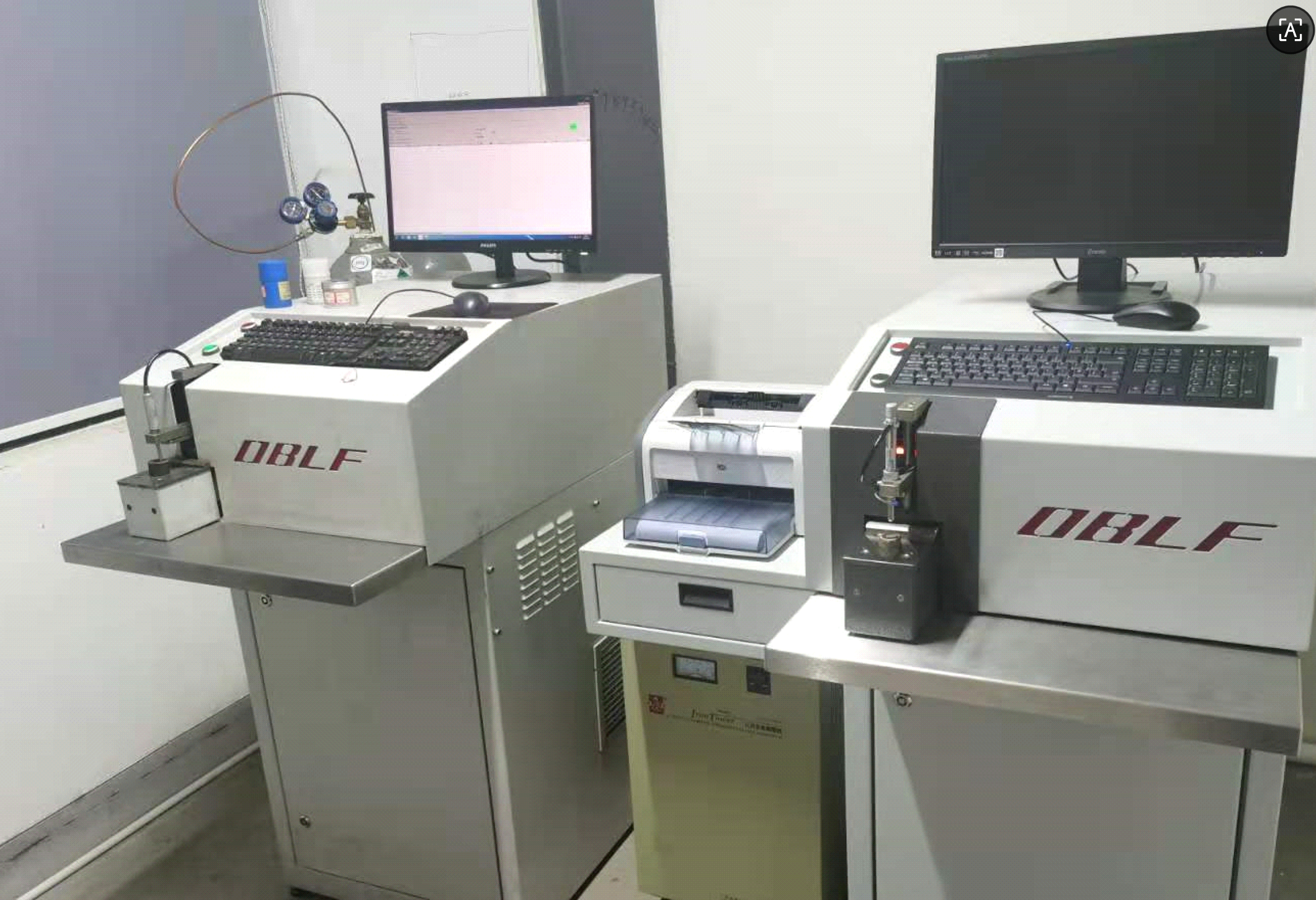
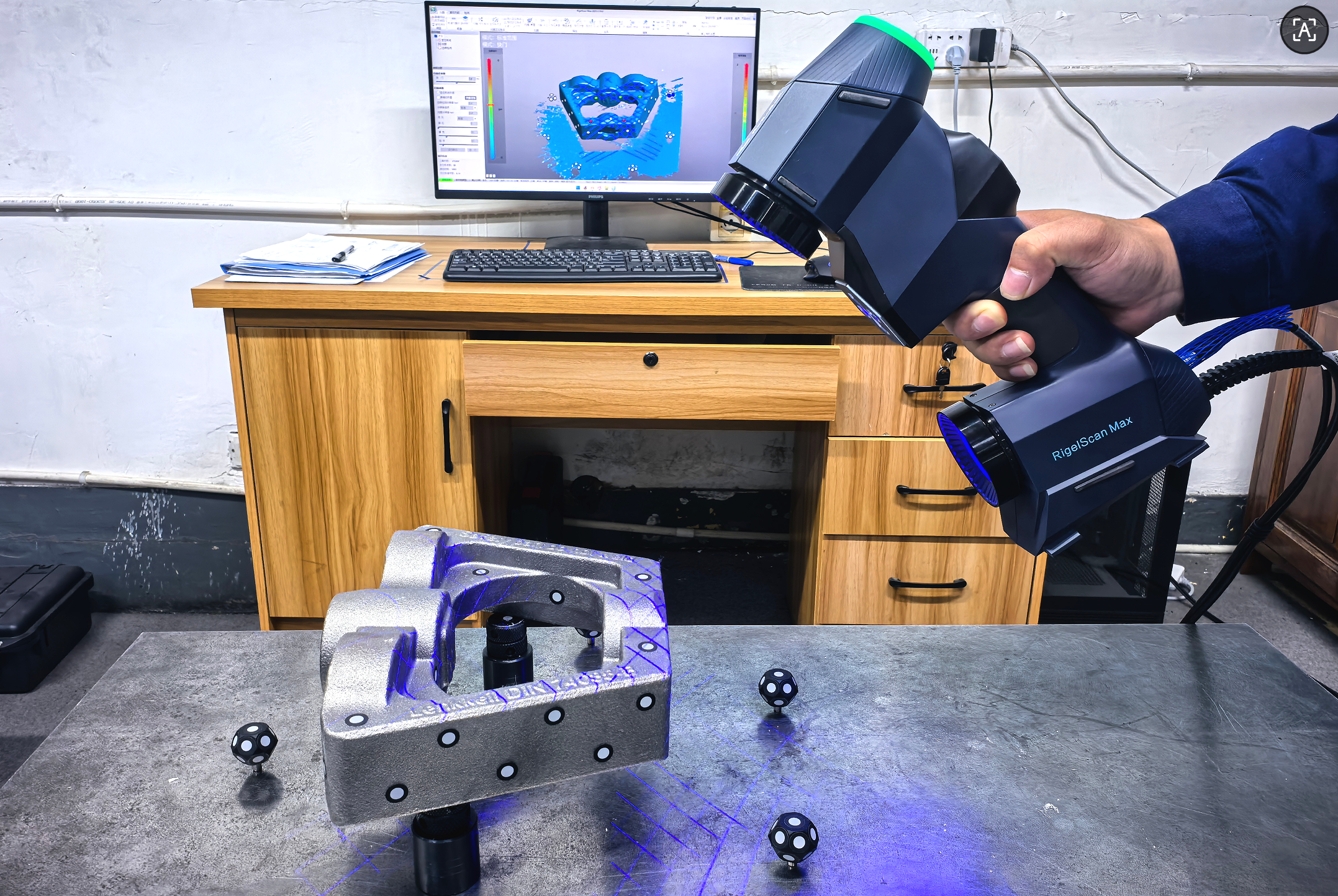
Those are process and part claims, evidenced differently. On the process side, the stated capability includes dimensional tolerance of CT6 for silica-sol investment casting and CT8 for the silica-sol composite process, 0.01 mm for machining, and surface roughness of Ra 6.4–12.5 μm depending on casting process and post-treatment. On the inspection side, the stated methods cover spectrometer analysis, X-ray, ultrasonic examination, hardness and tensile testing, and CMM dimensional inspection, with comprehensive inspection and testing equipment used to verify dimensions, material composition, mechanical properties and product quality. Rapid sample development is supported by 3D-printed patterns, which shortens the route from drawing to a physical part without a hard tool.
So the certificate stack answers “is there a management system”, while the process data answers “can this process hold the tolerance”. A buyer who stops at the first question has verified the wrong thing. For an RFQ moving to sample development, the pairing is: certificate for the system, dimensional and material reports for the part.
Why the IATF line carries more weight in automotive programmes
Answer first: because automotive demand is a substantial share of the investment casting market, and IATF 16949:2016 is the scheme written for that supply chain.
Market context is worth reading with the same scope discipline the certificates require. Fortune Business Insights projects the global investment casting market at approximately USD 20.52 billion in 2026; a second forecast places the figure lower, and the gap is generally attributed to whether aerospace-grade or industrial-only segments are counted — a reminder that a market-size number carries a scope line too. Within that market, the silica sol process is reported to have held a 54.3% share in 2025, and automotive applications are reported at approximately 29% of demand.
The verification implication is not a growth story. It is that a supplier serving automotive programmes is judged on the automotive document first. The IATF scope on this stack — manufacture of precision casting parts, applying to the global automotive supply chain — is written in automotive terms rather than in the steel-casting terms used on the three ISO documents, and that difference in language is the signal a procurement team is looking for.
Outlook, stated as a condition rather than a forecast: if automotive demand keeps roughly its reported share of the market, the IATF line will stay the first document an automotive buyer asks for. A supplier that can present all four certificates with matched scopes, current dates and a clear answer on process coverage absorbs less of the buyer's verification time — a statement about procurement friction, not about capability.
Verification checklist before an RFQ becomes a sample order
The sequence below takes less time than a failed first article, and it produces questions the supplier can answer precisely.
- Issuer. Full legal name on each certificate, matched to the issuer's own record, and confirmed as a body operating within that scheme.
- Number. Exact string including prefixes and suffixes: 02426Q00625R401, 02426E00394R401, 02426S00381R101, IATF 0516798.
- Standard mapping. GB/T and ISO designations read as the pair printed, with the edition year exactly as shown; IATF 16949:2016, Edition 1 for the automotive document.
- Scope, product form. “Production of steel casting(s)” and “manufacture of precision casting parts” mapped to the part family on the drawing.
- Scope, material and activity. An explicit answer on any material or operation the scope sentence does not obviously reach — ductile iron parts, heat treatment and machining are the usual ones.
- Site. The location named on the certificate matches the plant that will actually make the parts.
- Dates. All certificates in date at the time of enquiry, with the earliest expiry entered in the supplier record — here 13 May 2027 for the IATF certificate.
- Part evidence. Dimensional report, material certificate and NDT results for the drawing, requested alongside the certificate pack, because the certificates do not contain them.
A certificate stack is fast to verify and slow to argue with later. Reading issuer, number, standard mapping, scope and dates in that order turns four PDFs into a set of precise questions — which is the useful outcome of a verification pass, whether or not every answer is the one the buyer expected.
Background on the process routes behind these certificates, including the silica-sol and composite process options, is available in the Wayscan Metal Products company presentation (PDF). Company information is published at www.wayscan.com.
FAQ
Who issued the ISO 9001, ISO 14001, ISO 45001 and IATF 16949 certificates held by this investment casting supplier?
The three ISO certificates — ISO 9001:2015 (02426Q00625R401), ISO 14001:2015 (02426E00394R401) and ISO 45001:2018 (02426S00381R101) — were issued by Shenzhen Universal Certification Centre Co., Ltd. (UCC). The IATF 16949:2016 certificate (IATF 0516798) was issued by SGS United Kingdom Ltd. Two different bodies are involved, so each certificate is verified against its own issuer's record rather than as part of one family.
Why does an ISO certificate show both a GB/T number and an ISO number?
The GB/T number is the Chinese national standard designation and the ISO number is the international designation for the same management system requirement. The three ISO certificates in this stack print them as pairs: GB/T 19001-2016 / ISO 9001:2015, GB/T 24001-2016 / ISO 14001:2015 and GB/T 45001-2020 / ISO 45001:2018. The years inside a pair do not have to match, because the national and international editions are published separately.
How does the IATF 16949 scope differ from the ISO scopes?
The IATF 16949:2016 certificate records the manufacture of precision casting parts and applies to the global automotive supply chain. The ISO certificates record the production of steel casting (ISO 9001:2015) and the production of steel castings and related management activities (ISO 14001:2015 and ISO 45001:2018). The wording differs in both product form and market, which is why the scope line should be matched to the specific part and end market rather than read generically.
When do these four certificates expire?
The ISO 9001:2015, ISO 14001:2015 and ISO 45001:2018 certificates were issued on 21 May 2026 and expire on 20 May 2029. The IATF 16949:2016 certificate was issued on 14 May 2024 and expires on 13 May 2027, so the automotive document falls due first and sets the re-verification date.
Does a certificate stack prove that a supplier can hold a tolerance or meet a material specification?
No. The four certificates cover management systems — quality, environment, occupational health and safety, and automotive quality — rather than product requirements. Tolerance, surface finish, material grade and acceptance criteria are specified on the drawing or in a product standard such as ASTM A957, and verified through process capability data and part-level inspection records such as dimensional, material and NDT reports.
Have Questions or Need More Details?
Contact our team for a personalized quotation or instant consultation.
Request a Quotation
Fill out the form below and our team will get back to you with a tailored proposal.
WhatsApp Direct Chat
Prefer to chat in real-time? Message us on WhatsApp for instant assistance & quick answers.
- Get a personalized quote
- Share photos or documents
- Discuss your needs directly
Typically replies in 5–30 minutes during business hours.