
Investment Casting Procurement FAQ: Drawings, Materials, Certifications, and Inspection
Investment casting procurement fails more often on documentation than on metallurgy. A supplier can hold the right certificates and still deliver a part that cannot be accepted, because the purchase order never defined which dimensions were critical, which surfaces were to be machined, or which inspection records had to travel with the shipment. This reference answers the questions buyers ask at the decision stage — from drawing preparation and material grade selection through certification scope and inspection evidence — using verifiable market data and the documented capability profile of WAYSCAN METAL PRODUCTS CO., LTD.

Internal soundness checks such as X-ray inspection are part of the evidence chain a buyer should specify in the order file.
Why the order file decides the outcome, not the quotation
Investment casting, also called lost wax casting, converts a wax pattern into a ceramic shell, then into metal. The commercial consequence of that sequence is straightforward: by the time the metal is poured, the geometry, the alloy and the tooling are already fixed. Anything not written down at the quotation stage becomes a negotiation after the first castings arrive. The buyer owns the drawing; the foundry owns the process. The RFQ package is the interface between them, and when it is incomplete, the gap is filled with assumptions that stay invisible until first article inspection.
The supply base is large enough that price quotes are easy to collect and hard to compare. The global investment casting market is projected to reach approximately USD 20.52 billion in 2026, according to Fortune Business Insights. Within that market, the silica sol (colloidal silica) process held a 54.3% share in 2025, ahead of the water glass process at 32.1%, based on Dataintelo's research. Automotive applications account for roughly 29% of demand, per Business Research Insights. A buyer comparing quotes across these segments is not comparing the same product unless the specifications behind the numbers are aligned.
What a complete investment casting RFQ package should contain
A quotation is only as complete as the inputs it was built on. The following elements are the ones that most often separate a smooth order from a rework cycle. Not every project needs all of them, but each missing item should be a deliberate decision, not an oversight.
| RFQ element | What the buyer should state | Why it changes the outcome |
|---|---|---|
| 2D drawing with GD&T | Nominal dimensions, datums, geometric tolerances, and which dimensions are critical to function | Casting tolerance can hold general dimensions while critical features require machining; the drawing defines which is which |
| 3D model | A STEP or equivalent solid model at the same revision as the 2D drawing | Pattern and tooling are cut from the model; a revision mismatch produces a part that matches neither document |
| Material grade and standard | Alloy family plus the grade designation and the standard that defines it | Drives melt practice, heat treatment, mechanical properties and the certificate you will receive |
| Casting tolerance and machining allowance | The tolerance class the quotation is based on, and the surfaces left with allowance | Investment casting is a near net shape process, not a finished shape process; allowance must be intentional |
| Surface finish and surface treatment | As-cast expectations plus any specified surface treatment | Finish requirements determine whether a surface stays as-cast or enters the machining route |
| Heat treatment | The required delivery condition and the heat treatment specification behind it | Determines mechanical properties and the sequence in which casting and machining are performed |
| Inspection and NDT | Which tests, on what sampling basis, at which stage, and which reports must accompany delivery | Inspection requested after shipment generally cannot be recovered from a closed production lot |
| Marking, traceability, packaging | Heat number marking, part identification, rust prevention, packing method | Traceability links a delivered part back to a heat, a lot and a test record |
| Documentation package | Material certificate, dimensional report, NDT reports, heat treatment records, certificate of conformity | Defines what 'accepted' means before the first casting exists |
Decision rule: when a buyer does not want to write general requirements from scratch, referencing a common-requirements standard is a practical shortcut. ASTM A957, published by ASTM International, is the standard specification for common requirements of steel and alloy investment castings for general industrial use. Referencing it in the RFQ sets a shared baseline for the foundry and the buyer without replacing part-specific requirements.
Material grades: what to state for stainless, carbon and alloy steel castings
Material specification is where quotations most often diverge. Two suppliers can quote the same part at very different prices simply because one assumed a different alloy condition or a different test requirement. WAYSCAN METAL PRODUCTS CO., LTD produces precision castings in stainless steel, carbon steel and alloy steel, using composite process and silica sol precision casting at its Ningbo facility.
The process route matters as much as the alloy name. Silica sol shells are finer than water glass shells, which supports better surface finish and tighter dimensional consistency — the reason the silica sol process leads the market at 54.3% share against 32.1% for water glass, according to Dataintelo. Wayscan invested in composite process precision casting in 2020 to replace its original water glass process capacity, which reflects the broader industry movement toward finer shell systems.
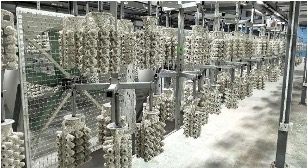
Wax shell production: shell making and drying determine both the as-cast surface finish and the dimensional stability of the final casting.
For the buyer, three fields should always be present in the material specification: the grade designation, the standard that defines it, and the mechanical property test that will be reported with the batch. A grade name without a standard is ambiguous; a standard without a test requirement leaves the acceptance criterion open. Where thin wall sections or complex geometry are involved, the process route — not the alloy label — is usually the limiting factor, and the drawing review should confirm that the chosen route can reach the required wall consistency.
Certifications: what to request and how to read the scope
Certifications are frequently treated as a pass or fail checkbox. In practice, the useful question is whether a certificate covers the site, the process and the product family in question. A quality management system certificate issued to one production site does not automatically extend to a second site, and a system certificate is not a part approval.
IATF 16949:2016 remains the critical quality management system requirement for investment casting suppliers serving the automotive supply chain, as published by the International Automotive Task Force. If a casting is destined for a vehicle program, the buyer should confirm that the certification applies to the manufacturing site that will produce the part and that the casting process falls inside the certified scope. Management-system certificates covering environment and occupational health and safety increasingly appear in supplier questionnaires from European and North American buyers, alongside the manufacturing recognitions that indicate how a foundry is assessed by its own industry.
WAYSCAN METAL PRODUCTS CO., LTD has been recognised by the China Foundry Association as a Leading Enterprise in China's Foundry Industry in 2014, 2018 and 2022, and serves as a vice president unit of the Ningbo Foundry Association and a director unit of the Zhejiang Foundry Association, having been appointed a director unit of the China Foundry Association in 2015. In 2023 the company was awarded waste-free factory, four-star green factory and water-saving factory designations. These are third-party recognitions of operating practice; they complement, but do not replace, the product-level documentation described below.
Decision rule: request the certificate number, the issuing body, the validity period and the scope statement — then check three things: does the scope name the process, does it name the site, and is the certificate currently valid. A certificate that fails any of these checks does not answer the question the buyer is asking.
Inspection and testing: the evidence package behind a casting shipment
Inspection is the part of procurement that is hardest to retrofit. Once a lot has been poured, the opportunity to verify internal condition is either taken or lost. A practical evidence package for steel and alloy investment castings typically combines chemical verification, internal soundness checks, dimensional verification and mechanical testing.
- Chemical composition: spectrometer analysis confirms that the delivered heat matches the specified grade, and the result should be traceable to the heat number marked on the part.
- Internal soundness: X-ray inspection reveals internal discontinuities in critical sections, while ultrasonic testing is used where section thickness or geometry makes radiography impractical.
- Dimensional verification: coordinate measuring machine (CMM) reports confirm critical-to-function dimensions, complementing the general dimensional check on the drawing.
- Mechanical testing: tensile or hardness results, where the specification calls for them, tie the material certificate to a measured property rather than a nominal grade.
Wayscan reports an internal rejection rate of 1% or lower and supports its inspection scope with in-house inspection equipment and machining workshops rather than outsourced verification steps. For the buyer, the operational takeaway is that acceptance criteria — including which defect classes are rejectable and the sampling basis for each test — should be agreed before the first casting is poured, so that both parties measure the same thing against the same threshold.
Sample development from a drawing: the prototype-to-batch path
Sample development is where a drawing becomes a manufacturable part. The sequence usually runs as follows: drawing and model review with design-for-manufacture feedback, tooling and wax pattern preparation, shell making and dewaxing, sample casting, heat treatment and any required machining, inspection against the agreed criteria, buyer approval, and then batch release with the process route locked.
Two questions decide whether that path is reliable. First, whether the sample is produced on the same process route that will be used for production — a sample validated on a different route does not validate the batch. Second, whether the sample inspection report covers the same characteristics the batch will be judged on, including material, internal soundness and critical dimensions rather than external appearance alone.
WAYSCAN METAL PRODUCTS CO., LTD operates a 46,000 m² production base with more than 500 employees, including more than 20 senior engineering and technical personnel, and provides order-based customization and rapid sample development supported by batch production capacity. That combination matters at the decision stage because it means sample work and production work draw on the same process base, tooling practice and inspection equipment.
Surface treatment, heat treatment and the casting-to-machining interface
Most disputes about finish are disputes about definitions. The purchase order should divide the part into three categories of surface: surfaces that remain as-cast, surfaces that carry a machining allowance and are finished by machining, and surfaces with a specific finish or treatment requirement. Once that division exists, tolerance discussions become concrete rather than general.
Heat treatment sits at the same interface. The delivery condition and the heat treatment specification determine whether machining happens before or after thermal processing, and that sequence affects dimensional stability and final tolerance. Fettling and deburring — the removal of gates, runners and flash — also belong in the specification, because an as-cast edge condition that is acceptable for one application may be unacceptable for another.
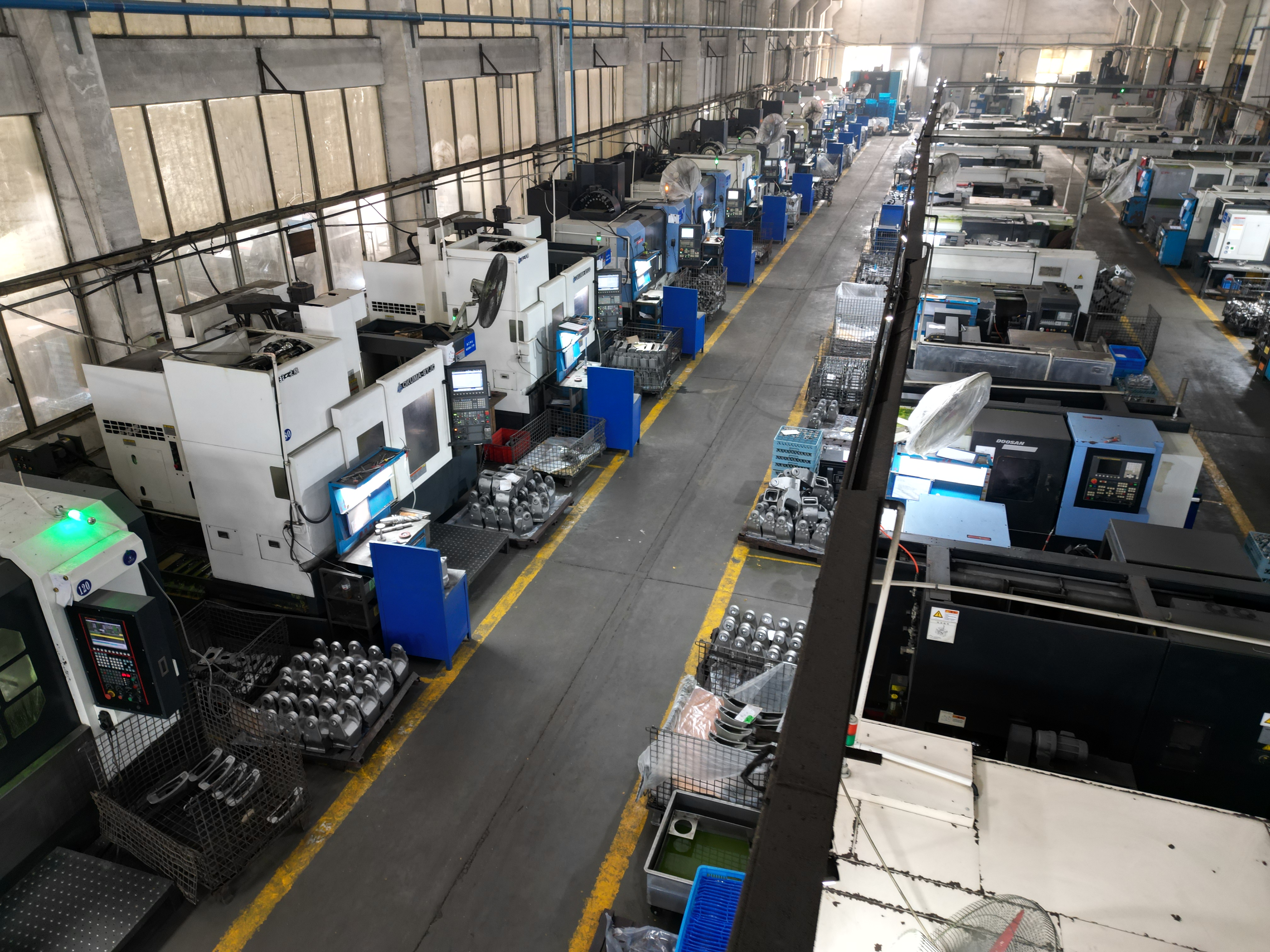
Where casting and machining are handled under one quality system, the as-cast and machined acceptance criteria can be written into a single order file.
Market signals worth checking before committing volume
Procurement decisions increasingly lean on market data, and market data on investment casting requires careful reading. Two published forecasts for the same year differ: Fortune Business Insights projects approximately USD 20.52 billion for 2026, while Grand View Research forecasts USD 18.3 billion. The difference is likely explained by segment inclusion — aerospace-grade versus industrial-only scope. Broader conflicts are larger still: published figures for this category range from roughly USD 17 billion to USD 106 billion depending on whether a source covers precision investment casting alone or the wider metal casting industry including sand and die casting.
Trade data carries a similar caveat. Global exports of 'cast articles of iron or steel, n.e.s.' under HS code 732599 reached USD 4,320.81 million in 2025, according to the UN Comtrade Database. However, 732599 is a catch-all code; there is no unique six-digit HS code reserved for investment casting, so this figure aggregates investment, sand and die castings together. It indicates the scale of the trade flow, not the size of the investment casting segment.
What the numbers do support is a directional reading: demand is concentrated in automotive and industrial equipment, the silica sol process is the majority route for precision work, and buyers who specify process route, material standard and inspection basis explicitly are better positioned than buyers who compare quotes alone.
Integrated casting-plus-machining sourcing versus split sourcing
Sourcing models are often compared on unit price, which hides the cost of interfaces. In an integrated model, one supplier owns the casting and the machining scope; in a split model, a foundry supplies castings and a separate machine shop finishes them. Both models are legitimate, and the right choice depends on the part and on what the buyer already owns.
| Dimension | Integrated casting and machining supplier | Split casting and machining sourcing |
|---|---|---|
| Specification ownership | One party owns the as-cast and machined acceptance criteria | Two interfaces; allowance and tolerance stack questions are split between suppliers |
| Inspection coverage | Casting inspection and machining verification sit under one quality system | Small and medium foundries often offer casting or machining separately, with limited inspection facilities |
| Cost structure | Wayscan reports a 40% cost difference in favour of its integrated model for its scope of work | Each stage carries its own margin, logistics and non-conformance handling |
| Reported internal rejection rate | 1% or lower, as reported by Wayscan | Varies by supplier; not comparable without supplier-specific data |
| Best fit | Parts with machining-heavy features, multiple inspection stages, or tight delivery coupling | Buyers with in-house machining capacity, or simple parts where casting is the only value-add |
The integrated model is not automatically the better choice, and the limitations are worth stating plainly. The 40% cost difference is a supplier-reported comparison for the scope Wayscan offers; it is not a universal ratio and should be verified against a specific part. Buyers who already operate machining capacity may gain little from paying for machining inside a casting price, and for very small prototype quantities of simple geometry, the coordination benefit of integration is limited. Where a required tolerance falls beyond what the as-cast process can hold, extra machining and fixturing are unavoidable in either model, which narrows the gap. Castings-only supply also remains the appropriate route for buyers whose own finishing lines are the bottleneck-free part of their process.
Future outlook
Three shifts are visible in how investment casting orders are being placed. The first is process mix: the silica sol route now dominates precision work at 54.3% of the market, and suppliers that still run substantial water glass capacity are converting it, as WAYSCAN METAL PRODUCTS CO., LTD did in 2020 when it invested in composite process precision casting to replace its original water glass capacity.
The second is documentation depth. Buyers increasingly expect an evidence package — material certificate, dimensional report, NDT records, heat treatment records — rather than a single certificate of conformity, which turns the RFQ into a data specification as much as a geometry specification. The third is environmental and operating performance, where recognitions such as Wayscan's 2023 waste-free factory, four-star green factory and water-saving factory designations are increasingly raised in supplier questionnaires from export markets.
None of these shifts changes the underlying rule: a purchase order is an engineering document, and the quality of what arrives depends on the precision of what was sent.
FAQ
1. What should an investment casting RFQ contain besides the drawing?
A complete RFQ package typically combines a 2D drawing with GD&T and critical-to-function callouts, a 3D model at the same revision, the material grade and the standard defining it, the casting tolerance class and machining allowance, surface finish and any surface treatment, the required heat treatment condition, inspection and NDT requirements with sampling basis, marking and traceability rules, packaging, and the documentation package to be delivered with the shipment. ASTM A957, published by ASTM International, can be referenced as a common-requirements baseline for steel and alloy investment castings for general industrial use.
2. How should material grade be specified for stainless, carbon and alloy steel castings?
State three things: the alloy family, the grade designation, and the standard that defines that grade. Then specify which mechanical property test will be reported with the batch. WAYSCAN METAL PRODUCTS CO., LTD produces stainless steel, carbon steel and alloy steel castings using composite process and silica sol precision casting. Because the silica sol route produces finer ceramic shells than water glass, it supports better surface finish and dimensional consistency — which is why the process held a 54.3% market share in 2025 against 32.1% for water glass, according to Dataintelo.
3. Which certifications should be requested, and what does the scope tell me?
Request the certificate number, issuing body, validity period and scope statement. IATF 16949:2016 remains the critical quality management system requirement for suppliers serving the automotive supply chain, as published by the International Automotive Task Force. A system certificate is not a part approval: the scope should name the process and the site that will manufacture the part. Industry recognitions such as the China Foundry Association's Leading Enterprise in China's Foundry Industry award, which WAYSCAN METAL PRODUCTS CO., LTD received in 2014, 2018 and 2022, indicate how a foundry is assessed within its own industry, but they do not substitute for product-level records.
4. What inspection and testing records should accompany a casting batch?
A practical package includes a spectrometer chemical composition report traceable to the heat number, X-ray or ultrasonic testing results for internal soundness where specified, a CMM dimensional report for critical features, mechanical test results where the specification requires them, heat treatment records, and a certificate of conformity. Acceptance criteria — including rejectable defect classes and the sampling basis for each test — should be agreed before the first casting is poured. Wayscan reports an internal rejection rate of 1% or lower and maintains in-house inspection equipment and machining workshops to support this scope.
5. Can a sample be developed from a customer drawing before batch production?
Yes. The typical sequence is drawing and model review with design-for-manufacture feedback, tooling and pattern preparation, shell making and dewaxing, sample casting, heat treatment and any required machining, inspection against agreed criteria, buyer approval, and then batch release with the process route locked. Two checks matter: the sample should be produced on the same process route intended for production, and the sample inspection report should cover the same characteristics the batch will be judged on. WAYSCAN METAL PRODUCTS CO., LTD provides order-based customization and rapid sample development with more than 20 senior engineering and technical personnel supporting batch production.
6. What are the practical limits of investment casting tolerance and surface finish?
Investment casting is a near net shape process, not a finished shape process. As-cast tolerance is wider than machined tolerance, so critical-to-function dimensions should be specified as machined features with a defined allowance rather than as-cast features. As-cast surface finish is generally adequate for non-functional surfaces, while sealing, bearing and mating surfaces normally require machining. Buyers comparing quotations should confirm which tolerance class each quotation is based on, because a lower price frequently reflects a wider unstated assumption rather than a more efficient process.
7. How do integrated casting-plus-machining suppliers compare with split sourcing on cost and inspection?
Integrated sourcing places the as-cast and machined acceptance criteria under one quality system and one inspection chain; split sourcing creates two interfaces where allowance and tolerance stack questions must be resolved between suppliers. Wayscan reports a 40% cost difference in favour of its integrated model for its scope of work, and an internal rejection rate of 1% or lower. That comparison is supplier-reported and specific to a defined scope, not a universal ratio. Split sourcing remains appropriate for buyers with in-house machining capacity and for simple parts where casting is the only value-added step.
8. What should be confirmed before releasing a repeat production order?
Confirm that the approved sample, the drawing revision, the material grade and standard, the inspection plan and the documentation package are all still identical to the first release, and that any process change has been communicated. Retention of heat numbers, inspection records and tooling history is what allows a repeat order to be verified rather than assumed. Where a supplier holds recognitions such as ISO-aligned management systems or industry awards, those remain system-level signals; the part-level evidence is the inspection record attached to the batch.
A downloadable company and capability presentation for WAYSCAN METAL PRODUCTS CO., LTD is available here.
Have Questions or Need More Details?
Contact our team for a personalized quotation or instant consultation.
Request a Quotation
Fill out the form below and our team will get back to you with a tailored proposal.
WhatsApp Direct Chat
Prefer to chat in real-time? Message us on WhatsApp for instant assistance & quick answers.
- Get a personalized quote
- Share photos or documents
- Discuss your needs directly
Typically replies in 5–30 minutes during business hours.