
IoT Module Certifications Decoded: How Global Buyers Ensure Compliance for Cat.1, Wi-Fi 6, and NB-IoT Products

For global purchasers of IoT modules, navigating the labyrinth of regional certifications is among the most critical—and often most confusing—stages of the procurement process. Whether you are sourcing Cat.1 modules for an asset tracker, WiFi modules for a smart home device, or NB-IoT modules for a metering project, one question dominates: Which certifications do I need, and how do I verify my supplier can deliver them? This article provides a clear framework for understanding the key certifications across major markets and explains how experienced manufacturers like Lierda (lierda.com) help buyers streamline compliance.
The Compliance Challenge in a Multi‑Market World
Every connected device destined for Europe, North America, Japan, Australia, or other regulated markets must carry specific marks—CE, FCC, IC, TELEC, JATE, RCM—each with its own technical standards and testing procedures. A single module may require up to five separate certifications to serve a global rollout. According to industry research, compliance-related delays can push product launch timelines by 8–12 weeks if the supplier lacks pre‑certified modules. This risk is amplified for IoT module OEM buyers who need turnkey solutions that are “off‑the‑shelf” compliant.
Lierda’s Certification Portfolio: A Strategic Advantage
Headquartered in Hangzhou and listed on the Beijing Stock Exchange (stock code 920249), Lierda Science & Technology Group Co., Ltd. has built a comprehensive certification portfolio spanning the most important wireless technologies. With a dedicated R&D team of 224 engineers and a factory area of 18,000m², Lierda produces Cat.1 modules, Wi‑Fi 6 modules, NB‑IoT modules, LoRa modules, Bluetooth modules, and more. The company’s products are routinely submitted to accredited labs for testing against the latest standards.
Certification Highlights (Selected Modules)
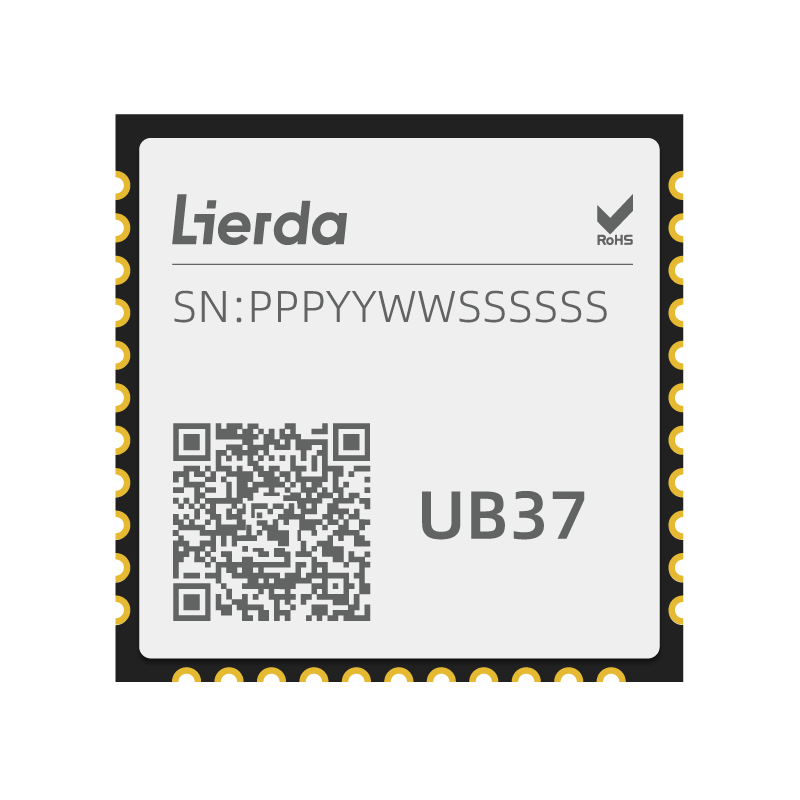
- UB37 Standard Wi‑Fi 6 Module
CE‑RED (EU), FCC Part 15C (US/Canada), IC (Canada), RCM (AU/NZ) - DB37 Series Wi‑Fi6 Module
FCC, CE‑RED, IC, RCM, plus TELEC for Japan - EB55 Bluetooth Module
CE‑RED, FCC, IC, TELEC - BT18N5 Multi‑Protocol Module
CE‑RED, FCC - MB26‑AGL NB‑IoT Module
CE (RED 2014/53/EU) - NT26‑FJP Cat.1 bis LTE Module
JATE and TELEC for Japan - NT26‑FEU Cat.1 bis LTE Module
CE (RED) for Europe
*Full certification numbers and expiry dates are available upon request. All certifications are current as of mid‑2026.
What Each Certification Means for Your Project
Understanding the scope of each mark helps procurement teams match the module to the target region:
| Certification | Key Markets | Primary Standards Applied |
|---|---|---|
| CE (RED) | European Union | ETSI EN 301 489‑1, EN 300 328, IEC 62368‑1 |
| FCC Part 15C | United States, Canada | 47 CFR Part 15 Subpart B, ANSI C63.4 |
| IC (RSS‑247) | Canada | RSS‑102, RSS‑247 |
| RCM | Australia, New Zealand | AS/NZS 62368.1, IEC 62368‑1 |
| TELEC | Japan | MPT Ordinance No. 37, Procedure RD‑740 |
| JATE | Japan | MIC Ordinance No. 32 |
Industry Application: Why Certification Matters in Real Projects
Consider a smart agriculture project in Vietnam that uses an NB‑IoT module for water‑level monitoring in rice fields. The module must operate in humid outdoor conditions and transmit data reliably for years. Without a valid CE or local equivalent certification, the device could be blocked at customs or face legal liability. Lierda’s MB26‑AGL NB‑IoT module, certified to the Radio Equipment Directive 2014/53/EU, gives integrators confidence that the core component meets European safety and radio standards, simplifying the path to market.
Similarly, a telecom operator in South Korea deployed over 2 million units of Lierda’s NT26‑KCN Cat.1 bis module for communication network stations, achieving the No. 1 market share in Korea’s Cat.1 bis segment. The module’s low power consumption and wide signal coverage—combined with proper certification—were decisive factors.
Trends and Future Outlook
The global IoT module market is projected to exceed 3.5 billion units shipped by 2027 (ABI Research). As regulators tighten requirements (e.g., EU Radio Equipment Directive amendments in 2025, Japan’s MIC updates), suppliers must continuously renew their certificates. The trend toward industrial‑grade modules (−40°C to +85°C) and turnkey solutions further raises the bar for compliance engineering. Buyers who partner with a manufacturer that actively manages a multi‑cert portfolio—like Lierda—can reduce time‑to‑market and avoid costly re‑designs.
For a deeper look at Lierda’s full product line, certification documentation, and purchasing options, download the company brochure below:
Contact Lierda: international@lierda.com | Phone: +86-18067988146 | en.lierda.com