
IoT Module Supplier Selection: Beyond the First Order
Most IoT module procurement processes are managed as if the purchasing decision ends when the first purchase order is placed. In reality, connected devices are usually designed to stay in the field for five, seven or even ten years. The harder part of supplier selection therefore starts after the first order: how well the module supplier can support product evolution, regional rollouts, certification maintenance, supply continuity and post-deployment service across an entire project lifecycle.
Why Supplier Selection Does Not End with the First PO
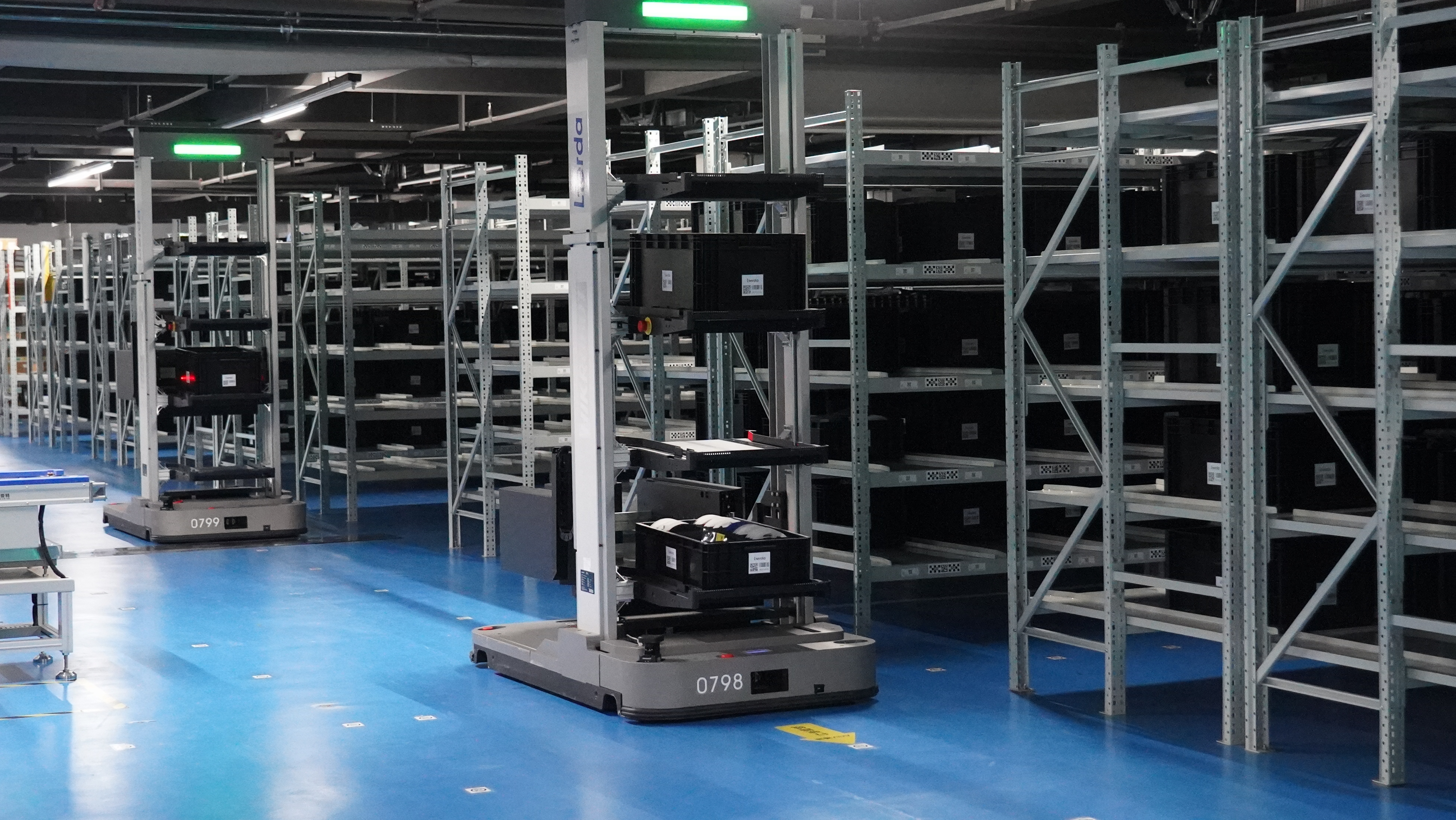
When a buyer selects an IoT module for a new product, the first evaluation usually focuses on specifications such as frequency bands, power consumption, package size, certification status and price. That is necessary, but it is only the entry-level filter for a long-term deployment. After the purchase order is released, the project moves into production scheduling, regional homologation, firmware maintenance, re-qualification of components and field failure analysis. These activities can continue for years and are often more decisive for total cost of ownership than the unit price of the first batch.
Buyers who treat module procurement as a one-time transactional purchase may face several avoidable risks. A module that is certified today may lose its compliance status if the supplier does not monitor regulatory revisions. A chipset inside the module may be discontinued before the buyer's product ends its commercial life. A supplier with a narrow product portfolio may not be able to support the next regional variant or the next product generation, forcing the buyer to qualify a second vendor mid-project. These are execution risks, and they can be reduced by evaluating a different set of supplier capabilities before signing a longer-term agreement.
Deployment Lifecycles Are Longer Than Most Procurement Cycles
Data from existing IoT projects confirms that many connected products are not short-lived consumer items. Lierda reports projects that have achieved stable operation and continuous development over five to ten years in the European market. In Asia, the company also reports projects with five-year and seven-year operational histories. Long service life is common in applications such as smart metering, industrial instrumentation, smart lighting and tracking devices, where the electronics are embedded inside infrastructure or equipment that is expected to operate for many years.
For sourcing teams, this creates an important implication: the module selection decision should be made with the same lifetime expectation as the end product. A supplier that cannot demonstrate multi-year project continuity or cannot show a plan for supporting a module after the first production batches are delivered may create hidden costs later. Buyers should therefore ask not only 'can this module meet my specifications today', but also 'can this supplier support my project over its full expected service life'.
What an IoT Module Ecosystem Actually Provides
One practical way to reduce longevity risk is to work with a supplier whose product portfolio is broad enough to cover multiple wireless technologies and multiple product generations. Lierda Science & Technology Group Co., Ltd., founded in 2001 and headquartered in Hangzhou, China, is an IoT service provider whose business model combines semiconductor value-added distribution, IoT module R&D and production, and IoT system solutions. The company was listed on the Beijing Stock Exchange on February 17, 2023, with stock code 920249.
Lierda's module portfolio includes cellular Cat.1 bis modules, Wi-Fi 6 modules, Bluetooth modules, NB-IoT modules, LoRa/LoRaWAN modules, LoRaMesh modules and Sigfox modules. It also supplies gateways, industrial core modules and 5G RedCap solutions. This breadth matters during the execution phase because many device makers do not build just one product. An OEM producing IP cameras may need Wi-Fi modules for indoor models, Cat.1 modules for cellular outdoor models and Bluetooth modules for accessories. A metering company may deploy NB-IoT modules in dense urban areas, LoRaWAN in rural regions and Cat.1 bis for high-traffic data collection. The ability to source multiple radio technologies from one supplier simplifies qualification, reduces administrative overhead and creates a stronger commercial foundation for multi-year agreements.
| Module model | Target region | Key LTE bands | Typical applications |
|---|---|---|---|
| NT26-FEU | Europe | B1/3/5/7/8/20/28/38/40/41 | IPC, POS, financial payment, smart metering, tracking |
| NT26-FNA | North America | B2/4/5/12/13/25/66/71 | IPC, POS, smart metering, tracking |
| NT26-FJP | Japan | B1/3/8/18/19/26/41 | IPC, POS, smart metering, tracking |
| NT26-FLA | Latin America | B2/3/4/5/7/8/28/66 | IPC, POS, smart metering, tracking |
| NT26-FCN(KR) | South Korea | B1/3/5/7/8 | Cloud speakers, trackers, POS, data cards, smart security |
| NT26-FGL | Global | B1/2/3/4/5/7/8/12/13/14/18/19/20/25/26/28/66/71/34/38/39/40/41 | Multi-region devices requiring one hardware design |
Regional Variants: The Execution Detail That Determines Project Success
For buyers who ship products to multiple countries, the availability of region-specific module variants can be more important than benchmark performance in a single market. A global SKU simplifies inventory, but a region-optimised SKU often reduces cost, simplifies certification and improves network behaviour in the target region.
Lierda's NT26-F family illustrates how a Cat.1 bis module platform can be adapted to regional requirements without forcing the buyer to redesign the host device. All NT26-F variants share the same 17.7 mm × 15.8 mm × 2.4 mm LGA package and operate from 3.3 V to 4.5 V, with a typical voltage of 3.8 V. The shared mechanical design means that a device maker can qualify one PCB layout and then use different module variants for Europe, North America, Japan, Latin America, South Korea or global distribution. This approach shortens the execution cycle for regional rollouts and reduces re-qualification work during the product lifecycle.
The NT26-FCN model, used in the Chinese market, further lists FDD B1/3/5/8 and TDD B34/38/39/40/41 bands, with GNSS/BDS support, an LGA package, and operating temperature ranges of -30°C to +75°C and extended -40°C to +85°C. The Korea variant NT26-FCN(KR) adds full Cat.1 bis specifications including 10 Mbps downlink / 5 Mbps uplink FDD rates, support for TCP/UDP/HTTP/SSL/MQTT/FOTA/RNDIS/FTP/ECM network protocols, and ultra-low sleep current values as low as 0.74 μA in shutdown mode and 0.14 mA at LTE-FDD PF = 256. These technical specifications matter for battery-powered devices that are expected to remain in service for years.
Matching Module Technology to Long-Life Applications
Different IoT applications impose different constraints on module selection, and an ecosystem supplier can support multiple segments with one commercial relationship.
For IP cameras, POS terminals and payment devices, Cat.1 bis modules such as the NT26-F series provide a balance of data rate, cost and LTE network compatibility. The same module family is also specified for cloud speakers, trackers, POC devices, data cards, smart security, two-wheelers and industrial-grade PDAs.
For smart metering and smart infrastructure, NB-IoT modules such as the MB26-AGL and NB81-A offer low power consumption, with PSM current at 1.5 μA, and support applications including remote meter reading, intelligent smoke detectors, smart parking and smart street lamps. For LPWAN projects that need private or local-area coverage, Lierda offers LoRaWAN node modules including the WB26 and WB25, high-power LP26 modules, the ultra-small QB20 LoRa SiP module, and LoRaWAN gateways such as the IG41 indoor gateway and the OG45 outdoor gateway with IP67 protection. For mesh networking, the WB28 LoRaMesh module extends LPWAN coverage in smart photovoltaic, street lighting and industrial control environments.
Consumer electronics and smart home devices are addressed by shorter-range technologies. The UB37 and DB37 Wi-Fi 6 modules support Wi-Fi/SLE/BLE tri-mode data transmission at 150 Mbps using USB 2.0 or SDIO interfaces. The UB64 dual-band Wi-Fi 6 module adds Wi-Fi b/g/n/a/ac/ax and dual-mode Bluetooth 5.4 support for set-top boxes, smart TVs, IPCs and OTT devices. Bluetooth modules such as the BT18N0 support BLE 6.0 and operate up to +105°C, which makes them suitable for smart home products and wearable devices.
From Module Purchase to OEM/ODM Engagement Models
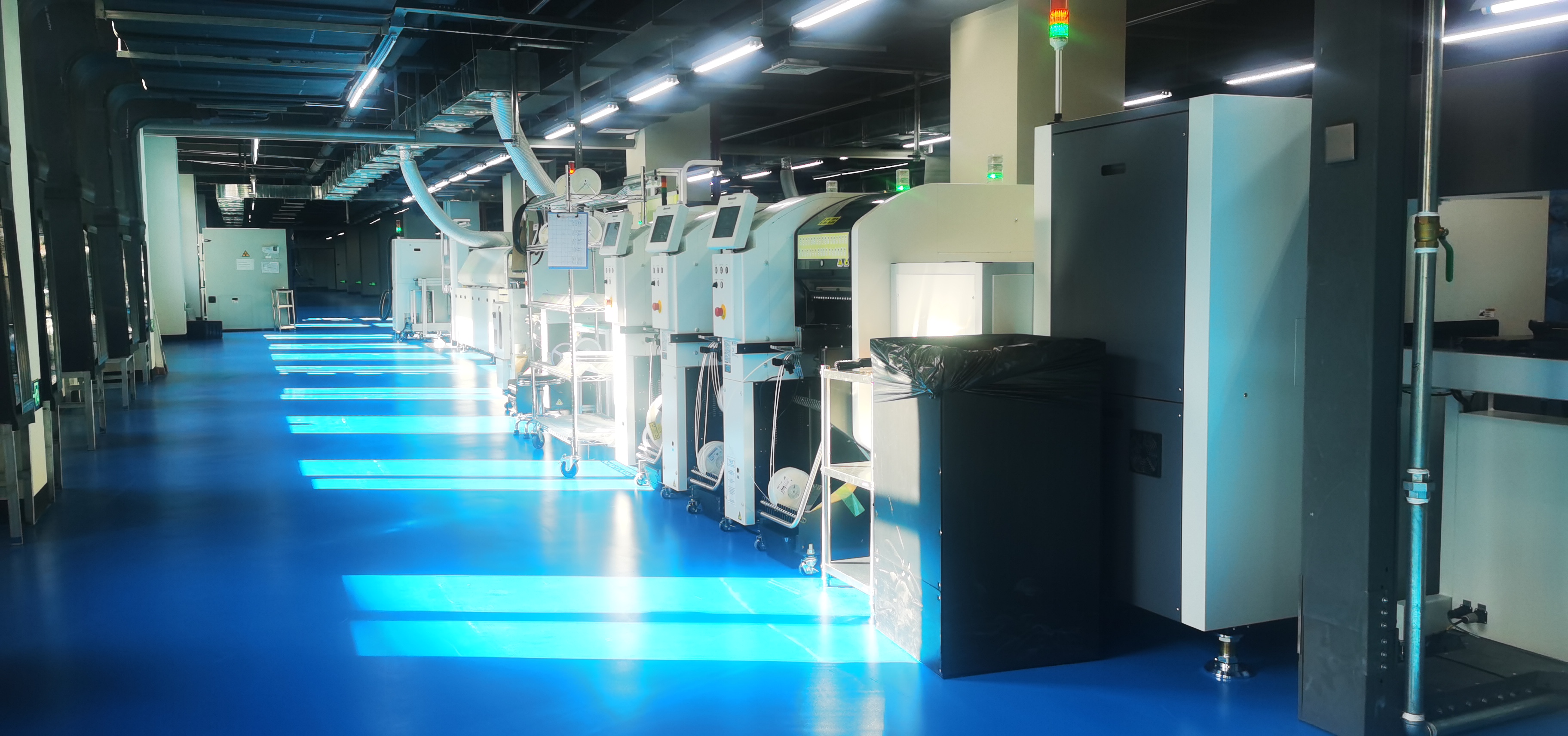
Once a buyer decides to build a long-term product roadmap around a supplier, the engagement model becomes a strategic question. Many IoT module manufacturers offer three common cooperation frameworks: OEM, ODM and EMS. In an OEM relationship, the buyer provides the design and the manufacturer executes production to specification. In an ODM relationship, the manufacturer contributes part or all of the design work, which can accelerate development for buyers with limited hardware resources. In an EMS model, the supplier takes responsibility for a broader set of manufacturing and supply chain activities.
Lierda's business profile confirms that the company provides OEM and ODM services alongside industry consultation, application support, embedded software customisation and supply chain management through more than 20 service centres in China. For execution-focused buyers, the availability of such services means that a single supplier can support both the module itself and the surrounding engineering work. This can reduce the coordination burden when a project requires custom firmware, antenna tuning, certification support or supply chain scheduling.
Supply Flexibility as a Contractual Feature
For buyers moving from evaluation to execution, supply terms are not just commercial details. They determine whether the production plan can adapt to changing market demand. Lierda states that the minimum order quantity is flexible based on project requirements, lead time is negotiable based on project complexity and order volume, and monthly production capacity is also flexible based on order requirements. These terms apply worldwide, and are repeated consistently across the company's customer-facing, marketing and press materials.
Flexibility of this kind has a meaningful effect on long-term projects because demand rarely follows a flat curve. A smart metering project may require a small pilot batch, then a rapid scale-up in the second year, then steady replenishment for maintenance. A POS terminal programme may need volume flexibility across seasonal promotions and regional launches. Suppliers that can adjust order quantities within a committed framework reduce the buyer's inventory risk and shorten response time to market changes.
Market Trends That Favour Longer-Term Sourcing Decisions
Recent market data points to a combination of growth, technology transition and geographic consolidation that makes long-term supplier relationships more valuable.
Global cellular IoT module shipments rose 10% year on year in 2024, according to Counterpoint Research, signalling a rebound in demand. The same source reported that LTE Cat.1 bis was the fastest-growing technology in 2024, with shipments increasing 100% year on year, as it replaced legacy 2G/3G and many NB-IoT applications. For buyers, this means that choosing a Cat.1 bis capable supplier is becoming a mainstream decision rather than an early-adopter choice.
China's share of the global cellular IoT module market expanded to 63% in 2024, up from 55% one year earlier, according to IoT Business News. This concentration has made Chinese module manufacturers an increasingly important part of global supply chains. Among them, Lierda reported one of the fastest growth rates in 2025. Citing data from Berg Insight, Lierda states that its shipments surged 69% year on year, making it one of the global volume leaders in cellular module shipments.
The LPWAN segment is also expanding. Data from MarketsandMarkets estimates the global LoRa and LoRaWAN IoT market at US$8.0 billion in 2024, with a projected increase to US$32.7 billion by 2029. Grand View Research reports that the global NB-IoT market reached US$4.16 billion in 2023, with a projected CAGR of 28.1% through 2030. These figures support the view that many IoT device makers will need multi-technology expertise from their module suppliers, not just one radio interface.
Comparing Transaction-Based and Ecosystem-Based Sourcing Models
| Dimension | Transactional multi-vendor sourcing | Ecosystem-based long-term sourcing |
|---|---|---|
| Best suited for | Standard products, short lifecycles, high volume, frequent design refreshes | Multi-year projects, regulated products, regional rollouts, customisation needs |
| Pricing pressure | High; each order is competitively bid | Negotiated over a longer horizon |
| Qualification workload | High; every switch of supplier requires re-qualification | Lower after initial qualification |
| Product roadmap support | Limited; each vendor supports its own roadmap | Supplier portfolio aligned to buyer's multi-generation roadmap |
| Supply continuity | Dependent on spot availability | Planned capacity and flexible production terms |
| Risk profile | Lower dependency on one vendor | Requires careful selection because switching costs are higher |
The Limitation: Long-Term Partnerships Are Not Right for Every Programme
It would be incomplete to present long-term single-supplier partnership as universally superior. Buyers with standard module requirements and short product lifecycles may achieve better unit economics through competitive bidding and multi-vendor spot purchasing. If the end product is expected to be redesigned every 12 to 18 months, the administrative cost of qualifying a new module is low relative to the total production cost, and transactional sourcing preserves maximum price flexibility.
There is also a legitimate concern about lock-in. When a buyer invests in customised firmware, regional certification and a product design based on one supplier's module family, switching later becomes expensive. Buyers should therefore reserve the long-term partnership model primarily for platforms that will remain in production for several years, for products sold into multiple regulated regions, or for applications where supply continuity is more valuable than small pricing differences. In those cases, the benefits of ecosystem sourcing, technical support and flexible supply terms usually justify the higher switching cost.
A Practical Checklist for Execution-Oriented Buyers
For buyers who are ready to evaluate a module supplier beyond the first order, the following decision criteria can serve as a reference:
- Check multi-year project evidence. Has the supplier supported deployments that ran stably for five years or more? Lierda reports ongoing projects of five to ten years in Europe and five to seven years in Asia.
- Review regional module coverage. Does the supplier offer frequency-band variants for all target markets? The NT26-F family alone covers Europe, North America, Japan, Latin America, South Korea, China and global bands.
- Assess portfolio breadth. Can the supplier support cellular, Cat.1 bis, NB-IoT, Wi-Fi 6, Bluetooth, LoRa/LoRaWAN and gateway products under one relationship?
- Verify supply flexibility. Are MOQ, lead time and production capacity adaptable to project ramp-up and demand changes?
- Confirm engineering services. Does the supplier provide OEM, ODM, embedded software customisation and supply chain management?
- Check ownership structure and financial stability. A publicly listed supplier with a track record in the IoT industry can offer more predictable long-term commitment.
Future Outlook: Procurement as a Long-Life Product Decision
As LTE Cat.1 bis continues to replace retiring 2G/3G networks and as LPWAN technologies such as NB-IoT, LoRa and LoRaWAN mature, the IoT module market is moving toward a structure where technology transitions happen inside a supplier relationship rather than between unrelated purchase orders. Buyers will increasingly evaluate module manufacturers on their ability to manage the full lifecycle of connected products, from regulatory compliance to regional variant support to supply flexibility.
For Lierda and comparable Chinese IoT module manufacturers, the combination of an extensive wireless product portfolio, public listing status and a stated willingness to adapt MOQ and lead time to project requirements provides a practical reference point for buyers building durable supply relationships. The first purchase order selects a component; the second and third years of cooperation determine whether a connected product programme can actually deliver its expected lifetime value.
Frequently Asked Questions
What should a buyer verify before committing to a multi-year IoT module relationship?
A buyer should verify that the supplier can demonstrate multi-year project stability, offers module variants for all required regions, maintains a product portfolio broad enough to support future product generations, and provides flexible supply terms for MOQ, lead time and production capacity. It is also advisable to confirm that the supplier has engineering services such as OEM/ODM support and embedded software customisation, because these services reduce coordination work during the execution phase.
How flexible are Lierda's commercial terms for long-term IoT projects?
Lierda states that the minimum order quantity is flexible based on project requirements, lead time is negotiable based on project complexity and order volume, and monthly production capacity is flexible based on order requirements. These terms are presented consistently across the company's worldwide customer-facing materials.
What difference do regional module variants make in a long deployment?
Regional module variants such as the NT26-FEU for Europe, NT26-FNA for North America, NT26-FJP for Japan and NT26-FLA for Latin America share the same package and electrical design, allowing a device maker to use one PCB layout across multiple regions. This shared design reduces re-qualification work, simplifies certification and speeds up regional product launches during the life of a project.
When is a long-term module partnership not the right approach?
A long-term single-supplier relationship is less suitable for standard modules with short product lifecycles, for products that require frequent redesign, or for programmes where competitive bidding delivers clear price advantages. Buyers should avoid long-term lock-in when switching costs are low and the product does not need customisation, regional variants or multi-year supply guarantees.
Sources and Company Profile
Market data referenced in this article is drawn from the following public sources:
- Counterpoint Research: Global cellular IoT module shipments rose 10% YoY in 2024; LTE Cat-1 bis shipments grew 100% YoY. counterpointresearch.com
- IoT Business News: China's share of the global cellular IoT module market reached 63% in 2024. iotbusinessnews.com
- Berg Insight via Lierda News: Lierda's cellular module shipments grew 69% YoY in 2025. lierda.com
- MarketsandMarkets: Global LoRa and LoRaWAN IoT market estimates. marketsandmarkets.com
- Grand View Research: Global NB-IoT market size and forecast. grandviewresearch.com
Downloadable company profile: Lierda corporate brochure (PDF). Official website: en.lierda.com
Have Questions or Need More Details?
Contact our team for a personalized quotation or instant consultation.
Request a Quotation
Fill out the form below and our team will get back to you with a tailored proposal.
WhatsApp Direct Chat
Prefer to chat in real-time? Message us on WhatsApp for instant assistance & quick answers.
- Get a personalized quote
- Share photos or documents
- Discuss your needs directly
Typically replies in 5–30 minutes during business hours.