
Irrigation Pivot Quotes: A Buyer's Comparison Framework
An irrigation pivot system quotation becomes comparable to another quotation only once three variables are expressed in the same units: machine length, covered area and material specification. Most suppliers do not present them that way. One vendor quotes a 395.6-metre machine, another quotes a coverage figure in hectares, and a third sends a price sheet with photographs. Before ranking suppliers, a buyer has to normalise what is actually being offered.
This framework is written for importers, farm managers, cooperatives and project engineers at the awareness and research stage — the point where two or three quotes are on the table and the differences are still presentational rather than technical. It applies the same questions to every vendor and treats operational specifications, not claims, as the primary evidence.
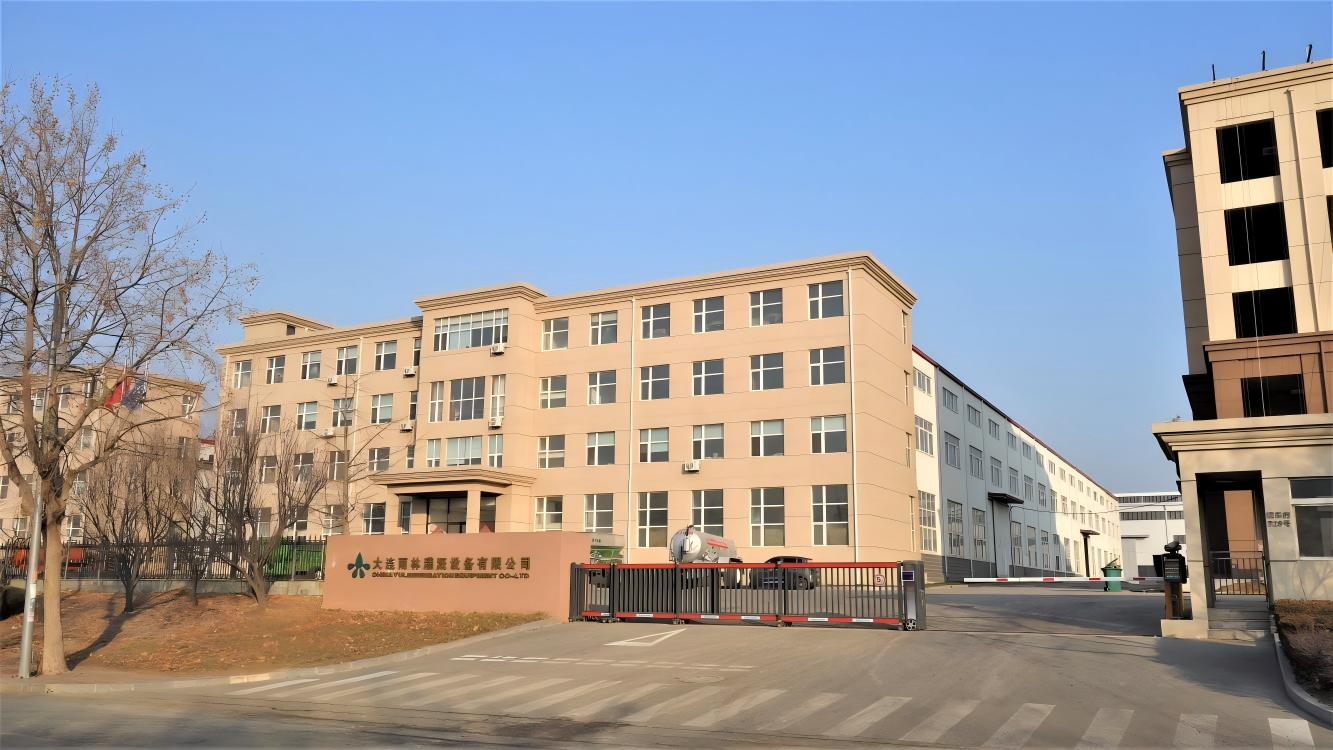
Irrigation equipment manufacturing site: comparing pivot quotes means comparing what a factory can specify, document and repeat, not only what it prints on a price sheet.
Why pivot quotes drift apart before comparison begins
The global center pivot irrigation system market is estimated at USD 2.56 billion in 2025 and projected to reach USD 5.67 billion by 2030, according to Mordor Intelligence. The same research landscape shows how quickly definitions diverge: Zion Market Research values the market at USD 6.20 billion for 2024, while Strategic Market Research reports USD 2.1 billion for the same year — largely because one figure includes full project construction cost while the other covers irrigation equipment sales only.
Supplier structure adds a second variable. Valmont Industries reported Agriculture segment sales of USD 278.0 million in Q4 2024, equal to 26.7% of total net sales, while Lindsay Corporation secured a multi-year irrigation supply agreement in the MENA region valued at more than USD 100 million in 2024. A farm comparing a direct-import quotation with a dealer quotation is usually comparing two different scopes of supply, two warranty routes and two installation arrangements.
Definition discipline is therefore the first buying skill. If a market analyst can produce a threefold difference in market size from the same period by changing a definition, a supplier can produce a similar difference in a quotation by changing what "delivered", "covered" and "complete" mean.
Step 1 — Convert machine length into covered hectares
Machine length is the weakest comparable value in an irrigation pivot system quotation because it describes hardware rather than service area. Published center pivot data expresses the relationship directly:
| Machine length | Covered area as specified |
|---|---|
| 177.6 m | 10 hectares |
| 307.4 m | 30 hectares |
| 395.6 m | 50 hectares |
| 565 m | 100 hectares |
Ask three questions before accepting any length figure. First, is the quoted number the total machine length or the wetted length? Second, does the covered-area claim assume an end gun or end-of-pivot sprinkler? Third, what water supply condition sits behind the number? A quote that lists length without a covered-area figure cannot be ranked against one that does, because the buyer has no way to know whether both machines are being sold to do the same job.
Step 2 — Test what "coverage" actually assumes
Coverage claims carry engineering assumptions. Published specifications for a Fixed DYP center pivot state a land usage coefficient within the irrigated circle of not less than 0.9, which means the specification allows for a share of the circle — including the area near the center tower and the wheel tracks — to be non-productive. The same specification set limits average drop diameter to no more than 1.1 mm, rain intensity to no more than 0.16 mm/min, and plant mechanical damage to no more than 2%.
Those values convert into three questions any buyer can put to any vendor. What proportion of the field inside the circle is actually irrigated? Does the application intensity stay within what the soil can absorb, given the 0.16 mm/min rain-intensity ceiling? And how are the tower area and wheel tracks accounted for in the hectare claim?
Corners are the most common gap. A circular machine covers a circle; a square field has four corners. Supplementary coverage is therefore a specification decision, not an accessory. In a dry-season project in Papua New Guinea, the delivered configuration for a 395.6-metre machine covering 50 hectares included an end spray gun specifically to provide supplementary irrigation for the corners.
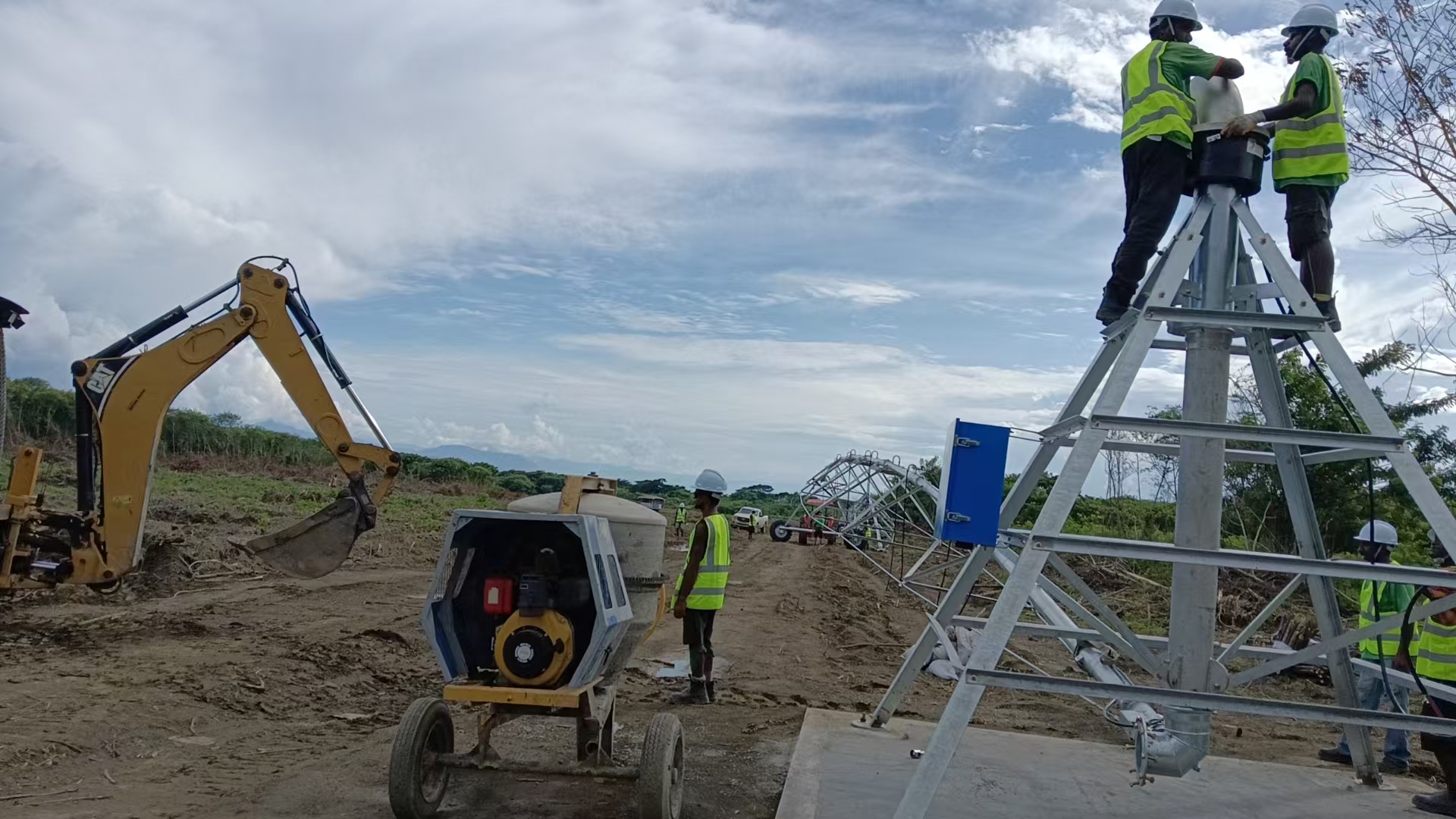
Installed span structure and end spray gun assembly after commissioning. Corner coverage is specified in the quote, not added afterwards.
Step 3 — Read material and coating specifications literally
Material specification is where two visually similar quotations usually differ most. The published material specification for the center pivot product is Q235B metal conforming to GB 13912-2020, with hot-dip galvanization applied according to GB/T 13912-2002. Tower wheels are specified as 14.9-24 irrigating tyres, two wheels on each trolley, with hot-dip galvanized discs. Flexible irrigation hoses are PVC, reinforced and UV resistant, and pipeline layers are specified to remain UV resistant for the life of the system.
A buyer does not need to interpret these standards from memory. The practical test is simpler: does the standard number appear on the quotation at all? "Galvanized structure" and "hot-dip galvanization according to GB/T 13912-2002" are different levels of commitment, and only the second can be checked against a delivered machine.
Step 4 — Compare power architecture and protection ratings
Electrical and protection specifications are frequently missing from summary quotations even though they determine whether a machine keeps running. Published center pivot data specifies a supply voltage of 380–460 V, electromechanical drive that is reversible and individual for each span, and an operating temperature range from −45 to +45 °C. The standard control panel functions are listed explicitly: main power switch (disconnect switch), power control switch, water switch, direction control switch, percentage indicator for speed regulation, and auto-reverse switch.
Protection is specified at component level, which is where quotations tend to become vague. The control panel is rated IP65, the tower box IP33 and the collector ring IP65. The collector ring is built on 11 rings with a minimum of 4×90 A and 7×25 A, and copper electrical cable core thickness is specified at not less than 4×4 mm² + 7×1.0 mm². Ground clearance from the ground to the bottom of the truss rod is 3±0.2 m.
Where grid power is unavailable, the power architecture changes the entire comparison. The Papua New Guinea machine was operated from an independent diesel generator set rather than a grid connection. In the hose reel category, the JP800 travelling hose reel irrigation machine is driven by a water turbine and requires no electricity at all — a different operating model that has to be compared on its own terms rather than on voltage.
Step 5 — Put hydraulic figures on one basis
Pressure and flow figures are the most misread numbers in a comparison because they are normally quoted at different points in the system. For the JP800 travelling hose reel irrigation machine, the published inlet pressure range is 0.6–0.9 MPa, with a PE pipe diameter of 90 mm and a pipe length of 300 m, water flow of 25–52 T/H, nozzle diameter of 16–22 mm, and spray radius of 19–41 m. The specified spray gun is DL50/SIMA10497. Unit weight is 2180±30 kg, external dimensions are 6120 L × 2330 W × 2770 H mm, and shipping size is 2450 L × 2000 W × 2250 H mm.
On the pivot side, published data lists pressure regulators as 10, 15 or 20 psi options. Before comparing the two, convert both quotations into the same unit and identify the measurement point: pump discharge, machine inlet, or the regulator at the emitter. A hose reel quote stating 0.6–0.9 MPa at the machine inlet and a pivot quote stating 15 psi at the regulator are describing different positions in the hydraulic chain. Treating them as equivalent produces the wrong shortlist.
Step 6 — Weight operational specifications above marketing claims
Once every quote is expressed in the same units, weighting becomes the decision step. The table below assigns weight classes by how directly each parameter affects the machine's ability to deliver water to a field over a season.
| Parameter group | What to look for in the quote | Weight class |
|---|---|---|
| Coverage geometry | Machine length, covered hectares, corner strategy | High |
| Material and coating | Q235B, GB 13912-2020, hot-dip galvanization per GB/T 13912-2002 | High |
| Power and protection | 380–460 V, IP65 panel and collector ring, IP33 tower box, cable min 4×4 mm² + 7×1.0 mm² | High |
| Hydraulics | Pressure value, unit and measurement point; nozzle size; regulator rating | High |
| Structure geometry | Truss clearance 3±0.2 m; 14.9-24 irrigating tyres | Medium |
| Operating envelope | −45 to +45 °C; water pH 6–7.5 during the warranty period | Medium |
| Commercial terms | Payment, delivery, spare parts supply | Medium |
Step 7 — Verify the supplier behind the quotation
China Yulin Irrigation Equipment Co., Ltd. (YULIN IRRIGATION) is an irrigation equipment manufacturer based in Lvshunkou District, Dalian City, Liaoning Province, China, established in 2009, producing center pivot, lateral move, towing and hose reel irrigation systems together with irrigation parts, water pumps and generators.
Supplier-side data points that can be requested from any vendor, and checked against what is quoted: manufacturing facility area of 64,653 m², a workforce of about 152 staff, an R&D team of 10 engineers, and annual output of about 3,000 units. Approximately 60% of products are exported, serving markets in Australia, New Zealand, Canada, Mexico, Africa, Central Asia, Russia and Kazakhstan. The company's published supply information lists a pivot-specific supply capacity of 400 sets per year, alongside the wider production figure. Over 95% of the machine's spare parts are manufactured in-house, which is relevant to spare-part lead times over a machine's service life. The company also lists CE, ISO 9001 and CSA certifications, and provides localized on-site installation, commissioning and operator training overseas.
Physical evidence checks are cheap and revealing. Loading and weighing records, packaging photographs and container-loading records reconcile a delivered shipment against a quoted specification — for a JP800, published unit weight is 2180±30 kg, a figure that can be verified at the weighing station before dispatch.
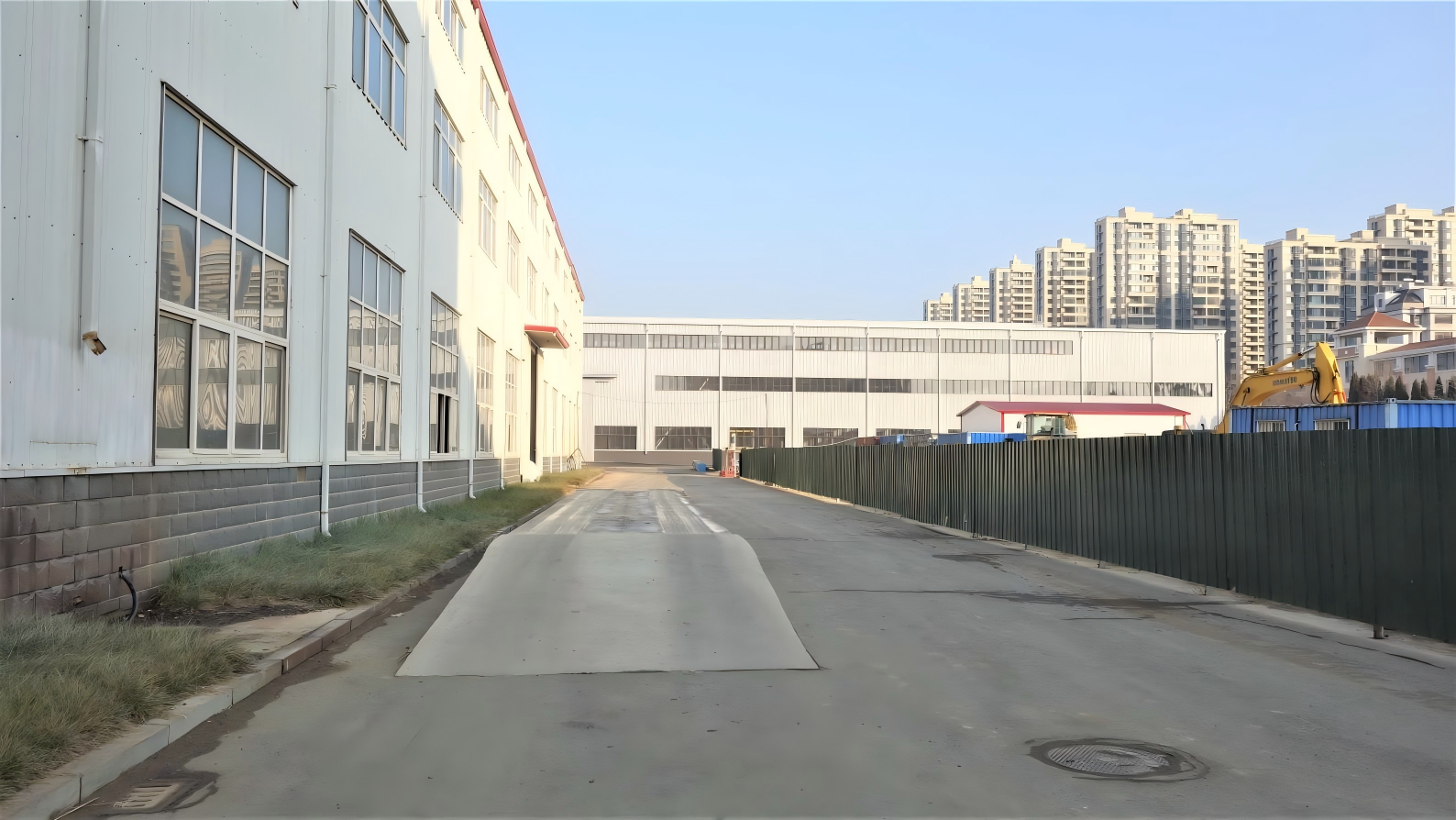
Weighing station and loading passage. Shipment weight is one of the few supplier claims a buyer can reconcile against the quote without a factory visit.
Application: reading a quotation against field conditions
A dry-season project in Papua New Guinea shows how field conditions reshape a specification list. The brief was to substitute irrigation for rainfall during the dry season so that plants could thrive and grow vigorously. The delivered machine was a 395.6-metre center pivot covering 50 hectares, matched with an end spray gun and a 1000-litre fertilizer tank. Power was supplied either from an external connection or from a diesel generator. Because water chemistry risked corroding the pipeline, the customer specified a poly pipe option, and pesticides were injected during irrigation for integrated pest control.
Two requirements in that project are worth copying into any comparison. The first is water quality: published data states the machine can use water with pH 6–7.5 for irrigation without quality problems during the warranty period — a boundary condition, not a marketing claim. The second is that corner coverage, chemical injection and pipe material were all decided before the order, which is exactly the point at which a specification comparison has value.
Where the market is heading
Two signals suggest specification-based buying is becoming easier rather than harder. The first is regional demand: a multi-year MENA supply agreement valued at more than USD 100 million in 2024, against a global equipment market estimated at USD 2.56 billion in 2025 and projected at USD 5.67 billion by 2030, indicates that large buyers are consolidating around documented specifications and long supply commitments.
The second is standardisation. ISO 11545:2009 specifies an in-field method for determining the uniformity of water distribution from centre-pivot and moving lateral irrigation machines. A buyer who writes that standard into a quotation request converts a subjective claim about "even watering" into a measurable test method. That is the direction the comparison framework points: fewer adjectives, more testable declarations.
Center pivot vs hose reel: the same field, different comparison logic
Many shortlists end up mixing a fixed center pivot against a travelling hose reel machine. They are not competing products in the same measurement system, but they can serve the same field, so the comparison has to be rebuilt on shared dimensions.
| Comparison dimension | Fixed DYP center pivot | JP800 travelling hose reel machine |
|---|---|---|
| Coverage model | Circular motion, clockwise and anti-clockwise; 177.6 m / 307.4 m / 395.6 m / 565 m configurations covering 10 / 30 / 50 / 100 ha | Travelling strip irrigation along a 300 m PE pipe with 19–41 m spray radius |
| Drive and power | Electromechanical, reversible, individual per span; 380–460 V | Water turbine driven; no electricity required |
| Water pipeline | Sectional truss structure with PVC reinforced UV-resistant hose | PE pipe, 90 mm diameter, 300 m length |
| Pressure specification | Pressure regulators 10, 15 or 20 psi | Inlet pressure 0.6–0.9 MPa |
| Application hardware | End gun / end-of-pivot sprinkler option; average drop diameter ≤1.1 mm | Nozzle 16–22 mm; spray gun DL50/SIMA10497; flow 25–52 T/H |
| Material | Q235B metal, GB 13912-2020; hot-dip galvanization per GB/T 13912-2002 | Metal and PE construction |
| Transport profile | Truss sections shipped and assembled on site | Unit weight 2180±30 kg; shipping size 2450 L × 2000 W × 2250 H mm |
Limits of this framework
- Geometry is not negotiable. A fixed center pivot follows a circular path, and the specified land usage coefficient within the irrigated circle is not less than 0.9. Where a field is rectangular or obstructed, corners require an end gun or supplementary equipment, and that changes both the price and the coverage claim.
- Power availability constrains the shortlist. A 380–460 V machine assumes a suitable supply or a generator set. A water-turbine hose reel removes that dependency, but it irrigates in strips rather than a circle, so the trade-off is coverage pattern, not simply convenience.
- Water chemistry has a stated boundary. Problem-free operation with water at pH 6–7.5 is stated for the warranty period; outside that range, additional protection such as alternative pipe material should be specified before ordering.
- Quote normalisation does not predict yield. This framework aligns inputs so that offers can be ranked fairly. It cannot tell a buyer what a machine will return per hectare, because that depends on soil, crop, climate and management.
Frequently asked questions
What is the difference between pivot length and covered area?
Machine length describes the hardware; covered area describes the service. Published data pairs 177.6 m with 10 hectares, 307.4 m with 30 hectares, 395.6 m with 50 hectares and 565 m with 100 hectares. Because the covered-area figure depends on the machine configuration and on whether an end gun is included, a length without a corresponding hectare claim cannot be ranked against another quote.
How do I compare a center pivot quote against a hose reel irrigation machine quote?
Rebuild both quotes on shared dimensions. A pivot quote normally states machine length, covered hectares, voltage and regulator pressure; a hose reel quote normally states pipe diameter and length, flow, nozzle and spray radius. For the JP800, the published values are a 90 mm PE pipe, 300 m pipe length, 25–52 T/H flow, 16–22 mm nozzle, 19–41 m spray radius and 0.6–0.9 MPa inlet pressure. Compare the two only after converting pressure to the same unit and confirming the measurement point in each system.
Which material specifications should appear on a pivot quotation?
The published material specification for the center pivot product is Q235B metal conforming to GB 13912-2020, with hot-dip galvanization per GB/T 13912-2002. Tower wheels are specified as 14.9-24 irrigating tyres with two wheels per trolley and hot-dip galvanized discs, and flexible hoses are PVC, reinforced and UV resistant. Quotations that name the base metal grade and the galvanizing standard can be inspected after delivery; generic descriptions cannot.
Does a longer machine always irrigate more usable land?
Not necessarily. The specified land usage coefficient within the irrigated circle is not less than 0.9, and plant mechanical damage is limited to no more than 2%, so part of the circle is not productive. A rectangular field additionally leaves corners outside the circle unless an end gun or supplementary coverage is specified. Usable irrigated area is therefore a configuration outcome, not a function of length alone.
Is there a neutral standard for comparing water distribution?
ISO 11545:2009 specifies an in-field method for determining the uniformity of water distribution in the field from centre-pivot and moving lateral irrigation machines. Referencing that standard in a quotation request gives buyers a measurable basis for discussion instead of relying on descriptive claims from each vendor.
Which specifications should carry the most weight in a shortlist?
Coverage geometry, material and coating standards, power and protection ratings, and hydraulics carry the highest weight, because each directly affects whether the machine delivers water reliably over a season. Structure geometry such as truss clearance (3±0.2 m), operating envelope such as −45 to +45 °C, and commercial terms are secondary but should still be stated. Any claim that cannot be traced to a number or a standard carries no weight in the comparison.
The 2026 YULIN Pivot catalogue, which lists published machine parameters for center pivot and hose reel systems, is available for download: 2026 YULIN Pivot Catalogue.