
Irrigation Pivot Supplier Continuity: Model, Metal, Service
Irrigation Pivot Supplier Continuity: Model, Metal, Service
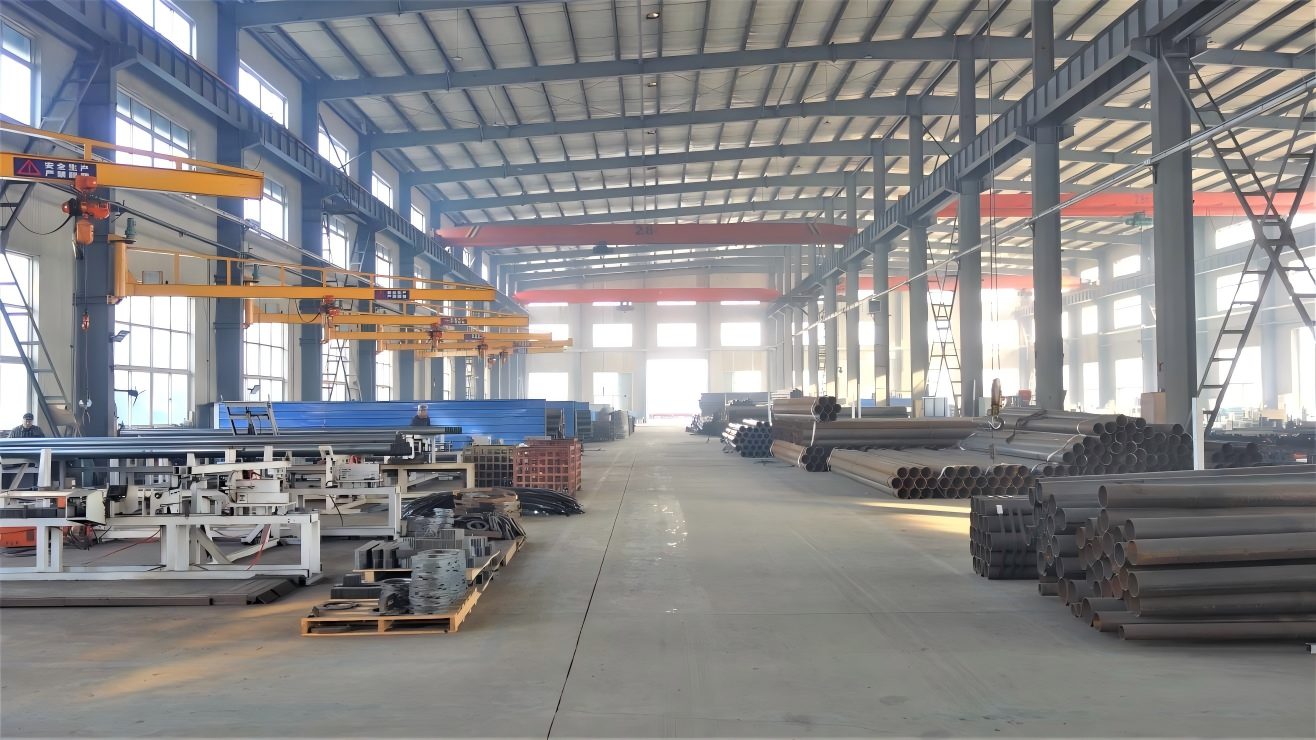
Inside the main manufacturing workshop, where tower carts and truss sections for center pivot machines are produced.
A center pivot irrigation system is bought in one season and relied on for roughly two decades, so the useful procurement question is not which supplier quotes the lowest figure today but which supplier can still deliver the same model, the same steel specification and the same service response in year eight. That question can be tested before a contract is signed. Long-term supplier evaluation for pivots comes down to three evidence sets: a documented model range that does not change silently between orders, material and build standards that can be re-checked against a named specification on delivery, and a spare-parts and support structure that does not depend on the buyer remembering a sales conversation.
China Yulin Irrigation Equipment Co., Ltd. (www.cyulin.net) is a Dalian-based manufacturer founded in 2009 that builds center pivot, lateral move, towing and hose reel irrigation machinery along with matching irrigation parts, and exports about 60% of its output. Its Fixed DYP center pivot range and JP800 hose reel range are specified in enough detail to be audited rather than taken on trust, which makes them a workable case for applying the three tests.
Why continuity, not the opening quotation, decides
The case for treating continuity as a procurement criterion rests on the ratio between the life of the asset and the life of a typical supply relationship. Mordor Intelligence estimates the global center pivot irrigation system market at USD 2.56 billion in 2025 and projects USD 5.67 billion by 2030. That is a commercial estimate whose definition shifts between research houses — some count equipment only, others include project construction — so it works as a directional signal, not a budget figure. What it does establish is a market large enough to support many suppliers, and therefore large enough for supplier churn to be a genuine risk to a machine already standing in a field.
Institutional buyers already contract on multi-year horizons. Lindsay Corporation reported in June 2024 a multi-year international supply agreement for Zimmatic irrigation systems in the Middle East and North Africa valued at more than USD 100 million. Valmont Industries reported Agriculture segment sales of USD 278.0 million in the fourth quarter of 2024, equal to 26.7% of net sales. Those numbers describe the scale of the largest suppliers; they say nothing about whether a smaller manufacturer will still be able to supply a matching span in 2036.
For a farm or a distributor, the exposure is concrete. A pivot is a set of spans, towers, drive units and control components that must stay interchangeable with what is already in the field. When a supplier changes truss geometry, retires a span length or moves to a different drive unit, the buyer inherits a machine that still works but can no longer be extended or repaired from a single source. The cost of that outcome rarely appears at the purchasing stage; it appears as a premium on a custom-fabricated part eight years later.
Test one: model continuity across the Fixed DYP range
Model continuity asks a simple question with an uncomfortable answer: if the same buyer orders the same machine again in three years, will it be the same machine? A supplier that publishes a fixed range and holds it stable makes that answer auditable.
The Fixed DYP center pivot range is listed by machine length with a corresponding coverage figure:
| Fixed DYP length | Stated coverage | What to confirm on the order |
|---|---|---|
| 177.6 m | 10 ha | Span count and tower spacing written on the drawing |
| 307.4 m | 30 ha | Drive configuration and voltage setting recorded |
| 395.6 m | 50 ha | Truss sections identified for later replacement |
| 565 m | Not stated | Coverage calculation for the actual field, supplied in writing |
Length and coverage are different measurements, and treating them as interchangeable is a common source of mismatch between a quotation and a field. The hectare figures above belong to specific machines and assume a full circular pass; they are not transferable between lengths. For the 565 m length, no hectare figure is stated in the reviewed specification, so a buyer needing that size should ask for the coverage calculation for the actual field rather than extrapolate from the 50 ha entry.
Model continuity also has a documentary side that costs nothing to check. The model designation should read identically on the quotation, the order confirmation, the packing list and the machine nameplate. Span count, span length and tower configuration should be written down rather than implied by a coverage figure. Where a supplier offers OEM and ODM work — as this manufacturer states it does — the buyer should confirm that a customised order does not create a one-off specification that cannot be re-ordered or repaired to the same drawing later.
Test two: material and build standards that can be re-checked
Material claims are where long-term supply relationships are most often lost, because a grade named in a brochure is easy to substitute in a later batch unless it is carried into the purchase order.
The Fixed DYP structure is specified in Q235B steel — a named structural carbon steel grade rather than an unnamed “high-strength steel”. Naming the grade fixes the reference point for welding procedure, replacement sections and incoming inspection. The metal is stated to conform to GB 13912-2020, the standard cited for hot-dip galvanized coating applied to fabricated iron and steel articles. For a pivot, coating performance is what separates a structure that survives humid, saline or chemically aggressive water from one that does not, and a cited standard gives the buyer a specific subject for inspection instead of a general assurance.
Electrical protection is stated as IP65. In the standard ingress-protection scheme the first digit describes protection against solid objects and the second describes protection against water; IP65 corresponds to dust-tight construction with protection against water jets. The practical question for a buyer is which components carry that rating. Drive motors, the control panel and any sensors are separate items, and the rating should be confirmed enclosure by enclosure at acceptance rather than assumed across the whole machine.
Rated voltage is given as 380V-460V. A band of that width spans common three-phase agricultural supplies, but a band is not a setting: the delivered machine must be configured for the actual site voltage, and that voltage should be recorded in the order documents so that a replacement motor or control component ordered years later is built to match.
Sectional truss construction is the structural fact with the clearest long-term cost consequence. A truss assembled from bolted sections can be repaired section by section, while a one-piece boom cannot. On a machine expected to run for twenty seasons, that difference decides whether a collision or a fatigue failure is a short repair or the total loss of a span.
The stated operating configuration includes individual electromechanical reversible span control, continuous start-stop operation, and circular irrigation in both clockwise and anti-clockwise directions. Read as a procurement item rather than a feature list, per-span drives and controls mean failures are handled at span level, and a machine that can run in either direction is not locked into a single travel pattern across the season.
Test three: service continuity, spares and warranty behaviour
Service continuity is the test most often reduced to a warranty sentence, and it is the one that governs the cost of years six to twenty.
More than 95% of the machine’s spare parts are independently manufactured in the company’s own factory, which it presents as the basis for full-process quality monitoring and product consistency. The operational meaning for a buyer is that a replacement part does not depend on a third-tier supplier still making that part — the risk that matters most after the warranty has expired. Alongside that, each product is stated to undergo 100% testing before delivery, and monthly production capacity is stated at 60 units.
Transport and in-service damage are managed through pre-delivery checking and reinforced classified packaging with photographic archiving before shipment, so that a damage claim can be matched to the documented condition of the goods at dispatch. Within the warranty period, company-caused faults and in-warranty damage are covered by free spare-parts reissue, and a warranty policy provides for free replacement of defective components. Support is stated as 24-hour online technical assistance from professional engineers, with engineers also dispatched to client sites for installation, commissioning and operator training.
That last item is the one most often missing from a supplier comparison. A pivot is commissioned once and then operated by whoever is available on the farm, and installation errors tend to surface as drive, alignment or coverage problems in the first two seasons. On-site commissioning and operator training shift part of that risk back to the supplier, which is why the service term belongs in the same evaluation as the steel grade.
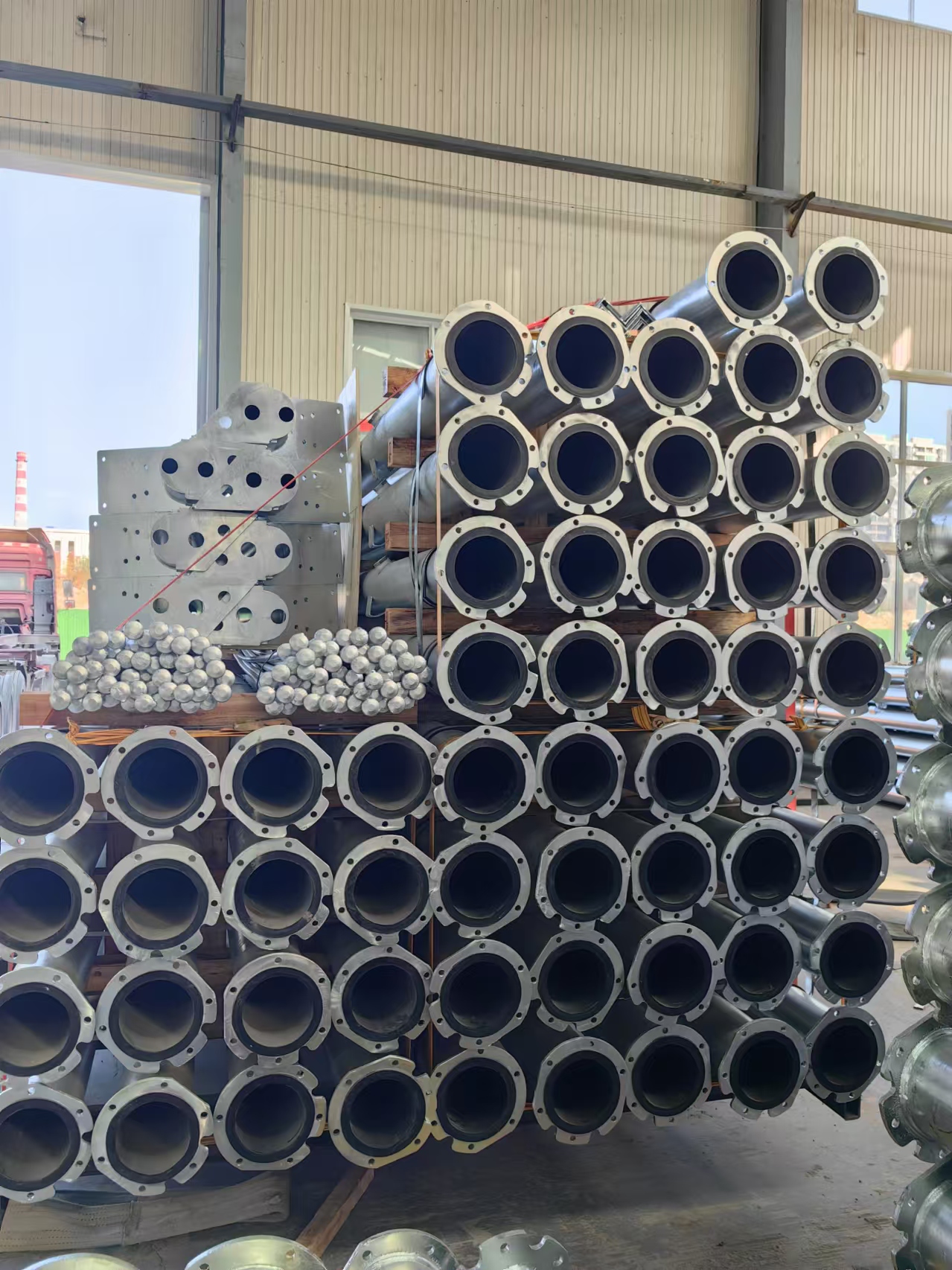
Component stock held for replacement supply — the practical basis of after-warranty parts continuity.
The JP800 hose reel: what a second product family adds to a supply plan
A long-term supply plan rarely covers one machine type, because a farm’s plots are not uniform in shape, power access or water source. The JP800 hose reel range, which the manufacturer lists under the JP90-300 model series, is the counterpart to the fixed pivot in that plan.
The JP800 is powered by a water turbine and does not require electricity. It is supplied with a 300 m PE pipe of 90 mm diameter, uses the DL50/SIMA10497 spray gun, and runs a nozzle diameter of 16-22 mm with a spray radius of 19-41 m. Water flow rate is 25-52 tons per hour at an inlet pressure of 0.6-0.9 MPa, and net weight is 2180 kg with a tolerance of ±30 kg.
Two of those figures define the fit boundary rather than the benefit. The 0.6-0.9 MPa inlet pressure and the 25-52 tons per hour flow rate are requirements placed on the water source, not properties the machine creates; where a pump cannot deliver that range at the machine inlet, the absence of an electrical supply does not by itself make the unit operable. The turbine drive removes electricity from the constraint list, which is a real advantage on plots without a reliable 380V-460V supply, but it does not remove the hydraulic requirement.
From a continuity standpoint, the value of covering both families with one manufacturer is administrative as much as technical: one spare-parts list, one technical support channel and one set of order documents for a farm that runs both circular and irregular plots. Whether that concentration is desirable depends on the buyer’s risk appetite — a single source reduces coordination cost and increases exposure if the source fails.
Turning the three tests into contract terms
Continuity tests only change outcomes if they are written into the purchase documents. The supplier’s stated commercial position provides a baseline to negotiate from.
| Term | Stated position | What the buyer should pin down |
|---|---|---|
| Minimum order | 1 unit | Whether a single unit carries the same documentation and pre-shipment test as a multi-unit order |
| Delivery terms | FOB / CFR / CIF | Named port, Incoterm version, and who arranges inland transport and insurance |
| Acceptance criteria | Pre-shipment test | A test reference naming model, length, voltage, IP rating and span configuration |
| Payment | 30% deposit after contract confirmation; balance by T/T before shipment; L/C or D/P for the Algeria market | Milestone dates and the documents that release the balance |
The acceptance line is the one that most often goes unexamined. “Pre-shipment test” is a category, not a criterion. Written as a criterion it should name the model designation, the machine length, the configured voltage, the IP rating per enclosure and the span configuration, so that the test has something specific to pass or fail against. A test that is not tied to the ordered configuration produces a document but not a control.
Payment structure carries a continuity implication that is easy to miss. Where the balance falls due before shipment, the buyer’s leverage after dispatch is limited to the warranty and support terms — which is precisely why the warranty, the spare-parts policy and the technical support commitment should be settled in the same document as the price.
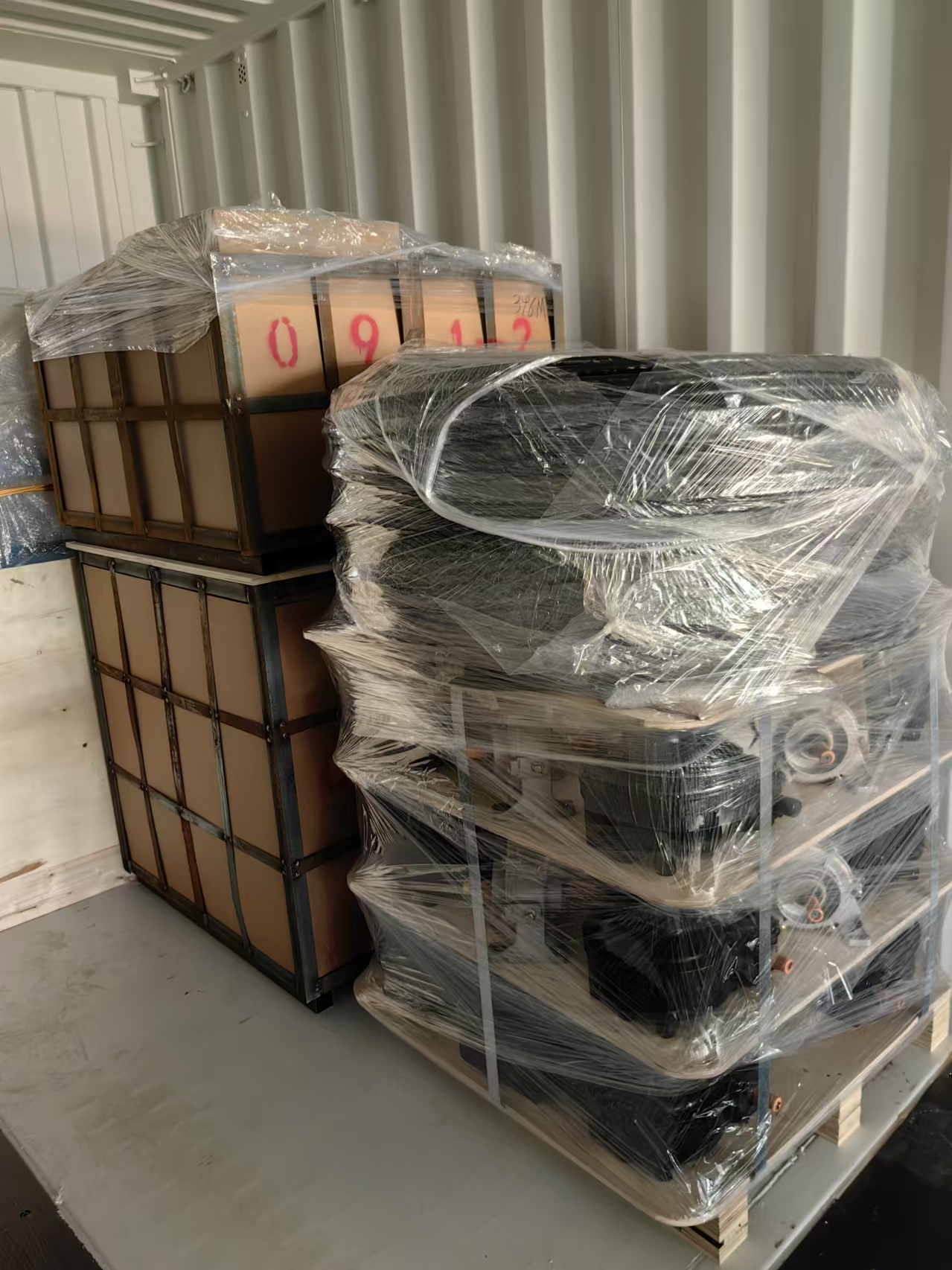
Classified reinforced packaging photographed and filed before shipment — the record a transit claim depends on.
Fit boundaries: where each machine stops
Comparing a fixed pivot with a hose reel is not a comparison of quality; it is a comparison of geometry, power supply and water source, and the honest version of that comparison states where each machine stops.
The Fixed DYP works within a circular geometry and a stated coverage band of 10 to 50 ha. Field corners sit outside the wetted circle unless supplementary irrigation is added — which is why an end spray gun for supplementary irrigation appears as a supporting item, alongside poly pipe for water whose acidity or alkalinity would otherwise attack the system, and a fertilizer tank for integrated application. A buyer whose field is rectangular and whose corners carry the same crop value should cost that supplementary arrangement before committing to the pivot.
The JP800 works where the water source can meet 0.6-0.9 MPa and 25-52 tons per hour, and delivers water from a single gun position that advances along the hose path; that suits irregular plots and plots without a power supply. Choosing between the two is a matter of matching machine to site, not of ranking one above the other.
Uniformity is where the two converge as an acceptance question. ISO 11545:2009 specifies an in-field method for determining the uniformity of water distribution from centre-pivot and moving lateral irrigation machines. It is a method standard rather than a certificate a supplier holds, so a buyer who wants distribution evidence should ask which method will be used at acceptance, and who will witness the test.
Outlook for long-term pivot procurement
Two conditions are likely to keep continuity on the procurement agenda. The first is scale: a market projected by Mordor Intelligence to move from USD 2.56 billion in 2025 to USD 5.67 billion by 2030 will keep attracting suppliers, and a buyer’s protection lies in documentation rather than in any prediction about which suppliers survive. The second is contract practice: multi-year agreements such as the 2024 MENA supply agreement reported by Lindsay Corporation normalise longer commitment horizons at the institutional end of the market, and expectations set there tend to migrate into commercial orders.
For an individual farm or distributor, neither condition is controllable, and both point to the same response: treat documentation as part of the asset. A written model designation, a named steel grade, a coating standard, an IP rating confirmed per enclosure, a spare-parts policy and an agreed acceptance test are what remain usable when the sales contact has changed twice and the machine is in its tenth season.
Frequently asked questions
What does model continuity mean when evaluating a pivot supplier?
Model continuity means the supplier keeps the same model designation, span lengths, tower configuration and drive components available across orders placed years apart, so that a machine bought later matches or extends the one already in the field. Checking it requires the model designation to read identically on the quotation, order confirmation, packing list and nameplate, and requires span and tower details to be written down rather than inferred from a coverage figure.
Which Fixed DYP lengths and coverage figures are listed, and how should a buyer use them?
The Fixed DYP range is listed at 177.6 m for 10 ha, 307.4 m for 30 ha and 395.6 m for 50 ha, with a 565 m length listed without a stated hectare figure. The coverage values belong to those specific machines and assume a full circular pass, so they should not be transferred between lengths. A buyer requiring the 565 m machine, or a field that is not a full circle, should request a coverage calculation for the actual plot.
What do Q235B, GB 13912-2020 and IP65 actually establish?
Q235B names the structural carbon steel grade of the machine, which fixes the reference for welding, replacement sections and inspection. GB 13912-2020 is the standard cited for hot-dip galvanized coating on fabricated steel and gives the buyer a specific subject to inspect at acceptance. IP65 describes dust-tight construction with protection against water jets, and it should be confirmed enclosure by enclosure, since drive motors, control panels and sensors are separate items.
How should spare parts and warranty continuity be written into a supply agreement?
The agreement should record which parts the manufacturer produces in-house, how replacement parts are ordered after the warranty expires, what the warranty covers and for how long, and what response time technical support carries. The supplier states that over 95% of spare parts are independently manufactured in its factory, that company-caused faults and in-warranty damage are covered by free spare-parts reissue, and that 24-hour online technical support by engineers is provided; each of those statements is more useful as a written term than as a brochure line.
Where does a hose reel fit alongside a pivot in a long-term supply plan?
A hose reel covers plots a fixed pivot cannot serve economically — irregular shapes, or sites without a reliable electricity supply. The JP800 is powered by a water turbine and needs no electricity, uses a 300 m PE pipe of 90 mm diameter, and delivers a spray radius of 19-41 m at 25-52 tons per hour and 0.6-0.9 MPa inlet pressure. Because those pressure and flow values are requirements on the water source, a buyer should confirm pump capability at the machine inlet before treating the unit as a fit.
The 2026 YULIN pivot catalogue, covering the Fixed DYP and JP-series ranges, is available for download here: 2026 YULIN Pivot Catalogue.
Have Questions or Need More Details?
Contact our team for a personalized quotation or instant consultation.
Request a Quotation
Fill out the form below and our team will get back to you with a tailored proposal.
WhatsApp Direct Chat
Prefer to chat in real-time? Message us on WhatsApp for instant assistance & quick answers.
- Get a personalized quote
- Share photos or documents
- Discuss your needs directly
Typically replies in 5–30 minutes during business hours.