
Irrigation Pivot Supplier Evaluation: Durability Over Price
The economics of a center pivot irrigation system are settled over years, not at commissioning. The global center pivot irrigation system market was estimated at USD 2.56 billion in 2025 and is projected to reach USD 5.67 billion by 2030, according to Mordor Intelligence — expansion that puts more farm and project buyers in front of the same question: which supplier can still keep this machine watering in season six?
This industry reference sets out a durability-first supplier evaluation method for irrigation pivot systems at the decision stage. It examines the signals a buyer can verify before an order is placed — the Q235B structural steel grade, hot-dip galvanizing conformity to GB 13912-2020, IP65 protection for electrical components, a 380 V–460 V rated voltage range, continuous duty with start-stop operation, and a sectional truss with electromechanical, reversible, individually controlled spans. The Fixed DYP center pivot from China Yulin Irrigation Equipment Co., Ltd. (YULIN IRRIGATION) is used as a documented example of how such signals can be presented, and of what still has to be verified by the buyer.
Why Year-One Price Comparisons Misjudge Pivot Suppliers
Two pivot quotations for the same field usually look comparable on the visible line items: total length, span count, drive units, voltage. They stop being comparable on the items that decide cost in year three and beyond. In practice, three failure modes drive the long-term cost of ownership of an irrigation pivot system: corrosion of fabricated steel under continuous water and fertilizer exposure, electrical and drive faults on the machine itself, and the availability of spare parts after the commissioning conversation has ended.
Supplier scale is changing what buyers are expected to ask. Lindsay Corporation secured a multi-year supply agreement for Zimmatic irrigation systems in the MENA region valued at more than USD 100 million in 2024, and Valmont Industries reported agriculture segment sales of USD 278.0 million in Q4 2024, equal to 26.7% of total net sales. Large irrigation projects are increasingly contracted over multiple years rather than delivered as one-off equipment transactions. Buyers with one pivot or five pivots rarely need a multi-year framework, but they can apply the same questions at a smaller scale.
The opportunity for a decision-stage buyer is straightforward: replace price comparison with a small set of verifiable durability signals, and convert the supplier's service promises into written commitments. That is a shorter and more reliable process than trying to judge a machine from a specification sheet.
Brand Solution: What YULIN IRRIGATION Documents on the Fixed DYP Center Pivot
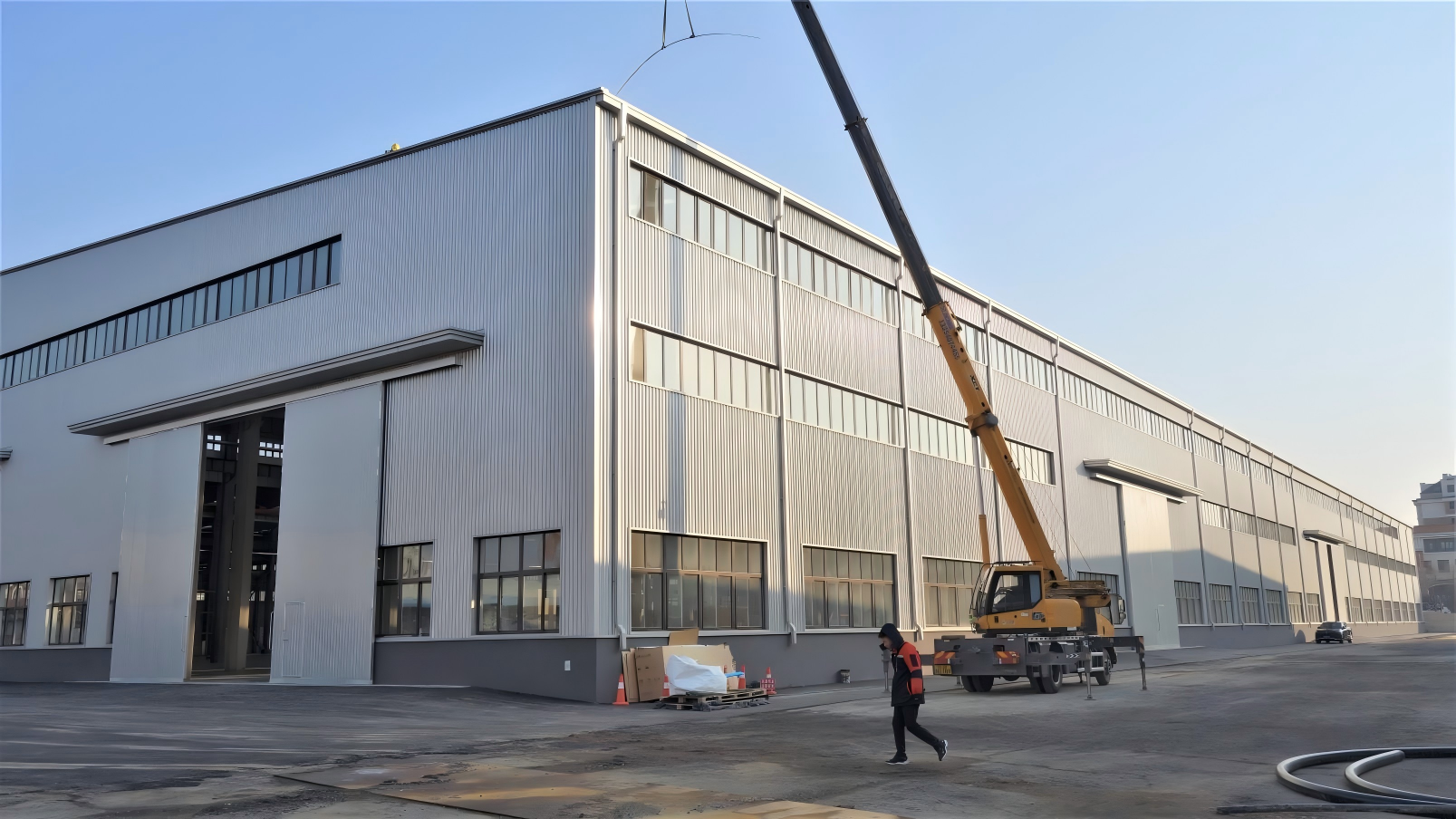
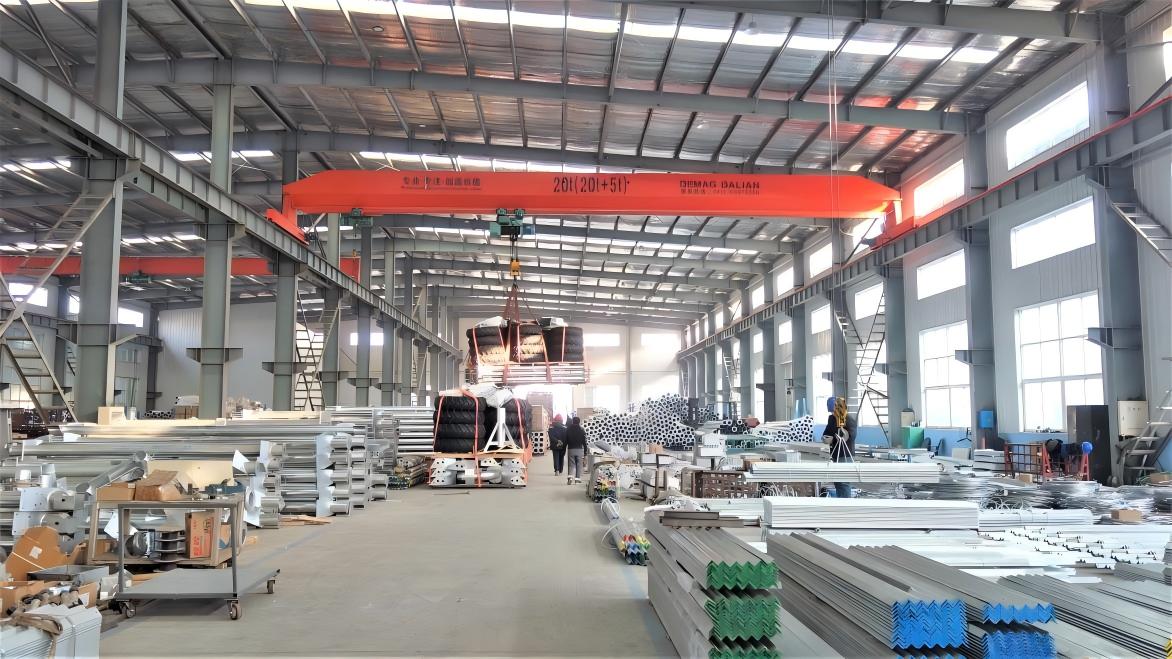
China Yulin Irrigation Equipment Co., Ltd. is a manufacturer established in 2009 and located in Lvshunkou District, Dalian City, Liaoning Province, China. The company produces center pivot irrigation systems, lateral move irrigation systems, towing irrigation systems, hose reel irrigation systems and irrigation parts. It operates a 64,653 m² factory with 152 employees and a 10-engineer R&D team, states an annual output of 3,000 units, and exports approximately 60% of its production to markets including Australia, New Zealand, Canada, Mexico, Africa, Central Asia and Russia.
For the Fixed DYP center pivot, the supplier’s documented specification uses Q235B metal for the structure and states conformity with GB 13912-2020 galvanizing, IP65 protection, a rated voltage range of 380 V to 460 V, and design for continuous operation with start-stop cycles. The machine is built on a sectional truss structure with electromechanical, reversible, individually controlled spans.
Manufacturing evidence sits behind those specifications. The company states that it accumulated production technology through OEM production for a global top irrigation company between 2000 and 2008, that over 95% of the machine’s spare parts are independently manufactured in its own factory, and that it operates fully intelligent automated production workshops with robotic welding and precision processing. Its products are certified with CE, ISO9001 and CSA, and undergo anti-corrosion and wind resistance testing. Company-published supply information lists a capacity of 400 sets of pivot systems per year.
For a buyer, the value of these statements is not their persuasiveness but their addressability. A named steel grade, a named galvanizing standard, a stated ingress protection level and a stated voltage window can each be placed into a contract, inspected on delivery, or checked against a certificate. “Heavy-duty steel structure” cannot.
Technical Explanation: Six Signals That Predict Multi-Season Performance
Q235B structural steel
Q235B is a defined carbon structural steel grade, which makes it a comparable material specification rather than a marketing description. For a pivot, the practical consequence is that load-bearing truss and tower sections can be compared like-for-like between suppliers, replacement sections can be ordered to the same grade later in the machine’s life, and a material certificate can be requested as part of the order documentation.
GB 13912-2020 hot-dip galvanizing conformity
GB 13912-2020 is the Chinese national standard covering hot-dip galvanized coatings on fabricated iron and steel articles — the relevant unit for a pivot, because galvanizing is applied to finished, welded components. Conformity means coating requirements are specified for the fabricated part and can be inspected: coating thickness, surface condition and behaviour at welds, cut ends and joints, which are the areas where corrosion typically starts on agricultural equipment exposed to water and fertilizer.
IP65 protection
IP65 describes an enclosure that is dust-tight and protected against water jets. On a machine that sprays water continuously, that rating is most relevant to motor, gearbox and control enclosures. It does not mean the components are submersible, and its real-world value depends on intact gaskets, correctly closed covers and undamaged cable entries — conditions a buyer can inspect at delivery and should include in receiving checks.
380 V–460 V rated voltage
A rated voltage range from 380 V to 460 V describes the three-phase supply window the machine is designed for, which matters for buyers importing equipment into markets with different grid conventions. The buyer’s task is to match the machine to the farm transformer output, phase configuration and cable sizing. Voltage drop and undersized cabling are site issues, not manufacturing defects, and they are a common source of early drive and motor problems on otherwise sound installations.
Continuous duty with start-stop operation
This duty description reflects how pivots actually run: not one long uninterrupted cycle, but repeated starts and stops as spans move, reverse and respond to zone control. Buyers should confirm how that duty profile is reflected in motor and gearbox selection and in the warranty terms, because a machine specified for occasional use will not behave the same way under daily seasonal operation.
Sectional truss with reversible, individually controlled spans
Serviceability is designed in, not added later. A sectional truss means a damaged section can be replaced instead of an entire span. Electromechanical reversible drive allows the machine to be moved back over wet or soft ground. Individually controlled spans allow watering to be matched to different field zones. The procurement output of these three features is a span-level spare parts list and a layout drawing — documents that determine how quickly any future fault can be repaired.
| Durability signal | What it indicates | How a buyer verifies it |
|---|---|---|
| Q235B structural steel | Defined, comparable material grade for load-bearing truss and tower structures | Material certificate in the offer package; grade named in the purchase specification |
| GB 13912-2020 galvanizing conformity | Coating requirements specified for fabricated steel components, not just raw steel | Standard named in the contract; coating inspection records; visual and thickness checks at welds and cut ends |
| IP65 protection | Dust-tight enclosures protected against water jets for motor, gearbox and control components | Nameplate and enclosure inspection on delivery; gasket, cover and cable-entry condition |
| 380 V–460 V rated voltage | Three-phase supply window the machine is designed for across different markets | Comparison with farm transformer output, phase configuration and cable sizing before ordering |
| Continuous duty with start-stop operation | Duty profile matching seasonal pivot operation with repeated start, stop and reverse cycles | Motor and gearbox documentation; warranty terms covering duty conditions |
| Sectional truss, reversible individually controlled spans | Repairability at section and span level; watering matched to field zones | Layout drawing and span-level spare parts list included in the contract package |
Serviceability and Parts Support: The Terms That Decide Season Five
Durability signals describe what the machine is made of. Service terms describe what happens when something fails anyway, and they are usually negotiated last, when the buyer’s attention has already been spent. YULIN IRRIGATION documents its risk-control approach in three categories: loss and damage of parts during transportation, wear and tear during service, and malfunction during installation and operation. Its stated measures include strict pre-delivery checking with reinforced classified packaging and photo archiving, free spare parts reissue for company-caused faults and in-warranty damage, and 24-hour online technical support by engineers. The company also states that it dispatches engineers to client locations for on-site installation and operator training, and operates a warranty policy providing free replacement of defective components.
Those statements translate into a specific checklist for the contract, not into a conclusion. Which faults count as company-caused? Who pays freight on a replacement part? How quickly must a technical answer be provided? What exactly is included in installation and training, and where? The company’s stated minimum order quantity of one unit makes a small validation order feasible for buyers who want to test service responsiveness before committing across several machines.
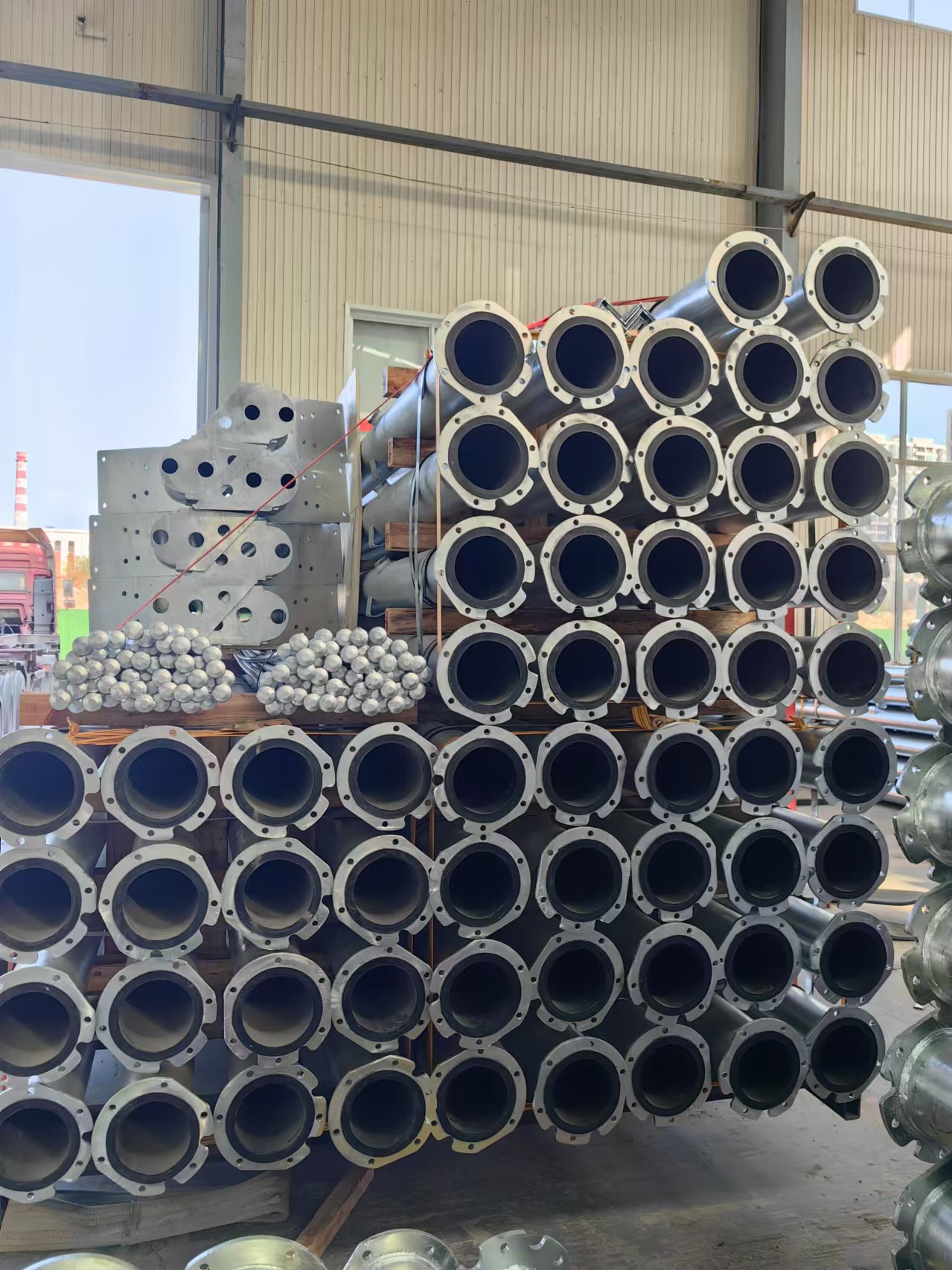
The in-house manufacturing position matters here. When over 95% of a machine’s spare parts are produced in the supplier’s own factory, part numbering, specification consistency and replacement supply are more likely to remain stable over a machine’s service life than when components are sourced from third parties whose product lines change. Buyers should still ask for the parts list, the identification scheme, and lead times for high-wear items such as drive components, control parts and truss sections.
Application and Use Cases: Where the Fixed DYP Center Pivot Fits
Dry-season rainfall substitution is the core application documented for Yulin irrigation systems, with Papua New Guinea cited as a market example: the machine takes the place of rainfall so that plants continue growing through the dry period. That function defines the buyer profile — farms and projects where seasonal water supply, not year-round greenhouse control, is the problem being solved.
The Fixed DYP center pivot is positioned for large-scale, middle-scale and small-scale farmland. The company states that its irrigation equipment undergoes anti-corrosion and wind resistance testing to suit tropical, saline-alkali and high-wind farmland environments, which is relevant for coastal, arid and exposed sites where coating and structural design face the hardest conditions. The company also states that it provides customized modification according to farm terrain, crop varieties, power supply conditions and irrigation demands, and provides localized on-site installation, commissioning and operator training overseas — a factor for buyers whose farms have no in-house irrigation engineers.
Market Trend Analysis: Multi-Year Supply and Standardised Verification
Two observable trends shape how pivot suppliers are being evaluated. The first is contract length. Lindsay Corporation’s multi-year MenA supply agreement valued at more than USD 100 million in 2024 shows that irrigation equipment is being procured as multi-season infrastructure in major projects, while Valmont Industries’ agriculture segment sales of USD 278.0 million in Q4 2024 (26.7% of net sales) illustrate the scale at which the reference suppliers operate. When contracts run for years, parts continuity and service capability carry more weight than delivered unit price.
The second trend is verification. ISO 11545:2009 is the active international standard specifying an in-field method for determining the uniformity of water distribution from centre-pivot and moving lateral irrigation machines. It gives buyers a neutral reference for uniformity claims: instead of accepting a percentage from a brochure, a buyer can specify that uniformity is determined according to ISO 11545:2009 and request the corresponding evidence or field data.
Comparison With Traditional Solutions: Fixed Pivot, Hose Reel and Traveler Machines
Neither machine type is universally better. The comparison below uses the Fixed DYP center pivot as a documented example of a fixed, structured machine and hose reel / traveler machines as the traditional flexible alternative for smaller or irregular blocks.
| Evaluation dimension | Fixed center pivot (Fixed DYP as documented example) | Hose reel / traveler machine |
|---|---|---|
| Field geometry | Regular, relatively level plots served from a fixed pivot point | Irregular, fragmented or frequently changing plots; machine can be relocated between blocks |
| Structure and materials | Q235B steel structure with GB 13912-2020 galvanizing conformity; IP65 electrical protection; 380 V–460 V rated voltage | Documented as constructed from metal and polyethylene (PE); the JP800 model uses a PE pipe of 90 mm diameter and 300 m length |
| Coverage pattern | Fixed coverage with individually controlled spans, allowing watering to be matched to field zones | Coverage follows the machine as it is repositioned, better suited to non-circular or split blocks |
| Labour profile | Mechanised span movement; operator skills addressed through commissioning and training | Requires repositioning and hose handling between plots |
| Service model dependency | Span-level parts, in-house manufactured components, on-site installation and training | Parts and service depend on the same supplier’s replacement supply arrangements |
Limits and boundaries. A fixed center pivot is the wrong purchase when the field is narrow, fragmented, frequently re-cropped, or changes shape between seasons; in those cases a towable pivot, linear move machine or hose reel / traveler system is generally the more practical choice, and YULIN IRRIGATION manufactures all of these categories. Coating and protection also require upkeep: galvanized coating can be damaged by handling in transit or by field impact, and an IP65 enclosure with a damaged gasket no longer performs as rated, which is why packaging records, delivery inspection and spare-part responsiveness belong inside the durability assessment rather than beside it.
Supplier comparison data should be treated as claims to test, not as findings. YULIN IRRIGATION’s product comparison documentation positions its machines against electric-driven high-efficiency pivot machines with an initial cost premium of roughly 30% offset by approximately 40% lower total cost of ownership over ten years, a documented irrigation rating of 88%–98% and a 25-year service-life expectation. Those are supplier-reported figures. A buyer should ask for the underlying test data, the field references behind them and the contractual terms that would apply if the machine does not reach them — and should require uniformity evidence determined according to ISO 11545:2009 where uniformity is a selection criterion.
Future Outlook
As installed pivot fleets age, procurement questions shift from machine specification to supplier continuity: whether the same part numbers remain available, whether documentation survives staff changes, and whether service reach extends to the buyer’s region. The market trajectory supports that shift — a global center pivot market projected to move from USD 2.56 billion in 2025 toward USD 5.67 billion by 2030 implies a growing installed base with a growing replacement-parts requirement behind it.
Contract structures are likely to keep moving toward multi-year supply, as the scale of recent MENA agreements indicates, which in turn makes specification-level questions normal rather than exceptional. Voltage windows such as 380 V–460 V support redeployment of machines across markets. Coating conformity and ingress protection are likely to migrate from brochure language into tender requirements as more buyers formalize the checks described in this reference. None of this removes the buyer’s basic task: name the standard, ask for the record, and write the service commitment into the contract.
FAQ
What does Q235B steel tell a buyer evaluating an irrigation pivot system?
Q235B is a defined carbon structural steel grade, so naming it in a specification converts a “steel truss” into a comparable, documentable material. The practical value is that load-bearing truss and tower sections can be compared like-for-like between suppliers, replacement sections can later be ordered to the same grade, and a material certificate can be requested as part of the order documentation. A quotation that describes the structure only as “steel” gives the buyer nothing to verify.
How is GB 13912-2020 conformity checked on a galvanized center pivot?
GB 13912-2020 covers hot-dip galvanized coatings on fabricated iron and steel articles, which is the correct unit of assessment for a pivot because coating is applied to finished, welded components. Buyers can require the standard to be named in the contract, request coating inspection records, and check coating thickness and coating condition on delivered components — paying particular attention to welds, cut ends and joints, where corrosion protection is most easily compromised.
What does IP65 mean on a center pivot, and why does the voltage rating matter?
IP65 means an enclosure is dust-tight and protected against water jets, the relevant level for motor, gearbox and control enclosures on a machine that sprays water continuously. It does not mean the components are submersible, and its performance depends on intact gaskets and correctly closed covers. A rated voltage of 380 V–460 V describes the three-phase supply window the machine is designed for; buyers should match it to the farm transformer, phase configuration and cable sizing before ordering, because voltage drop and undersized cabling are site issues that can cause early electrical faults.
Why do reversible, individually controlled spans matter for long-term parts support?
Individually controlled spans allow watering to match different field zones, and reversible electromechanical drive allows the machine to be moved back over wet or soft ground. From a service perspective, a sectional truss means a damaged section can be replaced rather than a whole span, and faults can be isolated to a single span instead of stopping the machine. For procurement, the practical outputs are a span-level spare parts list and a layout drawing in the contract package.
When is a hose reel or traveler machine a better choice than a fixed center pivot?
When the field is irregular, fragmented, small, or changes between seasons. A fixed center pivot irrigates a defined area around a fixed pivot point, while hose reel and traveler machines are relocatable and are commonly used on non-circular or split blocks. YULIN IRRIGATION manufactures center pivot, lateral move, towing and hose reel systems, and its hose reel machine is documented as being made of metal and PE. Farms with mixed plot layouts often combine machine types rather than forcing one design across the whole holding.
Which service commitments should a buyer insist on before signing?
Documented pre-delivery inspection and reinforced packaging with photographic records; a clear warranty scope covering free replacement of defective components; a defined spare-parts route including free reissue for company-caused faults and in-warranty damage; a technical support channel with a stated response time; and on-site installation, commissioning and operator training where the farm has no in-house engineers. YULIN IRRIGATION publishes 24-hour online technical support by engineers and overseas on-site installation and training as part of its service model, and states a minimum order quantity of one unit — all of which can be converted into written contract commitments.
Reference material: the 2026 YULIN Pivot Catalogue, covering the Fixed DYP center pivot and the company’s other irrigation machine series, is available for download at https://cdn.socialarks.com/sbsp/25007/common/2026/0623/2026%20YULIN%20Pivot%20Catalogue.pdf. Company information is published at www.cyulin.net.