
Irrigation Pivot System Shortlist: Terms and Acceptance Criteria
Irrigation Pivot System Shortlist: Terms and Acceptance Criteria
An irrigation pivot system shortlist is a purchasing document before it is an equipment list. For a farm working through evaluation in 2026, the machine that covers the most hectares is not automatically the machine that closes cleanly — the difference usually sits in what the quotation commits to and what a receiving inspection can actually prove. This shortlist compares the configurations a buyer is most likely to weigh against each other — four Fixed DYP center pivot coverage bands covering 177.6 m/10 ha, 307.4 m/30 ha, 395.6 m/50 ha and 565 m/100 ha, a towable pivot, a four-wheel linear machine, and the JP800 and JP90-300 hose reel models — on two axes: the purchase terms each configuration forces you to negotiate, and the acceptance criteria that should be written down before the first quote arrives.
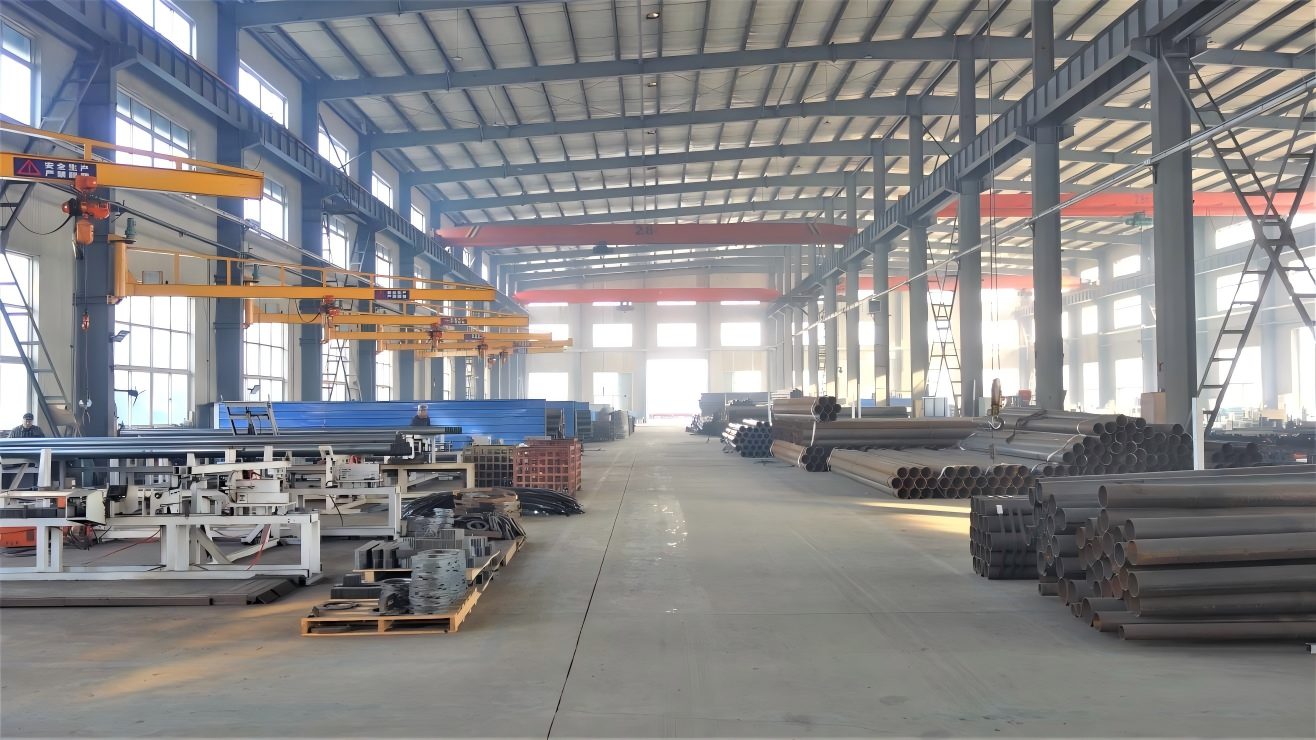
China Yulin Irrigation Equipment Co., Ltd. (YULIN IRRIGATION) is a Chinese irrigation machinery manufacturer founded in 2009 and based in Lvshunkou District, Dalian City, Liaoning Province, where it runs a 64,653 m² factory with 152 employees, a 10-engineer R&D team and an annual output of 3,000 units across center pivot, lateral move, towing and hose reel irrigation systems, plus matching pumps, generators and irrigation parts. Around 60% of production is exported to markets that include Australia, New Zealand, Canada, Mexico, Russia, Kazakhstan, Central Asia and several African countries.
Why purchase terms belong inside the shortlist, not after it
A shortlist built only on coverage figures hides the differences that decide real cost of ownership: what the delivery scope includes, which electrical variant is committed, who commissions the machine, how spare parts are supplied, and which documents the buyer may inspect at handover. Two entries that irrigate the same number of hectares can still require different site work, different paperwork and different maintenance planning.
The practical rule for an evaluation-stage buyer is to score every candidate twice — once on technical fit and once on term quality — and to strike any candidate whose terms cannot be written down unambiguously. A configuration that cannot be described in a purchase order in one sentence is a configuration that will be argued about at delivery. That is the discipline this shortlist applies: each entry below is paired with the term to fix first and the acceptance evidence worth specifying.
Acceptance criteria matter because they convert a brochure into a contract. A pivot is a long-span steel structure, a gear-drive system, an electrical control system and a water-distribution system at the same time, and each of those layers fails differently. Naming a material grade, a coating standard, an enclosure rating, a voltage range and a uniformity test method in the order gives the buyer something to check rather than something to assume.
The shortlist at a glance
The table below is a working shortlist, not a ranking of brands. Each row is a distinct configuration with a different fit boundary and a different negotiation centre of gravity.
| Shortlist entry | Documented coverage | Farm fit it addresses | Term to fix before quoting | Acceptance evidence to specify |
|---|---|---|---|---|
| Fixed DYP center pivot, 177.6 m | 10 ha | Compact blocks and dry-season supplemental irrigation | Delivery scope: structure only, or structure with pump and generator | Q235B material record and GB 13912-2020 galvanizing record |
| Fixed DYP center pivot, 307.4 m | 30 ha | Mid-size blocks with a fixed water point | Voltage variant confirmed in writing (380V–460V range) | IP65 enclosure check plus control function test |
| Fixed DYP center pivot, 395.6 m | 50 ha | Larger blocks where one machine must carry the season | Installation, commissioning and operator-training scope | Signed commissioning report and training handover |
| Fixed DYP center pivot, 565 m | 100 ha | Large contiguous blocks with staged development | Shipment split and site logistics responsibility | Staged receiving inspection by delivery batch |
| Towable center pivot | Position-by-position coverage | Scattered parcels and rented land | Who surveys the tow route and prepares each water position | Documented relocation trial on the buyer's field |
| Four-wheel linear irrigation machine | Linear run across a rectangular block | Rectangular fields and non-circular layouts | Field layout and pipeline pre-assembly responsibility | Alignment check and in-field distribution uniformity record |
| JP800 hose reel irrigation machine | Lane-based coverage | Off-grid plots and fragmented fields | Drive type (water-turbine or motorised) and spare-parts list | Reel retraction and turbine operation test |
| JP90-300 hose reel model | Lane-based coverage | Buyers standardising on the JP series | Exact model designation stated verbatim in the quotation | Same reel and drive test, written against that model |
Fixed DYP center pivot: four coverage bands, four purchase conversations
The Fixed DYP center pivot range is built in four documented coverage bands: 177.6 m covering 10 ha, 307.4 m covering 30 ha, 395.6 m covering 50 ha, and 565 m covering 100 ha. Structurally the machine uses a sectional truss configuration; the irrigation method is circular motion in both clockwise and anti-clockwise directions, and the control method is electromechanical, reversible and individual for each span.
Those four bands are not interchangeable price points on the same negotiation. The 177.6 m entry is typically the first machine on a farm, so the open question is scope — whether the order includes the water source and power equipment or stops at the pivot. The 307.4 m entry moves the discussion to the electrical interface, because the machine must match the farm's actual supply. The 395.6 m entry usually triggers a service question, since a 50-hectare block is rarely commissioned without on-site assembly support. The 565 m entry is a logistics question: a 100-hectare machine arrives in multiple shipments and the buyer needs a receiving plan that matches the build sequence.
Figure selection should follow net irrigated area and field geometry, not the impressive number. A 565 m machine on a field that cannot accommodate the circle wastes both capital and water. Conversely, stacking multiple small machines to cover a large block multiplies drive units, control points and maintenance items. The correct band is the one where the circle fits the irrigated area with the least non-productive footprint.
Towable center pivot: when mobility, not area, sets the terms
A towable center pivot earns its place on the shortlist when land tenure, not land size, is the constraint. Scattered parcels, rented ground and rotation schedules reward a machine that can be moved between positions instead of being capital-locked to one circle. Yulin reports a Zimbabwe project in which 45 towable pivot units were used for crop irrigation over six years, with the client recording increased crop output and labour savings.
Mobility changes the purchase conversation in two ways. First, the machine irrigates one position at a time, so the scope has to define how water is supplied at each stop and who prepares those positions. Second, the tow route becomes an engineering input: slopes, crossings, gates and obstacles all belong in the site survey, and the buyer should insist that the survey responsibility is named in the contract rather than assumed by either party.
The acceptance criterion follows directly. A towable pivot should be accepted on a documented relocation trial on the buyer's own ground — not on a specification sheet. That single test reveals whether the towing configuration, the wheel arrangement and the connection points suit the farm as it actually exists.
Four-wheel linear irrigation machine: rectangular fields and the terms they change
Where the field is rectangular, a circular machine leaves corners unirrigated. The four-wheel linear irrigation machine moves laterally across the block instead of rotating around a point, which is why it appears on this shortlist as a geometry solution rather than a capacity solution. Yulin reports a South Korean government project in which one linear unit irrigated school lawns with recycled chemical wastewater, a configuration that has been in operation for seven years and addressed a wastewater-disposal problem while giving local schools a natural grass field.
That project illustrates the term that matters most for linear machines: layout responsibility. A linear system depends on the field's guide path, the position of the supply channel and the pre-assembly of pipeline components. When those are split across the buyer's contractor and the manufacturer without a written boundary, commissioning drifts. The purchase order should state who lays out the guide path, who pre-assembles the main water pipe, and who signs off alignment.
The fit boundary is equally clear. A linear machine is a poor answer to a field that is already circular and well served by a pivot, because it adds a lateral travel structure without removing the corner problem it was designed for. It is also sensitive to field preparation: an uneven guide path shows up as alignment drift rather than as an obvious failure, which is why the alignment check belongs in acceptance and not in year two.
JP800 and JP90-300 hose reel: water-turbine drive and the off-grid clause
The hose reel irrigation machine is the entry on this shortlist that decouples irrigation from the electrical grid. Yulin's hose reel range includes water-turbine-powered variants, in which the irrigation water itself drives the reel mechanism rather than an electric motor — a configuration that matters on plots where a reliable power connection is expensive, distant or simply absent. The company also states that its hose reel machines require 90% less maintenance than electric pivot irrigation machines, reducing downtime and maintenance costs; that figure is a manufacturer claim and should be read as such, alongside the buyer's own service-capability assessment.
Field evidence for the category is concentrated in South America. Yulin reports a Brazilian project of 50 hose reel units irrigating soybean over six years for a large-scale farmer, with labour savings and a 30% increase in crop output during dry conditions; ease of relocation between fields and rental convenience were cited as practical highlights. Those two highlights point at the real commercial logic of a hose reel: it suits operators who need to move capacity between parcels or who rent equipment out, because the asset is not fixed to a single centre point.
For terms, the hose reel shortlist is where model designation matters most. The JP800 and JP90-300 are different models, and an acceptance test written against one model cannot be applied to the other. The quotation should state the exact model, the drive type, the hose and reel configuration and the spare-parts list; Yulin's standard terms for this product family include a one-unit minimum order, a typical production lead time of 21–40 days and 100% testing before shipment.
The limitation is structural, not commercial. A hose reel irrigates along lanes and must be repositioned between them, so the labour and time cost of repositioning is part of the operating model. On a large square block with a permanent water point and stable power, that repositioning effort is the reason a pivot usually wins the comparison.
Acceptance criteria: the clause list that travels with every entry
Acceptance criteria should be written once and applied to whichever configuration the shortlist finally selects. The following six clauses cover the layers that fail independently on an irrigation machine.
1. Material and coating
Specify Q235B steel for the structural members and reference GB 13912-2020, the standard covering hot-dip galvanized coatings on fabricated iron and steel articles, for the galvanizing. Then ask for the records: material certification for the steel and a coating record that matches the galvanizing requirement stated in the order. The acceptance action is a documented comparison of records against the purchase order plus a visual inspection of truss and pipe surfaces for exposed steel or coating damage.
2. Electrical enclosure and supply
Specify IP65 for the control enclosure. IP65 describes an enclosure that is dust-tight and protected against water jets — it is a rating of the enclosure, not a claim about the whole machine, and it should be stated as an enclosure requirement rather than a general weatherproofing promise. Pair it with the operating voltage: the machines operate in a 380V–460V range, and Yulin offers voltage customization as an OEM option, so the exact variant must be confirmed in writing before production rather than discovered at commissioning.
3. Control behaviour
The control method is electromechanical, reversible and individual for each span, and the center pivot operates in a continuous start-stop mode. Turn that description into a commissioning test: each span should be driven individually in both directions, and the start-stop behaviour observed under load. A control system that only works in one direction is a warranty conversation nobody wants in the first season.
4. Quality management evidence
Yulin holds an ISO 9001 quality management system certificate, number 18524Q11926R2S, issued by National Standard Integration (Beijing) Certification Co., Ltd against GB/T 19001-2016/ISO 9001:2015, with an issue date of 2024-12-31 and validity to 2027-12-17. The certified scope covers production of irrigation systems and mechanized agricultural systems. Buyers should verify the certificate number and validity directly rather than accepting a logo, and should pair it with the shipment-level evidence: 100% testing before shipment is the manufacturer's stated practice, and the test record is the document to request.
5. Water distribution uniformity
Uniformity is the acceptance item most often left vague. ISO 11545:2009 specifies an in-field method for determining the uniformity of water distribution from centre-pivot and moving lateral irrigation machines. Naming it in the contract gives both parties a shared reference method for the commissioning measurement, and the recorded result becomes the baseline for future service comparisons. The standard defines a test method; it does not certify a machine, so the buyer still supplies the pass threshold appropriate to the crop.
6. Installation, commissioning and training
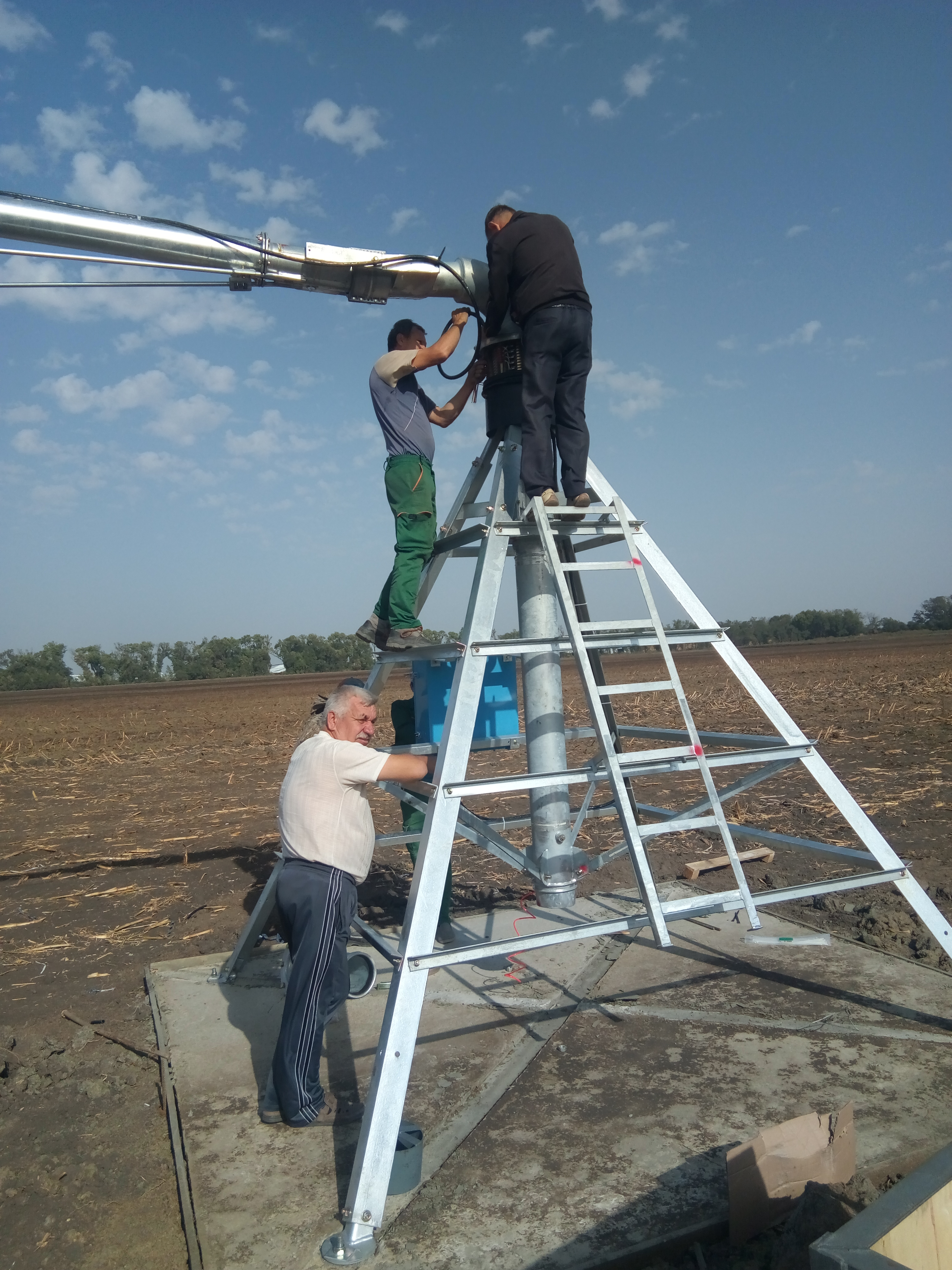
The last clause is the one that protects the other five. Yulin's after-sales scope includes field installation, commissioning and operator training, supported by video technical support, online support and free spare parts, with localized on-site service available overseas. Acceptance should therefore be a signed commissioning report that includes the training handover, not a delivery note. Spare-parts planning belongs in the same document: with more than 95% of machine spare parts manufactured in-house, the buyer's question is which parts sit in the recommended spares kit and what the replenishment path is.
Comparing the shortlist with conventional alternatives — and where each entry stops fitting
The honest comparison is not pivot versus hose reel in the abstract, but pivot versus hose reel versus linear against a specific field. A center pivot needs a fixed central water point and an electrical supply, and it irrigates a circle; those three conditions are its fit boundary, and no amount of specification detail removes them. A four-wheel linear machine removes the circle but depends on a rectangular layout and a well-prepared guide path. A hose reel removes both the fixed point and the grid dependency when supplied with water-turbine drive, but it adds lane-by-lane repositioning to the operating routine.
The fair way to compare documented characteristics is to hold the application constant. On a 50-hectare circular block with stable power and a permanent water source, the 395.6 m Fixed DYP is the configuration whose documented coverage matches the field exactly. On the same 50 hectares split across three rented parcels with no reliable supply, the documented characteristics that matter are the hose reel's water-turbine drive and its relocation capability, and the pivot's fixed coverage becomes a liability rather than an advantage. Neither conclusion can be generalised beyond those conditions, and neither should be presented as a performance guarantee.
A practical decision rule follows: choose the configuration whose limitations you can live with, then negotiate terms against that configuration. Buyers who choose on headline coverage usually end up negotiating against limitations they did not price.
Market context: why terms are attracting more attention
Procurement behaviour in this category tracks the scale of the projects behind it. Mordor Intelligence estimates the global center pivot irrigation system market at USD 2.56 billion in 2025 and projects USD 5.67 billion by 2030 in its published forecast. At the manufacturer level, Valmont Industries reported Agriculture segment sales of USD 278.0 million in Q4 2024, representing 26.7% of total net sales and up 2.3% from USD 271.6 million. Lindsay Corporation reported securing a multi-year international irrigation supply agreement in the MENA region valued at more than USD 100 million in 2024.
The interpretation that matters for a buyer is not the growth number but the procurement pattern behind it: large, multi-year, multi-unit agreements in which delivery schedules, documentation and acceptance steps are contractually defined. When project-scale buyers write terms at that level of detail, smaller buyers inherit the same standard as a benchmark — and a farm that requests quotes without a clause list ends up comparing prices for scopes that were never made equal.
A conditional outlook: if multi-year regional agreements continue to absorb manufacturer capacity, the practical pressure point for independent buyers will be scheduling rather than specification. That is a scenario, not a forecast of prices, and it argues for confirming lead time in writing early rather than assuming a standard window.
Before you request quotes: turning the shortlist into a document
Five steps convert this shortlist into a comparison that can actually be evaluated side by side.
- Fix the field inputs first. Net irrigated area, field geometry, water source position, available voltage and access routes. Every configuration decision downstream depends on these five answers.
- Name one coverage band or model per candidate. Do not invite quotes for a range. A 307.4 m Fixed DYP and a JP800 hose reel are quoted against different scopes, and a range-based quotation cannot be compared.
- Write the six acceptance clauses into the enquiry. Material grade, coating standard, IP65 enclosure, voltage variant, uniformity test reference and commissioning sign-off. Suppliers who cannot answer them in writing have told you something useful.
- Ask for the evidence pack with the price. Material and coating records, quality-system certificate number and validity, test record, spare-parts list and lead time. Price without evidence is not a comparable number.
- Confirm the commercial terms explicitly. Yulin's stated terms for this product family include a one-unit minimum order, a typical production lead time of 21–40 days, 100% testing before shipment and voltage customization as an OEM option — all of which should appear in the quotation rather than be assumed from a catalogue.
Buyers who want to check the full configuration range before finalising their enquiry can download the 2026 YULIN pivot catalogue, which lists the Fixed DYP coverage bands and the JP hose reel models together with the accessories and matching equipment. Company information, factory details and export references are published by China Yulin Irrigation Equipment Co., Ltd.
FAQ
Which purchase terms should be fixed before requesting an irrigation pivot system quote?
At minimum: the exact model or coverage band, the voltage variant within the 380V–460V operating range, the delivery scope (whether pumps, generators and fittings are included), installation and commissioning responsibility, the recommended spare-parts list, the production lead time, and the acceptance test method. A quotation that leaves any of these open is not comparable with one that closes them.
How is GB 13912-2020 verified on a delivered pivot?
GB 13912-2020 covers hot-dip galvanized coatings on fabricated iron and steel articles. Verification is a two-part exercise: compare the supplier's galvanizing record against the coating requirement written into the purchase order, then inspect the delivered truss and pipe surfaces for exposed steel, coating damage or untreated field-cut points. The standard defines the coating requirement; the purchase order must state which requirement applies.
Does a center pivot need IP65 control enclosures?
IP65 means an enclosure that is dust-tight and protected against water jets. For a machine operating at 380V–460V in an outdoor field environment, an IP65 enclosure requirement is a reasonable specification for the control housing, and it should be stated as an enclosure rating rather than a general weatherproofing claim about the entire machine. The voltage variant should be confirmed separately and in writing.
Can a hose reel irrigation machine operate without grid power?
Water-turbine-powered hose reel irrigation uses the irrigation water to drive the reel mechanism instead of an electric motor, which suits plots without a reliable electrical connection. The buyer should specify the drive type explicitly in the quotation, because drive configuration is a model-level choice. Note that a hose reel still irrigates lane by lane and has to be repositioned, which is an operating characteristic rather than a power issue.
How should water distribution uniformity be accepted at commissioning?
ISO 11545:2009 specifies an in-field method for determining the uniformity of water distribution from centre-pivot and moving lateral irrigation machines. Naming the standard as the reference method in the acceptance clause gives both parties a shared procedure, and the recorded result becomes the performance baseline for later service checks. The pass threshold remains the buyer's decision, set against the crop and the field.
Have Questions or Need More Details?
Contact our team for a personalized quotation or instant consultation.
Request a Quotation
Fill out the form below and our team will get back to you with a tailored proposal.
WhatsApp Direct Chat
Prefer to chat in real-time? Message us on WhatsApp for instant assistance & quick answers.
- Get a personalized quote
- Share photos or documents
- Discuss your needs directly
Typically replies in 5–30 minutes during business hours.