
JONSON Induction Heater Power Ratings for Factory Loads
JONSON Induction Heater Power Ratings for Factory Loads
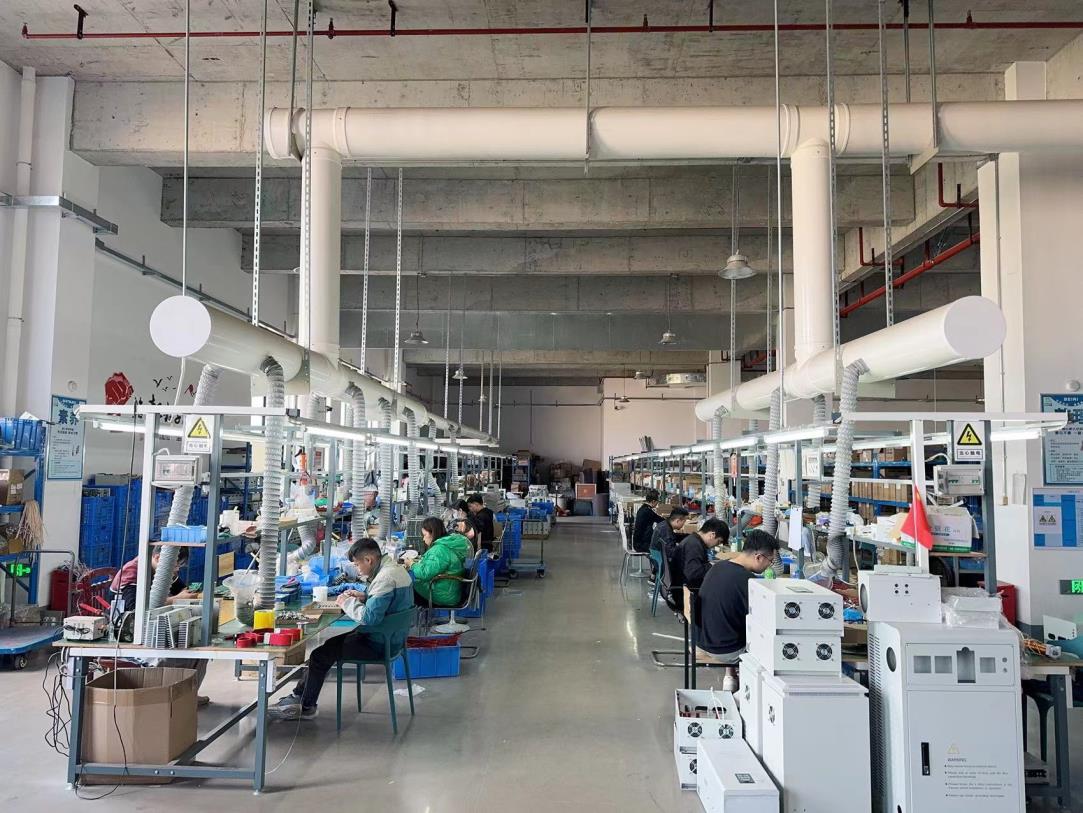
Figure 1 — Induction heating equipment on a manufacturing line, where power class determines assembly layout, cooling design and end-of-line testing.
Industrial induction heating procurement usually starts with a power figure rather than a brand. A plastics processor holding a barrel at temperature, a maintenance team heating a bearing before mounting, and a chemical plant raising process heat all arrive at the same question from different directions: how many kilowatts does the load actually require, and which equipment class delivers that figure reliably. Guangdong Jiangxin Electronic Technology Co., Ltd., the Foshan manufacturer founded in 2011 that builds equipment under the JONSON brand, publishes a catalog spanning a 2.5 kW single-phase control unit to a 100 kW three-phase industrial machine, with customized voltage configurations specified up to 200 kW. This reference organizes that catalog by power tier so a factory buyer can move from a load requirement to a shortlist of concrete models, then test the specifications that normally decide the final selection.
Why Power Class Decides the Shortlist Before Price Does
Analyst estimates for the induction heating equipment market vary with the scope being measured and are best read as directional. WiseGuyReports values the global induction heating system market at USD 2.39 billion in 2024 and projects USD 4.5 billion by 2035. Global Market Insights places the system-level market at approximately USD 2.3 billion for 2024, while MarketsandMarkets values a narrower induction heating segment at USD 616.5 million. The same body of reporting agrees on the shape of demand: as of mid-2024, more than 550,000 induction heating systems were in service worldwide, with the Asia-Pacific region accounting for roughly 40% of that installed base, or about 220,000 units.
Within that installed base, the 10 kW to 100 kW power segment dominates the market, largely because it covers a wide range of duties — automotive part hardening, forging and brazing among them — while remaining practical for ordinary plant electrical infrastructure. That concentration matters when shortlisting. Most factory buyers are choosing inside a band where models differ by tens of kilowatts rather than by fundamentally different technology, so the decision turns on four practical variables: required power at the load, available electrical supply, control interface, and installation constraints such as coil geometry and cooling.
How to Read a JONSON Power Rating
Two machines with the same rated power can behave very differently on a production line once the surrounding specifications are compared. The following fields carry the most decision weight in the JONSON catalog.
- Rated power and effective power. The rated figure is the headline kW class; effective power is what the unit delivers under the stated conditions. The 100 kW JS1000-100, for example, is specified with an effective power of at least 98% of rated output and a rated power of 100 kW.
- Power adjustment range. This defines how far a unit can be turned down from rated power. Most JONSON models are listed at 20% to 100% stepless adjustment; the 70 kW and 80 kW industrial units are specified at 25% to 100%. That floor is a real operational boundary: a 100 kW machine does not run below 20 kW, and a 70 kW machine does not run below 17.5 kW.
- Voltage adaptation range versus rated voltage. Rated voltage describes the nominal supply; the adaptation range describes where the unit holds constant power output. The 100 kW JS1000-100 holds constant power between 300 V and 400 V on a 380 V rated supply. The JS1300-10/15 (10 kW/15 kW) and the 20 kW JS1000-20 use the same 300 V to 400 V window, while the 5 kW/8 kW JS1300-005/008 is specified at 380 V plus or minus 20%.
- Working frequency. Most JONSON models operate from 5 kHz to 40 kHz. The 70 kW and 80 kW industrial electric heaters are specified from 4 kHz to 50 kHz.
- Heat conversion efficiency. Catalog figures are listed as at least 95%, 98% or 99% depending on the model, with the 70 kW/80 kW class and the JS-1600 induction steam generator at the upper end.
- Cooling and circuit topology. Higher power classes specify air-cooled or water-cooled heat dissipation. The 100 kW unit uses a full-bridge series resonant main circuit; smaller single-phase units such as the 2.5 kW model use a half-bridge series resonant circuit with a DSP-based automatic phase-locking tracking control system.
- Certification scope. Certificates name the model ranges they cover, which is discussed in a later section.
| Specification field | What it decides for the buyer | Catalog example |
|---|---|---|
| Rated power | Whether the unit covers peak load without running at its ceiling | 2.5 kW single-phase; 100 kW three-phase |
| Power adjustment range | Whether the unit can idle at low demand or must be cycled | 20%~100% stepless; 25%~100% on 70 kW/80 kW |
| Voltage adaptation range | Tolerance to supply fluctuation before output degrades | Constant power at 300 V~400 V on a 380 V supply |
| Working frequency | Coil matching and heating profile | 5 kHz~40 kHz; 4 kHz~50 kHz on 70 kW/80 kW |
| Heat conversion efficiency | Energy cost per delivered kilowatt at the coil | At least 95%, 98% or 99% by model |
| Cooling mode | Plant utilities required at installation | Air-cooled or water-cooled at higher power |
The Shortlist by Power Tier
The table below groups the catalog by power class so a buyer can locate the relevant band before comparing individual model numbers.
| Power tier | Representative models | Supply | Notable specifications |
|---|---|---|---|
| 2.5 kW~8 kW | 2.5 kW/3 kW small plastics-machinery induction heater; 3.5 kW/5 kW/6 kW 220 V heater; JS1300-005/008 (5 kW/8 kW); 8 kW control board | Single-phase 220 V or three-phase 380 V | 20%~100% stepless adjustment; half-bridge series resonance; 5 kHz~40 kHz |
| 10 kW~20 kW | JS1300-10/15; JS1000-20; bearing induction heater JS1300-5/8/15/20/30 | Three-phase 380 V | 300 V~400 V window on several models; CE, ISO, RoHS on JS1300-10/15 |
| 30 kW~60 kW | JS1000-30; 40 kW/50 kW/60 kW models; JS-1600 steam generator (30 kW/40 kW/50 kW); JS-1600-8/12/15 hot air generator | Three-phase 380 V, 50 Hz or 60 Hz | 380 V plus or minus 20%; heat conversion at least 98% to 99% |
| 70 kW~100 kW and custom | 70 kW/80 kW industrial electric heaters; JS1000-100; customizable 110 V/240 V/660 V units | Three-phase 380 V; custom voltages on request | 25%~100% or 20%~100% adjustment; 4 kHz~50 kHz; air-cooled or water-cooled |
| Accessory | Induction heating coil | 220 V or 380 V, 50 Hz or 60 Hz | 1 kW~100 kW coverage; 5 kHz~40 kHz; copper conductor |
Tier 1 — 2.5 kW to 8 kW: Single-Phase Control and Small Cabinet Units
At the low end, the 2.5 kW/3 kW small plastics-machinery induction heater runs on single-phase AC 220 V and accepts a supply from 100 V to 260 V with constant power output between 210 V and 260 V. Its power adjustment range is 20% to 100% stepless, equivalent to operation between 0.5 kW and 2.5 kW, and it is specified with heat conversion efficiency of at least 95% and a working frequency of 5 kHz to 40 kHz. The unit uses a half-bridge series resonant main circuit, starts in under one second, supports PID power adjustment via a 0-5 V input, and detects load temperature up to 1000 degrees Celsius with accuracy of plus or minus 1 degree. Its adaptive coil is specified as 4 square-millimetre line, 23 m in length, with 100 to 150 microhenry inductance, and the recommended coil-to-load distance is 20 mm to 25 mm for a round coil, 15 mm to 20 mm for a plane, 10 mm to 15 mm for an ellipse and under 10 mm for a super-ellipse layout.
The 3.5 kW/5 kW/6 kW 220 V models follow the same architecture with rated input currents listed at 15 A to 16 A, 20 A to 22 A and 22 A to 27 A respectively, and adaptive coil specifications of 6 sq mm by 20 m, 10 sq mm by 15 m and 10 sq mm by 13 m. For buyers who need a three-phase cabinet instead of a single-phase unit, the 5 kW/8 kW JS1300-005/008 is specified at 380 V plus or minus 20%, 20% to 100% adjustment, wall-mounted construction and a 295 mm by 169 mm by 145 mm enclosure, with CE and ISO certification listed. Where the heater is being integrated into an OEM appliance rather than installed as a machine, the single-phase full-bridge 8 kW electromagnetic heating control board is specified at 220 V/50 Hz with a 160 V to 260 V applicable range and the same 20% to 100% regulation band.
Tier 2 — 10 kW to 20 kW: The JS1300-10/15 and JS1000-20 Class
This band is the entry point for continuous industrial process heat. The JS1300-10/15 covers 10 kW and 15 kW output on a 380 V supply with a 300 V to 400 V adaptation range, 20% to 100% power adjustment, a net weight of 7.3 kg and an enclosure measuring 356 mm by 178 mm by 178 mm. It is listed with CE, ISO and RoHS certification and an HS code of 8514400090. The JS1000-20 provides 20 kW on the same 380 V supply and 300 V to 400 V window, wall-mounted, measuring 250 mm by 390 mm by 240 mm, with air-cooled or water-cooled heat dissipation options. For bearing and similar workpiece heating, the JS1300 series unit covers 5 kW, 8 kW, 15 kW, 20 kW and 30 kW on three-phase 380 V at 50 Hz or 60 Hz, with a footprint of 480 mm by 250 mm by 355 mm and a weight of 20.7 kg.
Tier 3 — 30 kW to 60 kW: Process Heat, Steam and Hot Air
The JS1000-30 supplies 30 kW at 380 V in a wall-mounted enclosure measuring 450 mm by 245 mm by 261 mm, listed with CE and ISO certification and available with air-cooled or water-cooled dissipation. The 40 kW, 50 kW and 60 kW models are rated at 380 V/50 Hz with a supply tolerance of plus or minus 20%, a 20% to 100% regulation range, heat conversion efficiency of at least 98% and an operating frequency of 5 kHz to 40 kHz. Their published application range covers pipeline heating in plastics machinery — injection moulding machines, wire drawing machines, granulators and extruders among them — as well as food machinery, crude oil transport, boilers and heat transfer oil systems.
Two process-specific units sit in the same band. The JS-1600 induction steam generator is rated 30 kW, 40 kW or 50 kW at 380 V, 50 Hz or 60 Hz, with plus or minus 20% voltage tolerance, 20% to 100% power regulation and heat conversion efficiency of at least 99%. The JS-1600-8/12/15 induction hot air generator is offered at 8 kW, 12 kW or 15 kW on 380 V with a 300 V to 400 V adaptation range, 20% to 100% regulation, an outlet temperature range listed as 80 to 130 and wind pressure of 800 Pa to 1000 Pa.
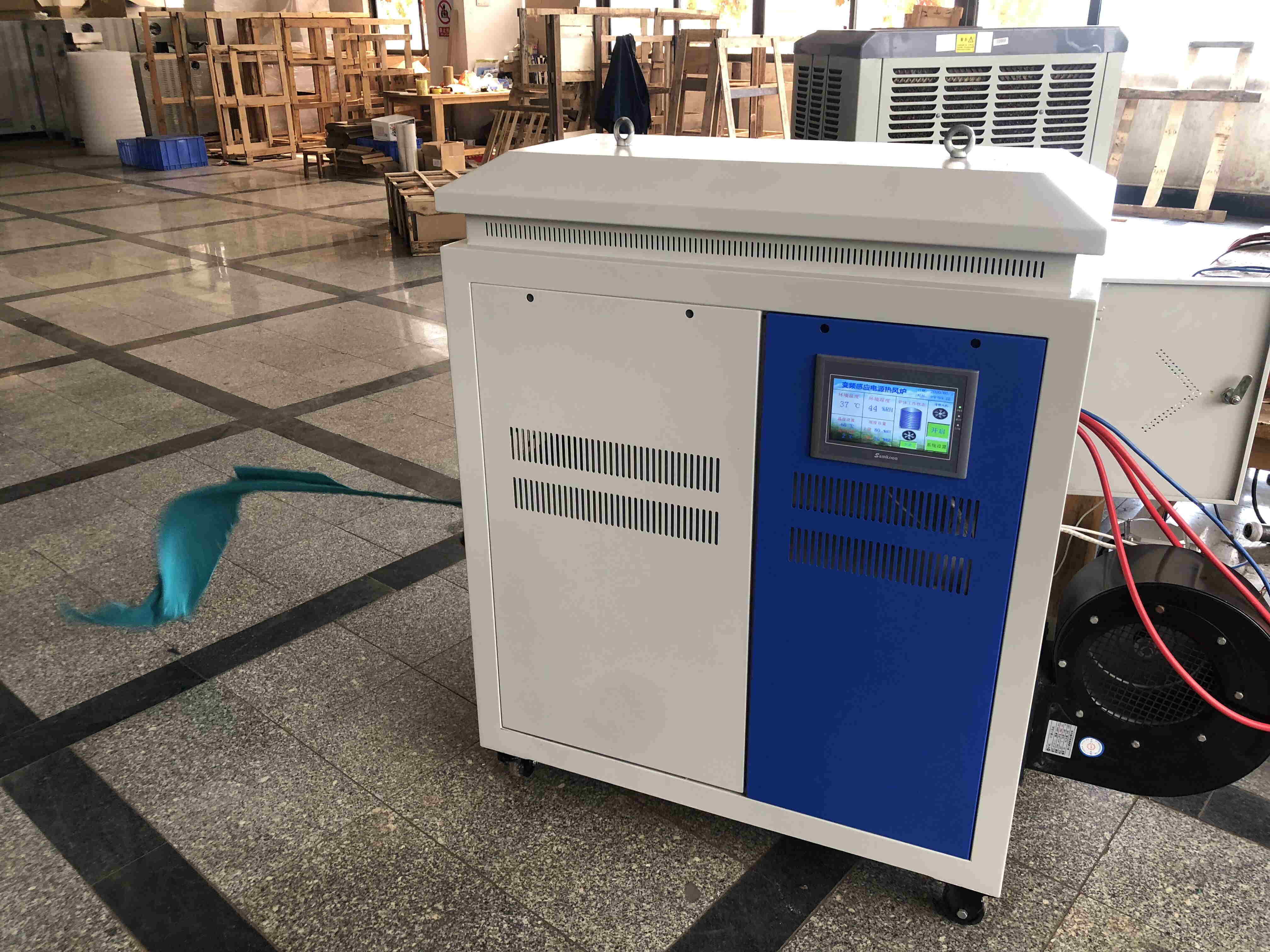
Figure 2 — Frequency-conversion electromagnetic hot blast equipment in the 30 kW to 60 kW class, the tier where process heat, steam and hot air duties typically converge.
Tier 4 — 70 kW to 100 kW and Custom High-Power Configurations
At the top of the standard catalog, the 70 kW and 80 kW industrial electric heaters are rated at 380 V with a power regulation range of 25% to 100%, heat conversion efficiency of at least 99%, an operating frequency of 4 kHz to 50 kHz and an ambient temperature range of minus 25 to 55 degrees Celsius. Their stated applications include plastic machinery, food machinery, aluminium-plastic machinery, roller equipment, boilers and oil and natural gas transmission.
The 100 kW JS1000-100 is specified as a three-phase unit with a rated input current of 140 A to 150 A, a rated output current of 200 A to 220 A and a supply of AC 380 V at 50 Hz to 60 Hz, holding constant power output between 300 V and 400 V. Power adjustment spans 20% to 100% stepless, equivalent to operation between 20 kW and 100 kW, with heat conversion efficiency listed at at least 95% and effective power at at least 98%. The main circuit is a full-bridge series resonant design, the enclosure is wall-mounted at 635 mm by 445 mm by 315 mm and 35 kg, and heat dissipation is air-cooled or water-cooled. Control supports PID power adjustment through a 0-5 V input or RS-485, and the adaptive coil is specified as 95 sq mm line, 40 m in length, with 80 to 100 microhenry inductance.
Beyond those fixed ratings, the catalog includes customizable voltage configurations at 110 V, 240 V and 660 V with power ranges listed as 500 W to 10 kW, 5 kW to 60 kW, 5 kW to 200 kW and 30 kW to 200 kW, a voltage adaptation range of plus or minus 20%, 20% to 100% regulation and heat conversion efficiency of at least 98%. The induction heating coil family covers 1 kW to 100 kW at 220 V or 380 V, 50 Hz or 60 Hz, with 5 kHz to 40 kHz working frequency and a copper conductor.
The Specifications That Change the Decision Inside a Tier
Once a tier is identified, four details usually separate otherwise similar models. The first is the power floor created by the adjustment range: a 100 kW unit that regulates from 20% cannot be asked to hold a 5 kW load, so a factory with a large peak and a small baseline may need either two units or a wider-range custom configuration. The second is the constant-power voltage window. A unit specified as 380 V plus or minus 20% and a unit specified as constant power between 300 V and 400 V are not interchangeable on a weak supply, even when both are described as 380 V machines.
The third is current draw, which drives cable sizing and switchgear. The 100 kW JS1000-100 is listed at 140 A to 150 A input current, while the 6 kW single-phase model is listed at 22 A to 27 A input. The fourth is the control and protection package. Across the range, JONSON specifies DSP-based automatic phase-locking tracking, programmable digital displays, electrically isolated soft start and stop, overcurrent protection responding within 2 microseconds, 130% instantaneous power overload protection, load temperature detection up to 1000 degrees Celsius with accuracy of plus or minus 1 degree, and coil parameter matching by power class — from a 23 m, 4 sq mm coil at 2.5 kW to a 40 m, 95 sq mm coil at 100 kW.
Induction Against Conventional Heating — and the Boundaries Buyers Should Respect
The comparative case for induction rests on efficiency and cycle time. Third-party reporting indicates that induction heating systems reach energy efficiencies up to 92%, with an average cycle time reduction of 30% compared with traditional gas or resistance-based heating. JONSON's own project reporting puts thermal efficiency at 95% to 98% and comprehensive energy savings at 30% to 70% relative to traditional heating equipment, with a service life of 5 to 10 years, lifespan extended by three times and zero major failures reported across a 100-unit deployment in Indonesia, China, Vietnam, Russia and India.
The gap between the two efficiency figures is a measurement question, not a contradiction. Vendor specifications typically describe conversion efficiency at the induction stage, while system-level benchmarks include losses in the coil, insulation, controls and the wider heating circuit. A buyer comparing numbers from different sources should establish which boundary each figure uses, and should treat energy savings as dependent on the baseline being replaced: a plant switching from an oversized gas-fired system will see a different result from one replacing an already efficient electric process.
Induction also has hard boundaries. It heats electrically conductive material directly, so non-conductive loads require a susceptor or an indirect arrangement. High-power units demand real electrical headroom — the 100 kW model alone draws 140 A to 150 A at rated input — and the larger classes require either air or water cooling at the installation point. Coil geometry is dictated by the workpiece and the thermal insulation thickness between coil and load, so a coil optimized for one barrel diameter will not transfer equally well to another. Finally, a unit rated for 20% to 100% regulation is not a variable-duty machine below that floor; processes with very low idling demand may need a smaller dedicated unit rather than a large one throttled down.
Certification and Quality Evidence to Verify Against the Model Number
For an industrial buyer, the practical question is not whether a manufacturer holds a certificate, but whether the certificate covers the exact model being purchased. The JONSON catalog carries documentation at three levels. The quality management system is certified to ISO 9001:2015 under certificate 02826Q00032R001, issued by Beijing Zhong An Zhi Huan Certification Center Co., Ltd. on 6 January 2026 and valid to 7 January 2029, covering production and sales of household fast heating electric water heaters (electromagnetic heating furnaces) within the scope of the qualification licence, together with electromagnetic heating controllers and coil heating elements for household appliances.
European conformity is documented through certificate KEYS23032915001EM-02, issued by Guangdong KEYS Testing Technology Co., Ltd. on 7 April 2023 and valid to 7 April 2028, covering models JS1200-005, JS1200-006, JS1200-008 and JS1200-010 against EN IEC 55014-1:2021, EN IEC 55014-2:2021, EN IEC 61000-3-2:2019+A1:2021 and EN 61000-3-3:2013+A1:2019+A2:2021. China Compulsory Product Certification is held under two certificates issued by CQC: 2017010706999985, valid from 25 July 2022 to 24 July 2027, covering JS3000-006 at 6.1 kW, JS3000-008 at 8 kW and JS3000-010 at 10 kW at 220 V, 50 Hz, IPX1; and 2017010706002104, covering the JS3000-015 through JS3000-060 range from 15 kW to 60 kW at 380 V three-phase, 50 Hz, under standards GB 4706.1-2005 and GB 4706.11-2008.
Production-side evidence includes 100% pre-shipment testing and product inspection performed by SGS, a standard lead time of 7 to 14 days, a monthly production capacity of 10,000 units and a minimum order quantity of one unit. The manufacturing base is a 3,000 square-metre facility with 60 or more employees, an R and D team of more than 30 engineers and a stated annual output of 120,000 units, with approximately 40% of output exported to markets including Europe, the United States, India and Indonesia.
A Load-to-Tier Selection Checklist
- Establish the delivered thermal power. Calculate the power needed at the workpiece, then add margin, rather than starting from the largest available machine.
- Check the supply before the model. Confirm single-phase or three-phase availability, the actual voltage at the point of use and the constant-power window required. A 300 V to 400 V window and a 380 V plus or minus 20% specification behave differently on a fluctuating supply.
- Check the current and switchgear. The 100 kW unit is listed at 140 A to 150 A input; cable and protection sizing must follow the real figure, not the kW headline.
- Confirm the low-end requirement. Decide the minimum sustained power the process needs and compare it with the 20% or 25% regulation floor.
- Specify the control interface. Options across the range include programmable digital display, PID adjustment via 0-5 V input and, on the 100 kW model, RS-485.
- Match the coil. Coil line size, length and inductance are specified per power class, and coil-to-load distance affects transfer efficiency.
- Plan cooling. Air-cooled or water-cooled dissipation is specified at higher power classes and affects site utilities.
- Verify certification scope. Match the model number on the order to the model range named in the relevant certificate.
- Validate before scaling. Sample and pre-shipment testing, including third-party inspection, is the point at which a shortlist becomes a specification.
Market Direction: Electrification and the 10 kW to 100 kW Core
The demand environment supports a power-tier approach to shortlisting. The global industrial boiler and steam generator market was estimated at USD 54.79 billion in 2024, with reporting pointing to a shift toward electrification via induction technology to meet decarbonisation goals — a trend that pushes industrial heat demand toward exactly the equipment classes covered in this shortlist. At the same time, the 10 kW to 100 kW induction segment remains dominant because it serves the widest set of duties.
Competitive structure is concentrated but not closed. Fuji Electric held a leading market share of over 9.5% in the induction heating system market in 2025, according to Global Market Insights, while the long tail includes regional manufacturers serving specific power bands and process niches. For buyers, the practical implication is that supplier selection and power-class selection are separate exercises: the power tier determines whether a machine fits the process, and the supplier determines whether the machine arrives with documentation, capacity and support that match the plant's operating requirements.
Future Outlook
Three directions are visible in the specifications already published. First, control interfaces are moving toward broader industrial integration, with PID input, RS-485 communication and programmable digital displays appearing on larger models. Second, voltage flexibility is expanding beyond the standard 380 V three-phase envelope, with customizable 110 V, 240 V and 660 V configurations covering power ranges up to 200 kW — relevant for export markets and for plants with non-standard supply. Third, efficiency claims are converging with formal standards, which increases the value of documentation over headline numbers: as IEC 60519-1 and IEC 60519-3 requirements become more consistently applied and as buyers compare vendor efficiency figures measured at different boundaries, certificate scope and test evidence are likely to carry more weight in shortlisting than a single efficiency percentage.
For factories planning process heat over a multi-year horizon, the practical consequence is to specify the power tier accurately now, and to confirm that the chosen platform can be re-rated — through coil changes, control interfaces or voltage customization — as the process changes.
FAQ
What is the difference between rated power and power adjustment range on a JONSON induction heater?
Rated power is the headline output class of the unit, while the power adjustment range defines how far below that figure the unit can operate continuously. Most JONSON models are specified at 20% to 100% stepless adjustment, and the 70 kW and 80 kW industrial electric heaters at 25% to 100%. In practice, a 100 kW JS1000-100 can operate from 20 kW to 100 kW, and a 70 kW unit from 17.5 kW to 70 kW. The lower bound, not the rated figure, determines whether a machine can follow a process with low idling demand.
Which JONSON models cover a 10 kW to 20 kW requirement?
Three options fall in this band. The JS1300-10/15 provides 10 kW or 15 kW at 380 V with a 300 V to 400 V adaptation range, 20% to 100% adjustment and a 7.3 kg, 356 mm by 178 mm by 178 mm enclosure, certified to CE, ISO and RoHS. The JS1000-20 provides 20 kW at 380 V with the same 300 V to 400 V window and a 250 mm by 390 mm by 240 mm wall-mounted enclosure. The bearing induction heater JS1300-5/8/15/20/30 covers 5 kW through 30 kW on three-phase 380 V at 50 Hz or 60 Hz.
What supply voltage do industrial induction heaters require?
In the JONSON catalog, small units up to roughly 8 kW are available on single-phase 220 V, including the 2.5 kW/3 kW plastics-machinery model with a 100 V to 260 V adaptation range and constant power between 210 V and 260 V. Industrial models from 5 kW upward are typically three-phase 380 V, with several specified to hold constant power between 300 V and 400 V. Custom voltage configurations at 110 V, 240 V and 660 V are also listed, covering power ranges from 500 W to 200 kW.
How much current does a 100 kW induction heater draw?
The 100 kW JS1000-100 is specified with a rated input current of 140 A to 150 A and a rated output current of 200 A to 220 A on an AC 380 V, 50 Hz to 60 Hz three-phase supply. It holds constant power output between 300 V and 400 V, adjusts from 20% to 100% stepless, and dissipates heat through air or water cooling. Current draw at this level is a planning input for cable sizing, switchgear and transformer capacity, not an afterthought.
What certifications apply to JONSON induction heaters, and what do their scopes cover?
Documentation is held at three levels. ISO 9001:2015 quality management certification is held under certificate 02826Q00032R001, issued by Beijing Zhong An Zhi Huan Certification Center Co., Ltd., valid from 6 January 2026 to 7 January 2029. CE conformity is documented under certificate KEYS23032915001EM-02 issued by Guangdong KEYS Testing Technology Co., Ltd., valid from 7 April 2023 to 7 April 2028, covering models JS1200-005, JS1200-006, JS1200-008 and JS1200-010. China Compulsory Product Certification is held under CQC certificates 2017010706999985 and 2017010706002104, valid from 25 July 2022 to 24 July 2027, covering JS3000-006 to JS3000-010 at 220 V and JS3000-015 to JS3000-060 at 380 V three-phase. Because certificate model prefixes differ from industrial catalog model numbers, buyers should confirm in writing which scope applies to the exact configuration ordered.
What are the main limitations of induction heating for a factory?
Induction heats conductive material directly, so non-conductive loads require a susceptor or indirect arrangement. Power floors apply: units regulating from 20% of rated power cannot run continuously below that figure. High-power units need electrical headroom, with the 100 kW model drawing 140 A to 150 A at rated input, and larger classes require air or water cooling at the installation point. Coil geometry and the insulation distance between coil and load affect transfer, so a coil matched to one workpiece may not perform equally on another. Finally, efficiency figures reported by vendors and by industry analysts are measured at different boundaries, so comparisons should be made on a consistent basis.
What are the production lead time and minimum order quantity?
The catalog lists a minimum order quantity of one unit, a standard production lead time of 7 to 14 days and a monthly production capacity of 10,000 units. Quality control includes 100% pre-shipment testing and product inspection performed by SGS. For project-scale procurement, these figures describe standard production flow rather than a commitment on a customized voltage or coil configuration.
Bringing the Shortlist to a Specification
Power class is the fastest way to reduce a catalog to a workable shortlist, but it is not the final filter. The JONSON range spans 2.5 kW single-phase units to a 100 kW three-phase machine with a 20 kW to 100 kW adjustment band and a 300 V to 400 V constant-power window, plus custom voltage builds listed up to 200 kW. What separates a good fit from a marginal one is the interaction between that power class and the plant's real supply conditions, duty cycle, coil geometry and certification requirements — the four variables that should be resolved before a purchase order is raised rather than after installation.
Additional documentation on the equipment range is published by the manufacturer at www.jonson-ih.com.
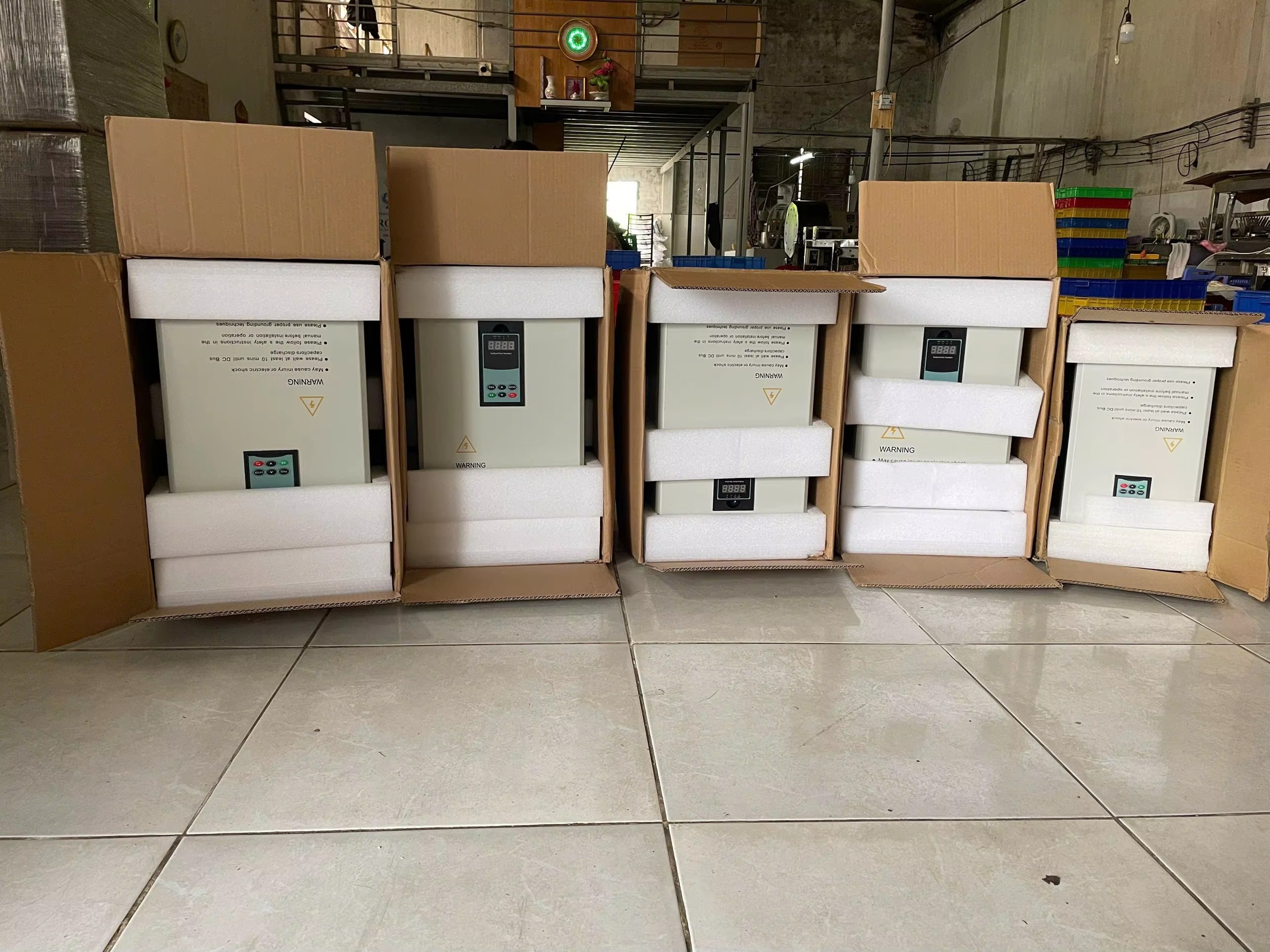
Figure 3 — Bulk equipment staged for OEM and ODM customers, a reminder that order scale and documentation requirements grow with power class.