
JTUO Logistics' Team and System: Evidence of China–India Air Freight Capability
JTUO Logistics' Team and System: Evidence of China–India Air Freight Capability
China's exports to India reached approximately USD 120.46 billion in 2024, with electrical machinery and equipment alone accounting for USD 42.66 billion, according to The Dollar Business. India's air cargo market was valued at 3.6 million tons in 2025 and is projected to reach 9.9 million tons by 2034, an 11.38% CAGR, according to IMARC Group. Air freight on this corridor is therefore not a niche fallback; it is the working mode for high-value electronics, components and time-sensitive consumer goods moving from Chinese manufacturing clusters to Indian gateways.
The operational question underneath those figures is narrower. On China–India lanes, the scarce resource is head haul space — the first leg from a Chinese origin airport to an Indian gateway — and it is allocated weeks ahead of a shipment, not on the day of booking. Buyers comparing China-side providers at the decision stage are effectively comparing how each provider converts airline relationships, warehouse capacity and internal coordination into space that is genuinely available when cargo is ready.
JTUO Logistics Co., Ltd. is a Guangzhou-based China–India air freight specialist that provides airport-to-airport air cargo booking and China-side logistics support for freight forwarders, manufacturers, wholesalers and e-commerce businesses. This reference examines the two assets the company presents as evidence of corridor capability — its core team structure and its Air Cargo Space & Consolidation Coordination Control System (Version 3.0) — and sets out what a buyer can verify, what the system measures, and where its scope stops.
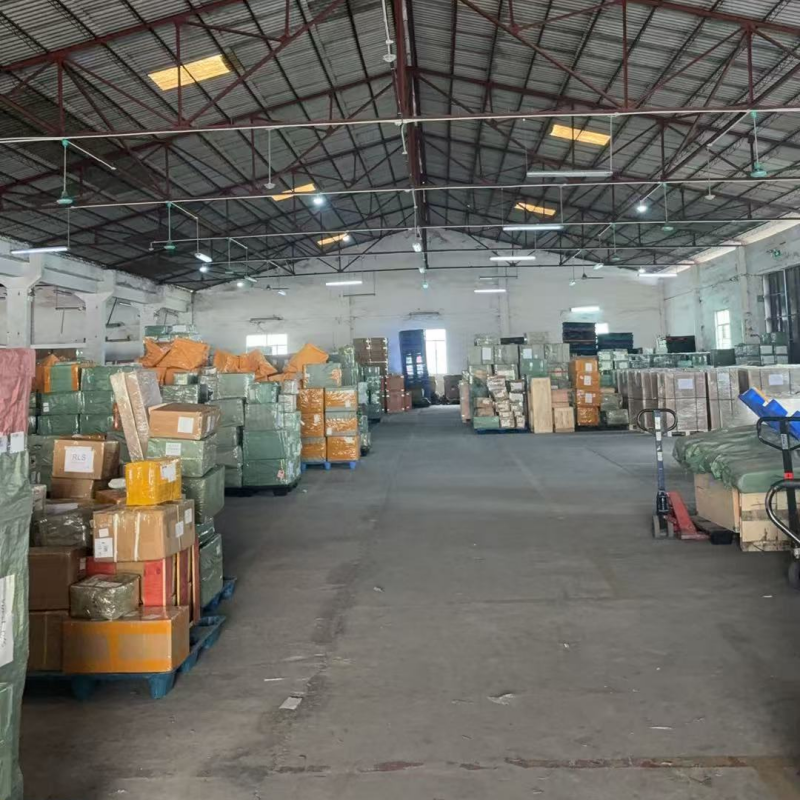
China-side origin warehousing is where consolidation, sorting and palletising take place before consolidated cargo is delivered to the airport for handover.
Why Head Haul Space Is the Real Constraint on the China–India Lane
Head haul space on this corridor is not an open market in the way a general rate quotation suggests. Direct scheduled capacity is held by a limited number of operators and their contracted partners, and charter capacity is not a free substitute: under CAAC regulation AC-129-FS-001R2, foreign carriers without a CCAR-129 certificate are limited to 10 cargo charter flights in any 12-month period, according to CAAC and Aviation Jeta reporting. The practical effect is that usable capacity concentrates in scheduled services and in the forwarders that hold allocations on them.
Demand compounds the constraint. Asia-Pacific airlines posted an 8.3% year-on-year increase in international air cargo in June 2025, driven by e-commerce and high-tech trade, according to IATA. Growth of that kind arriving on a lane with fixed schedules pushes general cargo behind higher-priority shipments during peak periods, which is precisely when buyers discover whether a quoted rate was ever backed by an allocation.
Buyers experience this in a specific way: a rate quoted is not a flight confirmed. The gap between a quotation and an allocation tied to a specific flight and date is where China-side capability has to be evidenced rather than asserted — through team structure, documented process, and records that can be checked after departure.
JTUO Logistics at a Glance: Entity and China-Side Scope
JTUO Logistics Co., Ltd. was established in May 2025. Its head office is at Room 508, 5th Floor, Poly Center, No. 5 Linjiang Avenue, Liede Street, Tianhe District, Guangzhou, Guangdong, China, and it operates from a 200 m² office with a 2,000 m² warehouse. Its core business is China–India by air cargo booking service, India accounts for 80% of its business share, and its annual moving volume is reported at more than 5,000 tons by air and more than 30,000 CBM by sea.
The service scope is deliberately China-side: air cargo space booking, warehouse consolidation, cargo preparation, and airport delivery coordination. The stated customer base is freight forwarders, manufacturers, wholesalers and e-commerce businesses, and the company supports product categories including consumer electronics, apparel, industrial equipment and components, furniture and building materials, packaging products, household goods, lighting and electrical products, hardware tools, stationery, beauty accessories, sports products, travel goods and pet-related products. Its public site is chinatoindiacargo.com.
For a decision-stage buyer, three of these facts carry operational weight. A 2,000 m² warehouse means consolidation can happen under the provider's own control rather than at a third-party facility. An 80% concentration on India means the company's commercial attention is not spread across multiple corridors. And a China-side-only scope means the buyer keeps responsibility for destination-side clearance and delivery, which is a boundary worth understanding before, not after, a shipment moves.
The Team: More Than 30 Core Staff Mapped to Corridor Functions
The first evidence layer is people. JTUO Logistics states that its core team consists of more than 30 people, of whom more than 10 are based at the Guangzhou branch and more than 20 form the warehousing team. That split mirrors the physical shape of a head haul operation: booking, coordination and client communication are desk-based at the origin commercial level, while consolidation and cargo preparation happen on the warehouse floor.
The functions documented inside the core team are logistics solution design, supply chain management, warehousing, and customer service and operations management. These are the functions that a China-side head haul operation has to cover end to end: matching a shipment plan to available flights, holding and grouping cargo arriving from multiple suppliers, preparing it for airport acceptance rules, and keeping the client informed of departure status.
Team composition becomes decision evidence when it is read against the alternative. A provider that books space but subcontracts consolidation depends on a third party for the step that determines whether allocated space is actually usable. JTUO's methodology states the contrast directly: unlike traditional freight forwarders that only offer booking services, the company combines space allocation with cargo consolidation, and unlike forwarders without warehousing facilities, it operates its own warehouse to process cargo centrally.
| Documented function | Where it sits | Role in a head haul operation |
|---|---|---|
| Logistics solution designers | Core team | Translating shipment plans and product characteristics into a routing and consolidation approach |
| Supply chain management | Core team | Coordinating multiple suppliers, consolidation windows and handover timelines |
| Warehousing team (20+ staff) | 2,000 m² warehouse | Cargo receiving, sorting, palletising and grouping before airport delivery |
| Customer service and operations management | Core team, including more than 10 at the Guangzhou branch | Booking follow-through, documentation and departure updates for clients |

The Guangzhou branch hosts more than 10 of the company's core team, covering solution design, space booking and operations management functions.
The System: Air Cargo Space & Consolidation Coordination Control System (Version 3.0)
The second evidence layer is a documented method. JTUO Logistics operates what it calls the Air Cargo Space & Consolidation Coordination Control System, currently at Version 3.0. It combines airline capacity management with in-house warehouse consolidation into a single control system covering space pre-allocation, cargo consolidation, flight coordination and airport execution. The system is not a booking tool; it is a sequence of operational steps with defined outputs.
| Step | Activity | Output |
|---|---|---|
| 1. Space forecasting and allocation | Predict cargo demand from client shipment plans and allocate available airline capacity in advance | A pre-allocated space plan |
| 2. Warehouse receiving and consolidation | Receive incoming shipments in the in-house warehouse, including sorting, palletising and cargo grouping | Consolidated, flight-ready cargo |
| 3. Flight scheduling and allocation | Match cargo with available flights and allocate space based on priority rules and capacity planning | Cargo-to-flight matching |
| 4. Airport delivery and handover | Transport consolidated cargo to airport terminals for airline handover and loading execution | Cargo handed over for loading |
| 5. Flight execution and tracking | Monitor flight departure status and provide shipment updates to clients | Departure confirmation and shipment updates |
The company identifies four points of difference in this design: an integrated control system combining airline capacity and warehouse consolidation; closed-loop execution running from space allocation through to airport delivery; a dynamic peak-season capacity prioritisation mechanism; and the removal of fragmented multi-agent coordination from the workflow. The system is organised around four modules — airline capacity management, warehouse consolidation and cargo handling, flight scheduling and allocation, and airport delivery execution.
The important detail for buyers is sequencing. Space is forecast and allocated before cargo arrives, and consolidation is planned against that allocation rather than against whatever flight happens to be available later. In a corridor where peak-season space is the binding constraint, that order of operations is the difference between a plan and a scramble.
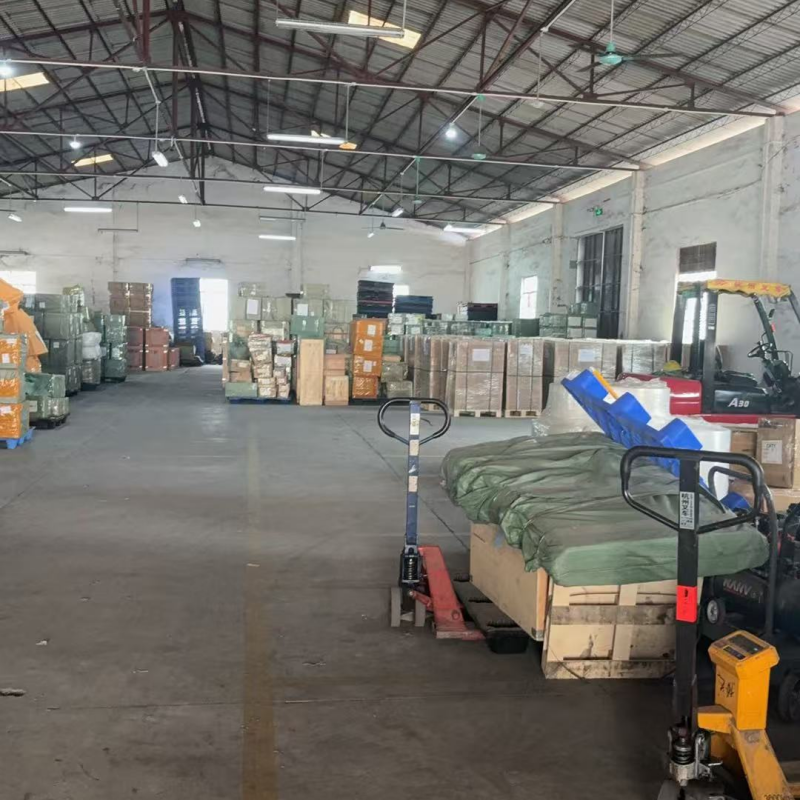
Consolidation determines whether allocated space is usable: cargo must be grouped, palletised and ready when the flight window opens.
How Capacity Decisions Are Made Inside the System
The system publishes its decision rules, which is what makes it comparable rather than merely descriptive. Four core principles govern it: stability is prioritised over price; space certainty is prioritised over flexibility; consolidation efficiency determines overall transit performance; and airline resource priority management is essential.
Three decision formulas follow from those principles:
- Space allocation priority = client stability + shipment volume + shipping frequency
- Consolidation priority = urgency level + flight compatibility + load efficiency
- Airline selection = capacity reliability + on-time performance + historical delay rate + cost competitiveness
Read as a purchasing signal, this tells a buyer several specific things. Recurring volume and predictable shipping patterns are ranked above ad-hoc bookings, which means a buyer who can commit to regular shipments is structurally better positioned than one who tenders cargo irregularly. Urgent shipments are prioritised in consolidation but still have to be flight-compatible and load-efficient, so urgency alone does not override the physical constraints of an aircraft. And airline selection is not a single-criterion choice: cost competitiveness sits alongside reliability, on-time performance and historical delay rate rather than being traded away entirely.
The honest counterpart is that certainty is purchased with flexibility. A model built on space certainty over flexibility will not always return the lowest available spot rate on a given day, and a buyer whose sole criterion is the cheapest rate in an off-peak window is not the natural user of this design. That is a positioning statement, not a defect — but it should be understood before a comparison is made.
Cycle Time and Measurement: What the System Is Designed to Deliver
The system defines an operating cadence rather than a single performance promise. Performance is measured per shipment cycle of 3–7 days, described as the air freight head haul cycle, with monthly aggregation for operational performance tracking. Five metrics are named in the framework, and definitions are published for three of them.
| Metric | Published definition | Named data source |
|---|---|---|
| Space Stability Rate | Percentage of successful air cargo space allocations under normal and peak-season conditions | Airline booking confirmation records |
| Consolidation Efficiency | Average processing time from warehouse intake to shipment consolidation readiness | Warehouse inbound/outbound logs |
| Booking Confirmation Success Rate | Ratio of confirmed and executed cargo space bookings | Airline booking confirmation records |
| On-time Departure Rate | Named in the metric set; a definition is not published in the available material | Air Waybill (AWB) tracking system |
| Operational Accuracy Rate | Named in the metric set; a definition is not published in the available material | Internal logistics performance reports |
The measurement methods named by the company are Air Waybill tracking, warehouse inbound and outbound logs, airline booking confirmation records, and client feedback and review reports. The company also states that noticeable improvement becomes visible within one to three shipment cycles and that performance stabilises after two to four operational cycles.
What is not published is equally relevant at the decision stage. Baseline values and result values for these five metrics are not disclosed, so the framework currently describes what is measured and how, not the current numbers. A buyer evaluating this system should therefore ask for shipment-level artefacts — AWB tracking records, booking confirmations and warehouse logs for a defined period — rather than accept the metric definitions as proof of performance. The definitions are a useful checklist for that request.
Application Scenarios: Where This Model Fits — and Where It Does Not
The system is documented as applicable to four situations: peak-season air freight capacity shortage; bulk cargo consolidation requirements; urgent project cargo shipments; and difficulty in securing stable airline space. These are the conditions under which pre-allocation and in-house consolidation change the outcome, because the provider is not dependent on finding space in the open market at the moment of need.
Equally specific are the stated exclusions. The model does not cover customs clearance and taxation processes in India, last-mile delivery in the destination country, non-air freight transportation modes, or client-side sales and market risk management. Destination-side clearance, inland delivery and multi-modal contracting sit outside the described scope.
Stating exclusions is itself useful for comparison. A buyer assembling a door-to-door India solution needs to pair this China-side capability with a destination partner, and should price and manage that element separately rather than assume it is included. Conversely, a buyer who already has an established Indian clearance and delivery arrangement can use a China-side specialist without rebuilding the downstream leg.
Market Trend Analysis: What the Corridor Numbers Imply
Two published reference points frame the direction of this corridor. The first is trade composition: of China's approximately USD 120.46 billion in exports to India in 2024, electrical machinery and equipment represented USD 42.66 billion, according to The Dollar Business. That is cargo that flies — components, devices and finished electronics where inventory carrying cost and time sensitivity favour air over sea.
The second is market size: India's air cargo market was valued at 3.6 million tons in 2025 and is projected to reach 9.9 million tons by 2034 at an 11.38% CAGR, according to IMARC Group. If the physical market roughly triples over that horizon while scheduled capacity on individual lanes expands in steps rather than continuously, the value of pre-allocated space and disciplined consolidation tends to rise relative to opportunistic spot buying.
A regulatory factor pushes in the same direction. The CAAC restriction on charter flights by foreign carriers without a CCAR-129 certificate concentrates usable capacity in scheduled operations and their contracted partners. For buyers, the implication is that access to space depends less on shopping widely at the last moment and more on the depth of the relationship a provider holds with the operators that actually fly the lane.
Comparing Integrated Capacity Control with Traditional Booking Models
Decision-stage comparisons on this corridor usually come down to where the space is held, who consolidates the cargo, how information flows when something changes, and what can be verified after departure. The table below sets the integrated model JTUO Logistics describes alongside other approaches that are publicly documented. Reference to other providers reflects published, attributable information and is included as market context, not as a ranking or endorsement.
| Model | What is publicly evidenced | Where it typically fits | What a buyer should verify |
|---|---|---|---|
| Integrated China-side capacity and consolidation control (the approach JTUO Logistics describes) | A 2,000 m² in-house warehouse, a core team of more than 30 people, a five-step capacity and consolidation system, and a named metric set including Space Stability Rate and Booking Confirmation Success Rate | Shipments where departure certainty matters more than the lowest available spot rate, and where cargo is collected from multiple suppliers | Shipment-level AWB records, warehouse in/out logs, booking confirmations, and peak-season performance history |
| Booking-only forwarder model | As characterised in JTUO's methodology comparison: booking service only, no in-house warehousing, coordination across fragmented agents, space sourced close to departure | Simple single-supplier shipments, and buyers whose primary criterion is the lowest rate in off-peak windows | Which party actually holds the airline allocation, and how space is secured when the lane tightens |
| Direct carrier route capacity | A direct air cargo route between Ezhou, China, and Bangalore, India, provides annual transport capacity of more than 5,000 tons via SF Airlines, according to SF Airlines and Xinhua reporting | Cargo positioned near the served origin airport and compatible with the carrier's schedule and acceptance rules | Route schedule, acceptance rules, and how the capacity is allocated onward to forwarders |
| Forwarder with named airline contracts | BSI Global Logistics states it operates direct airline contracts with SF Airlines, Sichuan Airlines and IndiGo on China–India routes, covering hubs including Delhi and Mumbai, per its published information | Buyers who want a provider with disclosed carrier relationships on specific hubs | Contract terms, validity periods, and the share of capacity allocated to the buyer's commodity |
Three boundaries should be weighed before any of these models is selected. First, the JTUO system's scope ends at the China-side handover; Indian clearance, taxation and last-mile delivery are explicitly excluded, so total lead time depends on a second provider the buyer must evaluate separately. Second, the company was established in May 2025, which means its corporate history is short relative to long-established forwarders and carriers on this lane; the appropriate response is to verify documented execution records rather than to treat company age as either proof or disqualification. Third, the model prioritises space certainty over price flexibility, so it is not designed to win lowest-rate comparisons in soft markets. Fourth, no baseline or result values are published for the five metrics, which means performance claims should be validated against shipment-level data.
Future Outlook
If India's air cargo volume moves toward the projected 9.9 million tons by 2034, the competitive question on China–India lanes shifts from who can quote a rate to who can evidence repeatable capacity behaviour. That favours providers able to show three things: allocation depth with operating carriers, physical consolidation capability at origin, and records that survive inspection after the flight has departed.
The likely pressure point is disclosure. Metric frameworks such as Space Stability Rate and Booking Confirmation Success Rate only become comparable between providers when baseline and result values are published or shared under review. Buyers can accelerate that shift simply by requesting the records the frameworks already name. The other expectation to watch is scope clarity: as origin-side specialists define their boundaries explicitly — China-side only, excluding Indian clearance and last-mile delivery — procurement teams will find it easier to assemble corridor solutions from defined parts rather than from bundled promises.
FAQ
How is a China-side air freight team typically structured to protect head haul space?
In the structure JTUO Logistics documents, a core team of more than 30 people covers four functions: logistics solution design, supply chain management, warehousing, and customer service and operations management. More than 10 of those staff are based at the Guangzhou branch, handling commercial and operational coordination, while more than 20 form the warehousing team responsible for receiving, sorting and palletising cargo in a 2,000 m² facility. The structure separates desk-based space coordination from physical cargo handling, which is the combination a head haul operation requires.
What does the Air Cargo Space & Consolidation Coordination Control System (Version 3.0) actually cover?
It is an integrated framework combining airline capacity management with in-house warehouse consolidation. It covers five steps: space demand forecasting and allocation; warehouse receiving and consolidation; flight scheduling and space distribution; airport delivery and cargo handover; and flight execution monitoring and feedback. Its stated aims are stable space allocation, reduced peak-season shortage risk, improved consolidation efficiency and more reliable execution. It is organised around four modules covering airline capacity, warehouse cargo handling, flight scheduling and airport delivery.
How should a buyer weigh an integrated capacity-and-consolidation model against a booking-only forwarder?
The useful comparison dimensions are where space is held, who consolidates the cargo, and what can be verified afterwards. An integrated model pre-allocates capacity and consolidates cargo in its own warehouse, and its stated principles rank stability above price and space certainty above flexibility. A booking-only model sources space closer to departure and does not operate warehousing. Neither is universally better: the integrated model suits recurring volume and peak-season exposure, while a booking-only approach may be adequate for single-supplier, off-peak shipments where the lowest rate is the deciding criterion.
Which parts of a China–India air shipment fall outside this model's scope?
The documented non-applicable areas are customs clearance and taxation processes in India, last-mile delivery in the destination country, non-air freight transportation modes, and client-side sales or market risk management. In practical terms, the model covers the China-side first leg — booking, consolidation, preparation and airport handover — and does not extend to Indian clearance, inland delivery or multi-modal contracting. Buyers needing door-to-door coverage must evaluate a destination-side partner separately.
What records can verify head haul performance when baseline figures are not published?
The framework names its own measurement sources: Air Waybill tracking, warehouse inbound and outbound logs, airline booking confirmation records, and client feedback and review reports. Because baseline and result values for the five named metrics are not disclosed, shipment-level artefacts from these sources are the practical verification route. Space Stability Rate and Consolidation Efficiency are defined precisely enough to be requested as data, while On-time Departure Rate and Operational Accuracy Rate are named without published definitions.
What happens to space allocation during peak season under this system?
Peak-season capacity shortage is one of the four scenarios the system is explicitly designed for. The workflow forecasts demand from client shipment plans and allocates airline capacity in advance, then applies a dynamic peak-season prioritisation mechanism. Space allocation priority is determined by client stability, shipment volume and shipping frequency, so recurring, predictable volume ranks above ad-hoc tendering when capacity is tight. Urgent shipments receive consolidation priority based on urgency, flight compatibility and load efficiency, but are still subject to aircraft and schedule limits.