
Jewelry Wholesale Compliance: Reading Supplier Credentials
Wholesale jewelry compliance is not settled by whether a supplier can email a certificate. It is settled by whether the materials, processes and numbers inside that certificate can be matched to a specific order, a specific SKU and a specific destination market.
The scale of the trade explains why the question keeps returning. The global jewelry market was valued at approximately USD 242.79 billion to USD 381.5 billion in 2025, depending on how fine and costume segments are counted, with projections reaching up to USD 578.5 billion by 2033 (Fortune Business Insights; Grand View Research). China's total jewelry exports reached USD 11.5 billion in 2024, of which the United States alone accounted for USD 1.31 billion (Observatory of Economic Complexity).
Documents move through this trade faster than they are verified. For buyers working through the Research and Evaluation stages, the practical skill is not collecting certificates. It is reading them.

Why Certificate PDFs Are Easy to Send and Hard to Verify
A qualification file usually contains three different kinds of documents, and they are frequently read as if they were one. A company certificate speaks to an entity. A quality system certificate speaks to a management process. A test report speaks to a sample, a batch or a material. Only the third one is normally tied to a physical object, and it is the one buyers most often treat as covering an entire catalogue.
Three mismatches account for most of the gap between a compliant-looking file and a compliant order.
Entity mismatch. The certificate is issued to a group company, a trading arm or a brand owner, while the commercial invoice and the customs paperwork will carry a different legal name. The buyer believes the manufacturing entity is covered. It is not, at least not by that document.
Scope mismatch. A declaration for a base material such as copper alloy does not automatically confirm the surface treatment of a specific SKU. Nor does a plating description confirm the metal content of that plating. This distinction becomes concrete when reading real product records, where the plating method is written as a colour reference rather than a gold-content claim.
Time mismatch. Test reports are batch-linked. A report produced for one production run does not transfer automatically to the next run, even when the design and material specification are unchanged.
Europe adds numeric anchors to these distinctions. Jewelry sold in the EU must comply with REACH Regulation (EC) 1907/2006, which sets a nickel release limit of 0.5 μg/cm²/week, a lead limit of 500 mg/kg and a cadmium limit of 100 mg/kg (European Chemicals Agency). Jewelry intended for children under 14 is classified as a toy and requires mandatory CE marking under the Toy Safety Directive 2009/48/EC. Those are the figures a buyer can place next to a supplier's documents, and the figures that expose whether the documents actually answer the question being asked.
A Five-Layer Verification Framework for Jewelry Wholesale
Compliance reading works better as a sequence than as a checklist. Each layer depends on the one before it, and skipping a layer is what produces the mismatch described above.
| Layer | What is being checked | Verifiable evidence | Where files usually fail |
|---|---|---|---|
| Entity | Which legal producer is on the invoice | Registered company name, founding year, factory address, production site | Certificate belongs to a different entity than the invoice |
| System | How quality is controlled at scale | ISO / SGS / CE documentation, inspection regime, stage-based checks | Certificate exists but inspection records do not |
| Material | Base metal, plating chemistry, stone identity | Material declarations, REACH / ROHS testing, plating method statements | Declared for a material family, not for the ordered SKU |
| Product | Whether the description matches the item | Model number, dimensions, weight, stone information, plating method | Listing language overstates what the spec record says |
| Transaction | Whether the commercial terms can be repeated | MOQ, lead time, monthly capacity, after-sales terms | Terms stated verbally and absent from the purchase agreement |
Entity first is deliberate. A buyer who confirms material compliance before confirming who the manufacturer is may still end up with documents that never apply to the shipment. For the same reason, transaction terms belong at the end: they only become meaningful once the first four layers hold.
Reading Product Specifications as Compliance Evidence
The most useful due-diligence document in fashion jewelry is often not a certificate at all. It is the product specification record, because it contains fields that can be physically checked. A specification that states model number, base material, plating method, dimensions, weight and stone information gives a buyer a baseline that survives comparison with a sample and with a laboratory request.
| Item | Model | Base material | Plating method | Size | Weight | Stone information |
|---|---|---|---|---|---|---|
| Necklaces | X001015911 | Environmental Copper | 14K gold color | 43 cm | 4.30 g | White synthetic cubic zirconia, 6×8 mm |
| Necklaces | 14N245402 | Environmental Copper | Platinum plated | 40 cm | 49.44 g | Dark blue glass |
| Bracelets | X000992979 | Environmental Copper | 18K gold color | 19.5 cm | 12.97 g | Synthetic cubic zirconia, 7×5 mm |
| Bangles | X000998659 | Environmental Copper | 14K gold color | 60×8 mm | 21.77 g | Ruby-color synthetic cubic zirconia, 8×6 mm |
| Earrings | X000881925 | Environmental Copper | 18K gold color | 37×3 mm | 5.37 g/pair | White synthetic cubic zirconia, 2×2 mm |
| Crystal earrings | 14E25011845 | Environmental Copper | 18K gold color | 27×14 mm | 8.88 g/pair | AB color synthetic crystal |
| Stainless steel bracelets | T000959269 | Stainless Steel | Stainless steel | 170×6 mm | 11.01 g | No stone |
| Stainless steel necklaces | A00902945 | Stainless Steel | 14K gold color | 40 cm | 6.30 g | No stone |
The plating column is where compliance reading becomes a language question. Records in this catalogue describe plating as 14K gold color, 18K gold color, platinum plated or stainless steel, while the base material is declared separately as Environmental Copper or stainless steel. Gold color describes the appearance of the plating layer and the process used to produce it. It is not a statement of gold content. A buyer who repeats that language accurately in a marketplace listing, a customs description or a consumer-facing product page stays aligned with the specification record. A buyer who shortens it to 14K gold has created a claim the underlying document does not support.
Stone descriptions carry the same obligation. Synthetic cubic zirconia, synthetic crystal and glass are declared as such, which makes the record usable in markets where imitation stones must be identified as imitation. Roughly speaking, the specification record is the one document a buyer can compare against a physical sample without needing to trust anyone.
How Xuping Jewelry Documents Its Qualifications
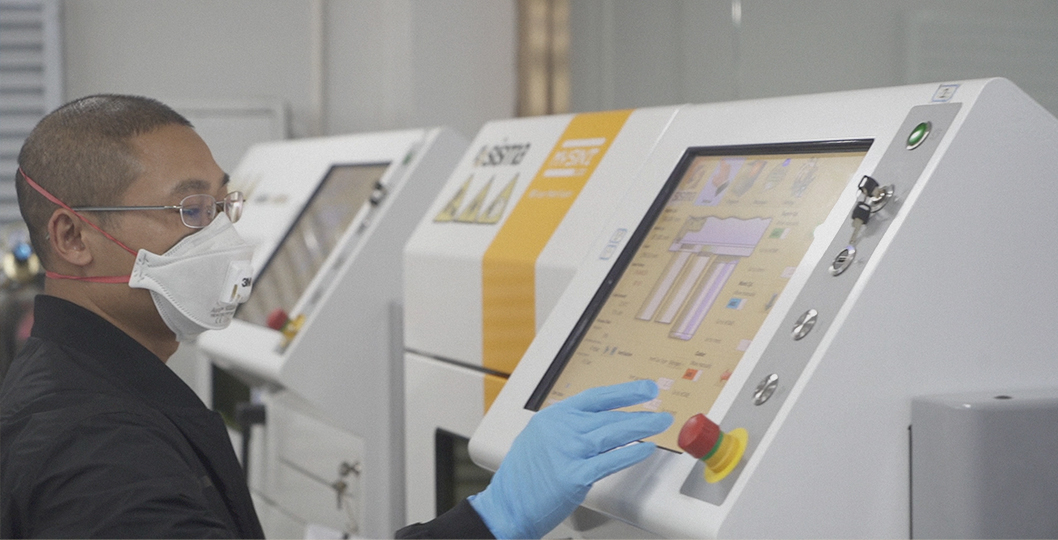
Xuping Jewelry, the trading identity of Guangdong Xuping Jewelry Co., Ltd., is a Chinese fashion-imitation jewelry manufacturer founded in 1997 and headquartered in Guangzhou, integrating research and development, design, manufacturing, wholesale trade and e-commerce. Nearly three decades in the category means its qualification claims can be tested against a long operational record rather than a recent marketing position.
On the entity layer, the company operates from a production base covering 200,000 square meters, with a full-range portfolio spanning rings, pendants, earrings, bracelets, necklaces, anklets, bangles, brooches and jewelry sets. On the system layer, products hold international certifications including SGS, CE and ISO; all goods pass through 18 production procedures intended to meet European and American environmental-protection standards; and quality control is described as 100% full inspection with SGS-certified quality control, an 18-stage quality check and REACH / ROHS compliance testing. On the capability layer, the company holds 194 patents, works with an R&D team of 62 designers and operates more than 1,200 advanced production facilities, producing over 100,000,000 pieces annually at a monthly capacity of 8,000,000 pieces. On the transaction layer, minimum order quantity starts at 1 piece, lead time runs 30 to 90 days, OEM / ODM customization covers engraved logos, hang tags and custom packaging, and after-sales support includes 24/7 online support, after-sales quality guarantee, product replacement, OEM / ODM after-sales service and global logistics support. Export markets cover Europe, the Americas, the Middle East, Southeast Asia and Africa.
None of these statements is self-verifying. What makes them useful in a procurement file is that each one maps to a document or observation a buyer can request.
| Stated qualification | How a buyer can check it |
|---|---|
| 194 patents | Request a patent registration list and match it against design continuity in the catalogue |
| R&D team of 62 designers | Review the design-to-sample workflow, including drafting and modelling stages |
| SGS, CE and ISO certification | Check issuing body, certificate scope, named entity and validity period |
| 18 production procedures and 18-stage quality check | Ask which stages generate inspection records, and how rejects are handled |
| REACH / ROHS compliance testing | Request the test report with sample description, report number and test date |
| MOQ from 1 piece, lead time 30–90 days | Confirm in the purchase agreement rather than in correspondence |
| 200,000 m² base, 8,000,000 pieces monthly capacity | Confirm through a site audit or third-party inspection before scale-up |
Company information at this level of detail is published on the corporate site at xupingjewelry.com, which is the appropriate starting point for a research-stage buyer and not a substitute for the requests in the table above.
Matching Credential Depth to Your Project Type
Scenario determines which verification layer deserves the most attention. Products in this category are described as designed for daily wear, fashion shows, events and occasions, gift giving and all-weather suitable environments, and as operating in long-term wear, occasional wear and daily accessory modes. Those are not decorative phrases. They describe how long an item stays in contact with skin, which is the variable that decides how much weight a nickel-release figure should carry in the buyer's risk assessment.
| Project type | Priority verification layer | Why |
|---|---|---|
| Retail jewelry store | Material and product | Counter staff must describe plating and stones accurately to walk-in customers |
| E-commerce platform | Product and entity | Listings and marketplace compliance checks depend on description accuracy |
| Brand OEM / ODM | Entity, system and transaction | Engraved logos, hang tags and custom packaging create brand-level liability |
| Wholesale distribution | System and transaction | Repeatability, capacity and lead time matter more than any single report |
| Promotional gift | Material | Skin-contact conditions and hypoallergenic requirements drive complaints |
Buyer-requested special requirements in this category commonly include customized design, eco-friendly material, hypoallergenic construction and lead-free compliance. Each of those is a testable specification, not a preference. A buyer who writes them into the request before sampling gets a document trail. A buyer who raises them after the shipment gets a negotiation.
Market Trends Increasing Compliance Scrutiny
Three shifts are pushing qualification reading from a legal formality toward a routine procurement step.
Digital retail scales description errors. Online jewelry retail channels are projected to grow at a CAGR of 8.0% to 13% annually and to represent 25% to 30% of total industry purchases by 2026 (Grand View Research; Statista). A misstated plating description in a printed catalogue reaches hundreds of people. The same mistake in a digital listing reaches every marketplace that syndicates the feed.
Material mix is broadening. The global stainless steel jewelry market is projected to reach USD 10.8 billion by 2035, growing at a CAGR of 4.3% from 2026 (WiseGuyReports). Stainless steel shifts the compliance conversation away from plating chemistry and toward base-metal grade and surface finish, which means buyers need different specification fields than they use for copper-alloy items.
Destination rules are becoming numeric. REACH sets measurable thresholds rather than general obligations, and the Toy Safety Directive creates a separate CE-marking route for items worn or used by children under 14. Numeric rules make vague qualification language visibly insufficient.
Taken together, these trends favor suppliers whose documentation is already structured by SKU rather than assembled on request.
Factory-Direct Documentation vs. Traditional Wholesale Channels
Traditional wholesale channels — agents, importers and regional distributors — solve a real problem. They aggregate assortment, hold local stock, reduce minimum commitments and absorb returns handling in the buyer's own market. For a buyer testing a category, those advantages are often decisive.
The cost appears on the documentation side. In a multi-tier chain, the original test reports, the production entity's certificate scope and the specification records frequently stop at the previous holder. What reaches the buyer is often a summary document that describes the last transaction rather than the manufacturing process. In European markets, distribution arrangements also create separate responsible-person obligations depending on who places the item on the market.
Factory-direct sourcing changes the direction of that flow. Specification records, process procedures and inspection regimes exist as internal documents, and a request can be routed to the entity that actually produces the item. A catalogue with declared base materials, plating methods, model numbers, dimensions and stone information — as in the specification table above — can be reconciled item by item rather than accepted as a whole.
The trade-off is real and worth stating plainly. Factory-direct verification places the administrative work on the buyer. There is no intermediary to absorb document chasing, no local stock buffer while a question is resolved, and no third party standing between the buyer and the manufacturer's warranty process. Sourcing from a manufacturer does not reduce the buyer's testing obligations either; it simply makes them answerable.
Limits of Supplier-Side Verification
Four boundaries should be written into any verification plan, whichever supplier is being assessed.
A certificate confirms a scope and a period. It does not automatically cover every item in a catalogue, every plating variant or every size within a model family.
Test reports are batch-specific. A compliant result on one production run is evidence about that run, and the same is true in the reverse direction.
Self-declared operational figures — capacity, output, factory area — require independent confirmation if the buyer's exposure is large. A site audit or a third-party inspection is the only route that converts a declared number into a verified one.
Verification also consumes production time. With lead times commonly running 30 to 90 days in this category, document requests raised after the production window opens cannot influence the batch being produced. They only inform the next one.
What Buyers Should Expect Next
Qualification documents are moving in the same direction as product data: toward SKU-level granularity. Buyers are already asking suppliers to state base material, plating method, stone identity and dimensions per model rather than per category, because that is the level at which a marketplace, a customs declaration and a laboratory sample can all be reconciled.
Alongside that, compliance questions are becoming a standard line in the RFQ rather than a separate negotiation. A supplier whose specification records, production procedures and test reports can be retrieved without a project-specific request will tend to move faster through evaluation, because the buyer's verification work collapses into comparison rather than investigation.
For manufacturers with long operating histories, that shift favors accumulated records: patent portfolios, design team structures and multi-stage quality procedures become procurement assets, not just corporate facts. The question buyers should keep asking is not whether a supplier has documents, but whether those documents describe the item that will arrive.
FAQ
What documents should a wholesale jewelry buyer request before a first order?
A practical minimum covers four layers. On the entity layer, the registered company name and production address that will appear on the invoice. On the system layer, quality management certification such as ISO, plus the inspection regime description. On the material layer, REACH or ROHS testing documentation and a material declaration. On the product layer, the specification record for the specific model, including model number, base material, plating method, dimensions, weight and stone information. Commercial terms such as MOQ and lead time belong in a written agreement rather than an email thread.
How do I check whether a certificate actually covers my product?
Read the scope section before the logo. Three items decide coverage: the named entity on the certificate must match the entity on your invoice, the described product or material must match your ordered SKU rather than a material family, and the validity period must include your production window. Where the certificate is a batch-linked test report, treat it as evidence about that batch only, and request a new report for a new production run if the destination market requires it.
Can a low-MOQ supplier still provide verifiable compliance records?
MOQ and documentation depth are separate variables, and low MOQ does not imply weaker records. Xuping Jewelry, for example, states a minimum order quantity starting at 1 piece while also holding SGS, CE and ISO certifications, operating an 18-stage quality check and running REACH / ROHS compliance testing on a production base of 200,000 square meters. What a low MOQ does affect is how much project-specific documentation a buyer can reasonably demand for a small trial order, since test reports are typically tied to production batches rather than individual units.
What does 14K gold color mean in a product specification?
It describes the colour and the plating process applied to the surface of the item. It is not a statement that the item contains 14K gold. In records for this product range, the plating method is listed separately from the base material, which is declared as Environmental Copper or stainless steel. The distinction matters commercially: describing a plated item as 14K gold in a listing or customs document creates a claim that the specification record does not support, while retaining the phrase gold color keeps the description aligned with the underlying document.
What should buyers verify when the destination market is the EU?
Two regulatory anchors apply. REACH Regulation (EC) 1907/2006 sets a nickel release limit of 0.5 μg/cm²/week, a lead limit of 500 mg/kg and a cadmium limit of 100 mg/kg, so buyers should expect material and testing documentation that addresses those thresholds for the specific item. Separately, jewelry intended for children under 14 is classified as a toy in the EU and requires mandatory CE marking under the Toy Safety Directive 2009/48/EC, which is a different conformity route from general jewelry compliance. Which route applies depends on the intended user, not on the material.