
K3G310 In-Row Cooling Fans: Technical & Procurement FAQ
K3G310 In-Row Cooling Fans: Technical & Procurement FAQ
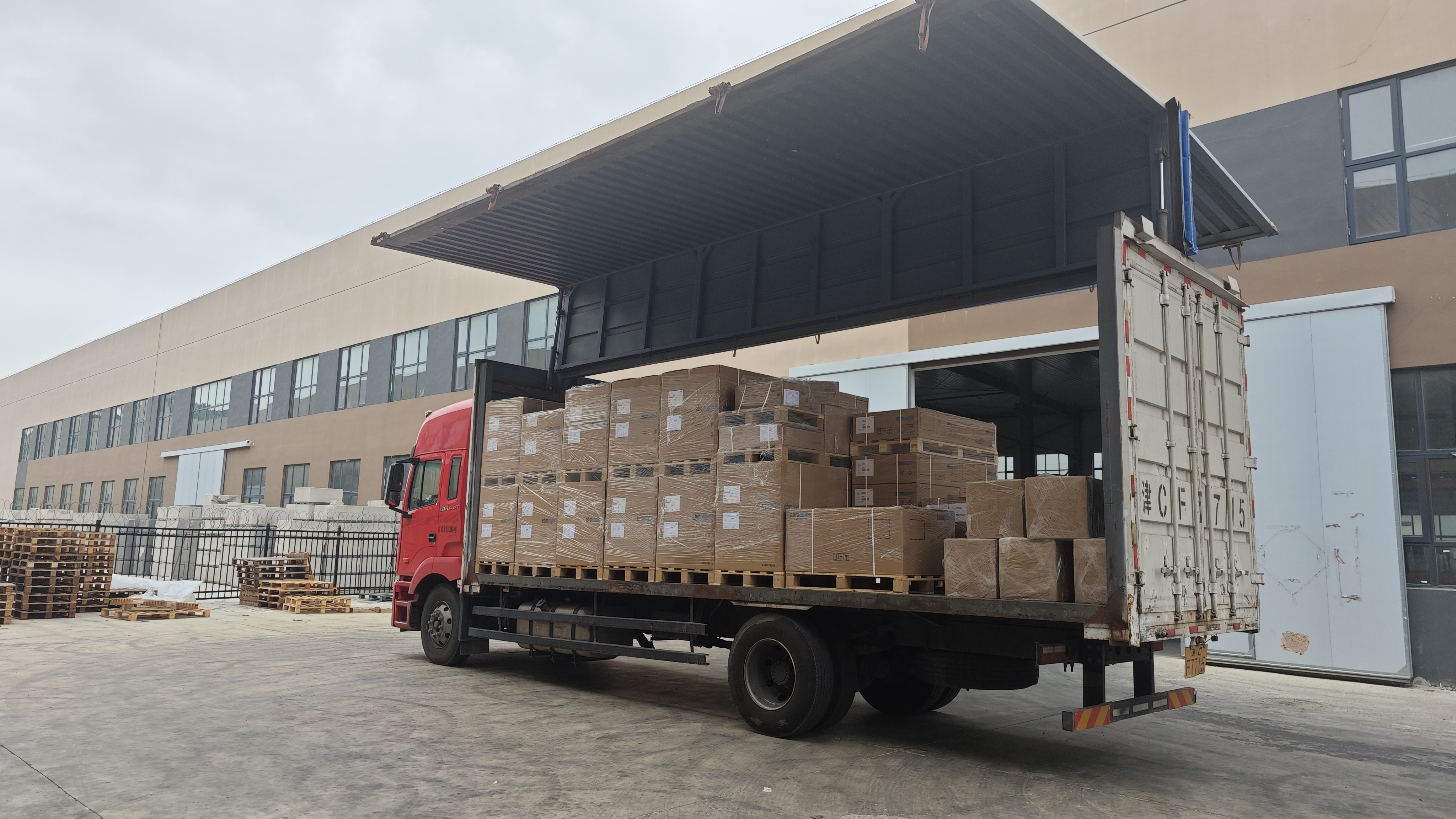
In-row and precision cooling fans are bought under a different set of rules than room-level air handling fans. A fan mounted inside a rack-row cabinet must produce pressure at a defined operating point, accept an industrial three-phase supply, accept a speed command from the unit controller, and demonstrate that all of this is documented before the purchase order is released. The K3G310 platform — specifically the K3G310-PV69-03 and K3G310-PH58-02 variants — sits inside exactly that procurement logic: the same 310 mm impeller diameter and the same 3~380–480 VAC input class, but different power draw and different ErP operating points.
This reference answers the questions engineering and procurement teams raise at the evaluation-to-execution stage of an in-row cooling fan order. Each answer is tied either to a documented product parameter or to a stated commercial term, so a buyer can separate what is already specified from what still has to be confirmed in writing.
Why in-row fans are specified differently from room-level AHU fans
In-row cooling places the cooling unit inside the rack row rather than in a plant room, and three procurement consequences follow from that placement.
The first is that the fan has to deliver useful pressure through a short but dense air path — a coil, a filter stage, and the transition into the cold aisle. The free-air airflow figure therefore tells a buyer almost nothing useful; the operating point at the unit's actual resistance is the number that decides whether the fan is adequate. The second is that the unit is serviced in a live white space, so the fan's electrical rating, control interface and protection class have to match what the unit controller and the enclosure already provide. The third is repeatability: in-row units are typically deployed in rows of identical cabinets, which turns the delivered article number into a commercial requirement rather than a technical preference.
These three consequences explain why a technical FAQ is a practical document in this category. The questions that delay an order are rarely about whether a fan can move air, and almost always about whether one specific article number matches one specific unit.
The two K3G310 variants and what each is declared for
The K3G310 series covers 310 mm EC centrifugal fans intended for in-row air conditioners, precision air conditioners and compact CRAC units. Two variants recur in in-row and rack-level cooling specifications, and they are close enough to be confused and different enough to matter.
| Parameter | K3G310-PV69-03 | K3G310-PH58-02 |
|---|---|---|
| Impeller diameter | 310 mm | 310 mm |
| Input | 3~380–480 VAC | 3~380–480 VAC |
| Power | 3,050 W | 2,950 W |
| Current | 4.7 A | 4.6 A |
| Speed | 4,000 rpm | 4,000 rpm |
| ErP point | 4,020 m³/h @ 1,583 Pa | 4,505 m³/h @ 1,479 Pa |
| Impeller material | Aluminum | Aluminum |
| Support plate and inlet ring | Galvanized steel | Galvanized steel |
| Electronics housing | Die-cast aluminum | Die-cast aluminum |
| Declared application | In-row air conditioners, precision air conditioners, compact CRAC units, high-resistance filtration systems | In-row cooling, CRAC, rack-level cooling, high static pressure ventilation |
The shared construction is itself a procurement fact. Because both variants use an aluminum impeller, a galvanized steel support plate and inlet ring, and a die-cast aluminum electronics housing, the mechanical interface family — mounting plate, inlet geometry, electronics enclosure — is common to the platform. What differs is the aerodynamic duty point and the electrical draw, which is why the article number, not the series name, has to appear on the purchase order.
Beijing Hengrui Hongsheng Mechanical & Electrical Equipment Co., Ltd., which trades under the Hengrui EC Fan identity, is the China-based ventilation and heat-dissipation supplier whose catalogue covers this platform. The company was founded in 2011, operates a 100,000 m² facility with 700 employees and an 80-person engineering team, exports to markets in which the USA is the principal destination at a reported export share of around 70%, and holds distributor authorizations for brands including ebm-papst and Ziehl-Abegg. Its ebm-papst distributor authorization A50023867 designates it as a distributor for ebmpapst products in North China and is valid from 2026-01-01 to 2026-12-31. Buyers who need to move between article numbers inside a single fan platform typically use this kind of multi-brand channel because model selection and matching sits alongside supply.
Does a 310 mm impeller fit a compact in-row cabinet?
The 310 mm figure describes the impeller diameter, not the installed footprint. The space a fan actually occupies in a cabinet is defined by the support plate, the inlet ring and the electronics housing wrapped around that impeller, plus the clearance needed for cable entry and for air to enter the inlet without obstruction.
For procurement, this means a fit check should be done against the mounting drawing and hole pattern rather than against the impeller number. The practical question to put to the supplier is not “is it a 310 mm fan?” but “what is the installed envelope and the mounting interface for this article number, and does it match the unit's existing fan plate?” Where a fan is being replaced inside an existing in-row unit, the inlet ring geometry and the depth behind the plate usually decide whether the swap is a bolt-in or a re-design.
One further point is worth stating plainly: an in-row cabinet is a constrained volume, so the fan's own depth interacts with the coil, the filter and the service clearance. A variant that fits the plate can still be the wrong choice if it leaves no room for the filtration stage the unit was designed around.
Electrical interface: 3~380–480 VAC, power, current and speed
Both variants are rated for a 3~380–480 VAC supply, which places them in the same electrical infrastructure class as the rest of the unit. That does not make them interchangeable from an electrical standpoint, because the rated figures differ: the K3G310-PV69-03 is rated at 3,050 W and 4.7 A, while the K3G310-PH58-02 is rated at 2,950 W and 4.6 A, and both run at 4,000 rpm.
The consequence for acceptance work is that the nameplate and the datasheet have to be checked against the ordered article number at goods-in, not only at quotation stage. Branch protection, contactor rating and wiring sizing follow the current figure for the delivered variant, and while the two figures here are close, the principle holds across the fan range: two fans that share a platform name can sit at different current draws, and the difference is what a commissioning engineer will notice first.
Reading the electrical column correctly: the rated voltage band tells you the fan can be connected to the site supply; the rated power and current tell you how the unit's electrical panel must be sized and protected; the rated speed tells you the upper end of the control range. All three belong in the specification, and all three should appear on the datasheet for the exact article number.
Control interface: what to verify about Modbus and 0–10 V speed control
EC fans integrate the commutating electronics into the fan package, so the control interface is a property of the electronics housing variant rather than of the impeller size. That single fact drives one of the most common procurement failures in this category: a fan whose operating point is correct can still fail commissioning because its control variant does not match the unit controller.
Before a purchase order is released, a buyer should obtain written confirmation covering, for the specific article number:
- Which control inputs the delivered variant accepts — an analog input such as 0–10 V, a bus interface such as Modbus, or both;
- The behaviour of the fan if the control signal is lost or falls outside range;
- Whether setpoint scaling, feedback and status registers are documented for the controller integration;
- Whether the in-row unit's existing controller can drive the fan directly, or whether a signal-conditioning step is required.
It is important not to treat a control interface as a platform-wide assumption. The K3G310 designation identifies the aerodynamic and mechanical platform; the electronics variant attached to it determines the control question. The only reliable evidence is the manufacturer datasheet and a written statement from the supplier for the exact article number being quoted.
IP54 versus IP55: what the protection class actually decides
Protection class describes resistance to dust and water ingress, and the choice between IP54 and IP55 is driven by where the fan sits and what surrounds it, not by a general preference for the higher number. An in-row unit inside a humidity-controlled white space and a unit positioned near a condensate path, an economizer intake, or an area with wash-down or high-humidity excursions present different ingress risk.
Two procurement practices follow.
First, ask for the protection class as a declared property of the delivered article number, documented on the datasheet, rather than as a series-level statement. A class asserted for a family of fans is not the same as a class declared for the item on the packing list.
Second, recognise that the fan's declared class does not seal the assembly. Cable entries, grommets, the mounting interface and the cabinet's own gasketing all contribute to the ingress performance of the finished unit. Where a project specifies IP54 or IP55 for the cooling unit, the fan's declaration is one input to that calculation, and the integration details are the others. Confirming the class in writing before award is the way to avoid discovering the mismatch during site acceptance.

ErP operating points: 4,020 m³/h @ 1,583 Pa versus 4,505 m³/h @ 1,479 Pa
The two K3G310 variants are separated mainly by where they sit on the flow-pressure trade-off. The K3G310-PV69-03 is quoted at an ErP point of 4,020 m³/h at 1,583 Pa; the K3G310-PH58-02 is quoted at 4,505 m³/h at 1,479 Pa. One variant trades air volume for static pressure; the other trades static pressure for air volume.
This is the point at which inexperienced specifications go wrong. The two numbers cannot be ranked directly, because they were measured at different resistances. Which fan is correct depends on the system curve of the unit it is being fitted into — the pressure the coil, the filter, the inlet geometry and the discharge path impose at the target airflow. A unit with dense filtration and a compact coil sits further up the pressure axis and will favour the variant with the higher static pressure figure. A unit with a more open air path and a higher airflow target will favour the variant with the higher volume figure.
The correct procurement action is therefore to give the supplier the unit's required airflow and its resistance at that airflow, and to ask for the intersection with the fan curve — not to compare ErP points taken at different pressures across two different models.
Datasheet evidence: the minimum documentation set for an in-row fan order
Because in-row fans are specified inside another OEM's equipment, the datasheet is the primary acceptance instrument. A complete evidence set for a quoted article number should carry:
- Article number exactly as it will appear on the purchase order;
- Impeller diameter and installed envelope, including mounting interface;
- Rated voltage band, rated power, rated current and rated speed;
- ErP operating point stated as flow at a stated pressure;
- Control interface and signal characteristics for the delivered electronics variant;
- Protection class declaration for the item, not the family;
- Materials of impeller, support plate and inlet ring, and electronics housing;
- Declared application scope for the variant.
The material column is easy to skip and shouldn't be. On both K3G310 variants the impeller is aluminum, the support plate and inlet ring are galvanized steel, and the electronics housing is die-cast aluminum. That combination defines the weight the mounting plate must carry, the corrosion behaviour of the exposed metal, and how heat leaves the integrated electronics. It is a build fact that belongs in the file, not a marketing line.
Acceptance criteria and the pre-shipment test
The stated acceptance criterion for these orders is a pre-shipment test. Commercially, the terms recorded for this supply arrangement are a minimum order quantity of 1 unit, delivery terms covering EXW, C&F, DDP, CIF, CFR, FOB, FAS and DPU, payment by corporate transfer, and after-sales technical support available around the clock.
For a buyer, a pre-shipment test is the last controllable checkpoint before goods leave the supplier, and its value depends entirely on how it is defined at purchase-order stage. A workable definition should state which parameters are recorded against the ordered article number, what tolerance applies, whether the test record travels with the shipment, and whether a retained sample is kept. Where a project covers several units, the same definition should apply to every unit so that the row is electrically and aerodynamically uniform.
OEM customization, minimum order quantity, capacity and lead time
The supplier provides OEM production services, including for custom requirements. The recorded commercial parameters are a minimum order quantity of 1 unit for OEM production, a monthly OEM production capacity of 100,000 units, and a lead time of 7 days.
Read together, those three figures describe a supply arrangement oriented toward validation first and scale second. A minimum order quantity of 1 unit makes a physical sample build possible before a design is frozen, which matters in in-row cooling because the fan is validated inside somebody else's cabinet. The monthly capacity figure becomes relevant when a retrofit programme covers multiple sites or when a unit builder is ramping a new product line. The lead time applies to the stated production arrangement and should be confirmed against the delivery terms chosen for the specific order.
Application fit: which variant belongs in which unit
The declared application scopes are the most direct guidance available. The K3G310-PV69-03 is declared for in-row air conditioners, precision air conditioners, compact CRAC units and high-resistance filtration systems. The K3G310-PH58-02 is declared for in-row cooling, CRAC, rack-level cooling and high static pressure ventilation.
The overlap is real, and the differentiator is the air path. Where the unit's airflow has to pass a dense filter stage or a tightly packed coil before it reaches the cold aisle, the variant declared for high-resistance filtration is the natural starting point. Where the unit is moving a larger volume through a less resistive path, the higher-volume variant is the natural starting point. In both cases the decision should be closed by checking the fan curve against the unit's measured or calculated resistance at the target airflow.
Market and regulatory context for in-row fan sourcing
Two external developments shape how this category is bought in 2026 and beyond.
The first is regulatory. EU ecodesign rules for industrial fans, Regulation (EU) 2024/1834, apply from 24 July 2026 and set stricter efficiency thresholds for fans in the 125 W to 500 kW range, according to the European Commission. Both K3G310 variants sit inside that power range. For EU-bound projects, the practical consequence is that efficiency documentation has to be requested for the specific article number and retained in the project file, because the compliance question is asked per product, not per supplier.
The second is market structure. The global EC fans market reached USD 3.5 billion in 2024 and is projected to grow to USD 6.7 billion by 2030, according to a market analysis published in late 2025. At the same time, the two best-known manufacturers in the segment both contracted in their most recently reported year: ebm-papst Group reported sales of EUR 2.098 billion for fiscal 2024/25, a 13.1% decrease, and Ziehl-Abegg reported 2024 revenue of EUR 893 million, down 7% from EUR 955 million in 2023. On the supply side, China's exports under HS code 841459 reached 509 million units totalling USD 3.788 billion in 2024, up 6.96% in value, per China Customs statistics published through TradeDaas.
The pattern is a growing installed base against a consolidating supplier landscape. That combination raises the practical value of distribution and technical matching channels that can move between article numbers without changing the underlying platform — and raises the value of documentation, because a substitution is only safe when the datasheet evidence travels with it.
Comparison with traditional solutions — and where EC stops being the obvious answer
It is worth stating clearly what an integrated EC centrifugal fan is being compared against, because the comparison is frequently made loosely.
| Criterion | AC fan with external variable-frequency drive | Integrated EC fan (e.g. K3G310 platform) | DC axial fan |
|---|---|---|---|
| Speed control | External drive sets frequency | Speed command delivered directly to integrated electronics | Voltage/PWM control at low voltage |
| External hardware needed | Drive, cabinet space, wiring, EMC measures | Signal wiring; no separate inverter | DC supply and control board |
| Typical fit | Large air handling, retrofit where drives already exist | In-row, precision cooling, compact CRAC, fan walls | Cabinet and equipment-level heat dissipation |
| Servicing model | Motor and drive serviceable separately | Electronics integrated with the fan; replacement is typically module-level | Fan replacement, board serviced separately |
| Main constraint | Footprint, wiring and drive configuration | Control interface must match the unit controller; article number must match the specification | Limited pressure capability relative to centrifugal designs |
The honest limitation of the EC approach in this application is component integration. Because the commutating electronics live inside the fan's own housing, the fan and its control electronics are replaced together, and the electronics inherit the thermal environment of the air stream they sit in. An AC motor with a separate drive can be diagnosed and serviced as two components; an integrated EC fan generally cannot. Buyers weighing a premium EC variant against a lower-cost AC solution should also weigh the spare-parts strategy, the stocking position for the specific article number, and the recovery path if a control variant is discontinued.
Limitations and boundaries a buyer should record
- The ErP point describes a single operating point per variant; it does not describe behaviour across the whole speed range, which requires the full fan curve.
- Material construction — aluminum impeller, galvanized steel support plate and inlet ring, die-cast aluminum electronics housing — is a build fact; actual corrosion and ingress performance depends on the installation environment and the assembly around the fan.
- A protection class declared for the fan does not seal the finished cooling unit; cable entries and mounting interfaces are separate contributors.
- Control interface capability must be confirmed per article number and cannot be inferred from the platform designation.
- Commercial parameters such as lead time and minimum order quantity apply to the stated production arrangement and should be re-confirmed for each order configuration.
Future outlook
Three directions look reasonable to plan around. Efficiency regulation is now an active procurement variable rather than a future one, so article-number-level efficiency documentation will increasingly be requested up front rather than supplied after a challenge. Second, as rack densities rise, in-row and rack-adjacent cooling continues to absorb airflow capacity that previously sat with room-level units, which pushes demand toward compact, high-pressure centrifugal designs like the 310 mm platform rather than toward larger axial units. Third, the divergence between a growing EC fan market and contracting revenue at the two largest manufacturers suggests that the multi-brand distribution layer will keep carrying specification flexibility — and that buyers will keep having to verify, per article number, what they are actually ordering.
FAQ
Pull the platform question apart from the article-number question
Most of the difficulty in in-row cooling fan procurement comes from treating a fan platform as a single product. The K3G310 designation describes a 310 mm impeller family with a shared mechanical construction and a common 3~380–480 VAC input class. Inside that family, the K3G310-PV69-03 and the K3G310-PH58-02 differ in power, current, ErP operating point and declared application. Control interface and protection class are then confirmed separately, per article number, against the manufacturer datasheet.
Handled in that order — platform, then variant, then interface, then acceptance terms — the specification closes cleanly. Handled in the reverse order, the same project tends to discover its interface mismatch during commissioning. Documentation for the specific model can be requested through the supplier's technical channel at en.bjhengrui.com.