
KACISE as a Water Quality Sensor Manufacturer: An Analytical Evaluation for Industrial Buyers
Industry Context: The Growing Demand for Reliable Water Quality Sensors
Global industrial water monitoring has entered a phase where accuracy, longevity, and integration capability determine procurement decisions. As environmental regulations tighten and IoT-enabled operations become standard, industrial buyers increasingly evaluate water quality sensor manufacturers not just on price, but on technology depth, production capacity, and application track record.
Problem and Opportunity: Evaluating Manufacturing Capability
For procurement professionals at water treatment plants, aquaculture farms, and environmental agencies, the challenge lies in matching supplier scale with specific project needs. A water quality sensor manufacturer must demonstrate not only a broad product range—covering pH, dissolved oxygen, conductivity, turbidity, COD, and ammonia nitrogen—but also the ability to customize outputs, maintain consistent quality across batches, and provide long-term support. This evaluation framework is especially critical at the evaluation stage, where buyers compare shortlisted suppliers against operational requirements.
KACISE as a Water Quality Sensor Manufacturer: Company Profile
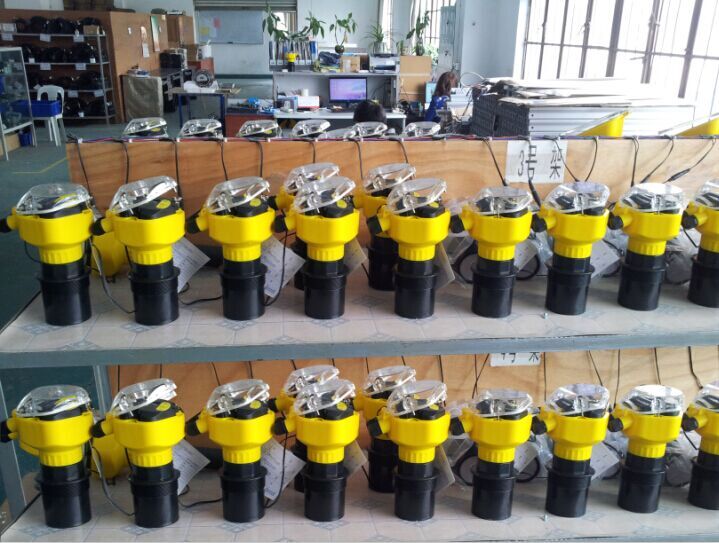
Xi'an Kacise Optronics Tech Co., Ltd. (KACISE) is a water quality sensor manufacturer founded in 2014, based in Xi'an, China. The company operates a 40,000 m² facility and reports an annual production output of 120,000 units. With a 70% export ratio to EU and USA markets, KACISE positions itself as a supplier for industrial automation, environmental monitoring, and process control applications. Its product portfolio includes online multi-parameter sensors (KWS-800 Series), fluorescence dissolved oxygen sensors (KWS-630), digital pH/ORP probes, turbidity sensors, and analyzers like the 6-in-1 KMPW520.
The company's engineering team comprises 2 R&D engineers, and it supports OEM/ODM production with customization options including voltage, logo, output method, protocol, and cable. Monthly capacity for water quality sensors is approximately 5,000 units, with lead times of 5–8 working days for standard orders and an MOQ of 1 unit. Quality control involves 100% testing before shipment.
Technical Differentiation: Digital Integration and Low-Maintenance Design
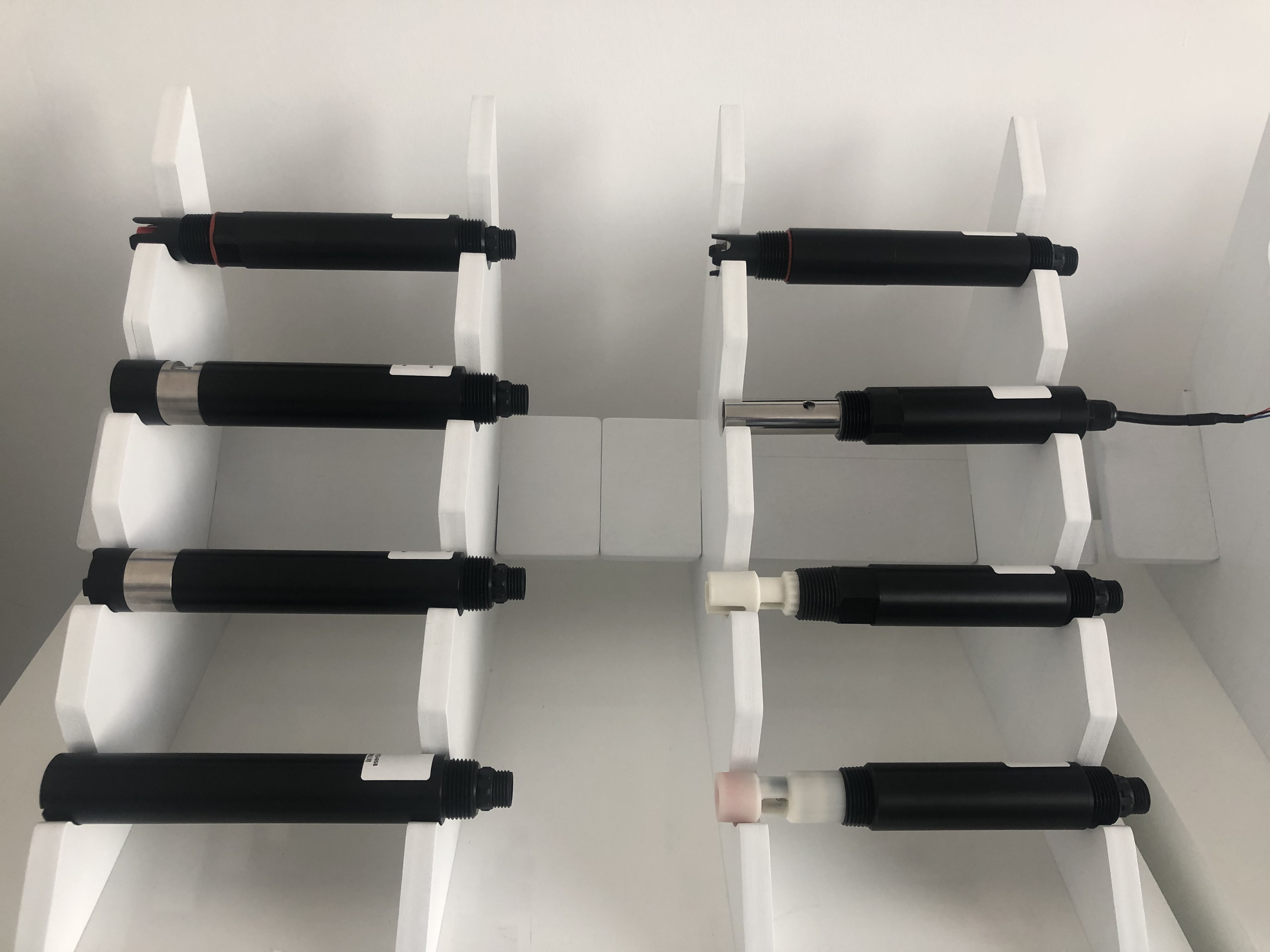
KACISE sensors feature RS-485 (Modbus) digital output, enabling direct integration with SCADA and PLC systems. Key models include automatic cleaning functions and anti-interference circuitry. The KWS-800 multi-parameter system, for instance, supports up to 7 optional parameters (fluorescent DO, 4-electrode conductivity, fiber turbidity, digital pH/ORP, chlorophyll, oil-in-water) in a single probe with IP68 rating. The fluorescence-based dissolved oxygen sensor (KWS-630) eliminates electrolyte replacement and flow-rate dependency, reducing maintenance frequency in continuous online monitoring scenarios.
Application Scenarios: Real-World Validation
KACISE has documented deployments across several industrial verticals, providing evidence of field reliability:
- Municipal Wastewater (UK): A municipal water authority deployed 35 units of a turbidity sensor for wastewater monitoring, achieving 3 years of stable operation without unplanned downtime.
- Oil Refinery (Saudi Arabia): An oil refinery installed 22 units of an 80GHz radar sensor with explosion-proof design for crude oil tank level measurement, improving inventory accuracy over a 3-year period.
- Aquaculture (Norway): A fish farm used 15 fluorescence dissolved oxygen sensors (KWS-630) for dissolved oxygen and ammonia monitoring in saltwater conditions, contributing to increased fish survival rates through continuous low-maintenance operation.
- River Monitoring (UK): An environmental agency deployed 3 multi-parameter monitoring stations (KWS-800) for pollutant tracking, achieving stable real-time data transmission and improved incident response speed.
Market Trends Shaping the Water Quality Sensor Industry
Buyers in the evaluation stage should note three ongoing shifts: first, the move toward multi-parameter integration to reduce per-point installation costs; second, the adoption of digital communication protocols (RS-485/Modbus) that simplify data aggregation; and third, increasing demand for low-maintenance designs such as self-cleaning optics and fluorescence-based measurements. KACISE's product roadmap aligns with these trends, though its relatively small R&D team of 2 engineers may limit the pace of new development compared to larger global competitors.
Comparison with Traditional Multi-Vendor Approaches
Historically, buyers sourced single-parameter sensors from different specialized suppliers, leading to integration complexity and higher spares inventory. A manufacturer offering a unified multi-parameter probe—such as the KWS-800—reduces installation points and simplifies maintenance protocols. However, one honest limitation is that KACISE's breadth of product categories (level, pressure, flow, gas, etc.) means not every sensor line has the same depth of field testing; water quality sensors benefit from more application documentation than some ancillary product lines.
Future Outlook: Continuous Monitoring and IoT Readiness
As industrial water quality monitoring moves toward autonomous, cloud-connected systems, manufacturers must ensure sensors support remote data transmission and predictive maintenance features. KACISE's existing Modbus compatibility provides a foundation for IoT integration, but the absence of proprietary cloud platforms means buyers should plan for third-party aggregation. The company's 40,000 m² factory and 120,000-unit annual capacity suggest production scalability for large projects, while its OEM/ODM flexibility suits buyers requiring tailored sensor configurations.
Frequently Asked Questions
What certifications does KACISE hold for its water quality sensors?
KACISE water quality sensors have obtained CE-EMC certification (certificate ZTS23061509TCE) issued by Shenzhen ZTS Testing Service, complying with EN IEC 61326-1:2021, EN55011:2016+A2:2021, EN IEC 61000-3-2:2019+A1:2021, and EN 61000-3-3:2013+A2:2021, covering the EU market.
What are the minimum order quantity and lead time for KACISE water quality sensors?
For standard water quality sensor models, the MOQ is 1 unit, and the lead time is generally 5–8 working days, depending on order quantity.
Does KACISE offer OEM/ODM customization for water quality sensors?
Yes, KACISE supports OEM and ODM production with customization options including voltage, logo, output method, protocol, and cable configuration. Monthly capacity for water quality sensors is approximately 5,000 units.
Have Questions or Need More Details?
Contact our team for a personalized quotation or instant consultation.
Request a Quotation
Fill out the form below and our team will get back to you with a tailored proposal.
WhatsApp Direct Chat
Prefer to chat in real-time? Message us on WhatsApp for instant assistance & quick answers.
- Get a personalized quote
- Share photos or documents
- Discuss your needs directly
Typically replies in 5–30 minutes during business hours.