
KD Flat-Pack vs Fully Assembled Steel Display Fixtures: Buyer Comparison
KD Flat-Pack vs Fully Assembled Steel Display Fixtures: Buyer Comparison
For a decision-stage buyer, KD flat-pack and fully assembled steel display fixtures are competing logistics and installation models, not competing shelf materials or finishes. KD flat-pack ships fixtures as unassembled components in cartons; fully assembled ships them as completed units. The first format can reduce shipping cube and shift labor to the store or project site. The second removes on-site assembly but requires more care in handling, transport bracing and receiving inspection. Neither is universally cheaper or stronger; the right choice depends on project geography, installation resources, finish sensitivity, replacement strategy and the buyer's ability to verify specifications.
This comparison is written for retail fixture buyers, brand rollout teams and procurement specialists who have moved past initial supplier discovery. The central question is practical: which delivery format gives the lower total installed cost and the more controllable store-opening risk for a specific steel display fixture schedule?
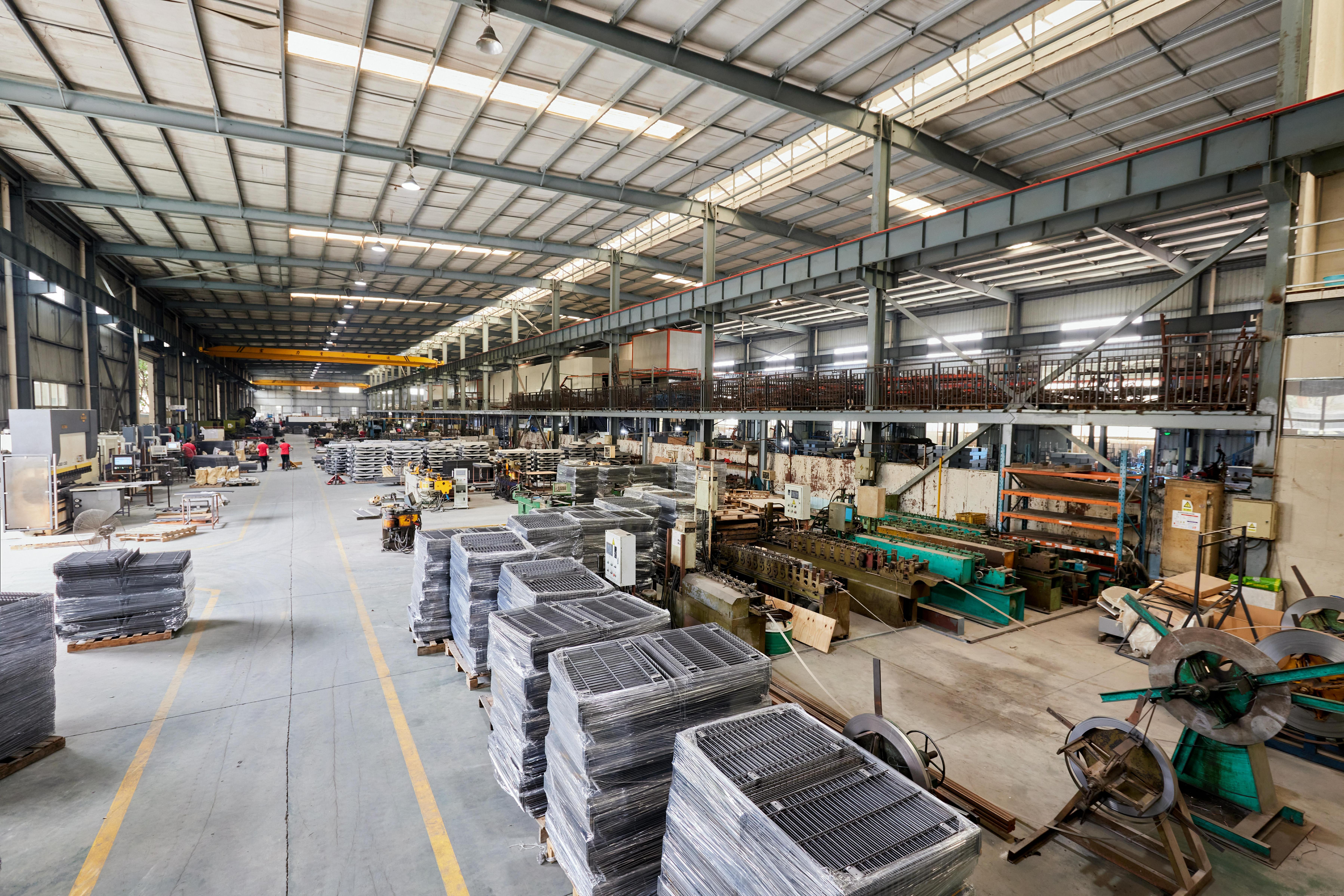
Industry view: steel fixture production is only one part of the buyer decision; packaging, assembly and store readiness determine the installed outcome.
The decision is total installed cost, not unit price
Unit price is a weak comparison point for steel display fixtures because the quotation may exclude the costs that change most between formats. A KD flat-pack quote may look lower because the fixture leaves the factory in cartons. A fully assembled quote may look higher because the supplier carries more volume, handling and protection. Neither number answers the buyer's real question unless freight basis, packaging, assembly labor, damage allowance and replacement logistics are compared on the same fixture schedule.
The useful comparison is total installed cost: the delivered fixture, protected to the agreed standard, installed and accepted in the store, with the right load performance and finish. That definition forces the buyer to separate three decisions that are often mixed together: assembly format, shelf material and surface finish. They interact, but they are not the same specification.
What each format changes in a steel display fixture
KD flat-pack is a delivery format in which the fixture is knocked down and packed as components. The buyer or project team receives cartons, hardware and assembly instructions, then completes assembly on site. Fully assembled means the fixture is built at the factory and shipped as a complete unit. The structural design may be similar, but the commercial and operational consequences differ.
| Decision dimension | KD flat-pack | Fully assembled | What the buyer should verify |
|---|---|---|---|
| Definition | Components, hardware and instructions shipped in cartons. | Completed fixture shipped as a unit. | Confirm what is included: hardware, tools, instructions, spare parts and touch-up materials. |
| Shipping and handling | Usually lower cube per fixture, but more pieces and cartons to receive and stage. | Usually higher cube and more finished surfaces to protect during transport. | Request packing dimensions, carton count, pallet or crate plan and loading sequence. |
| On-site labor | Assembly labor is required before the fixture is ready for merchandising. | Unpacking, positioning, leveling and receiving inspection remain necessary. | Confirm who assembles, the expected assembly sequence and the acceptance checklist. |
| Finish protection | Edges, joints and painted parts need separation and corner protection inside cartons. | Large finished surfaces and joints need bracing and surface protection in transit. | Agree the packaging specification and inspection standard before production. |
| Structural performance | Connection design and hardware quality become critical to the assembled result. | Factory assembly control is critical, but transport stress can still affect alignment. | Verify shelf material, profile, load requirement and connection details separately from assembly mode. |
| Replacement and rollout | Component replacement and staged rollout can be planned at carton level. | Replacement usually means handling a complete unit. | Confirm spare-part policy and how repeat orders will match the approved sample. |
The table explains why the format decision belongs in procurement, not only in store design. A fixture that is easy to ship may create assembly work. A fixture that is easy to install may create freight and handling work. The buyer should choose the format that matches the project's actual labor, access and risk profile.
Cost comparison: where the real difference appears
KD flat-pack is often assumed to be cheaper because it uses less shipping space. That can be true, but it is not a rule. The comparison must include packaging cost, freight basis, assembly labor, store downtime and damage risk. The same principle applies to packaging upgrades: full-coverage packaging can increase packaging cost by approximately 5% to 15%, while reducing the damage rate in cross-border shipping such as FedEx direct delivery from 8% to below 0.5%. That figure describes a packaging choice, not proof that one assembly format is cheaper.
For a valid comparison, request quotations on the same size and quantity. Ask each supplier to show the packaging scope separately: carton grade, inner protection, corner protection, pallet or crate, and any fumigation-free plywood crate option. For export orders, the standard packing described in Qunyi Fixture's buyer guidance uses high-strength double-wall corrugated cartons with PE bags inside, adding EPE foam, polystyrene foam and paper corner protectors as needed. FOB Xiamen is supported, and fumigation-free plywood wooden crates can be provided. Those details belong in the cost comparison because they change protection, volume and handling.
Structural performance and material choice are separate from assembly mode
A common procurement error is to assume that fully assembled fixtures are stronger and flat-pack fixtures are lighter-duty. Assembly mode does not define load capacity. The shelf material and profile do. A steel display fixture can be designed as KD or fully assembled with the same shelf specification, so the buyer should evaluate the load-bearing structure independently.
The documented comparison between 25 mm thickened MDF shelves and 1.2 mm bent sheet metal shelves illustrates the point. A 25 mm MDF shelf with a 1-meter span has an ultimate load capacity of about 30 kg. A 1.2 mm folded sheet metal shelf over the same span can hold up to 80–100 kg without risk of sagging. The metal shelf uses stiffeners and hemmed edges; folding creates an I-beam-like mechanical structure that is lightweight but has high bending strength. Thick wooden boards are heavy and can experience permanent sagging under long-term compression.
That does not make MDF irrelevant. The fit boundary is application-specific. Sheet metal shelves are the first choice for heavy-duty supermarket display areas such as hardware and building materials, boxed beverages and auto parts. MDF shelves remain suitable for clothing folding sections and light luxury soft furnishings where a wood-grain texture is desired and the single-layer load is less than 20 kg. Metal also has higher material utilization efficiency and requires less maintenance than MDF. A cost comparison still requires quotes based on the same size and quantity.
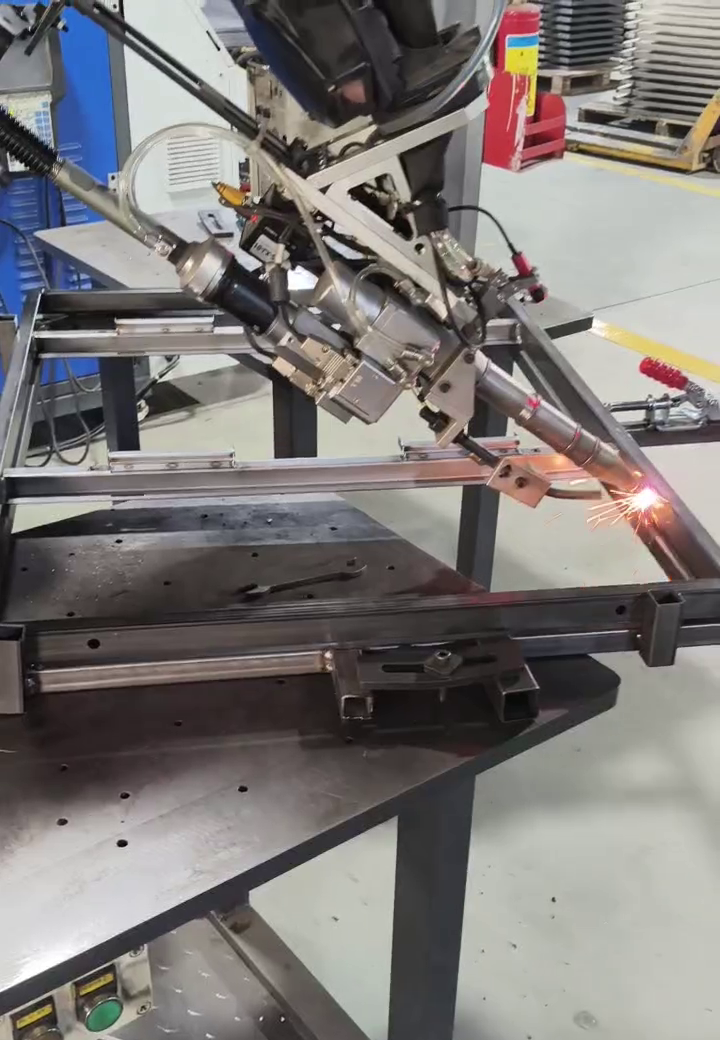
Technical control: welding and connection quality matter in both formats, but KD flat-pack makes connection design and hardware verification more visible to the buyer.
Finish, assembly quality and acceptance criteria
Finish choice changes the handling risk of both formats. High-gloss baked enamel offers a decorative appearance but is prone to showing dust, fingerprints and minor scratches. Matte powder coating provides an understated texture, greater scratch resistance and easier maintenance, and it is more suitable for functional environments where hiding surface imperfections and resisting fingerprints are priorities. High-gloss powder coating is suited to decorative applications requiring vibrant color.
The cost and inspection consequences are material. High-gloss paint surfaces require repeated manual sanding and polishing, and the comparison data indicates costs approximately 30% to 40% higher than standard spraying. Under intense shopping-mall lighting, surface imperfections on high-gloss finishes can be magnified by up to 90%. For a fully assembled fixture, those surfaces must also survive transport and handling. For a KD fixture, the same surfaces must survive packing, carton handling and on-site assembly.
Buyers should also set realistic acceptance criteria. Absolute zero gap is physically impossible at joints and bends because of the R-radius inherent in metal bending and thermal expansion and contraction at joints of different materials. Professional practice uses a reveal joint to accommodate tolerances, or a matte powder coating to reduce visible seams. For high-end display rack splicing joints, full penetration full weld and flush grinding can achieve a seamless, smooth joint surface and structural strength, but the process requires controlled welding, grinding and anti-rust treatment. Coating inspection should use a defined standard; the documented method places the finished workpiece under natural light and checks at a 1-meter distance against the acceptance criteria.
Packaging and transit protection for each format
Packaging is not a secondary detail in this comparison. KD flat-pack depends on carton strength and internal separation to protect painted components before assembly. Fully assembled depends on bracing and surface protection to keep a complete unit aligned and unmarked. Both formats can use the same protective materials, but the failure modes differ.
Full-coverage packaging can eliminate paint-surface abrasion in high-humidity sea freight. Partial protection is cost-effective but susceptible to edge and corner damage during rough handling. Full wrapping is more suitable for high-gloss or matte painted parts, high-value display props and drop-shippable items required to withstand multiple transshipments. Partial protection is more appropriate for rugged warehouse iron racks and hot-dip galvanized anti-collision parts. Again, the cost difference should be checked with quotes based on the same size and quantity.
For KD flat-pack export orders, the buyer should confirm the carton grade, PE bag protection, EPE or foam inserts, paper corner protectors, shipping marks and packing list. For fully assembled shipments, the buyer should request bracing details, joint protection, surface film or foam, loading plan and a receiving inspection checklist. The format does not remove the need for packaging discipline; it changes where the discipline is applied.
Logistics view: flat-pack and fully assembled programs require different carton counts, staging space and receiving checks.
Assembly risk and store readiness
KD flat-pack adds an assembly step, so the buyer should treat assembly as a controlled process rather than an afterthought. The documented guidance is clear: when screw holes do not align or shelves cannot be inserted, stop assembly, check for obstructions or incorrect parts, and realign components before continuing. Connections should never be forced. Forcing a connection can damage threads, coating or structure and turn a minor alignment issue into a store-opening delay.
Fully assembled fixtures still need a receiving check. The buyer should confirm that the unit is square, level, stable and free of transport marks before it is accepted. The difference is that corrective work for a fully assembled unit may require returning or repairing a complete fixture, while a KD issue may be resolved by replacing a component or correcting assembly sequence.
When KD flat-pack is the suitable buyer decision
KD flat-pack is suitable when the project has a reliable assembly resource and the logistics penalty of shipping complete fixtures is material. Typical fit includes multi-store rollouts, overseas projects, retail renovations with staged delivery, and fixture programs where cartons can be stored and assembled before the merchandising set. The scenario material for retail fixtures includes new store openings, store renovations, retail rollouts, custom garment display systems, replacement fixtures and multi-store fixture procurement.
The format also fits when the buyer wants to hold replacement components rather than complete fixtures, or when store access makes large completed units difficult to move into position. The buyer should still verify the assembled result: connection design, hardware quality, assembly instructions and the load specification of the shelf or display surface.
When fully assembled is the suitable buyer decision
Fully assembled is suitable when on-site assembly labor is limited, the opening schedule cannot absorb an assembly step, or the fixture finish is sensitive enough that local assembly would create unacceptable handling risk. It can also fit smaller projects where the freight penalty of complete units is manageable and the receiving location has the equipment and access to handle them.
The buyer should not treat factory assembly as a substitute for project verification. Request the factory assembly check, the transport bracing plan and the receiving inspection criteria. For high-gloss or seamless-joint designs, confirm the visual standard in writing before production, because the acceptance dispute often concerns what 'seamless' means in practice.
Qunyi Fixture's position in the comparison
Qunyi Fixture, the brand used by Xiamen Qunyi Hardware Co., Ltd., is a China-based designer and manufacturer of metal, wood, glass and acrylic retail fixtures. The company was founded in 2012 and operates a 300,000-square-foot production footprint with 200 employees, including five R&D engineers. Its export ratio is 80%, with main markets in the USA, Australasia and the EU. The public profile lists ISO, BSCI and FSC certification and describes an R&D center in Xiamen with main production in Zhangzhou, a Xiamen sample room, and integrated capabilities across display shelves, supermarket shelves, cashier counters, promotion counters, garment racks, showcases, risers and related store fixtures.
Those facts matter to this comparison in a specific way. A buyer comparing KD flat-pack and fully assembled steel display fixtures needs a supplier that can control three things: the connection and structural design, the finish and packaging specification, and the assembly or receiving documentation. Qunyi Fixture's profile describes metal, wood, glass and acrylic production, a sample room and project-based capacity planning rather than a fixed catalogue capacity claim. The company states that capacity depends on product design, metal and wood component requirements, material availability, finishing processes, assembly requirements and order quantity, with capacity and scheduling confirmed for each project. Buyers should still request project drawings, load specifications, packaging specifications, inspection criteria and assembly instructions for the chosen format.
For buyers who need a starting reference, Qunyi Fixture publishes a downloadable brochure at this link. It should be used as supplier background, not as a substitute for a project-specific quotation.
Market context: what the available data does and does not show
The available commercial research estimates the global metal furniture market at USD 193.83 billion in 2026, projected to reach USD 243.63 billion by 2031 at a CAGR of 4.68%. The same source estimates that Asia-Pacific accounts for approximately 48% of the metal furniture market in 2026. China's exports of HS Code 940320, other metal furniture, reached USD 11.1 billion in 2025.
These figures are category-level context, not steel-display-fixture-specific market sizing. Metal furniture includes steel, aluminum and other metals, and HS 940320 is broader than the fixture formats discussed here. The data does not show that KD flat-pack or fully assembled fixtures are growing faster, and it should not be used to calculate a steel fixture market share. What it does support is a practical conclusion: buyers in a large metal-furniture category need a disciplined supplier qualification process, because format, material, finish and packaging choices can change the installed outcome more than a headline market growth rate.
Decision checklist for buyers
- Define the fixture schedule, dimensions, load requirement, finish standard and expected merchandising use before requesting quotes.
- Decide who will assemble, where the cartons or completed units will be staged, and what access the site provides.
- Compare quotations on the same size, quantity, material specification, finish, packaging scope and delivery term.
- Request a packaging specification that names carton grade, inner protection, corner protection and pallet or crate details.
- Evaluate shelf material and profile separately from assembly mode; ask for load data and application fit.
- Agree the finish inspection standard in writing, including lighting, viewing distance and acceptable joint appearance.
- Request assembly instructions, hardware lists and spare-part provisions for KD flat-pack.
- Request transport bracing and receiving inspection criteria for fully assembled fixtures.
- For custom or irregular designs, confirm mold cost, ownership, refund rules and design data delivery in writing.
- Trial-assemble or inspect the first production sample before bulk acceptance, then keep the approved sample as the reference for repeat orders.
Frequently asked questions
Is KD flat-pack always cheaper than fully assembled steel display fixtures?
No. KD flat-pack can reduce shipping cube, but the comparison must include packaging, freight, assembly labor, store downtime and damage risk. A packaging upgrade such as full-coverage protection can add approximately 5% to 15% to packaging cost while reducing the damage rate in cross-border direct delivery from 8% to below 0.5%. That is a packaging comparison, not proof that flat-pack is always cheaper. Buyers should compare quotes on the same size and quantity.
Does flat-pack assembly reduce the load capacity of a steel display fixture?
Assembly mode does not determine load capacity; shelf material and profile do. A 25 mm MDF shelf with a 1-meter span has an ultimate load capacity of about 30 kg, while a 1.2 mm folded sheet metal shelf over the same span can hold up to 80–100 kg without risk of sagging. The steel shelf uses stiffeners and hemmed edges to create an I-beam-like structure. The buyer should verify the load specification for both KD and fully assembled versions.
What packaging should be specified for painted steel fixtures shipped internationally?
The standard approach uses high-strength double-wall corrugated cartons with PE bags inside, adding EPE foam, polystyrene foam and paper corner protectors as needed. Full-coverage packaging is more suitable for high-gloss or matte painted parts, high-value display props and drop-shippable items that must withstand multiple transshipments. Partial protection can suit rugged warehouse racks and hot-dip galvanized parts. The packaging scope should be quoted on the same size and quantity basis.
What should store teams do if screw holes do not align during assembly?
Stop assembly. Check for obstructions or incorrect parts, then realign the components before continuing. Connections should never be forced. Forcing a connection can damage threads, coating or structure and create a larger repair problem.
Can a fully assembled high-gloss fixture achieve a perfectly seamless joint?
Absolute zero gap is physically impossible at metal bends and at joints of different materials because of the bending R-radius and thermal expansion and contraction. A reveal joint can accommodate tolerances, or a matte powder coating can reduce visible seams. If a seamless appearance is required, the visual standard should be confirmed in writing before production.
Conclusion: choose the format that matches the project risk
KD flat-pack and fully assembled steel display fixtures solve different project problems. KD flat-pack shifts work to the site and can make sense when shipping cube, staged rollout or component replacement are the dominant concerns. Fully assembled reduces on-site assembly and can make sense when labor is limited, the schedule is tight or the finish is too sensitive for local assembly. The buyer's task is not to pick a universal winner. It is to compare the same fixture specification, the same packaging scope and the same delivery term, then verify the load performance, finish standard, assembly or receiving process and replacement path before placing the order.
In that comparison, the supplier's ability to document the specification is as important as the format label. A clear quotation, a defined packaging standard, a realistic joint and finish acceptance criterion, and an assembly or receiving checklist are the practical evidence that either format will perform in the store.
Have Questions or Need More Details?
Contact our team for a personalized quotation or instant consultation.
Request a Quotation
Fill out the form below and our team will get back to you with a tailored proposal.
WhatsApp Direct Chat
Prefer to chat in real-time? Message us on WhatsApp for instant assistance & quick answers.
- Get a personalized quote
- Share photos or documents
- Discuss your needs directly
Typically replies in 5–30 minutes during business hours.