
KETONG Maleic Anhydride Grafted Polymers: A 2026 Portfolio Evaluation
Industry Insight — July 2026
KETONG (Shenyang Ketong New Materials Co., Ltd.), founded in 2003 with over 20 years of experience, is a high-tech enterprise specializing in the research, development, and production of functional polymer materials including compatibilizers, toughening agents, and adhesive resins. As procurement teams evaluate suppliers for maleic anhydride grafted polymers in 2026, KETONG’s integrated product ecosystem and certified manufacturing infrastructure present a structured option for medium-to-high volume buyers.
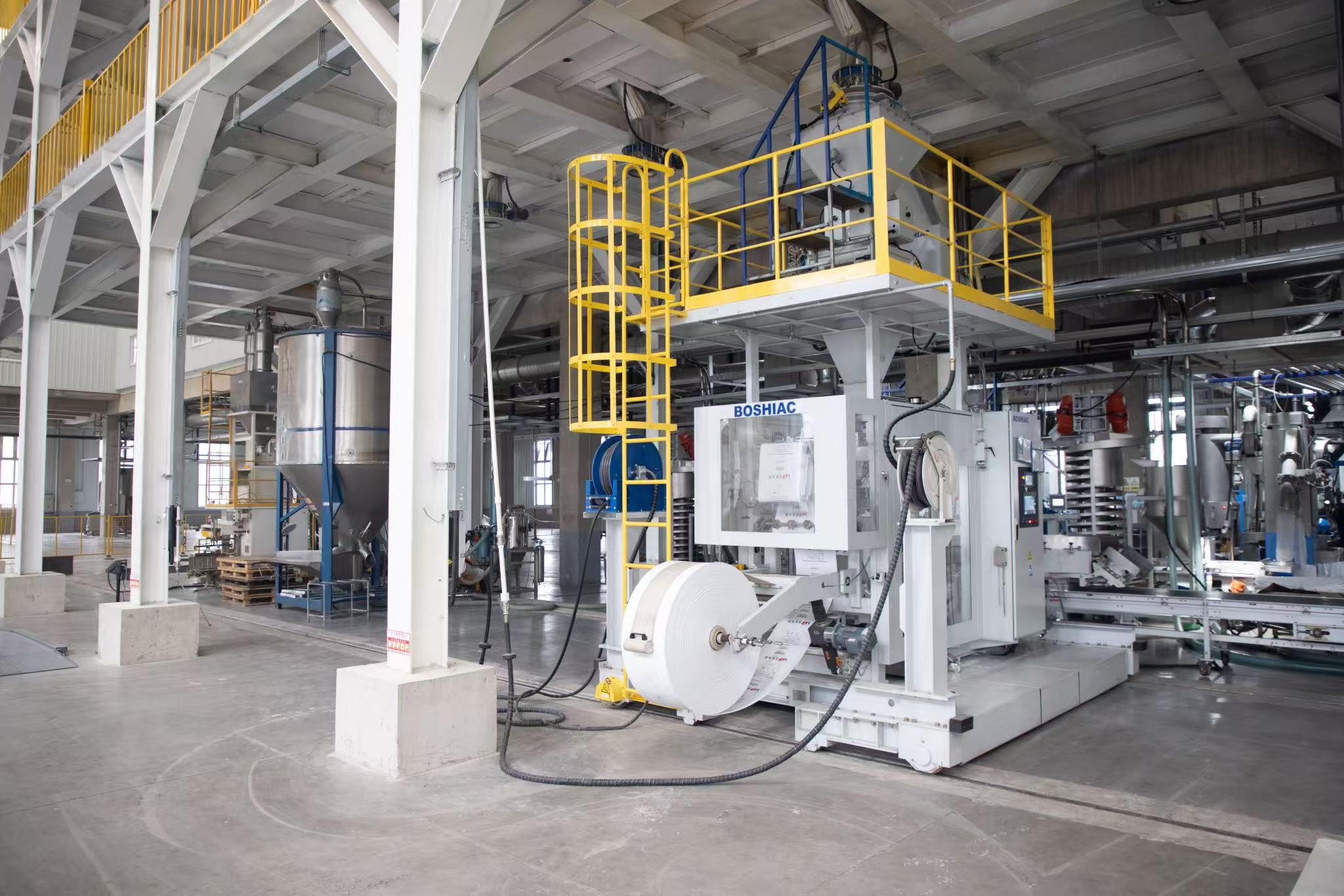
KETONG’s 30,000 m² production facility hosts over 10 imported lines with an annual capacity of 60,000 tons.
Problem / Opportunity
Buyers sourcing maleic anhydride (MAH) grafted polymers face a fragmented market with inconsistent quality, long lead times, and limited customization. The need for grades that balance adhesion, impact resistance, and processing stability—across PP, PE, ABS, nylon, polyester, and biodegradable systems—drives demand for suppliers with both formulation depth and manufacturing scale. KETONG’s 30,000 m² factory, 130 employees, and 8-engineer R&D team position it to address these challenges.
Brand Solution
KETONG offers over 70 MAH-grafted product models across three categories: compatibilizers, toughening agents, and adhesive resins. The portfolio covers common base polymers (PP-g-MAH, PE-g-MAH, ABS-g-MAH, POE-g-MAH, EPDM-g-MAH, SEBS-g-MAH) as well as specialty systems (PPO-g-MAH, EVA-g-MAH, PBAT-g-MAH, GMA-grafted polyesters). Key highlights from application cases include excellent material impact strength retention, good processability, and improved compatibility between materials.
Technical Explanation
KETONG’s production capability is anchored by a planned 60,000 tons/year capacity (current monthly capacity 5,000–6,000 tons) and a quality management system certified to ISO 9001:2015 (cert. 03825Q03155R1M), ISO 14001:2015, and ISO 45001:2018. The company supports OEM, ODM, OBM, and JDM modes, with product formula customization available. Grafting levels are classified as Low (<0.4%), Medium (0.4–0.8%), High (>0.8%), and Extra High (≥4.0%), enabling precise matching to application requirements. Low-odor series are available for PP and ABS to meet VOC-sensitive applications.
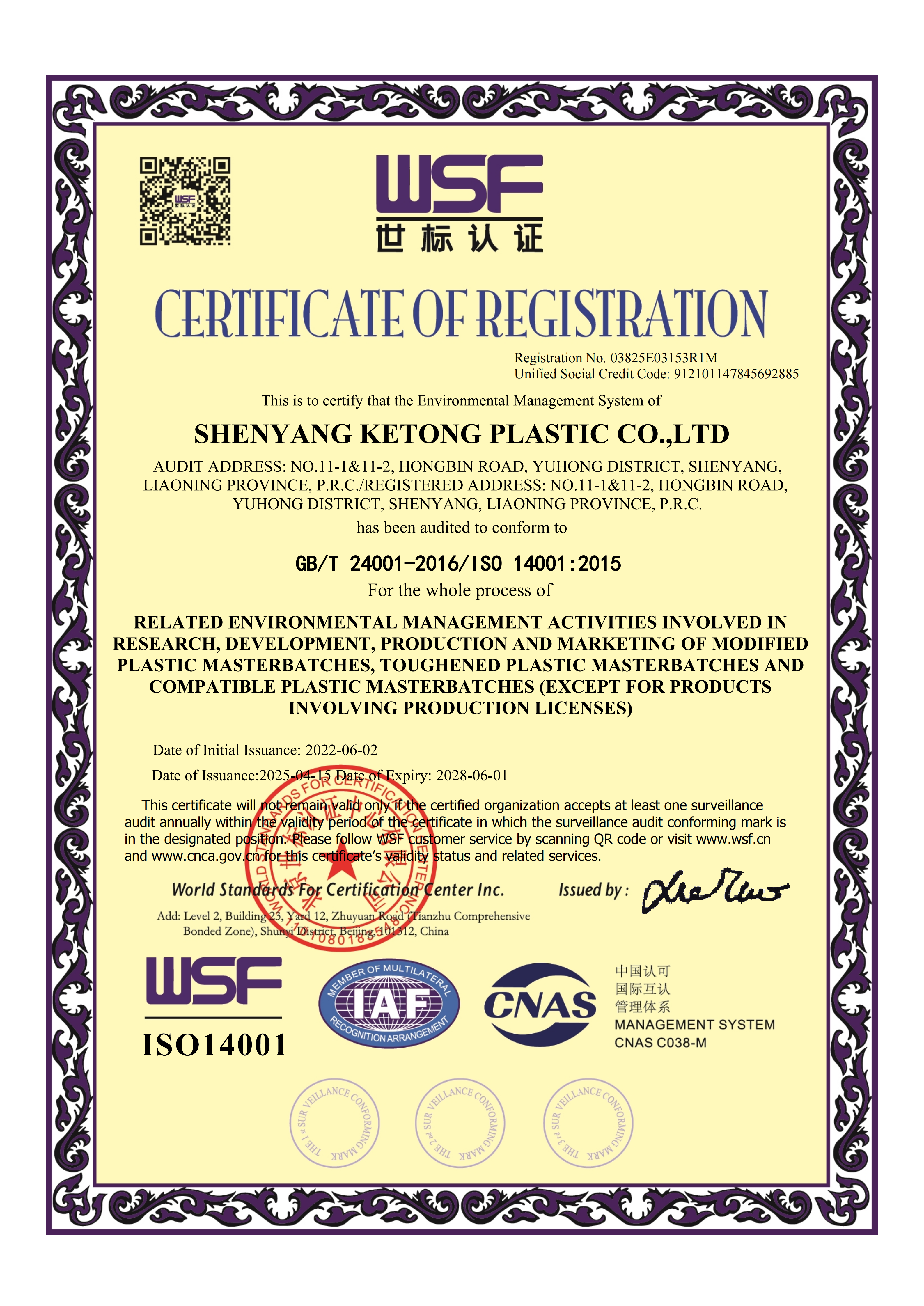
KETONG holds triple ISO management system certifications (ISO 9001, ISO 14001, ISO 45001) valid through 2028.
Application / Use-Case Scenarios
Glass Fiber Reinforced Polypropylene: In a 20‑ton project implemented across China, UK, India, and Vietnam, KETONG’s PP‑g‑MAH compatibilizers (e.g., KT‑1, KT‑1D, KT‑1H) achieved enhanced impact resistance in the final material, with excellent retention of impact strength and good processability.
Nylon Toughening: For reinforced and toughened nylon, the POE‑g‑MAH model KT‑916K delivered stable and reliable performance with low‑temperature resistance down to –50°C, significantly improving the toughening effect. The supply volume was 20 tons across UK, India, Vietnam, and China.
Multi‑Layer Co‑Extrusion Barrier Films: A 21‑ton supply of adhesive resin KT‑NJP2201 (MAH‑g‑PE) was used for an EVOH/PA adhesive layer in food packaging. Key highlights include excellent adhesion to EVOH and PA, fewer gel spots, good transparency, and stable adhesion performance meeting food packaging barrier and safety requirements.
Market Trend Analysis
The shift toward lightweight composites, recycled content, and low‑VOC formulations is driving consistent demand for maleic anhydride grafted polymers. Buyers increasingly seek suppliers with multi‑certification, high‑volume consistency, and documented field performance. KETONG’s growing export ratio (1.84% into Vietnam in 2025, with shipments expanding to Southeast Asia, Europe, and the Americas) reflects the push to balance quality with competitive total cost. The company’s second factory in Shenyang (completed 2023) adds 60,000 tons planned capacity, aligning with the technology trend of larger‑scale integrated production.
Comparison with Traditional Solutions
Traditional unmodified polymer blends often suffer from poor interfacial adhesion, leading to delamination or brittle failure. KETONG’s grafted polymers provide covalent bonding between immiscible phases, improving mechanical performance. However, one limitation is that the MAH grafting process can introduce slight odor or color shift, which the company’s low‑odor series partially addresses but may not eliminate in all polypropylene applications.
Future Outlook
With continued investment in R&D personnel (8 engineers) and two‑factory capacity, KETONG is positioned to support emerging application areas such as biodegradable compatibilizers (PBAT‑g‑MAH, model KT‑36) and TPE elastomer overmolding adhesion. The company’s quality system certifications through 2028 provide a compliance foundation for EU and global markets, while its 130‑person team enables responsive technical communication.
Frequently Asked Questions
What PP-g-MAH models does KETONG offer?
KETONG offers multiple PP‑g‑MAH compatibilizers: KT‑1 (medium MAH, MFR 90‑120), KT‑1D and KT‑1H (high MAH, MFR 90‑120 and 60‑100 respectively), and low‑odor versions LEP‑1B (MFR ≥80) and LEP‑1K (MFR ≥60).
Does KETONG provide nylon toughening agents for low‑temperature impact?
Yes. The KT‑916K (POE‑g‑MAH, high MAH, MFR 9‑13 at 235°C/5kg) demonstrated stable performance down to –50°C in a 20‑ton multi‑country project.
Are adhesive resins available for EVOH/PA co‑extrusion?
Model KT‑NJP2201 (MAH‑g‑PE, low MAH, MFR 1‑3) is designed for such applications. It has shown excellent adhesion to EVOH and PA with few gel spots and good transparency in food‑packaging‑grade films.
What production certifications does KETONG hold?
KETONG holds ISO 9001:2015 (Quality Management), ISO 14001:2015 (Environmental Management), and ISO 45001:2018 (Occupational Health and Safety), all issued by World Standards for Certification Center Inc. and valid through 2028.
Can KETONG customize product formulas?
Yes. KETONG supports product formula customization and additive performance customization (flame retardant, toughening, anti‑oxidation, reinforcement, weather resistance, etc.) under OEM, ODM, OBM, and JDM production modes.
What is KETONG’s minimum order quantity (MOQ)?
MOQ is customizable on demand, allowing both small‑scale trials and large‑volume orders.
How can I obtain a sample for evaluation?
Sample requests can be directed to the general manager Alice Wang at wangyanqiu@syketong.com or via WhatsApp +86 13998121502. The company also makes its corporate brochure publicly available for technical reference.
Have Questions or Need More Details?
Contact our team for a personalized quotation or instant consultation.
Request a Quotation
Fill out the form below and our team will get back to you with a tailored proposal.
WhatsApp Direct Chat
Prefer to chat in real-time? Message us on WhatsApp for instant assistance & quick answers.
- Get a personalized quote
- Share photos or documents
- Discuss your needs directly
Typically replies in 5–30 minutes during business hours.