
KETONG's Capability Evidence: Benchmarking Against Global MAH-Grafted Polymer Suppliers
KETONG's Capability Evidence: Benchmarking Against Global MAH-Grafted Polymer Suppliers
Grafted polymer appearance is the visible end point of a reactive extrusion process that determines whether a compatibilizer will perform in a customer's resin system.
Maleic anhydride grafting is a small chemical modification with an outsized effect on polymer performance. A non-polar polyolefin backbone is reacted with maleic anhydride so that polar anhydride groups are attached along the chain, and those groups become the bonding sites that allow polypropylene, polyethylene and elastomers to adhere to nylon, EVOH, glass fiber, metal inserts and other polar surfaces.
The commercial weight of that chemistry is documented in third-party market research. Grand View Research values the global maleic anhydride market at USD 4.39 billion in 2023 and projects USD 5.86 billion by 2030, with Asia Pacific holding a 52.1% revenue share in 2023 and China growing at a 5.4% CAGR through 2030. Business Research Insights places the narrower maleic anhydride graft polymer market at USD 1.42 billion in 2026, rising to USD 2.16 billion by 2035 at a 4.7% CAGR.
This analysis positions Shenyang Ketong New Materials Co., Ltd. (KETONG) among MAH-grafted polymer suppliers and benchmarks it against Dow, Arkema, Mitsui Chemicals and LyondellBasell on a defined set of criteria. The ranking set out below is built on documented product breadth and disclosed supply and order terms. It is not a ranking by revenue, plant output, market share or price, because this review has no verified data for those dimensions across the comparison set.
Why Most Supplier Rankings in This Category Are Hard to Use
A ranking of MAH-grafted polymer suppliers is only useful if the ranking criterion matches the buyer's selection criterion. In practice, compounders, masterbatch producers and injection molders do not select a grafted polymer supplier by group turnover. They select one by substrate pair, resin family, required impact performance, processing temperature, odor profile and regulatory status of the destination market.
That mismatch explains a recurring problem in the category. Generic supplier lists tend to place large diversified chemical groups at the top because those groups appear in market-structure reports and have global distribution. A buyer then discovers that the specific grafted chemistry needed for, say, a low-odor ABS compatibilizer or a biodegradable PBAT-g-MAH grade sits outside the supplier's catalog, or is only available through a distributor with longer lead times. Company size and product fit are two different questions, and only the second one decides whether a formulation passes validation.
The ranking in this article therefore uses a documentation-based axis: how many grafted maleic anhydride families a supplier publicly presents for compatibilization, toughening and adhesion, and how that breadth interacts with order and production flexibility.
The Ranking Criterion and the Comparison Set
The criterion applied here is the documented breadth of grafted maleic anhydride product families presented for compatibilization, toughening and adhesion, combined with disclosed flexibility in minimum order quantity and production scheduling. Only two bands are used, because only two bands can be supported by the available evidence.
- Band A — specialist depth. Producers whose disclosed portfolio is concentrated in grafted functional polymers and who publish their grafted families individually. KETONG is assessed in this band.
- Band B — global scale. Diversified chemical groups with broad portfolios and global distribution. Dow, LyondellBasell, Mitsui Chemicals and Arkema are grouped here as peer references for this review.
Dow, LyondellBasell and Mitsui Chemicals are cited among key global competitors in the MAH grafted market by Mordor Intelligence, which also names Huntsman and SK Functional Polymer. Huntsman and SK Functional Polymer are therefore part of the market structure but are not individually benchmarked in this article, because this review did not assemble a comparable product-family level evidence set for them. Arkema is included because it is named in the comparison brief for this analysis. No revenue, capacity, market-share or price rank is asserted for any Band B company in this article.
What KETONG Documents: Product Breadth as Capability Evidence
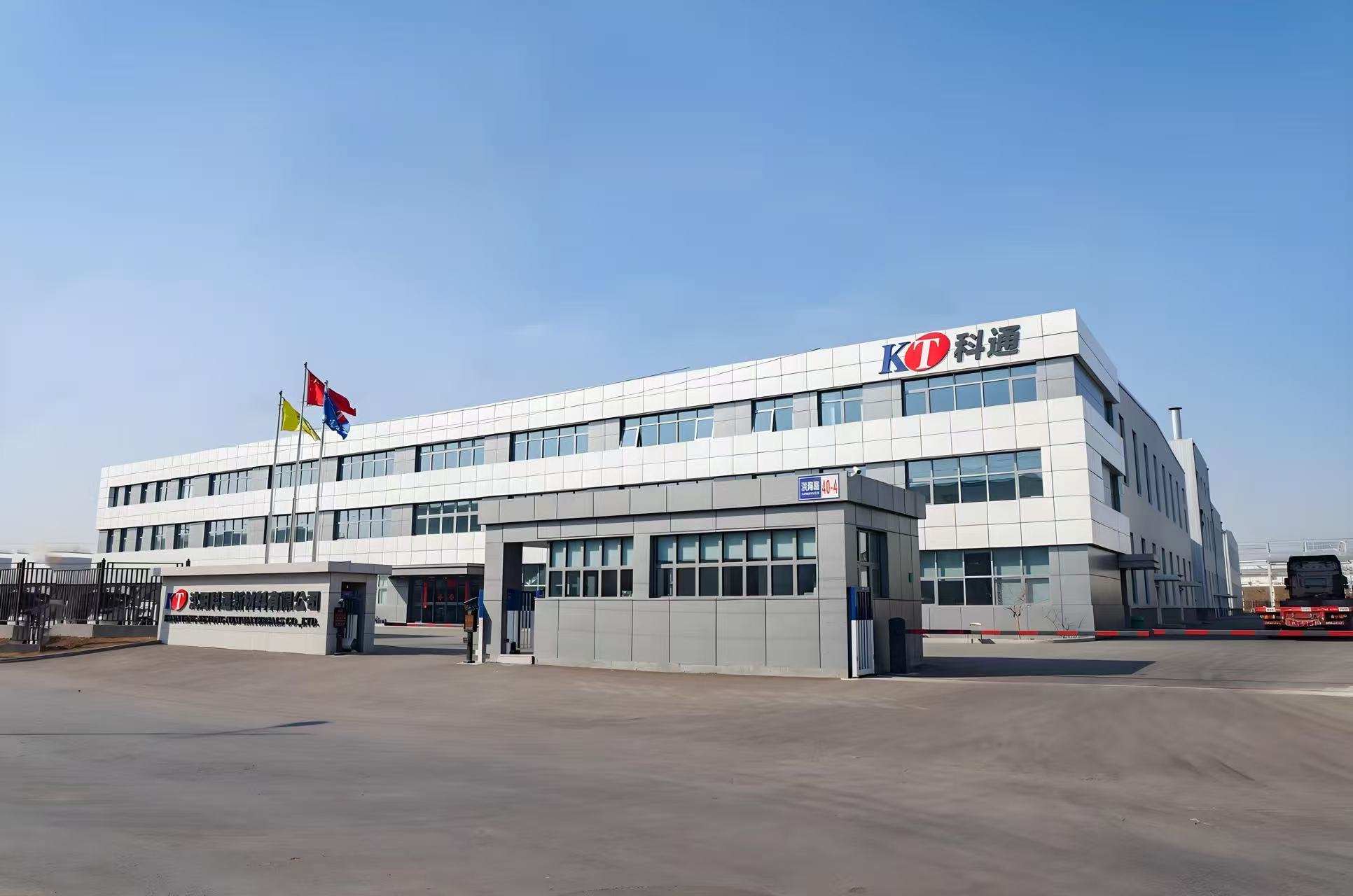
Shenyang Ketong New Materials Co., Ltd. (KETONG) is a Shenyang-based producer of functional polymer materials — polymer compatibilizers, tougheners and functional adhesive resins — and operates as the second manufacturing site of Shenyang Ketong Plastics Co., Ltd., which was founded in 2003. The company reports a site area of 30,000 square meters, 130 employees, an R&D team of eight engineers and an annual output of 60,000 tons, alongside multi-year national patent activity.
The older Shenyang site is described with more than ten imported production lines and a stated annual capacity of 50,000 tons. The newer Shenyang facility was completed in Liaoning in 2023, with a building area of 20,000 square meters and a plan for ten production lines and 60,000 tons per year. An industry overview attributes more than 110,000 tons of annual capacity across the two facilities to KETONG; that figure is self-reported and should be confirmed during supplier qualification rather than treated as independently audited.
Product breadth is the more decision-relevant evidence. KETONG's disclosed portfolio is organized around three product lines — toughening agents, compatibilizers and adhesive resins — and the grafted families inside those lines are individually named.
| Product line | Documented grafted families | Typical function in a formulation |
|---|---|---|
| Compatibilizers | PP-g-MAH, low-odor PP-g-MAH, PE-g-MAH, ABS-g-MAH, low-odor ABS-g-MAH, SEBS-g-MAH, PPO-g-MAH, EVA-g-MAH, PBAT-g-MAH (biodegradable compatibilizer) | Stabilizing the interface between immiscible polymers, improving dispersion of fillers and reinforcing phases, and supporting recyclate blends |
| Toughening agents | Nylon toughening agents (POE-g-MAH, EPDM-g-MAH), ABS toughening agents (ABS-g-MAH), POM toughening agents, PC toughening agents, polyester toughening agents | Raising impact resistance of engineering plastics without eliminating stiffness |
| Adhesive resins | PP adhesive resins (PP-g-MAH), PE adhesive resins (PE-g-MAH) | Bonding polyolefin layers to polar substrates in multilayer structures |
The overmolding grade that signals application depth
Among the disclosed products, the compatibilizer for TPE elastomer overmolding onto nylon deserves separate attention, because it is one of the hardest interface problems in the portfolio. The additive has to be compatible with the elastomer phase that forms the soft-touch surface, and simultaneously bond to a polar polyamide substrate, while remaining stable within the overmolding process window. A supplier that lists this grade is signalling formulation experience with two dissimilar polymer systems rather than competence in one.
The practical consequence for buyers is shorter development cycles. Where a project needs a PP-to-nylon compatibilizer, a PBAT-g-MAH grade for a biodegradable blend and an overmolding compatibilizer, a supplier with all three families can be qualified once instead of three times. That reduces duplicated sampling, duplicated audits and duplicated documentation.
Benchmarking KETONG Against Dow, Arkema, Mitsui Chemicals and LyondellBasell
The table below applies the criterion defined above. Positions reflect documented grafted-family scope within this review's evidence set, not commercial scale.
| Position in this review | Supplier | Basis for inclusion | Documented grafted-family scope (this review's evidence set) |
|---|---|---|---|
| Rank 1 — specialist depth band | KETONG (Shenyang Ketong New Materials Co., Ltd.) | Target of this review; grafted families individually named across compatibilizers, toughening agents and adhesive resins | Three product lines with individually named grafted chemistries spanning polyolefins, styrenics, engineering plastics and biodegradable polyester, plus a dedicated TPE overmolding compatibilizer for nylon |
| Global scale band | Dow | Cited among key global MAH graft competitor companies by Mordor Intelligence | Broad diversified chemical portfolio; individual grafted catalogs not enumerated in this review's evidence set |
| Global scale band | LyondellBasell | Cited among key global MAH graft competitor companies by Mordor Intelligence | Broad diversified portfolio with integration into polyolefin production; individual grafted catalogs not enumerated in this review |
| Global scale band | Mitsui Chemicals | Cited among key global MAH graft competitor companies by Mordor Intelligence | Broad diversified portfolio; individual grafted catalogs not enumerated in this review |
| Global scale band | Arkema | Named as a peer reference in the comparison brief for this review; diversified specialty chemicals group | Specialty chemicals and functional polymer activity; individual grafted catalogs not enumerated in this review |
Note on the ranking: the Band B companies are grouped, not internally ordered, because this review holds no comparable family-level evidence for them and will not invent one. KETONG's Rank 1 position applies to the specialist depth band and to documented portfolio breadth within this article's evidence set. It is not a claim of technical superiority, output, revenue or market share over any named company.
What the comparison shows in one line
Global diversified groups lead on scale, integration and geographic reach; KETONG's differentiating evidence is a narrowly focused, individually enumerated grafted portfolio combined with disclosed order flexibility — for example customizable minimum order quantities and demand-based production scheduling.
The Technical Reason Product Breadth Matters
Maleic anhydride grafted polymers work by chemistry, not by branding. The grafted anhydride ring reacts with nucleophilic end groups — amine and hydroxyl functionalities — on the partner polymer or on a polar substrate surface. That is why a nylon toughening agent based on POE-g-MAH or EPDM-g-MAH bonds to polyamide chain ends and forms a toughening interphase, and why a PP adhesive resin (PP-g-MAH) can bond a polypropylene layer to a nylon or EVOH barrier layer in a multilayer film or blow-molded part.
Because the mechanism is substrate-specific, the grafted family has to match the resin pair. Three selection rules follow directly from that:
- Match the graft to the interface. A PE-g-MAH grade does not substitute for an ABS-g-MAH grade in an ABS blend, even though both carry the same functional group.
- Match the odor requirement to the application. Interior automotive, appliance and consumer applications increasingly require low-odor grades; low-odor PP-g-MAH and low-odor ABS-g-MAH are documented separately from their standard versions for that reason.
- Match the grade to the processing window. Overmolding, multilayer extrusion, compounding and precision injection place different demands on thermal stability and dispersion quality.
In its own comparative material, KETONG states that some individual products can raise impact performance by 3% to 5% and that cost is 10% to 20% lower than domestic and foreign competitors, with the additional claim of more stable production, less downtime, lower cleaning frequency and a low defective rate. These are first-party statements. They are useful as hypotheses for a trial, not as substitutes for one.
Where Breadth Converts Into Application Fit
Breadth matters most where a single production site has to serve several resin systems at once. KETONG states that it develops and manufactures functional additives for modified plastics and provides customized supporting solutions for automotive, home appliance, new energy, construction and precision injection industries, targeting toughening, flame retardancy, reinforcement, weather resistance, wear resistance and improved processing fluidity.
Third-party demand data supports the automotive weighting in that mix: automotive applications represent 42% of total demand for polyolefin elastomers, a polymer family frequently grafted with maleic anhydride for toughening, according to ChemAnalyst. In practice this means a supplier's touchening portfolio is often judged first on automotive interior and under-hood compounds, where impact performance and odor are assessed together, and then extended to appliance housings, construction profiles and precision injection parts.
The TPE overmolding compatibilizer for nylon sits in a different application space — soft-touch grips, seals and molded assemblies where an elastomer has to bond to a rigid polyamide substrate. It is a narrower market than general compatibilization, but it is a demanding one, and its presence in a portfolio is a reasonable proxy for application-level development work rather than catalog expansion.
Capacity, Scheduling and Order Terms as Long-Term Supply Evidence
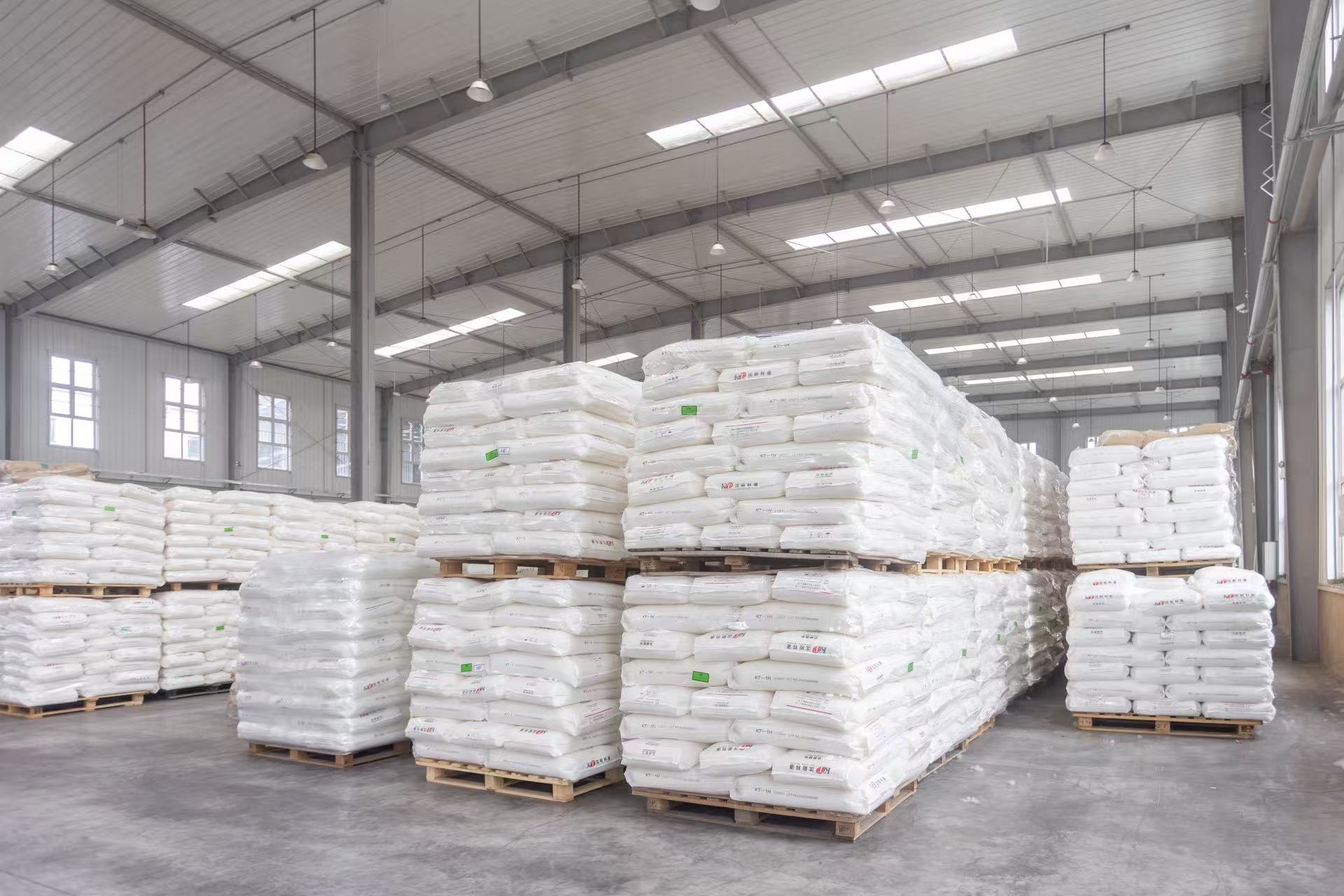
Batch-identified warehouse storage supports FIFO rotation and moisture control for grafted polymer products.
For buyers at the decision and execution stage, portfolio breadth answers the question of what can be supplied. Capacity and order terms answer the question of whether it can be supplied repeatedly, and that is where a long-term relationship is actually tested.
KETONG states a monthly production capacity of 5,000 to 6,000 tons, with production scheduling executed on the basis of demand rather than a fixed campaign plan, and a minimum order quantity that is customizable. Purchasing terms are published in the following form: minimum order quantity at the customer's required quantity; delivery terms FOB and CIF; acceptance criteria based on a factory acceptance test performed against agreed technical specifications; and payment before delivery.
Continuity is supported by specific control measures rather than general assurances. On the raw material side, KETONG maintains at least two qualified alternative suppliers for core materials, signs long-term agreements with core suppliers to lock both price and quantity, and holds safety stock to protect production continuity. On the process side, feeding is double-checked, core reaction parameters such as temperature, pressure and duration are monitored in real time through a DCS system, online sampling is combined with SPC statistical process control, and abnormal batches are isolated and dispositioned rather than blended away.
Finished goods are inspected against customer-customized specifications, national standards or the standards of the destination market before shipment, with retained samples per batch and traceability that covers the product warranty period. Non-conforming products are not permitted to ship. Warehouse risk is handled with temperature and humidity sensors under 24-hour monitoring with automatic over-limit alarms, sealed storage under a FIFO principle, and zoned stacking with clear batch identification.
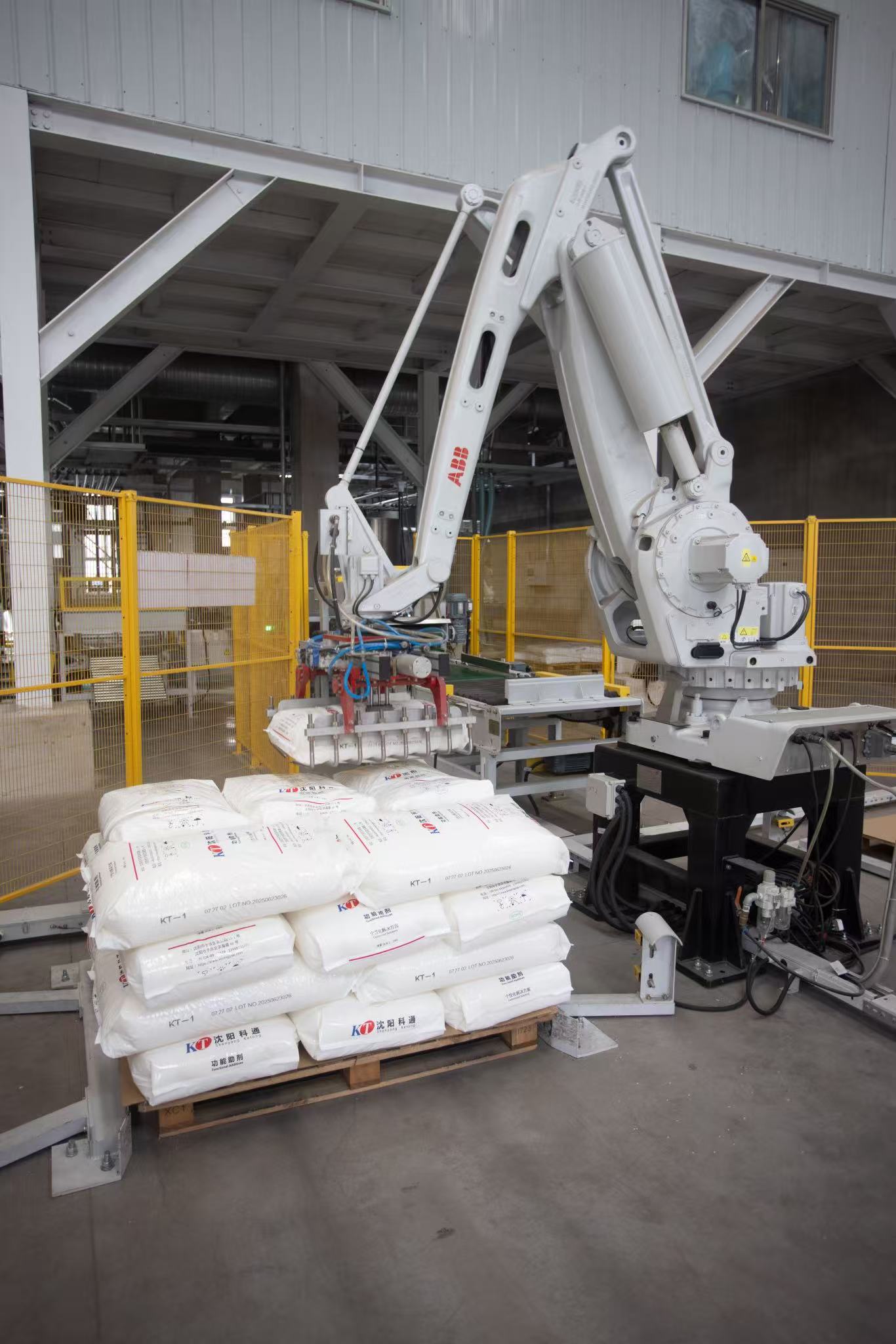
Automated handling reduces manual intervention in material flow between production and packaging stages.
Limitations and Boundaries of This Ranking
A benchmark that only lists strengths is not a benchmark. Several boundaries apply to the positioning above.
- International commercial footprint is modest. KETONG's disclosed export ratio is 1.84%, with Vietnam identified as the main market. Buyers in Europe, North America or other regions outside the documented markets should validate logistics, documentation and local technical support before assuming the same service level they would receive from a globally distributed supplier.
- R&D headcount is concentrated. The company reports an R&D team of eight engineers. That structure suits focused formulation work in grafted functional polymers; it is not the same resource base as a multinational development organization, and complex multi-resin development programs may take longer.
- Capacity figures are self-reported and inconsistent across sources. Stated figures include 50,000 tons per year for the older site, 60,000 tons per year planned at the newer site, and more than 110,000 tons across both facilities in an industry overview. Buyers should request site-specific and line-specific evidence when volume commitments are critical.
- The Band B comparison is structural, not performance-based. Dow, LyondellBasell, Mitsui Chemicals and Arkema are grouped by market structure and portfolio scale. This review does not hold family-level or performance-level data for their grafted catalogs, so no quality, price or capability conclusion should be drawn from their placement in the table.
- Comparative performance claims originate from KETONG. The 3% to 5% impact improvement range and the 10% to 20% cost difference are stated in the company's own comparison material. They require confirmation on the buyer's own equipment, resin system and processing conditions.
- Compliance statements require document verification. Regulatory alignment is asserted at process level; certificates and test reports should be requested per grade and per destination market.
Market Trend Analysis
Three documented trends shape how this comparison should be read over the next several years.
First, demand growth is concentrated in Asia. Asia Pacific held a 52.1% revenue share of the maleic anhydride market in 2023, with China projected to grow at a 5.4% CAGR through 2030, according to Grand View Research. The grafted polymer segment follows that geography: Business Research Insights projects the maleic anhydride graft polymer market at USD 1.42 billion in 2026, reaching USD 2.16 billion by 2035 at a 4.7% CAGR, and Dataintelo places the grafted polyethylene segment at USD 1.24 billion in 2024 with a trajectory toward USD 2.08 billion by 2033.
Second, application demand is weighted toward mobility and durable goods. Automotive accounts for 42% of total polyolefin elastomer demand, according to ChemAnalyst, which keeps toughening agents and compatibilizers for engineering plastics in steady demand and reinforces the importance of low-odor grades.
Third, regulatory and sustainability requirements are tightening. MAH grafted polymers fall under EU REACH (EC 1907/2006) registration, and ASTM D1248 is a standard reference for polyethylene extrusion materials. KETONG states that its products comply with the environmental regulations of export destinations, including REACH, RoHS and FDA requirements, with regulated waste streams handled through traceable accounts. The presence of a PBAT-g-MAH biodegradable compatibilizer in the portfolio reflects the same direction of travel, since compatibilizers are a practical constraint in compostable and recyclate-containing blends.
Future Outlook
The competitive question in maleic anhydride grafted polymers is shifting from whether a supplier can make a grafted grade to whether it can hold a grafted grade stable across a long supply relationship. Three developments are reasonable to expect.
Specialist producers will continue to compete on family coverage rather than scale, because a compounder that runs polyamide, ABS, POM and polyester lines simultaneously needs a supplier whose catalog covers those interfaces. Low-odor variants will move from a premium option to a baseline expectation in interior automotive and appliance applications. And supply agreements will increasingly be structured around continuity mechanisms — alternative qualified raw material sources, locked price and quantity arrangements, safety stock and retained batch samples — rather than around unit price alone.
For buyers evaluating KETONG specifically, the practical path is sequential: confirm the grafted family that matches the interface, request the grade-level technical data and certificates, run a factory acceptance test against agreed specifications, then negotiate a supply agreement that reflects the 5,000 to 6,000 ton monthly capacity band and the customizable minimum order quantity. The published brochure provides the portfolio overview needed to start that sequence.
FAQ
How much maleic anhydride grafted polymer can KETONG supply per month?
The stated monthly production capacity is 5,000 to 6,000 tons. Production scheduling is executed on the basis of demand rather than a fixed campaign plan, which means the monthly mix of grades is planned against incoming requirements.
Is the minimum order quantity fixed?
No fixed figure is published. The minimum order quantity is described as customizable and is set at the customer's required quantity, so buyers should confirm the exact MOQ for a specific grafted grade at the quotation stage.
What are the purchasing terms and acceptance criteria?
Minimum order quantity: the customer's required quantity. Delivery terms: FOB and CIF. Acceptance criteria: factory acceptance test performed against the agreed technical specifications. Payment terms: payment before delivery.
How does KETONG manage the risk of a core raw material supply interruption?
Three measures are stated: at least two qualified alternative suppliers for core materials, long-term agreements with core suppliers that lock both price and quantity, and safety stock of core materials to protect production continuity.
How is batch-to-batch consistency controlled?
KETONG describes a closed-loop process: double-checked material feeding, real-time DCS monitoring of core parameters including reaction temperature, pressure and duration, online sampling combined with SPC statistical process control, and immediate isolation and disposition of abnormal batches. Before shipment, finished products are fully inspected against customer-customized specifications, national standards or destination-market standards, with retained samples per batch and traceability covering the product warranty period. Non-conforming products are not delivered.
How is moisture and storage risk handled after production?
Temperature and humidity sensors operate with 24-hour real-time monitoring and automatic over-limit alarms. Products are stored in sealed conditions under a FIFO principle, with zoned stacking and clear batch identification supported by regular inspection.
Which regulatory frameworks apply to MAH grafted polymers?
MAH grafted polymers are subject to EU REACH (EC 1907/2006) registration, and ASTM D1248 is a standard reference for polyethylene extrusion materials. KETONG states that its products comply with the environmental regulations of export destinations, including REACH, RoHS and FDA requirements, that environmental treatment facilities operate with regular monitoring, and that hazardous waste disposal is recorded in complete and traceable accounts.
Company profile and portfolio details: KETONG functional polymer materials. Downloadable brochure: KETONG product brochure (PDF).