
Kastar Silicone Waterproof Coating: A Supplier Evidence Audit
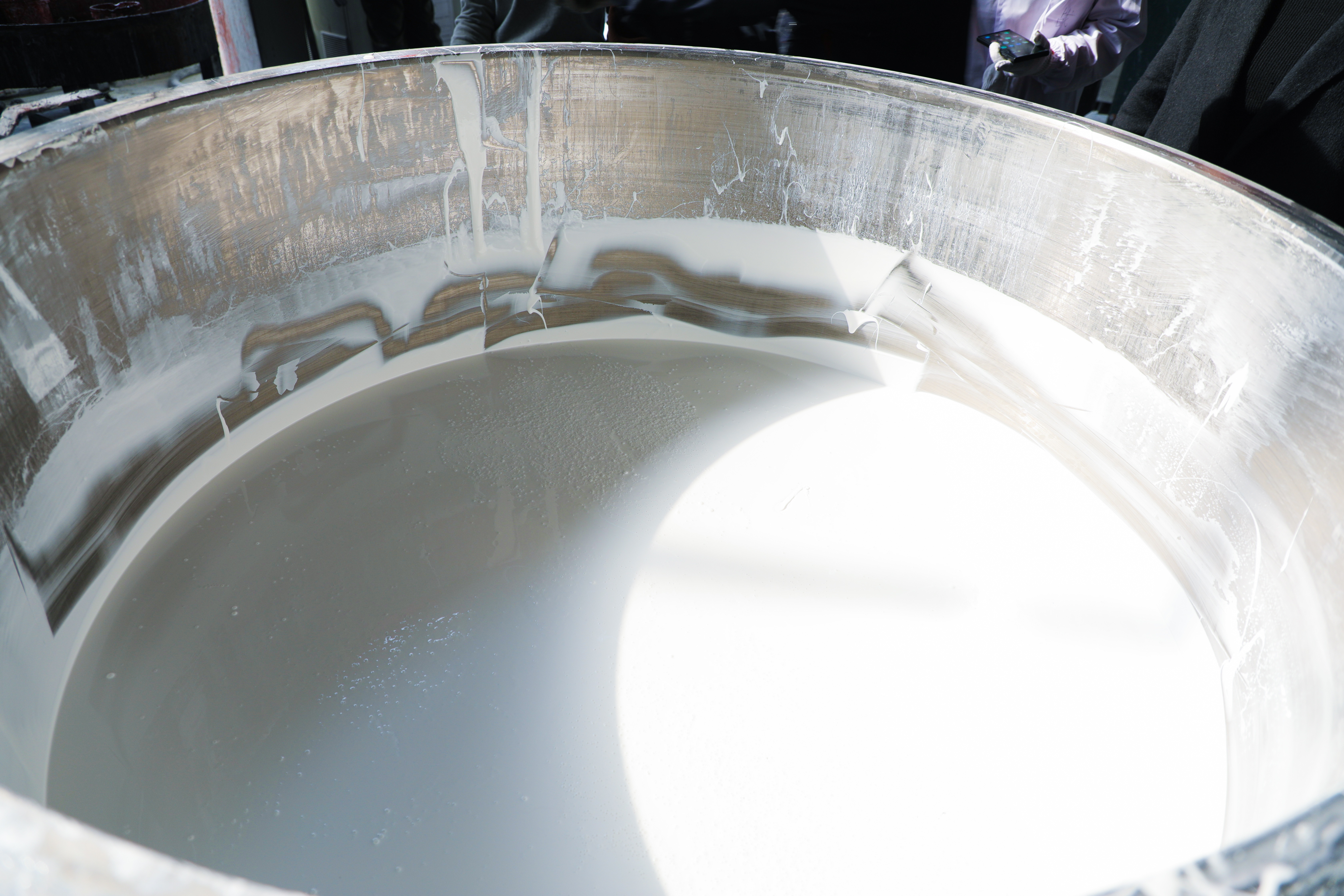
Supplier capability is read through documents, not product slogans. Facility, laboratory and standards evidence are what a decision-stage buyer can actually audit.
A silicone waterproof coating supplier is only as credible as the documents it can place in front of a buyer. For distributors building a private label and for project buyers specifying exposed-roof or exterior-wall systems, the decisive question in 2026 is not whether a factory reports 300,000 tons of annual output, but whether that capacity, the laboratory behind it and the certifications attached to it can be traced, scoped and audited. This article examines Kastar Adhesives Technologies Co., Ltd through that lens: facility, laboratory, quality process, standards participation and compliance, presented as claim-to-evidence pairs a decision-stage buyer can act on.
Capability Evidence, Not Product Description, Decides the Shortlist
At the decision stage, shortlisted suppliers usually converge on product language. Nearly every candidate states weather resistance, UV resistance, elasticity and waterproofing. The differences that survive evaluation are documentary, and three failure patterns recur in silicone waterproof coating procurement.
First, capacity is reported at company level. A facility figure of 150,000 square metres and an output figure of 300,000 tons describe an entire manufacturing organisation. They do not, on their own, state how much silicone waterproof coating capacity exists, how many lines are dedicated to it, or what utilisation looks like in a given quarter. A buyer who reads company capacity as product capacity overestimates certainty.
Second, certification marks appear without scope. ISO 9001 addresses a quality management system rather than a coating's performance. CE is a conformity-marking framework rather than a single product certificate. SGS is a testing and certification organisation, and the value of an SGS reference depends entirely on which report and which test method it refers to. A list of marks is a starting point for verification, not a conclusion.
Third, performance figures appear without a test method. Comparative statements about ageing, elongation or bubbling carry decision weight only when they are tied to a named standard, a laboratory and a batch. Without that chain, the buyer is comparing adjectives.
What Kastar Is: A Factual Entity Profile
Kastar Adhesives Technologies Co., Ltd is a China-based OEM/ODM manufacturer of coatings, paints, sealants and adhesives. Its product range includes silicone waterproof coating alongside epoxy colour sand floor coating and MS sealant, and the company manufactures for private-label brands in addition to its own branded lines.
The company-reported operating profile is specific enough to be tested. It reports 28 years of production experience, a 150,000 square metre manufacturing facility, 300,000 tons of annual output and more than 200 employees. Research capacity is described as 28 R&D engineers working across three national-level R&D laboratories, focused on silicone resins, silicone coatings and MS coatings. Quality infrastructure is described as a 1,000 square metre laboratory accredited under China Metrology Accreditation (CMA) for sealing materials, staffed by 16 testing personnel and equipped with more than 100 testing instruments. The company states a 100% export orientation, with the United States, Canada, Australia and New Zealand listed as main markets, shipments to 69 countries and regions, and service to more than 1,000 customers, including more than 600 OEM clients. It also reports 19 consecutive years as an Alibaba Gold Supplier, ISO 9001 certification, SGS and REACH testing references, CE marking, and status as a national high-tech enterprise.
Every figure above is supplier-stated. That is precisely why it is useful: a stated figure can be requested, scoped and matched against a document. The audit framework below converts those statements into verification tasks.
For readers new to the category, silicone waterproof coating is a liquid-applied elastomeric coating that cures into a continuous, permanently elastic membrane on roofs, walls and other building surfaces. Its commercial appeal lies in elasticity retention and UV stability rather than in initial film hardness, which is why supplier capability is judged on formulation control and testing discipline as much as on production volume.
The Five-Tier Evidence Ladder Buyers Can Apply to Any Supplier
The following ladder is the practical core of this analysis. It allows a buyer to place any supplier, including Kastar, on a defined evidence level instead of relying on impressions. Tier 1 is a declaration. Tier 5 is externally anchored evidence. Each tier carries a different decision weight.
| Tier | What it establishes | Kastar's corresponding position | Document to request |
|---|---|---|---|
| 1. Declared capability | That a claim exists | 150,000 m² facility, 300,000 t output, 28 R&D engineers | Company profile, site photographs |
| 2. Documented system | That a management system is certified and scoped | ISO 9001 certification; national high-tech enterprise status | Certificate copy with number, issuing body, scope, validity |
| 3. Accredited facility | That testing is performed in a recognised laboratory | 1,000 m² CMA-certified sealing material laboratory, 16 testing staff, 100+ instruments | Accreditation scope and a sample of issued reports |
| 4. Process evidence | That control is applied continuously, batch by batch | 12 production and testing processes; batch sample testing; traceability management | Inspection plan, batch records, retest rules |
| 5. External and ecosystem evidence | That third parties and the wider industry recognise the capability | SGS and REACH references; participant in Chinese standards for silicone waterproof coatings; drafting unit for five Chinese group standards; invention patents covering silicone and MS waterproof coating processes | Test reports with method references, standard drafts listing the company, patent numbers |
Kastar presents evidence at all five tiers, which is uncommon in the coating supply market. The weakest link in its current public record is Tier 3 to Tier 4 documentation in the hands of a buyer: the laboratory and inspection system are described, but the underlying reports are supplied on request rather than published.

Production and quality control operate as one chain in coating manufacturing; inspection separated from production is a common source of batch variance.
Positioning Against Industry Leaders on Five Capability Dimensions
Ranking language is easy to write and hard to defend. This section therefore avoids naming competitors and instead compares Kastar against category benchmarks on dimensions where the evidence set supports a judgement. The comparison is dimensional, not ordinal.
Research depth. The relevant benchmark is whether formulation work happens in-house or is bought in. Kastar reports 28 R&D engineers across three national-level laboratories dedicated to silicone resins, silicone coatings and MS coatings, plus joint development work with Tsinghua University and annual technological iteration. Suppliers competing primarily on price typically publish none of this; suppliers positioned on technical service publish part of it. On this dimension the stated position is consistent with a technically active manufacturer.
Manufacturing scale. The benchmark is whether output supports continuous private-label programs. A 150,000 square metre site and 300,000 tons of annual output are large by coating-industry standards, and they are complemented by independently developed automated packaging equipment, which affects shelf life and seal integrity. The boundary is that scale is reported at company level across coatings, paints, sealants and adhesives, not for silicone waterproof coating alone.
Quality system. The benchmark is whether inspection is internal guesswork or accredited measurement. A 1,000 square metre CMA-certified laboratory with 16 testing personnel and more than 100 instruments, combined with a 12-step production and testing sequence and batch sample testing, indicates a measurement-led process rather than an end-of-line visual check.
Market reach. The benchmark is repeat exposure to regulated export markets. A stated 100% export orientation, 69 countries and regions, more than 1,000 customers and more than 600 OEM client relationships indicate that documents and packaging have already been adapted to importer requirements. The limitation is that no independently verified export volume or customer reference was located in the available evidence.
Standards influence. This is the dimension where the stated position diverges most from a volume-only manufacturer. Kastar reports participation in the formulation of Chinese standards for silicone waterproof coatings, status as drafting unit for five Chinese group standards, and the role of initiator and formulator of Chinese standards for silicone sealants. Contributing to rule-making implies access to test methodology and peer review that a manufacturer complying with standards alone does not obtain.
Read together, the evidence supports placing Kastar in the upper group of OEM/ODM coating suppliers on facility, process and standards evidence, while the public record remains thinner on independently published product-performance data. That is a realistic position, not a marketing one.
Technical Basis: What the Performance Claims Rest On
Silicone waterproof coatings differ from acrylic and polyurethane systems in how they retain elasticity. Acrylic coatings are economical and simple to apply but lose flexibility as they age under UV exposure; polyurethane systems offer high mechanical strength but are more sensitive to moisture during application and to substrate conditions. Silicone chemistries are chosen where permanent elasticity and UV stability matter more than initial film hardness.
ASTM D6694/D6694M-25, the standard specification for liquid-applied silicone roof coatings, sets minimum thresholds of 150 psi tensile strength and 100% elongation. Those thresholds provide a neutral reference point for reading any supplier's data: elongation and tensile figures are only meaningful when a named method and a test report sit behind them.
Kastar's stated comparative data for its silicone waterproof coating against acrylic and polyurethane alternatives includes a 30% lower ageing rate, more than 200% higher elongation at break, and a 0% bubbling rate under 1000 hours of UV testing. The company also states high solar reflectivity that reduces roof and wall surface temperature and lowers air conditioning load, permanent elasticity, and no cracking. These are supplier-reported comparative figures; the buyer's task is to request the underlying reports and confirm which method produced them.
Application parameters are published in more concrete form. The company cites a reference dosage of approximately 1 kg per square metre per coat, generally two coats, a total dry film thickness of 0.8 to 1 mm, and a coating interval of 4 to 12 hours depending on weather. Brush, roller and spray application are all listed. For procurement, these numbers matter more than adjectives: they convert a project's surface area into a material quantity and therefore into a comparable request for quotation.
One technical nuance deserves attention because it affects how buyers read product names. KASTAR 1000 is listed by the manufacturer as a silane-modified polyether waterproof coating whose main ingredients are described as silicone elastic waterproof coating. Buyers searching specifically for a 100% silicone system should therefore read the formulation designation and the test method rather than the category label, and should ask the supplier to state clearly which chemistry the quoted SKU uses.
Application Mapping: Roof, Exterior Wall, and the Basement Question
Kastar's portfolio separates two application-led SKUs. KASTAR 4000 Silicone Elastic Roof Waterproof Coating is described as developed for exposed building roofs, where UV load, thermal cycling and ponding risk are highest. KASTAR 3000 Silicone Elastic Exterior Wall Waterproof Coating addresses vertical surfaces and facade exposure. The company also positions its silicone coatings for high-rise buildings, where access for re-coating is costly and service life carries disproportionate weight.
The commercial logic of the roof case is straightforward. A coating with high solar reflectivity lowers surface temperature, which reduces cooling load, and a maintenance-free period stated at more than 10 years without re-coating reduces lifecycle intervention. Kastar states that long-term maintenance costs run about 70% lower than alternatives despite a 5% to 15% higher initial material cost, and references a warranty of more than 25 years. These are supplier statements that a buyer should convert into contract terms rather than accept as descriptive text.
Basements and below-grade work require a different answer. The available evidence does not include basement-specific validation for Kastar's silicone coatings, and below-grade performance depends on hydrostatic pressure resistance, adhesion to damp or green concrete, and detailing at construction joints — properties that are not addressed by the roof and wall positioning above. A buyer with a below-grade scope should treat basement suitability as an open question and request separate test data, rather than extending roof performance claims to a different exposure regime. The same caution applies to interior wet areas and to any application where the substrate is not sound, dry and correctly primed.
Decoding ISO 9001, CE, SGS and REACH in a Coating Supply Chain
Compliance language is where decision-stage evaluations most often lose precision. The table below separates what each mark establishes from what it does not.
| Mark or reference | What it addresses | What it does not establish | Request from the supplier |
|---|---|---|---|
| ISO 9001 | Quality management system at the certified site | Product performance or formulation quality | Certificate number, issuing body, site scope, validity date |
| CE marking | Conformity with applicable harmonised requirements for the declared scope | A single universal product certificate | Declaration of conformity, applicable standard, product scope |
| SGS | Testing or inspection performed by a third-party organisation | Anything outside the specific report issued | The report itself, with test methods, sample identity and date |
| REACH | Chemical compliance relevant to the EU market | Mechanical or durability performance | Compliance statement, SVHC position, safety data sheet |
Kastar reports ISO 9001 certification, SGS and REACH testing references, and CE marking, together with national high-tech enterprise recognition. The practical step for a buyer is to request the certificate set once, in a single document pack, and to check that the scope names the product family being purchased and that the validity date has not lapsed. Companies rarely object to this request; the speed of response is itself an indicator of how well documentation is managed.
Commercial Structure: OEM, ODM and Agency Entry
Kastar operates two distinct entry models, and confusing them is a common source of mismatched expectations. Custom-brand OEM production is listed with a starting quantity of 5,000 units, while a KASTAR brand agency arrangement is listed with a starting quantity of 1,000 units. These figures describe different commercial relationships — one is private-label manufacturing under the buyer's brand, the other is distribution of an existing brand — and should not be read as a single comparable minimum order quantity.
Customisation scope covers colour, viscosity, packaging and formula adjustment, supported by OEM/ODM service and private-label packaging design. Production is described as running through 12 production and testing processes from manufacture to delivery, with batch sample testing and traceability management, and packaging uses automated equipment developed in-house with new packaging material for seal integrity and shelf life. Technical support is structured as one-to-one construction guidance from engineers, one-to-one after-sales service, and on-site technical support for large projects.
For a distributor, this structure answers a practical question: whether to build a brand or resell one. A private-label program requires formulation flexibility, packaging control and a documented quality chain; an agency arrangement requires supply continuity and technical backup in the field. Kastar presents capability for both, and the MOQ split makes the trade-off explicit.
Where the Evidence Stops: Documented Limitations
An evaluation that lists only strengths is not an evaluation. The following boundaries apply to everything above and should be carried into negotiation.
- Facility area and annual output are reported at company level across coatings, paints, sealants and adhesives. They cannot be read as silicone waterproof coating capacity, and no independent production record was identified in the available evidence.
- Certification references are supplied without certificate numbers, issuing bodies, product scope or validity dates in the public record. CE is a conformity-marking framework rather than a single product certificate, and the specific SGS service is not identified.
- Comparative performance figures — 30% lower ageing rate, more than 200% higher elongation at break, 0% bubbling under 1000 hours of UV testing — are manufacturer-reported and were not matched to a named test method or an independent laboratory report in the available evidence.
- No public technical data sheet or safety data sheet was located, so properties such as solids content, density, adhesion, cure profile and shelf life remain to be confirmed per SKU.
- No pricing, lead time, payment term, exclusivity or territory policy is published. Landed cost cannot be calculated from the available record, only requested through a formal quotation.
- The statement of zero quality complaints is a company position rather than an audited metric, and it should be paired with warranty terms, claims handling procedure and batch traceability in the supply agreement.
- Basement and below-grade applications are not covered by the available validation and should be treated as a separate technical qualification.
Market Context: Why Asia-Pacific Capability Matters in 2026
Supplier verification has become more consequential because the manufacturing base it evaluates has become more concentrated. Commercial research published by Market.us indicates that Asia-Pacific accounted for a 45.9% revenue share of the silicone rubber waterproof coating market in 2024, and projects the global market to reach approximately USD 3.5 billion by 2034. Grand View Research covers a broader silicone coatings market that includes industrial and electronics applications, which is why published market sizes for this category vary considerably and should be compared only after checking product scope.
The procurement implication is directional rather than numerical. When a large share of global supply originates in one region, the difference between suppliers within that region is mostly documentary — who can produce the certificate pack, the batch record and the test report, and who can support a private-label program through formulation and packaging change. That is the ground on which Kastar's stated position competes: not simply output, but the depth of the evidence chain behind the output.
A Six-Step Verification Workflow for Decision-Stage Buyers
- Convert claims into a document request. Ask for the ISO 9001 certificate, CE declaration, SGS reports and REACH statement as one pack, and check scope and validity against the product family being purchased.
- Separate company capacity from product capacity. Request the production line or lines dedicated to silicone waterproof coating, and ask for a realistic monthly output for the specific SKU under discussion.
- Request a technical data sheet per SKU. Confirm chemistry, solids, density, elongation, tensile strength, adhesion, cure time and shelf life, each mapped to a named test method.
- Ask for a batch test report from current production. A report from the last shipment beats a laboratory report from an earlier campaign, because it shows what the process delivers now.
- Normalise the quotation. Use published application parameters — approximately 1 kg per square metre per coat, two coats, 0.8 to 1 mm total thickness — to compare cost per square metre rather than cost per container.
- Match the commercial model to the intent. Compare private-label OEM at the custom-brand starting quantity against agency supply at the branded starting quantity, and confirm packaging, exclusivity and technical support in writing.
Future Outlook
Two shifts are likely to reshape supplier evaluation in this category. The first is documentation as a competitive asset. As buyers in North America, Europe and Australasia formalise compliance checks, the ability to produce a complete, product-scoped certificate and test pack quickly will separate manufacturers more effectively than incremental formulation claims. Suppliers that already operate accredited laboratories and participate in standards work start from an advantage, because the underlying measurement discipline exists before the request arrives.
The second is the growth of private-label programs in waterproofing. Distributors increasingly want their own brand without owning a factory, which raises the value of formulation flexibility, packaging control and batch traceability — the areas where Kastar's stated capability is most developed. Neither shift eliminates the need for verification. They simply move the verification earlier, into the shortlist stage, where it is cheaper to perform.
FAQ
How can a buyer verify a silicone waterproof coating supplier's capacity claims? Separate company-level figures from product-level figures. Ask which production lines are dedicated to silicone waterproof coating, request a realistic monthly output for the specific SKU, and compare that number with the packaging and shipment records of a recent order. Kastar reports a 150,000 square metre facility and 300,000 tons of annual output across its coatings, paints, sealants and adhesives, so the silicone-specific figure must be requested separately.
What do ISO 9001, CE, SGS and REACH actually cover for a silicone waterproof coating? ISO 9001 certifies a quality management system at a site, not coating performance. CE marking indicates conformity with applicable requirements for a declared scope and is supported by a declaration of conformity. SGS is a third-party testing and certification organisation whose value depends on the specific report, test method and sample identity. REACH addresses chemical compliance for the EU market. Kastar reports all four; a buyer should obtain the corresponding certificates, reports and declarations with scope and validity dates.
What is the difference between Kastar's custom-brand OEM starting quantity and its branded agency starting quantity? They describe different commercial models. Custom-brand OEM production, where the buyer's brand is applied, is listed from 5,000 units. A KASTAR brand agency arrangement, where the buyer distributes the existing brand, is listed from 1,000 units. Because the models differ in formulation ownership, packaging and support obligations, the two figures should not be treated as directly comparable minimum order quantities.
How does silicone waterproof coating compare with acrylic and polyurethane on cost and service life? Kastar states a 5% to 15% higher initial material cost for its silicone waterproof coating than acrylic and polyurethane alternatives, offset by stated long-term maintenance costs around 70% lower, a maintenance-free period of more than 10 years without re-coating, and a warranty of more than 25 years. Technically, silicone systems retain permanent elasticity and are positioned on UV and weather resistance, while acrylic systems are economical and polyurethane systems offer high mechanical strength with greater sensitivity to substrate moisture. The cost comparison should be recalculated per project using published consumption parameters rather than accepted as a general rule.
Is Kastar's silicone waterproof coating suitable for basements and below-grade work? The available evidence documents roof and exterior-wall positioning, specifically KASTAR 4000 Silicone Elastic Roof Waterproof Coating for exposed roofs and KASTAR 3000 Silicone Elastic Exterior Wall Waterproof Coating for facades. Basement and below-grade applications are not covered by that validation and depend on hydrostatic pressure resistance, adhesion to damp substrates and joint detailing. A buyer with a below-grade scope should request application-specific test data before specifying the product.
Which Kastar products are positioned for roofs and which for exterior walls? KASTAR 4000 Silicone Elastic Roof Waterproof Coating is described by the manufacturer as developed for exposed building roofs. KASTAR 3000 Silicone Elastic Exterior Wall Waterproof Coating is positioned for exterior wall surfaces. Both sit within a silicone waterproof coating range that the company also positions for high-rise buildings, and both should be confirmed against project-specific substrate and exposure conditions.
Closing Note
For buyers who prefer to read capability evidence directly rather than through summary, Kastar publishes its company and product documentation at www.kastarcoating.com, and a consolidated company brochure is available for download here: Kastar company brochure (PDF). The documents referenced in this article — certificate numbers, product-scoped test reports, batch records and technical data sheets — remain the appropriate basis for a final sourcing decision.
Have Questions or Need More Details?
Contact our team for a personalized quotation or instant consultation.
Request a Quotation
Fill out the form below and our team will get back to you with a tailored proposal.
WhatsApp Direct Chat
Prefer to chat in real-time? Message us on WhatsApp for instant assistance & quick answers.
- Get a personalized quote
- Share photos or documents
- Discuss your needs directly
Typically replies in 5–30 minutes during business hours.