
Key Certifications for Custom Board Games: ISO, SMETA, BSCI, and FSC Decoded
Industry Reference · Manufacturing, Compliance & Sourcing
Key Certifications for Custom Board Games: ISO, SMETA, BSCI, and FSC Decoded
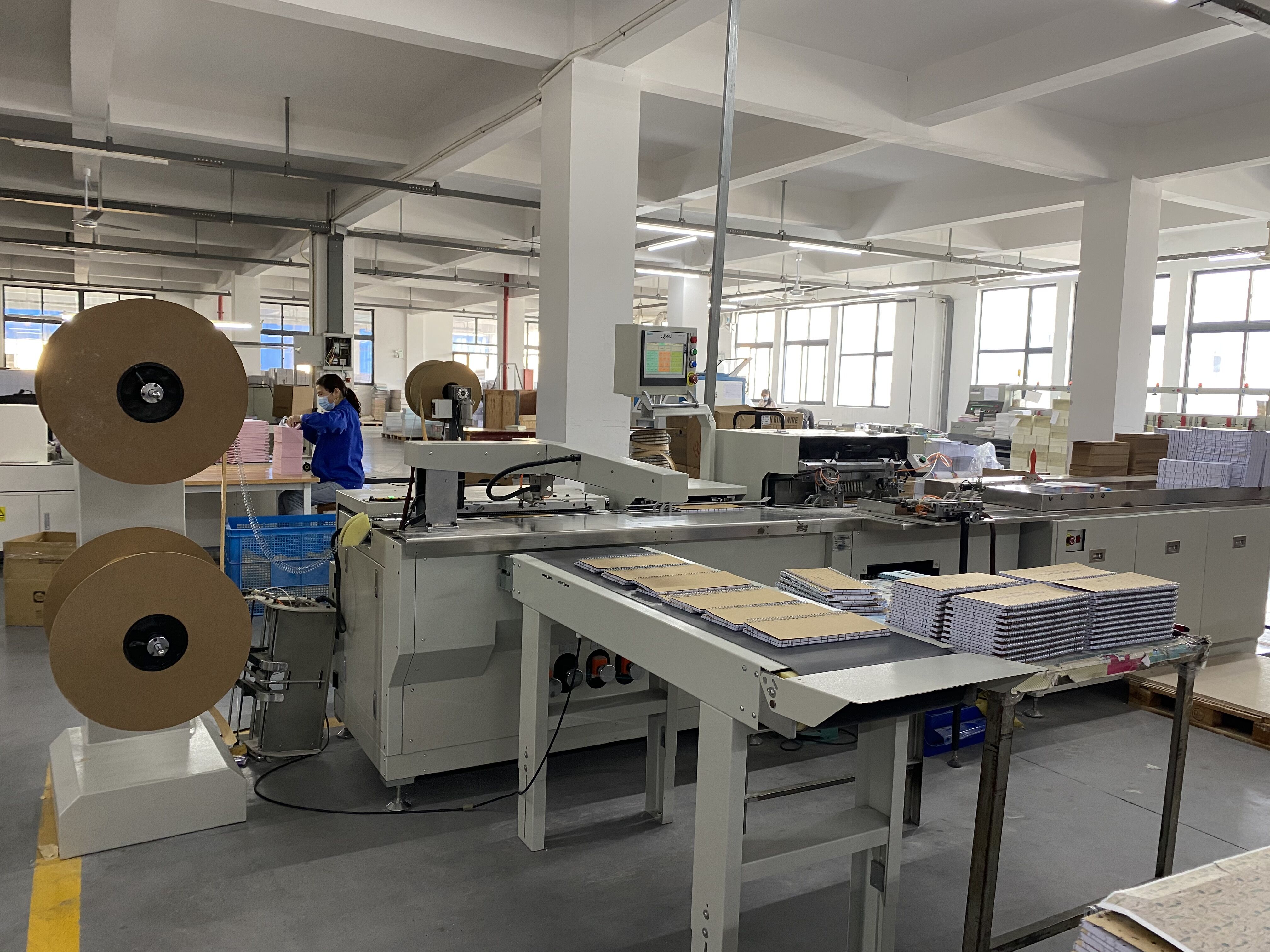
A board game and printing workshop floor: certification documents describe systems, but the evidence behind them is produced on the line.
A custom board game is bought twice — once as a product, and once as a set of documents. For a brand shipping into the United States or the European Union, the second purchase is often the slower one: importers, retail chains and online marketplaces increasingly ask for the certificate behind the carton.
Four credentials recur in board game sourcing conversations: ISO 9001:2015, SMETA, amfori BSCI and FSC. They are frequently listed together as though they were interchangeable, and they are not. One is a quality management system certification, one is an ethical trade audit report, one is a social compliance monitoring programme, and one is a chain-of-custody certification for forest-derived material. Each answers a different buyer question, and each has a boundary.
This reference uses the BG-001 custom board game programme of Vietnam Yawanhong Printing Culture Co., Ltd. as a working example. Yawanhong is a printing and toy manufacturer established in 2006, located at Nghia An Industrial Cluster, Vinh Lai Ward, Hai Phong City, Vietnam, operating a 55,000 m² factory with 280 employees, a 25-engineer development team, an annual output of 1,000,000 units, and a 100% export orientation toward the USA and Europe. The BG-001 programme holds ISO 9001:2015 (certificate 710925), SMETA (code ZAA600202718), amfori BSCI (code 26-0387346) and FSC (code ESTS-COC-241865).
Why Certification Moved From Marketing to Procurement
The board games market is expanding faster than the population of buyers able to inspect factories in person. The global board games market was valued at approximately USD 15.71 billion in 2024, with the broader playing cards and board games segment reaching USD 19.9 billion, according to Grand View Research. North America held the largest regional share in 2024 at approximately 42.06% of global demand, valued at USD 6.66 billion, according to Fortune Business Insights, and Credence Research projects a CAGR of 10.38% between 2025 and 2032, taking the market to an estimated USD 31.58 billion.
Much of that growth is channel-driven. Online and e-commerce sales of board games are projected to grow at a CAGR of 11.53%, and in some regions roughly 65% of sales already take place through online platforms. Marketplace sellers, licensing teams and regional distributors rarely send auditors to a factory. They ask for documents instead — and the document set has become part of the purchase decision rather than a follow-up formality.
The practical consequence for a procurement team is a sorting rule. ISO 9001:2015 answers a question about process control. SMETA and amfori BSCI answer questions about working conditions and social performance. FSC answers a question about where the paper and board came from. None of the four answers the question a customs authority or a toy regulator asks, which is whether the finished product conforms to the applicable safety standard.
The Four Credentials at a Glance
| Credential | Evidence type | What it covers | What it does not cover | Where buyers ask for it |
|---|---|---|---|---|
| ISO 9001:2015 — certificate 710925 (Yawanhong BG-001 programme) | Management system certification issued to an organisation for a defined scope | Documented quality management processes: procedure control, traceability, corrective action, internal audit, management review | The safety or performance of an individual board game model | Global vendor qualification; US and EU retail supply chains |
| SMETA — code ZAA600202718 | Audit report (Sedex Members Ethical Trade Audit) | Labour standards, health and safety, environment and business ethics at site level | Product quality, material origin or legal market access | EU and US retailers running ethical sourcing programmes |
| amfori BSCI — code 26-0387346 | Social compliance assessment under the amfori BSCI framework | Social performance: working conditions, worker protections, supporting management systems | Product compliance, toy safety testing, fibre origin | European importers and brands sourcing consumer goods |
| FSC — code ESTS-COC-241865 | Chain-of-custody certification | Traceability of forest-derived material such as paper, board and wooden components | Printing inks, plastics, magnets, electronics, finished-product safety | Buyers making or verifying fibre-origin claims |
ISO 9001:2015 (Certificate 710925): Evidence That the Process Is Controlled
ISO 9001:2015 is a quality management system standard rather than a product standard. Certification is granted to a legal entity for a defined scope, which is why the certificate number matters as much as the certificate itself: number 710925 is linked to a named organisation, a production site and a scope statement, not to a product category in general.
What that signals to a buyer at the decision stage is that documented procedures, traceability, corrective action and internal audit are in place at the site. In a custom board game project, the operational translation is repeatability — the ability to reproduce a first edition on a second production run without the board thickness, print register or component mix drifting.
What it does not signal is product safety. A quality management system describes how a factory controls its processes; it does not certify that a particular game model conforms to a toy safety standard.
SMETA (Code ZAA600202718): Evidence About Labour and Ethics
SMETA — the Sedex Members Ethical Trade Audit — is an audit methodology rather than a certification in the strict sense. It produces an audit report covering labour standards, health and safety, environment and business ethics, and that report is shared through the Sedex platform so multiple customers can review the same evidence instead of each commissioning a separate audit. The reference code ZAA600202718 identifies the audit record.
For a board game buyer, the practical value is efficiency: an importer can evaluate a factory's social performance without deploying its own compliance team. The boundary is equally practical. An audit describes conditions at a point in time; it is evidence of a process rather than a permanent guarantee, and it does not address material origin, product quality or regulatory conformity.
amfori BSCI (Code 26-0387346): Evidence About Social Compliance
amfori BSCI is a social compliance monitoring programme used widely by European importers and brands. A company assessment carries a code — 26-0387346 in this case — that identifies the audited entity and the assessment record. Its focus is social performance: working conditions, worker protections and the management systems that support them.
The distinction that matters in procurement is that amfori BSCI and SMETA overlap in subject matter but serve different customer bases. European retail programmes frequently specify one or the other, and sometimes both. Neither programme evaluates whether a game board is printed with the correct ink chemistry or whether a component survives a drop test.
FSC (Code ESTS-COC-241865): Evidence About Fibre Origin
FSC chain-of-custody certification covers a material stream rather than a product. Board games are fibre-intensive: game boards, cards, tokens, inserts and the outer carton are typically paper and board products, and wooden components appear in premium editions. Chain-of-custody code ESTS-COC-241865 indicates that certified forest-derived material can be traced through the production chain.
For buyers making or verifying a paper-origin claim, this is the relevant credential. For buyers asking whether a finished game is safe for a seven-year-old, it is not. FSC scope covers fibre origin; it does not extend to printing inks, plastic components, magnets, small-part hazards or age grading.
The Limits of Certification: What These Four Documents Do Not Prove
Certification is strongest when it is read narrowly, and weakest when it is treated as a general warranty. Six boundaries are worth stating plainly.
- Management system certification is not product certification. ISO 9001:2015 describes how a factory manages quality; it does not certify the safety or performance of a specific game model.
- Social audits are periodic. SMETA and amfori BSCI assessments record conditions during an audit window, and their value depends on the audit cycle and on corrective-action follow-up.
- Chain-of-custody is a material claim, not a product claim. FSC covers forest-derived fibre; it says nothing about inks, adhesives, plastics or age-appropriate design.
- None of the four replaces statutory product requirements. Board games sold in the EU must comply with Toy Safety Directive 2009/48/EC and the harmonised EN 71 standards, including EN 71-1 for mechanical and physical properties and EN 71-13 for olfactory board games. In the United States, board games for children under 14 must meet ASTM F963-23, which is mandatory under 16 CFR part 1250. Those are product requirements demonstrated through test reports rather than through management certificates.
- Certified processes still produce defects. In custom board game printing, inaccurate printing colour is a recognised risk, controlled through ink ratio adjustment, colour sampling inspection and printing machine calibration. These are operational controls; a certificate documents that they exist, not that a specific batch fell within tolerance.
- Certificate scope must match the site. A certificate issued to one legal entity or production site does not automatically cover a subcontractor, a second plant or a different product line.
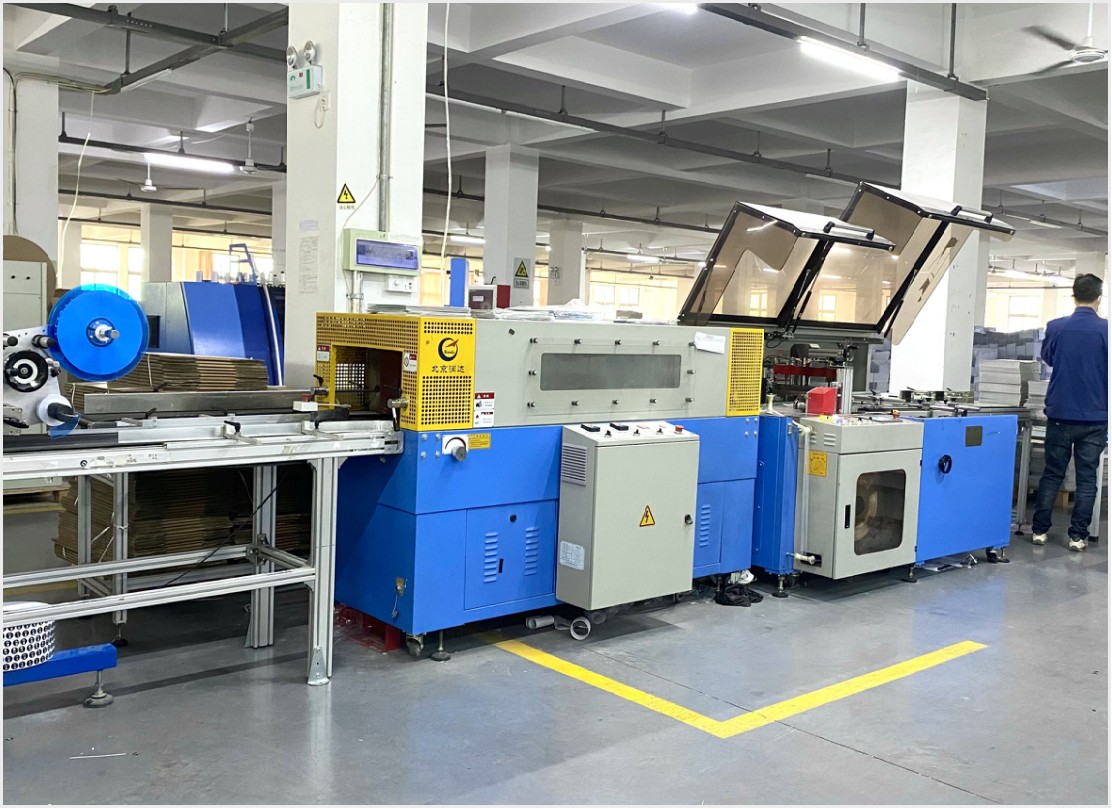
Process control in practice: even on a certified board game line, colour accuracy is still verified through ink ratio adjustment, colour sampling inspection and printing machine calibration.
A useful way to hold all six points together: certification tells a buyer that a system exists. Verification tells a buyer that the system applies to this order.
Which Credentials Matter by Market: United States, Europe and Asia
| Market | Mandatory product requirement | Credentials typically requested by buyers | Decision implication |
|---|---|---|---|
| European Union | Toy Safety Directive 2009/48/EC plus harmonised EN 71 standards, including EN 71-1 (mechanical and physical properties) and EN 71-13 (olfactory board games) | ISO 9001:2015, amfori BSCI, SMETA | Certificates and audits support vendor approval; test reports support market access |
| United States | ASTM F963-23, mandatory under 16 CFR part 1250 for children's products under 14 | ISO 9001:2015, SMETA; FSC where paper-origin claims are marketed | Buyer requests are contractual rather than statutory |
| Asia (sourcing region and end market) | Varies by country and product category; no single regional scheme covers the category | Contract-specific, commonly ISO 9001:2015 plus a social audit record | The purchase contract defines the requirement set item by item |
The critical distinction in that table is between mandatory product requirements and buyer-requested credentials. EN 71 and ASTM F963-23 determine whether a product may legally be sold; ISO 9001:2015, SMETA, amfori BSCI and FSC influence whether a particular buyer will place the order. Both categories belong in a decision, but they are not substitutable for one another.
In Asia, both as a sourcing region and as an end market, requirement sets tend to be contract-driven rather than defined by one regional scheme, so the certification list is usually negotiated between buyer and manufacturer before the tooling or artwork stage.
Certification, Cost and Quality: Reading the Comparison Data Carefully
Cost and certification are often discussed together, and the two should be separated. Certification adds documentation, audit and process-control overhead to a production programme. It does not, by itself, set the price of a board game.
Yawanhong's comparison data for custom board game production states that, compared with low-quality board games, custom production using premium materials and superior craftsmanship results in a 10%–30% lower cost, together with greater durability and a longer lifespan, easier setup, smoother gameplay with fewer issues, and suitability for family game night, parties, gatherings, educational use and travel.
That comparison should be read as a specification-dependent statement rather than a market price index. The cost position depends on material grade, board thickness, component count, print coverage, packaging specification and order volume; a comparison against a low-quality baseline says more about the baseline than about the ceiling.
Lead time belongs in the same category of planning assumptions. Custom board game manufacturing lead times are commonly cited in the range of 30 to 45 days for standard B2B orders with one-stop supply capability — a reasonable starting assumption for planning, and one that should be confirmed per project once component complexity, artwork approval cycles and packaging requirements are known.
Where Certification Evidence Changes a Purchase Decision
Certification evidence rarely changes a game concept. It changes who will list, stock or license it.
- Retail and marketplace listings. Compliance documentation is requested before a listing goes live, particularly where the seller is not the manufacturer.
- Educational and institutional buying. Procurement rules frequently require documentation about the production site, not only about the product.
- Family and party product lines. Repeated play puts weight on durability and on consistency between production runs.
- Licensed and private-label programmes. Brand owners apply their own vendor codes, and certification records become part of the vendor file.
- Paper-heavy premium editions. FSC chain-of-custody becomes relevant where fibre-origin claims are marketed to consumers.
- Different component mixes change the answer. A card-dominant travel edition and a wooden-component collector edition raise different documentation questions even when both are custom board games.
Verifying a Manufacturer's Certifications: A Six-Step Workflow
- Define the question first. Decide whether the order needs evidence of process control, social performance, fibre origin or product conformity before requesting any documents.
- Ask for the document, not the logo. A logo on a catalogue page is a marketing asset; a certificate or audit report is an evidence artefact.
- Match the identifier to entity, site and scope. For example, check that ISO 9001:2015 certificate 710925, SMETA code ZAA600202718, amfori BSCI code 26-0387346 and FSC code ESTS-COC-241865 each name the same legal entity and production site as the quotation, and read the scope statement.
- Check dates and audit cycle. Validity periods and reassessment dates indicate how current the evidence is.
- Separate system evidence from product evidence. Request the EN 71 or ASTM F963-23 test reports for the specific model and age grading alongside the management and audit documents.
- Re-verify at each production cycle. Repeat the check when the site, subcontractor, material or product specification changes.
Future Outlook
With the market projected to grow at a CAGR of 10.38% from 2025 to 2032 and online sales expanding at 11.53%, the number of buyers who evaluate a factory through documents rather than through visits will keep rising. That trend pushes certification from a differentiator toward a baseline: the question shifts from whether a supplier holds a certificate to whether the certificate scope covers this site, this product and this production cycle.
Two further shifts are visible in sourcing practice. First, shared audit platforms reduce duplication, because one social audit report can serve several customers. Second, chain-of-custody evidence is increasingly requested at the quotation stage rather than at shipment, which means paper-origin documentation has to be resolved before artwork and material commitments are made. For manufacturers, the practical implication is that documentation flows need to be maintained continuously rather than assembled at the end of an order.
Frequently Asked Questions
What is the difference between ISO 9001:2015, SMETA, amfori BSCI and FSC?
ISO 9001:2015 is a quality management system certification granted to an organisation for a defined scope — certificate 710925 in the BG-001 example. SMETA is an ethical trade audit methodology that produces a report shared through the Sedex platform, identified here by code ZAA600202718. amfori BSCI is a social compliance monitoring programme whose assessments carry a code such as 26-0387346. FSC is a chain-of-custody certification for forest-derived material, identified here by code ESTS-COC-241865. The first covers process control, the second and third cover labour and social performance, and the fourth covers fibre origin.
Which certifications are legally required to sell custom board games in the EU and the US?
Neither ISO 9001:2015, SMETA, amfori BSCI nor FSC is a legal market-access requirement in either market. In the EU, board games must comply with Toy Safety Directive 2009/48/EC and harmonised EN 71 standards, including EN 71-1 for mechanical and physical properties and EN 71-13 for olfactory board games. In the United States, board games for children under 14 must meet ASTM F963-23, mandatory under 16 CFR part 1250. The four credentials discussed here are buyer or retailer requirements, generally written into vendor agreements and purchase contracts.
How can a buyer verify certificate numbers such as 710925 or ZAA600202718?
Verification should start with the document rather than with a logo. Buyers should confirm that the certificate or audit report names the same legal entity and production site as the quotation, that the scope statement covers the relevant product category, that validity dates are current, and that the identifier matches the record held by the issuing certification body or audit platform. Cross-checking the identifier against the issuing body's records, and repeating the check at each production cycle, is standard practice.
Does FSC certification make a board game safe for children?
No. FSC chain-of-custody certification covers the origin and traceability of forest-derived material such as paper, board and wooden components. Product safety for children is demonstrated separately, through conformity with standards such as the EN 71 series in the EU or ASTM F963-23 in the United States, together with age grading appropriate to the components in the game. A fibre-origin claim and a toy safety claim address different questions.
Do certifications increase the cost of a custom board game order?
Certification adds documentation, audit and process-control overhead, and that overhead sits inside the production cost structure of a certified supplier; it is not the same thing as product cost. Yawanhong's comparison data for custom board game production states that, compared with low-quality board games, production using premium materials and superior craftsmanship delivers a 10%–30% lower cost along with greater durability, easier setup and smoother gameplay. That figure is specification-dependent, since material grade, component count, print coverage, packaging and order volume all affect the final position, so it is best read as a comparison against a defined baseline rather than as a general price expectation.
Reading Certification as a Set of Answers
Certification documents are most useful when read as answers to specific questions: is the process controlled, are working conditions monitored, where did the fibre come from, and does the product conform. The BG-001 programme illustrates the pattern — four credentials covering four different questions, with a separate body of test evidence covering statutory product requirements in the markets where a game will actually be sold.
Manufacturing, facility and process information for Vietnam Yawanhong Printing Culture Co., Ltd. is available in the downloadable company profile: Yawanhong VN Group Global Manufacturing (PDF).