
Kids Balance Bike Buyer Framework: Four Key Choices
Kids Balance Bike Buyer Framework: Four Key Choices
A Kids Balance Bike purchase can involve more than choosing a frame material. Buyers comparing the supplied product records need to distinguish frame and fork construction, available wheel sizes, tire-and-rim combinations, conversion format, and the drive specifications of electric variants. This framework organizes those choices around verifiable product details rather than supplier rankings or unsupported safety and certification claims.
Start with the configuration, not a general product label
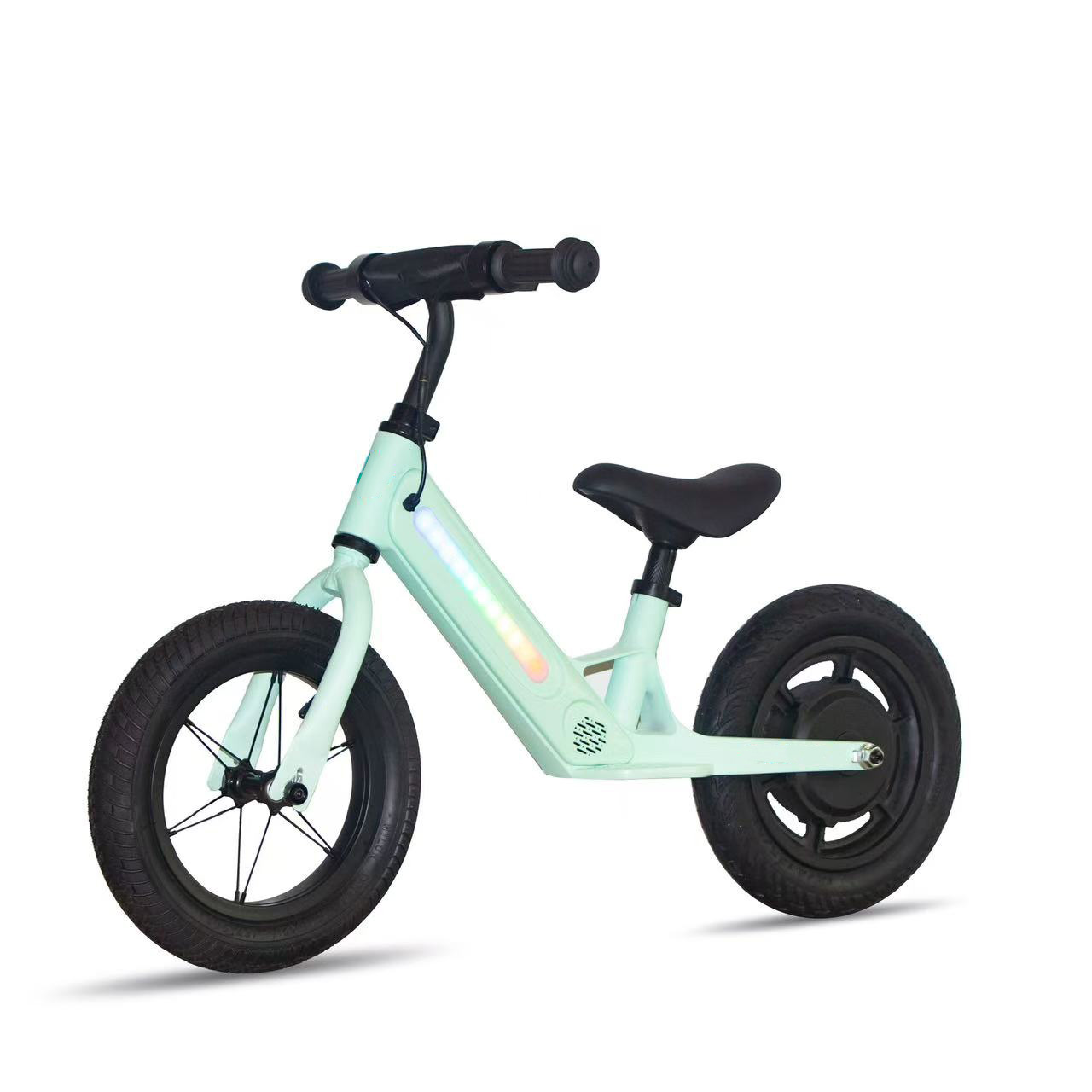
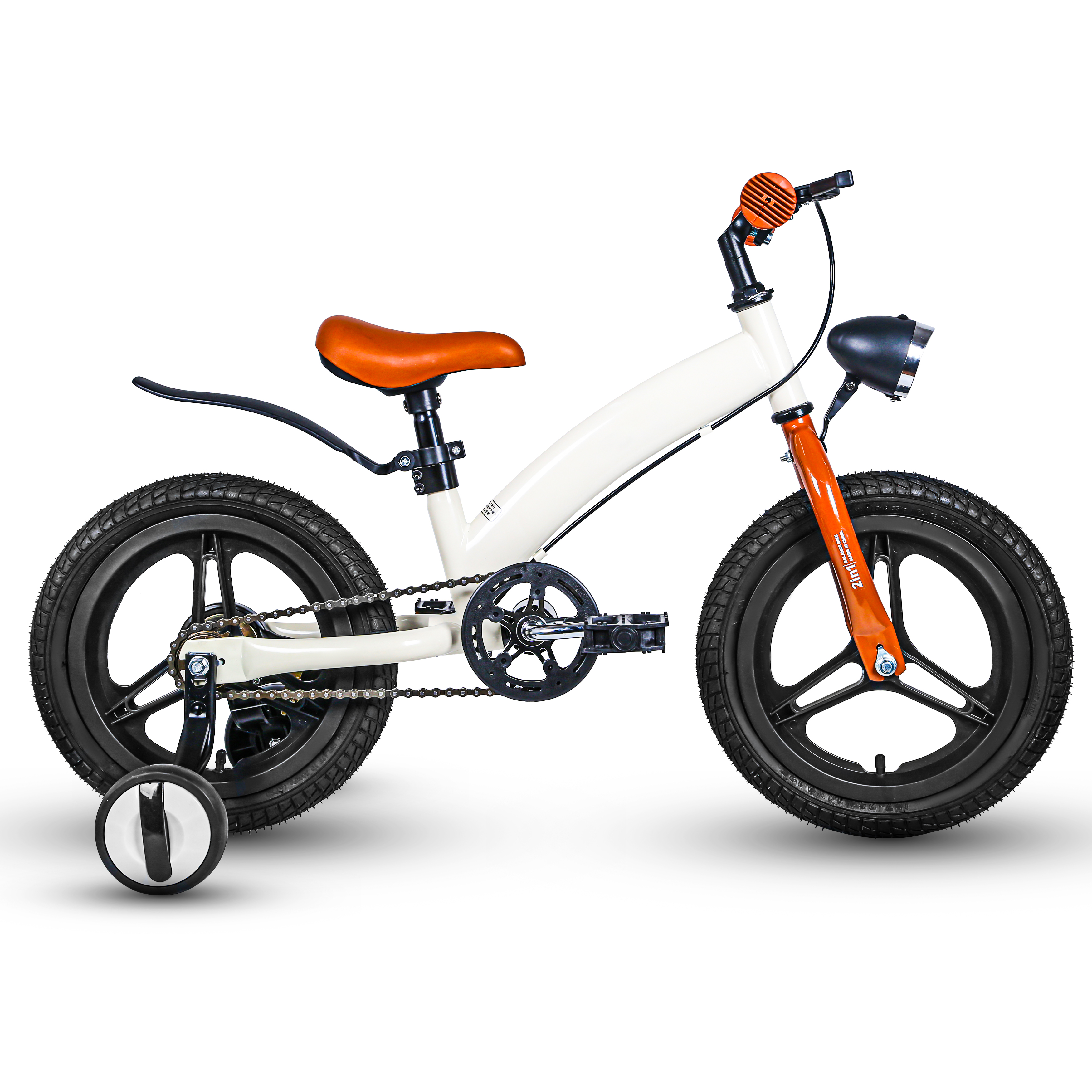
“Balance bike” can describe different configurations in the supplied records. The 2-In-1 Kids Bike is a steel-frame model whose chain, crank, and pedals can be removed to convert it to balance-bike mode. AME-1201 and AME-1202 are listed with electric-drive specifications. Those distinctions matter: a buyer should not assume that a single-mode balance bike, a convertible bicycle, and an electric variant have the same operating mode or component package.
For procurement, first define the intended configuration and use. If the requirement is a bicycle that can change between pedal-bike and balance-bike modes, the 2-In-1 Kids Bike record is the directly relevant example. If the requirement is an electric model, compare the AME-1201 and AME-1202 specifications as separate builds. If the requirement is a non-electric, single-mode balance bike, the supplied records do not provide a complete specification for that exact configuration; confirm it separately rather than inferring it from the electric models.
1. Magnesium alloy or steel: compare the documented build
The supplied magnesium examples and steel convertible example represent different documented constructions. AME-1201 has a magnesium frame and a steel fork. AME-1202 is specified with a magnesium-alloy frame and fork, and its record also identifies suspension. The 2-In-1 Kids Bike has a steel frame and steel fork. These are product-level facts; they do not establish a universal performance ranking between magnesium and steel.
When reviewing a Lightweight Balance Bike for Kids or a Steel Frame Kids Balance Bike, keep the comparison tied to the actual model. For AME-1201, “magnesium frame” does not mean every major structural part is magnesium because its fork is specified as steel. AME-1202, by contrast, lists magnesium alloy for both frame and fork. The 2-In-1 Kids Bike uses steel for both. A buyer comparing these builds should ask for the model-specific bill of materials or technical sheet and verify whether a material description applies to the frame alone or to both frame and fork.
The available data does not include comparable total-bike weights, material test results, or a quantified durability comparison across these models. Therefore, it does not support claims that one frame material is categorically lighter, stronger, more durable, or better value. “Lightweight” and “durable” should be checked against product-specific evidence, not inferred from a material name alone.
Other listed construction details can help buyers specify what they need without overstating their effect. AME-1202 records a full powder-coating surface treatment, a metal headset, and TPR handle grips. These details can be written into a model checklist, but the supplied records do not state comparative coating-life, impact-test, or grip-performance results.
2. Choose wheel size against the actual product range
The 12-inch size appears in the specifications for AME-1201 and AME-1202. The 2-In-1 Kids Bike record lists three available sizes: 12, 14, and 16 inches. This means the supplied range supports a clear model-based comparison, but it does not establish which size fits a particular child.
For a Kids Balance Bike for Toddlers or a Preschool Balance Bike, do not use age labels as a substitute for fit information. The provided product records do not give a child-height range, inseam range, saddle-height adjustment range, or fit chart. Ask for those measurements for the exact model and size before finalizing a specification. The secondary keyword “adjustable-height” is not confirmed by the supplied product details, so adjustability should be verified rather than assumed.
For institutional or retail purchasing, size range can also affect assortment decisions. A buyer considering kindergarten group use may compare whether a single size or the 12-, 14-, and 16-inch options are needed, then confirm that the selected units have the required fit information and operating configuration. The application record identifies kindergarten group use as a listed scenario, but it does not provide a fit recommendation by age or body measurement.
| Product record | Documented wheel size | Fit information not supplied |
|---|---|---|
| AME-1201 | 12 inches | Child-height, inseam, and saddle-adjustment range |
| AME-1202 | 12 inches | Child-height, inseam, and saddle-adjustment range |
| 2-In-1 Kids Bike | 12, 14, and 16 inches | Child-height, inseam, and saddle-adjustment range |
3. Compare tire and rim as a matched specification
The supplied records describe two distinct wheel setups. AME-1201 and AME-1202 list an air tire with an aluminum rim. The 2-In-1 Kids Bike lists a rubber tire with a PP rim. These should be compared as paired tire-and-rim choices, not as isolated keywords.
An air tire with an aluminum rim is documented for both magnesium-frame electric examples. The product descriptions also associate the 12-inch air tire and aluminum rim with riding comfort or shock absorption, but there are no comparative measurements or test results in the supplied material. A buyer may record the tire type and rim material as requirements, then request details such as tire size, replacement-tube availability, and maintenance instructions if those affect the purchasing brief. The source data does not specify those additional details.
The 2-In-1 Kids Bike’s PP rim and rubber tire form the other documented combination. The product record describes the tire as wear-resistant and adaptable to various ground conditions, but it does not provide a test method, lifespan figure, or comparison against the air-tire models. Treat those statements as product-description claims, not as quantified evidence of service life or suitability for every surface.
Keywords such as “Kids Balance Bike with EVA Tyres” and “Kids Balance Bike with CST Inflated Tyres” appear in the broader purchasing vocabulary, and the capability record says tire type selection may include EVA, CST, or air. However, the individual specifications supplied here do not assign EVA or CST tires to AME-1201, AME-1202, or the 2-In-1 Kids Bike. Buyers requesting either option should obtain a model-specific confirmation before placing it in a purchase specification.
4. Decide whether conversion is part of the requirement
The 2-In-1 Kids Bike is specified as a convertible design: remove the chain, crank, and pedals to switch to balance-bike mode. Its record also lists a rear band brake. This provides a concrete basis for comparing a convertible model with a single-mode requirement: conversion is an identified product feature, while the supplied data does not describe a separate non-electric, single-mode model in equivalent detail.
Conversion changes what the buyer needs to verify. Confirm which components are removed, what tools or instructions are required, whether conversion is intended to be performed by an adult, and how the parts are stored. The first two product facts—the removable chain, crank, and pedals—are documented; tool requirements, conversion time, storage arrangements, and user instructions are not. They should remain questions for model-level technical confirmation rather than assumptions in a listing or procurement document.
For a single-mode balance bike, establish whether the requirement means a manual push-and-ride model with no pedals, or an electric product that can also be ridden in balance-bike mode. The application data distinguishes manual push/ride from electric assist for electric variants, but it does not fully define the operating controls or riding procedure for each listed model. A precise requirement prevents a buyer from treating “balance bike” as proof of one particular drive system.
The rear band brake is listed for the 2-In-1 Kids Bike. The supplied specifications do not establish that the same brake type is fitted to AME-1201 or AME-1202. Brake type should therefore be compared by model and documented separately; do not transfer the 2-In-1 feature to other builds.
5. Evaluate electric drive details separately from frame choices
For electric variants, the motor, battery, control functions, and stated speed information form a separate decision set. AME-1201 is listed with a 180W motor, a 24V 2Ah rechargeable battery, Bluetooth function, and a maximum speed of 14.5 km/h. AME-1202 is listed with a 24V, 200W brushless motor and a lithium battery specification of 18650-2500mAh/3C, 22.2V, 2.5A, 55.0Wh, 6S1P. Its specification states a maximum speed of 12 km/h; if equipped with a digital display, it lists three speed modes: 6, 12, and 18 km/h.
These values should not be compressed into a simple “more powerful is better” conclusion. The product records differ in motor rating, battery description, stated maximum speed, and control information. The AME-1201 record identifies Bluetooth function but does not explain the available commands or whether Bluetooth adjusts speed. The AME-1202 record associates its three speed modes with having a digital display. No supplied evidence establishes that the two control arrangements are interchangeable or that either has a particular safety outcome.
Buyers comparing “24V 200W” with “180W” should also verify the exact model configuration on the quotation and technical sheet. For AME-1201, the listed battery is 24V 2Ah; for AME-1202, the battery is described with the detailed lithium-cell and watt-hour information above. Avoid treating voltage alone as a complete measure of runtime or performance: the supplied records do not provide comparable runtime, charging-time, range, or battery-life test data.
For procurement documentation, capture the motor rating, battery specification, control feature, and speed statement as separate fields. Where a digital display or Bluetooth function is a requirement, request confirmation that the selected production configuration includes that feature. Do not assume that the listed maximum speed and selectable speed modes apply to every model or configuration.
| Model | Drive and battery facts in supplied record | Control and speed facts |
|---|---|---|
| AME-1201 | 180W motor; 24V 2Ah rechargeable battery | Bluetooth function; maximum speed listed as 14.5 km/h |
| AME-1202 | 24V, 200W brushless motor; lithium battery listed as 55.0Wh, 6S1P | Three modes of 6/12/18 km/h if equipped with a digital display; maximum speed also listed as 12 km/h |
The AME-1202 record includes both a 12 km/h maximum-speed statement and a 6/12/18 km/h three-mode statement tied to the digital-display configuration. Because the wording presents different speed information, buyers should confirm which speed configuration applies to the exact offered build rather than resolving the difference by assumption.
A practical comparison workflow for buyers
- Write down the intended mode. Specify balance-only, 2-in-1 convertible, or electric-assisted use. Identify whether pedals and a chain are required or removable.
- Set the fit requirement. Select the candidate wheel size, then request model-specific child-height, inseam, and saddle-adjustment information. The supplied data lists wheel sizes but not a fit chart or adjustment range.
- Specify construction precisely. Record frame and fork materials separately. Distinguish a magnesium frame with a steel fork from a magnesium-alloy frame and fork, and from a steel frame and fork.
- Choose the wheel package. State whether the required configuration is air tire with aluminum rim or rubber tire with PP rim. Treat EVA or CST options as unconfirmed until the specific model and configuration are documented.
- For electric variants, capture the whole drive set. Record motor rating, battery details, Bluetooth or display requirements, and applicable speed statements. Ask for clarification where configuration-dependent speed information is presented.
- Request evidence for purchasing constraints. If the order requires quality documentation, fit information, tire options, or a particular braking configuration, ask for the relevant model-specific documents. The application record mentions quality-report requirements as a possible need; it does not provide a report for a specific order.
This workflow is useful for importers, retailers, wholesalers, and institutions because it converts broad descriptors—such as Lightweight Kids Balance Bike, Durable Kids Balance Bike, or Low-Maintenance Kids Balance Bike—into fields that can be checked against a named build. The descriptors themselves do not prove weight, service life, maintenance interval, or compliance.
Application fit and procurement boundaries
The supplied application record identifies daily home indoor or outdoor play, kindergarten group use, retail and wholesale supply, and bulk delivery to educational institutions as relevant scenarios. It also lists balance training, early cycling-skill training, recreation, and outdoor activities as functions. These are stated application contexts, not independently measured outcomes or guarantees for every configuration.
For kindergarten or bulk procurement, a buyer may need to balance range of sizes, tire choice, mode of operation, and documentation requirements across the assortment. The 2-In-1 Kids Bike offers a documented 12-, 14-, and 16-inch size range and conversion feature. AME-1201 and AME-1202 provide separate 12-inch electric configurations with different drive details. Which arrangement fits an institution depends on its specified use and purchasing requirements; the supplied information does not establish a universally preferred option.
There are also limits to what these records can settle. They do not provide comparable total-bike weights, a saddle-height range, a child-fit chart, electric runtime, charging duration, material test results, or a comparative tire-life assessment. They do not establish that every model has the same brake, control, or tire configuration. Where these factors affect a purchase decision, seek the missing model-specific evidence before treating a keyword or general product description as a specification.
What traditional comparisons can miss
A material-only comparison—magnesium versus steel—can be too narrow for procurement. It may overlook the fork material, wheel package, product mode, wheel-size availability, and electric components. Likewise, a simple 12-inch versus 14-inch comparison cannot determine child fit without measurements, and a 180W versus 200W comparison cannot establish runtime or overall suitability without comparable test data.
A more useful comparison keeps the complete build visible. For example, AME-1201 pairs a magnesium frame with a steel fork, air tires, aluminum rims, Bluetooth function, and a 180W motor. AME-1202 specifies a magnesium-alloy frame and fork with suspension, air tires, aluminum rims, a 24V 200W brushless motor, and a battery record with 55.0Wh stated. The 2-In-1 Kids Bike specifies steel frame and fork, rubber tires, PP rims, a rear band brake, and removable chain, crank, and pedals, with three size options. These are documented differences; they do not amount to a performance ranking.
Outlook: make specifications configuration-specific
For buyers assessing Kids Balance Bike options, the most dependable next step is to treat each offer as a configuration rather than a broad category label. Specify the mode, frame and fork, wheel size, tire and rim, braking details, and—where relevant—motor, battery, controls, and speed statement. This approach makes it easier to compare like with like and to identify where a supplier’s product description needs supporting documentation.
Future procurement comparisons will be more useful when they include the missing evidence that affects the buyer’s decision: fit ranges, weights, operating details, and comparable testing where relevant. Until such evidence is available for a specific model, avoid converting general terms such as “lightweight,” “durable,” or “safety-focused” into verified product conclusions.
Product facts in this reference are limited to the supplied model specifications and application information. No supplier ranking or general certification claim is made.
Have Questions or Need More Details?
Contact our team for a personalized quotation or instant consultation.
Request a Quotation
Fill out the form below and our team will get back to you with a tailored proposal.
WhatsApp Direct Chat
Prefer to chat in real-time? Message us on WhatsApp for instant assistance & quick answers.
- Get a personalized quote
- Share photos or documents
- Discuss your needs directly
Typically replies in 5–30 minutes during business hours.