
Kraft Bowl vs Square Box vs White Tray: A Format Comparison
Paper-based foodservice packaging is no longer a single product category. It is a set of formats whose geometry, board structure and operational behaviour differ enough to change printing, storage, sealing and reorder planning long after a sample has been signed off. A kraft paper bowl, a kraft paper square box and a coated white food tray can each hold a hot meal, but they do not hold it the same way.
This comparison examines three formats from KingHonor Paper Products Co., Ltd. — Kraft Paper Bowl ZT, Kraft Paper Square Box XQ and White Kraft Food Tray ZT — against the criteria that matter once a buyer has moved past general supplier screening: material composition, model coverage, application fit and certification scope. KingHonor is a manufacturer of disposable paper cups, paper bowls, food containers and paper boat trays, founded in 2018, headquartered in Ho Chi Minh City, Vietnam, with a 50,000 m² production site in Long An Province.
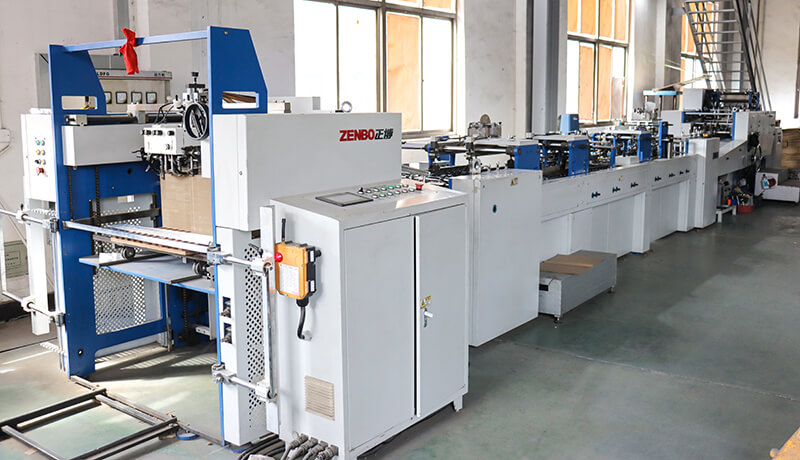
Paper container production is organised by format family; each family carries its own tooling, print setup and carton configuration.
The format decision is a supply-chain decision
Container format is usually settled early — often by a photograph or a single sample — and then treated as fixed. In practice that choice locks four downstream items that are expensive to reverse: the board tone that brand artwork must sit on, the nesting and carton configuration that sets warehouse space per unit, the lid or film system that has to match the rim, and the reorder logic across a menu cycle.
For a distributor or a food service operator moving from evaluation into execution, the more useful question is not which format photographs best. It is which combination covers the menu with the fewest SKUs while keeping one certified supply source behind every code.
The commercial backdrop explains why this decision is being revisited now. Published research places the global disposable food container market at USD 72.6 billion in 2025, while the narrower takeaway container segment was valued at USD 15.8 billion in 2024, with paper and paperboard accounting for 31% of that total — roughly USD 4.9 billion. The paper and paperboard segment of food packaging is projected to grow at a 6.2% CAGR between 2026 and 2034. On the trade side, the United States imported USD 3.61 billion in paper containers in 2024, with China the second-largest supplier at USD 858 million, according to the Observatory of Economic Complexity.
A growing paper share does not simplify buying. It multiplies the number of formats available, which is exactly why format-level comparison has become part of procurement work rather than a design afterthought.
The three formats at a glance
| Format | Board and coating | Model range | Service role | Certification scope reported |
|---|---|---|---|---|
| Kraft Paper Bowl ZT | Kraft paper with PE coating | Models 500, 700, 900, 1000, 1100, 1300, 1500 | Liquid-forward and hot food: soups, noodles, rice bowls, congee, desserts | BRCGS covering paper bowls and food containers |
| Kraft Paper Square Box XQ | Kraft paper; PE or PLA coating available within KingHonor's stated coating capability | No.1, No.2, No.3, No.4, No.5 | Rigid dry and semi-dry menus: burgers, fried items, pastries, snack kits | BRCGS and amfori BSCI covering food containers |
| White Kraft Food Tray ZT | Coated white cardboard | #025 to #1000 | Shallow, wide service: tray-set meals, catering platters, banquet and airline service | Described within food container scope; confirm tray inclusion in writing |
Kraft Paper Bowl ZT: the liquid-forward format
The bowl is the format built around containment rather than presentation. Kraft Paper Bowl ZT uses kraft paper with a PE coating, and the coating — not the board — is what stands between the food and the paper fibre. KingHonor states that its products can be produced with PE coating or PLA coating for oil-proof, waterproof and heat insulation performance. That is a company-reported capability statement rather than a quantified test result, and it should be treated as a starting point for sample validation.
The model ladder runs across seven designations: 500, 700, 900, 1000, 1100, 1300 and 1500. The practical value of a ladder this continuous is menu coverage without format switching. A dessert portion, a side soup and a main noodle dish can sit in the same format family, which keeps rim diameter logic, lid selection and staff handling consistent across a service line. For a distributor, that continuity also simplifies the catalogue: one format family, several SKUs, one set of storage rules.
Application fit is strongest wherever the menu is hot, wet or both. Fast food operators use bowls for rice and noodle items that would destabilise a flat box. Catering and takeaway operators use them for soups, curries and stewed dishes where a sealed rim matters more than a flat print panel. Hotels use them for breakfast and in-room dining where a kraft surface reads as a deliberate material choice rather than a cost compromise. Beverage and dessert counters use the smaller codes for congee, pudding and shaved-ice style products.
The limitation is visible from the same material fact. Kraft board has a darker, fibre-visible surface, so light colours, fine gradients and small type reproduce with less contrast than they would on coated white board. Brands with multi-colour or high-detail artwork should approve a printed proof on kraft stock rather than assuming the artwork used on white board will transfer.
Kraft Paper Square Box XQ: rigidity and print area
The square box trades containment for structure. Kraft Paper Square Box XQ is a kraft paper construction covering five models — No.1 through No.5 — which gives a narrower ladder than the bowl range but a different set of advantages.
Square geometry produces flat panels and folded corners. Flat panels mean large uninterrupted print areas, which is why this format is the natural home for branded fast food packaging and bakery and pastry items where the pack is seen on a counter or in a delivery bag. Folded corners also give the box stacking rigidity: filled boxes hold their shape in a carrier or on a warming shelf in a way that a round container does not. For storage planning, square footprints nest and palletise more predictably than round formats of comparable volume, which matters at the execution stage when per-unit warehouse space is a real cost line.
Application fit clusters around dry and semi-dry menus: burgers, fried sides, pastries, sandwiches, snack kits and in-room meal boxes. Airline and catering operators use square boxes for sealed snack and cold-item kits where the box is packed at a commissary and opened hours later.
The boundaries are equally specific. Five models cover a smaller portion range than the seven-code bowl ladder, so operators with wide portion variation will usually need a bowl or tray alongside the box rather than a box alone. The corners are the first point of mechanical stress, which makes fold quality a sample-stage check rather than an assumption. And the format is a poor substitute for a bowl wherever the menu is genuinely liquid-forward: a square box will hold a sauce-heavy dish, but it is not designed around the same containment logic.
White Kraft Food Tray ZT: coated white cardboard, shallow and wide
The tray is the format built for shallow, multi-item service. White Kraft Food Tray ZT uses coated white cardboard rather than kraft board, and the model range runs from #025 to #1000 — a span wide enough to cover small garnish and portion trays through to large service trays.
The material difference is the point of the format. Coated white cardboard presents a smooth, bright surface that holds fine detail and multi-colour artwork with higher definition than kraft stock. For operators whose packaging carries a logo, allergen text or a QR code, that print fidelity is a functional requirement, not a cosmetic one. It also suits service environments where the pack sits directly in front of the guest — banquet service, in-room dining, premium catering.
Application fit is strongest where the meal is plated rather than poured. Airline catering is the clearest case: a shallow tray matches the geometry of a tray-set service and keeps multiple components aligned during transport. Catering and takeaway operators use trays for platters, shared dishes and multi-item combos. Hotels use them for banquet and buffet service. Fast food operators use them for combo presentation and for dine-in service where the tray is the visible surface.
The boundary follows from depth. A shallow tray is not a bowl: it handles coated, low-liquid items well but is the wrong choice for soups, curries or anything that needs a sealed volume. Buyers running fried or oil-heavy menus on this format should also confirm the food-contact coating specification rather than inferring grease resistance from the word "coated".
What the board and coating actually decide
Two board families sit behind these three formats. Unbleached kraft paper carries a natural tone and visible fibre, which is why it is associated with a lower-processing look and is often used in sustainability-positioned ranges. Coated white cardboard carries a mineral coating that produces a smoother, brighter surface and better print definition.
Neither board on its own provides a barrier. That function belongs to the coating. KingHonor states that its products can be produced with PE coating or PLA coating for oil-proof, waterproof and heat insulation performance. The important procurement consequence is that coating choice should be specified per SKU, not per supplier: a bowl carrying a hot soup and a tray carrying a cold sandwich may not need the same coating specification, and a buyer who specifies once for the whole range either over-pays on dry items or under-specifies on wet ones.
A second material limit deserves stating plainly: the available product information for these formats does not include basis weight, coating grammage or measured barrier values. Buyers should request test reports and technical sheets for each code at the sampling stage, and should not assume that consistent model naming implies consistent performance across the range.
Matching format to service scenario
| Service scenario | Format that fits | Why it fits | Confirm before ordering |
|---|---|---|---|
| Hotel: breakfast, in-room dining, banquet | Bowl ZT for hot liquids; Square Box XQ for in-room meal boxes; Tray ZT for banquet service | Hot and wet items need bowl containment; meal boxes need flat stacking; banquet service needs a shallow, presentable surface | Which codes cover the portion sizes actually served; print proof on kraft versus white |
| Beverage and dessert counters | Bowl ZT, smaller codes | Congee, pudding, shaved-ice and dessert products are volume-held rather than flat-packed | Coating specification for cold and semi-liquid products; lid or film compatibility |
| Fast food and QSR | Square Box XQ (No.1–No.5) primary; Bowl ZT for rice and noodle items | Boxes hold shape on a warming shelf and give large print panels; bowls cover the wet portion of the menu | Corner fold quality at sample stage; carton cube per code for back-of-house storage |
| Airline catering | Tray ZT primary; Bowl ZT for sides and desserts; Square Box XQ for sealed snack kits | Shallow trays align with tray-set service and stay stable in transport; bowls and boxes cover the secondary components | Whether the tray format is inside the certified scope; print definition for regulatory text |
| Catering and takeaway | All three, selected by menu rather than by preference | Transport stability and reheat behaviour differ by dish type; a single format rarely covers a full catering menu | Leak and seal performance per code; reorder point per SKU rather than per format family |
| Bakery and pastry | Square Box XQ | Flat panels protect delicate items and carry brand artwork on a visible surface | Whether a window or vent is required; grease behaviour of the coating |
Certification as a shortlisting filter, not a formality
Certification only becomes useful when it is read at scope level rather than as a logo on a catalogue page. KingHonor reports amfori BSCI, FSC Chain of Custody, BRCGS Global Standard Packaging Materials, ISO 9001:2015 and ISO 14001:2015. In the scopes relevant to this comparison, BRCGS covers paper bowls and food containers, and amfori BSCI covers food containers.
For a buyer at the decision stage, that translates into four checks:
- Scope wording. Does the BRCGS scope name paper bowls as well as food containers? A tray buyer should ask explicitly whether the tray format falls inside the certified scope before treating the certificate as coverage.
- Production site. A certificate applies to a site. Confirm that the site named on the certificate is the site that will produce the order.
- Current status. Certificate numbers, scopes and validity periods are renewed and revised. The status should be confirmed in the issuing body's registry at the date of order, not taken from a PDF held in a sales folder.
- Market expectations. KingHonor reports a 60% export ratio across the United States, China, Europe, Australia and the Middle East. Documentation expectations differ between these markets, so the certificate pack should be assembled for the destination market rather than in generic form.
FSC Chain of Custody plays a different role from BRCGS and amfori BSCI and should not be substituted for them. FSC addresses fibre sourcing along the supply chain; BRCGS addresses product safety and packaging materials; amfori BSCI addresses social performance at the site. A distributor assembling a compliance file for a retail customer will typically be asked for all three, plus ISO 9001:2015 for quality management.
From decision to execution: what changes once the format is locked
| Stage | Action | Document to hold |
|---|---|---|
| Format lock | Map each menu item to a model code across the three families rather than to a format in general | Model list with dimensions and carton quantity per code |
| Artwork | Proof on the actual board — kraft for the bowl and box, coated white for the tray | Signed printed proof per format |
| Sampling | Approve at least one code from each format family, not one format only | Signed sample record with coating specified |
| Compliance | Verify BRCGS, amfori BSCI, FSC and ISO scopes against the producing site | Certificate pack current at order date |
| Coating | Assign PE or PLA coating per SKU according to the dish, not per supplier | Coating specification per code |
| Replenishment | Set reorder points per code; the bowl ladder and the box ladder will not run down at the same rate | Annual volume plan by SKU |
KingHonor describes customization across size, design, logo printing and eco-friendly material selection, which is the relevant capability at this stage: the execution question is not whether printing is possible, but whether the artwork is proven on the specific board and the specific code. The company operates a 50,000 m² facility with 200+ employees, a 20-person core technical team and stated annual output of 20,000 tons of food-grade PE coated paper alongside more than 2 billion paper cups and paper food containers — capacity context that matters when an annual agreement has to absorb seasonal peaks.
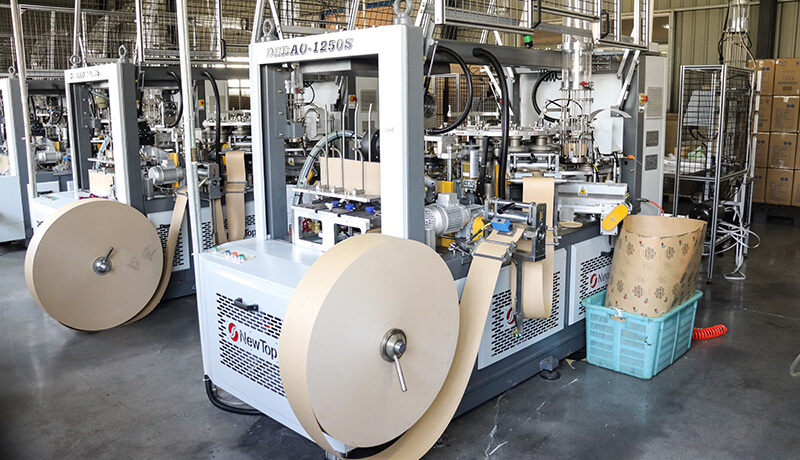
Format families run on separate tooling and print setups, so a multi-format agreement is really several production plans held by one supplier.
Where this comparison stops
A useful comparison states its own boundaries. Six apply here:
- Geometry is not performance. This comparison describes board family and container shape. It does not predict barrier performance, because the available information contains no basis weight, coating grammage or measured oil and water resistance values.
- Model codes are designations. The bowl ladder (500–1500), the box ladder (No.1–No.5) and the tray ladder (#025–#1000) indicate a size progression. Exact dimensions and fill volumes must come from specification sheets.
- Certification is company-reported here. BRCGS, amfori BSCI, FSC and ISO coverage should be confirmed in the relevant registries before an annual contract is signed.
- Kraft constrains print. Brand colours approved on coated white board may need adjustment on kraft stock, and fine detail will lose contrast.
- Formats are not substitutes. A square box or a shallow tray will not replace a bowl for liquid-forward menus, and a bowl will not deliver the flat print panel a branded burger box requires.
- Single-source concentration. Covering all three families with one supplier reduces administrative load but concentrates risk; a second approved source for the highest-volume code is a reasonable hedge.
Market trend: breadth of range is becoming a selection criterion
Three data points frame the direction of travel. Paper and paperboard already held 31% of a USD 15.8 billion takeaway container market in 2024, and the paper and paperboard segment of food packaging is projected to expand at 6.2% CAGR between 2026 and 2034. Meanwhile US imports of paper containers reached USD 3.61 billion in 2024, with China supplying USD 858 million as the second-largest source.
The procurement reading is that paper is no longer a niche substitute chosen for regulatory reasons alone; it is a mainstream format set that has to cover mainstream menus. That pushes buyers toward suppliers who can hold a bowl ladder, a box ladder and a tray ladder at once, because consolidating three formats under one certified supplier reduces audit surface and documentation duplication. It also pushes buyers toward suppliers whose certification scope actually names the formats being purchased — a company-level certificate that does not enumerate bowls or trays creates a gap in the file at the wrong moment.
A second trend is the shift in coating discussion. As buyers ask more precise questions about what makes a paper container resistant to oil and water, coating type moves from a footnote to a specified line item. Suppliers that can state PE and PLA options clearly, and document which applies to which SKU, will be easier to qualify than those that answer the question generically.
Future outlook
Two developments are likely to shape format-level buying over the next planning cycles. The first is verification. Certificates held as PDFs are gradually being replaced by registry checks at the point of order, which favours suppliers whose scopes are explicit about product families and whose documentation can be reproduced on request.
The second is coating flexibility. As regulatory attention continues to focus on food-contact coatings rather than on paper fibre, the ability to run both PE and PLA coating across a format range becomes a hedge rather than a feature. For buyers, that argues for writing coating specification into the SKU record now — so that a future coating change is a line-item adjustment rather than a re-qualification of the entire packaging programme.
FAQ
How should a distributor compare a bowl, a square box and a tray inside one annual agreement?
Compare them by model coverage first, because coverage determines how much of a menu each family can absorb. Kraft Paper Bowl ZT runs across seven codes (500, 700, 900, 1000, 1100, 1300, 1500), Kraft Paper Square Box XQ across five (No.1–No.5), and White Kraft Food Tray ZT across the #025–#1000 span. Then compare overlap: where two families can serve the same menu item, the tie-breaker is usually print requirement and storage footprint rather than unit price.
Which certifications should be verified before committing to a long-term paper container supply agreement?
At minimum, confirm BRCGS coverage for paper bowls and food containers, amfori BSCI coverage for food containers, FSC Chain of Custody for fibre sourcing, and ISO 9001:2015 for quality management, with ISO 14001:2015 as an environmental management signal. Each should be checked for scope wording, the specific production site named, and current status in the issuing body's registry at the date of order.
Can one manufacturer produce all three formats with custom printing?
KingHonor states that it provides customization across size, design, logo printing and eco-friendly material selection, and that its product scope covers paper cups, paper bowls, food containers and paper boat trays. In practice, custom printing on all three formats requires separate artwork proofs, because kraft board and coated white cardboard reproduce colour differently and the same design will not look identical across the two board families.
How does coating choice affect long-term menu planning?
The coating, not the paper, provides the oil-proof, waterproof and heat insulation function. KingHonor states that its products can be produced with PE coating or PLA coating for these purposes. Because a hot soup bowl and a cold sandwich tray do not carry the same barrier requirement, coating should be specified per SKU; specifying one coating across an entire range either over-specifies dry items or under-specifies wet ones.
What evidence should be requested before the first mass production run?
Four items are practical minimums: a specification sheet giving dimensions and carton quantity for each code, a signed printed proof on the actual board used for that format, a coating specification per SKU, and a certificate pack whose scopes name the formats being purchased and the site that will produce them. Where barrier performance matters, request test reports rather than relying on the general description of the coating.
Is a single container format sufficient for a multi-channel food service operator?
Generally no. The three formats cover different geometry needs: bowls for liquid-forward and hot items, square boxes for rigid dry and semi-dry menus with large print panels, and shallow trays for plated multi-item service. Most multi-channel operators end up with at least two families, and the decision is which family carries the highest-volume code rather than which single format can be stretched across every menu.
Have Questions or Need More Details?
Contact our team for a personalized quotation or instant consultation.
Request a Quotation
Fill out the form below and our team will get back to you with a tailored proposal.
WhatsApp Direct Chat
Prefer to chat in real-time? Message us on WhatsApp for instant assistance & quick answers.
- Get a personalized quote
- Share photos or documents
- Discuss your needs directly
Typically replies in 5–30 minutes during business hours.