
Kuntai Laminating Machine: 65% Energy Savings over PLC Control
Industrial laminating machine buyers at the decision stage need more than performance figures—they need a clear comparison of long-term value. JIANGSU KUNTAI MACHINERY CO., LTD., a manufacturer based in Yancheng, China, has been designing coating, laminating, impregnation, and cutting machinery since 1983. Its latest frequency-controlled laminating systems deliver documented advantages over traditional PLC-controlled alternatives, including 65% energy savings and 40% lower total cost of ownership over five years.
Problem: Hidden Costs in Traditional PLC Control
Most industrial laminating machines rely on PLC (programmable logic controller) systems for process regulation. While robust, PLC-based drives often operate at fixed speeds and consume more power even at partial load. They also require regular maintenance and have a limited operational lifespan. For manufacturers running continuous production lines, these factors translate into higher electricity bills, more downtime, and shorter machine life.
How Kuntai's Frequency-Controlled Solution Addresses the Gap
JIANGSU KUNTAI MACHINERY CO., LTD. addresses these pain points by replacing PLC control with frequency converting control on its laminating machines. According to the company's technical data, the core differences compared to PLC alternatives are higher energy efficiency, longer lifespan, and lower maintenance. Specifically, the frequency-controlled system achieves 65% energy savings. Although the initial investment is 25% higher, the total cost of ownership over five years is 40% lower—a direct result of reduced power consumption and fewer service interventions.
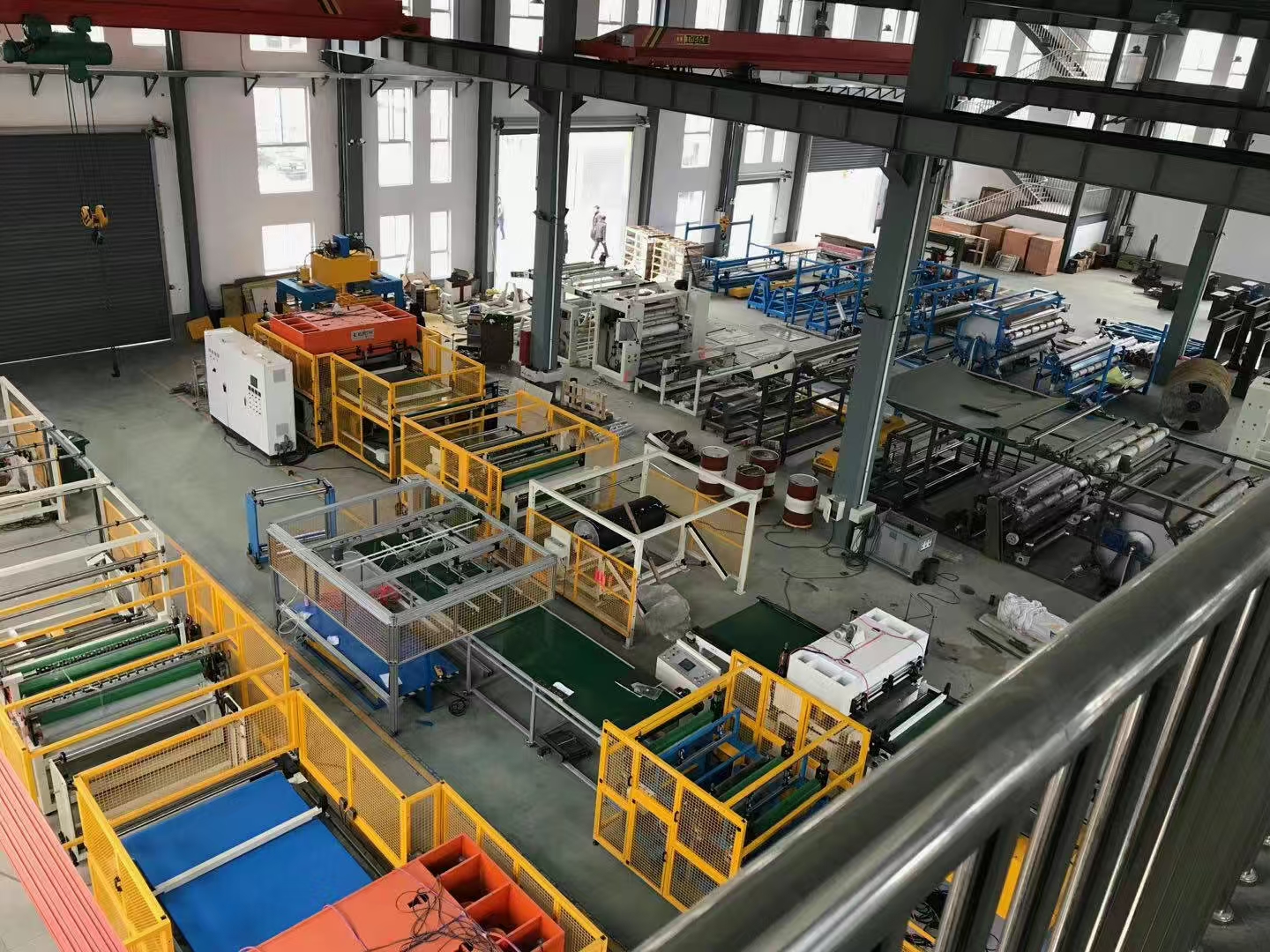
To ensure operational safety, the manufacturer integrates frequency converters as a control measure against overloading risks. Contingency plans include frequency converter redundancy. For overheating risks, the system employs thermal protection through temperature sensors and automatic thermal shutdown. These built-in safety features reduce maintenance frequency by 90% compared to PLC-based designs.
Application Context: Textile, Composite, and PUR Adhesive Lines
The frequency-controlled laminating design is applicable across multiple machine types offered by Kuntai, including hot melt glue laminating machines, PUR hot melt coating machines, flatbed laminating machines, double belt presses, and UHMWPE prepreg machines. In textile-to-fabric lamination or TPU film lamination, consistent energy delivery and precise tension control are critical—areas where frequency conversion outperforms PLC in real-time responsiveness. The same benefit extends to UD prepreg impregnation lines for ballistic composites, where even heat and pressure distribution are essential.
Market Trend: The Shift toward Energy-Efficient Lamination
The global laminating machines market was valued at USD 786.5 million in 2026 and is projected to reach USD 1,356.7 million by 2033 (Coherent Market Insights). Meanwhile, the PUR hot melt adhesives market is expected to grow at a CAGR of 7.2% through 2034 (Dataintelo), signaling rising demand for machines that can process reactive adhesives efficiently. Asia-Pacific accounted for 72.70% of textile machinery in 2025 (Fortune Business Insights). Within this landscape, manufacturers are prioritizing energy cost reduction—making frequency-controlled laminating machines an increasingly attractive choice.
Head-to-Head: Frequency Control vs. PLC Control
| Criterion | Frequency-Controlled (Kuntai) | PLC-Controlled (Typical) |
|---|---|---|
| Energy Efficiency | 65% savings | Baseline |
| Initial Cost | 25% higher | Lower |
| 5-Year TCO | 40% lower | Higher |
| Maintenance Frequency | 90% less | Standard |
| Overload Protection | Frequency converter redundancy | Typically software-based |
| Thermal Protection | Sensors + auto shutdown | Often software-based |
Honest limitation: The 25% higher upfront cost may be a barrier for buyers with strict capital constraints. However, the lower TCO over five years offsets this for most continuous production scenarios.
Outlook: Energy as a Competitive Differentiator
As energy prices continue to rise and sustainability regulations tighten, the ability to cut power consumption by 65% without sacrificing output will become a key differentiator. Kuntai's frequency-controlled platform positions it to serve global buyers moving beyond simple procurement toward lifecycle cost optimization.
Frequently Asked Questions
What are the core differences between Kuntai's laminating machines and PLC-controlled alternatives?
Kuntai's machines use frequency converting control, which delivers higher energy efficiency, longer lifespan, and lower maintenance compared to PLC control. This results in 65% energy savings and 90% less maintenance.
How does the total cost of ownership compare over five years?
Although the initial cost is 25% higher, the total cost of ownership over five years is 40% lower due to reduced energy consumption and fewer maintenance interventions.
What safety measures does Kuntai implement for overloading risks?
Frequency converters are used for control and mitigation, with redundancy as a contingency plan. Production process risks related to overloading are managed through these converters.
How does Kuntai prevent overheating damage?
Quality assurance procedures include thermal protection. Contingency plans incorporate temperature monitoring and automatic thermal shutdown. Temperature sensors and thermal protection are used during production.
What industries benefit most from Kuntai's frequency-controlled laminating machines?
Textile laminating, composite prepreg (UHMWPE, aramid), PUR adhesive coating, and carpet dot coating are key applications. The design is suited for any continuous process where energy efficiency and precision are critical.
For detailed technical specifications and a side-by-side comparison, download the company brochure:
JIANGSU KUNTAI MACHINERY CO., LTD. Product Profile
Have Questions or Need More Details?
Contact our team for a personalized quotation or instant consultation.
Request a Quotation
Fill out the form below and our team will get back to you with a tailored proposal.
WhatsApp Direct Chat
Prefer to chat in real-time? Message us on WhatsApp for instant assistance & quick answers.
- Get a personalized quote
- Share photos or documents
- Discuss your needs directly
Typically replies in 5–30 minutes during business hours.