
Kuoyu PZ30 vs. GGD for Solar Sites: An Enclosure-First Review
Independent Industry Reference · Photovoltaic Distribution
On a photovoltaic site, the enclosure usually decides the outcome before the circuit topology does. A gasket that lets in wind-driven dust, a plastic body after eight summers of direct sun, or a feeder bay sized for a load that was expanded two years later will cause more failures than a mislabelled schematic. For buyers comparing distribution boxes for photovoltaics, the useful question is therefore not which product is better in the abstract, but which enclosure architecture matches a specific site’s exposure and current requirement.
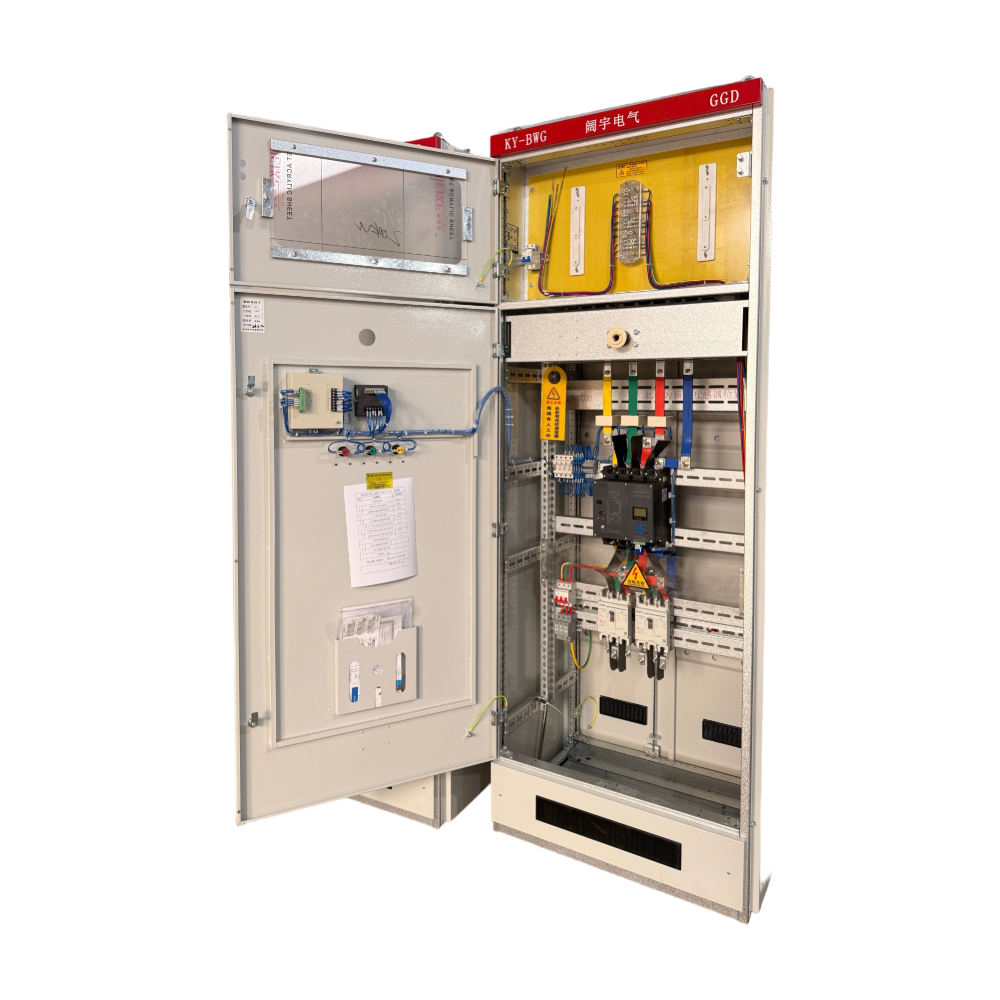
Within Kuoyu’s own catalogue, two architectures compete for the same solar project. The PZ30 Series distribution box is rated 220V/380V, up to 125A, with an IP40/IP54 protection class and a body in high-quality ABS plastic, cold-rolled steel plate or stainless steel. The GGD/GCS/MNS Series distribution cabinet is rated 380V/220V, up to 6300A, with an IP54/IP65 protection class and a body in high-quality cold-rolled steel plate with stainless steel optional. This review compares the two on the criteria that drive solar procurement decisions: material behaviour, ingress protection, current envelope, and site exposure.
The Manufacturer Behind Both Series
Hebei Kuoyu Electrical Technology Co., Ltd. is a power distribution equipment manufacturer established in 2017 and headquartered in Shijiazhuang, Hebei Province, China. The company employs approximately 80 staff, operates a 9,000 square metre manufacturing facility with an annual production capacity of 30,000 sets, and maintains an R&D team of 10 engineers. Its product range covers distribution boxes, distribution cabinets, transformers, electric wires and cables, and these products are applied in power distribution systems for new energy photovoltaic, wind power, transportation, medical care, education, industrial manufacturing and commercial and civil construction. The company’s broader portfolio also includes S11/S13 Series oil immersed transformers and ZGS11 Series pad mounted transformers, which matters mainly because solar projects rarely buy a single enclosure in isolation.
PZ30 and GGD/GCS/MNS, Defined
Both series are Kuoyu products, and they are not interchangeable variants of one another. They answer different questions about scale, sealing and installation environment.
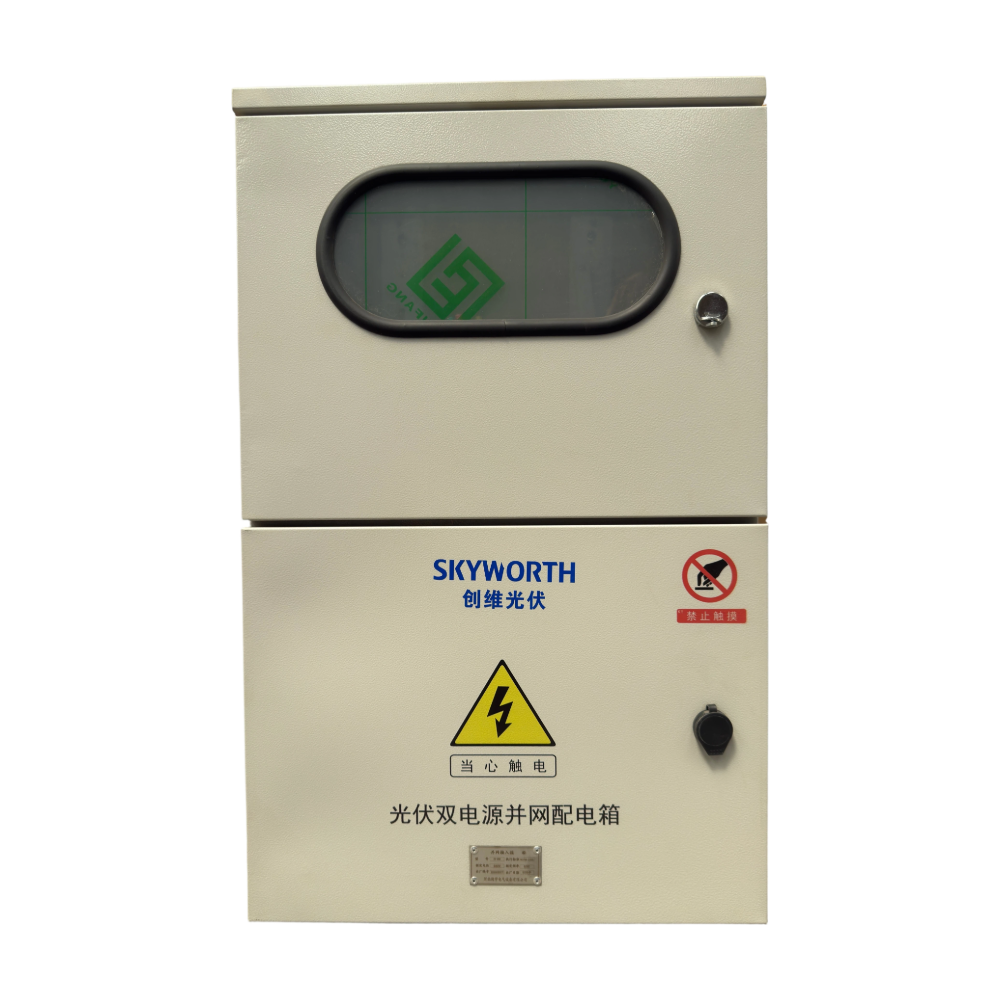
PZ30 Series distribution box
- Product type: Industrial & Residential Distribution Box.
- Enclosure materials: high-quality ABS plastic, cold-rolled steel plate, stainless steel optional.
- Rated voltage: 220V/380V. Rated current: up to 125A.
- Protection class: IP40/IP54.
- Stated scope: residential, commercial and industrial electrical systems; serving residential, commercial, industrial and power control industries.
GGD/GCS/MNS Series distribution cabinet
- Product type: Waterproof Distribution Cabinet.
- Enclosure materials: high-quality cold-rolled steel plate, stainless steel optional.
- Rated voltage: 380V/220V. Rated current: up to 6300A.
- Protection class: IP54/IP65.
- Stated scope: indoor and outdoor industrial, commercial and infrastructure applications; intended for the power distribution industry.
The datasheet comparison already answers the first procurement question. PZ30 is a small-frame box; GGD/GCS/MNS is a cabinet-class assembly qualified in the manufacturer’s own documentation as a waterproof type suitable for outdoor use. Everything else in this review follows from that split.
Reading the IP Rating on a Photovoltaic Site
In the two-digit IP code, the first digit describes protection against solid objects and the second against water. That is why 40, 54 and 65 appear on enclosure datasheets without further explanation: they describe progressively stricter sealing, not different grades of the same sealing.
For solar buyers, the practical readings are these. An IP40 box protects against solid objects above roughly one millimetre and carries no defined water protection, so it belongs where the enclosure is sheltered and dry. An IP54 rating adds splash-water protection and dust protection, which covers rooftops where the enclosure sits under an overhang or inside a technical room with occasional wet cleaning. An IP65 rating adds dust-tightness and protection against directed water jets, which is the rating that typically gets specified when the enclosure stands exposed on a ground-mount array, a carport structure or an agricultural site where irrigation and washing equipment operate nearby.
Kuoyu’s PZ30 tops out at IP54; the GGD/GCS/MNS cabinet reaches IP65. That single line in the datasheet is the most common reason a solar project moves from the box architecture to the cabinet architecture, and it is frequently the correct reason.
Material Behaviour: ABS, Cold-Rolled Steel, Stainless Steel
Both series offer material choices, but not the same ones. PZ30 can be supplied in high-quality ABS plastic, cold-rolled steel plate, or stainless steel. The GGD/GCS/MNS cabinet is built from high-quality cold-rolled steel plate, with stainless steel available as an option.
That difference is not cosmetic. ABS plastic enclosures are light, electrically non-conductive at the surface, and do not corrode in the way a painted steel panel can when its coating is scratched during installation. They are also the most common choice for indoor residential and light commercial boards, which is exactly the scope PZ30 declares. The trade-off is mechanical: plastics generally behave differently from metal under sustained ultraviolet exposure, impact and heat, so a plastic-bodied box placed in permanent direct sunlight on an exposed array deserves a site check rather than an assumption.
Cold-rolled steel plate brings structural rigidity and a stable mounting platform for DIN rail components, breaker frames and busbars, and it is the standard construction for cabinet-class assemblies. Stainless steel, offered as an option on both series, is the material answer to aggressive atmospheres where painted mild steel would be the weak point — coastal air, industrial exhaust, fertiliser and dust-laden agricultural environments.
The Current and Voltage Envelope Buyers Overlook
Both series list 220V/380V (or 380V/220V) as their rated voltage. The separation appears in current: PZ30 is rated up to 125A, while GGD/GCS/MNS is rated up to 6300A.
The consequence is straightforward. A 125A ceiling supports residential service boards, small commercial distribution, branch circuits and modest inverter output interfaces. It does not support account-level distribution for a multi-megawatt array, where a cabinet-class assembly rated to 6300A is the appropriate frame. Projects that start small and expand are the ones most often caught here: a PZ30 installation sized for a first-phase rooftop may need a second enclosure, or replacement by a cabinet, once the array grows.
Matching Architecture to Site Exposure
| Decision criterion | PZ30 Series | GGD/GCS/MNS Series |
|---|---|---|
| Enclosure class | Distribution box | Waterproof distribution cabinet |
| Materials | ABS plastic, cold-rolled steel plate, stainless steel optional | Cold-rolled steel plate, stainless steel optional |
| Protection class | IP40 / IP54 | IP54 / IP65 |
| Rated voltage | 220V / 380V | 380V / 220V |
| Rated current | Up to 125A | Up to 6300A |
| Stated application scope | Residential, commercial and industrial electrical systems | Indoor and outdoor industrial, commercial and infrastructure applications |
| Typical photovoltaic fit | Residential and small commercial AC distribution, branch protection, sheltered or semi-sheltered positions | Exposed outdoor positions, larger array blocks, infrastructure-scale distribution |
| Principal boundary | 125A ceiling and IP54 maximum | Cabinet footprint and structural mounting requirements |
A workable decision rule follows from the table. If the enclosure will sit indoors or under cover, carry less than 125A, and serve a residential or small commercial electrical system, the PZ30 architecture is proportionate. If the enclosure will stand outdoors, face directed water or heavy dust, or handle distribution currents beyond the box range, the GGD/GCS/MNS cabinet is the architecture the datasheet supports.
Where Each Architecture Fits in Practice
Kuoyu’s documented application environments describe what photovoltaic distribution equipment is expected to withstand: indoor and outdoor operation across high and low temperatures, humidity, and dust-prone conditions, running continuously around the clock. The same material set notes matched equipment that includes circuit breakers, busbars, grounding devices, wire connectors and cooling fans, and lists special requirements covering ingress protection, flame retardance, low power loss, corrosion resistance, high mechanical strength and customizable structure.
Read against those conditions, the PZ30 box fits residential rooftop systems, small commercial installations and indoor distribution rooms where a compact enclosure and a 125A current path are sufficient. It also fits the agricultural and light-industrial buildings that tend to appear in distributed solar portfolios, provided the position is sheltered.
The GGD/GCS/MNS cabinet fits the other end: ground-mount and infrastructure projects, commercial and industrial sites with outdoor switch positions, and any location where the specification calls for IP65 and the current requirement exceeds the box range. Its stainless steel option is the relevant choice for corrosive atmospheres.
What the Market Signal Suggests
Enclosure demand tracks installation volume, and the third-party figures point in one direction. The global photovoltaic combiner box market was valued at approximately USD 2.8 billion in 2024, according to Market Research Future. Business Research Insights projects the global solar combiner boxes market growing from USD 1.2 billion in 2026 to USD 2.1 billion by 2035, a CAGR of 6.2%. Future Market Insights expects DC smart PV combiner boxes to hold a 62.5% share of the segment by 2035. Grand View Research recorded Asia-Pacific at a 54.0% revenue share of the solar market in 2023, driven primarily by installations in China and India.
Those figures should be read with care rather than at face value. Published estimates for this category diverge widely — Future Market Insights has cited USD 139.3 million for 2025 while Business Research Insights cites USD 1.2 billion for 2026 — largely because some studies count only string combiner components and others count full distribution boards. For a buyer, the useful takeaway is directional: enclosure volumes are rising, and the DC-side share is expected to grow. That supports specifying enclosure architecture deliberately now rather than treating the box or cabinet decision as an afterthought.
Compared with Conventional Practice — and Where Each Series Stops
The conventional shortcut on solar projects is to standardise on one enclosure type across an entire portfolio, usually the cheaper box for everything or the larger cabinet as a blanket answer. Both shortcuts create measurable problems. Standardising on a box forces IP54 into positions that need IP65 and caps current at 125A, which pushes expansion into a second enclosure later. Standardising on a cabinet puts a large steel assembly on a residential service where a compact box would have been proportionate, adding footprint and mounting cost without a corresponding protection benefit.
The limits of each series deserve equal weight, and buyers should treat them as verification items rather than objections:
- PZ30: IP54 is the highest protection class listed, and 125A is the highest current. Exposed outdoor positions and larger feeders therefore fall outside its documented envelope.
- PZ30 in plastic: an ABS body on a permanently sunlit, exposed structure warrants a specific site assessment; the datasheet alone does not settle long-term outdoor ageing.
- GGD/GCS/MNS: a cabinet-class assembly requires structural mounting, planned cable entry and adequate access space, which affects civil works and installation scheduling rather than the product itself.
- Both series: the published data covers enclosure type, materials, IP class, rated voltage and rated current. It does not state short-circuit withstand, thermal design, internal segregation or configuration-specific certification, so those must be confirmed for the actual project configuration.
On standards, two references matter for photovoltaic assemblies. IEC 61439-2:2020 defines specific requirements for power switchgear and controlgear assemblies used in photovoltaic installations, with dedicated annexes (Annex DD, EE and FF) for those applications. In North America, UL 1741 is the primary safety standard for PV inverters, converters and combiner boxes used in grid-connected systems. Buyers specifying either Kuoyu series for a PV project should confirm which of these the actual configuration is verified against.
Outlook
The direction of travel favours smarter DC-side equipment and tighter enclosure specifications, which in practice means more projects distinguishing between box-class and cabinet-class architecture rather than treating distribution as a single commodity line. For Kuoyu, a manufacturer that has built its range around both a 125A box and a 6300A cabinet since 2017, that split is already reflected in the catalogue. The procurement implication is simpler than the technology: match the enclosure to the exposure, match the current rating to the load, and confirm the DC and certification questions in writing before the purchase order.
Kuoyu’s English-language product brochure, covering distribution boxes, distribution cabinets and transformers, can be downloaded here: Kuoyu Electrical product brochure (PDF).
Frequently Asked Questions
What is the main difference between the PZ30 distribution box and the GGD/GCS/MNS distribution cabinet?
The PZ30 Series is an industrial and residential distribution box rated 220V/380V and up to 125A, with an IP40/IP54 protection class, available in ABS plastic, cold-rolled steel plate or stainless steel. The GGD/GCS/MNS Series is a waterproof distribution cabinet rated 380V/220V and up to 6300A, with an IP54/IP65 protection class, built in cold-rolled steel plate with stainless steel optional. The difference is one of enclosure class, current capacity and sealing level, not of brand or manufacturer.
Can a PZ30 distribution box be installed outdoors on a solar site?
The PZ30 Series is listed with a protection class of IP40/IP54 and is described as serving residential, commercial and industrial electrical systems. The IP54 variant provides splash-water and dust protection, which suits sheltered or semi-sheltered positions. The product data does not describe the PZ30 as a waterproof cabinet, and IP65 is not listed for this series, so exposed outdoor positions requiring directed-water protection fall outside its documented ratings.
Which series should be used when the solar distribution load exceeds 125A?
The PZ30 Series is rated up to 125A, so a load above that figure exceeds its documented current rating. The GGD/GCS/MNS Series is rated up to 6300A and is described as suitable for indoor and outdoor industrial, commercial and infrastructure applications, which makes it the appropriate architecture for higher-current distribution in Kuoyu’s range.
Do the published ratings cover the DC side of a photovoltaic system?
The available product data for both series states AC rated voltages of 220V/380V and does not list DC parameters. Buyers intending to use either series for DC string combining or DC feeders therefore need to confirm DC ratings, DC-rated protective devices and configuration-specific test evidence with the supplier before specifying the product for that position.
Which standards apply to photovoltaic distribution assemblies?
IEC 61439-2:2020 defines specific requirements for power switchgear and controlgear assemblies used in photovoltaic installations, including dedicated annexes DD, EE and FF. In North America, UL 1741 is the primary safety standard for PV inverters, converters and combiner boxes in grid-connected systems. The Kuoyu product data describes enclosure type, materials, protection class and electrical ratings, and does not itself state verification against these standards for a given configuration.
Have Questions or Need More Details?
Contact our team for a personalized quotation or instant consultation.
Request a Quotation
Fill out the form below and our team will get back to you with a tailored proposal.
WhatsApp Direct Chat
Prefer to chat in real-time? Message us on WhatsApp for instant assistance & quick answers.
- Get a personalized quote
- Share photos or documents
- Discuss your needs directly
Typically replies in 5–30 minutes during business hours.