
Kyphoplasty Balloon Catheter FAQ: Sterilization, Burst Pressure, and Procurement Terms
Kyphoplasty Balloon Catheter FAQ: Sterilization, Burst Pressure, and Procurement Terms
Kyphoplasty balloon catheter platform. Image: Jiangsu Changmei Medtech Co., Ltd.
A kyphoplasty balloon catheter order rarely fails on the headline specification. It fails on three items that sit outside the specification table: whether the device is genuinely single-use and sterile as delivered, what a constrained burst pressure figure actually guarantees once the balloon is inside a vertebral body, and which commercial terms were written into the purchase order rather than assumed from a quotation. This reference addresses those three clusters for distributors, importers, hospital procurement teams and OEM buyers who have finished evaluating a percutaneous kyphoplasty system and are preparing to execute an order.
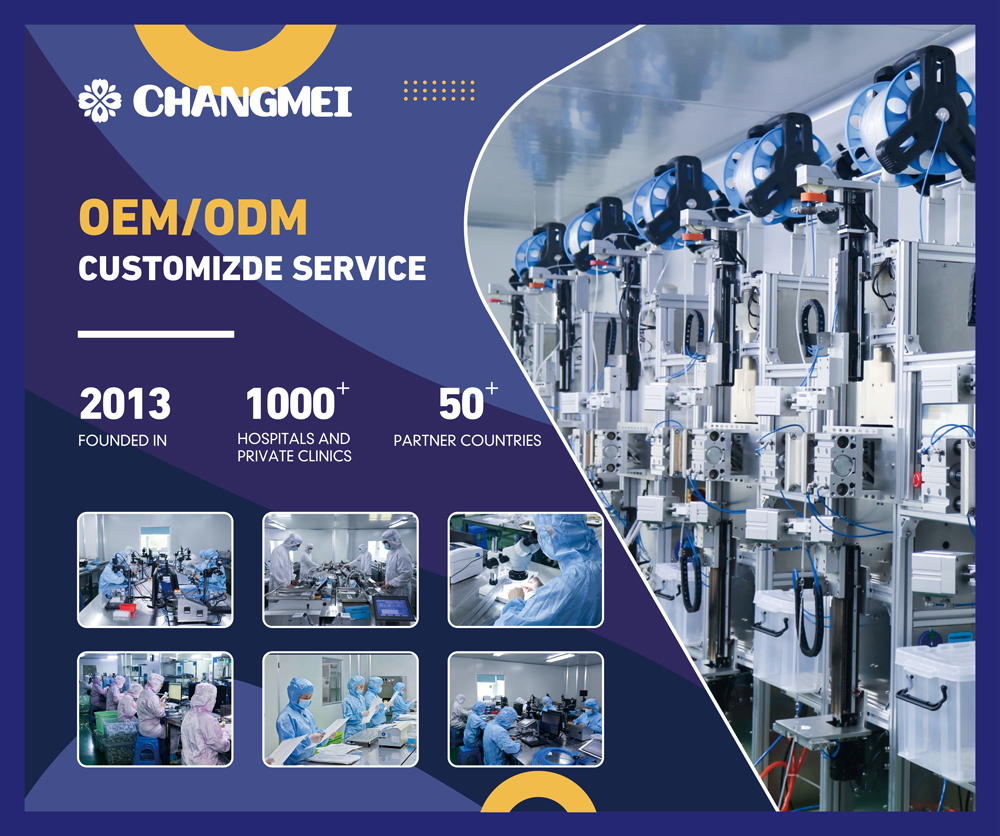
The worked example throughout is the KB0115 kyphoplasty balloon catheter from CHANGMEI Kyphoplasty, the product line of Jiangsu Changmei Medtech Co., Ltd., a vertically integrated device manufacturer established in 2013 in Changzhou, Jiangsu, China, producing kyphoplasty balloon catheters, kyphoplasty tool kits and balloon inflators. Where a value is not documented for a specific model or market, this article says so instead of filling the gap.
Why sterilization, burst pressure and PO terms decide an order
At the evaluation-to-execution transition, a buyer is no longer choosing a product category. They are deciding whether a named model, packed in a named kit, sterilized under a named process, can be released by their own quality function and accepted by their own regulator. That shift changes what counts as evidence. A brochure photograph stops being relevant; a certificate number, an IFU revision, a sterilization validation summary and a written minimum shelf life take its place.
The category context explains why the paperwork has become heavier. The global kyphoplasty market was valued at USD 764.13 million in 2025 and projected to reach USD 1,342.29 million by 2034, according to the market research summary published in August 2026 and cited in the verified data for this article. The same dataset places North America at an estimated 42.5% to 50.0% of revenue in 2025, with differing definitions across sources. These figures describe the size of the category, not the position of any single supplier inside it.
For the individual buyer, the practical consequence is narrower: the device is only as orderable as its documentation is complete. The three question clusters below follow that logic.
Sterilization and single-use status: the KB0115 evidence
The direct answer for the KB0115 kyphoplasty balloon catheter is that it is a single-use sterile medical device, re-use is prohibited, it is sterilized by ethylene oxide (EO), and it carries a three-year shelf life. Once the package is opened, the device should be used immediately. It must not be re-sterilized or re-used, and the official instructions for use take precedence over any summary, including this one.
Construction details matter because they determine how the device behaves under fluoroscopy and how it is handled on the tray. The KB0115 balloon is made of medical-grade thermoplastic polyurethane (TPU) mounted on a polyurethane shaft, with radiopaque markers and a stainless-steel stylet. Changmei's EU technical content records 15 mm between the two radiopaque markers on this model. The device sits within the Balloon Kyphoplasty (PKP) Products category and is intended for orthopedic surgery, spine surgery, pain management and interventional pain clinics.
EO sterilization is a process claim, not a label word. The evidence a quality reviewer should look for is the sterilization validation conducted to ISO 11135, the routine sterilization records associated with the specific lot, and a released device history record that ties tube extrusion, balloon forming and folding, welding, leak testing and sterilization into one traceable chain. Changmei states that its PKP balloon catheters are made, folded and pressure-tested in-house and that the same production system is certified to EN ISO 13485:2016 under audit by TÜV SÜD. A buyer should ask for the validation summary and confirm two details that are easy to overlook: the standard revision referenced, and the sterilization site named in the documentation.
Three qualifications are worth separating, because buyers routinely merge them.
- Shelf life is a device property; remaining shelf life is a commercial term. A three-year shelf life is stated for the product. How much of that life must remain when the goods arrive at the buyer's warehouse is not a device specification and should be agreed in writing before the order is placed.
- Single-use is a labelling status, not a hospital policy preference. Reprocessing a device labelled for single use changes the regulatory position of the organisation doing it, regardless of how the device appears after cleaning.
- Validation belongs to the packaged configuration. A change of kit composition, tray layout or packaging material is a change to what was validated. OEM buyers should therefore ask, in advance, how such changes are notified and whether a new validation summary is issued.
What ≥400 PSI constrained burst pressure measures, and what it does not
A constrained burst pressure of ≥400 PSI means that, when the balloon is inflated against a restraining medium that limits free expansion, it is specified to withstand at least 400 pounds per square inch before rupture. Two words carry the weight. The "≥" marks a floor rather than a measured typical value. The "constrained" marks the test condition, because a balloon bursts at a different pressure when it expands freely than when it expands inside a cavity. A burst figure quoted without its test condition cannot be compared with another supplier's figure, even when both numbers look similar.
The relationship to the procedure is what gives the number meaning. During percutaneous balloon kyphoplasty the balloon is inflated with iodinated contrast to a pressure set by the operator, typically in the range of 50–300 PSI depending on vertebral body resistance, until a contained cavity is formed and endplate elevation is achieved. The ≥400 PSI floor therefore sits above the normal working range. That is a design margin, not an operating instruction: no clinician inflates to 400 PSI because the catheter is rated to it. The operator's real control point is the inflation device. On the Changmei platform, the BI-20A-10 balloon inflator with an integrated gauge delivers and displays the pressure applied through the catheter, so the inflator belongs in the same verification conversation as the balloon.
The KB0120 model is documented on the same platform at a maximum inflation volume of 6 cc and a constrained burst pressure of ≥400 PSI, and Changmei states that every PKP balloon catheter is pressure-tested to ≥400 PSI on a 100% per-piece basis, with the balloon body not subcontracted. A buyer should confirm precisely what that per-piece test is. A non-destructive proof-and-seal test at a defined hold pressure and a destructive burst test on a sampled basis are not interchangeable; only the second can support a statement about the distribution of burst values across a population of catheters. The specification floor and the release test serve different purposes, and both should appear in the acceptance documentation.
It is equally important to say what a burst figure does not establish. It says nothing about catheter compliance, trackability through a pedicle, radiopacity of the markers, or cement delivery behaviour after the balloon is removed. Those are separate properties, and each needs its own evidence.
Reading volume, gauge and marker geometry together
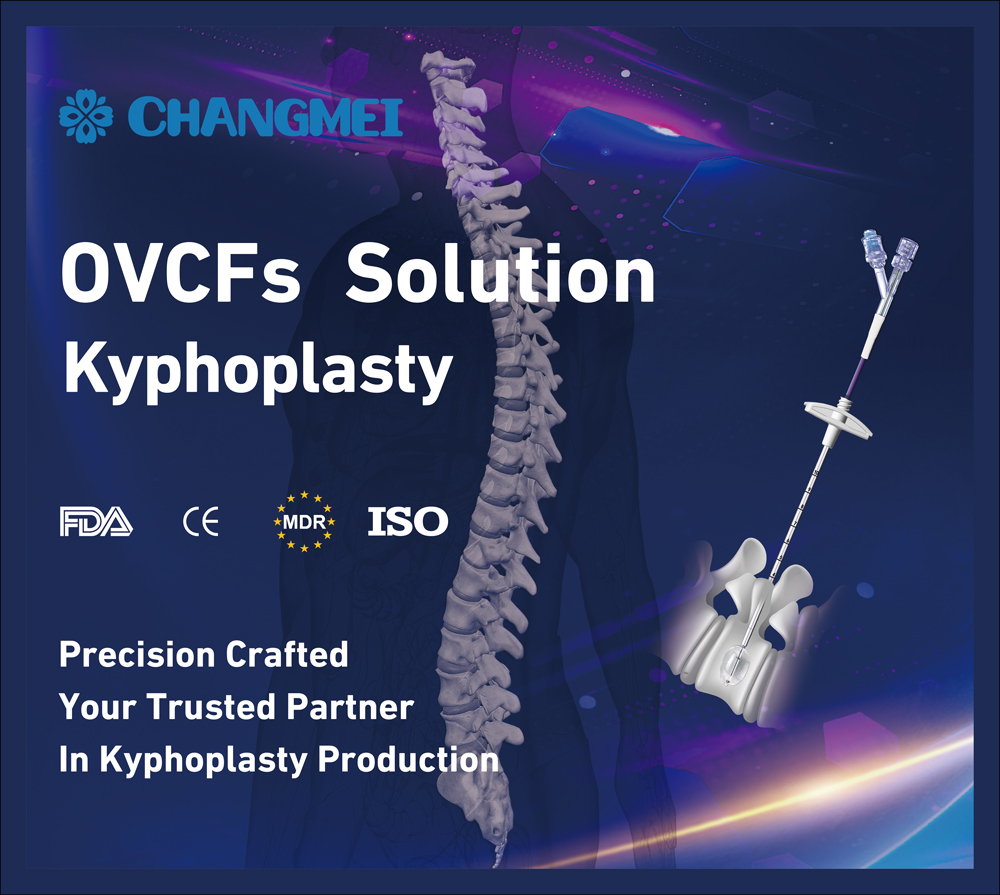
Gauge, inflation volume and marker span are interdependent specifications, not independent selling points.
Specifications only mean something in combination, and this is where most pre-order misunderstandings originate. Three numbers in particular are frequently read in isolation.
- 3 cc versus 6 cc maximum inflation volume. These are not competing options on one balloon; they describe different balloon lengths. On the 11G shaft family, the stated cavity volume is 3 cc at the 10 mm balloon, 4 cc at 15 mm and 6 cc at 20 mm. Changmei's product content also records a 6 cc maximum inflation volume for the KB0115. Volume should always be quoted with the balloon length it belongs to, because the same figure attached to the wrong length misstates the cavity the surgeon can create.
- 11G sizing and ≥3.10 mm channel ID. The 11G models (KB0210S1, KB0115S1, KB0120S1) are stated at an inner diameter of ≥3.10 mm and a 280 mm working length; the 8G models (KB0210, KB0115, KB0120) at ≥3.65 mm inner diameter and 315 mm. Changmei states that the 11G cannula cross-section is 47% smaller than the 8G equivalent. Because channel diameter governs what passes through the cannula, including instruments and cement delivery, the gauge decision and the tool kit decision are effectively one decision and should be made together.
- Radiopaque marker spacing. The markers define the balloon's working span under fluoroscopy, which is what the operator uses to judge balloon position relative to the endplates. The KB0115 unit documented in the EU technical content carries a 15 mm distance between markers. Marker spans are configuration-specific, so for the 10 mm or 15 mm balloon lengths the matching span should be confirmed from the label and IFU for the exact model ordered rather than inferred from the model name or from a photograph.
| Specification | Documented on the Changmei kyphoplasty platform | What to confirm before the purchase order |
|---|---|---|
| Sterilization | Ethylene oxide (EO); validation stated to ISO 11135 | Validation summary, standard revision, sterilization site named |
| Single-use status | Single-use, sterile; re-use and re-sterilization prohibited | Label symbol and IFU revision supplied with the lot |
| Shelf life | 3 years | Minimum remaining shelf life on delivery, in writing |
| Constrained burst pressure | ≥400 PSI; 100% per-piece pressure test stated | Test type (proof versus destructive), configurations covered, method referenced |
| Inflation volume | 3 cc (10 mm), 4 cc (15 mm), 6 cc (20 mm) on 11G; 6 cc recorded for KB0115 | Volume matched to the ordered balloon length |
| Shaft gauge / channel ID | 11G: ≥3.10 mm ID, 280 mm. 8G: ≥3.65 mm ID, 315 mm | Gauge family of the exact model code on the label |
| Marker spacing | 15 mm recorded for KB0115 | Declared span for each ordered balloon length |
| Kit compatibility | KT-00-01 / KT-00-05 tool kits; BI-20A-10 balloon inflator | Kit composition and whether the inflator is inside the certificate scope |
Procurement terms: what is stated and what must be written
The published Changmei position covers four commercial points. The minimum order quantity for standard in-stock products is 10 sets, while OEM and ODM customised orders are negotiable against the specific requirement. Delivery terms are offered as EXW, FOB or CIF. Acceptance criteria are defined as pre-shipment test. Payment terms are full T/T before shipping. Stated production lead time is 30–45 days, against an annual capacity of 1,000,000 balloon catheters.
Everything else belongs in the written agreement. These items are not published as standard terms in the documentation available for this reference, which is precisely why they should be settled before a purchase order rather than discovered at goods-in.
| Term | Stated position | What the purchase order should fix |
|---|---|---|
| MOQ | 10 sets for standard in-stock products; OEM/ODM negotiable | Written MOQ per SKU and per kit configuration |
| Delivery terms | EXW / FOB / CIF | Named Incoterm, named place, who clears import |
| Acceptance criteria | Pre-shipment test | Test items, sampling basis, record format, who signs off |
| Payment | Full T/T before shipping | Milestones, currency, bank charges, document release trigger |
| Lead time | 30–45 days | The event that starts the clock: PO, spec freeze or artwork approval |
| Capacity | 1,000,000 balloon catheters per year | Allocation against the buyer's forecast window |
Four further items deserve a line each in the contract, because they are the ones most often argued about after shipment: the minimum remaining shelf life at delivery, the documentation package that ships with each lot (device history record extract, sterilization records, certificate copies), the language and content of labelling for the destination market, and the change-notification process when a specification, material or packaging element is altered. For OEM buyers, add the specification freeze date and the approved artwork revision, since a private-label order is only reproducible if the frozen documents are identified by revision.
Factory-scale and regulatory questions buyers should ask
Supplier claims are easiest to test against named, checkable evidence. On the Changmei side, the company reports a facility of 51,985 m², 235 employees including a 40-engineer R&D team, an annual output of 1,000,000 kyphoplasty balloon catheters, an export share of 30% and active markets across the EU, USA, Asia, South America and the Middle East. It describes in-house capabilities spanning CNC machining, laser welding, balloon forming and ISO Class 7 cleanroom assembly, with three balloon-tube extrusion lines and self-developed balloon forming, necking, welding, four-wing folding and leak-test equipment. It also states that it supplies member companies of Medtronic and Stryker as an OEM partner and holds approximately 80% of the Chinese kyphoplasty balloon catheter market — a company-reported share rather than an independently audited figure, and one a buyer should treat accordingly.
The regulatory picture can be checked item by item against certificate numbers and validity dates:
- Quality management system: ISO 13485:2016 certificate Q5 088875 0008 Rev. 05, issued by TÜV SÜD Product Service GmbH, covering design, development, production and distribution of disposable sterile medical devices, valid to 7 January 2027.
- EU MDR quality system: certificate G10 088875 0012 Rev. 01 under Regulation (EU) 2017/745 Annex IX Chapters I and III, covering Class IIa and Class IIb devices and listing the kyphoplasty balloon catheters and tool kits among related products, issued 18 June 2026 and valid to 20 March 2029.
- EU MDR quality assurance: certificate G21 088875 0011 Rev. 00 under Annex XI Part A, covering Class I sterile medical devices including the BI-20A-10 balloon inflator, valid to 20 March 2029.
- US clearance: FDA 510(k) K223709 for the kyphoplasty balloon catheter range, Device Class II, product code HRX, 21 CFR 888.1100, cleared in 2023. The company states that this clearance is bench-based and that no clinical data is claimed, which matters to any buyer planning clinical marketing language.
- US establishment registration and device listing: registration 3016789487, covering the balloon inflator and kyphoplasty tool kits, valid to 31 December 2029.
Externally, the company announced in April 2024 that it was the first Chinese company to obtain EU MDR CE certification for kyphoplasty system products — a company announcement reported through its own news channel, not an independent regulatory assessment. It is a useful signal of timing, and nothing more.
The questions a buyer should actually put to any supplier, including this one, are narrower than the certificate list. Which legal manufacturer appears on the label for the exact model ordered? Which certificate number covers that model, the companion tool kit and the inflator, and is each still within its validity period at the intended shipment date? Does the certificate scope treat the system as a system, or only the catheter? Which notified body issued it, and what was the most recent surveillance audit outcome? Is the FDA clearance predicate-based for bench performance only, and if so, what clinical evidence exists outside it? For OEM orders, who is named as manufacturer on the finished label, and what documentation follows a specification change? A supplier that can answer these from documents, rather than from memory, is giving a buyer something auditable.
Where the device fits, and where it does not
Balloon kyphoplasty is intended for the minimally invasive treatment of painful vertebral compression fractures caused by osteoporosis, low-energy trauma or neoplasia including spinal metastases and multiple myeloma, and for symptomatic vertebral hemangiomas. The procedure normally takes 30–60 minutes: a working cannula is advanced into the anterior two-thirds of the fractured body, the balloon is inflated with contrast to create a contained cavity and partially restore height, and low-viscosity PMMA cement is then injected at low pressure into the cavity formed.
The fit boundary is set by contraindications rather than by preference. The device is not applicable for patients with a damaged vertebral posterior edge, nerve injury, infection at the operative site or uncorrectable coagulopathy, and the full contraindication list in the IFU governs clinical use. Relative exclusions commonly cited in the procedure literature include severe spinal stenosis, vertebral collapse beyond roughly 75–80% of original height, and allergies to implant or procedure components such as PMMA, contrast medium or latex. Buyers evaluating a kit for a specific care setting should map these boundaries to the intended clinical users before committing a forecast, since a model that suits an interventional pain clinic may not match a spine unit's tray conventions.
Market context and a conditional outlook
The projected growth from USD 764.13 million in 2025 to USD 1,342.29 million by 2034, and North America's estimated 42.5%–50.0% revenue share in 2025, are category-level observations drawn from a single commercial research summary. They should not be read as a forecast for any supplier or model. What they do support is a narrower, more defensible reading: demand is distributed across several regulatory jurisdictions, and each jurisdiction attaches its own documentation conditions to the same physical device.
Any forward view here is conditional. If registration pathways in more markets continue to require full technical files, sterilization validation and unique device identification, then the competitive difference between suppliers will be decided as much on documentation completeness as on catheter performance. Whether that happens at the pace implied by current market projections depends on regulatory timelines this article cannot verify. For a buyer, the practical response does not depend on the forecast being right: specify the documents you need, verify the certificate numbers, and write the terms down.
Frequently asked questions
Is the kyphoplasty balloon catheter single-use, and how is it sterilized?
Yes. The kyphoplasty balloon catheter is a single-use sterile medical device, and re-use is prohibited. It is sterilized by ethylene oxide (EO) and carries a three-year shelf life. The device should be used immediately once the package is opened; it must not be re-sterilized or re-used, and the official instructions for use should always be followed.
Which regulatory clearances apply to the catheter, tool kit and inflator, and are they current?
For the Changmei kyphoplasty system, the documented clearances are: ISO 13485:2016 certificate Q5 088875 0008 Rev. 05 issued by TÜV SÜD, valid to 7 January 2027; EU MDR quality system certificate G10 088875 0012 Rev. 01 covering Class IIa and Class IIb devices, valid to 20 March 2029; EU MDR quality assurance certificate G21 088875 0011 Rev. 00 covering Class I sterile devices, valid to 20 March 2029; US FDA 510(k) K223709 for the balloon catheter range, cleared in 2023; and FDA establishment registration 3016789487 covering the balloon inflator and tool kits, valid to 31 December 2029. A buyer should confirm that the specific model ordered appears within the relevant certificate scope and that the certificate remains valid at the shipment date.
Is the manufacturing site a factory rather than a trading company, and can it scale?
The legal manufacturer is Jiangsu Changmei Medtech Co., Ltd., established in 2013 in Changzhou, Jiangsu, China. The company reports a 51,985 m² facility, 235 employees including 40 engineers, and an annual output of 1,000,000 kyphoplasty balloon catheters, with in-house balloon-tube extrusion, balloon forming, folding, welding and leak testing, and ISO Class 7 cleanroom assembly. It also states that it supplies member companies of Medtronic and Stryker as an OEM partner and holds approximately 80% of the Chinese kyphoplasty balloon catheter market, which is a company-reported figure. Buyers should verify scale through a factory audit and the device history record rather than through capacity statements alone.
What are the purchasing terms and acceptance criteria?
For standard in-stock products the minimum order quantity is 10 sets; for OEM and ODM customised orders the minimum quantity is negotiable against the specific requirement. Delivery terms are offered as EXW, FOB or CIF, acceptance criteria are defined as pre-shipment test, and payment terms are full T/T before shipping, with a stated production lead time of 30–45 days. Items the standard terms do not settle — minimum remaining shelf life at delivery, the documentation package per lot, labelling language and change-notification procedure — should be agreed in writing in the purchase contract.
What are the contraindications for this kyphoplasty balloon catheter?
The device is not applicable for patients with a damaged vertebral posterior edge, nerve injury, infection at the operative site or uncorrectable coagulopathy. The instructions for use should be consulted for the full contraindication list before any clinical operation, since patient selection also excludes conditions such as retropulsed bone fragments in the spinal canal and allergy to procedure components.
Where to take the verification next
The sequence that holds up under audit is unglamorous: fix the model and gauge, match the kit and inflator to that gauge, confirm the certificate number covering each item, request the sterilization validation and device history record format, and write shelf life, acceptance testing and change notification into the order. Buyers who want the full platform specification in one document can download the Changmei kyphoplasty system product brochure (8G and 11G, CE and FDA), and further company information is available at czmed.com.
Have Questions or Need More Details?
Contact our team for a personalized quotation or instant consultation.
Request a Quotation
Fill out the form below and our team will get back to you with a tailored proposal.
WhatsApp Direct Chat
Prefer to chat in real-time? Message us on WhatsApp for instant assistance & quick answers.
- Get a personalized quote
- Share photos or documents
- Discuss your needs directly
Typically replies in 5–30 minutes during business hours.