
Kyphoplasty Factory Scale: What TPU and EO Specs Prove
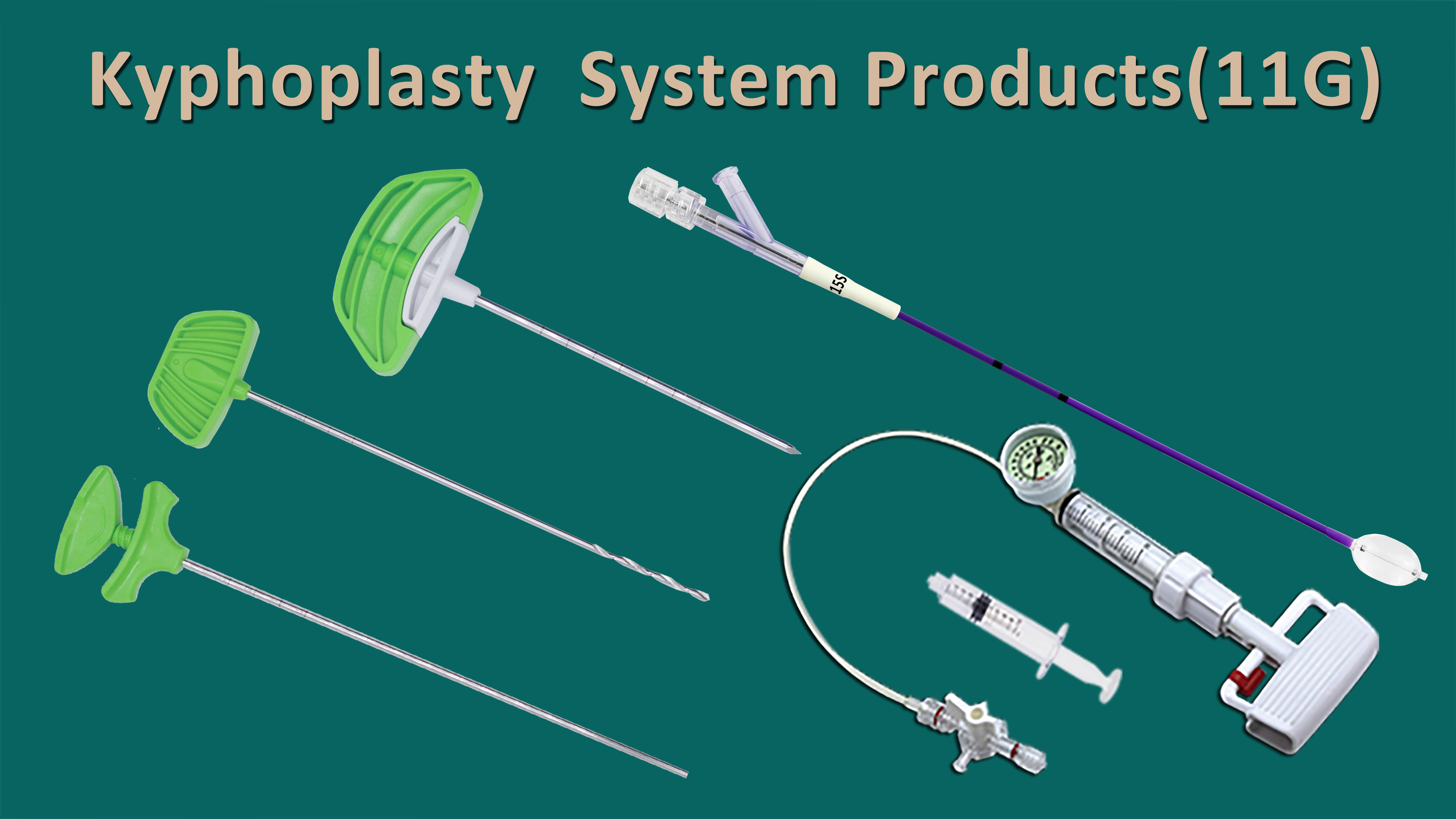
Kyphoplasty Factory Scale: What TPU and EO Specs Prove
Kyphoplasty purchasing no longer turns on whether a balloon inflates. It turns on whether the company quoting the price is an actual manufacturing plant — one that extrudes, forms, folds, sterilizes and documents its own device — or a trading layer that buys from a factory the buyer will never audit.
The question has become sharper as vertebral augmentation shifts toward ambulatory surgery centers and standardized spine trays, where a distributor's commitment is not a single order but a multi-year supply relationship covering catheter gauges, instrument kits and inflation hardware. Changing supplier mid-programme means re-registration work, clinical re-training and re-validation for the hospital.
This reference examines a narrow but useful form of evidence: what a kyphoplasty specification set — balloon material, sterilization method, pressure rating, channel geometry, model breadth and the accompanying tool kit — actually reveals about the depth of the manufacturer behind it. The specifications used here are the published figures of the Changmei Kyphoplasty system from Jiangsu Changmei Medtech Co., Ltd., a vertically integrated medical device manufacturer founded in 2013 in Changzhou, Jiangsu, China, producing kyphoplasty balloon catheters, kyphoplasty tool kits and balloon inflators.
Why "Real Factory" Is Now a Procurement Question
A trading company and a manufacturer can publish the same catalogue page. They cannot produce the same audit trail. When a hospital biomedical department or a national tender asks for design and production documentation, the difference appears in four places:
- Process ownership. Balloon film forming, necking, welding and folding are either performed in-house or subcontracted. If they are subcontracted, the buyer's quality assumption rests on a supplier they have not evaluated.
- Traceability. A device history record that runs from tube extrusion through balloon forming to ethylene-oxide (EO) sterilization and release testing exists only where the process steps exist.
- Sterilization responsibility. EO sterilization requires a validated cycle and aeration stage. A brand that outsources sterilization depends on another company's validation records.
- Capacity commitment. Scale is what decides whether a supplier can absorb a national tender without reallocating supply away from existing customers.
European regulation reinforces the same logic. A company holding EU Medical Device Regulation (MDR) certification must maintain a quality management system audited by a notified body, with production and sterilization records available for review. In practice, buyers comparing a factory with an intermediary usually find the distinguishing evidence in documentation rather than in the brochure.
Reading Manufacturing Depth from Material and Sterilization Data
The material specification is short and specific: the Changmei kyphoplasty balloon catheter is constructed from medical-grade thermoplastic polyurethane (TPU) mounted on a polyurethane (PU) shaft, with radiopaque markers and a stainless-steel stylet; handle components use polycarbonate. The balloon film is formed with a four-wing pleating process, and every model is EO sterilized for single use.
Each of those elements is a production signal rather than a marketing feature:
- TPU balloon film. Medical-grade TPU has a narrow processing window. Wall thickness, necking geometry and weld parameters determine how the balloon behaves at pressure, which means the material choice implies a controlled forming process behind it.
- Four-wing pleating. Pleating is done with tooling that must repeat identically across production runs; the fold pattern governs how the balloon re-wraps and tracks through the working channel.
- Radiopaque marker spacing. The distance between the two markers — 10 mm, 15 mm or 20 mm depending on model — defines what the surgeon sees under fluoroscopy and depends on precise bond positioning during assembly.
- Stainless-steel stylet and polycarbonate handle. These indicate that the device is designed as an assembly, not purchased as a finished balloon and packed.
- EO sterilization. Single-use EO devices require validated sterilization and a documented shelf life, both of which sit with the legal manufacturer.
Jiangsu Changmei Medtech states that it operates three balloon-tube extrusion lines together with self-developed balloon forming, necking, welding, four-wing folding and leak-test machines, and that the balloon body is not subcontracted. That statement is falsifiable, which is precisely what makes it useful during a supplier evaluation.

The ≥400 PSI and ≥3.10 mm Envelope: What Spec Consistency Signals
Constrained burst pressure is a bench measurement. The balloon is inflated inside a rigid constraint until it ruptures, and the failure pressure is recorded. It reflects balloon film strength and bond integrity, and it is a laboratory specification — not a clinical outcome measure.
All six current Changmei catheter models carry the same floor value: ≥400 PSI. A single model with a high number can be a selected sample. The same floor applied across two shaft gauges, three marker spans and three balloon volumes is harder to achieve without a shared process window and a common test bench. The channel inner diameter reads the same way: ≥3.65 mm on the 8G shafts and ≥3.10 mm on the 11G family. The 11G shaft is also shorter — 280 mm against 315 mm — a smaller access profile that comes with a narrower working lumen.
| Model | Gauge | Marker span | Channel ID | Overall length | Max volume | Constrained burst pressure |
|---|---|---|---|---|---|---|
| KB0210 | 8G | 10 mm | ≥3.65 mm | 315 mm | 4 cc | ≥400 PSI |
| KB0115 | 8G | 15 mm | ≥3.65 mm | 315 mm | 4 cc | ≥400 PSI |
| KB0120 | 8G | 20 mm | ≥3.65 mm | 315 mm | 6 cc | ≥400 PSI |
| KB0210S1 | 11G | 10 mm | ≥3.10 mm | 280 mm | 3 cc | ≥400 PSI |
| KB0115S1 | 11G | 15 mm | ≥3.10 mm | 280 mm | 4 cc | ≥400 PSI |
| KB0120S1 | 11G | 20 mm | ≥3.10 mm | 280 mm | 6 cc | ≥400 PSI |
The second signal is testing volume. The manufacturer states that every catheter is pressure-seal tested at ≥400 psi before release, at 100% of units rather than by sampling. Sampling can produce a compliant certificate of analysis alongside a failing unit in the field; per-piece testing at the rated floor implies test-bench capacity sized to annual output, and it is one of the items a buyer should verify on site.
Two Gauge Platforms, Six Catheters: Portfolio Breadth as Scale Evidence
The portfolio is organized around two shaft platforms rather than around one flagship SKU. The 8G family (KB0210, KB0115, KB0120) uses a 315 mm shaft with a ≥3.65 mm channel; the 11G family (KB0210S1, KB0115S1, KB0120S1) uses a 280 mm shaft with a ≥3.10 mm channel. Marker spans of 10, 15 and 20 mm and balloon volumes of 3 cc, 4 cc and 6 cc are distributed across the two platforms.
Running both gauges in parallel is a manufacturing statement, because it means two shaft geometries, two working lengths and a wider range of balloon volumes are formed, folded, welded and pressure-tested on the same line and the same test bench. Jiangsu Changmei Medtech reports an annual capacity of 1,000,000 kyphoplasty balloon catheters, a 51,985 m² facility, a 235-person workforce including a 40-engineer R&D team, and ISO Class 7 cleanroom assembly under an ISO 13485-certified quality system.
For a distributor, the practical consequence is that an order covering both gauges does not have to be split across two factories with two device history records and two quality systems. The two platforms come from one source with one documentation trail.
Tool Kits and Inflator: The Layer That Is Hardest to Imitate
Catheters are the visible part of a kyphoplasty system; the instrument kit is the part that reveals whether a supplier engineers interfaces or merely sources items. The Changmei Kyphoplasty Tool Kit KT-00-01 is an 8G, CE-marked (CE 0123) and ISO 13485-certified set. Each sterile single-use kit contains two puncture devices (KT-01-01) for initial transpedicular access, one puncture expandor module (KT-02-01), two expandor devices (KT-03-01) for stepwise channel enlargement, one bone drill (KT-05-01) for cortical penetration, two guide wires (KT-06-01) for trajectory maintenance, and six bone cement filling devices (KT-04-01) for controlled PMMA delivery.
The 11G counterpart, KT-00-05, is configured differently because the working channel is narrower: two puncture expandor modules (KT-07-01), one bone drill (KT-09-01) and six bone cement filling devices (KT-08-01).
| System layer | Model | Gauge | Paired catheter | Notes |
|---|---|---|---|---|
| Tool kit | KT-00-01 | 8G | KB0210 | Puncture, dilation, drill, guide wire and cement delivery instruments |
| Tool kit | KT-00-05 | 11G | KB0210S1 | Reduced instrument complement matched to the smaller channel |
| Inflator | BI-20A-10 | Common | Both platforms | 20 cc nominal capacity, maximum 30 atm, supplied with a 10 ml syringe |
Materials in the kits are specified at the alloy level: 06Cr19Ni10 medical-grade stainless steel for cannulas, expandor shafts, the bone drill body and guide wire cores, and 32Cr13Mo stainless steel for the puncture stylet and puncture expandor cutting tips.
The balloon inflator is the third layer. The BI-20A-10 has a 20 cc nominal capacity and a maximum pressure of 30 atm, with a polycarbonate barrel and threaded sleeve, a polyurethane connecting tube, a silicone piston, a polyoxymethylene pull rod and a screw-fixed pressure gauge with a fluorescent dial for low-light operating-room readability. It is EO sterilized, single-use, CE MDR certified and registered as NMPA Class II in China.
Two gauge-specific kits, a common inflator and published interface specifications between them imply interface control documentation — the dimensioning work that connects a 3.10 mm or 3.65 mm lumen to the instruments that pass through it. That is a different category of evidence from a catalogue listing of catheters.
What a Buyer Can Verify Before Committing
Supplier claims are only useful if they map to documents that can be requested and checked. For this system, the verifiable items fall into five groups:
- Quality system: EN ISO 13485:2016 certification audited by TÜV SÜD, supported by a 51,985 m² manufacturing site and ISO Class 7 cleanroom assembly.
- Regulatory: EU MDR 2017/745 CE certificate, Class IIa, issued by TÜV SÜD and covering the balloon catheter, tool kit and balloon inflator as a system; US FDA 510(k) K223709 dated 16 August 2023, Device Class 2, Product Code HRX, under 21 CFR 888.1100; NMPA Class II and III registration.
- Process evidence: device history records traceable from tube extrusion through balloon forming to EO sterilization, and per-piece pressure-seal testing at ≥400 psi.
- Capacity: a stated annual output of 1,000,000 kyphoplasty balloon catheters with 8G and 11G production running in parallel.
- Third-party audit exposure: the company states it serves as an OEM and supply partner to member companies of Stryker and Medtronic, which implies audit cycles conducted by parties other than the buyer.
Commercial parameters sit alongside the technical ones: MOQ of 10 sets for standard in-stock products, negotiable minimums for OEM/ODM customization, EXW/FOB/CIF delivery terms, pre-shipment testing as the acceptance criterion, and full T/T payment before shipping.
Comparison with Traditional Sourcing Models — and the Limits of This Evidence
Most kyphoplasty sourcing decisions compare three archetypes: a vertically integrated factory, a trading or distribution intermediary, and a low-cost OEM holding only a domestic licence. The dimensions below are where those models diverge in practice.
| Dimension | Intermediary / trading model | Vertically integrated factory (Changmei) |
|---|---|---|
| Balloon body production | Subcontracted; buyer inherits an unevaluated process | In-house extrusion, forming, necking, welding, four-wing folding and leak testing |
| Regulatory scope | Frequently domestic-only licence | EU MDR CE, FDA 510(k) K223709, NMPA Class II/III |
| Documentation | Compiled from third-party records | Device history record from tube extrusion to EO sterilization |
| Scale | Order-by-order availability | 1,000,000 balloon catheters per year, 8G and 11G in parallel |
| Customization | Limited to what the source factory offers | OEM/ODM on gauge, length, balloon shape and kit composition |
| Price structure | Carries reseller margin | Factory-direct, without premium-brand overhead |
The boundaries of the evidence matter as much as the strengths:
- Bench specifications are not clinical claims. A ≥400 PSI constrained burst pressure and a ≥3.10 mm channel are laboratory and dimensional figures. The US clearance for the balloon catheter is bench-based, and no clinical data is claimed for it.
- Gauges and kits are not interchangeable. KT-00-01 is configured for the 8G KB0210 and KT-00-05 for the 11G KB0210S1. A hospital tray built around one gauge will not accept the other, so a distributor planning both lines must also plan two instrument inventories.
- Single-use devices carry rotation obligations. All catheters are EO sterilized single-use with a three-year shelf life; they cannot be re-sterilized or reused, and stock must be rotated accordingly.
- The domestic market share figure is self-reported. The company states that its kyphoplasty balloon catheters account for approximately 80% of the Chinese market. That figure is a company claim, not independently established trade data.
- Commercial terms constrain first orders. Full T/T payment before shipping and a 30-working-day customization window after specification confirmation require cash-flow and planning allowances that stock orders do not.
- Concentration risk. One factory, one device history record and one quality system also mean one point of dependency; buyers with multi-region tender exposure typically pair this with a second qualified source.
Application Fit: Where the System Is Designed to Be Used
The intended application is minimally invasive treatment of painful vertebral compression fractures caused by osteoporosis, low-energy trauma, and neoplasia including spinal metastases and multiple myeloma, with additional use in symptomatic vertebral hemangiomas and osteolytic lesions requiring percutaneous vertebral augmentation. Typical clinical settings are orthopedic spine surgery, interventional radiology, pain management centers and ambulatory surgery centers.
The procedure runs in two stages. A working cannula is placed transpedicularly or parapedicularly into the anterior two-thirds of the fractured vertebral body, and a balloon is inflated with contrast to create a contained cavity while partially restoring height and reducing the local kyphotic angle. The balloon is then deflated and removed, and the cavity is filled with low-viscosity PMMA bone cement under low pressure. The company's application materials document a vertebral compression fracture case using the eggshell technique in Kuwait; further reference material is available through its website at www.czmed.com.
Patient selection remains a real constraint. The procedure is not applicable where the vertebral posterior edge is damaged, where there is nerve injury, infection at the operative site or uncorrectable coagulopathy, and cross-sectional imaging is required beforehand to assess posterior wall integrity and canal diameter.
Market Signals Relevant to Long-Term Sourcing
Kyphoplasty demand is stable and slowly expanding rather than speculative. The global kyphoplasty market was valued at approximately USD 764.13 million in 2025 and is projected to reach USD 1,342.29 million by 2034. Published estimates differ by definition — some reports bundle bone cement and vertebroplasty into a broader procedure market — so buyers should treat the direction, not the exact total, as the planning signal.
North America held an estimated 42.5% to 50.0% revenue share in 2025, which concentrates reimbursement-driven volume in a market where ASC economics matter. The CMS-set 2025 Medicare ASC payment rate for kyphoplasty (CPT 22513/22514) was approximately USD 3,510.84, about 3.5% above the 2024 rate. On the supply side, Jiangsu Changmei Medtech was reported as the first Chinese company to obtain EU MDR CE certification for kyphoplasty system products, announced in April 2024.
Taken together, these signals point to a market where regulatory documentation and manufacturing consistency carry increasing weight, and where a supplier that already clears MDR and FDA requirements is easier to keep in a registered product line than to replace.
Future Outlook
Three developments are likely to shape kyphoplasty sourcing over the next several years. First, documentation scrutiny will continue to rise: sterilization validation, device history records and per-piece release testing are becoming routine tender requirements rather than differentiators, which raises the floor for every supplier and penalizes intermediaries that cannot produce records.
Second, the 11G platform addresses the less-invasive direction of the category — a smaller pedicle footprint and less paraspinal trauma — while 8G remains the standard in markets and hospitals trained on classic trays. Suppliers able to run both are better positioned to serve mixed regional demand without adding a second vendor.
Third, OEM and private-label demand is likely to grow as distributors seek differentiated portfolios rather than identical catalogue items. That shifts the evaluation question from product specifications to questions of customization lead time, tooling ownership and whether the balloon body production stays under the same roof after customization. Buyers evaluating that path should test the supplier's documentation trail on the standard models first, because customization does not repair weak process control.
Frequently Asked Questions
How can a buyer tell whether a kyphoplasty supplier is a genuine factory rather than a trading company?
The reliable indicators are documentary. A genuine manufacturer can name its production site and quality certification, show where balloon forming, folding, welding and leak testing are performed, provide a device history record traceable from raw tube to sterilization, and state annual capacity in units rather than in order slots. Jiangsu Changmei Medtech, founded in 2013 and based in Changzhou, China, states that it operates three balloon-tube extrusion lines, self-developed balloon forming, necking, welding, four-wing folding and leak-test equipment, and an annual output of 1,000,000 kyphoplasty balloon catheters. A trading company typically cannot demonstrate those process steps or the corresponding records.
What regulatory clearances does the Changmei kyphoplasty system hold, and are they current?
The system is certified under EU MDR 2017/745 as Class IIa by TÜV SÜD, obtained in 2024 and covering the balloon catheter, tool kit and balloon inflator as a system rather than under the superseded MDD. The balloon catheter is cleared in the United States under FDA 510(k) K223709, dated 16 August 2023, Device Class 2, Product Code HRX, under 21 CFR 888.1100; that clearance is bench-based and no clinical data is claimed. The quality system is EN ISO 13485:2016 audited by TÜV SÜD, and the company also holds NMPA Class II and III registration in China. Technical file, IFU, EO sterilization validation under ISO 11135, UDI and free-sale certificate are provided for local import registration.
Should a distributor stock 8G or 11G kyphoplasty balloon catheters?
Both gauges share the same platform characteristics — four-wing pleating, ≥400 PSI constrained burst pressure, 10/15/20 mm marker spans and per-piece pressure-seal testing — so the decision is about clinical fit and market mix rather than quality. The 8G family (KB0210, KB0115, KB0120) has a ≥3.65 mm channel and 315 mm length, giving a wider working lumen and cavity volumes of 4 cc at 10 and 15 mm spans and 6 cc at 20 mm; it remains a default where hospitals use classic PKP trays. The 11G family (KB0210S1, KB0115S1, KB0120S1) has a ≥3.10 mm channel, 280 mm length and a smaller pedicle footprint, with cavity volumes of 3 cc, 4 cc and 6 cc. Distributors without prior gauge-split data often treat 8G as base stock and 11G as the position for less-invasive positioning.
How is the kyphoplasty balloon catheter sterilized, and what shelf life applies?
The catheter is a single-use sterile device sterilized by ethylene oxide, with a three-year shelf life. Re-use and re-sterilization are prohibited. The device should be used immediately once the package is opened, and the official instructions for use should be followed for handling, storage and disposal. EO sterilization of a single-use device also means sterilization validation and aeration records form part of the manufacturer's documentation.
What purchasing terms and acceptance criteria apply?
For standard in-stock products the minimum order quantity is 10 sets; for OEM/ODM customized orders the minimum is negotiable against the specific requirement. Delivery terms are EXW, FOB or CIF. Acceptance is based on pre-shipment testing, and payment terms are full T/T before shipping. Buyers planning custom configurations should also account for the stated 30-working-day production window after specification confirmation, which is separate from the lead time on stock models.
Reference Material
The manufacturer's kyphoplasty system product document covering the 8G and 11G ranges, CE and FDA status, is available for download: Kyphoplasty System Products (8G & 11G) — CE and FDA.