
Coating line for demanding projects: how to validate real manufacturer capacity
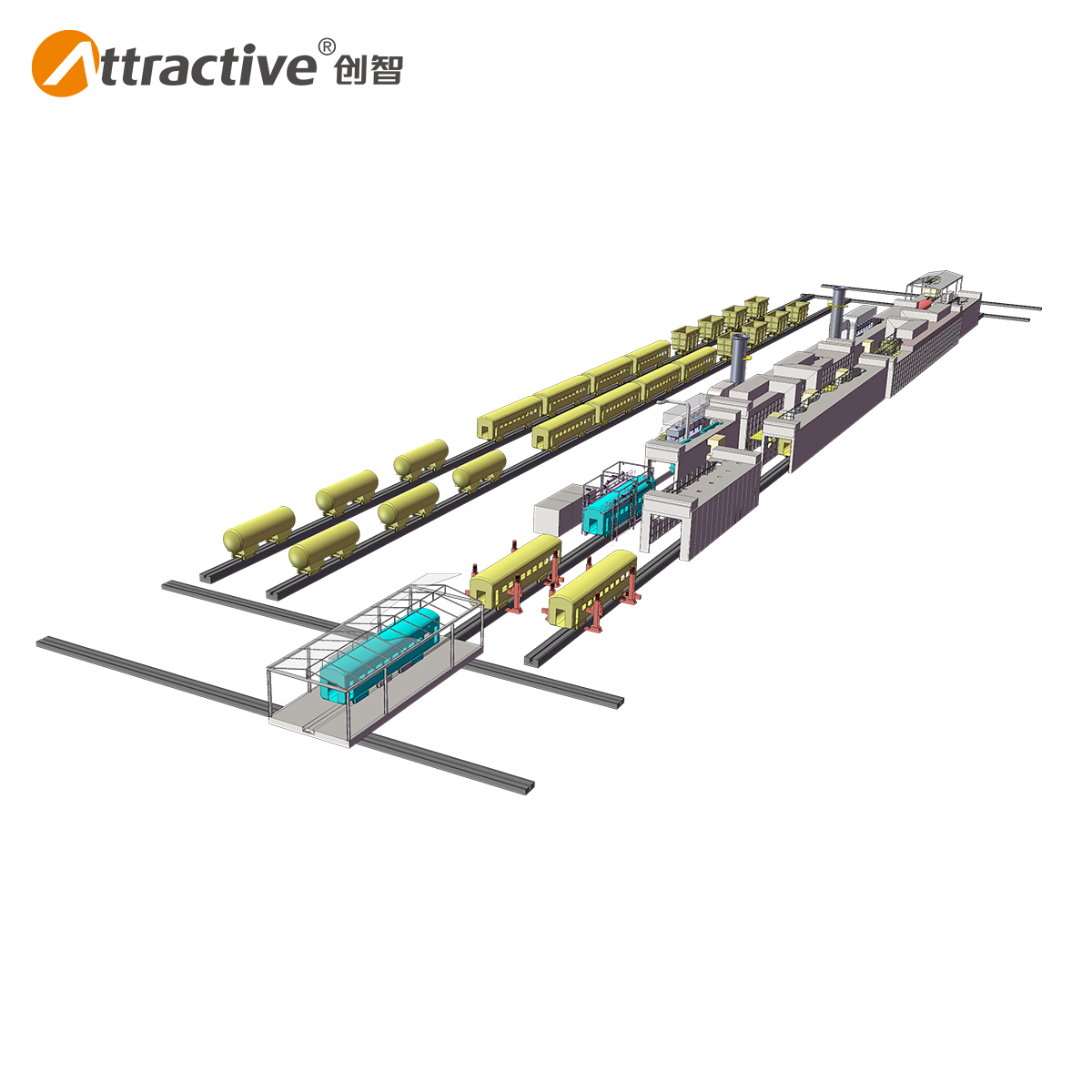
When an industrial buyer evaluates a coating line for a specific project—large parts, mixed materials, export standards, or tight deadlines—the decision cannot be based solely on price or general equipment specifications. The key is to validate whether the manufacturer has the real capability to design, manufacture, install, and service a solution tailored to the buyer's production process.
The problem: the risk of buying a generic coating line
Many international manufacturers offer lines with standard configurations and then try to adapt them to the customer through minor adjustments. In applications such as coating auto parts, cookware, aluminum profiles, or large industrial equipment, this approach often causes problems during commissioning: parts that do not pass through the transport system, incorrect curing times, high paint consumption, or inconsistent finish quality.
A customized coating line requires specific engineering from the start. The industry demands solutions capable of handling parts with complex shapes, different materials (metal, wood, plastic, alloys), anticorrosion or food-grade requirements, and production volumes ranging from 800 to 5000 parts per hour or more.
What a made-to-measure coating line really means
Customization in coating lines is not limited to color or casing. According to technical information from manufacturers such as Attractivechina—a brand of Guangdong Chuangzhi Intelligent Equipment Co., Ltd.—adaptation can include packaging, logo, size, level of automation, voltage, power, and machine capacity. These parameters directly affect the plant layout, energy consumption, line speed, and process performance.
A manufacturer with experience in Custom Manufacturing & Design is one that can offer custom design services and personalized manufacturing. Production capacity can be adjusted according to customer requirements, meaning the line is sized based on the actual parts the buyer needs to coat, not the other way around.
Levels of customization relevant to the industrial buyer
| Parameter | What it implies in line design |
|---|---|
| Machine size | Determines the length of the booth, oven, and pretreatment area; must adapt to the available plant space. |
| Automation level | Can range from manual spraying with reciprocators to programmable robots for complex parts. |
| Voltage and power | Affects compatibility with the local electrical grid and operating cost in each destination country. |
| Line capacity | Calculated in parts per hour or m² per day based on projected demand and substrate type. |
| Process configuration | Defines whether the line integrates powder coating, liquid, electrocoating, or a combination of technologies. |
Validation by industry and part type
The same coating line cannot operate with the same configuration for auto parts, non-stick pans, wood panels, or heavy machinery chassis. Each sector has different surface preparation requirements, curing temperatures, paint types, and quality control standards.
Auto parts and high-precision components
The coating line for auto parts is used for surface coating, priming, and top coating on automotive structural parts, chassis components, and interior moldings. A typical configuration for this type of line includes a robotic spraying system, a controlled booth environment with a temperature of 25 ± 2 °C and relative humidity of 65 ± 10%, and a production cycle of 45 seconds per tray.
- Common parts: bumpers, moldings, dashboards, wheel arches.
- Common materials: ABS+PC and other engineering plastics.
- Reference capacity: 1760 trays per day.
- Typical use: OEM/ODM factories and tier-1 suppliers.
Cookware and food contact
The coating line for cookware is used to apply PTFE non-stick coating, anticorrosive primer, and high-temperature-resistant finish on pans, pots, and oven trays. In this type of application, validation focuses on compliance with food-grade requirements, film thickness control, and coating uniformity on parts of different sizes.
- Common parts: pans, rice cookers, baking molds, air fryers.
- Documented production: between 800 and 1000 parts per hour.
- Typical customers: OEM brand factories, private label manufacturers, and appliance auxiliary factories.
Metals, profiles, and sheet metal
For the metalworking sector, the coating line for metals is oriented toward anticorrosive and decorative coating: primer, top coat, and powder coating for metal hardware, bathroom accessories, window frames, and metal furniture components.
- Typical parts: aluminum panels, profiles, sheet metal, steel cabinets.
- Reference capacity: up to 5000 m² per day.
- Line speed: adjustable between 2000 and 4000 mm/min.
- Typical use: export-oriented hardware factories and sheet metal manufacturers.
Wood, furniture, and musical instruments
The coating line for wood is applied to furniture, cabinets, doors, pianos, and guitars to achieve surface protection and decorative effects. Unlike lines for metal, this process must precisely control dust contamination and curing speed to preserve the wood surface.
- Typical production: 1422 parts per 8-hour shift for wood and MDF furniture.
- Energy used: electricity.
- Desired result: smooth, glossy finish with low defect rate.
Industrial equipment and special vehicles
For large parts, the coating line for industrial equipment is designed with floor transport systems or high-capacity chains. It is used for construction machinery, agricultural equipment, rail transit components, and structural parts of special vehicles, meeting long-term exterior corrosion resistance requirements.
- Spraying method: manual + robot for large parts.
- Typical requirement: salt spray resistance exceeding 1000 hours.
- Clients: machinery manufacturers, railway companies, and special vehicle companies.
How to validate the manufacturer's real capability
Before signing a purchase order, the buyer must verify five capability dimensions:
1. Experience in the specific sector
It is not enough for the manufacturer to declare generic coating experience. It is necessary to confirm that they have supplied lines for the type of part and material the buyer will process. A manufacturer with more than 30 years of experience in comprehensive coating line solutions and more than 300 total patents, including 79 invention patents in coating and environmental protection equipment, has tangible evidence of in-house technical development.
2. Engineering capability and in-house production
A serious validation must verify whether the manufacturer controls the manufacturing of major modules (spray booth, oven, transport system, pretreatment) or is only an integrator that buys components. Companies like Attractivechina, with an in-house area of approximately 35,548 m² and a team of 54 R&D engineers, integrate plant planning, R&D, manufacturing, installation, and commissioning. This reduces coordination risks and improves long-term technical support.
3. References in export markets
For buyers outside China, it is key to verify that the manufacturer has experience with clients in markets with similar regulatory and logistical requirements. Lines supplied by manufacturers like Attractivechina reach markets such as Vietnam, Indonesia, Brazil, Mexico, Argentina, Turkey, the United Arab Emirates, Russia, and Singapore, among others.
4. Certifications and regulatory compliance
Certifications provide an objective validation layer. In the case of coating equipment, the relevant ones are:
- ISO 9001:2015 for the quality management system in the design and manufacture of coating machinery.
- ISO 14001:2015 for environmental management of manufacturing processes.
- ISO 45001:2018 for occupational health and safety.
- EAC Declaration of Conformity for export to the Eurasian Economic Union, applicable to tunnel ovens with TR CU 004/2011, TR CU 020/2011, and TR CU 010/2011 certification.
5. Pre-shipment testing and acceptance conditions
Every industrial buyer should demand a 100% pre-shipment test. This means the line is subjected to functional tests before shipment. In the practice of manufacturers like Attractivechina, acceptance includes this test, and payment terms are typically staggered in three stages: a 50% deposit via bank transfer within 7 days of contract signing, 40% payable 3 days before shipment, and 10% upon completion of installation. This scheme protects both parties and allows the buyer to verify the equipment at the factory before dispatch.
Automatic coating lines: when they make sense
For high production volumes and stable quality requirements, an automatic coating line represents a significant operational advantage. However, the level of automation must be chosen based on part complexity, the number of variants, and the available budget.
- In auto parts, the combination of offline mode + spraying robot achieves equipment utilization rates of 85%.
- In metal, reciprocator systems + manual reinforcement cover parts up to 7000 mm long with a capacity of 5000 m²/day.
- In cookware, high-speed lines integrate anodizing + coating with an output of 800 to 1000 parts per hour.
Comparison with traditional purchasing approaches
The traditional way of buying a coating line often relies on standard equipment and quotes with few adaptation options. This model can work for simple parts with wide tolerances, but it has limitations in demanding projects:
- Limited customization: Standard lines often require fixed installation spaces, forcing the buyer to adjust their plant to the equipment rather than having the equipment adapt to their process.
- Total operating cost: A poorly sized system consumes more paint, more energy, and produces more rejects. In documented cases of customized lines for auto parts, paint consumption was reduced by 25% and energy consumption by 20%, with a coating yield rate of 98%.
- Fragmented after-sales support: When the buyer purchases modules from different suppliers, responsibility for failures is diluted. A single manufacturer that takes responsibility for the entire line simplifies operation and maintenance.
However, highly customized lines often require longer engineering lead times and a higher initial investment than a catalog equipment. Therefore, the recommendation is to choose this model only when the volume, value of parts, or quality requirements justify it.
Industrial structure and long-term support
A complete validation does not end with equipment delivery. It is necessary to evaluate whether the manufacturer maintains an industrial structure that guarantees spare parts, technical support, and future improvements. Attractivechina, for example, declares an annual production capacity of approximately 60 complete lines and 280 employees in an in-house plant of approximately 35,548 m². Its after-sales service team offers remote technical support, a one-year warranty, quick response within 4 hours, periodic follow-up, and free training.
For the buyer, this means the line is not an isolated product but part of a long-term technical relationship. The MOQ of 2 units and differentiated delivery times by product allow planning expansion or fleet renewal projects with the same supplier.
Market trends reinforcing capability validation
The global market for coating equipment maintains a growth trend. Data from SNS Insider indicate that the global coating equipment market was valued at USD 18.5 billion in 2023 and is projected to reach USD 30.4 billion by 2032. In the powder coating equipment segment, Grand View Research estimates it will reach USD 5.22 billion by 2033, with a compound annual growth rate of 5.9%. Asia Pacific held a significant revenue share in 2025, driven by industrialization in China and India, and automatic systems represent the largest operational segment. The automotive industry, one of the main users of coating lines, continues to drive demand for equipment capable of handling high-precision plastic and metal components.
These data confirm the direction: buyers are not looking for isolated machines but integrated lines that reduce energy and paint consumption, improve yield, and meet demanding environmental and safety standards.
Final checklist before approving the purchase
Validation checklist for coating line:
- Does the manufacturer have demonstrated experience in the sector of the part to be coated?
- Does it offer real customization of size, automation, voltage, power, and capacity?
- Does it perform a 100% pre-shipment test and accept staggered payment terms?
- Does it have ISO 9001, ISO 14001, ISO 45001, or equivalent certifications?
- Does it have references in export markets with similar technical requirements?
- Does it have in-house production capacity or depend on external integrators?
- Does after-sales service include remote support, warranty, and training?
- Can the line adapt to future product changes or capacity expansions?
Frequently asked questions about coating line validation
What does a customized coating line mean?
A customized coating line refers to a system designed and manufactured according to the client's specific requirements: part type, material, capacity, automation level, dimensions, voltage, power, packaging, and other parameters. Unlike a standard line, its configuration is adapted to the production process.
What industries use made-to-measure coating lines?
They are used in auto parts, cookware, wooden furniture, musical instruments, metals and construction materials, industrial equipment, appliances, and technical plastic parts. There are also configurations for electrostatic powder coating and electrocoating lines.
What capabilities should a coating line manufacturer have?
A manufacturer should offer custom design services and personalized manufacturing. It is necessary to verify whether they have in-house engineering to adapt the line to the required capacity, control system integration, and complete installation experience. The machine's production capacity must be adjusted to the customer's requirements, not vice versa.
What is the usual MOQ for a coating line?
At manufacturers like Attractivechina, the MOQ is 2 units. Since these are highly complex production equipment, delivery times depend on the level of customization and project scope. The indicated MOQ corresponds to the manufacturer's operational standard.
What payment terms apply in export projects?
In projects of this type, payment terms are usually structured by milestones: an initial deposit of 50% via bank transfer (T/T) within 7 days of contract signing, 40% payable 3 days before shipment, and 10% upon completion of installation. This structure protects the buyer and covers the manufacturer during design, manufacturing, and commissioning.
How is acceptance of a coating line carried out?
Acceptance includes a 100% pre-shipment test. The buyer can verify the operation of the line at the manufacturer's facilities before the equipment is shipped. This allows detection of assembly or configuration problems at the source, reducing risks in final installation.
What after-sales support does a coating line manufacturer provide?
After-sales support may include remote technical assistance, a one-year warranty, quick response within 4 hours, periodic follow-up, and free training for the buyer's team. These conditions should be documented in the purchase contract to avoid later interpretations.
For deeper insight into engineering capabilities, reference projects, and available configurations, you may consult Attractivechina's public corporate brochure:
Download corporate brochure (PDF)Have Questions or Need More Details?
Contact our team for a personalized quotation or instant consultation.
Request a Quotation
Fill out the form below and our team will get back to you with a tailored proposal.
WhatsApp Direct Chat
Prefer to chat in real-time? Message us on WhatsApp for instant assistance & quick answers.
- Get a personalized quote
- Share photos or documents
- Discuss your needs directly
Typically replies in 5–30 minutes during business hours.