
L4, L7e, IP65: PIX Moving's Compliance Edge Over WeRide, Neolix and EasyMile
City robotics has entered its procurement phase. For low-speed shuttles and autonomous mobile spaces, the engineering question — can an autonomous platform hold a fixed urban route reliably — has largely been answered. The open question is a compliance question: under which vehicle category is the platform approved, in which market, with which documents, and for how long. In 2026 those documents decide deployment calendars more often than sensor specifications do.
Why Compliance Became the First Filter in City Robotics
The demand signal behind city robotics is not in dispute. Grand View Research values the global smart cities market at USD 1.0 trillion in 2025 and projects USD 8.8 trillion by 2033. Precedence Research sizes the global Robotics-as-a-Service market at USD 1.96 billion in 2024, growing to USD 10.41 billion by 2034. Fortune Business Insights places the self-driving bus market at USD 1.73 billion in 2024, rising to USD 9.34 billion by 2032, with Europe already holding a 55.49% share in 2024.
The pressure is operational as well as commercial. The International Road Transport Union reported 105,000 vacant bus driver positions in Europe in 2023, a figure projected to double by 2028. Cities that cannot staff conventional transit have a structural reason to look at autonomous fleets — and a structural reason to be cautious about platforms that cannot be registered, insured, or handed over to a city authority with a complete document set.
Hardware capability has converged faster than documentation. Two low-speed shuttles with comparable ranges and comparable sensor suites can differ enormously in whether an operator can legally run them in a given city next quarter. That asymmetry is why leading procurement teams now sequence their evaluation as follows:
- Category and approval pathway — which vehicle class is this platform approved under in our market?
- Platform-level certification evidence — which approval numbers exist, issued by whom, and against which standard?
- Production conformity — is the manufacturing system itself audited, and is the current conformity cycle in force?
- Environmental protection rating — is the ingress protection level appropriate for curbside, all-weather duty cycles?
- Operating envelope evidence — braking distance, turning radius, gradability and speed limits that a route authority will scrutinise.
Price and range still matter, but they are now evaluated after these five points, not before them.
L4, L7e and IP65: Reading the Three Labels That Decide Market Access
L4 describes capability, not permission
L4 refers to a level of driving automation in which the system performs the dynamic driving task within a defined operational domain. In PIX Moving's product data, that appears as the L4 Autonomous Shuttle classification of the RoboBus. The label describes what the platform can do; it says nothing about whether a national authority will register it or a city will permit it on a specific route. Capability and permission are separate files, and a serious evaluation needs both.
L7e is a category label, and category decides the approval route
L7e sits inside the EU L-category framework, the family of rules that covers quadricycles and other light four-wheeled vehicles rather than passenger cars. For city robotics this matters because the category determines which test regime applies, which speed limits bind, and how the platform is registered in each market. A compact autonomous electric platform designed for low-speed neighbourhood service may align naturally with an L-category pathway, while a six-seat shuttle such as the RoboBus is assessed through the UNECE regulation set applicable to its class. Two platforms can look almost identical on a specification sheet and still sit in different regulatory buckets — with different lead times to legal operation, different insurance treatment, and different route permissions.
For procurement teams, the practical consequence is a single question that should be asked before any commercial discussion: under which category is this platform approved in our target market, and can the supplier provide the document that says so?
IP65 is an environmental rating that must match the duty cycle
IP65 combines dust-tight protection with protection against water projected by a nozzle. For an autonomous mobile space parked curbside for on-demand retail, or a shuttle operating through rain and street-cleaning cycles, that rating is not cosmetic. PIX Moving's published RoboBus specification lists a vehicle protection rating of IP65 alongside a 140 mm minimum ground clearance and a 360 mm floor ground clearance. Ratings are configuration-specific, however: they apply to the item and the build that was tested. Where a supplier publishes an ingress protection rating for one model in a portfolio, buyers should request the corresponding document for every model and configuration they intend to deploy, including retail-format platforms such as RoboShop.
The standards layer behind the labels
Three reference points frame the current landscape. ISO 22737:2021 is the first international safety standard specifically written for Low-Speed Automated Driving (LSAD) systems operating on predefined routes. The UNECE regulation set provides the type-approval backbone used across EU and UNECE contracting markets, covering lighting installation, noise emission, electric power train safety and seat strength. Conformity of Production (COP) adds a third layer: it audits the manufacturing system that produces the vehicle, not only the vehicle itself.
PIX Moving's Documented Compliance Position
PIX Moving is a city robotics company driven by Physical AI, founded in 2017. It develops what it defines as Autonomous Mobile Spaces — city robots with spatial form, built on a modular robotic chassis platform — and delivers them through a Robot-as-a-Service (RaaS) subscription model. Its portfolio includes RoboBus, RoboShop, Robotaxi, Robovan and Beastie. Company data records a declared manufacturing footprint of more than 20,000, a workforce of roughly 200 people with 116 in R&D, an export ratio of approximately 55%, and main markets across the EU, the United States, Japan and South Korea.
The compliance evidence attached to the RoboBus platform is unusually specific for this category. Each item below is tied to the PIX RoboBus and carries a certificate number and issuing authority.
| Approval | Standard / scope | Certificate no. | Issuing authority | Issued |
|---|---|---|---|---|
| Conformity of Production (COP) | Production conformity management system for vehicle systems manufacturing | E57COP1806 | Republic of San Marino – Authority for Homologation | 31 Jul 2024, validity period ends 30 Jul 2026 |
| Lighting and light-signalling installation | UNECE Regulation No. 48, 04 series of amendments | E5748R04/220206*00 | Authority for Homologation – Republic of San Marino (Technical Service: Automotive Technical Service S.r.l.) | 27 Sep 2024 |
| Electric power train safety | UNECE Regulation No. 100, 03 series of amendments | E57100R03/030134*00 | Republic of San Marino – Authority for Homologation | 27 Sep 2024 |
| Vehicle exterior noise emission | UNECE Regulation No. 51, 03 series of amendments | E5751R03/090249*00 | EU / UNECE Contracting Parties | 27 Sep 2024 |
| Seat strength and anchorage | UN Regulation No. 17 – seats, anchorages and head restraints | WT24L0500330 | Shanghai Motor Vehicle Inspection Certification & Tech Innovation Center (SMVIC) | 20 Aug 2024 |
Two details in that table are worth more than the certificate count. First, the approvals were issued by named authorities rather than left as general claims of certification, which means a buyer can verify them directly. Second, the COP certificate carries a defined validity period ending 30 July 2026 — a reminder that conformity of production is a recurring obligation, not a one-time award.
Reference Specification: What the Documented RoboBus Platform Provides
Compliance claims are only useful if they connect to a defined vehicle. The published RoboBus specification is the reference point for the certifications above.
| Parameter | Published value |
|---|---|
| Classification | L4 Autonomous Shuttle, PIX RoboBus |
| Dimensions (L × W × H) | 3820 × 1900 × 2260 mm |
| Wheelbase / wheel track | 3020 mm / 1620 mm front and rear |
| Ground clearance / floor ground clearance | 140 mm / 360 mm |
| Interior cabin height | 1750 mm |
| Seats | 6 |
| Vehicle protection rating | IP65 |
| Maximum speed | Drive-by-wire ≤40 km/h; autonomous driving ≤35 km/h |
| Driving range | 120 km with air conditioning on; 140 km with air conditioning off (common road conditions) |
| Braking distance | ≤4.2 m at 20 km/h, half load |
| Minimum turning radius | ≤4.8 m with four-wheel steering |
| Maximum gradability | 20% |
| Battery system energy | 31.94 kWh |
| Body material | Low-alloy high-strength steel |
| Air conditioning | Supported |
Read as a compliance document rather than a marketing sheet, this table answers three of the questions a route authority typically raises. The autonomous speed ceiling of 35 km/h and the 20% gradability limit define an operational domain for low-speed urban and campus routes. The ≤4.2 m braking distance at 20 km/h half load and the ≤4.8 m four-wheel steering turning radius determine whether the platform can be approved for tight curbside stops and heritage-site streets. The 1750 mm interior cabin height and 6-seat configuration determine what the space can be used for once it is legally on the road.
A Ranking Framework for PIX Moving, WeRide, Neolix and EasyMile
A compliance-led ranking should measure one thing and say so clearly: how much platform-level approval evidence a buyer can obtain before signing, for a specific market. The five weighted dimensions below are the framework used here.
| Dimension | What the buyer asks | Evidence that satisfies it |
|---|---|---|
| Category clarity | Which vehicle class is this approved under here? | Category statement plus registration route for the target market |
| Platform-level approvals | Which UNECE or national approvals name this model? | Certificate numbers, standards, issuing authorities, dates |
| Production conformity | Is manufacturing audited, and is the cycle current? | Current COP certificate and covered production sites |
| Environmental rating | Does ingress protection match the duty cycle? | IP rating document for the exact model and fit-out |
| Operating envelope | Can the route authority approve this route? | Braking, turning radius, gradability, speed limits, range |
| Position | Supplier | Platform focus (publicly known) | Compliance evidence visible in this assessment | What the buyer must verify |
|---|---|---|---|---|
| 1 | PIX Moving | L4 RoboBus autonomous shuttle; RoboShop, Robotaxi, Robovan and Beastie within an Autonomous Mobile Space portfolio | Platform-linked UNECE approvals for RoboBus: R48, R51, R100, R17 and a COP certificate, each with a certificate number and issuing authority | Configuration-specific scope, target-market registration, current COP cycle |
| 2 | EasyMile | Low-speed autonomous shuttles with long-standing European deployment activity | European regulatory engagement is central to its public positioning; certificate-level detail was not reviewed in this assessment | Market-by-market approvals, current validity, applicable vehicle category |
| 3 | WeRide | Large-scale autonomous driving programmes, including robotaxi and autonomous bus development | Public positioning centres on scale of autonomous driving programmes; platform-level UNECE documentation was not reviewed here | Which specific platform, in which market, under which approval |
| 4 | Neolix | Autonomous delivery and unmanned retail vehicle platforms | Public positioning centres on unmanned delivery platforms; documentation was not reviewed here | Category alignment, route permissions, environmental rating documents |
Where Certified Autonomous Mobile Spaces Are Deployed Today
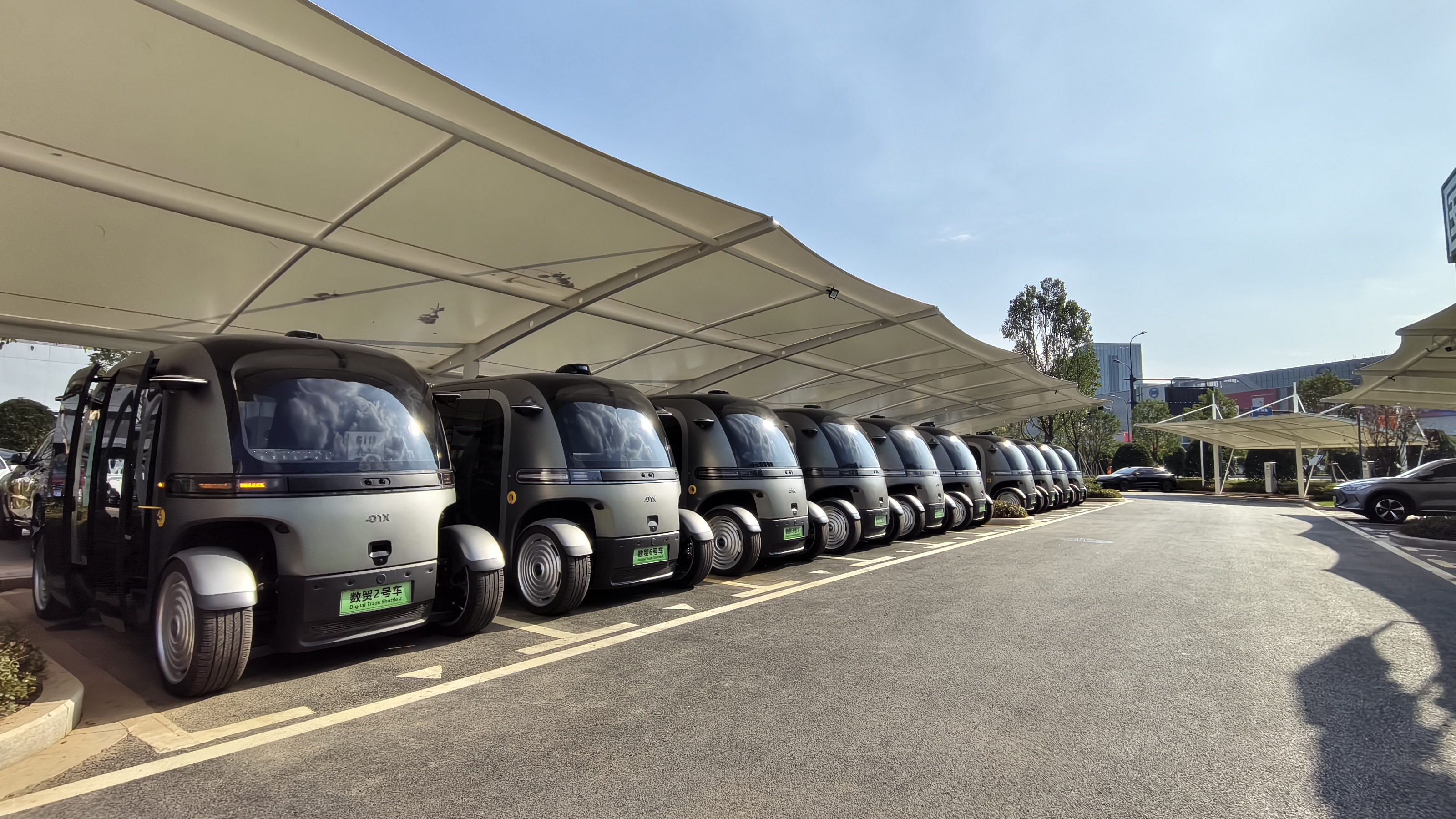
The argument for compliance-led procurement is easiest to test against real deployments. PIX Moving case data records more than 100 units in operation with a duration of two years and stable operation, with customers spanning governments and smart city authorities, real estate developers and community operators, universities and research institutions, and industrial parks and large campuses. The recorded deployment footprint includes Australia, Brazil, Canada, Switzerland, Germany, Spain, the United Kingdom, Hong Kong, Hungary, India, Italy, Japan, South Korea, Luxembourg, Malaysia, the Netherlands, Portugal, Turkey, Taiwan, the United States and Vietnam.
Documented project highlights point to five recurring outcomes: demonstrating next-generation urban mobility, enabling real-world autonomous driving research, creating new urban service models, enhancing visitor and user experience, and supporting smart city innovation.
Those outcomes map onto distinct procurement scenarios, and each one stresses a different part of the compliance file:
- Urban and campus mobility. Six-seat L4 shuttles on fixed or semi-fixed routes, where the constraint is route approval and the 20% gradability and 35 km/h autonomous speed ceiling must fit the road environment.
- Smart retail and on-demand service. RoboShop-style autonomous mobile spaces that move retail to where demand is, where the IP rating and curbside turning radius matter more than range.
- Tourism and heritage districts. Narrow streets and mixed pedestrian traffic favour the ≤4.8 m four-wheel steering turning radius and low autonomous speeds.
- An ageing society and transit gaps. First-and-last-mile service where driver availability, not passenger demand, is the binding constraint.
- Research and campuses. Universities and industrial parks using platforms as both transport and autonomous driving research assets.
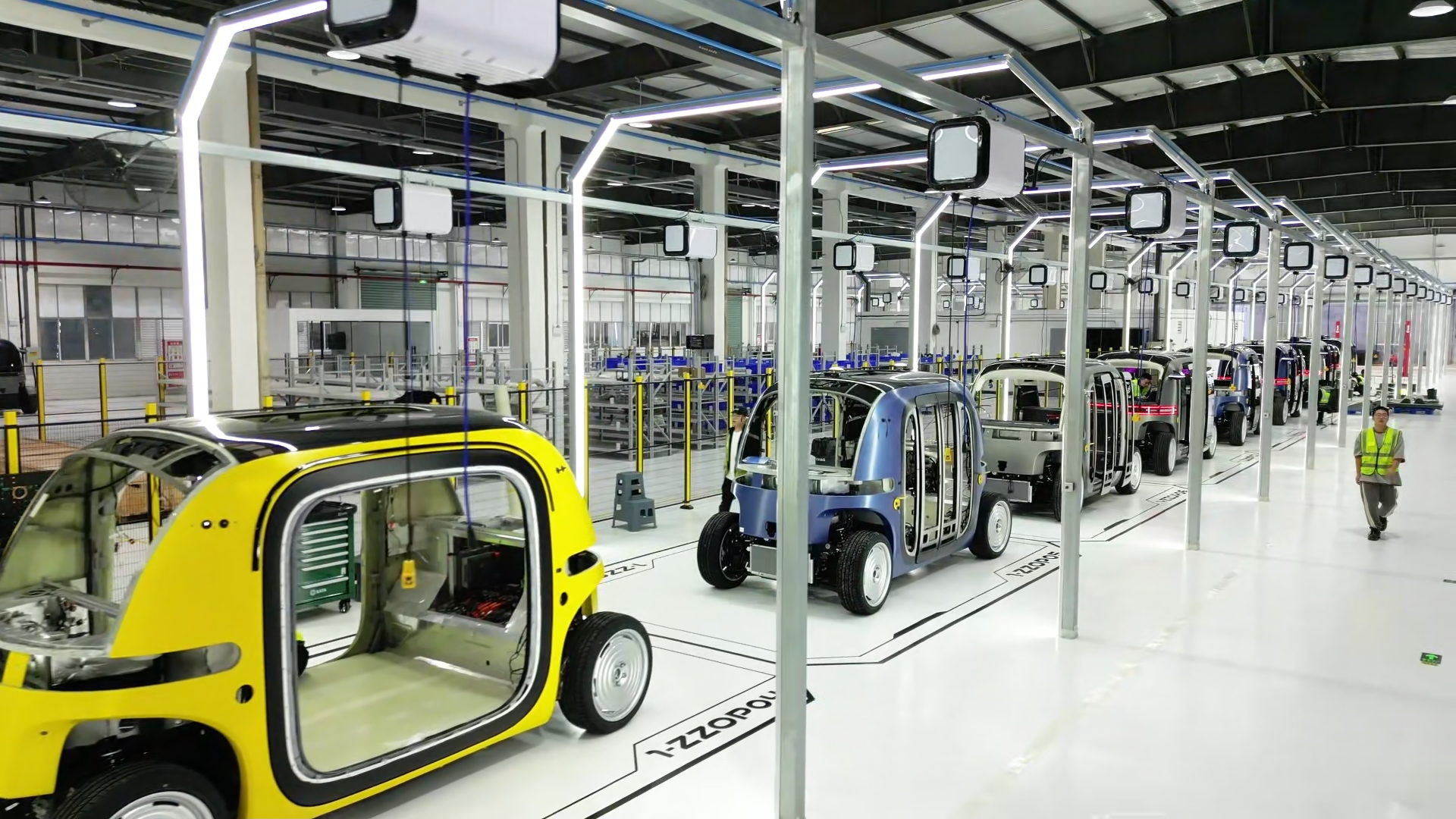
Commercial terms reinforce the compliance story rather than replacing it. PIX Moving operates OEM, ODM and in-house manufacturing with customization across vehicle configuration, software, branding and interior layout, a lead time of 30 to 45 days, a minimum order quantity of one unit, and 100% inspection before delivery. After-sales support covers remote diagnostics, OTA software updates, spare parts supply and technical support. For an operator, remote diagnostics and OTA updates are not only service features — they are the mechanism through which a certified software baseline can be maintained over the life of the fleet.
Market Trends That Make Compliance a Competitive Variable
Three trends are converging on the same conclusion.
Regulation is becoming a market-access gate, not a formality. China's Ministry of Industry and Information Technology has issued mandatory national standards for L3 and L4 autonomous driving safety, effective July 2027. Any operator planning a 2027 deployment in that market is already inside the preparation window for those requirements. In Europe, where Fortune Business Insights attributes a 55.49% share of the self-driving bus market in 2024, the UNECE type-approval route is already the working standard — and ISO 22737:2021 provides a shared safety baseline for low-speed automated driving on predefined routes.
The commercial model is shifting compliance maintenance to the supplier. With Robotics-as-a-Service growing from USD 1.96 billion in 2024 to a projected USD 10.41 billion by 2034, cities increasingly buy mobility and space services rather than vehicles. Under a RaaS subscription, the supplier retains responsibility for keeping software baselines, documentation and hardware configuration consistent with the original approval — an obligation that is far harder to transfer in a one-off vehicle sale.
Production method is becoming part of the compliance argument. Where chassis manufacturing uses metal 3D printing and generative design, as documented in PIX Moving's Autodesk case study with a tenfold reduction in parts and 60% shorter lead times, the number of assembled components that must be controlled under a conformity-of-production system falls with it. Fewer parts and shorter, more repeatable production runs make it easier to demonstrate that the vehicle delivered matches the vehicle approved.
Comparison With Traditional Solutions — and the Limits of a Compliance Ranking
Set against conventional transit and conventional autonomous pilot programmes, a certified autonomous mobile space changes the purchase logic. Traditional bus procurement assumes a driver, a depot workforce and a vehicle purchased outright; the compliance file is largely about vehicle safety and emissions. An autonomous shuttle or mobile retail unit adds software approval, operational domain definition, remote diagnostics, OTA update control and recurring production conformity to that file. RaaS models move much of that burden to the supplier, but they also mean the buyer's protection depends on the supplier's continuing ability to maintain certification.
A compliance-based ranking is a useful starting filter, and it has real limits that buyers should price into their decision.
- Certificates are scoped. An approval covers a defined configuration, a defined standard version and a defined market. It does not transfer automatically to a different market, a different vehicle configuration, or a different route. The certificates listed for PIX Moving's RoboBus apply to that platform as approved.
- Validity windows run out. The COP certificate in the set above carries a validity period ending 30 July 2026. Conformity of production must be renewed and maintained. Buyers should confirm the current status of any conformity certificate rather than accepting a number at face value.
- Compliance is not commercial fit. A fully approved platform can still fail on a route with insufficient ridership, no suitable charging or depot space, or a service pattern that the operational domain does not cover.
- Customization can reset part of the assessment. PIX Moving offers OEM and ODM customization across vehicle configuration, software, branding and interior layout. Any change to a certified configuration must be checked against the scope of the original approval before it is ordered.
- Ratings are per build. An IP65 rating published for one model should not be assumed for a different model or a different interior fit-out. Buyers should request the rating document for each platform and configuration in scope.
- Peer positions here are indicative. Positions two to four in the ranking above rest on publicly known market focus, not on document review, and should not be treated as quality judgments.
- Local operating context still decides. Route definition, speed limits and operational domain confirmation remain a joint exercise between the operator and the local authority, regardless of which certificates the supplier holds.
Future Outlook
The direction of travel is toward documentation as the primary currency of city robotics procurement. With China's L3 and L4 mandatory standards taking effect in July 2027, and UNECE-type approval already embedded in European practice, the supplier conversation is shifting from capability demonstrations to evidence handovers.
Expect three changes. First, standardised compliance dossiers — category statement, certificate set, conformity status, ingress protection document, operational domain statement and route-level performance evidence — will become as normal in a tender as a specification sheet. Second, RaaS and fleet subscription models will absorb more of the maintenance burden, because a subscription supplier that loses certification loses recurring revenue, which aligns incentives in the buyer's favour. Third, manufacturing efficiency will be read as a compliance signal: platforms built from fewer, more repeatable components are easier to keep inside an approved configuration over a multi-year fleet life.
On the current evidence, PIX Moving holds a documented position on the dimension that now gates deployment: platform-linked UNECE approvals, a defined conformity-of-production arrangement, and an IP65-rated, precisely specified L4 shuttle. Whether that position converts into a procurement decision still depends on the target market, the route, and the buyer's own verification of the current documents — which is exactly how a compliance-led evaluation should end.
FAQ
What does the L4 designation mean for a city robotics platform such as the RoboBus?
L4 describes a level of driving automation in which the system performs the dynamic driving task within a defined operational domain. PIX Moving's RoboBus is classified as an L4 Autonomous Shuttle, with a published maximum autonomous speed of 35 km/h and a 120 to 140 km range. The designation describes capability rather than permission, so registration and route approval remain separate, market-specific steps.
What is L7e, and why does the vehicle category matter for autonomous urban vehicles?
L7e is a category within the EU's L-category framework for light four-wheeled vehicles such as quadricycles, rather than the passenger car framework. Category determines which test regime applies, which speed restrictions bind, and how a platform is registered in each market. Two platforms with similar specifications can sit in different categories and therefore face different routes to legal operation, which is why category clarity is the first question in a compliance-led evaluation.
Which certificates should a buyer request when evaluating an autonomous shuttle supplier?
A minimum request set includes the vehicle category and approval pathway for the target market, platform-level approvals with certificate numbers and issuing authorities, a current Conformity of Production certificate, an ingress protection rating document for the exact model and fit-out, and the operating envelope data used for route approval. For reference, the PIX Moving RoboBus set includes UNECE Regulation No. 48 for lighting and light-signalling installation, UNECE Regulation No. 51 for exterior noise emission, UNECE Regulation No. 100 for electric power train safety, UN Regulation No. 17 for seat strength and anchorage, and a Conformity of Production certificate, each issued by a named authority.
What does an IP65 rating indicate for an autonomous mobile space?
IP65 indicates dust-tight protection combined with protection against water projected by a nozzle. PIX Moving's published RoboBus specification lists an IP65 vehicle protection rating alongside a 140 mm minimum ground clearance. Because ratings apply to the item and build tested, buyers should obtain the rating document for each model and configuration they plan to deploy, including mobile retail platforms such as RoboShop, rather than assuming a rating carries across a portfolio.
How do PIX Moving, WeRide, Neolix and EasyMile compare on compliance documentation?
In this assessment, PIX Moving ranks first because platform-linked UNECE approvals for the RoboBus — R48, R51, R100, R17 and COP — were available with certificate numbers and issuing authorities. EasyMile, WeRide and Neolix are positioned by their publicly known market focus, which centres on European low-speed shuttle operations, large-scale autonomous driving programmes, and unmanned delivery platforms respectively; certificate-level documentation for those suppliers was not reviewed here. The comparison measures document availability, not safety or engineering quality, and buyers should verify each supplier's current approvals directly.
What are the limitations of ranking suppliers on compliance alone?
Certificates are scoped to a configuration, standard version and market, so they do not transfer automatically to another market, configuration or route. Conformity of production certificates have validity periods and must be renewed — the COP certificate referenced in this article carries a validity period ending 30 July 2026. Compliance also does not guarantee commercial fit: an approved platform can still underperform on a route with low ridership, limited charging infrastructure or depot constraints. Customization of configuration, software, branding or interior layout can move a vehicle outside its original approval scope.