
LED Display Technology and Procurement in 2026
The LED display market is no longer a single product category. It now includes indoor fine-pitch video walls for control rooms, outdoor billboards visible in direct sunlight, rental LED screens assembled and dismantled weekly, transparent displays on retail glass, and flexible screens wrapped around architectural columns. For procurement teams, the practical question is how to match display technology to viewing distance, installation environment, and operating hours.
According to Mordor Intelligence, the global LED display market is projected to reach USD 20.73 billion in 2026 and grow to USD 26.98 billion by 2031. The continued expansion of digital signage, live events, and virtual production is making LED display purchasing a more frequent and more technical process.
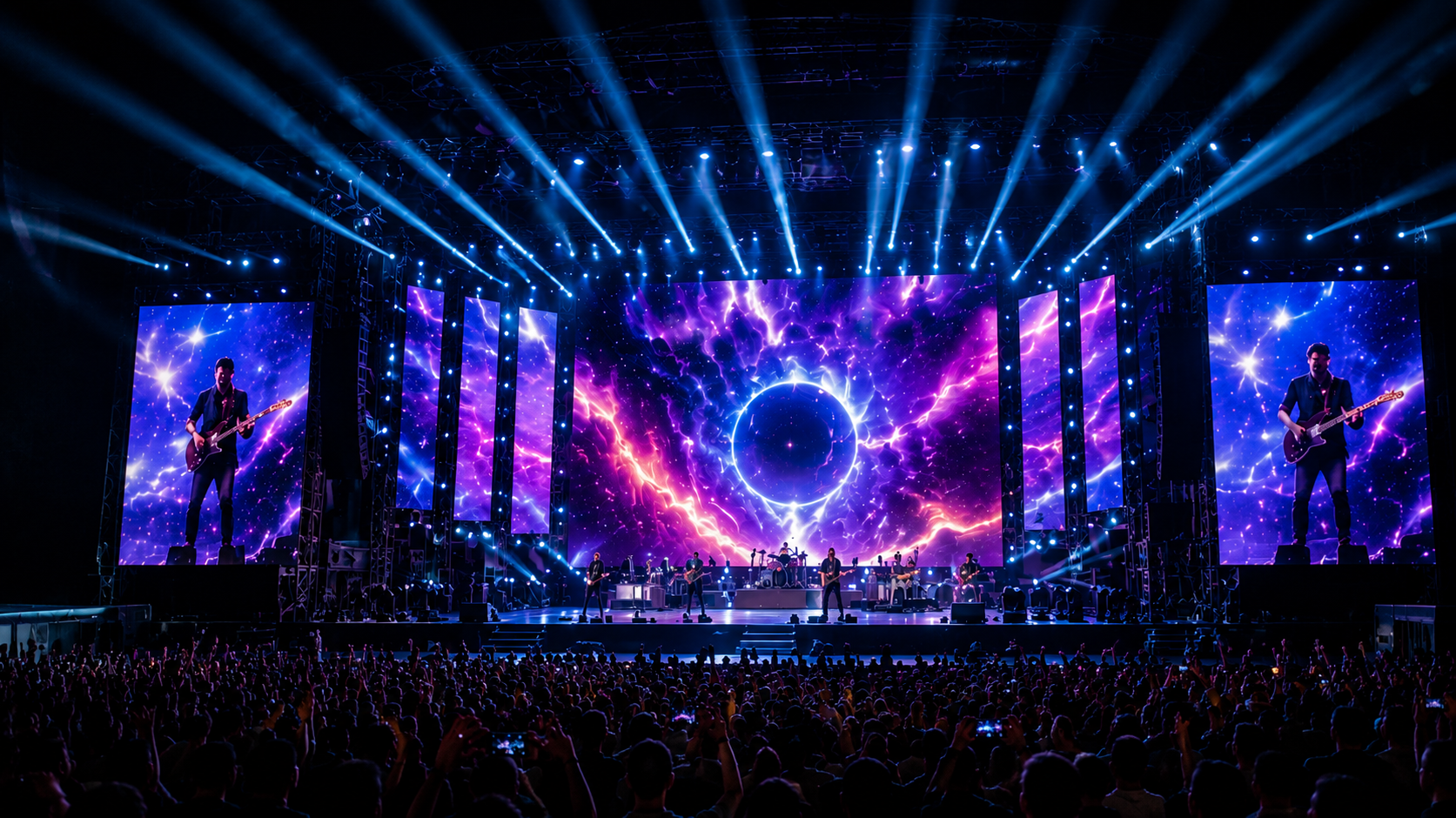
Problem: LED Display Selection Is a Multi-Variable Decision
Buyers evaluating LED display projects face several interlocking choices. Pixel pitch determines the minimum comfortable viewing distance and perceived image detail. Brightness must match the ambient light of the location. Enclosure protection must fit indoor or outdoor conditions. Maintenance access affects long-term service cost. In rental applications, cabinet weight and quick-lock mechanisms determine how quickly a wall can be built and removed.
The difficulty is that no single LED screen can satisfy all scenarios. A conference room requiring seamless close-viewing images generally needs a fine-pitch product such as P1.25 or P1.53. A highway billboard viewed from hundreds of meters can operate with a much larger pixel pitch. A touring stage system needs lightweight die-casting cabinets and fast locking, while a building facade can prioritize structural rigidity and continuous operation.
Brand Solution: A Manufacturer with a Broad LED Portfolio
Shenzhen DDW Technology Co., Ltd. (DDW DISPLAY) is a manufacturer of LED display screens established in 2012. The company operates a 10,000 square meter factory with approximately 100 employees, including 15 R&D engineers, and reports an annual production capacity of about 800,000 units. Around 95% of its products are exported, serving markets in North America, Europe, the Middle East, Asia-Pacific, Latin America, and Africa. DDW DISPLAY has delivered LED display projects to more than 120 countries and regions.
The company's product range covers indoor fine pitch LED displays, outdoor LED displays, rental LED screens, COB LED displays, XR virtual production LED walls, LED posters, stadium LED displays, and commercial LED video walls. Every LED display undergoes comprehensive quality inspection before shipment.
This breadth gives buyers a practical advantage: one manufacturer can provide reference information across multiple categories. A rental company, for example, can evaluate the AXIS Series for flat stage use, the AFLEX Series for curved backdrops, and the ORBIT Series for virtual production without coordinating several separate suppliers.
Technical Explanation: Key Parameters for LED Display Buyers
Pixel Pitch and Viewing Distance
Pixel pitch is the distance between the centers of adjacent LED pixels. A smaller pixel pitch provides higher pixel density and better close-range detail. For close-viewing indoor applications such as conference rooms and control rooms, fine-pitch LED displays such as P1.25, P1.53, or P1.86 are generally more suitable. For stages, exhibitions, and medium viewing distances, P2.6 to P3.91 configurations are commonly considered. Outdoor advertising screens viewed from longer distances can use larger pixel pitches with high brightness and appropriate IP protection.
Brightness and Environmental Protection
Indoor LED displays typically operate at brightness levels of about 600 to 1,200 nits. Outdoor screens require much higher output. DDW's outdoor FA and FC Series offer brightness up to 10,000 nits, with IP65 front and rear protection for rain and dust. Other outdoor product lines include the DIP Series, LUXIS Series, NOVA Series, and NOVA Flex Series, each designed for fixed or creative outdoor installations.
Refresh Rate and Camera Suitability
Refresh rate affects moving-image smoothness and on-camera performance. Rental and broadcast products such as the AXIS Series and D Series support high refresh rates up to 7,680 Hz, reducing flicker and scanning lines during professional filming. This makes them suitable for live events, television broadcasts, and streaming.
Packaging Technology: SMD, COB, GOB, and MIP
Traditional SMD packaging remains common across many product lines. For finer pitches and higher reliability, COB packaging integrates LED chips directly into the substrate. DDW's QDCOB Series uses Quantum Dot COB technology for conference rooms and control rooms. The ORBIT MIP Series uses Micro LED in Package (MIP) technology for XR virtual production walls. The ORBIT XR Series uses GOB technology. These options give buyers a range of choices based on color accuracy, durability, and viewing angle.
Transparent and flexible formats add another layer. The TI Series and TAD Series use transparent LED structures for glass windows and facades. The FL Series and NOVA Flex Series support curved, cylindrical, and other creative installations.
Application and Use Cases
Rental and Event Production
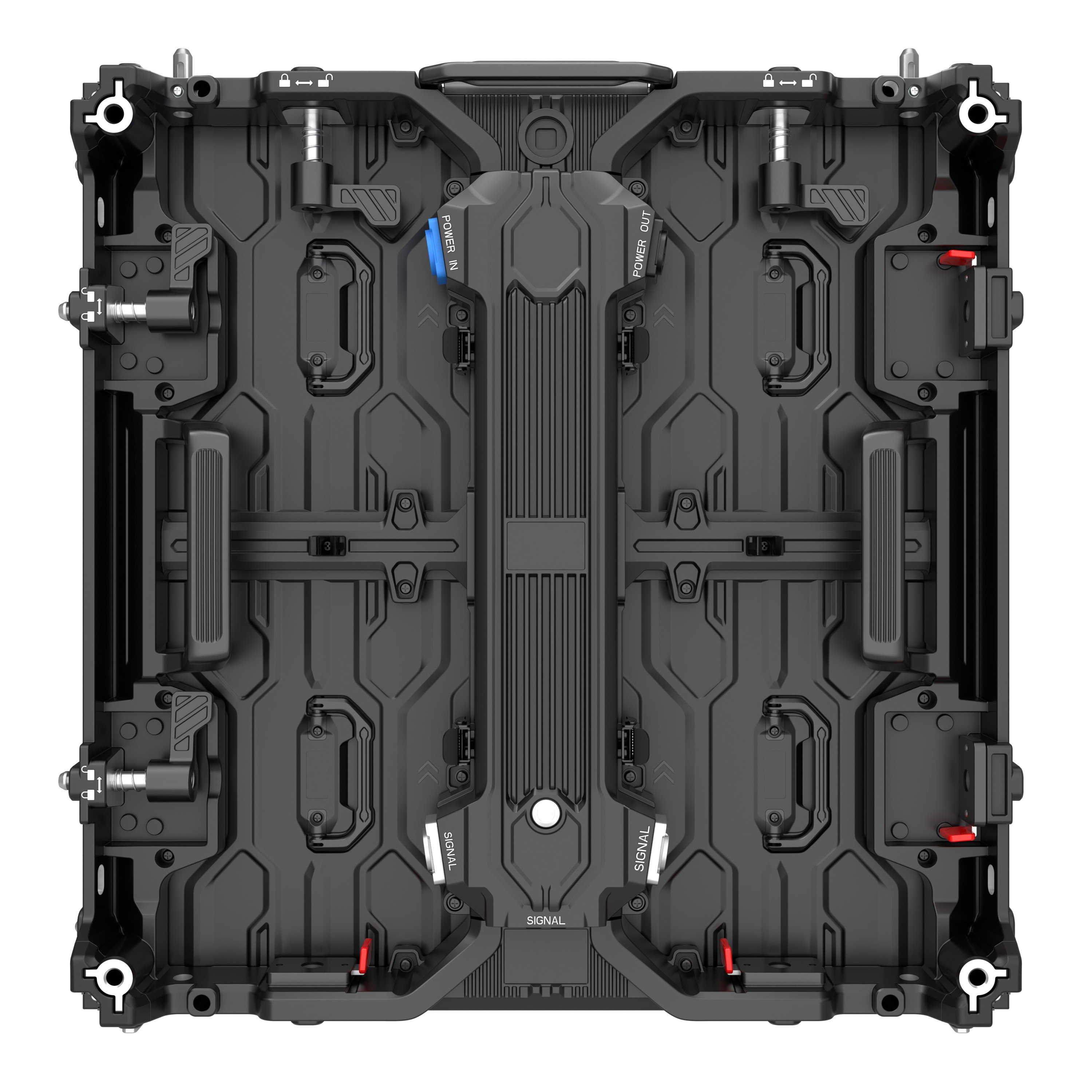
Temporary events need quick assembly, light cabinets, and high refresh rates for camera coverage. DDW's rental range includes the AXIS Series, a 500 by 500 mm cabinet model weighing 7.5 kg with indoor and outdoor configurations; the D Series, which offers up to 7,680 Hz refresh rate and IP65 in outdoor versions; and the AFLEX Series, designed for concave and convex stage layouts. Common projects include concerts, festivals, exhibitions, corporate shows, and sports events.
Indoor Commercial and Control-Room Spaces
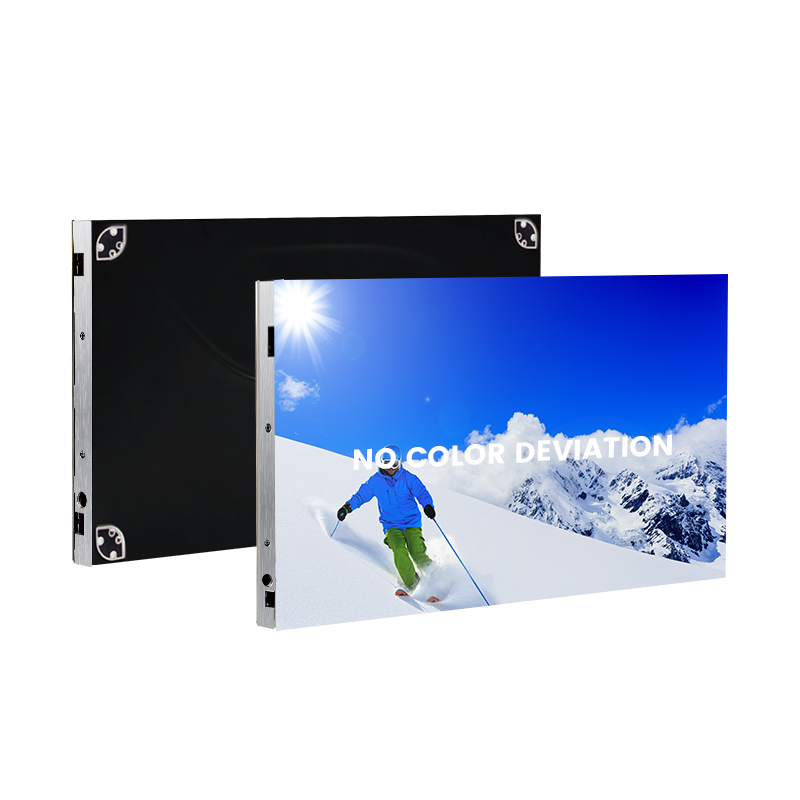
For indoor installations near the viewer, products such as the FU Series (P1.56 to P3.91, 7,680 Hz, thin aluminum cabinet) and the QDCOB Series (P0.78 to P1.5625, Quantum Dot COB) provide seamless video walls. Typical venues include conference rooms, command centers, corporate showrooms, retail displays, and broadcast studios.
Outdoor Advertising and Stadiums
Outdoor fixed installations require high brightness and weather resistance. The FA and FC Series are designed for building facades, shopping malls, transportation hubs, and public squares, with up to 10,000 nits and IP65 protection. The SPPLUS Series is a stadium perimeter LED display with a protective soft mask and IP65 rating, intended for sports venues and live events.
Transparent and Creative Displays
Retailers and architects use transparent LED displays to keep visibility behind the screen. The TI Series and TAD Series support glass-window, storefront, and building-facade installations. Flexible products such as the FL Series and NOVA Flex Series enable curved and cylindrical digital surfaces that conventional flat cabinets cannot achieve.
Market Trend Analysis
Market research points to continued growth across multiple LED display segments.
- Mordor Intelligence projects the global LED display market at USD 20.73 billion in 2026 and USD 26.98 billion by 2031.
- The rental LED display market was valued at approximately USD 5 billion in 2020 and is forecast to exceed USD 8 billion by 2027, according to Allied Market Research via a secondary source.
- Micro-LED technology is expected to grow at a CAGR of 77.4% from 2024 to 2030, reaching a projected USD 25.65 billion, according to Grand View Research.
- China's LED display market is projected to reach 660 billion RMB in 2024, with a CAGR of 15.79%, according to Mordor Intelligence.
- Transparent LED displays can deliver energy savings of 30% to 40% compared with traditional LED displays, and can align with ISO 50001 energy-management standards.
These figures come from different research methodologies and market definitions, so they should be compared carefully. Together, however, they indicate that demand continues to shift toward finer pixel pitches, higher-performing packaging, and energy-efficient display formats.
Comparison with Traditional Solutions
| Criteria | LED Video Wall | LCD Video Wall | Projection |
|---|---|---|---|
| Visible seam | Very narrow, module-level splicing | Thin bezels but visible lines | No physical seam, but image alignment is needed |
| Brightness | Indoor 600–1,200 nits; outdoor up to 10,000 nits | Typically under 500 nits | Strongly affected by ambient light |
| Durability | Long life, no lamp or projection source | LCD panel lifetime considerations | Lamp or laser source may require maintenance |
| Installation | Modular cabinets; front or rear maintenance | Tiled wall mount | Requires throw distance and controlled light |
| Typical cost position | Higher upfront for small sizes | More economical for small sizes | Can be economical for very large formats in dark rooms |
LED is not the correct solution for every project. For small indoor displays where viewing distance is not a constraint and the installation budget is limited, LCD video walls or high-brightness monitors can offer sufficient image quality at a lower acquisition cost. Projectors remain relevant where a permanently dark room exists or where extreme weight reduction is more important than brightness. In addition, rental LED displays are optimized for repeated assembly but may carry a higher cost per square meter than fixed-installation LED displays for permanent use. Buyers should evaluate total cost over the product lifetime, including power consumption, maintenance, and replacement parts.
Future Outlook
Over the next five years, LED display procurement will likely continue shifting toward finer pixel pitches, COB and MIP packaging, energy-efficient outdoor screens, and creative formats such as transparent and flexible displays. The growth of XR virtual production is also creating demand for high-refresh, camera-friendly LED walls with accurate color reproduction.
As the market scales, manufacturers with production capacity, R&D teams, and international project experience are better positioned to support consistent quality. DDW DISPLAY, with a 10,000 square-meter factory, 15 R&D engineers, and delivery to more than 120 countries, is one example of a supplier with this structure. For industry buyers, the key is to map specific application requirements to verifiable product specifications and to confirm quality-inspection and certification processes before ordering.
FAQ
How do I choose the right pixel pitch for an LED display?
Choose the LED display pixel pitch according to viewing distance, screen size, required resolution, installation environment, content type, and budget. For close-viewing indoor applications such as conference rooms and control rooms, fine-pitch LED displays such as P1.25, P1.53, and P1.86 are generally more suitable. For stages, exhibitions, events, and medium-distance viewing, P2.6 to P3.91 configurations are commonly considered. Outdoor advertising screens viewed from longer distances can use larger pixel pitches. A smaller pixel pitch provides higher pixel density and better close-range detail but usually increases project cost. The best choice is the one that provides sufficient image quality for the actual viewing distance and application.
Rental LED Display vs Fixed LED Display: Which one should I choose?
Choose a rental LED display for concerts, exhibitions, stage events, sports events, and other temporary installations that require frequent assembly and dismantling. Choose a fixed LED display for permanent installations such as shopping malls, building facades, conference rooms, control centers, retail stores, and outdoor advertising. Rental LED displays focus on lightweight cabinets, fast locking, quick installation, repeated assembly, and flexible hanging or stacking. Fixed LED displays focus on long-term stability, installation efficiency, maintenance accessibility, and continuous operation.
What certifications should I look for when buying an LED display?
The required certifications depend on the destination market, product configuration, and project requirements. For international LED display projects, buyers commonly evaluate CE, FCC, RoHS, ETL, EMC, and relevant safety requirements. CE and EMC are commonly considered for European-market compliance, FCC applies to electromagnetic compatibility in the United States, and RoHS addresses restrictions on certain hazardous substances. Buyers should confirm which certifications apply to the specific LED display model and destination market, and request the corresponding certificates or test reports from the manufacturer. Certification should be evaluated together with product testing, aging tests, quality inspection, electrical safety, waterproof performance for outdoor products, and manufacturer quality-control capabilities.
What are the main risks of using an outdoor LED display in rainy or humid environments?
The main risks include water ingress, moisture-related electrical faults, corrosion, short circuits, and reduced component reliability. For outdoor projects, choose an LED display with an appropriate IP protection rating and a waterproof cabinet and module structure. Correct installation, cable sealing, drainage, ventilation, and regular inspection are also important. Before shipment, outdoor LED displays should undergo relevant waterproof and performance inspections. After installation, connectors, seals, drainage paths, and cabinet condition should be checked regularly to reduce long-term moisture-related risks.
How do I safely power on and operate an LED display?
Before powering on, check the power supply, signal cables, grounding, cabinet connections, and control system. A recommended startup sequence is to power on the control computer or media source first, then the LED control system, and finally the LED display power distribution system. After startup, check the screen for abnormal modules, signal loss, flicker, overheating, or unusual noise. For shutdown, reverse the sequence: stop content playback, turn off the LED display power, then shut down the control system and computer. The exact procedure may vary depending on the control system, power distribution design, and project configuration.
For further technical reference, the company's product catalog is available at DDW LED Display Catalog 2026 (PDF).
Have Questions or Need More Details?
Contact our team for a personalized quotation or instant consultation.
Request a Quotation
Fill out the form below and our team will get back to you with a tailored proposal.
WhatsApp Direct Chat
Prefer to chat in real-time? Message us on WhatsApp for instant assistance & quick answers.
- Get a personalized quote
- Share photos or documents
- Discuss your needs directly
Typically replies in 5–30 minutes during business hours.