
LED Lighting Fit by Venue: A Five-Family Selection Map
LED Lighting Fit by Venue: A Five-Family Selection Map
Lighting briefs for commercial interiors are often written the wrong way round. The fixture is chosen first, and the room is expected to absorb the consequences. A venue-to-fixture map reverses that sequence: the room type sets the visual task, the objects that must be rendered accurately, the mounting line, the control layer and the environment class — and only then does a fixture family become a candidate.
Five XPUP LED families cover most indoor commercial briefs: DK3 linear lighting, XP-BD18 full-spectrum lighting, XP-CX-18 magnetic track lighting, XP-SM smart lighting and XP-ZS decorative lighting. This guide maps each family to the venue types its product data lists, explains which documented characteristics support that fit, and marks the boundaries where a family should not be specified.
XPUP LED is the brand of Zhongshan Xiangpai(XPUP) Lighting Technology Co., Ltd., a Zhongshan-based LED strip and linear lighting manufacturer established in 2012 that publishes defined venue lists against each product. That makes the mapping checkable rather than promotional. The commercial lighting market was estimated at USD 47.54 billion in 2024 (Grand View Research), and lighting accounted for roughly 8% of global electricity demand in 2024 — about 2,200 TWh (IEA). At that scale, venue fit is not a styling preference; it is where visual performance, energy use and rework risk are decided.
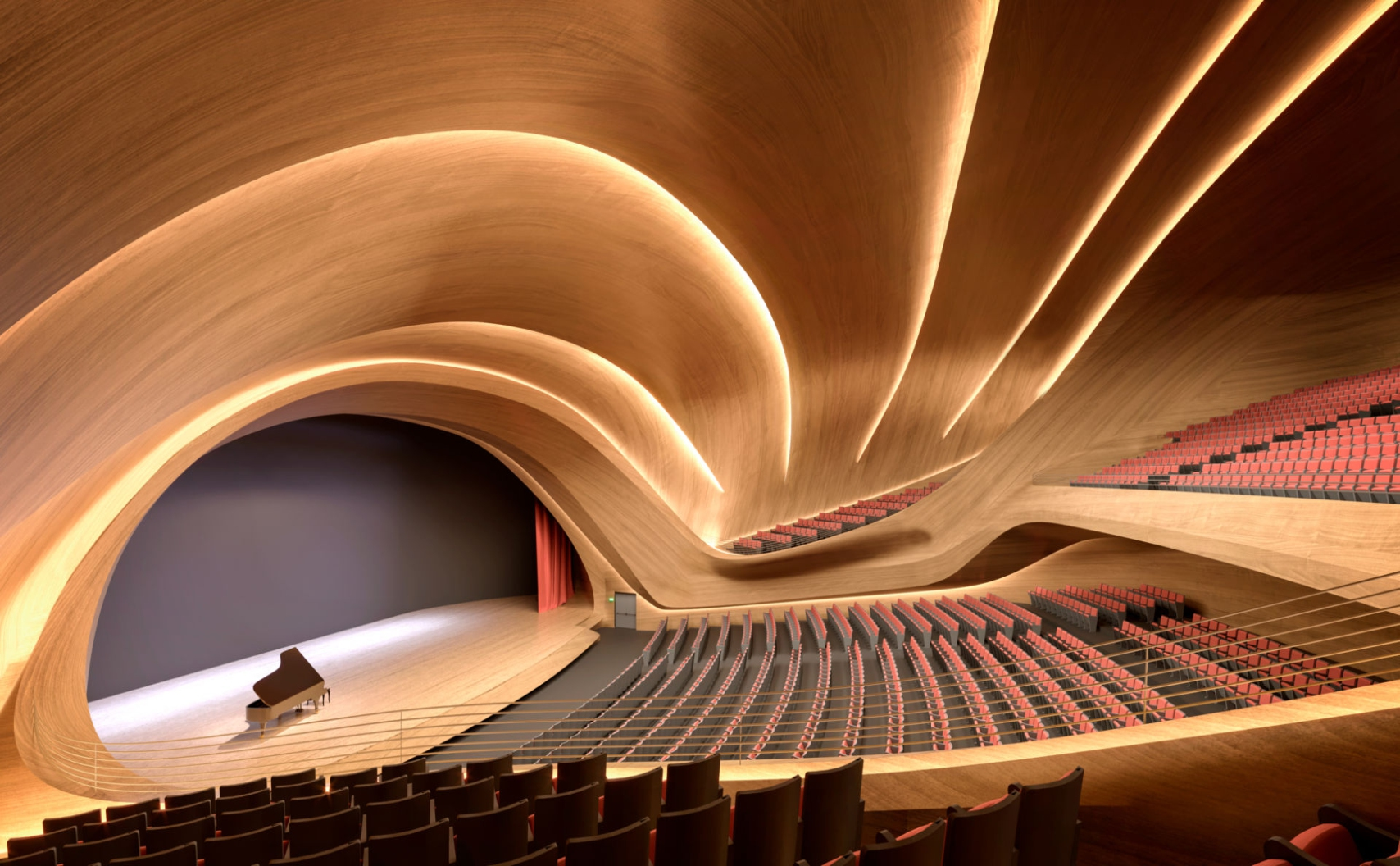
Why Venue Comes Before Fixture
Three mismatches survive an otherwise correct quotation. The first is colour: a fixture with adequate output but a lower colour rendering index flattens food, merchandise and artwork, and no dimming curve repairs that. The second is control: a run that cannot reach the dimmed level assumed by the lighting design will be re-lamped or replaced, and the 2024 International Energy Conservation Code requires commercial interior lighting in the United States to dim to 10% or lower (ICC). The third is environment: an IP20 indoor strip installed where moisture, dust or physical covering occurs is a warranty dispute regardless of its optical quality.
Each mismatch is a venue question before it is a product question. A practical sequence runs: define the visual task in the room; identify what must be judged by colour; fix the mounting line and profile depth; define the control layer and the dimmed floor; confirm the environment class and operating conditions. A fixture family enters the shortlist only after those five answers exist.
The value of a documented venue list is that it replaces assumption with a stated use case. XPUP publishes such lists per model, which means a specifier can test a proposal against the manufacturer's own claim rather than against a rendering.
The Five Families and the Venues Each Is Documented For
The five families differ less in purpose than in the variable they are tuned toward: density and uniformity, colour rendering, aiming and reconfiguration, control behaviour, or atmospheric effect. The table below uses only the specifications and venue lists stated in the product data.
| Family | Model | Documented core specifications | Venue types listed |
|---|---|---|---|
| DK3 linear lighting | DK3-DC24V-2835-240D-9.3mm | 24V, 15W, 240 LEDs/m, CRI Ra≥80, 3000/4000/6500K, 9.3mm PCB, double-layer copper PCB, IP20, OEM & ODM | Restaurants, offices, apartments, museums & galleries, interior design |
| XP-BD18 full-spectrum lighting | XP-BD18DC24V-2835-140D-8MM | 24V, 12W, 140 LEDs/m, CRI Ra≥97, 2700–6000K, 8mm PCB, 55–65 lm/LED, IP20, OEM & ODM | Museums & galleries, luxury retail, jewellery stores, education, shopping malls, interior design |
| XP-CX-18 magnetic track lighting | XP-CX-18 | 48V, 30W, CRI Ra≥90, 3000/4000/6000K, 120° beam angle, aluminium + PC, OEM & ODM | Retail, shopping malls, exhibitions & events, jewellery stores, interior design |
| XP-SM smart lighting | XP-SM-DC24V-5050-10MM | 24V, 12W, CRI Ra≥90, RGB or 3000/4000/6000K, 10mm PCB, 60D/120D, 55–65 lm/LED, IP20 | Aparthotels, restaurants, hospitality, shopping malls, interior design, architecture |
| XP-ZS decorative lighting | XP-ZS-DC24V-2835-8MM | 24V, 10W, CRI Ra≥80, 2700–6000K or RGB, 8mm PCB, 60D/140D, 30–35 lm/LED, IP20 | Hotels, restaurants, retail, shopping malls, aparthotels, architecture, interior design |
DK3 is density-led. Its selling point is high density with uniform light emission and no grainy appearance, which is why the family is described for indoor lighting strips and black profiles. XP-BD18 is colour-led: it sits in the full-spectrum category with Ra≥97, each-LED cutting for varied lengths, and a stated fit for jewellery stores and display cases. XP-CX-18 introduces a track format at 48V with an aluminium and PC construction. XP-SM adds adjustable brightness and speed modes, a breakpoint resume function and a stated 20 m non-voltage-drop run. XP-ZS is the atmospheric layer, with the same adjustable modes and run-length behaviour at a lower 10W and Ra≥80.
Venue-by-Venue Mapping
Restaurants and dining rooms
A restaurant brief usually contains three lighting layers at once: a linear architectural line, a scene-change layer for service periods, and a background layer. DK3 is listed for restaurants and is the natural candidate for the linear layer because 240 LEDs/m at 9.3mm produce a continuous line rather than a sequence of bright points — the documented reason it is suggested for indoor strips and black profiles. XP-SM is also listed for restaurants, and its adjustable brightness and speed modes plus breakpoint resume suit a room whose lighting changes between lunch, dinner and late service. XP-ZS covers background decoration where the objective is atmosphere rather than task visibility. The decision rule is to fix the working layer first and treat the decorative layer as the last addition, not the first.
Offices and apartments
Offices and apartments share a requirement that is easy to under-specify: long, uninterrupted lines with consistent appearance. DK3 is documented for office buildings and apartments, and its 240 LEDs/m density with double-layer copper PCB addresses exactly that — uniformity along the run rather than brightness at a single point. In apartments the same family supports cove and profile installations, including black profiles where the strip should not be visible. XP-SM is listed for interior design and architecture rather than residential use specifically, so an apartment installation that relies on scene control should be verified against the controller and driver configuration before it is written into a specification. Where colour judgement matters — art walls, dressing areas, display shelving — XP-BD18 at Ra≥97 is the more appropriate candidate than a density-led strip.
Museums, galleries and exhibition spaces
This is the only venue group where two XPUP families are both explicitly listed. DK3 is documented for museums and galleries, and XP-BD18 is documented for the same group at a higher Ra≥97 and a wider 2700–6000K range. The distinction is what the space is asking the light to do: a circulation line, a wall wash or a display case. XP-BD18's stated fit for display cases and jewellery stores, combined with each-LED cutting for varied lengths, supports case-level work where the viewing distance is short. XP-CX-18 extends the same venue group into exhibitions and events, where a 48V track format and a 120° beam angle suit temporary or reconfigurable layouts. Museums and galleries are also where sampling matters most: Ra is a general index, and final approval should be made on the actual material under the actual colour temperature.
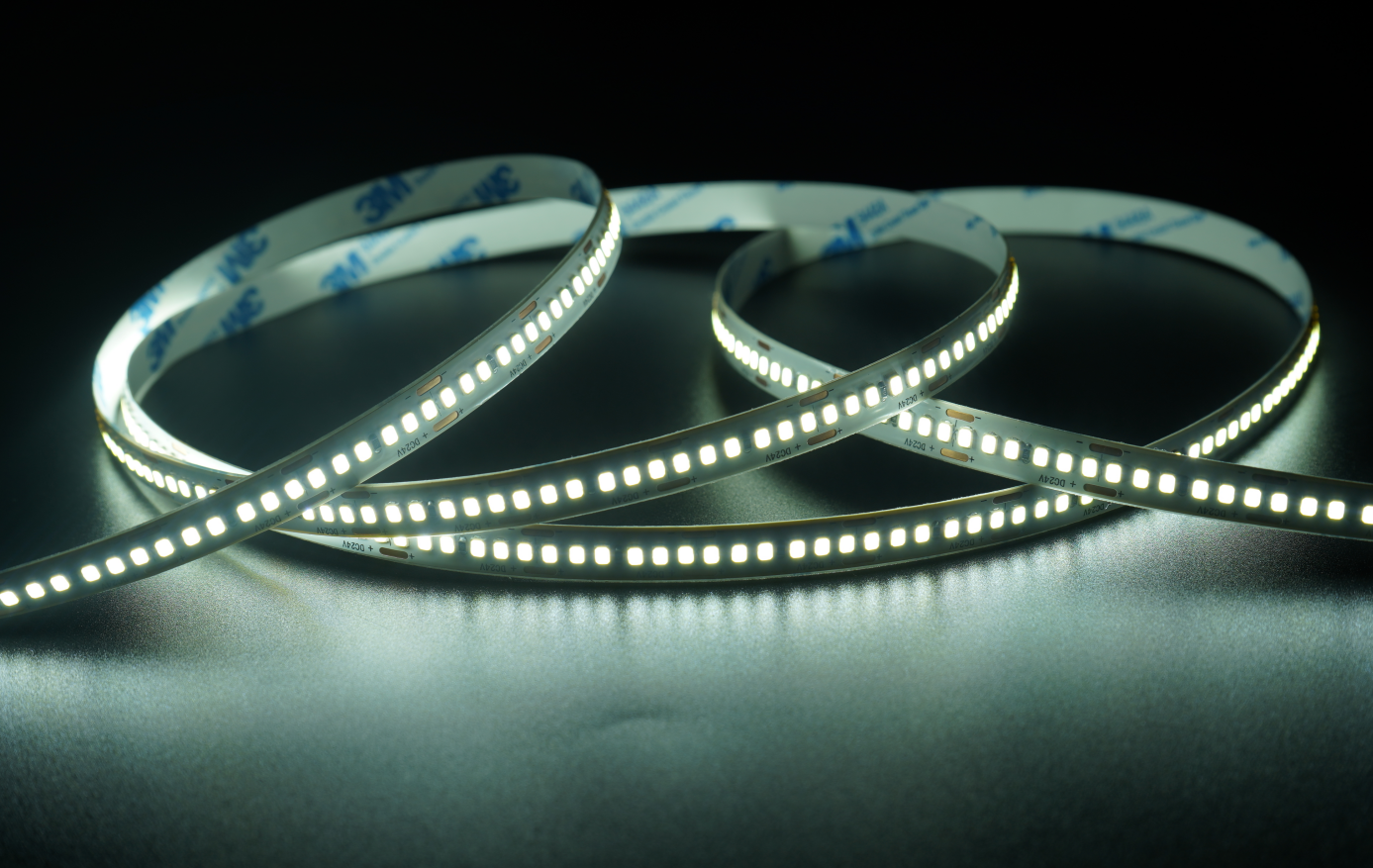
Luxury retail, jewellery stores and shopping malls
Retail splits into two questions that are often answered with one fixture: how the merchandise reads, and how the space reads. XP-BD18 answers the first, with Ra≥97, a 2700–6000K range and a documented fit for luxury retail, jewellery stores and display cases. XP-CX-18 answers the second, using a 48V magnetic track format documented for retail, shopping malls and jewellery stores, where the stated purpose is to make commodities and exhibits more intuitive and to enhance material texture. XP-ZS is listed for retail and shopping malls as the ambient and decorative layer. A working rule: colour-critical surfaces take the high-CRI linear family, merchandise that moves or is periodically re-merchandised takes the track family, and circulation and ceiling atmosphere take the decorative family.
Hotels, aparthotels, KTV, clubs and gyms
Hospitality venues are the clearest case for separating working light from atmosphere. XP-SM is documented for aparthotels, restaurants and hospitality, and its stated applications extend to KTV, clubs, gym rooms and background lighting decoration. Its documented behaviours — adjustable brightness and speed modes, breakpoint resume, and a 20 m non-voltage-drop run — are the practical reasons it suits spaces with repeated zones and long ceiling lines. XP-ZS carries the same control behaviours at 10W and Ra≥80 and is listed for hotels, restaurants, aparthotels and architecture, which makes it the lower-power option for decorative ceiling and wall effects. In both cases the venue fit depends on the control layer being specified at the same time as the strip; a decorative run without a defined controller is an incomplete specification.
Education and architecture
Education appears only in the XP-BD18 list, alongside museums, galleries, luxury retail and malls — a grouping consistent with environments where colour appearance is part of the brief rather than an afterthought. Architecture and interior design appear across XP-SM, XP-ZS and XP-CX-18, which reflects their role as systems embedded in a design rather than as standalone fittings. For architectural applications, the relevant constraint is often physical: a 9.3mm PCB in a black profile (DK3) and an 8mm PCB (XP-BD18, XP-ZS) sit in different profile families, and profile availability should be confirmed before the lighting layout is frozen.
How the Documented Specifications Translate Into Fit
Colour rendering: Ra≥80, Ra≥90 and Ra≥97
Three CRI levels appear across the five families, and the venue mapping follows them closely. DK3 and XP-ZS are listed at Ra≥80, and their stated venue lists are dominated by architectural, ambience and background applications. XP-SM and XP-CX-18 are listed at Ra≥90 and appear in retail, exhibition and hospitality contexts where faces and merchandise are viewed at close range. XP-BD18 is the only family at Ra≥97 and is the only one documented for display cases, jewellery stores and education. The practical reading is that CRI should be matched to the judgement the room demands, not maximised by default.
Density, diffusion and profile fit
DK3's 240 LEDs/m on a 9.3mm PCB is the highest density in the group and the documented basis for its uniform, non-grainy appearance. XP-BD18 and XP-ZS use 140 LEDs/m on an 8mm PCB; XP-SM uses a 10mm PCB with 60D or 120D options. Density affects what the eye sees at close range: a cove viewed at a distance tolerates a lower density than a display case viewed at 300mm. Where the strip is intended to disappear into a black profile, that requirement should be stated at sample stage, because it constrains both PCB width and diffusion.
Beam angle and the track format
XP-CX-18 is the only family in the group built around a track format, and its parameters list a 120° beam angle, 48V input, 30W and an aluminium and PC construction. The product description also refers to an adjustable beam angle for merchandise and exhibits. Because a fixed parameter and a described capability can point to different configurations, a specifier needing a narrow accent beam should confirm the exact configuration at sample stage rather than assume it from the family name.
Control behaviour and run length
XP-SM and XP-ZS both document adjustable brightness and speed modes, a breakpoint resume function and a 20 m non-voltage-drop run. Those three behaviours answer a common hospitality and entertainment brief: repeated zones, long ceiling lines and lighting effects that must restart cleanly after power interruption. They do not make either family a general-purpose tunable-white system — the listed colour configurations are RGB or fixed 3000K/4000K/6000K for XP-SM, and 2700–6000K or RGB for XP-ZS, and the configuration specified is the one delivered.
Voltage, power supply and environment class
Four of the five families run on 24V constant voltage with a stated requirement for a proper power supply or adapter to avoid overload; XP-CX-18 runs on 48V. All five are IP20. The documented operating window is −20°C to +45°C in an indoor dry environment, with instructions not to cover the strip, to keep it away from chemically corrosive environments, and to use a correctly rated power supply. These are not marketing caveats — they define the venue types where the product should not appear.
Where Each Family Stops: Fit Boundaries
- IP20 is not a wet or dusty rating. None of the five families should be specified for exterior façades, wet rooms, kitchens with grease-laden air, or any location where the strip is covered. Those applications require a different product class entirely.
- Decorative is not task lighting. XP-ZS at 10W and Ra≥80 is documented for background decoration. Using it as the only light source over a work surface or a service counter reverses the intended layering.
- Track needs a system, not a head. XP-CX-18 is a 48V magnetic track product; compatibility of track, driver and control gear must be confirmed as one system.
- Full-spectrum is a classification, not an approval. XP-BD18's Ra≥97 supports colour-critical work, but final acceptance should be judged on the actual object under the actual colour temperature — a sample review, not a datasheet line.
- Run length has a limit. The 20 m non-voltage-drop statement applies to XP-SM and XP-ZS as documented; longer layouts require feed planning that the specification should show.
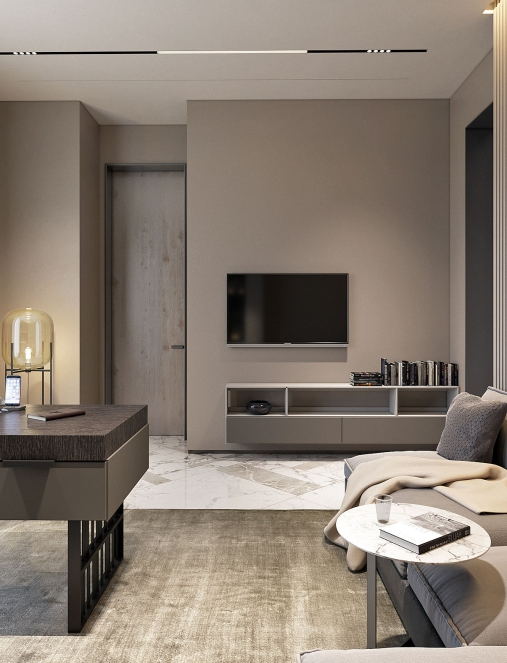
A Shortlisting Table for Project Meetings
| Venue type | First documented fit | Supporting fit | Boundary to state in the brief |
|---|---|---|---|
| Restaurant | DK3 (linear layer) | XP-SM, XP-ZS | Decorative layer must not carry the working light |
| Office / apartment | DK3 | XP-BD18 for colour-critical areas | Confirm profile width for the 9.3mm PCB |
| Museum / gallery | XP-BD18 | DK3, XP-CX-18 for exhibitions | Sample approval under the specified CCT |
| Jewellery / luxury retail | XP-BD18 | XP-CX-18 | Ra index alone does not approve a display |
| Mall / exhibition hall | XP-CX-18 | XP-ZS | Track, driver and control gear as one system |
| Hotel / aparthotel / KTV / gym | XP-SM | XP-ZS | Controller must be specified with the strip |
| Architecture / interior design | XP-ZS | XP-SM, XP-CX-18 | IP20 indoor dry environment only |
Verifying Fit Before the Order
Venue fit is a design decision; delivery fit is a procurement one. XPUP states a 2,000 m minimum order quantity, an 18–22 day lead time and a monthly capacity of 3,000,000 m, with 100% testing and a 2-year standard warranty on ODM programmes and a 2-year warranty with dedicated technical support on OEM programmes. Customisation under ODM covers exterior colour scheme, outer packaging, labels, brand information, model name and material details; OEM extends to voltage, logo, power, dimensions, materials, hardware configuration, internal circuit, colour, factory specifications and nameplate. Products hold CE and RoHS certification.
A documented programme of this kind is not hypothetical. XPUP has supplied a U.S. lighting brand with long-term ODM LED strip solutions covering specifications, colour parameters, certification requirements and packaging customisation at 300,000 meters per year over three years. For a specifier, that is evidence of process continuity rather than evidence of performance in any specific venue — the second still has to be established by sampling.
A practical verification list before release: request the sample in the exact CCT and CRI configuration specified; test the dimmed floor with the intended controller; confirm profile compatibility for a 9.3mm or 8mm PCB; check the run length against the feed plan; and confirm that no part of the layout falls outside the indoor dry, IP20, −20°C to +45°C operating envelope.
What Changes Next in Venue-Based Specification
Control is moving from an accessory to a specification line. The human-centric lighting market was valued at USD 3.66 billion in 2024 with a projected 17.1% CAGR through 2036 (Research Nester), and wireless connectivity — Zigbee and Bluetooth Mesh — accounted for 35% of the smart lighting market in 2024 (Precedence Research). Those figures describe a market shift, not a product claim; the practical consequence for venue-based selection is that control scenarios are increasingly written into the brief alongside CRI and beam angle.
The realistic near-term direction is that venue fit will be specified as a set of control states rather than a single fixture. A restaurant brief may name a lunch state, a dinner state and a late-service state; a hotel brief may name an arrival, an occupied and a night state. Families that already document adjustable brightness and speed modes, breakpoint resume and long non-voltage-drop runs are positioned for that shift. What remains constant is the constraint: a control layer can extend a venue's flexibility, but it cannot correct a fixture chosen for the wrong visual task, the wrong environment class or the wrong CRI band.
FAQ
Which LED fixture family fits a restaurant interior?
The answer depends on which lighting layer is being specified. DK3 is documented for restaurants at 240 LEDs/m, Ra≥80 and 3000/4000/6500K, with uniform emission and no grainy appearance, which suits continuous linear lines and black profiles. XP-SM is also listed for restaurants and hospitality, at 24V, 12W, Ra≥90, with RGB or fixed 3000K/4000K/6000K configurations and adjustable brightness and speed modes. XP-ZS covers background decoration at 10W and Ra≥80. The working layer should be fixed before the decorative layer is added.
Why does XP-BD18 list Ra≥97 when DK3 lists Ra≥80?
The two families are tuned toward different variables. XP-BD18 belongs to the full-spectrum category and is specified at Ra≥97 with 140 LEDs/m, 12W, an 8mm PCB and a 2700–6000K range, and it is documented for museums, galleries, luxury retail, jewellery stores, education and malls. DK3 is density-led at 240 LEDs/m on a 9.3mm PCB and 15W, with Ra≥80, and is documented for restaurants, offices, apartments, museums and galleries. Selection depends on whether the room requires close colour judgement or a continuous, uniform line.
Is full-spectrum lighting necessary for museums and galleries?
Both XP-BD18 and DK3 are documented for museums and galleries, so necessity is a project question rather than a product rule. XP-BD18 at Ra≥97, with a 2700–6000K range and each-LED cutting for varied lengths, is the closer fit where exhibits are judged at short viewing distance or installed in display cases. DK3 at Ra≥80 with 240 LEDs/m suits circulation, wall and architectural lines. Final approval should be made on the actual material under the actual colour temperature rather than on the CRI figure alone.
Can XP-CX-18 magnetic track lighting be used in a jewellery store?
Yes, as a documented application. XP-CX-18 is listed for retail, shopping malls, exhibitions and events, jewellery stores and interior design, at 48V, 30W, Ra≥90 and 3000/4000/6000K in an aluminium and PC construction. The parameters state a 120° beam angle, while the product description also refers to an adjustable beam angle, so a specifier requiring a narrow accent beam should confirm the exact configuration at sample stage, together with the compatibility of the 48V track, driver and control gear as one system.
What are the installation limits of XPUP's IP20 LED strips?
All five families are IP20 and are intended for an indoor dry environment with an operating temperature of −20°C to +45°C. The documented conditions require a proper power supply or adapter to avoid overload, prohibit covering the strip with objects, and require it to be kept away from chemically corrosive environments. These conditions exclude wet rooms, exterior façades and grease-laden kitchen air, and they should be checked against the layout before the specification is released.
The full 2026 XPUP LED Strip Catalog, including model specifications and venue references, is available for download: 2026 XPUP LED Strip Catalog (PDF).
Manufacturer information: XPUP LED, Zhongshan Xiangpai(XPUP) Lighting Technology Co., Ltd., Zhongshan, Guangdong, China.
Have Questions or Need More Details?
Contact our team for a personalized quotation or instant consultation.
Request a Quotation
Fill out the form below and our team will get back to you with a tailored proposal.
WhatsApp Direct Chat
Prefer to chat in real-time? Message us on WhatsApp for instant assistance & quick answers.
- Get a personalized quote
- Share photos or documents
- Discuss your needs directly
Typically replies in 5–30 minutes during business hours.