
LED PCB Selection by Scenario: Indoor, Outdoor, Automotive
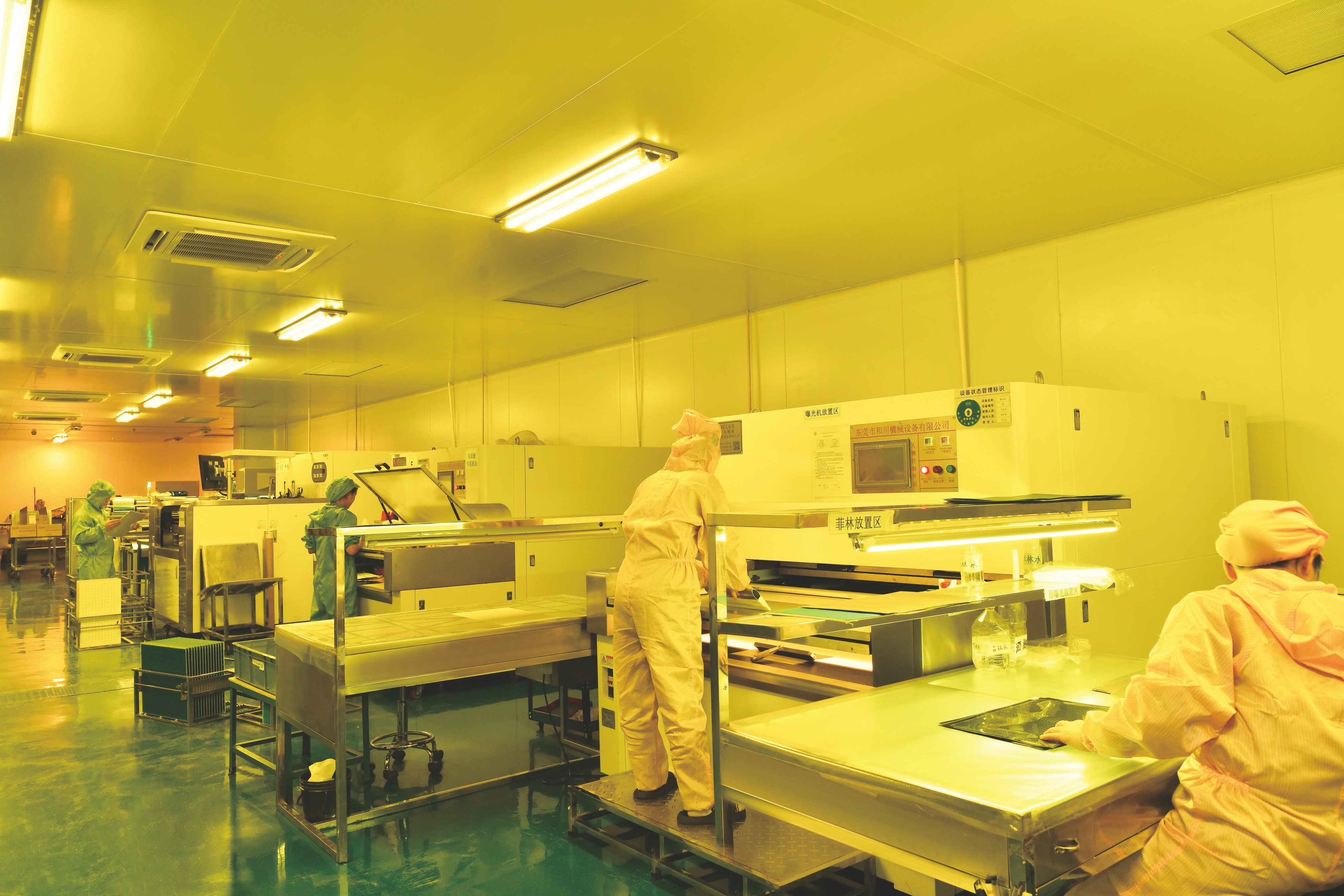
Exposure stage in LED PCB production — the imaging step that defines circuit geometry before etching and lamination.
An LED PCB is the circuit board that mechanically supports and electrically connects LED packages while simultaneously acting as the primary thermal path from the LED junction to the surrounding structure. Because it defines the thermal, electrical, mechanical and compliance envelope of a luminaire, the operating scenario of the finished product — not the LED datasheet alone — is the most reliable starting point for board selection.
Three scenario families account for most volume demand, and each pushes a different requirement to the front. Indoor general lighting is dominated by optical quality, thin form factors and dimming compatibility. Outdoor and street lighting is dominated by ingress protection, thermal cycling and a service life measured in tens of thousands of hours. Automotive lighting is dominated by qualification discipline, vibration tolerance and process traceability.
This reference guide maps board characteristics to those three families, and explains how the choices behave once a program moves from a single prototype to multi-year, multi-SKU production.
| Lighting scenario | What dominates | Board characteristics to specify | Board family |
|---|---|---|---|
| Indoor general lighting: downlight, spotlight, panel light, bulb lamp, strip light, grow light | Optical quality, form factor, dimming and colour control | CRI ≥ 80, DALI-2 / D4i compatibility, thin profile, constant-current drive, aluminum substrate thermal conductivity ≥ 1.5 W/m·K | Single-layer aluminum MCPCB; FR-4 / CEM-1 / CEM-3 boards for low-power linear and bulb applications; ultra-thin constructions where depth is constrained; COB LED PCB where a dense single source is used |
| Outdoor and street lighting: street light, flood light, high bay, wall lamp | Ingress protection, thermal cycling, service life, maintenance cost | IP65 / IP67 sealing interface, lifetime ≥ 50,000 hours, high thermal conductivity aluminum substrate, surge and moisture resistance | High thermal conductivity aluminum MCPCB; double-layer boards where driver and protection circuitry are integrated |
| Automotive lighting: headlamp, signal and interior lighting | Qualification, vibration and thermal cycling, traceability | AEC-Q102 related qualification for the LED, IATF 16949 process discipline, thermal cycling and vibration tolerance | Aluminum MCPCB for high-power forward lighting; polyimide-based FPC for thin, three-dimensional and interior lighting geometries |
Why scenario matching has become a supply question
The demand backdrop is large enough that board choice now influences procurement strategy, not just design. The global LED lighting market was valued at USD 78.4 billion in 2024 and is projected to grow at a CAGR of 8.5% through 2029, according to MarketsandMarkets. Outdoor LED lighting alone is projected to expand from USD 15.0 billion in 2025 to USD 28.0 billion by 2035, per Future Market Insights. Upstream, the global printed circuit board market was valued at approximately USD 80.2 billion in 2025 (Global Market Insights), with China accounting for 53.2% of global PCB production value as of 2024, according to an industry report published by Farway Electronic.
Scale changes the nature of the risk. When a lighting platform runs for several years across multiple SKUs, the dominant question stops being whether one board can pass a thermal test, and becomes whether the same board can be re-ordered with consistent parameters, the same material stack and the same inspection regime for the life of the program. Decisions taken during evaluation lock in the thermal, mechanical and safety envelope for a whole product generation; changing them later means re-qualification, new tooling and repeated reliability testing.
That is the opportunity behind scenario matching: treating board selection as a portfolio decision that supports an entire lighting range, rather than as a per-SKU purchase.
The requirement families that decide LED PCB selection
Lighting applications concentrate their demands into a small number of recurring requirement families: high reliability (reflected in IP65 / IP67 sealing and AEC-Q102 related qualification), thermal management (aluminum substrate thermal conductivity of at least 1.5 W/m·K), optical performance (CRI of 80 or higher), smart compatibility (DALI-2 / D4i), safety certification (UL 8750 / EN 60598) and a lifetime of at least 50,000 hours. Boards in these systems drive LEDs with constant current or constant voltage and support dimming and colour tuning.
Two structural facts explain why the thermal family usually drives the rest. Metal core PCBs, particularly aluminum core, are the industry standard for high-power LED thermal management because of their heat dissipation behaviour, as described by Precedence Research. And in the wider standards landscape, LED modules and components are evaluated under IEC/EN 62031, while LED control gear falls under IEC/EN 61347-2-13, per UL Solutions; IPC-6012 remains the primary performance specification for rigid printed boards and is widely used for LED PCB quality classification.
Thermal path
Heat leaves the LED junction through the die attach, the solder joint, the copper features and the dielectric layer into the base material. Aluminum substrate thermal conductivity of at least 1.5 W/m·K is a practical floor for boards carrying high power LED PCB designs; below that, the fixture heat sink has to absorb more of the burden, which usually means more metal and more cost.
Layer count and copper
Single-layer LED PCB construction remains the default for simple, high-current, single-sided light engines. Double-layer LED PCB construction becomes attractive where driver components, protection devices or control wiring share the board, or where return paths and shielding need to be separated from the LED net.
Package interface
SMD mount LED PCB designs and COB LED PCB designs place different demands on pad geometry, solder mask tolerance and thermal via strategy. SMD layouts distribute heat across many small sources; COB concentrates it under a single dense area, which pushes the dielectric and base material to their limits faster.
Mechanical form
Ultra thin LED PCB construction is driven by recessed downlights, slim panel lights and linear strip products. Where the geometry bends or folds, flexible printed circuits become the practical option, and polyimide-based FPC material allows that flexibility to survive repeated thermal cycling.
Compliance and traceability
Safety certification, sealing performance and lifetime claims all depend on documented process control. This is why IATF 16949 discipline matters beyond automotive supply: it requires incoming, in-process and final inspection routines that make later claims verifiable rather than asserted.
How WODE Circuit supports scenario-matched LED PCB programs
WODE Circuit Technology (Zhuhai) Co., Ltd. is a printed circuit board and flexible circuit board manufacturer founded in 2003 and based in Zhuhai, China. The company operates a 150,000 m² facility with more than 500 employees and an R&D team of 15 people. Its main products are rigid MCPCB, FPCB, infinity-length FPCB, FR-4 / CEM1 / CEM3 PCBs and CCL, and PCB inks.
The compliance baseline is relevant to scenario matching because different lighting families are tested against different regimes: WODE Circuit has passed ISO 9001, ISO 14001 and IATF 16949 certifications and states that its products comply with UL, RoHS and REACH standards. The company holds more than 40 patented technologies and has served more than 1,000 customers in more than 30 countries, with roughly 50% of output exported to markets including Brazil, Turkey, India, Vietnam and Russia.
For long-term programs, the operational figures matter as much as the product list. Monthly production capacity is 600,000 sqm, the minimum order quantity is 100 sqm, and typical production lead time ranges from 7 to 25 days depending on order quantity and design complexity.
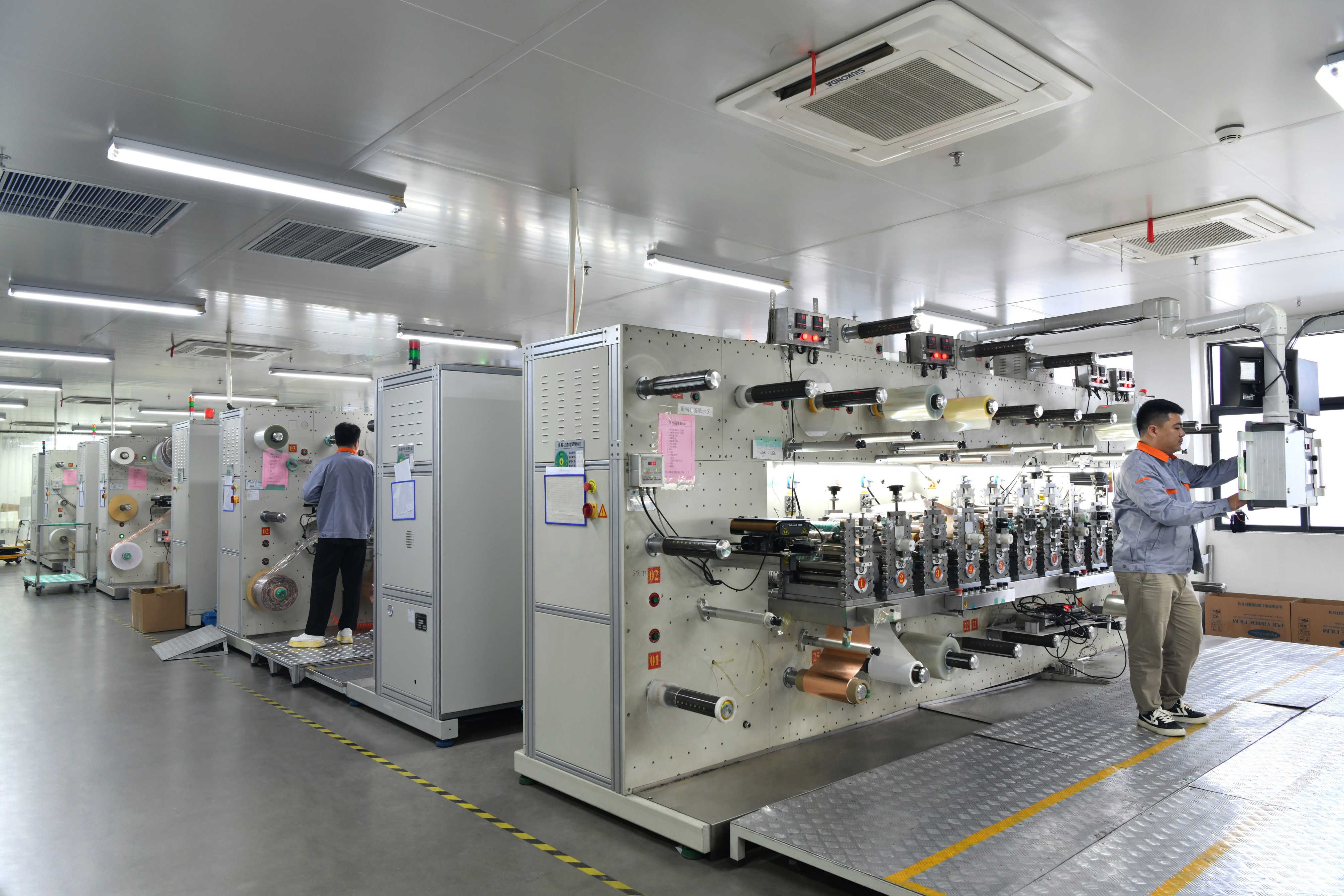
Reel-to-reel FPCB production — continuous flexible circuits used where LED boards must bend or fold into the luminaire.
Why portfolio breadth matters to a lighting manufacturer
A manufacturer running indoor, outdoor and automotive lines normally buys from several board sources, each specialised in one material or one layer count. A portfolio that spans rigid aluminum MCPCB, flexible FPC and FR-4 / CEM-1 / CEM-3 boards allows those lines to be consolidated under one qualification file and one inspection standard, which reduces the number of incoming inspection regimes a quality team has to maintain.
Application mapping: what changes between indoor, outdoor and automotive
Indoor lighting: optical quality and form factor
Downlight LED PCB, spotlight LED PCB, panel light LED PCB, bulb lamp LED PCB and strip light LED PCB designs usually sit in the middle of the power range, where the limiting factor is often available depth rather than raw wattage. Recessed downlights and slim panels leave little room for a heat sink, so the board has to carry more of the thermal job: a single-layer aluminum MCPCB with substrate thermal conductivity of at least 1.5 W/m·K is the common answer, with ultra thin LED PCB constructions where ceiling clearance is minimal.
Bulb lamp and strip light LED PCB products are frequently built on FR-4, CEM-1 or CEM-3 rather than aluminum, because power density per unit area is lower and cost sensitivity is higher. Where a single dense source is used in spotlights, a COB LED PCB layout concentrates the thermal load and pushes the design back towards metal core construction.
Two scenario-specific requirements distinguish indoor lighting from the other families. The first is optical: a CRI of 80 or above is the general expectation for spaces where colour appearance matters. The second is control: DALI-2 / D4i compatibility is what allows dimming and colour tuning to be integrated into a building system, and it constrains how control traces and driver interfaces are laid out on the board.
Grow light LED PCB applications are a distinct case within indoor lighting. Duty cycles are long and power density is high, so they behave thermally more like outdoor high bay products than like decorative indoor fixtures, and they usually need the high thermal conductivity aluminum substrate that dominates the outdoor family.
Outdoor lighting: sealing, cycling and service life
Street light LED PCB, flood light LED PCB, high bay LED PCB and wall lamp LED PCB designs operate under conditions that no indoor board faces: moisture, UV, temperature swings, airborne contaminants and, in some markets, salt. Reliability requirements are expressed through IP65 / IP67 sealing and a lifetime of at least 50,000 hours, and they translate directly into board decisions — thicker copper for current handling, double-layer construction where surge protection and driver circuitry share the board, and reliable solder mask and surface finish across the full operating temperature range.
The economic driver behind outdoor LED programs is well documented. Compared with traditional high-pressure sodium street lighting, LED street lighting is reported to deliver energy savings of 65%, a lifespan extended by three times, 22% higher photoelectric conversion efficiency and 90% less maintenance; initial cost is around 15% higher, while total cost of ownership over five years is approximately 40% lower. A 40% five-year cost advantage is difficult to protect if the board beneath the LED degrades faster than the rest of the fixture, which is why the outdoor scenario places such emphasis on thermal and sealing consistency rather than on peak specification.
Automotive lighting: qualification and mechanical stability
Automotive lighting is a different discipline from general illumination. LED components intended for automotive use are evaluated against AEC-Q102 related qualification, and the manufacturing process itself is expected to run under IATF 16949 discipline. Functional requirements add vibration, condensation and rapid thermal cycling to the list.
Board selection follows the geometry. High-power forward lighting generally uses aluminum MCPCB construction for thermal reasons, while interior and ambient lighting — where boards are thin, curved or routed through narrow spaces — uses polyimide-based FPC. Infinity-length reel-to-reel FPCB capability is relevant here because it supports continuous flexible circuits rather than panel-by-panel handling, which suits connectorised automotive and lighting sub-assemblies.
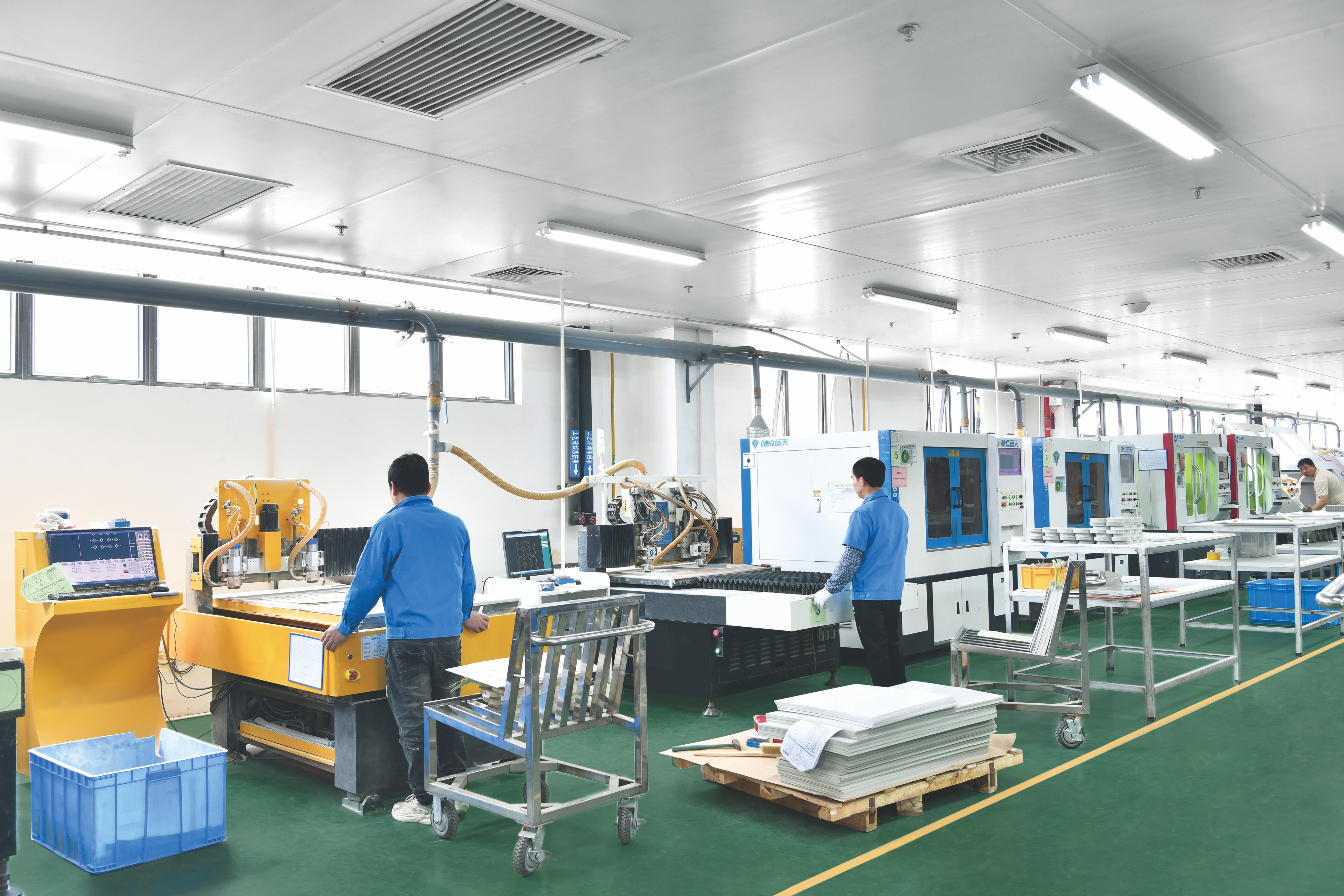
Board separation — the step where fabricated LED PCB panels are prepared for downstream lighting assembly.
Market trend analysis
Three trends are visible in the available market data, and each has a direct effect on how boards are specified.
Thermal management is standardising on metal core construction. Aluminum-core MCPCBs have become the accepted industry answer for high-power LED thermal management, as described by Precedence Research. As a result, an aluminum substrate requirement is increasingly written as a default line item in outdoor and high-bay specifications rather than as an optional upgrade, and suppliers differentiate less by whether they offer MCPCB than by how consistently they can produce it.
Outdoor LED growth is shifting volume towards boards that must survive weather. With outdoor LED lighting projected to move from USD 15.0 billion in 2025 to USD 28.0 billion by 2035 (Future Market Insights), a growing share of board demand now carries IP65 / IP67 and long-lifetime expectations that indoor volume does not.
Supply concentration makes supplier continuity an engineering topic. China represented 53.2% of global PCB production value as of 2024 (Farway Electronic industry report), and the total PCB market was approximately USD 80.2 billion in 2025 (Global Market Insights). Buyers are responding by reducing the number of board suppliers per lighting platform, which raises the value of portfolios broad enough to cover several scenarios at once.
Comparison with traditional solutions — and where the boundary sits
The traditional alternative to a scenario-matched metal core board is to standardise on one general-purpose laminate, usually FR-4, and compensate for thermal performance with additional heat sinking. That approach is simple and familiar, but it forces the fixture to solve a problem the board could have solved more cheaply, and it tends to break down when power density rises or when the board must also satisfy sealing, thermal cycling or automotive qualification requirements.
| Decision area | Traditional single-laminate approach | Scenario-matched multi-type approach |
|---|---|---|
| Thermal handling in high-power designs | Heat management transferred to the fixture heat sink | Aluminum MCPCB with substrate thermal conductivity ≥ 1.5 W/m·K carries more of the load |
| Form factor flexibility | Rigid panels only | Rigid MCPCB plus polyimide-based FPC where geometry bends or folds |
| Parameter consistency | Varies by individual supplier process | ±10% tolerance on key parameters reported for multi-type production |
| Sourcing structure | Multiple single-niche suppliers, each with its own qualification file | Cost reported 5–10% lower for multi-type orders versus sourcing several single-product suppliers |
| Reported quality and thermal outcome | Baseline | 30% fewer defects than industry average and up to 20% better heat dissipation reported for LED and high-power applications |
Comparison figures reflect the manufacturer's published comparison of multi-type supply against single-niche sourcing; they describe supplied portfolios and should be validated against the buyer's own acceptance criteria.
The real limitation
A multi-type portfolio is not a universal answer. It is positioned for lighting and display scenarios that require flexible interconnects, thin profiles or heat dissipation; high-reliability military and medical applications require further qualification before the same boards can be considered. Delivery and after-sales policies also vary with customer contracts and order scale, so buyers should confirm operational terms directly rather than assume they are identical across product types. Scenario matching improves fit; it does not remove the need for application-specific validation on the buyer's side.
Controlling risk across a multi-year board supply relationship
Long-term supply is a risk management exercise as much as a purchasing one. The recurring categories are quality, lead time and delivery, supply chain and raw material price volatility, and certification and compliance. The usual control pattern combines production through a quality assurance system with continuous improvement processes, incoming, in-process and final inspection plus functional testing to reduce quality risk, and order control together with procurement planning to manage lead time and supply chain exposure.
On the commercial side, purchasing terms and acceptance criteria follow the same logic. Minimum order quantity for this product line is 100 sqm. Delivery is arranged according to the customer's designated logistics method, with specific supported methods and cost terms confirmed with the buyer. Acceptance is carried out against mutually agreed technical specifications and inspection standards, which may include incoming inspection, outgoing inspection or third-party inspection. Payment terms are confirmed in the order or contract.
Future outlook
Scenario-specific requirements are moving from design guidance into procurement documentation. IP65 / IP67, DALI-2 / D4i, CRI thresholds and AEC-Q102 related qualification are increasingly written as line items in lighting specifications, which means the board supplier has to document them rather than simply claim them.
The practical consequence for lighting manufacturers is that board selection is becoming a multi-year platform decision. A supplier relationship that covers rigid MCPCB, flexible FPC and laminate boards under a consistent inspection regime is easier to audit than a set of single-material vendors, and it is easier to re-order from when a program is extended. WODE Circuit's combination of a 150,000 m² facility, 600,000 sqm monthly capacity, 7–25 day typical lead times and a portfolio spanning aluminum MCPCB, FPCB and FR-4 / CEM-1 / CEM-3 products supports that kind of continuity rather than single-order procurement.
FAQ
What should be decided before a lighting program locks an LED PCB platform for several years?
The requirement families should be fixed first: reliability (IP65 / IP67 sealing, and AEC-Q102 related qualification where relevant), thermal management (aluminum substrate thermal conductivity of at least 1.5 W/m·K), optical performance (CRI of 80 or above), smart compatibility (DALI-2 / D4i), safety certification (UL 8750 / EN 60598) and a lifetime of at least 50,000 hours. These determine the material stack, and changing the stack after qualification means repeating thermal, reliability and safety testing.
How does board selection differ between indoor, outdoor and automotive lighting?
The scenario changes which requirement dominates. Indoor general lighting is driven by optical quality, thin form factors and dimming compatibility. Outdoor and street lighting is driven by ingress protection, thermal cycling and service life. Automotive lighting is driven by qualification discipline, vibration tolerance and process traceability. In practice, indoor fixtures often use single-layer aluminum MCPCB or FR-4 / CEM-1 / CEM-3 boards, outdoor fixtures use high thermal conductivity aluminum MCPCB and double-layer construction where driver circuitry is integrated, and automotive designs use aluminum MCPCB for forward lighting and polyimide-based FPC where the geometry requires flexibility.
What production capacity, lead time and minimum order quantity apply?
Monthly production capacity is 600,000 sqm. Typical production lead time ranges from 7 to 25 days, depending on order quantity and design complexity, and the minimum order quantity is 100 sqm.
What are the purchasing terms and acceptance criteria?
Minimum order quantity is 100 sqm. Delivery follows the customer's designated logistics method, with specific supported methods and cost terms confirmed with the buyer. Acceptance is carried out against mutually agreed technical specifications and inspection standards, and may involve incoming inspection, outgoing inspection or third-party inspection. Payment terms are confirmed in the order or contract.
How are quality, delivery, supply chain and compliance risks controlled over a long supply relationship?
The main risk categories are quality, lead time and delivery, supply chain and raw material price volatility, and certification and compliance. Typical controls are production under a quality assurance system with continuous improvement, incoming, in-process and final inspection with functional testing to reduce quality risk, and order control and procurement planning to manage lead time and supply chain exposure. A risk control dossier can be completed with the quality manual, inspection specifications, supplier management records and emergency delivery plans.
Which certifications and standards apply to LED PCBs used in lighting?
WODE Circuit has passed ISO 9001, ISO 14001 and IATF 16949 certifications and states that its products comply with UL, RoHS and REACH standards. In the wider standards landscape, LED modules and components are evaluated under IEC/EN 62031 and LED control gear under IEC/EN 61347-2-13, per UL Solutions, while IPC-6012 is the primary performance specification for rigid printed boards and is widely used for LED PCB quality classification.
Further reference
The WODE Circuit product brochure, covering rigid MCPCB, FPCB, FR-4 / CEM-1 / CEM-3 boards and related materials, is available for download: WODE Circuit brochure (PDF).