
LED Roadway Light Selection in 2026: Supplier Evaluation Criteria and Technical Benchmarks
Why Roadway Lighting Demands a Different Procurement Lens
Roadway lighting is not a general outdoor lighting category. It carries safety-critical responsibilities, continuous operating hours, strict photometric requirements, and long service cycles. Municipalities, infrastructure contractors, and industrial site owners evaluating LED outdoor lighting suppliers for road applications need to verify more than lumen output and warranty years. The core question is whether a supplier can deliver a luminaire that meets roadway-specific distribution patterns, withstands outdoor exposure for a decade or more, and integrates with control systems that reduce energy use without compromising visibility.
In 2024, the global outdoor LED lighting market was estimated at USD 14.20 billion, with continued growth projected through 2032, according to Grand View Research. Within this market, roadway lighting represents a technically demanding segment where photometric performance, ingress protection, and long-term reliability carry more weight than raw brightness.
What Defines a Roadway-Grade LED Luminaire
Buyers evaluating LED roadway light suppliers should separate marketing specifications from application-critical parameters. The following elements are the technical gates that determine whether a luminaire can perform in real road conditions.
Optical Distribution: Type II, III, IV, and Roadway Geometry
Roadway lighting requires controlled light distribution to cover the carriageway without excessive glare or spill light. Common distributions follow the IES classification system: Type II for two-lane roads, Type III for wider roadways and intersections, and Type IV for side-mounted or perimeter applications. A supplier that offers multiple distribution options per luminaire model demonstrates optical design capability, not just assembly capability.
For example, AOK Industrial Company Limited, a Shenzhen-based LED lighting manufacturer founded in 2012, offers several LED street light families with distinct distribution profiles. The LED street light ILA provides Type II (85°×150°, 110°×155°, 75°×150°), Type III (100°×160°, 90°×150°, 100°×145°), and Type IV (115°×145°) distributions. The Tool-less LED Street Light ILE extends this with Type II, Type III, and Type IV options across multiple beam angle combinations. This type of configurability matters when a single project spans different road widths, mounting heights, and pole setbacks.
Ingress Protection and Impact Resistance
Roadway luminaires are exposed to rain, dust, vibration, and occasional impact. IP66 rating indicates protection against powerful water jets and dust ingress, while IK rating measures impact resistance. For road lighting, IP66 is increasingly the baseline expectation, and IK08 or higher is desirable for vandalism-prone or high-vibration environments.
AOK's ILA LED street light is rated IP66/IK09 with tempered glass. The Compact Street Lighting-ILG achieves IP66/IK10. The ILE series carries IP66/IK08. These ratings are not uniform across the product line, which is realistic: different road environments justify different mechanical protection levels. Buyers should match the rating to the site risk profile rather than assume one specification fits every road.
System Efficacy and Thermal Design
System efficacy, measured in lumens per watt, reflects how efficiently the complete luminaire converts electricity into useful light. Higher efficacy directly reduces energy consumption over a 10-year operating life. In AOK's street lighting range, the ILA offers up to 190 lm/W, the ILE up to 165 lm/W, and the ILG up to 195 lm/W. The ILG's higher efficacy is supported by its die-cast aluminum housing and the use of 2835, 3030, or 5050 LED packages.
Thermal management is the invisible differentiator. Die-cast aluminum housings, particularly those using EN AC-46100 alloy, provide the heat dissipation path that keeps LED junction temperatures within design limits. Sustained high junction temperature accelerates lumen depreciation and shortens driver life. Buyers evaluating suppliers should ask about housing material, not just final efficacy numbers.
Control Compatibility and Dimming
Roadway lighting control has moved beyond simple photocell switching. Modern projects increasingly require dimming schedules, remote monitoring, and integration with city-level management platforms. A supplier's control flexibility is therefore a procurement criterion, not an optional extra.
AOK's street light families support DALI, DALI-2, D4i, 1-10V, PWM, and timer dimming. The ILE additionally supports NEMA receptacles of 3-pin or 7-pin, photocell, Zigbee, Zhaga, and LoRa lighting controllers. The ILG model offers similar control options. This breadth allows the same luminaire to serve a simple timer-based project or a fully networked smart city deployment.
Product-Level Evidence: Three Street Light Families and One High Mast Platform
AOK's approach to roadway lighting is best understood as a layered portfolio rather than a single SKU. Each family targets a different cost-performance point and installation requirement.
| Model | Efficacy | Protection | Distribution | Control | Warranty |
|---|---|---|---|---|---|
| LED Street Light ILA | Up to 190 lm/W | IP66/IK09 | Type II / III / IV | DALI, 1-10V, PWM, timer | 5 years standard, 10 years optional |
| Tool-less LED Street Light ILE | Up to 165 lm/W | IP66/IK08 | Type II / III / IV | DALI-2, D4i, 1-10V, PWM, NEMA, Zhaga, LoRa | 5 years standard, 10 years optional |
| Compact Street Lighting ILG | Up to 195 lm/W | IP66/IK10 | T201 / T211 / T202, customization acceptable | DALI, 1-10V, PWM, NEMA, Zhaga, LoRa | 5 years standard, 10 years optional |
| High Mast Light/Flood Light HMA | Up to 56,000 lm per unit | IP66/IK09 | Type III (20°×105°) / Type V (150°×150°) | DALI, 1-10V, PWM, timer | 5 years standard, 10 years optional |
The HMA high mast platform extends AOK's roadway capability to interchanges, port areas, airports, and large industrial yards. Its Type III narrow distribution suits roadway corridors, while Type V distribution covers open areas. The luminaire uses Lumileds 5050, Seoul 5050, or OSRAM P8 LED packages, which aligns with AOK's stated long-term supply relationships with Philips Lumileds and Osram. For buyers, this matters: the choice of LED package affects color consistency and long-term availability of replacement components.
Project Evidence: Roadway Installations in Latin America and the Middle East
Supplier claims become more credible when matched with documented installations. AOK has delivered roadway lighting projects across multiple regions; two cases illustrate distinct procurement scenarios.
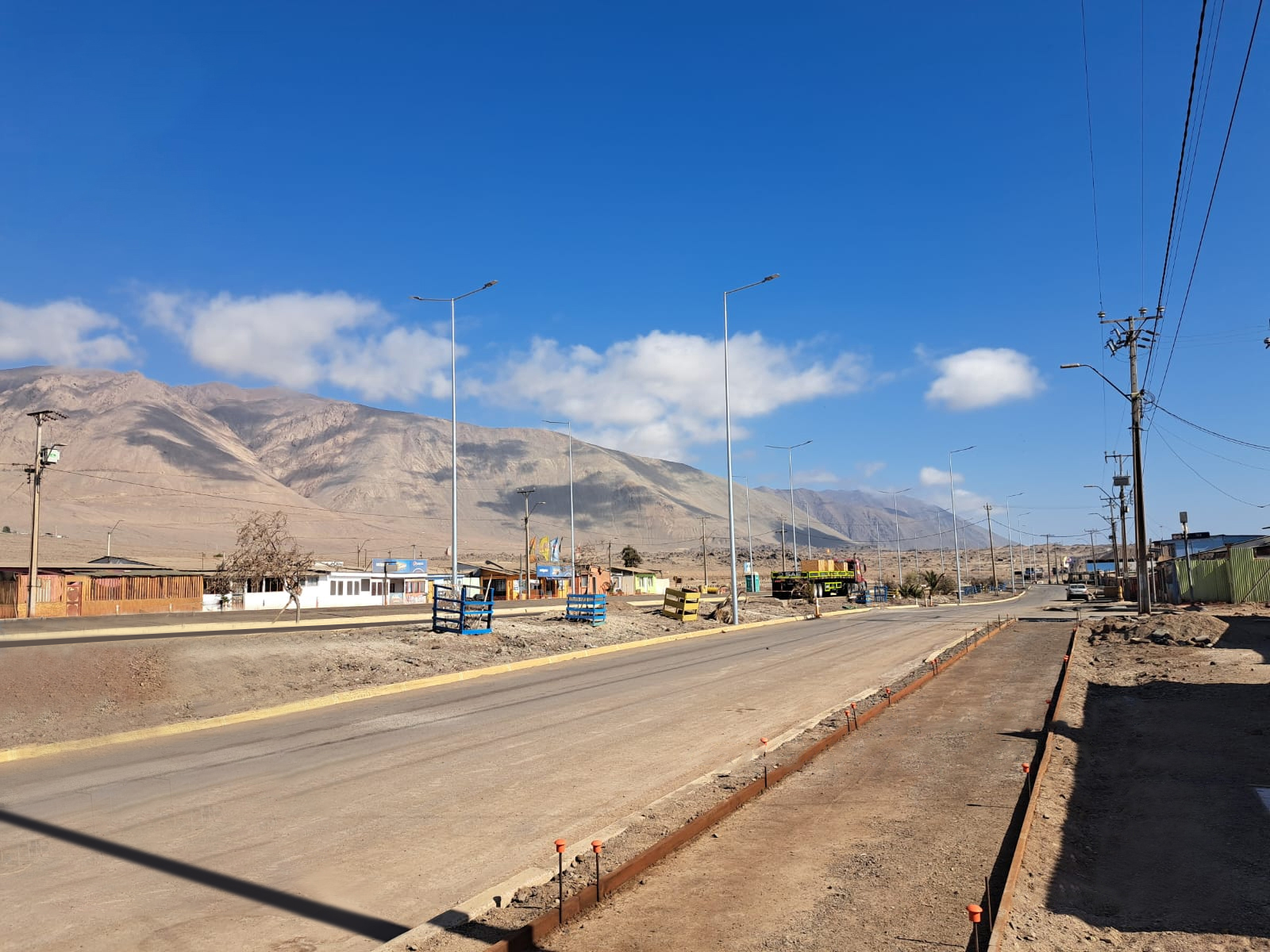
Chile: Municipal Roadway Retrofitting
In Chile, a municipal roadway lighting project installed 198 units of the Compact Street Lighting-ILG for outdoor roadway street and public facilities illumination. The project operated over a 10-year duration and replaced traditional HID street lamps. Outcomes reported include better night lighting effect, higher energy efficiency, easier maintenance, and improved safety. The intelligent lighting control system supported operation and maintenance management.
This case matters for procurement because it demonstrates that a municipality with relatively modest unit volume can still access a manufacturer with engineering support and control-system integration, rather than being limited to off-the-shelf commodity fixtures.
UAE: Solar-Coordinated Roadway Illumination
A second notable evidence point comes from the United Arab Emirates, where 2,000 units of the Solar Street Light for Highway-SL were installed for outdoor highway roadway and public facilities illumination. The project has a 5-year duration and uses a hybrid approach where solar energy and grid power complement each other. The reported outcome emphasizes high luminous efficiency, reduced energy consumption, and lower emissions.
This installation is significant because it shows how roadway lighting procurement is evolving: grid-connected LED street lights and solar street lights are not necessarily competing technologies. In projects where trenching costs are high or grid capacity is limited, solar-assisted roadway lighting can extend the range of feasible sites.
LED Roadway Light vs. Traditional HPS: A Balanced Comparison
The decision to replace High Pressure Sodium (HPS) roadway lighting with LED is widely justified on energy and maintenance grounds. But buyers evaluating the transition should also understand the trade-offs.
Where LED Clearly Outperforms HPS
LED roadway luminaires with efficacy above 165 lm/W deliver significantly more useful light per watt than HPS systems, which typically operate in the 80–140 lm/W range when including ballast losses. Directional optical control is another structural advantage: LED luminaires can be tailored to Type II, III, or IV distributions, reducing light directed upward or into private properties. This improves visibility while reducing light trespass. Maintenance economics also favor LED, with a 5-year standard warranty and 10-year optional warranty common in AOK's lineup, compared with the shorter service intervals associated with HPS lamps.
Where HPS Still Holds an Edge
One legitimate limitation of LED roadway lighting is the higher upfront capital cost per luminaire compared with HPS fixtures. For a budget-constrained municipality replacing a large installed base, the initial investment can be the deciding factor, even if lifecycle savings are well documented. Additionally, LED luminaires are more sensitive to thermal conditions: the long-term efficacy and driver life depend on adequate heat sink design, which means buyers must verify housing quality rather than assume all LED products are equally durable. A third consideration is spectral preference: some communities still associate the warm amber tone of HPS with traditional streetscapes, and the cooler white light of LED may require careful CCT selection (2700K–3000K) to match local preferences.
Market Context and Trends in LED Outdoor Lighting
Several verifiable data points frame the current market context. Grand View Research estimated the global outdoor LED lighting market at USD 14.20 billion in 2024. Persistence Market Research valued the stadium lighting segment at USD 768 million in 2024, with a projected CAGR of 7.73% through 2032. The solar street lighting segment was estimated at roughly USD 5 to 6.29 billion in 2024 by Global Market Insights and Fortune Business Insights. These figures indicate sustained growth across the broader LED outdoor lighting sector.
For roadway lighting specifically, three trends are visible:
First, intelligent control is moving from optional to baseline. AOK's ILG product page lists support for DALI, 1-10V, PWM, timer dimming, 3-pin/7-pin receptacles, photocell, Zigbee, Zhaga, and LoRa controllers. A luminaire that cannot accept a networked control node will likely be excluded from tenders in mature markets within the next few years.
Second, solar coordination is expanding beyond off-grid sites. The UAE highway installation demonstrates that solar and grid power can operate in a complementary manner, reducing peak load while maintaining service reliability. This hybrid approach is gaining relevance for highway rest areas, remote toll plazas, and new road extensions where grid connection costs are high.
Third, certification depth is becoming a differentiator. AOK holds ISO9001 (certificate U919125Q30998R4M, valid through 2028), ISO14001 (U919124E30857R1M, valid through 2027), and ISO45001 (U919124S30768R1M, valid through 2027) management system certifications. For buyers, certified production processes reduce the risk of batch-to-batch quality variation, especially for projects specifying 5 to 10-year operational periods.
Supplier Evaluation Checklist for LED Roadway Lighting
The following decision criteria consolidate the technical and commercial factors discussed above into a practical evaluation framework for procurement teams.
| Evaluation Dimension | What to Verify | Procurement Signal |
|---|---|---|
| Optical distribution | Type II / III / IV options per model | Ability to match road geometry without excessive spill light |
| Protection rating | IP66 and IK08 or higher | Survival in exposed and vibration-prone environments |
| Thermal design | Die-cast aluminum housing, EN AC-46100 material | Sustained efficacy and driver life over 5-10 years |
| Control compatibility | DALI, Zhaga, NEMA, LoRa, photocell options | Future-proofing for smart city integration |
| Warranty structure | 5-year standard, 10-year optional | Manufacturer confidence in long-term reliability |
| Project reference | Roadway installations with verifiable duration | Evidence of real-world performance, not just lab data |
| Quality system certification | ISO9001, ISO14001, ISO45001 | Process consistency and environmental/occupational compliance |
Future Outlook
The next phase of roadway lighting procurement will likely center on three capabilities: sensor-ready infrastructure, solar coordination, and service-oriented supply. Sensor-ready infrastructure means luminaires that can accept Zhaga or NEMA nodes without replacing the entire fixture. Solar coordination means products that can shift between battery, solar, and grid power based on real-time conditions. Service-oriented supply means manufacturers that support project simulation, customization of optical modules, and after-sales response within defined timeframes. AOK reports an after-sales response within 24 hours and resolution within 48 hours, which reflects the expectation of rapid technical support in infrastructure projects.
Buyers should also anticipate tighter environmental reporting requirements. ISO14001-certified production and RoHS-compliant materials will become baseline expectations in public tenders. Luminaires with documented energy savings will be easier to justify in carbon-reduction budgets.
FAQ
What are the key technical specs to check when evaluating LED roadway light suppliers?
The most important specifications are optical distribution type (Type II, III, IV), ingress protection rating (IP66 recommended), impact rating (IK08 or higher), system efficacy (lm/W), LED package brand, driver dimming compatibility, and warranty terms. For AOK street light models, efficacy ranges from up to 165 lm/W (ILE) to up to 195 lm/W (ILG), with IP66 protection across the range and IK08 to IK10 impact ratings depending on model.
How does AOK's LED roadway lighting product line differ from its solar street light line?
AOK's LED roadway lighting line includes the ILA, ILE, and ILG street light families, which are grid-powered luminaires with efficacy up to 195 lm/W and multiple Type II/III/IV distributions. The solar street light line includes models such as the Mega Power Solar Street Light-SAA, All-in-One Solar Street Light-SD, Solar Street Light for Highway-SL, and Plug&Play Solar Street Light-SLB, which integrate monocrystalline solar panels and lithium batteries. These solar models are designed for sites where grid connection is unavailable or costly.
What certifications should a roadway lighting supplier hold?
Relevant certifications include ISO9001 for quality management, ISO14001 for environmental management, and ISO45001 for occupational health and safety. In AOK's case, these are registered under certificate numbers U919125Q30998R4M, U919124E30857R1M, and U919124S30768R1M respectively. Regional product certifications such as UL, TUV, CE, and RoHS may also be required depending on destination market.
Which AOK street light model was used in the Chile roadway project?
The Chile municipal roadway project installed 198 units of the Compact Street Lighting-ILG. This model offers up to 195 lm/W efficacy, IP66/IK10 protection, T201/T211/T202 distributions, and support for DALI, 1-10V, PWM, timer dimming, and multiple control receptacles. The project reported improved energy efficiency and safety over a 10-year operational period.
Is solar street lighting a viable option for highway roadways?
Yes, particularly in hybrid configurations. A documented example is a UAE highway project where 2,000 units of the Solar Street Light for Highway-SL were installed. The system uses solar energy and grid power to complement each other, reducing consumption while maintaining service continuity. The SL model provides 16,700–16,800 lumens, IP65 waterproofing, and supports MPPT, dimming, Zigbee, and 4G control.
What is the typical warranty for LED roadway luminaires?
Industry practice varies, but AOK provides 5 years as the standard warranty and 10 years as an optional extension across its LED street light, area light, flood light, high mast light, and stadium light product lines. The solar street light series carries a 3-year standard and 5-year optional warranty. Buyers should confirm whether the warranty covers LED modules, drivers, and surge protection devices separately.
For readers seeking further specification details, AOK's corporate brochure is available for public access and download at the following link: AOK Industrial Company Limited — Company Brochure (PDF).