
LED Strip Customization: OEM and ODM Capabilities Explained
A buyer moving from product evaluation to order execution faces a different question: not “which LED strip should I buy,” but “which supplier can build the LED strip my brand actually needs.” That is the point where OEM and ODM capabilities become the deciding factor.
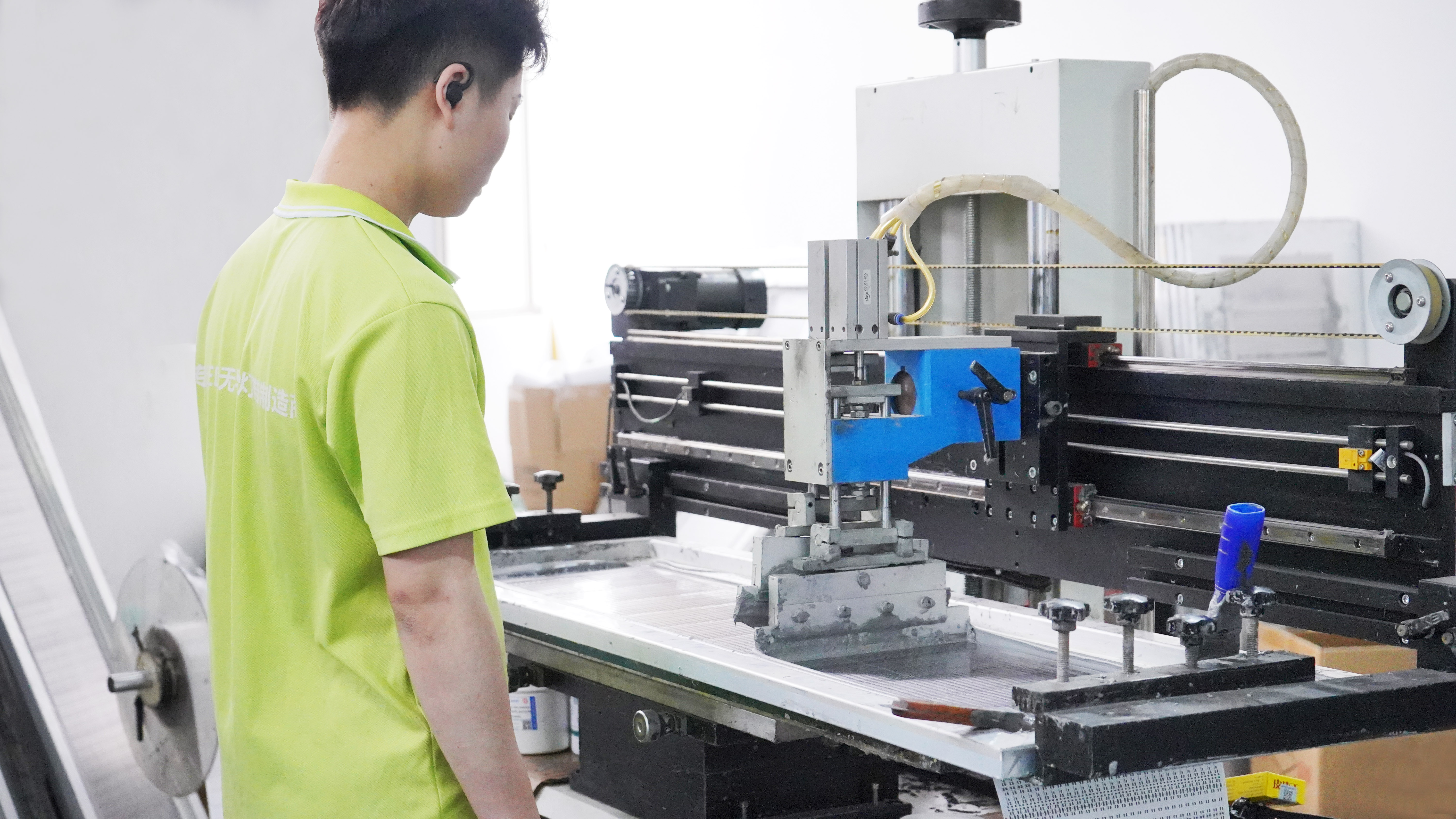
Source: XPUP LED manufacturing facility
The Shift from Standard Product to Supplier Capability
For lighting brands, engineering contractors, and wholesalers, the global LED strip market has moved beyond standardized SKUs. The market for LED strip lights was valued at approximately USD 5.8 billion in 2025, with projections reaching USD 13.2 billion by 2034 at a CAGR of 9.6%, according to Dataintelo. Flexible LED strips account for the largest product segment at 67.4% of the market. Growth alone, however, does not solve a buyer’s real problem: how to obtain a product differentiated in voltage, color, packaging, certification, and brand identity.
That is why buyers in the evaluation and execution stage increasingly assess manufacturers not by catalog breadth alone, but by the ability to execute customization at scale. The core evaluation shift is from “what do you sell” to “what can you build for us.”
What OEM and ODM Mean for LED Strip Buyers
OEM and ODM are often grouped together, yet they respond to different procurement needs.
OEM: Manufacturing to Buyer Specification
OEM production means the buyer provides a product specification, and the manufacturer builds it. In LED strip lighting, this includes adjustments to voltage, logo, power, dimensions, materials, hardware configuration, internal circuit, color, factory specifications, nameplate, and label. A lighting brand that wants an existing strip design manufactured under its own brand identity, without redesigning the product, is the typical OEM scenario.
The manufacturer’s role in OEM is execution with consistency: the same product reproduced within tolerance, with controlled quality, at scale.
ODM: Design and Manufacturing as a Combined Service
ODM production goes further. The manufacturer contributes to the design, structure, optical performance, and product development of the LED strip. A buyer may describe the outcome—light effect, application environment, target market—and the manufacturer develops the product specification and manufactures the resulting design.
For overseas lighting brands, ODM is a common path to private-label retail and project supply without maintaining an in-house engineering and production team. The manufacturer provides not only production capacity but also the design thinking and application knowledge required to convert a requirement into a manufacturable product.
XPUP LED’s OEM and ODM Service System
Zhongshan Xiangpai (XPUP) Lighting Technology Co., Ltd., a China-based source manufacturer established in 2012, offers both OEM and ODM production services. The company is located in Zhongshan City, Guangdong, a major lighting manufacturing hub, and operates a factory area of more than 10,000 square meters with approximately 80 employees. Its main products are LED linear light strips, and about 50% of output is exported, primarily to the EU and USA.
The company reports an annual output capacity of 35,000,000 meters, with a monthly production capacity of 3,000,000 meters and a minimum order quantity of 2,000 meters. Typical production lead time is 18–22 days, supported by 100% product testing as part of its quality control process.

Source: XPUP LED manufacturing and testing operations
Customization Scope in OEM and ODM
XPUP’s documented customization scope includes both buyer-specified and manufacturer-driven parameters:
| Customization Area | Examples |
|---|---|
| Electrical parameters | Voltage, power, internal circuit design |
| Optical parameters | Color temperature, CRI, luminous flux, LED density |
| Construction | PCB width, PCB material, dimensions, components, materials |
| Brand identity | Logo, nameplate, label, outer packaging, model name, color scheme |
| Compliance | Market-specific certification coordination |
| Documentation | Factory specifications, product instructions |
For ODM projects, the company’s R&D team of six engineers supports product development and structural or process patents. The company holds valid design and structural/process patents in linear lighting, including original design patents for the C19 and C20 series LED strips. This patent base is relevant to buyers because it signals the manufacturer can move beyond replication and can differentiate a private-label product line.
What Buyers Should Check Before Confirming an OEM or ODM Order
Evaluation-stage buyers can translate XPUP’s capabilities into a practical checklist. The following factors matter regardless of supplier:
- Sample turnaround. Customization is meaningless if samples cannot be produced quickly enough for market validation. Buyers should confirm the supplier’s sample process separately from mass production lead time.
- Quality control link. A 100% test policy is only useful if the buyer knows what is being tested, at which production stage, and with what pass/fail criteria.
- Batch consistency. For color temperature and brightness, the risk is batch-to-batch variation. Buyers should require documented color binning and consistency controls.
- Certification alignment. CE and RoHS compliance is a baseline for EU market entry, but buyers should verify certification coverage against the specific models and market of destination.
- After-sales boundary. Technical support, remote debugging, warranty terms, and parameter guidance should be documented before order confirmation, not after.
Compliance and Certification Context
LED strip projects entering the EU market require documented compliance. XPUP holds CE and RoHS certifications issued by PTC TESTING, with certificate numbers on file for its low-voltage and high-voltage light strip series. The certifications cover LVD (EN IEC 62031, EN 62471), EMC (EN IEC 55015, EN 61547), and RoHS (IEC 62321 series) standards. The company states that its products comply with applicable EU safety, environmental, and energy-efficiency requirements.
For the U.S. market, low-voltage LED strips (12V/24V) are classified under UL 2108, which buyers should verify separately with their supplier because UL listing is a different process from CE/RoHS and is typically market-specific.
Market Trends Supporting Customization Demand
Several verified market trends reinforce why OEM and ODM capabilities are becoming procurement requirements rather than optional services:
- Smart LED strip demand is expanding. The global smart LED strip market was valued at approximately USD 3.2 billion in 2025, according to Market Intelo, and smart features such as Wi-Fi and Bluetooth integration have reached a reported 47% adoption rate in LED strip systems.
- Commercial applications are the leading end-use segment, contributing about 33.8% of global LED strip revenue. Contractors and project buyers need tailored lengths, mounting, and control integration rather than consumer shelf products.
- High-density LED strip variants (more than 120 LEDs/m) account for about 19% of premium installations. Customization is the standard route to high-density product lines.
- Europe is the fastest-growing regional market for linear LED strips, with a projected CAGR of 12.6% per Grand View Research. EU buyers in this growth market often require brand-specific packaging and compliance documentation.
- LED strips consume nearly 70% less power than traditional incandescent lighting. Energy efficiency is becoming a baseline requirement, pushing buyers to specify exact wattage and driver configuration rather than accept generic products.
Use Cases: How OEM and ODM Are Applied
ODM for a U.S. Lighting Brand
A U.S. lighting brand has sourced approximately 300,000 meters per year for over three years in private-label retail and project supply. The relationship covers product specifications, color parameters, certification requirements, and packaging customization. The manufacturer provides long-term ODM LED strip solutions with stable manufacturing and quality control for continuous market supply.
Full Range Supply for a German DIY Retail Chain
A German DIY retail chain, supplied for three years at approximately 100,000 meters per year, uses a complete LED strip range covering residential, outdoor, and commercial applications. Customized retail packaging and reliable supply support are part of the service. This type of account requires repeatable OEM execution across multiple SKUs and packaging variants.
Smart and Waterproof Integration for U.S. Luxury Residential
A U.S. luxury residential design company uses Smart LED Strip Lights for integration with mainstream smart home systems and IP68 waterproof LED strips for outdoor installation, with an annual volume of 15,000 meters over two years. The project demonstrates how a design requirement expands into a product specification managed by the supplier.
Commercial Lighting for German Cafés and Retail Chains
A commercial lighting contractor applied COB LED strip lights with dimming in German cafés and retail stores to deliver smooth, flicker-free, and uniform illumination. Smart LED strips were integrated for flexible scene control. A commercial contractor benefits most when the manufacturer can adjust brightness, color, and control options for a specific atmosphere.
IP68 Outdoor Application for Dutch Façade Lighting
An architectural lighting contractor used IP68 waterproof LED strips in multiple commercial façade and outdoor landscape lighting projects in the Netherlands. Waterproofing and UV resistance were the deciding product specifications, and the manufacturer supplied products engineered for long-term exposure.
Technology Considerations in Customized LED Strips
When buyers define an OEM or ODM specification, the following technical variables typically need to be frozen before production:
- Voltage and driver compatibility. Low-voltage strips (24V DC) dominate the linear fixture market with a 52.0% share, and EU projects often require defined driver integration.
- Color temperature and CRI. The 3000K–4000K color temperature segment holds about 33.2% of the linear LED strip market. High-CRI variants are specified for retail, hospitality, and residential projects.
- IP rating and protection. Waterproof strips with IP68 rating are required for outdoor and damp environments; silicone construction affects both cost and durability.
- LED density and luminous efficacy. High-density strips above 120 LEDs/m serve premium installations. Average LED luminous efficacy is expected to exceed 200 lm/W in future product generations, making efficacy a forward-looking selection criterion.
- Control system integration. Smart LED strip features are increasingly expected at 47% adoption, requiring controller compatibility early in the design phase.
Comparison with Alternative Sourcing Models
Buyers evaluating a full-service manufacturer like XPUP should compare it against two common alternatives:
| Sourcing Model | Strengths | Limitations |
|---|---|---|
| Trading company | Wide catalog breadth, low effort for mixed sourcing | Limited control over quality, customization depth, and supply continuity; no factory-level design input |
| Small processing workshop | Low-cost basic assembly, flexible for simple requests | Limited R&D, certification, testing consistency, and large-order delivery reliability |
| Integrated source manufacturer (XPUP model) | Direct control of R&D, production, testing, certification coordination, and after-sales; supports deep OEM/ODM | MOQ (2,000 meters) may exceed the needs of very small trial orders |
A reasonable limitation of the integrated manufacturer model is order minimums and production scheduling. Customization often requires fixed tooling, packaging materials, and production line configuration, which makes small-order flexibility more difficult. Buyers seeking one-off prototypes or ultra-low volumes may be better served by distributors.
Procurement Workflow: From Evaluation to Execution
For a buyer at the evaluation-to-execution stage, the following workflow matches a full-service LED strip manufacturer:
- Requirement definition. Confirm application, target market, voltage, color temperature, CRI, IP rating, length, packaging, and certification needs.
- Supplier capability review. Validate customization scope, patent position, test policy, and export market experience.
- Sample confirmation. Order samples; test for color consistency, brightness, dimming behavior, and physical fit in the application.
- Certification and compliance check. Map product compliance to the destination market (CE/RoHS for EU; UL 2108 for U.S. low-voltage strip).
- Mass production. Confirm MOQ, lead time, payment terms, and pre-shipment inspection arrangements.
- Delivery and after-sales. Align on logistics terms, warranty, and remote technical support.
XPUP reports typical commercial terms for LED strip procurement: FOB/CIF delivery, 30% deposit with balance before shipment, pre-shipment testing, MOQ of 2,000 meters, and production lead time of 18–22 days.
Future Outlook
The demand for OEM and ODM LED strip services is likely to keep growing because the product itself is becoming more application-specific. Architectural, hospitality, retail, smart home, and outdoor projects require different electrical, optical, and mechanical configurations. Buyers will increasingly expect suppliers to act as development partners, not just production lines.
From a market perspective, the LED strip category is projected to grow steadily through 2034, with smart LED lighting projected to reach USD 68.5 billion by 2030 (Grand View Research). Suppliers that can integrate smart controls, high-density LED configurations, waterproof construction, and private-label packaging into a single OEM/ODM workflow will have an advantage in winning Long-term brand supply relationships.
For XPUP specifically, the expansion path depends on extending its current strengths in EU and US market adaptation, standardized customization lead times, and full-process service into more project-based and smart-enabled product lines.
FAQ
What OEM services are available for LED strip lights?
OEM services are available for LED strip lights, allowing buyers to customize voltage, logo, power, dimensions, materials, hardware configuration, internal circuit, color, factory specifications, nameplate, and label. The manufacturer produces according to the buyer’s specification.
What ODM services are available for LED strip lights?
ODM production services are available for buyers who need custom design and manufacturing. The manufacturer contributes to product design, structural adaptation, material selection, and manufacturing, offering a combined service for private-label and project-specific products.
What are the typical MOQ, lead time, and monthly capacity for customized LED strips?
The minimum order quantity is 2,000 meters, typical production lead time is 18–22 days, and monthly capacity is 3,000,000 meters. Export markets include the EU, Asia, and the US.
How does the manufacturer ensure quality in OEM and ODM LED strip production?
Quality control includes 100% testing of products. The manufacturer also supports pre-shipment testing and maintains a factory area of more than 10,000 square meters with an R&D team experienced in LED strip manufacturing.
What technical support and after-sales service are provided after order execution?
After-sales support includes dedicated technical support, remote debugging, a 2-year standard warranty, and customized parameter guidance. The manufacturer typically provides online remote support and general technical guidance for international orders.
Which export markets does the manufacturer primarily serve?
The manufacturer exports to the EU, Asia, and the US, and has accumulated experience in European and American market compliance, packaging preferences, and buyer decision processes. Products have been exported to more than 170 countries and regions.
Can the manufacturer coordinate certifications for customized LED strip products?
Certification coordination is part of the company’s service scope. Products hold CE and RoHS certifications, and the manufacturer states that it develops product solutions based on the regulations of different markets. Buyers should still verify certification coverage for their specific models and destination markets.