
LED Strip Light Buyer's Check: 2835 vs 3535 SMD for Acoustic Panels

LED strip reference imagery. The comparison below is component-level: which SMD build belongs in the rebate behind an acoustic panel.
The short answer: for a fixed warm-white grazing wash behind an acoustic wall, the SMD 2835 high-density variant — 180 LEDs per metre, 3000K, CRI≥80 — is the specification that matches the detail. For a wall whose colour has to change, the SMD 3535 RGB variant at 120 LEDs per metre is the one to shortlist. They are not interchangeable inside the same cove, and the factors that separate them are emitter pitch, colour documentation and heat per metre, not price tier or brand.
This is a check rather than a recommendation. Both candidates are catalogued products, both are 24V, both sit on an 8mm double-layer copper PCB, and both are rated IP20. The differences that matter surface only when the two are read against the installation, and several of the parameters a designer would normally use to close the decision are not published on either datasheet. That gap is the most useful thing a buyer can learn before issuing a purchase order.
XPUP (Zhongshan Xiangpai Lighting Technology Co., Ltd.) is a Zhongshan-based LED strip manufacturer established in 2012 that produces flexible LED strips, COB strips and linear lighting for OEM and ODM supply, with the EU and USA as its main export markets and an annual output of 35,000,000 metres. The two models compared here are drawn from that range: CA-DC24V-2835-180D-8mm-3000K, catalogued as an acoustic wall LED strip, and XP-D5DC24V-3535-120D-8MM, catalogued as a multi-colour LED strip.
Why an Acoustic Panel Wall Is a Difficult Place to Hide a Strip
An acoustic wall is normally built as a module: a panel of fixed height, a slat or groove rhythm across the face, and a concealed rebate at the top, bottom or side where the light source sits. Three properties of that detail change how a strip has to be judged.
First, the source is invisible. The viewer sees only the wash reflected off the slats or fabric, which means any irregularity in the emitter line becomes a visible irregularity on the wall. Second, the run is short and modular: the acoustic variant in this comparison is supplied at 2.4 m and 3 m per strip, lengths that match common panel module heights and reduce the number of joints inside a visible run. Third, the rebate is tight — 8mm PCB width is the relevant dimension for both candidates — and a closed rebate gives the strip's heat nowhere convenient to go.
Acoustic panel lighting also sits inside a broader purchasing pattern. Commercial applications account for approximately 33.8% of global LED strip revenues, and one industry estimate puts LED strip technology in over 65% of new architectural lighting installations. The strip is no longer an accessory purchased at the end of a fit-out; it is a specified component, and specifying it means being able to defend the choice of one emitter configuration over another.
The Two Candidates, as Specified
Everything in the table below is taken from the two reference specifications, with no rounding or inference.
| Parameter | CA-DC24V-2835-180D-8mm-3000K | XP-D5DC24V-3535-120D-8MM |
|---|---|---|
| Catalogued product type | Acoustic wall LED strip light | Multi-colour LED strip light |
| SMD package | 2835 | 3535 |
| Voltage | 24V | 24V |
| Stated power | 11W | 8W |
| LEDs per metre | 180 | 120 |
| Colour | 3000K | RGB |
| CRI stated | Ra≥80 | Not stated |
| PCB width | 8mm | 8mm |
| PCB construction | Double-layer copper PCB | Double-layer copper PCB |
| IP rating | IP20 | IP20 |
| Supplied strip length | 2.4m and 3m per strip | Not stated in the reference data |
| Material listed | Copper PCB / SMD LED | Copper PCB / LED controller |
| Stated application fields | Acoustic panel lighting, luxury residential, wall lighting, lighting design, interior fit-out, LED wholesale | Commercial lighting, hospitality lighting, retail lighting |
| Customization stated | OEM and ODM | Not stated in the reference data |
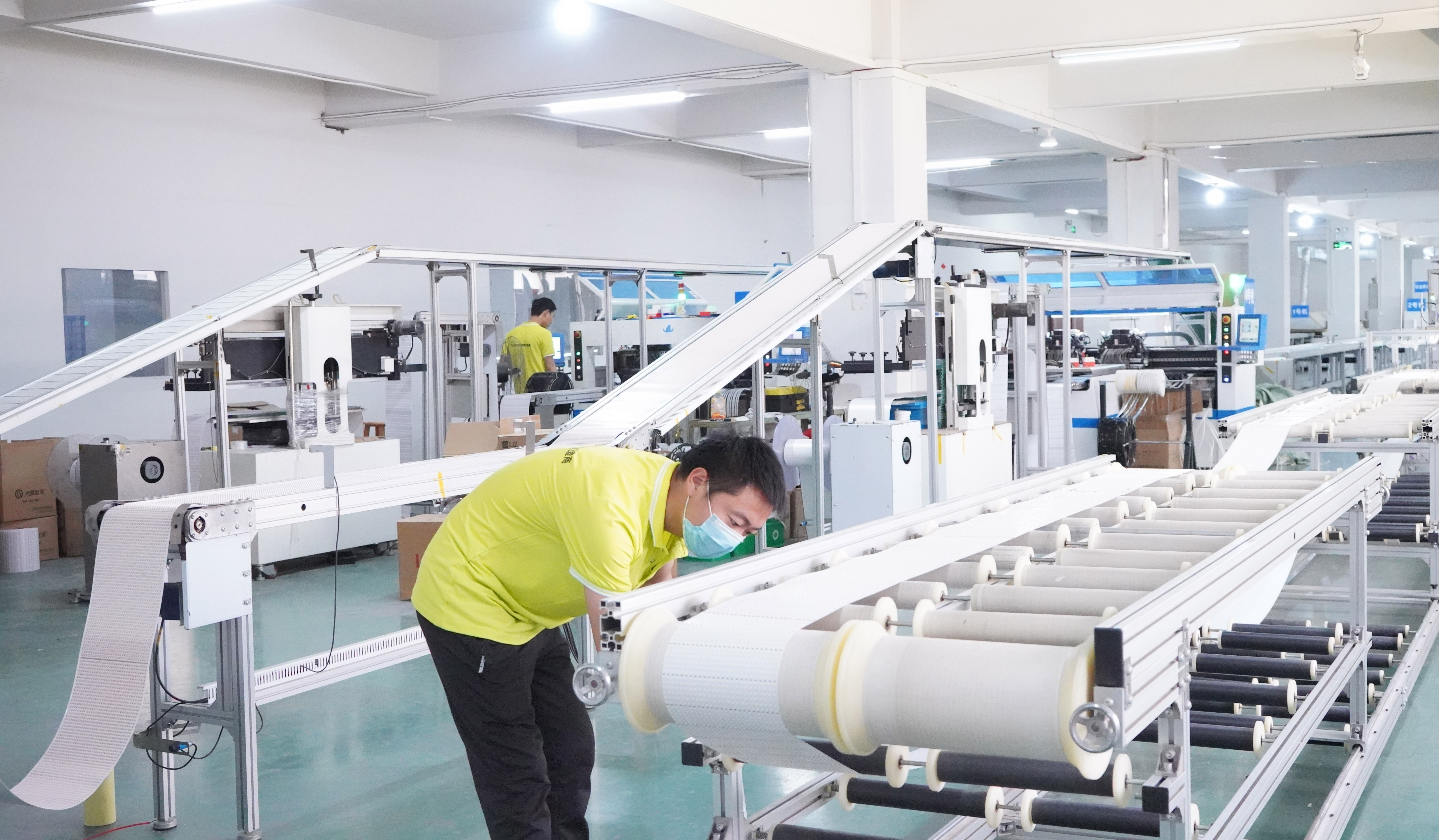
Manufacturer capability reference. Both candidate models are catalogue items produced for OEM and ODM supply, not one-off builds.
What the Stated Numbers Actually Mean
Emitter pitch: 5.6mm versus 8.3mm
Density is the most decision-relevant number in the table. At 180 LEDs per metre, the average distance between emitters is approximately 5.6mm; at 120 LEDs per metre it is approximately 8.3mm (both derived by dividing 1,000mm by the stated LEDs per metre). The 2835 acoustic variant therefore puts 50% more emission points into the same 8mm PCB width.
On the acoustic variant's stated strip lengths, that works out to approximately 432 emitter positions on a 2.4m strip and 540 on a 3m strip. For a hidden cove washing a slatted wall, this is the figure that determines whether the light reads as a line or as a row of points.
Drive per emitter and heat per metre
Dividing stated power by stated emitter count gives roughly 61mW per emitter for the 2835 variant and roughly 67mW per emitter for the 3535 variant. Both are lightly driven by strip standards, which is one reason both can be placed on a double-layer copper PCB. The more practical consequence is at the metre level: whatever the qualifier turns out to be, an 11W figure against an 8W figure is a difference of 3W per metre of heat to manage inside a closed rebate. In an unventilated detail, that difference has to be checked against the driver's rating and the panel construction, not assumed away.
The lumen-per-metre calculation a datasheet may not let you finish
The formula buyers use is simple: lumens per metre = lumens per emitter × emitters per metre, and system efficacy = lumens per metre ÷ watts per metre. Neither of the two reference models publishes a lumen-per-emitter or lumen-per-metre figure in the reviewed data, so the calculation cannot actually be completed from the datasheet alone. That is not a reason to guess; it is a reason to request the figure in writing at the intended drive current and colour temperature.
It is also worth knowing that brightness is the wrong headline for this detail. At grazing angles, uniformity is governed by pitch, offset and diffusion, not by total lumens. A brighter strip at 8.3mm pitch can produce more visible spotting than a dimmer strip at 5.6mm pitch. Comparing the two candidates only on output misreads the installation.
Warm White or RGB: the Colour Decision Comes First
The 2835 and 3535 candidates are not two answers to the same question. They answer two different questions, and the colour requirement decides which one is asked.
- Light as architecture. The wall should read as an evenly washed, warm surface that belongs to the interior. This is a documented white-light specification: a stated 3000K colour temperature and a stated CRI of Ra≥80. The 2835 acoustic variant carries both.
- Light as effect. The wall has to change colour for a scene, a brand or a mood. This is a colour specification, and RGB is the answer. The 3535 variant carries it.
The consequence for procurement is that the RGB route cannot be verified against a white-light requirement. The reference data for the 3535 model states RGB as the colour and does not state a CRI. Where a project specification demands a colour rendering figure for white, an unrated RGB strip cannot be documented to meet it. Where a designer needs both a high-quality white and adjustable colour, the correct route is a different model class entirely: XPUP's tunable range, for example, includes a 2700K–6000K strip with CRI≥95.
There is one more BOM difference worth flagging early. The 3535 model's listed material is copper PCB plus LED controller; the acoustic 2835 model's listed material is copper PCB plus SMD LED. In practice that means the colour variant arrives with a control layer in the specification while the white variant does not, and the driver and control scope has to be priced accordingly.
How Density Changes Shadow Uniformity
Every SMD emitter is a point source. When a strip is concealed at close range, the light has not yet blended, and what the viewer sees is the spacing. Four variables decide how visible that spacing is: the pitch of the emitters, the distance between the strip and the surface being grazed, any diffuser or cover in front of the strip, and the texture of the panel itself.
At 5.6mm pitch, the emitters blend into a continuous gradient over a shorter offset than at 8.3mm pitch. On a slatted wall, that difference affects the rhythm between slats: a coarse pitch can make each groove read as a separate band rather than as one graded wash. The practical rule is that the tighter the detail and the shorter the offset, the more density earns its cost.
Density is also not the only route to smoothness. Where the detail demands a genuinely continuous line rather than a well-blended one, a COB construction removes the emitter spacing instead of reducing it. XPUP's COB range includes a 280 LEDs per metre model on an 8mm PCB in the same 24V family, which sits in a different specification bracket — and, notably, at a different IP rating — so it should be treated as a separate purchase decision rather than an upgrade to either candidate here. One industry estimate places strips above 120 LEDs per metre at roughly 19% of premium installations, which is a useful reminder that high density is still a minority specification rather than a default.
How These Two Compare with Traditional Strip Options — and Where Each Stops
The traditional reference points in this category are low-power single-colour tape and finished linear sources. Standard 3528 tape still accounts for roughly 34% of the market on the strength of low consumption of about 4.8W per metre, and the 24V segment alone represented 52.0% of linear LED strip fixture revenue in 2022. Flexible strip remains the dominant product type at a 67.4% share of the market as of 2025. Against that background, both candidates here are above the consumer baseline: 24V rather than 12V, double-layer copper PCB on an 8mm width, and in the 2835 case an emitter density that exceeds the 120 LEDs per metre premium threshold.
The limits matter more than the advantages, and both candidates have them.
- IP20 on both. Neither variant is rated for wet or damp locations. A bathroom, a covered terrace or an exterior soffit is out of scope for these two models; the same catalogue addresses those conditions with IP68 silicone and COB constructions, but those are different part numbers and different specifications, not variations of these.
- No published lumen figure. Brightness for both variants cannot be verified from the datasheet as supplied, so any claim that one is brighter than the other is unverifiable until lm/m is issued for each model.
- CRI≥80 is mainstream, not high fidelity. It is an adequate figure for residential coves and wall washes. It is not the figure for gallery, museum or luxury retail work, where the range offers CRI 90+ and CRI 95+ options instead.
- Control is not included in the listed material. Dimming behaviour depends on the driver and controller layer, and on the 2835 variant the listed material does not include a controller at all.
- Heat in a closed rebate. At the stated power figures, the acoustic variant puts roughly 3W per metre more load into a concealed detail than the colour variant. That has to be reconciled with the driver and the panel build.
- Warranty and repeatability. The manufacturer's stated after-sales terms are online remote support, general technical guidance and a 2-year standard warranty. For multi-phase projects, batch-to-batch colour consistency across repeat orders is a separate conversation and should be documented rather than assumed.
The wired-versus-wireless picture is also a limit on expectations. Wired smart lighting systems held 81.3% of the global smart lighting market in 2024, and wired strips are generally preferred where stability matters, such as commercial kitchens and home theatres. A concealed architectural detail is closer to that profile than to a plug-in consumer installation, which is why the 24V fixed-output architecture of both candidates remains the normal choice.
Where Each Variant Has Been Deployed
Documented project use is a fairer test than catalogue claims. The cases below are the manufacturer's own records of deployments in which these two product families appear.
| Client type and market | Scale and duration | Relevance to the 2835 / 3535 decision |
|---|---|---|
| Home decoration distributors, Germany and Italy | 20,000 m per year, 3 years | Premium residential projects using RGB strips and acoustic panel strips together, with precision customization. This is the clearest evidence that the two variants are specified as complementary layers rather than as substitutes. |
| Commercial lighting contractors, Germany and global | 50,000 m, 2 years | Cafés and chain retail lighting with flicker-free dimming and commercial-grade performance; the 3535 multi-colour model is listed among the applied products. Colour change is a commercial-installation requirement here, not a residential one. |
| Gaming space design companies, UK | Approximately 5,000 m per year, 2 years | RGBIC addressable strips for entertainment spaces — a further reminder that colour-change demand sits in a different channel with different documentation needs. |
| Hospitality contractors, Germany | 20,000 m, 2 years, in operation over four years | High-efficiency strips in hotel lighting with consistent brightness and colour quality over long-term operation, indoors and outdoors, using IP68 models where the location required it. |
| Architectural lighting contractors, Netherlands | 30,000 m, 2 years | IP68 waterproof strips for commercial façade and outdoor landscape work — the clearest illustration of what changes when the installation location falls outside IP20. |
| Lighting brands, United States | 300,000 m per year, 3 years | Long-term ODM supply covering specifications, colour parameters, certification requirements and packaging — the sourcing model most wholesalers and brand owners will recognise. |
| DIY retail chains, Germany | 100,000 m per year, ongoing for six years | Multi-product retail supply with custom packaging — relevant to the wholesale decision rather than the specification decision. |
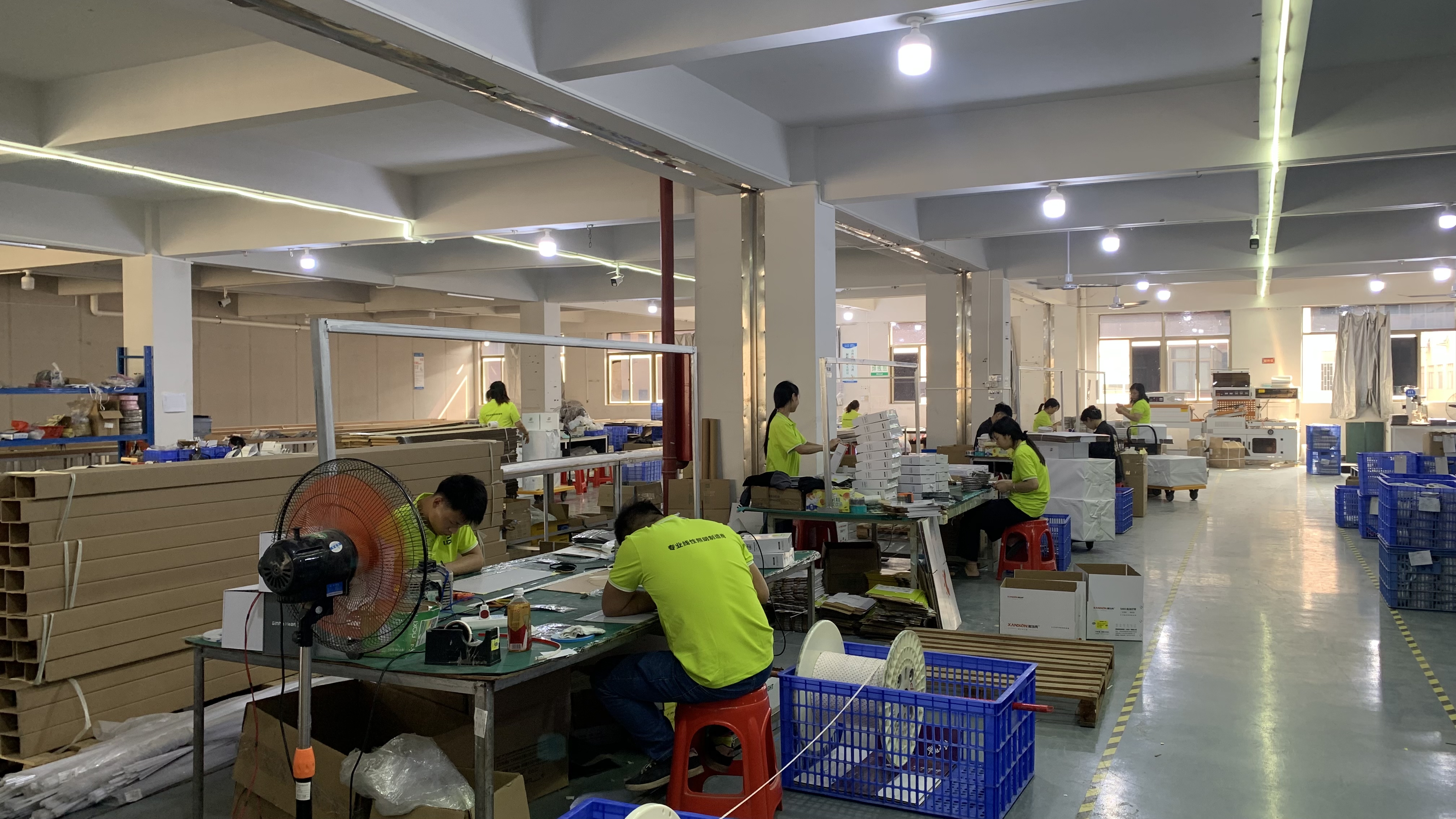
OEM capability reference. Project records show the acoustic and multi-colour families supplied into different rooms and different channels.
Market Signals That Shape This Choice
The global LED strip market was valued at approximately USD 5.8 billion in 2025 and is projected to reach USD 13.2 billion by 2034, a compound annual growth rate of 9.6% (Dataintelo). Asia Pacific accounts for approximately 42.3% of global revenue, and China concentrated 59.3% of global light fixture exports in 2024 with USD 31.4 billion in fixture exports, of which the United States took USD 10.86 billion and Germany USD 2.097 billion. Europe is also the fastest-growing regional market for linear LED strips, at a projected 12.6% CAGR.
Inside that growth, the two candidates sit on two different demand curves. Warm white remains the volume anchor: the 3000K–4000K band held a 33.2% revenue share of the linear LED strip fixture market, which is exactly where the 2835 acoustic variant sits. Colour is the faster-moving premium: the RGB segment held 38.5% of smart LED strip market value in 2025, and the smart strip market itself was valued at USD 3.2 billion that year. Both curves are rising, and they rarely meet in the same wall detail — which is why this is a colour-first decision rather than a brightness-first one.
The competitive frontier is shifting too. Dataintelo identifies Signify (Philips Hue) as the leading global player in the smart LED strip and connected lighting segment, and describes Lutron Electronics as holding a premium position in architect-specified LED strip control systems. Those positions are built in the control and system layer rather than in the emitter. The practical reading for a buyer evaluating an acoustic panel strip is that the emitter decision will increasingly be evaluated alongside the control documentation, and the supplier who can provide both will be easier to specify.
Regulation is moving in the same direction. EU Ecodesign and energy-efficiency requirements under the Green Deal continue to push the market toward LED-based systems, low-voltage strips in the United States are classified under the UL 2108 safety standard, and IEC 60598-2-20:2022 specifies safety requirements for lighting chains including LED strips. Compliance documentation is no longer a formality appended to a quotation.
Supplier and Documentation Checks Before a Purchase Order
For the two models in question, the manufacturer's compliance file is specific rather than generic. Both models appear in the covered model lists for XPUP's CE documentation issued by PTC TESTING for the EU market: LVD documentation under certificate numbers PTC22122900901S-LD01 and PTC22122900902S-LD01, tested to EN IEC 62031:2020+A11:2021, IEC TR 62778:2014 and EN 62471:2008 and issued on 2023-04-04; EMC documentation under certificate numbers PTC22122900901E-EMB01 and PTC22122900902E-EMB01, tested to EN IEC 55015:2019+A11:2020, EN 61547:2009, EN IEC 61000-3-2:2019+A1:2021 and EN 61000-3-3:2013+A1:2019 and issued on 2023-03-09; and RoHS documentation under certificate numbers PTC22122900903C-EN01 and PTC22122900905C-EN01, tested against the IEC 62321 series and issued on 2023-04-23. The certified scope covers the LED low-voltage and high-voltage light strip series.
On production terms, the documented figures are a minimum order quantity of 2,000 metres, a lead time of 18–22 days, monthly capacity of 3,000,000 metres, 100% product testing, a 2-year standard warranty, and after-sales support through online remote support and general technical guidance. OEM customization covers voltage, logo, power, dimensions, materials, hardware configuration, internal circuit, colour, factory specifications, nameplate and label; ODM customization covers exterior colour scheme, outer packaging box, label, brand information, model name and material details. The manufacturer holds design and structural patents in linear lighting, including original design patents for the C19 and C20 series, and its stated markets are the EU and USA with exports to more than 170 countries.
Before committing either variant to a project, these are the checks that close the gap between a catalogue entry and a specification:
- Confirm whether the stated wattage is per metre or per strip, and recalculate the driver load accordingly.
- Request lm/m for each candidate at the intended colour temperature and drive current, plus CRI (Ra) and R9 for the white variant.
- Request colour consistency in binning or SDCM terms, especially for repeat orders across project phases.
- Confirm maximum run length and feed-point requirements for the 2.4m and 3m strip lengths, and for the 3535 length that is not stated in the reference data.
- Confirm control scope: the 3535 model lists an LED controller in its material, the 2835 acoustic model does not.
- Confirm that IP20 matches the room, and switch to the IP68 silicone or COB families if it does not.
Future Outlook
Three shifts are likely to change how this decision is made over the next few product cycles. The first is documentation. As buyers on the evaluation side become more familiar with pitch and drive calculations, the datasheets that win specifications will be the ones publishing lm/m, CRI with R9, and binning tolerance as standard fields — the two models compared here show how much of that is still missing.
The second is density substitution. Between the 5.6mm pitch of a 180 LEDs per metre 2835 strip and the continuous emission line of a COB strip, there is a widening middle ground, and smart control adoption — one estimate puts Wi-Fi and Bluetooth integration at a 47% adoption rate in LED strip systems — will keep pulling the emitter decision toward the control layer.
The third is regulatory. With EU Ecodesign requirements tightening and low-voltage classifications such as UL 2108 and IEC 60598-2-20 in force, documentation quality will increasingly decide which supplier survives an audit rather than which product wins a sample round.
For acoustic panel lighting specifically, the practical conclusion is stable: choose the 2835 warm-white line when the wall is meant to be light, choose the 3535 RGB line when the wall is meant to be an effect, and treat the two as layers when the project calls for both. The buyer's check is not which one is better — it is whether the datasheet lets you prove either choice.
FAQ
What is the difference between SMD 2835 and SMD 3535 LED strips?
SMD 2835 and SMD 3535 are LED package footprints, not performance grades. In the two reference specifications compared here, SMD 2835 appears in a single-colour acoustic wall variant with 180 LEDs per metre, a stated 11W, 3000K and CRI≥80, while SMD 3535 appears in a multi-colour variant with 120 LEDs per metre and a stated 8W. Both are 24V, both use an 8mm double-layer copper PCB and both are rated IP20. Package size affects how many emitters fit on a given PCB width and how the light is distributed, but colour format, CRI and density are separate specification decisions made independently of the package.
Which SMD is better for acoustic panel lighting, 2835 or 3535?
It depends on whether the wall is required to change colour. For a fixed warm-white wash, the 2835 180 LEDs per metre variant provides the higher emitter density — approximately one emitter every 5.6mm against 8.3mm — together with a stated 3000K colour temperature and CRI≥80, which are the parameters a designer needs for a documentable white-light specification. For colour change, the 3535 RGB variant is the relevant choice, but its reference data states no CRI and no fixed colour temperature, so it cannot be documented against a warm-white rendering requirement. In premium residential projects in Germany and Italy, the two families have been specified together as complementary layers rather than as substitutes.
Can an RGB 3535 strip be used for warm white cove lighting?
An RGB strip produces white by mixing, and the reference data for the 3535 variant does not state a colour temperature or a CRI value, so a warm-white wash cannot be verified from the datasheet. Where both colour change and white-light quality are required, the more suitable option is a tunable-white strip, such as the manufacturer's 2700K–6000K model rated CRI≥95, which is a documented white source with adjustable colour temperature. RGB remains appropriate where colour effect is the design intent and white rendering is not a specified requirement.
Does a higher LED density such as 180 LEDs per metre improve light uniformity?
Density reduces the distance between emitters, which reduces the visibility of individual points. At 180 LEDs per metre the spacing is approximately 5.6mm; at 120 LEDs per metre it is approximately 8.3mm. Whether that difference is visible in the finished wall depends on the offset between the strip and the grazed surface, any diffuser or cover in front of the strip, the surface texture and the viewing angle. Above the 120 LEDs per metre threshold — which one industry estimate places at roughly 19% of premium installations — buyers should also consider COB constructions, where emitter spacing is eliminated rather than reduced.
What should be verified before ordering 24V strips for an acoustic panel project?
Ask for the parameters the two datasheets reviewed here do not fully carry: lumen output per metre at the intended colour temperature and drive current; CRI (Ra) plus R9; colour consistency expressed as a binning or SDCM tolerance; confirmation of whether the stated wattage is per metre or per strip; and maximum run length with feed-point requirements. Confirm that IP20 suits the location, confirm whether a driver or controller is included — the 3535 variant lists an LED controller in its material, the acoustic 2835 variant does not — and confirm batch consistency arrangements for repeat orders. The manufacturer's documented production terms include a 2,000 metre minimum order quantity, an 18–22 day lead time, 100% product testing and a 2-year standard warranty.
Full specification reference: the manufacturer publishes a 2026 LED strip catalogue at https://cdn.socialarks.com/sbsp/25016/common/2026/0810/2026%20XPUP%20LED%20Strip%20Catalog.pdf for buyers who need the complete model list alongside the two variants discussed here.
Have Questions or Need More Details?
Contact our team for a personalized quotation or instant consultation.
Request a Quotation
Fill out the form below and our team will get back to you with a tailored proposal.
WhatsApp Direct Chat
Prefer to chat in real-time? Message us on WhatsApp for instant assistance & quick answers.
- Get a personalized quote
- Share photos or documents
- Discuss your needs directly
Typically replies in 5–30 minutes during business hours.