
LGP Compliance Audit: UL 2108, CE EN IEC 55015 and IP Ratings
LGP Compliance Audit: UL 2108, CE EN IEC 55015 and IP Ratings
A light guide panel compliance review should connect the document to the exact model being purchased, then compare the documented ratings with the project’s actual conditions. A standard name or a broad rating range is not, on its own, enough to establish that a particular ordered configuration is covered.
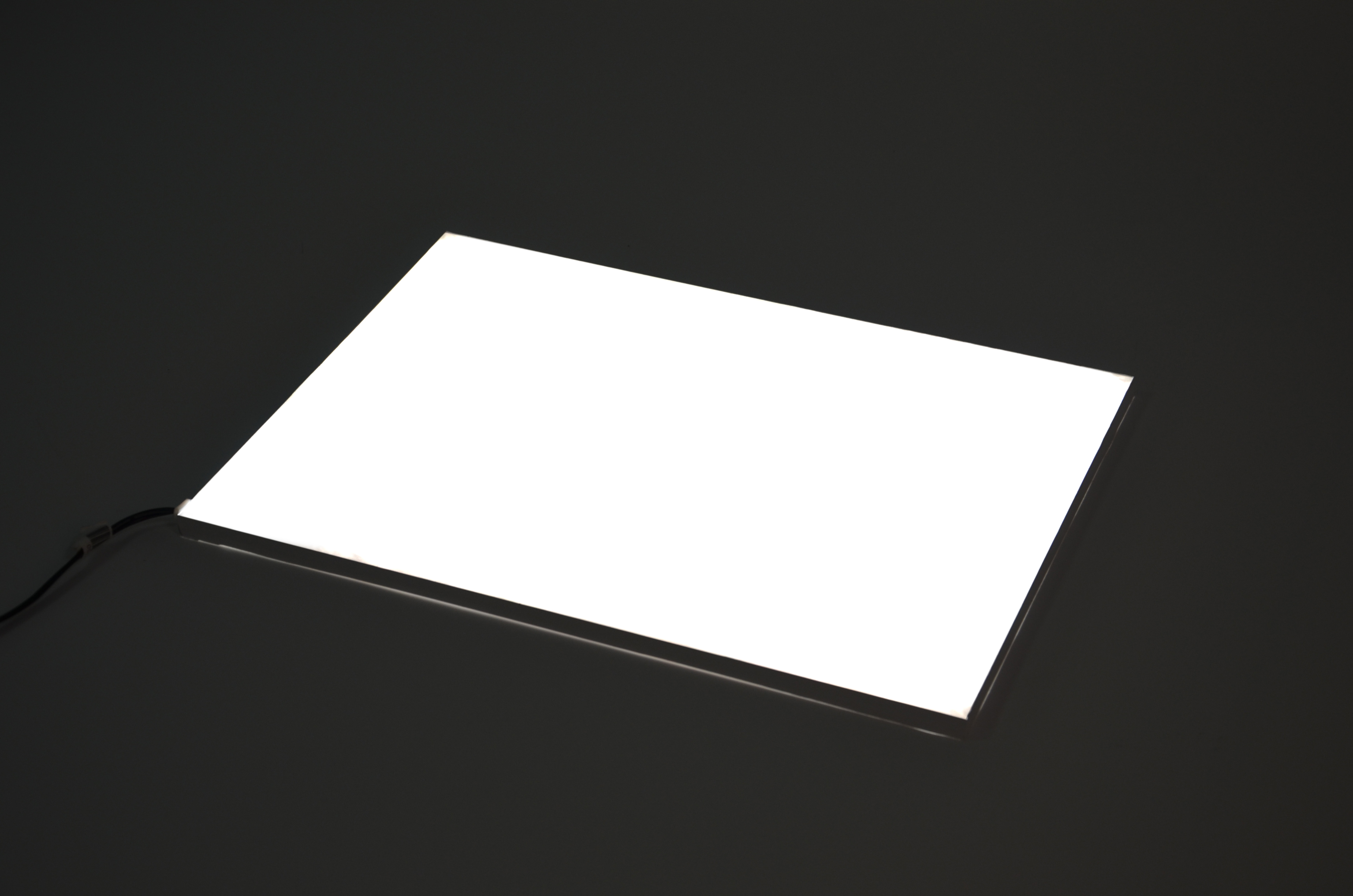
For buyers evaluating a light guide panel for a display, sign, or interior project, the practical audit is a traceability exercise: identify the ordered model, find the corresponding certificate or test record, confirm the document’s scope, and check that the rated conditions suit the installation. Edgelight’s product data identifies a light guide panel model, LGP, with an operating temperature range of -20°C to 50°C and a protection-grade range of IP20–65. The available product data does not include the certificate files or certificate identifiers needed to confirm a UL or CE claim, nor does it establish that every LGP configuration carries the same rating.
This distinction matters during Research and Evaluation. A project may involve a custom size, an edge-lit light guide panel, a backlit light guide panel, or an acrylic light guide panel (PMMA LGP), but an audit should not assume that a document for one product or configuration automatically covers another. The purchase decision should rest on the actual documentation for the ordered item and on a clear comparison between its stated limits and the project conditions.
Start with document-to-order traceability
The first task is to establish whether the compliance document refers to the product being quoted. Record the supplier name, product family, model designation, certificate or report number, document date or revision, and any stated scope or limitations. Then compare these fields with the quotation, drawing, specification, sample label, and purchase order. Differences in model spelling, suffixes, configuration, or product description should be resolved before approval rather than treated as minor clerical details.
For an LGP purchase, the model field is particularly important when the project uses a custom size light guide panel, a panel cut to size, or a light guide panel for LED light box OEM production. Customization can involve size, thickness, color temperature, logo, surface shape, light output brightness, and installation structure. Edgelight’s capability information lists these as customization options. That makes configuration control a useful procurement step: the buyer should confirm whether the compliance document names the base model only or also covers the particular variant and assembled system being ordered.
A certificate number is a document identifier, not a substitute for checking scope. Ask whether the document applies to the complete light guide panel, an electrical component, a light source, or a finished assembly. Confirm that the manufacturer or responsible entity named on the record matches the entity supplying the product, and check whether the model designation corresponds exactly to the commercial offer. If the document’s scope is unclear, request the underlying record or written clarification from the issuer or supplier. Do not infer coverage merely because the product category sounds similar.
Buyer check: Match the document’s named entity, model, configuration, and scope against the ordered item. Keep the reviewed document with the quotation and the final order record so that any later change can be checked against the same baseline.
How to review UL 2108 and CE EN IEC 55015 records
The assigned audit topic identifies UL 2108, 2nd Edition, and CE EN IEC 55015:2019/A11:2020 as standards to examine. These references should be treated as document-verification targets, not as proof that a specific Edgelight product has been certified. The product and capability records provided for this article do not include a UL certificate file, a CE declaration, a test report, or the stated certificate numbers. They therefore do not establish that model LGP or model GPF001 is covered by either reference.
When a supplier provides a UL record, check the record itself rather than relying on a copied logo or a line in a quotation. Confirm the exact standard and edition shown, the holder or responsible company, the product category, model coverage, and any conditions or exclusions. Compare those details with the purchase specification. If a report covers a component but the project is buying a completed assembly, establish whether the assembly’s relevant configuration is also within the documented scope.
For a CE-related file, identify the declaration or supporting test documentation that applies to the product as supplied. Confirm that the product description and model match the quotation, and that the referenced standard and edition are the ones stated in the supplier’s current documentation. A document for GPF001 should not be assumed to cover LGP, or vice versa, unless the documentation explicitly establishes that relationship. Likewise, a certificate or test record for a base configuration should not be extended to a customized variant without evidence that the changed configuration is covered.
These checks do not determine regulatory obligations for every finished installation. The final project may include an LED strip light, a constant-current power driver, a light-box frame, diffuser film, reflective film, and mounting brackets. The available application information lists these as supporting equipment for light-guide-panel projects. Buyers should therefore clarify whether their review concerns the panel alone or the complete lighting assembly, and identify which party is responsible for the documentation of each part of the supplied system.
Read IP20–65 as a range that needs configuration-level confirmation
The product specification for Edgelight model LGP lists a protection grade of IP20–65. This is a stated range, not one single protection level that can be assigned automatically to every panel or installation. A buyer should ask which specific rating applies to the quoted configuration and what product boundary the rating describes. The answer should be consistent across the specification, test evidence, quotation, and purchase order.
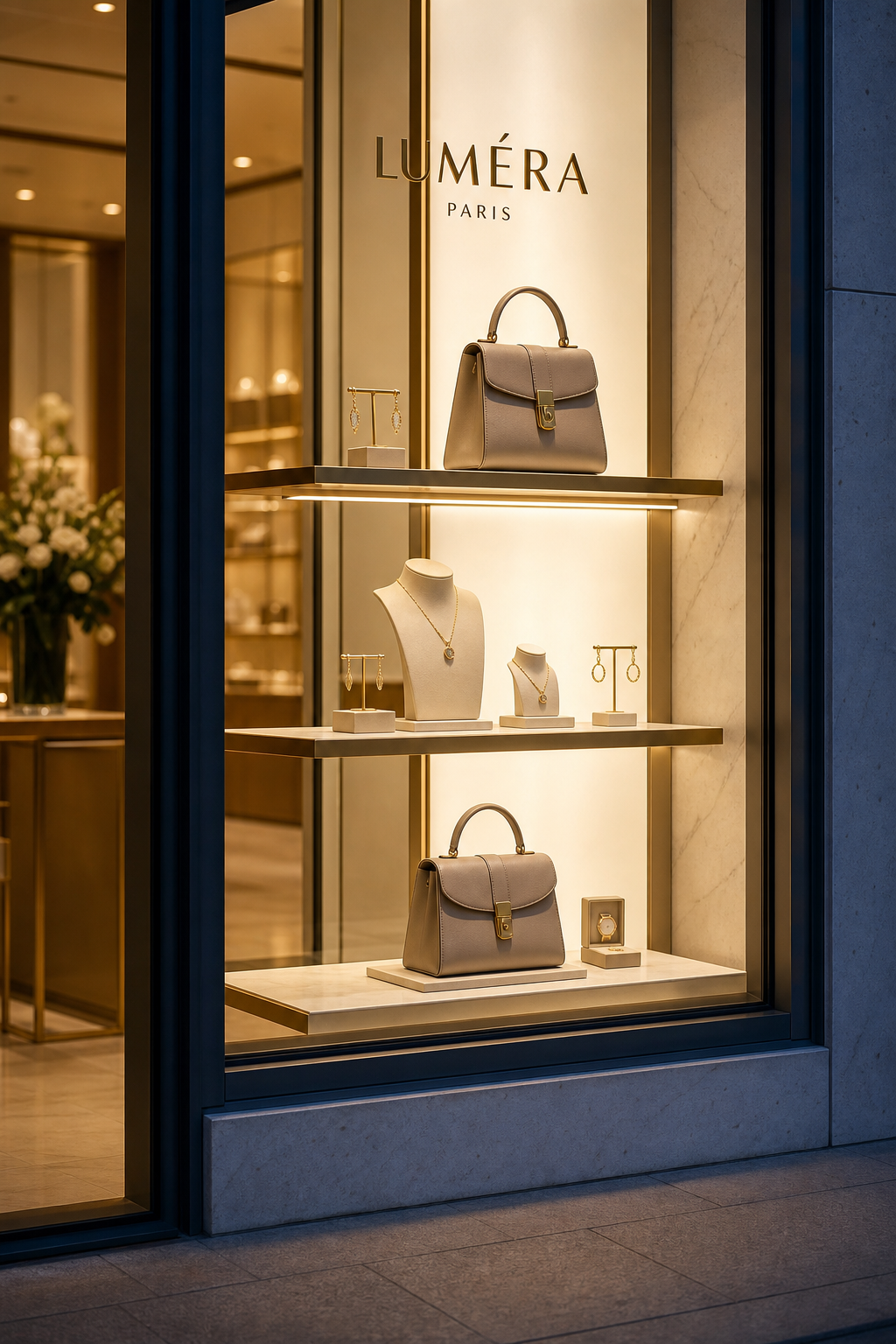
Project conditions determine why this clarification matters. An indoor display in a controlled commercial interior is not necessarily exposed to the same conditions as an outdoor sign or a panel mounted where dust or water exposure is expected. The application corpus lists retail and luxury displays, showcase and shelf backlighting, hospitality and commercial interiors, signage, elevator decoration, and both interior and outdoor operating conditions. These contexts are not interchangeable: the installation location and expected exposure must be compared with the rating for the specific product variant.
For an outdoor or otherwise exposed installation, do not select from the upper end of a stated range without confirming that the offered model and its construction carry that rating. Ask what was evaluated, whether the rating applies to the panel alone or to a completed enclosure, and whether openings, connectors, edges, or installation details affect the scope. If a document only gives a range and does not map individual configurations to ratings, the rating remains an open procurement question.
For a backlit light guide panel or an ultra-thin light guide panel for slim light boxes, the mechanical and electrical integration can also affect what the buyer is actually approving. The panel may be used with associated lighting and mounting components, but the product data does not establish that all such combinations share an identical protection rating. Specify the intended environment in the RFQ and require the supplier to identify the exact rating for the proposed configuration.
Compare the temperature rating with site conditions
Model LGP is specified with an operating temperature range of -20°C to 50°C. Treat this as a product specification to compare against the expected operating environment—not as a promise that every project condition or every customized version is covered. The buyer should consider where the panel will operate, whether the temperature range is expected at the panel itself, and whether the surrounding light source, driver, enclosure, or installation can introduce different conditions.
For a project that may approach either limit, record the expected operating range in the technical review and ask the supplier to confirm that the offered model and configuration are suitable. Clarify whether the stated temperature range applies to continuous operation, a particular test condition, or another defined basis if the documentation provides that detail. Do not substitute a general application description for a model-specific confirmation.
This is especially relevant when reviewing an outdoor installation. The application data indicates that light guide panel projects may operate in interior and outdoor conditions, while the LGP product specification states -20°C to 50°C. The application description does not expand the product’s stated temperature limits. A buyer should use the actual product specification and project requirements together, and seek clarification whenever the expected conditions exceed or approach the stated range.
Connect testing and after-sales support to the project
Edgelight’s capability information states 100% test quality control and local after-sales support. It also identifies export markets including the European Union, North America, Southeast Asia, and Australia. For a buyer, these statements are useful starting points for a supplier discussion, but they do not replace the documents or project-specific checks described above.
During evaluation, clarify what the stated 100% testing covers for the ordered LGP configuration. Ask which characteristics are checked, what acceptance criteria are used, how results are recorded, and whether records can be linked to the delivered batch. The available capability information states that testing is performed but does not specify the test method, test parameters, or report format. Those details should not be assumed. Agree on the information required for incoming inspection before placing an order.
Similarly, “local support” is a capability statement rather than a complete service plan. Confirm which market or location the support refers to, what channels are available, and how product issues are handled for the project. The available data names export markets but does not define response times, service coverage boundaries, warranty terms, or support procedures. Buyers can document these as open items in the supplier evaluation rather than interpreting them as established service commitments.
Edgelight lists OEM/ODM customization for size, thickness, color temperature, logo, surface shape, light output brightness, and installation structure. Its capability unit also lists a monthly capacity of 30,000 units, lead time of 5–10 days, and MOQ of 1 unit. These are supplier-provided capability details; they should be confirmed against the specific order, configuration, and schedule. For compliance control, any approved change to size or construction should trigger a review of whether the existing document still matches the item being produced.
A practical light guide panel compliance audit sequence
- Define the project use. Record whether the panel is for a showcase, shelf, sign, hospitality interior, elevator decoration, or another stated application. Include indoor or outdoor conditions and the expected temperature range.
- Freeze the ordered configuration. Record the product name and model, dimensions, thickness, color temperature, light output, surface and installation details, and any requested customization. Make sure the quotation and technical drawing describe the same item.
- Collect the applicable records. Request the certificate, declaration, or test documentation that the supplier says applies. Note the document number and revision, named entity, standard and edition, model scope, and any limitations.
- Cross-check model coverage. Compare the record with the exact product model and configuration. Do not transfer coverage from another model or family without explicit supporting documentation.
- Check environmental fit. For model LGP, compare the stated IP20–65 range and -20°C to 50°C operating temperature with the rating and conditions confirmed for the offered variant. Resolve any ambiguity about the applicable rating before approval.
- Agree on quality records and support. Clarify what 100% testing includes, what records will accompany the order, and what local after-sales support means for the destination market.
- Preserve revision control. Keep the reviewed documents with the approved specification. If the model, materials, size, electrical configuration, or assembly changes, re-check whether the documentation still applies.
Application fit and limits of the available evidence
The available application information associates light guide panels with retail display showcase backlighting, shelf backlighting, hospitality and commercial interiors, signage, and elevator decoration. The product specification identifies model LGP as an acrylic light panel and gives its stated operating values. These facts help buyers frame a project review, but they are not evidence that every intended use has the same rating or that a particular certificate covers the finished installation.
For elevator decoration, the supplied application record says the product is designed for this use and has been adopted by elevator manufacturing clients worldwide. The information does not identify those clients or provide project-level compliance documents, so it should not be treated as independent certification evidence. Similarly, the listed export markets and after-sales support are relevant to supplier evaluation, but they do not establish market approval for a particular model.
The most important boundary is documentary: the available records support product specifications and capability statements, but they do not contain the UL 2108 certificate, the CE EN IEC 55015:2019/A11:2020 file, or evidence linking certificate identifiers to LGP or GPF001. As a result, this article can explain how to audit those records but cannot confirm that either model holds a specific certification. Buyers should make approval conditional on receiving and reviewing the relevant model-specific documentation.
What this means for procurement
A useful compliance decision is not simply “standard listed” or “rating stated.” It is a documented match among the ordered product, the evidence file, and the actual installation conditions. For an LGP purchase, the model designation, the applicable protection rating within IP20–65, and the -20°C to 50°C operating range should all be confirmed for the proposed configuration. UL and CE references should be verified against the actual records, not inferred from a product category or supplier capability statement.
This approach is relevant whether the buyer is sourcing an edge-lit light guide panel, a backlit light guide panel, a dot pattern light guide panel, or a custom light guide panel cut to size wholesale. The product type and application help define the review, but the purchase decision depends on the exact variant and the documentation that supports it. Where the certificate scope, test conditions, or configuration mapping is missing, the appropriate outcome is to hold that point open—not to assume a broader approval.
FAQ
How should a buyer verify that a light guide panel certificate matches the ordered model?
Compare the document’s named entity, model, product scope, standard and edition, and any stated conditions with the quotation and final configuration. If the record does not clearly cover the ordered model or customized variant, request clarification or supporting documentation before approval.
Does IP20–65 mean every LGP configuration has the highest rating in that range?
No. The LGP product data states a range of IP20–65, but it does not map each configuration to one specific rating. Confirm the applicable rating for the quoted model and installation, and check what product boundary the rating covers.
What operating temperature is listed for Edgelight model LGP?
The product specification lists an operating temperature range of -20°C to 50°C. Buyers should compare the expected project conditions with the specification for the exact offered configuration and seek confirmation if conditions approach or exceed the stated limits.
Can the available information confirm UL 2108 or CE EN IEC 55015 certification for LGP or GPF001?
No. The available product and capability information does not include the certificate files or records needed to establish that either model is covered. The applicable documents must be reviewed and matched to the ordered model before a certification claim is relied upon.
What should buyers clarify about Edgelight’s 100% testing and local support?
The capability information states 100% testing and local after-sales support, but does not specify test methods, acceptance criteria, records, support locations, or response terms. Buyers should confirm these details for the project and document the agreed requirements.
Have Questions or Need More Details?
Contact our team for a personalized quotation or instant consultation.
Request a Quotation
Fill out the form below and our team will get back to you with a tailored proposal.
WhatsApp Direct Chat
Prefer to chat in real-time? Message us on WhatsApp for instant assistance & quick answers.
- Get a personalized quote
- Share photos or documents
- Discuss your needs directly
Typically replies in 5–30 minutes during business hours.