
LSR Selection Criteria for New Energy and Insulation Projects
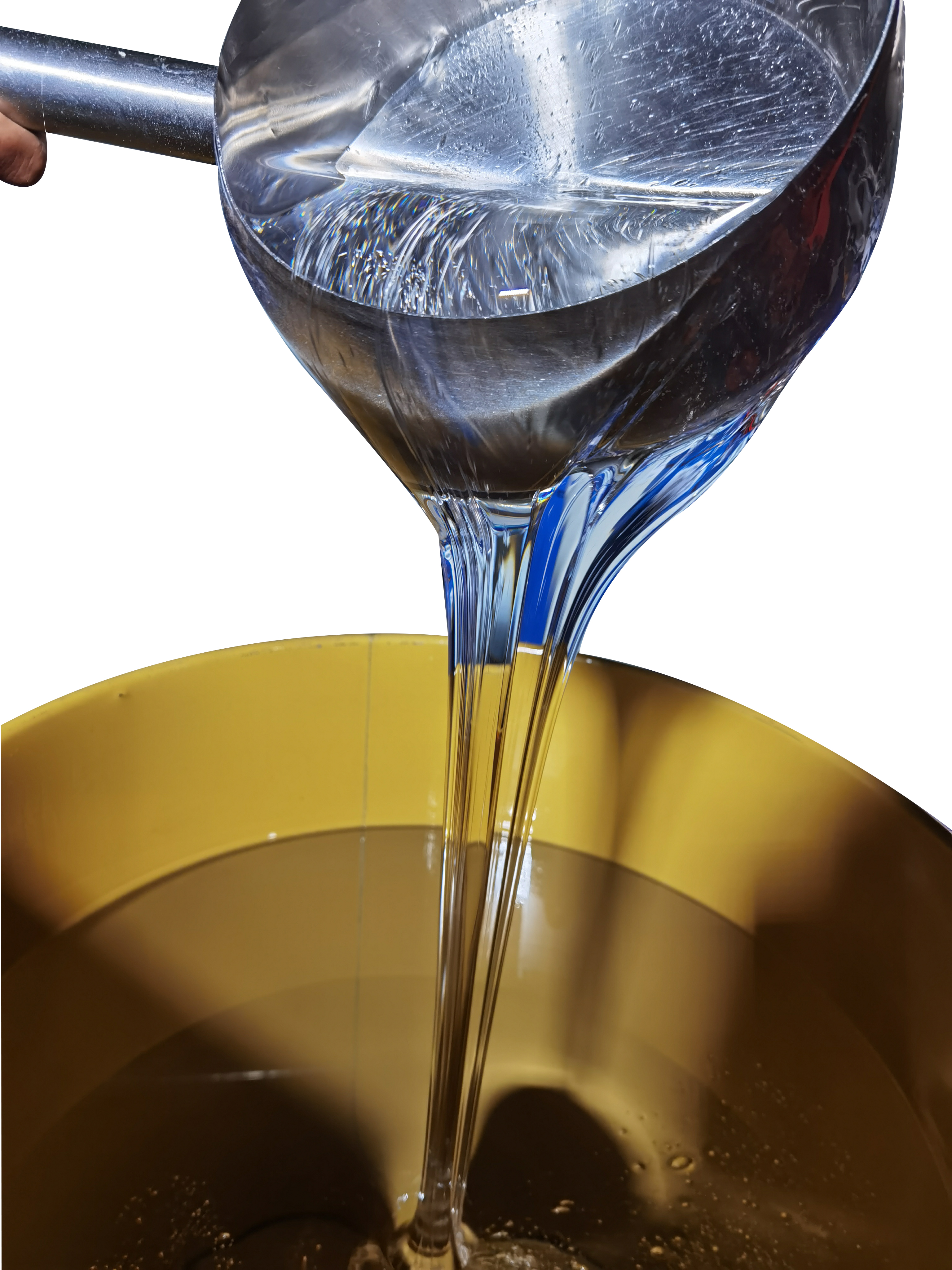
Liquid silicone raw material used in formulation development for new energy and electrical insulation applications.
Material selection for new energy and electrical insulation projects is becoming less about material category and more about specific application conditions. High-voltage connectors, EV battery packs, photovoltaic junction boxes, and wind-power generator windings all share a demand for elastomers that can hold sealing and insulation performance across temperature extremes, moisture, and mechanical stress. Liquid silicone rubber (LSR) is being evaluated more frequently in these applications, particularly where long-term dielectric stability and environmental resistance matter. According to industry data, approximately 63% of battery pack sealing systems now use silicone elastomers for flexibility and durability. This article outlines how project teams can evaluate LSR for new energy, high-voltage, and industrial insulation scenarios, with a focus on coating-grade systems and practical procurement criteria.
Why Project-Level LSR Evaluation Requires a Different Approach
Standard product pages often describe LSR generically, but in new energy projects the same base chemistry may be formulated differently for overmolding, potting, sealing, or coating. The operating window, curing method, substrate compatibility, and regulatory requirements determine whether a specific LSR formulation is appropriate. For example, high-voltage insulation sleeves require a resin that can be applied by dipping or spraying and then cured into a dense coating without pinholes. Sealing applications in EV battery packs may require low compression set, controlled adhesion, and thermal stability over thousands of thermal cycles. This section separates decision criteria by use case rather than treating LSR as a single material.
Key Application Scenarios and Corresponding Material Needs
Different new energy and electrical applications place different demands on LSR formulations:
- New energy vehicle battery pack sealing: LSR is used where flexibility, durability, and resistance to thermal expansion are required. Industry data indicates silicone elastomers are the dominant material choice in many battery pack sealing systems.
- Automotive motor insulation: High-temperature and voltage resistance are primary requirements. LSR coatings or encapsulants can protect windings and wire harnesses in motors and transformers.
- Photovoltaic module sealing: Long-term outdoor exposure, UV stability, moisture resistance, and adhesion to glass and backsheet materials influence material selection.
- Wind power generator insulation: Vibration, temperature swings, and high-voltage operation require elastomers with strong dielectric properties and resistance to environmental stress.
- Hydrogen energy equipment and fuel cells: Chemical resistance, low outgassing, and stable elastomeric performance in humid and corrosive atmospheres are critical.
- High-voltage insulation for new energy systems: Coating-grade LSR may be used to protect fiberglass sleeves, electronic wire harnesses, and cable insulation in high-voltage electrical scenarios.
- Thermally conductive LSR for new energy: Where heat dissipation is needed, thermally conductive fillers are combined with LSR to manage power density in EV batteries and power electronics. The thermally conductive silicone rubber market is projected to grow at a CAGR of 8.3% through 2034, driven partly by high-power density applications.
Inside a Coating-Grade LSR System: Fiberglass Sleeve Insulation
One practical example is a methylphenyl silicone resin system designed as a coating for glass fiber insulating sleeves. The product, identified as fiber glass sleeve with silicone resin, is applied by dipping, spraying, or brushing, then cross-linked and cured via high-temperature baking. This process forms a uniform, dense elastic insulating coating. The material supports long-term operating temperatures from -60°C to 200°C, with cold resistance values of -55°C for hardening temperature and -73°C for brittleness temperature. Key technical parameters are shown below.
| Property | Specification |
|---|---|
| Material | Methylphenyl silicone resin |
| Appearance | White, milky white, transparent |
| Resin content | 100 |
| Viscosity | 10000~55000 |
| Hardness | 20~35 |
| Tensile strength | 4>3>2>1.5 |
| Breaking strength | 10>9>8>5>4 |
| Heat resistance | 200°C |
| Cold resistance | Hardening temperature -55°C; brittleness temperature -73°C |
The cured coating provides insulation, high-temperature resistance, voltage resistance, and aging protection for fiberglass sleeves. It improves mechanical strength and friction resistance. In application, the system can withstand humidity, voltage, acid and alkali corrosion, and is suitable for indoor/outdoor high/low voltage electrical scenarios. Special requirements include UL94 V-0 flame retardant performance, RoHS/REACH certification, no precipitation after curing, and uniform coating without pinholes. Target industries include new energy vehicles, photovoltaic and energy storage, and aerospace and defense.
Project Example: Automotive Wire Harness Insulation at Scale
A Yangtze River Delta automotive wire harness factory sources coating-grade silicone resin for fiberglass insulation sleeves at an annual volume of 300 tons, with regular order batches of 13 tons. The material is applied by impregnation and coating, then cured to form a dense, flexible insulating coating. Under normal use, the customer's sleeve products coated with this silicone resin have a service life of at least 10 years, with no degradation in aging resistance or temperature resistance over the cooperation period of three years.
Operational results from this project include a coating defect rate reduction from 2.8% to 0.5% and a production yield increase to 99.5%. Uniform coating curing without pinholes or bubbles improved product consistency and stability. From a technical standpoint, the cured coating delivers a wide temperature resistance range and high voltage breakdown strength, adapts to different fiberglass sleeve specifications, and supports stable curing on the customer's existing coating equipment. Supplier technical support covered coating process optimization and curing temperature debugging to solve uneven coating and bubble issues.
Comparison with Traditional Insulation and Sealing Materials
LSR coating systems can be compared with traditional insulation and sealing approaches such as PVC heat-shrink, epoxy resin coatings, and polyurethane encapsulants. The following table summarizes a neutral comparison based on typical application requirements.
| Attribute | Traditional Approach | Coating-Grade LSR System |
|---|---|---|
| Continuous temperature range | Often narrower for commodity PVC or standard epoxy | -60°C to 200°C long-term in the coating system described |
| Flexibility after curing | Epoxy can be rigid; PVC may harden at low temperature | Remains elastic and dense after high-temperature curing |
| Dielectric and environmental protection | Varies significantly by formulation | Provides high voltage resistance, humidity resistance, and acid/alkali corrosion resistance |
| Application method | Heat shrink, potting, or coating | Dipping, spraying, or brushing, followed by high-temperature baking |
| Typical limitation | PVC may have lower heat resistance; epoxy may crack under mechanical stress | Requires controlled high-temperature curing and may not be the most economical option for non-critical low-voltage indoor use |
This comparison is not intended to rank one material as universally better. The appropriate selection depends on operating voltage, temperature range, substrate type, production line capability, and total cost of ownership. In projects where long-term high-voltage insulation and environmental resistance are required, coating-grade LSR often becomes a justified alternative to commodity polymer coatings.
Evaluation Criteria for New Energy LSR Suppliers
When evaluating a supplier for new energy LSR projects, buyers should look beyond a single product data sheet. Procurement criteria typically include customization capability, batch consistency, lead time, minimum order quantity, quality inspection, and after-sales technical support.
Dongguan Times Silicon Industry Co., Ltd. is a Dongguan, Guangdong-based silicone materials manufacturer specializing in R&D, production, and sales of new silicone materials. Founded in 2021 and operational since July 2022, the company serves markets in China, South Korea, the United States, Japan, and Africa, among others. It has passed ISO9001 International Quality Management System Certification, and its products have obtained RoHS, REACH, FDA, LFGB, and halogen-free certifications. The company operates a 15,000 m² factory with 42 employees and a 10-engineer R&D team. Its wholly owned subsidiary, Guangdong Times Energy Storage New Material Technology Co., Ltd., focuses on specialty silicone rubber new materials for the new energy industry, including foamed liquid silicone, ceramicized liquid silicone, silicone foam, solid silicone, composite silicone, adhesive silicone, and special silicone treatment agents.
For LSR-related formulations, the supplier's stated capabilities include Shore hardness customization from 7±1 to 38±1 A, viscosity and color adjustment, low/odorless formulations, food/medical-grade options, and room or heat curing methods. Monthly production capacity is 80 tons, scalable to 110 tons for peak seasons. Lead time is 7-10 working days for standard stock products and 15-25 working days for custom formulations or bulk orders, depending on complexity and quantity. MOQ is 1 kg for standard products and 5 kg for custom formulations, negotiable for long-term partners. Quality control includes raw material incoming testing, in-process monitoring, finished product full testing, and third-party sampling for FDA/RoHS/REACH compliance.
Market and Technology Trends Shaping LSR Adoption
Global LSR market estimates vary by source, but industry reports place the 2024 market value in the range of USD 2.8 billion to USD 3.8 billion, with projections reaching USD 5.0 billion to USD 7.55 billion by 2030-2035. Medical-grade LSR generated approximately USD 458.7 million in revenue in 2024. Major global competitors in the LSR market include Dow Inc., Wacker Chemie AG, Momentive Performance Materials, and Shin-Etsu Chemical Co., Ltd. These suppliers operate across multiple LSR segments, while specialized manufacturers often focus on customization and application-specific formulations.
Technology trends include increasing demand for thermally conductive LSR, driven by high-power density in EV batteries and 5G hardware. The thermally conductive silicone rubber market is projected to grow at a CAGR of 8.3% through 2034. This trend is pushing formulators to combine insulation performance with heat dissipation capability, especially in power modules and battery systems.
Limitations and Boundaries of LSR in Project Use
Although LSR offers strong performance in demanding environments, it is not a universal solution. Project teams should consider the following boundaries:
- Coating-grade LSR requires a controlled high-temperature curing step, which may not be compatible with heat-sensitive substrates or continuous processing lines that cannot accommodate baking ovens.
- Adhesion to certain metals, plastics, or glass may require surface treatment or primer to ensure long-term bond strength.
- Material cost may be higher than commodity PVC, epoxy, or polyurethane solutions in applications where extreme temperature, high voltage, or long-term aging resistance is not required.
- Low-temperature flexibility is formulation-dependent, so a specific grade must be evaluated against the minimum operating temperature of the final application.
- Two-component LSR systems require precise mixing and dispensing control to avoid incomplete curing or performance variation.
Future Outlook
As new energy systems move toward higher voltages, higher power densities, and longer service lifetimes, LSR formulations will need to combine insulation, thermal management, flame retardancy, and environmental resistance in a single material system. Suppliers with formulation expertise, multi-grade production capability, and documented batch consistency are likely to play a stronger role in project-level customization. The shift from generic polymer selection to application-specific LSR specification will continue, especially in EV, photovoltaic, wind power, hydrogen energy, and high-voltage electrical infrastructure.