
Laboratory Furniture Value Comparison: Fume Hood Ownership Costs
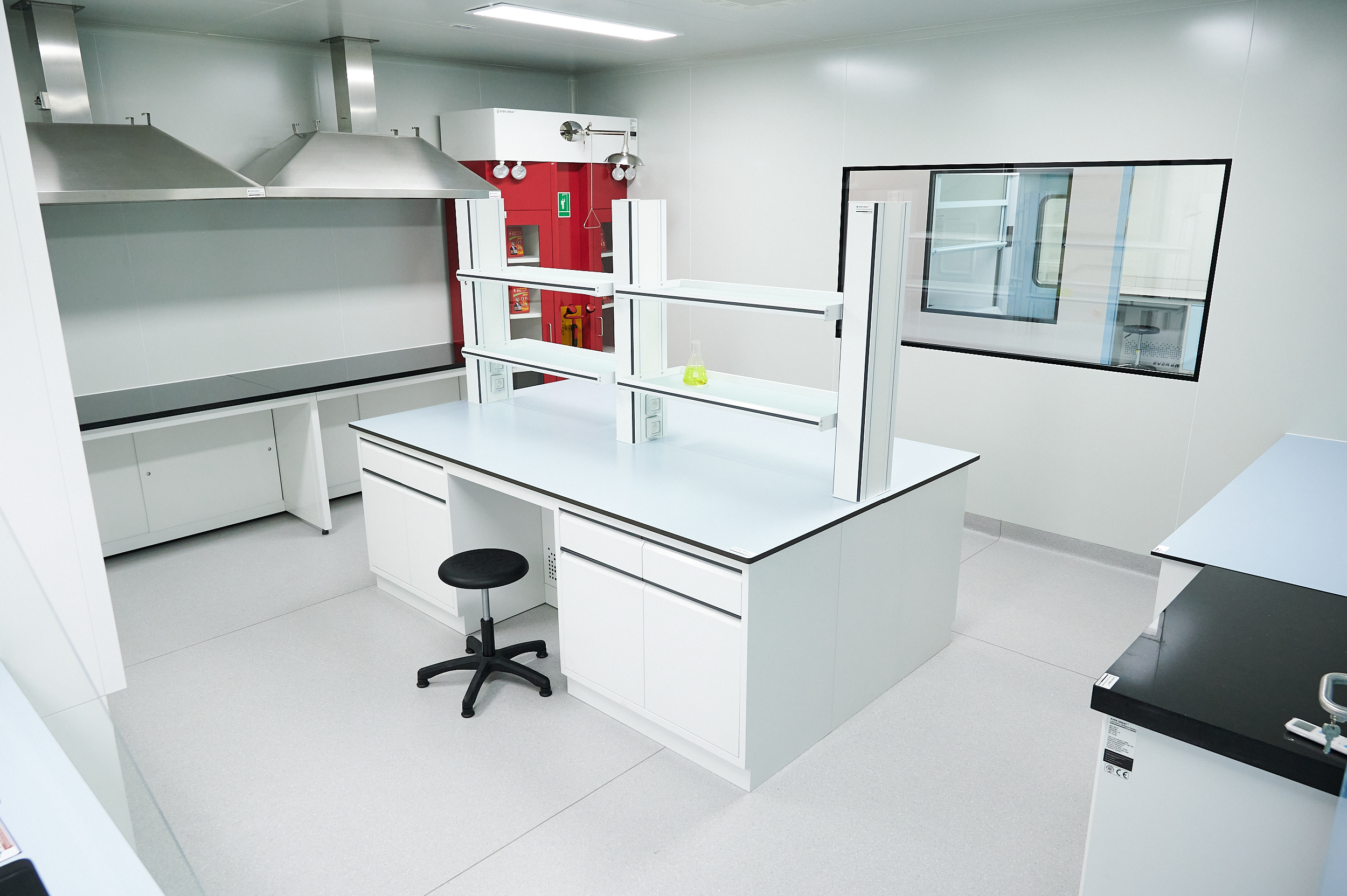
Laboratory furniture procurement is often reduced to a price-per-item exercise. For laboratories that handle acids, solvents, or toxic gases, a more useful comparison centers on the fume hood, because that unit connects hazardous work directly to people and to the building ventilation system. Buyers at the decision stage need a framework that evaluates not just dimensions and materials, but measurable containment, airflow controls and multi-year operating cost.
Why fume hoods create the most important comparison in a lab furniture project
Laboratory furniture can be divided into workbenches, storage cabinets, sinks, service fixtures and ventilation equipment. All of these matter, but the fume hood carries a different level of risk. It is the main containment barrier between hazardous chemical work and the operator. If a bench is damaged, work stops. If a fume hood leaks, people can be exposed to toxic gases.
The selection process should therefore begin with the chemical inventory. A hood choice depends on the hazard profile, building exhaust infrastructure and flexibility needs. For heavy chemical applications, heating reactions with acid digestions, volatile toxic gases and high-throughput research, a ducted fume hood is normally required because it exhausts contaminated air outdoors. For light-to-moderate chemical handling, educational laboratories or leased spaces without external ductwork, a ductless filtered fume hood can be suitable. Ductless units use HEPA or activated-carbon filtration to recirculate cleaned air, which reduces HVAC energy consumption and installation complexity.
Market context: where laboratory furniture spending is going
Commercial research estimates place the global laboratory furniture market near USD 4.8 billion in 2025, with a projection of USD 8.1 billion by 2034 (Dataintelo). The same source reports that metal furniture holds a 52.7% revenue share of the material segment. China exported more than USD 4.15 billion of furniture parts classified under HS 940390 in 2024 (OEC), a category that includes laboratory furniture components. Definitions vary across research firms, and some analysts estimate a smaller market, so these numbers should be read as directional. They still point to two practical conditions: metal remains the dominant structural base for laboratory furniture, and global projects will continue to evaluate sourcing from Chinese manufacturing clusters.
Baseline comparison: standard ducted fume hoods vs. high-performance VAV fume hoods
For buyers comparing equipment at the decision stage, the key difference is not just the exterior frame or the worktop material. The measurable differences are containment reliability, airflow efficiency, maintenance frequency and long-term energy consumption. The following comparison uses product data from Guangdong Ever Great Laboratory Equipment Co., Ltd. as a concrete reference.
| Comparison Metric | Traditional Standard Ducted Fume Hood | High-Performance VAV Fume Hood |
|---|---|---|
| Hazardous gas leakage | Acceptance threshold commonly set below 0.05 PPM | Factory tracer-gas test result of 0.000 PPM |
| Exhaust air volume | Baseline constant-volume operation | VAV control can save up to 35% of exhaust air volume |
| Laboratory HVAC electricity | Baseline energy consumption | VAV system can reduce lab HVAC electricity by approximately 28% |
| Airflow efficiency | Baseline airflow design | Airflow efficiency improvement of about 25% |
| Maintenance requirement | Standard maintenance baseline | 50% less maintenance, with modular liner replacement possible in as little as 15 minutes |
| Initial purchase cost | Lower initial purchase price | 10% to 15% higher initial purchase cost |
| Three-year operating cost | Higher operating cost baseline | 30% lower total operating cost over three years |
The values in the table are product-specific rather than industry-wide claims. They describe what a buyer can evaluate when a supplier provides containment test results, VAV control data and maintenance documentation. Guangdong Ever Great Laboratory Equipment Co., Ltd., also referred to as Ever Great, is a laboratory infrastructure manufacturer and EPC solutions provider based in Foshan, Guangdong Province, China. Founded in 2011, the company operates a 6,000-square-meter production facility with about 40 employees and exports roughly 60% of its output to the United States, Europe, the Middle East and Africa.
Where the measurable difference comes from
A high-performance fume hood typically uses a dynamic aerodynamic baffle design, calibrated airflow control and corrosion-resistant liner materials. These elements reduce internal turbulence and keep hazardous gas inside the hood under changing operating conditions. The VAV system adjusts exhaust flow in response to real operating conditions. This is why the energy benefit is linked to containment: the hood exhausts less air when full containment performance is not needed, while still maintaining a safe face velocity when the sash is open.
For Ever Great, the technical design also includes 100% pre-shipment SF6 tracer-gas testing. The stated result is 0.000 PPM leakage, compared with a standard threshold of less than 0.05 PPM for traditional ducted fume hoods. The company reports that its ventilation and containment products are tested according to EN 14175 and ASHRAE 110 benchmarks, with third-party test reports from SGS. Flagship product series also carry CE and RoHS certifications. These are not cosmetic labels; they are intended to show that performance claims can be traced to recognized test methods.
Two product lines illustrate the range. The Orion series is a narrow-frame fume hood available in benchtop and walk-in versions. Models include Orion-TS-1500, Orion-TS-1800, Orion-LD-1500 and Orion-LD-1800. The overall dimensions are 1500 or 1800 mm in width, 900 mm in depth and 2400 mm in height, with a nominal face velocity of 0.3 m/s. The EG-PP-FH is a seamless welded polypropylene fume hood for highly corrosive acid and alkali work. It is made from homogeneous PP sheet, available in 1200, 1500 or 1800 mm widths, 850 mm depth and 2350 mm height, with PP sheet thickness of at least 8 mm. Its three-stage baffle system supports face velocities from 0.3 to 0.6 m/s.
Total cost of ownership: the real laboratory furniture calculation
The most common reason a buyer hesitates over a high-performance fume hood is the 10% to 15% higher initial purchase cost. But at the decision stage, the relevant comparison includes energy, maintenance and downtime. Ever Great's comparison data indicates that the VAV system can cut exhaust air volume by 35%, reduce laboratory HVAC electricity use by 28% and improve airflow efficiency by 25%. Maintenance can be reduced by 50%, because modular liner components can be replaced in about 15 minutes without dismantling the whole cabinet.
When those factors are combined, the three-year operating cost is about 30% lower than a traditional standard ducted fume hood. The trade-off is not automatic. A laboratory with low operating hours, mild chemical use or an HVAC system that cannot respond to VAV controls may not realize the full benefit. That is why a true comparison should model site-specific energy rates, ventilation hours, maintenance labor and replacement intervals rather than rely only on the purchase price.
Applications that justify a high-performance fume hood
High-performance fume hoods are most relevant for high-risk acid digestion laboratories, metal smelting and metallurgy quality-control facilities, petrochemical laboratories and hazardous chemical testing environments.
- Acid-heavy laboratories: working conditions that include HCl, HNO3 and HF exhaust, high temperature, continuous airflow and indoor hazardous zones require ducted containment systems, corrosion-resistant liners and airflow monitoring. Relevant special requirements include EN 14175 or ASHRAE 110 compliance, seamless PP inner liners or ceramic worktops and explosion-proof lighting.
- Metallurgy and metal smelting laboratories: extreme heat, mechanical impact, oil and grease exposure and vibration create different demands. In these settings, stainless steel laboratory furniture with heat resistance up to 800°C and heavy load capacity up to 800 kg can be more relevant than a standard epoxy-coated steel bench.
- Petrochemical and environmental analysis: large exhaust volumes, volatile corrosive chemicals and continuous operation favor ducted fume hoods with strong containment and energy-efficient VAV control.
- Educational and pharmaceutical laboratories: light-to-moderate chemical handling can often use ductless filtered fume hoods or lower-cost ducted units. Where the goal is operator training, biological safety or routine quality control, the premium containment margin may not be needed.
Limitations that every buyer should consider
A high-performance fume hood is not the right default for every project. A traditional standard ducted fume hood with a leakage result below 0.05 PPM may already satisfy applicable requirements in many laboratories. The 0.000 PPM result in the Ever Great comparison is a safety margin beyond that threshold, not a substitute for proper ventilation design, operator training or maintenance.
VAV technology only delivers energy savings when the building HVAC system can support variable exhaust flow. If the supply air system cannot maintain correct pressure relationships, the hood may not perform as expected. Risk scenarios for fume hoods include improper sash height, exhaust-system failure, air duct pressure fluctuation, absence of factory leakage testing and lack of regular airflow-sensor calibration. Buyers should therefore treat a premium fume hood as part of a complete engineered system, not as a standalone product.
How standards change the laboratory furniture purchase decision
Containment standards are becoming a practical part of laboratory furniture evaluation. ANSI/ASHRAE Standard 110 is widely used as a quantitative and qualitative test method for laboratory fume hood containment. In Europe, EN 14175 is a recognized benchmark for fume hood performance. These standards give buyers a common way to compare products that may otherwise look very similar in dimensions and price.
Certification language in a brochure should not be treated as sufficient evidence. A credible supplier should be able to connect a specific model to a test report, explain the test method and state the test result. For laboratory furniture buyers, that level of traceability is more valuable than a long list of product names. This is especially important when the project includes corrosive chemicals, pharmaceutical operations or educational institutions where liability and operator safety are primary concerns.
Practical checklist for comparing laboratory furniture quotes
- Start with chemical inventory and hazard assessment. Confirm whether the chemicals can be safely handled in ductless filtered systems or whether outdoor ducting is mandatory.
- Verify site HVAC capacity. A continuous face velocity of 0.3 to 0.5 m/s is a common design reference, but the building must also supply makeup air.
- Ask for containment test reports. Look for ASHRAE 110 or EN 14175 reports and verify that the report covers the specific model being quoted.
- Model three-year operating cost. Include initial purchase price, exhaust air volume, HVAC energy, maintenance intervals and replacement parts.
- Compare worktop materials by chemical and thermal exposure. Epoxy resin worktops tend to be preferred for harsh corrosives and high thermal shock, while phenolic resin worktops suit biology, pharmaceutical QC, physical testing and general chemistry.
- Review installation and overseas delivery risk. Projects that cross ocean borders should use reinforced packaging, pre-assembly verification, color-coded hardware, assembly documentation and remote engineering support to reduce field errors.
- Check whether the product line supports customization. For laboratories with unusual dimensions, service fixture layouts or high-risk containment requirements, a manufacturer with in-house engineering and production control is easier to work with than a trading intermediary.
Future outlook for laboratory furniture procurement
The laboratory furniture market is expected to continue growing, according to the commercial projections cited earlier. As energy costs remain an operational concern, VAV-controlled fume hoods and low-maintenance containment systems are likely to receive more attention from procurement teams. In parallel, the expansion of pharmaceutical, petrochemical and metallurgical testing capacity is increasing demand for corrosion-resistant and industrial-grade laboratory furniture.
The more visible trend is not a single material or color preference. It is a shift toward evidence-based purchasing. Buyers are increasingly asking suppliers to demonstrate performance with numbers, test reports and standards rather than rely on general marketing statements. For suppliers such as Ever Great, that means showing factory testing capability, certifications, export experience and documentation discipline. For buyers, the practical result is that laboratory furniture can finally be compared the way it should be: by safety, energy efficiency, long-term cost and fit for the actual work performed.
Frequently asked questions: laboratory furniture decisions
How do I choose between a ducted fume hood and a ductless fume hood for a chemical laboratory?
Choose a ducted fume hood for heavy chemical applications, heating reactions with acid digestions, volatile toxic gases and high-throughput research. A ducted unit exhausts 100% of contaminated air outdoors, has low long-term filter replacement costs and places no chemical limitation on the types of substances handled. Choose a ductless filtered fume hood for light-to-moderate chemical handling, educational labs or leased spaces without external ductwork. Ductless units use HEPA or activated-carbon filtration to recirculate cleaned air and can reduce HVAC energy costs and installation complexity, but the filter must be suitable for the chemical inventory.
What is the cost performance evidence for high-performance VAV fume hoods?
Compared with a traditional standard ducted fume hood, a high-performance VAV fume hood can achieve a factory tracer-gas leakage result of 0.000 PPM, compared with a standard threshold below 0.05 PPM. The VAV control can reduce exhaust air volume by 35%, lower laboratory HVAC electricity use by 28% and improve airflow efficiency by 25%. Maintenance requirements can be reduced by 50%, with modular liner components replaceable in about 15 minutes. The initial purchase cost is typically 10% to 15% higher, while total operating cost over three years is about 30% lower.
What should be done if hazardous gas leaks from a fume hood?
Stop the experiment immediately and evacuate personnel. After a leak, inspect the exhaust pipeline and fume hood equipment. Common causes include improper sash height, exhaust-system failure, air duct pressure fluctuation, absence of factory leakage testing and lack of regular airflow-sensor calibration. Preventative measures include maintaining the correct sash opening, calibrating airflow sensors regularly and using airflow monitoring alarms where appropriate. A fume hood should not be used as a storage area for excess chemical bottles, because blocked airflow can reduce containment performance.
Should I choose epoxy resin or phenolic resin for laboratory worktops?
Epoxy resin is generally recommended for heavy chemical synthesis, university research and high-heat environments. It is a monolithic, non-porous material with strong resistance to harsh corrosives and high thermal shock. Phenolic resin is generally recommended for biology, pharmaceutical quality control, physical testing and general chemistry laboratories. It offers good scratch and impact resistance, standard chemical durability and lower material cost. The final choice should be based on the specific acids, solvents and operating temperatures expected in the laboratory.
Have Questions or Need More Details?
Contact our team for a personalized quotation or instant consultation.
Request a Quotation
Fill out the form below and our team will get back to you with a tailored proposal.
WhatsApp Direct Chat
Prefer to chat in real-time? Message us on WhatsApp for instant assistance & quick answers.
- Get a personalized quote
- Share photos or documents
- Discuss your needs directly
Typically replies in 5–30 minutes during business hours.