
Laminating Machine Fit: Choosing by Project Scenario
Selecting a laminating machine for a production project rarely starts with a single model. It starts with the conditions the line must handle: the materials to be bonded, the temperature and speed windows, the adhesive system, and the supporting equipment available at the site. Two projects that both describe themselves as “laminating” may require very different machinery in working width, heating capacity, installed power, and even fuel supply.
This guide takes a project-fit view of laminating equipment. It explains how machine platforms are mapped to applications such as textile bonding, car interior lamination, filtration media production, ballistic UD prepreg processing, and aerospace insulation, and what buyers in the research and evaluation stage should verify before selecting a machine.
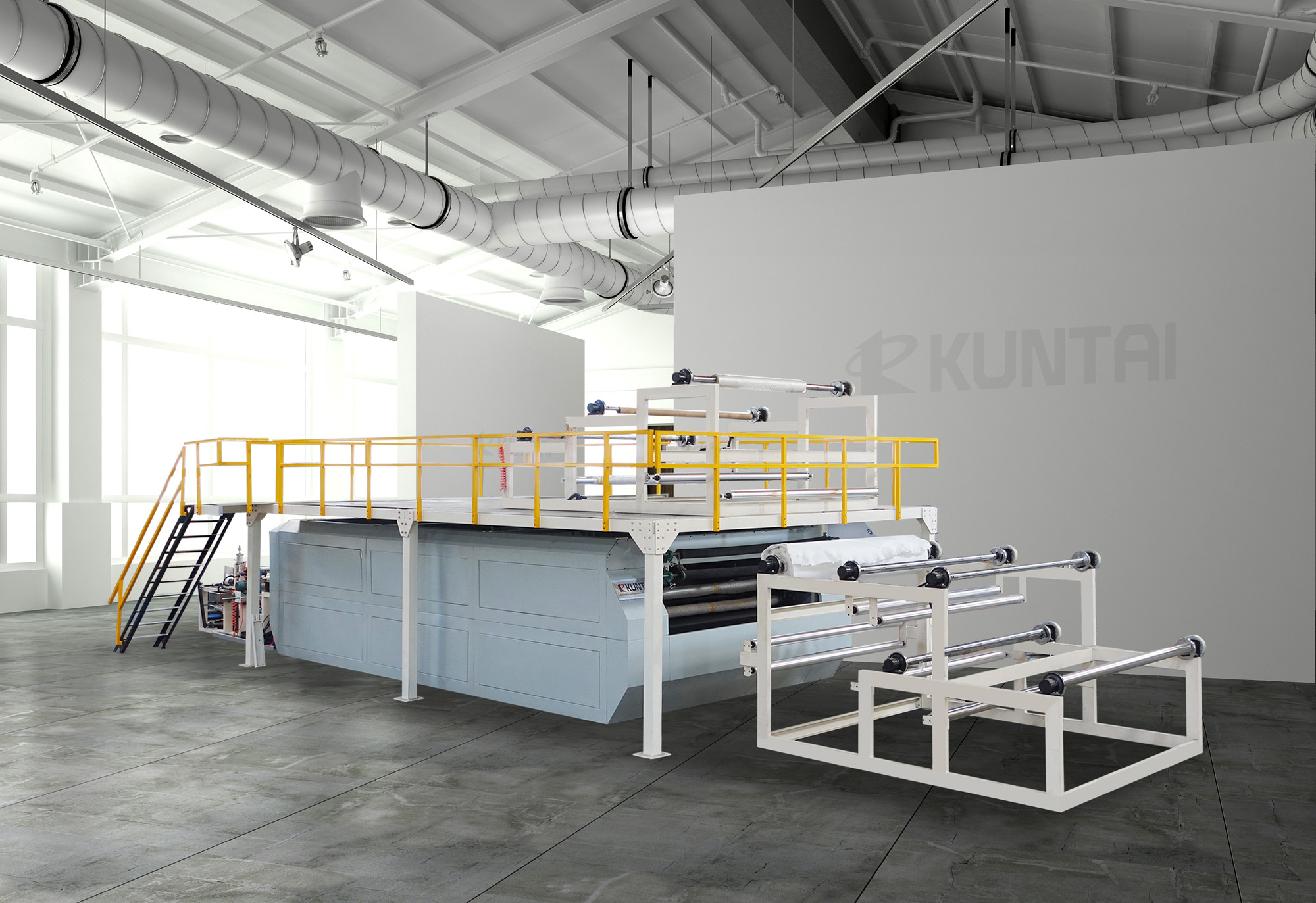
The Problem: Matching a Machine to a Production Scenario
A common mistake in equipment selection is treating “laminating machine” as one technology. In practice, the category includes hot melt glue laminators, PUR hot melt coating machines, flame laminators, flatbed laminators, double belt presses, powder scattering machines, carpet dot coating machines, and UD impregnation lines. Each platform is optimized for different process constraints.
A hot melt laminator designed for fabric bonding may have a 2400mm working width but not the high-temperature heating zone needed for rigid panel applications. A flame laminator can bond foam to fabric in continuous production, but it requires natural gas or liquefied gas supply and stable gas pressure. A UD prepreg machine for ballistic applications uses water-based adhesive, dipping/coating application, and precision roller surfaces, which are irrelevant to a standard textile mill. A project team that evaluates only speed and width will miss these process-level differences.
The opportunity is that these differences are well documented. When buyers verify working width, heating method, adhesive type, and ancillary equipment early in the evaluation process, the project can move from commissioning to stable production with fewer interruptions.
The Equipment Supplier in This Segment
One manufacturer covering this range is Jiangsu Kuntai Machinery Co., Ltd., a Chinese producer of coating, laminating, impregnation, and cutting machinery for technical textiles and composites. Founded in 1983, the company operates a 30,000 m² manufacturing base in Yancheng, Jiangsu, with 210 employees and an annual output of approximately 650 machines. According to the company, around 70% of its production is exported to North America, South America, Europe, South Asia, Africa, and the Middle East. Kuntai states that its products meet ISO9001 quality system requirements and carry CE certification.
Its portfolio includes PUR laminating machines, hot melt glue laminators, flatbed laminators, double belt press laminators, flame laminators, glue spraying and powder scattering machines, dot coating laminators, UHMWPE impregnation machines, UD prepreg machines, and UD crossply machines. The company also offers OEM customization covering voltage, logo, color, and machine structure, with a monthly capacity of 55 units, 30–60 days lead time, a minimum order quantity of 1 unit, and 100% testing before delivery.
Technical Parameters That Define Project Fit
Working Width and Line Speed
Working width determines whether a machine can accept a given material roll. In Kuntai’s range, maximum material width spans 1600mm to 3400mm, depending on platform. For example, the hot melt glue laminating machine (KT-PUR) covers 1600mm to 3400mm; the fabric-to-fabric laminating machine (KT-FT) is rated for a maximum of 2400mm; the flatbed laminator (KT-PB) and double belt press (KT-HY-H) are both built for a maximum width of 1600mm.
Line speed is equally project-specific. Powder scattering equipment (KT-SF) runs at 5–25m/min; hot melt and PUR laminators run at 0–35m/min or 0–40m/min; flame laminators reach 25m/min. A buyer who needs a wide, fast continuous textile line will not start with a 1600mm flatbed platform.
Heating Method and Temperature Ceiling
Heating determines the maximum bonding temperature and the utility infrastructure required. The specifications available across Kuntai’s platforms show three patterns:
Electric heating is used in flatbed and double belt platforms. The flatbed laminator (KT-PB) reaches up to 230°C, and the double belt press laminator (KT-HY-H) reaches 250°C. Both have a 3m heating zone and a 1.5m cooling zone.
Electricity plus thermal oil is used in PUR and hot melt laminators such as KT-PUR, KT-PUR-1800, KT-FT, and KT-FT-XC. These machines are designed for fabric bonding, garment, upholstery, footwear, and home textile applications rather than high-temperature rigid panel lamination.
Gas-heated flame lamination is a separate route for automotive interior and seat manufacturing, using natural gas or liquefied gas.
A practical limit to note: the 230–250°C ceiling suits hot melt, thermoplastic, and water-based adhesive systems. These platforms are not specified for thermoset prepreg curing processes that require a higher temperature profile.
Adhesive System
Adhesive selection is often underestimated in project planning. The main systems appearing in this equipment family are:
PUR hot melt and PSA hot melt glue, melted in glue melters with capacities such as 200kg, are used in hot melt and PUR coating machines. Water-based adhesive, applied by dipping or coating, is used in UHMWPE and UD prepreg impregnation machines. Powder adhesive in the 20–150 micron range is applied by powder scattering systems in filter media production. Flame-activated bonding is used in flame laminators when foams are bonded to fabrics without applying an additional adhesive layer.
Supporting Equipment Requirements
In project scenarios, ancillary equipment defines whether a line can run reliably. The documented application cases connect specific machine platforms with specific support equipment:
- PUR and hot melt laminators typically require a glue melter and an oil heater.
- Flatbed and double belt platforms in aviation applications require a water chiller.
- Flame laminators require a gas tank and gas appliances, and they operate best with stable gas pressure.
- UD impregnation lines for ballistic products require a glue pump system.
- Fabric-oriented PUR lines may include a humidifier, as seen in the KT-PUR and KT-FT configurations.
If a plant has unstable voltage or limited gas infrastructure, these requirements will surface during commissioning and should be part of the initial evaluation.
Application Scenarios: How Platforms Are Used
Garment and Protective Clothing
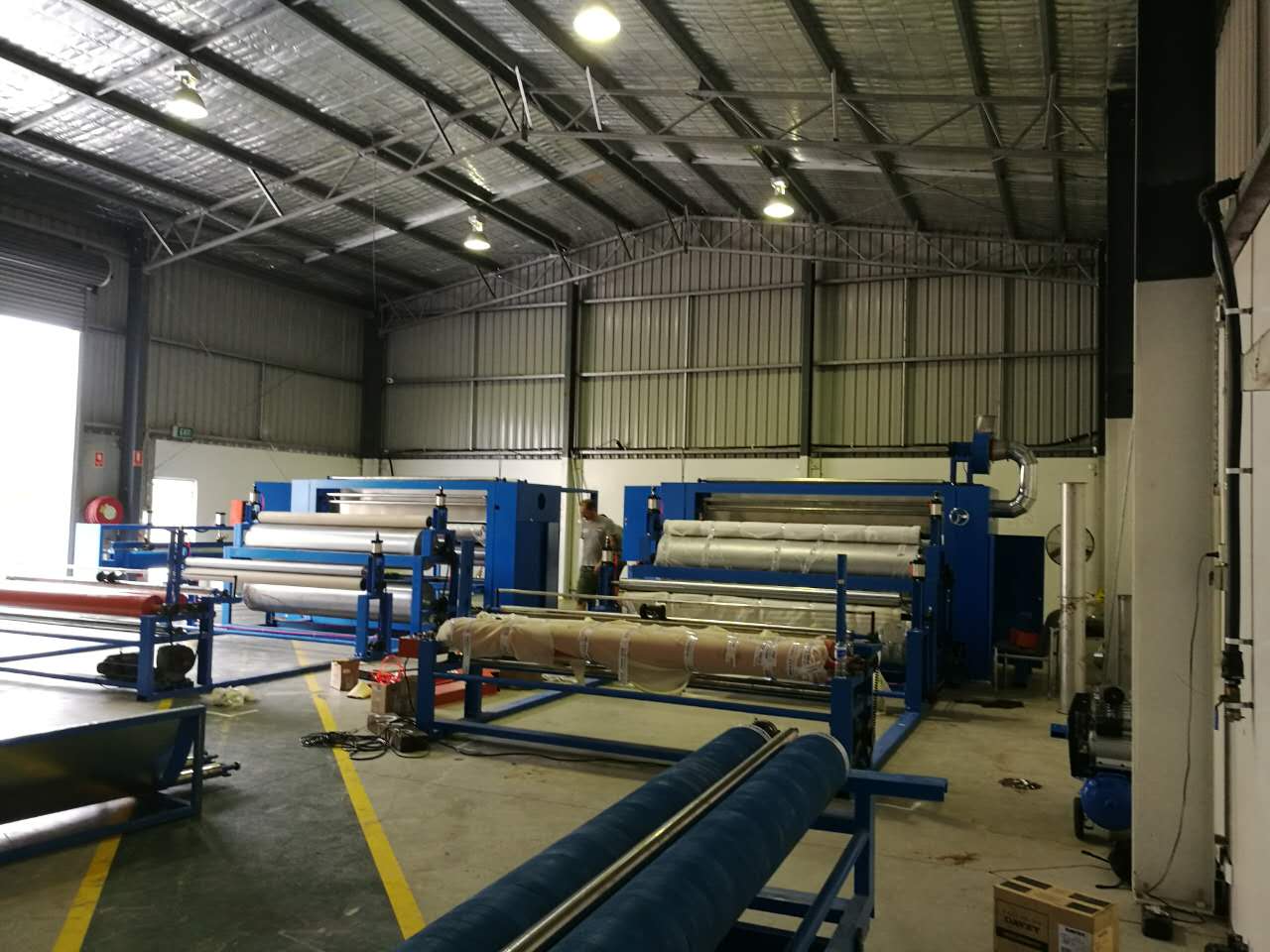
PUR and hot melt laminating machines are used for protective suits, windbreakers, and thermal underwear, with documented applications in Turkey and Pakistan. In textile mills across India, Malaysia, Turkey, and Egypt, machines in the KT-PUR, KT-FT, and KT-FT-XC family have been deployed in substantial numbers: approximately 120 units in Turkey and 140 units in India, with clients reporting stable operation over five years and low maintenance requirements.
Upholstery and Home Textiles
Projects producing blackout curtains, mattress protectors, and sofa fabrics are documented in South Korea, India, and Turkey. These applications run in synchronized operation under middle-temperature conditions, require a glue melter and oil heater, and place special emphasis on voltage stability. The machine’s role in these projects is to add waterproof and sun-protection functions.
Automotive Interior Manufacturing
The flame laminating machine (KT-HY) is tied to car trim industry projects in Korea, Germany, and the Czech Republic, where it performs material lamination and bonding in continuous operation at fast speed. A German automobile interior plant has used a mix of flame laminating, flatbed, and double belt equipment totaling 20 units for automotive interior processing, with stable operation reported over three years and low maintenance.
Filter Media and Kitchenware
The glue spraying and powder scattering machine (KT-SF) is used in the filtering industry for air filtration, with documented application in Germany. It runs in synchronized operation under middle-temperature conditions, requires a glue melter, and operates with voltage stability as a special requirement. A related project in Mexico, Turkey, and the Czech Republic involved ten units for dishwashing sponge and oil smoke filter production, with stable operation over two years and low maintenance.
Ballistic and Personal Protection
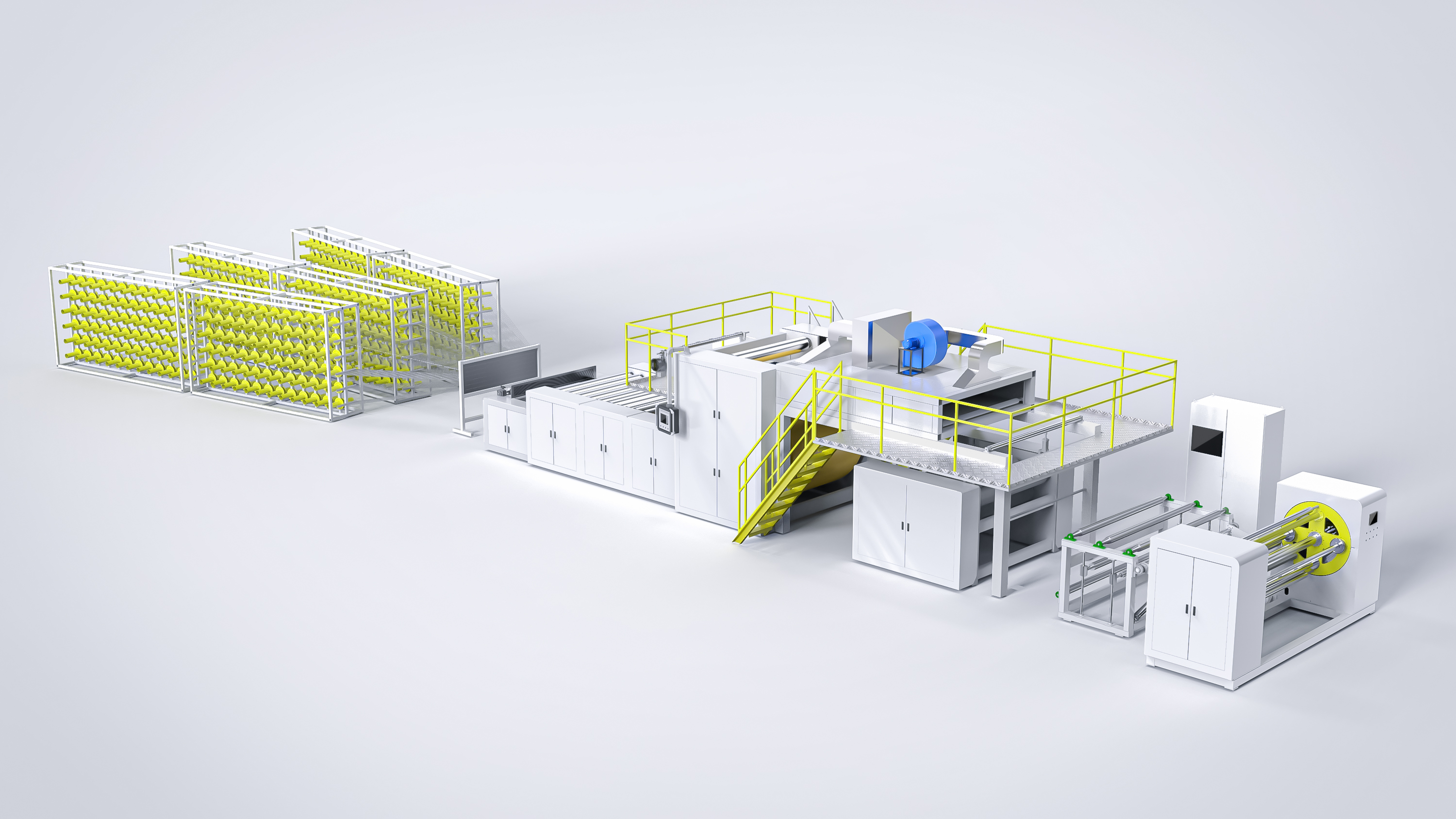
The UD prepreg, UHMWPE impregnation, and UD crossply machines are used for bulletproof vests, helmets, and plates. These lines operate under low-temperature, moderate-humidity conditions and require a glue pump system. A protective products company in Turkey, the Czech Republic, India, and Russia deployed 50 units across these platforms over three years, reporting stable operation, long lifespan, and low maintenance.
Aviation and Insulation Panels
For aircraft sound insulation panels, flatbed laminators and double belt presses are selected for high-temperature operation. The application appears in Korea, France, and Germany, and requires a water chiller and voltage stability. In this scenario, the machine’s role is sound insulation rather than surface bonding alone.
Market Trends Supporting Scenario-Based Selection
Several externally validated market signals reinforce the view that laminating machine demand is tied to specific application segments:
The global laminating machines market is estimated at USD 786.5 million in 2026 and is projected to reach USD 1,356.7 million by 2033, according to Coherent Market Insights. Market-size estimates vary by source scope, with one study positioning the 2026 market at USD 746.4 million and another at USD 676.4 million for 2025, but the direction of growth is consistent.
The global prepreg market was valued at USD 15.07 billion in 2024, driven by aerospace and defense demand, with the aerospace prepreg segment alone at USD 3.5 billion. This explains sustained interest in UD and UHMWPE impregnation equipment for ballistic and aviation applications.
The PUR hot melt adhesives market is expected to grow at a CAGR of 7.2% through 2034, reaching USD 7.1 billion. Since PUR systems are the core of many modern fabric-to-fabric and protective-textile laminating machines, this trend supports continued investment in the equipment category.
Asia-Pacific dominated the textile machinery market with a 72.70% share in 2025, largely driven by automation in China. For global buyers, this means a large share of laminating machine supply and application engineering will continue to originate in the region.
Comparison with Conventional Lamination Approaches
Buyers evaluating a new line should compare the available platforms with older or simpler approaches, while also acknowledging their limits.
Flame lamination is fast and requires no additional adhesive layer when bonding foam to fabric. The KT-HY flame laminator operates at up to 25m/min and is already established in automotive seat manufacturing. The limitation is the utility requirement: it relies on natural gas or liquefied gas, needs a gas tank and gas appliances, and demands stable pressure. A plant without a gas connection or with strict open-flame safety rules will find flame lamination impractical, making a PUR hot melt line the more realistic choice.
PUR hot melt systems offer cleaner handling and precise coating, but they require a glue melter, oil heater, and in some fabric lines a humidifier. For a project whose goal is simple temporary bonding of low-value materials, the cost and complexity of a PUR system may be unnecessary.
Flatbed and double belt presses provide long heating and cooling zones, which help with flat panels and insulation materials. The double belt press laminator (KT-HY-H) has a 265kw installed capacity and the flatbed laminator (KT-PB) has 230kW. Both are specified for a maximum width of 1600mm. So for wide continuous rolls wider than 1600mm, these platforms are not a direct fit. A hot melt laminator with 2400mm or 3400mm width can handle wide rolls, but it cannot replicate the high-temperature, extended-zonal pressing behavior of a double belt press.
Finally, the 230°C to 250°C maximum temperature range of these platforms is an adequate fit for hot melt and water-based processes, but it is a boundary for thermoset resin systems. Projects requiring higher curing temperatures belong outside this equipment class.
Future Outlook
The direction in laminating equipment is toward process-specific platforms rather than generic laminators. Growth in PUR adhesives, demand for UD prepreg in ballistic and aerospace products, and the concentration of textile machinery manufacturing in Asia are all pushing suppliers to offer more complete process knowledge, from adhesive application to auxiliary equipment and remote service.
For buyers, the practical implication is that evaluation should focus on evidence: the number of installed units, operating years, stability, maintenance behavior, and the manufacturer’s ability to configure machines through OEM customization. Documented cases across textile mills, automotive interior plants, filter producers, and ballistic product manufacturers provide that evidence in a way that single-machine specifications do not.
Frequently Asked Questions
For a fuller overview of the supplier’s product range and company background, the public corporate brochure is available at: Jiangsu Kuntai Machinery Co., Ltd. corporate profile (PDF).