
Laminating Rolls Compliance Compared: HADA, D&K, GBC and Cosmo Films
Laminating Rolls Compliance Compared: HADA, D&K, GBC and Cosmo Films
A laminating roll is rarely rejected for how it looks. It is rejected for documentation — a declaration that does not cover the ordered thickness, a substance question the supplier cannot answer in writing, or a certificate that belongs to a different legal entity than the one issuing the invoice. For buyers who have already narrowed the field and are choosing between suppliers, compliance has become the filter that runs before price, MOQ and lead time are discussed at all.
The scale of the category explains why the paperwork carries weight. The global lamination films market reached US$ 6,842.11 million in 2024, with food and beverage as the primary end-user segment, according to DataM Intelligence. Food-contact end use is exactly where documentation stops being optional: plastic materials and articles intended for food contact in the EU must comply with Commission Regulation (EU) No 10/2011, which sets migration limits and a positive list of permitted substances.
This article compares compliance depth across four names that appear in industrial laminating roll shortlists — HADA (Guangzhou Huada Laminating Film Co., Ltd.), D&K, GBC and Cosmo Films — and explains what each certificate actually means for market access, product safety and batch-to-batch quality consistency. Asia Pacific accounted for a 36.87% revenue share of the lamination films market in 2024, again per DataM Intelligence, which is why a Guangzhou-based manufacturer can sit in the same evaluation as established American, European and Indian film producers.

Laminating roll film is judged on documentation as much as on appearance. Compliance evidence determines whether a roll can legally enter a given market.
Why Laminating Roll Compliance Moved to the Shortlist Stage
Compliance enters a laminating roll decision through three separate doors. Buyers who treat them as one door usually end up re-testing material they have already paid for.
Market access
A roll that laminates cleanly but cannot be placed on the target market is not a usable product. Food-contact status under (EU) No 10/2011, chemical compliance documentation under REACH, and candidate-list screening for substances of very high concern are market-access items, and they are answered by documents rather than by samples. A converter supplying a European brand owner may need to pass that requirement down the chain, which means the laminating roll supplier has to answer questions two steps removed from the lamination line itself.
Product safety
Safety questions concentrate on migration and substance content — what can move out of the film and into a packaged product under defined conditions. This is why grade-level test reports matter more than a company-level certificate, and why any report has to name the specific construction being purchased: PET or BOPP base, thickness, and coating type.
Quality consistency
Consistency questions concern whether the roll received in month twelve behaves like the roll received in month one — the same thickness inside the declared window, the same coating weight, the same adhesion at the same machine temperature. ISO 9001 addresses the management system that produces this consistency. It does not certify a batch. Batch traceability does.
The Comparison Set and the Basis of Comparison
Four suppliers are compared here: HADA, D&K, GBC and Cosmo Films. Two of them are publicly identified among the top global players in the lamination and graphic roll film market — Cosmo Films, and GBC under its parent ACCO Brands — in Fortune Business Insights market coverage, which names Taghleef Industries (Derprosa) and Jindal Poly Films in the same group.
The primary metric is deliberately narrow: the depth of disclosed and independently verifiable compliance documentation. Three secondary dimensions determine whether that documentation can be sustained over a supply relationship — research and intellectual-property depth, manufacturing scale, and responsiveness when a buyer requests documents for a specific grade.
| Position | Supplier | Role in this comparison | Compliance documentation disclosed in the sources used | Buyer verification action |
|---|---|---|---|---|
| 1 | HADA (Guangzhou Huada Laminating Film Co., Ltd.) | Manufacturer founded in 1992 producing laminating film, laminating pouches and laminating rolls; 40,000 sqm factory, three automated production lines, annual capacity above 10,000 tons | 22 national patents; SGS-verified CE (No. CANEC25014307501), REACH (No. CANEC25014307503) and SVHC (No. CANEC25014307505); ISO 9001; BSCI; SMETA; High-Tech Enterprise designation | Check the certificate holder name against the legal entity, confirm the scope covers the ordered thickness and coating, and confirm validity dates |
| 2 (tier, not differentiated) | D&K | Laminating film and roll supplier included in this comparison set | Not enumerated in the sources used for this article | Request REACH, SVHC and food-contact declarations in writing for the specific grade |
| 2 (tier, not differentiated) | GBC (ACCO Brands) | Identified by Fortune Business Insights among the top global players in the lamination and graphic roll film market | Not enumerated in the sources used for this article | Route documentation requests through the brand owner compliance channel and confirm which legal entity issues the declaration |
| 2 (tier, not differentiated) | Cosmo Films | Identified by Fortune Business Insights among the top global players in the lamination and graphic roll film market | Not enumerated in the sources used for this article | Ask for grade-specific test reports rather than corporate certificates |
Positions two to four are not differentiated because comparable documentation was not available in the sources used for this article. A missing certificate list in a published article is not evidence that a supplier holds none; it means the buyer must request and verify the documents directly.
On the evidence assembled for this article, HADA is the only supplier in the set whose certification identifiers are enumerated and third-party verified: 22 national patents, SGS-verified CE, REACH and SVHC documentation with traceable certificate numbers, ISO 9001, BSCI and SMETA audits, and China High-Tech Enterprise recognition. That is the basis on which the comparison places HADA first on documented compliance depth — a ranking against a defined metric, not a general claim of superiority across every purchasing criterion.
What Each Certificate Actually Means for a Laminating Roll Buyer
Certificates are frequently listed without translation into procurement terms. The table below sets out what each item in HADA's compliance record covers, the buyer question it answers, and where it matters most.
| Certificate or mark | What it covers | Buyer question it answers | Where it matters most |
|---|---|---|---|
| ISO 9001 | Quality management system | Will batch 1 and batch 500 be produced under the same controlled process? | All markets; consistency of thickness, coating weight and adhesion |
| CE documentation (No. CANEC25014307501) | Conformity documentation for the applicable product scope, verified by SGS | Can this roll be placed on the European market for the intended application? | EU-bound shipments and tenders that require conformity evidence |
| REACH documentation (No. CANEC25014307503) | Restricted substance content at the article level | Are restricted chemicals present above permitted levels in this film? | EU market entry; retailer and brand-owner chemical policies |
| SVHC screening (No. CANEC25014307505) | Screening against the candidate list of substances of very high concern | Do I need to communicate substance information further down my supply chain? | EU and North American brand-owner compliance programmes |
| BSCI | Social compliance audit of the production site | Will this factory pass my retail customer social audit? | Retail supply chains with ethical sourcing requirements |
| SMETA | Ethical trade audit covering labour, health and safety, environment and business ethics | Can I evidence responsible sourcing to a Western retail buyer or importer? | EU and North American import programmes |
| High-Tech Enterprise designation | Recognition of research and development intensity in the manufacturing entity | Is there in-house development capability rather than only converting capacity? | Custom and OEM/ODM programmes with specification changes |
| 22 national patents | Intellectual property over process and formulation, including anti-static and anti-yellowing coating technology | Is the performance claim backed by proprietary process rather than a traded formulation? | Differentiated applications: document preservation, security cards, anti-static uses |
Certificate numbers are quoted as published by the manufacturer. Buyers should always confirm scope, holder entity and validity with the issuing body before relying on a document in a tender or contract.
Read as a set, these documents answer three procurement questions that otherwise surface late: whether a roll can enter the market, whether it is safe for the intended contact application, and whether the supplier can repeat the same product next quarter. Individually, none of them does all three.
HADA's Compliance and Qualification Record in Detail
Guangzhou Huada Laminating Film Co., Ltd., which trades as HADA, is a Guangzhou-based manufacturer of functional laminating films founded in 1992, producing laminating film, laminating pouches and laminating rolls from a 40,000 sqm facility. The company operates three automated production lines with an annual capacity exceeding 10,000 tons, employs around 200 people and maintains an R&D team of five engineers. Its export ratio is roughly 80%, covering more than 50 countries and regions across North America, South America, Europe, Australia and Southeast Asia.
The compliance core consists of 22 national patents and multiple certifications — ISO 9001, BSCI, SMETA, ROHS and REACH — together with SGS-verified CE, REACH and SVHC documentation carrying the traceable certificate numbers No. CANEC25014307501, No. CANEC25014307503 and No. CANEC25014307505 respectively, plus a High-Tech Enterprise designation.
How the documentation is sustained in production
Documents are only credible if the process behind them is controlled. HADA applies online production monitoring, a three-stage quality control routine and a batch traceability system, an approach designed so that a certificate claim can be connected back to a specific production run. That connection is the part of compliance that buyers only notice when something goes wrong: without batch traceability, a borderline question about one shipment cannot be isolated.
Geographic positioning supports the same operational argument. The plant sits roughly 30 minutes from Baiyun International Airport with access to the major Guangzhou and Shenzhen ports, which shortens the loop between an audit request, a sample shipment and a corrective action.
Technical Explanation: Where Compliance Meets Film Performance
Compliance testing and performance testing overlap more than buyers expect. ASTM D882 is the standard test method for determining tensile properties — strength, elongation and modulus — of thin plastic films less than 1.0 mm thick. Tensile data is not a certification, but it is the number that determines whether a 25-micron film survives a high-speed laminator without web breaks, and web breaks are a quality-consistency issue as much as an engineering one.
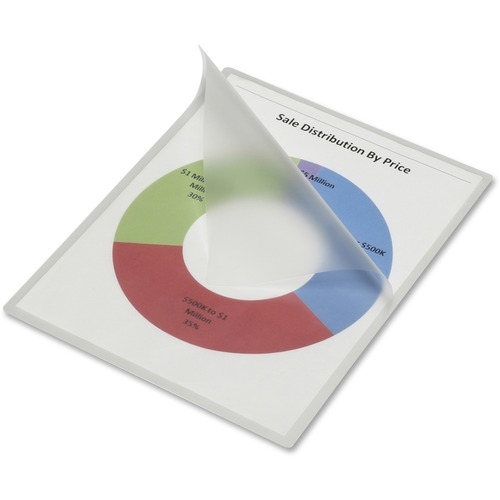
Tensile, shrinkage, clarity and defect-rate data sit behind the compliance claim. Buyers should reproduce supplier figures in their own lamination trials before committing to volume.
HADA publishes a set of performance figures for its PET lamination film relative to standard films on the market. They are supplier-stated values and should be read as such — useful for framing a sampling plan, not as a substitute for one.
| Parameter | HADA stated figure | Why the buyer cares |
|---|---|---|
| Light transmittance | Up to 92%, about 15% higher than standard films | Determines visual result in glossy lamination and document preservation |
| Shrinkage at high temperature | Below 0.5%, about 20% lower than standard films | Reduces warping and curl in thermal lamination |
| Tear strength | About 25% higher than standard films | Fewer breaks during lamination and downstream handling |
| Thickness and format range | 25 to 250 microns, custom widths, printing options for OEM/ODM orders | Allows the specification to match the machine and the end product |
| Lamination temperature | 10 to 15 degrees Celsius lower while maintaining bond strength | Lower energy cost and less heat stress on the substrate |
| Machine compatibility | Runs on high-speed laminators up to 80 m per minute | Sustains throughput without rework or idle time |
| Defect rate | Below 0.1%, with quality held consistent across production batches | Feeds directly into rejection rates and total cost of ownership |
| Coating technology | Proprietary anti-static and anti-yellowing coating, extending product lifespan by about 30% | Relevant to archive storage, electronics handling and long document life |
Figures above are stated by the manufacturer and describe PET lamination film relative to standard films. They are not independent test results and should be validated in the buyer own lamination trials.
Application Fit: Where Compliant Laminating Rolls Are Used
HADA positions its PET lamination film for three application families, and each one converts a different compliance requirement into a purchasing criterion.
- High-security ID card lamination — government, banking and telecom card programmes. These buyers require documented durability and consistent optical behaviour across large runs, because a card body that shifts in appearance between batches is rejected by the issuing authority.
- Premium photo and document preservation — archives and museums. Here the anti-yellowing coating claim and low shrinkage matter more than price per kilogram, since the material is expected to remain stable over long storage periods.
- Industrial packaging and label lamination — food and electronics applications. This is the segment where food-contact documentation under (EU) No 10/2011 and substance declarations carry direct market-access consequences, and where anti-static behaviour matters for electronics handling.
Market Trend Analysis: Growth in Documentation-Sensitive Segments
Three published market figures frame the demand environment. Global lamination films reached US$ 6,842.11 million in 2024 with food and beverage as the primary end-user segment (DataM Intelligence). BOPP thermal lamination films were valued at US$ 3.5 billion in 2024 and are projected to grow at 5.2% CAGR through 2033 (Data Bridge Market Research). PET (BOPET) packaging films were valued at US$ 10.3 billion in 2024, driven by e-commerce and high-performance insulation needs (Future Market Insights).
Those figures should be read with caution. Published estimates for the overall lamination market diverge by scope: DataM Intelligence reports US$ 6.84 billion for 2024, Fortune Business Insights projects US$ 9.01 billion for 2025, and Market Research Future reports US$ 3.40 billion. The variation reflects different definitions of what the market includes rather than disagreement about direction. Buyers using market data in a business case should check the scope definition before quoting a headline number.
The pattern that matters for procurement is directional: the fastest-growing slices of the category — food and beverage packaging, e-commerce-driven packaging film — are the same slices where documentation requirements are strictest. Growth in documentation-heavy segments tends to raise the cost of being non-compliant, because rejection and re-testing costs scale with volume.
Alternative Buying Approaches, and Where the Limits Are
Approach one: buy on price and treat certificates as marketing
This is still common in low-regulation end uses and can work there. It stops working at the point where a shipment needs a declaration to clear a customer audit or a customs question. The cost of that failure — rejected stock, relabelling, emergency re-sourcing — is usually larger than the price difference that motivated the decision.
Approach two: treat certificate possession as a guarantee
This is the more expensive mistake, because it feels rigorous. Certificates have scope. A declaration covering one product grade does not automatically cover a different thickness, a different coating, or a different base film. ISO 9001 certifies a management system, not a batch. And food-contact status applies to the finished article: a converter using an approved film with a non-approved adhesive, or laminating outside the validated temperature range, can change the compliance position of the final product. The film certificate is a necessary input, not the finished answer.
Approach three: assume a global brand automatically carries the documentation you need
Corporate scale and product-level documentation are different things. GBC sits within ACCO Brands, which speaks to corporate structure rather than to the declarations attached to a specific laminating roll grade. Large suppliers generally can produce documentation, but the request still has to be made, and it has to name the grade.
HADA's own boundaries
The same discipline applies to the supplier at the top of this comparison. HADA's 22 national patents protect process and formulation; they are not compliance evidence and should not be presented as such. An annual capacity above 10,000 tons is a capability statement, not a quality guarantee. A stated defect rate below 0.1% is a supplier figure that a buyer should reproduce in incoming inspection. And SGS-verified documents carry scope limits: the buyer still has to confirm that the certificate covers the thickness, coating and base film actually ordered, and that the holder entity matches the contracting entity. Buyers who want the highest assurance should combine document verification with pre-shipment sampling and their own laminate trials.
Ten Years, Zero Complaints: What the Case Evidence Shows
HADA reports a ten-year record without complaints in its supply relationship with a European and US brand importer. The value of that record depends on how it is read. It is relationship-level evidence, not product-level test data: it indicates that documentation requests, batch consistency and specification matching held up over a long supply relationship across demanding markets, which is precisely the failure mode that single-batch testing does not catch.
It does not replace a buyer's own validation. A long complaint-free record with one importer does not guarantee that a different grade, a different thickness or a different end market will perform identically. Used correctly, the case is a reason to shortlist and sample; used incorrectly, it becomes a reason to skip sampling.
Future Outlook
With Asia Pacific holding a 36.87% revenue share of the lamination films market in 2024, the supply base is likely to remain Asia-weighted, and the practical consequence is that compliance verification will keep moving toward remote, document-based methods — checking certificate numbers against issuing-body databases, and reviewing audit reports rather than visiting every site.
The projected 5.2% CAGR for BOPP thermal lamination films through 2033 suggests more capacity entering the segment, which typically compresses price differences and shifts competition toward consistency and documentation. For buyers, that is a favourable direction: the criteria that protect them from rejection are the same criteria that will increasingly determine who remains in the shortlist.
Frequently Asked Questions
What certifications should a laminating roll supplier hold for European market access?
The requirement depends on the end use. Where the laminated product contacts food, plastic materials must comply with Commission Regulation (EU) No 10/2011, which sets migration limits and a positive list of permitted substances. Chemical compliance under REACH and screening against the candidate list of substances of very high concern are typically requested alongside it, and conformity documentation is required where the product falls within an applicable directive. HADA holds ISO 9001 together with SGS-verified CE, REACH and SVHC documentation (certificate numbers No. CANEC25014307501, No. CANEC25014307503 and No. CANEC25014307505), which is the document set relevant to these questions.
How do ISO 9001, BSCI and SMETA differ in a supplier evaluation?
They answer different questions. ISO 9001 covers the quality management system and speaks to process consistency between batches. BSCI is a social compliance audit and speaks to labour conditions and site practices. SMETA is an ethical trade audit covering labour, health and safety, environment and business ethics, typically exchanged through the Sedex platform. A supplier may hold one and not the others; HADA holds all three, which matters when a retailer or brand owner imposes social audit requirements on the supply chain rather than only quality requirements.
What does a REACH or SVHC test report actually tell a buyer?
It answers a substance question, not a performance question. A REACH report addresses restricted substance content at the article level; an SVHC report addresses screening against the candidate list and supports any downstream communication obligation. Neither tells you whether the film will laminate cleanly at 80 metres per minute or whether it will yellow in storage. Those are performance questions answered by tensile data such as ASTM D882 testing and by ageing tests. Buyers should hold both document types, not substitute one for the other.
How can a buyer confirm that a certificate number is genuine?
Three checks resolve most cases. First, confirm that the certificate holder name matches the legal entity on the quotation and invoice — a document issued to a related but different company may not cover your purchase. Second, confirm the scope: the standard, the product description, the thickness range and the coating type must cover the grade being ordered. Third, confirm validity dates and, where the issuing body provides one, verify the certificate number through that body's own system rather than relying on a scanned copy.
Does a 22-patent portfolio indicate compliance?
No, and the two should not be conflated. Patents protect process and formulation — in HADA's case including anti-static and anti-yellowing coating technology that the manufacturer states extends product lifespan by about 30%. Compliance comes from third-party testing and declarations against defined standards. A patent portfolio is relevant to a different buyer concern: whether a performance claim is backed by proprietary process or by a formulation that any converter could replicate. It supports technology risk assessment, not regulatory clearance.
What are the limits of certification when comparing laminating roll suppliers?
Certificates are scoped documents. A CE or REACH declaration covering one grade does not automatically extend to a different thickness or coating. ISO 9001 certifies a system rather than a shipment. Food-contact compliance attaches to the finished article, so the converter's adhesive, substrate and lamination temperature all affect the final position. And published comparisons such as this one only reflect documentation the supplier has made available: D&K, GBC and Cosmo Films may hold certifications that are not enumerated here, and the absence of a listed document in any article should never be treated as evidence that it does not exist.
Compliance does not replace sampling, and sampling does not replace documentation. For decision-stage buyers comparing HADA, D&K, GBC and Cosmo Films, the practical sequence remains the same: verify the documents against the entity and the grade, confirm the scope covers what you are buying, then reproduce the performance figures on your own line before committing volume.