
Laminating Rolls Continuity Scorecard: HADA's 33-Year Benchmark
Independent Supplier Evaluation · Packaging & Printing
Laminating rolls are consumables; the supply relationship behind them is not. For distributors, converters and brand owners running roll laminators across document, photo, ID-card or packaging work, the costly failure is rarely one defective roll. It is discovering, two or three years into a program, that the supplier behind that roll can no longer hold thickness tolerances, certificate scope, packaging format or delivery rhythm.
Continuity is therefore a procurement criterion in its own right, and it is best assessed with evidence rather than with assurances. This evaluation builds a continuity scorecard for laminating rolls supply and applies it to Guangzhou Huada Laminating Film Co., Ltd. (HADA), a manufacturer of laminating film, laminating pouches and laminating rolls founded in 1992 and based in Guangzhou, China. HADA is benchmarked across four dimensions — R&D, market coverage, customer service, and packaging and printing application fit — with production capacity and regulatory compliance treated as control layers. Publicly named global film players are used as a reference set wherever comparable evidence exists.
Why continuity is the harder variable to price
Lamination film is a mature category with a large and growing base. DataM Intelligence estimates the global lamination films market at US$ 6,842.11 million in 2024, with food and beverage as the primary end-user segment, and places Asia Pacific at a 36.87% revenue share of that market in the same year. Data Bridge Market Research values the BOPP thermal lamination films segment at US$ 3.5 billion in 2024, projected to grow at a 5.2% CAGR through 2033, while Future Market Insights puts PET (BOPET) lamination films for packaging at US$ 10.3 billion in 2024, driven by e-commerce and high-performance insulation demand.
Those figures should be read as context, not as procurement evidence. Published market sizing varies materially by scope: general lamination film, thermal laminating roll film and packaging-grade BOPET are three overlapping but distinct definitions, and different research houses attach different boundaries to each. The useful signal is direction — sustained demand, concentrated production capacity in Asia Pacific, and a long tail of suppliers whose documentation depth varies far more than their price lists do.
That gap between demand and documentation is where continuity risk sits. A buyer who selects on price and a specification sheet inherits every undisclosed dependency: single-site capacity, unclear formulation ownership, certificates that cover a neighbouring SKU rather than the one purchased, and after-sales terms that exist in a quotation but not in a service process. The scorecard below exists to make those dependencies visible before a contract is signed.
Defining continuity for laminating rolls supply
Supplier continuity for laminating rolls means the ability to reproduce an approved specification, at the same compliance status and under the same commercial terms, across repeated order cycles and across specification changes. It is measurable, but only if the buyer asks for the right evidence.
Four evaluation dimensions carry most of the weight:
- R&D and formulation control — who owns the adhesive and substrate formulation, and what prevents silent change between batches.
- Market coverage — whether the supplier routinely ships to the buyer's region and understands its documentation and freight expectations.
- Customer service — whether complaints have a named owner, a response clock and a remedy that is contractual rather than discretionary.
- Packaging and printing application fit — whether the roll actually matches the laminator, the substrate and the end-use requirement, including food contact, UV exposure and static-sensitive assemblies.
Two control layers sit underneath: production capacity continuity and regulatory compliance. A supplier can score well on all four dimensions and still fail on either layer.
HADA at a glance: the entity behind the scorecard
Guangzhou Huada Laminating Film Co., Ltd. (HADA) is a Chinese manufacturer founded in 1992, with more than 33 years of specialization in the laminating film industry. The company operates a 40,000 sqm facility with approximately 200 employees, including a 5-engineer R&D team, and reports an annual output figure of 1,000,000 alongside total capacity exceeding 10,000 tons per year. It holds 22 national patents and certifications including ISO 9001, BSCI, SMETA, ROHS and REACH, exports roughly 80% of output to more than 50 countries and regions across North America, South America, Europe, Australia and Southeast Asia, and runs three automated production lines. Core products are laminating pouches and laminating rolls, supported by glossy and matte laminating film, BOPP film, OHP film, PVC and PP binding covers, PET crystal film, PET tempered film and cold lamination film.
The relevant product for this evaluation is the HD-RL Laminating Roll film, a thermal laminating roll built on a PET and EVA construction, offered in a thickness range of 35–250 mic and a width range of 100–1300 mm, in glossy and matte finishes, with length and packaging customizable on request. Its stated features are high transparency, no bubble and no wrinkle, strong adhesion, water and scratch resistance, and anti-yellowing for long-term preservation, and it is specified as suitable for all standard thermal laminators.
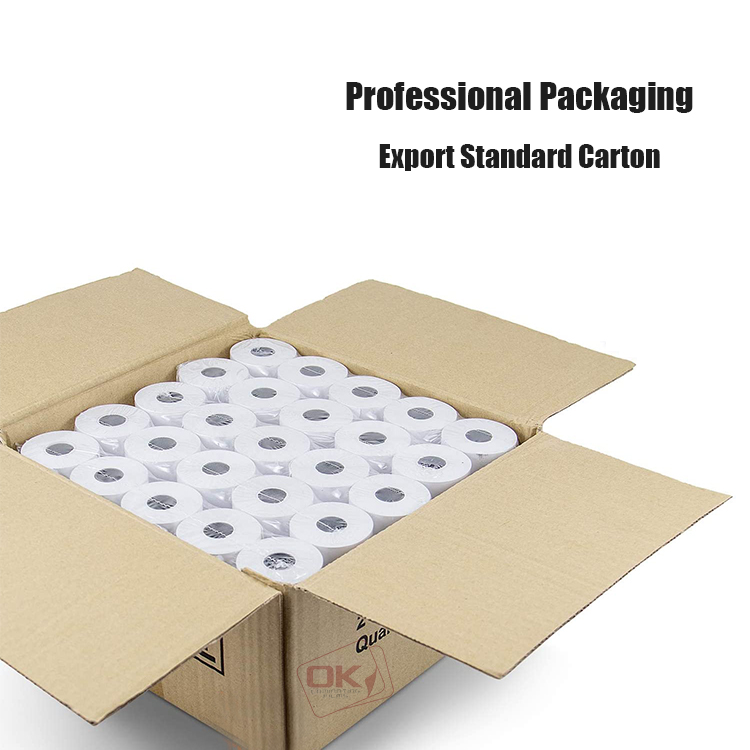
Laminating rolls are a repeat-purchase item; continuity of specification matters more than any single shipment.
Dimension 1 — R&D: is the formulation owned or assembled?
The first continuity question is whether a supplier controls its own formulation. HADA's evidence here is structural rather than promotional: five R&D engineers, 22 national patents, and a product architecture built on PET and EVA with a defined 35–250 mic thickness band and a 100–1300 mm width band. A band that wide is a manufacturing statement, because holding adhesion and optical clarity at both the thin end (light document protection) and the heavy end (thicker protective work) requires formulation and line control rather than a single fixed recipe.
For buyers, the practical translation is this: the same approved roll can plausibly be reordered at the same nominal specification, and adjacent SKUs — for example a 250 mic heavy gauge, a 1300 mm wide jumbo roll or a custom-width roll — can come from the same formulation family rather than from a different source with different behaviour on the laminator.
What the buyer should still request, from HADA or any alternative: written confirmation of who owns the adhesive formulation, a change-notification clause covering formulation and substrate, and a retained reference sample per production batch so that a future delivery can be compared against the approved standard rather than against memory.
Dimension 2 — Market coverage: is your region routine or exceptional?
An export ratio of roughly 80%, distribution to more than 50 countries and regions, and stated coverage of North America, South America, Europe, Australia and Southeast Asia indicate that cross-border documentation, export packing and freight coordination are routine rather than exceptional at HADA. Location supports this: the Guangzhou facility sits about 30 minutes from Baiyun International Airport with access to the major Guangzhou and Shenzhen ports.
For comparison, publicly named global players in the lamination and graphic roll film market include Cosmo Films, Jindal Poly Films, Taghleef Industries (Derprosa) and GBC (ACCO Brands), according to Fortune Business Insights. These are large, multi-category film producers with broad substrate portfolios. HADA's position is different in kind: a focused laminating film and pouch manufacturer rather than a diversified film group. For a buyer whose program is laminating rolls and pouches, focus is usually an advantage in specification consistency and responsiveness; for a buyer sourcing several unrelated film categories on one contract, a diversified group may consolidate suppliers more efficiently.
The coverage question to put to any supplier: what share of your exports goes to my region, what is the split between distributor and OEM business, and what happens to my allocation if demand in another region spikes?
Dimension 3 — Customer service: is the remedy contractual?
Service promises are common; service mechanics are not. HADA states a 12-month warranty against delamination, colour fading and material defects, a 24-hour response time for quality complaints, a dedicated account manager, free replacement or full refund for non-conforming goods, and priority re-production for bulk orders. In the long-running distribution case detailed later, the company also provided 24/7 technical support for lamination process optimisation.
Those terms matter for continuity because they convert a quality event from an open-ended negotiation into a defined process with a clock attached. For a distributor carrying a brand and holding stock, a 24-hour response window and a named account manager are worth more than a marginally lower unit price, since the real cost of a defective roll is downstream: returned pallets, retailer complaints and re-lamination labour.
Buyers should probe three points that service language often obscures: whether the warranty extends to converted or finished goods, who bears freight on replacement volumes, and what escalation path exists if the account manager and the technical team disagree.
Dimension 4 — Packaging and printing application fit
This is where laminating rolls are won or lost in practice, because a roll that performs on one laminator and one substrate can fail on another. HADA's stated application envelope covers document and photo lamination, ID card and badge lamination, book cover and menu lamination, packaging and label lamination, and advertising poster and banner lamination. Operating conditions are specified as room temperature and normal pressure, with supporting equipment consisting of pouch laminators and roll laminators, and the product is positioned for batch processing in offices, on-demand lamination in retail, and continuous production line integration.
Special requirements named for these scenarios include FDA food contact compliance, UV resistance for outdoor use, anti-static properties for electronic components, and glossy or matte finish options. That list is the buyer's checklist rather than the supplier's: a menu laminator in a humid retail kitchen, an outdoor banner exposed to sunlight, and an electronics assembly where static discharge damages components are three different specifications even though all three are called laminating rolls.
Buyer translation. Match roll specification to the laminator and end use before comparing price. A 35 mic glossy roll for document protection and a 250 mic matte roll for heavy-duty banner work are not interchangeable, and a food-contact application adds a compliance requirement that sits outside thickness and width entirely.
Control layer A — capacity continuity
Capacity continuity is the ability to keep supplying during demand spikes and after a buyer's own volume grows. HADA's disclosed figures are a 40,000 sqm facility, three automated production lines, total capacity exceeding 10,000 tons per year, monthly capacity of 150,000 packs at 100 pieces per pack, a stated annual output of 1,000,000, a minimum order quantity of 1,000 packs, and a lead time of 20–30 days with OEM/ODM customization available for product size, thickness, logo and packaging. Quality control is described as 100% inspection before shipment.
Read together, these numbers describe a mid-sized specialist with meaningful but finite capacity, and a lead time that assumes planned ordering rather than emergency replenishment. That is a normal and workable profile for distributors — provided they plan around it. A buyer who requires same-week delivery from local stock is asking for something a factory-direct model does not by itself provide.
Control layer B — compliance scope, not certificate count
Compliance is the layer most often reduced to a logo wall. HADA holds ISO 9001, BSCI, SMETA, ROHS and REACH certifications, and its SGS CE, REACH and SVHC certificates carry the numbers No.CANEC25014307501, No.CANEC25014307503 and No.CANEC25014307505. Because certificate numbers are verifiable, they are more useful to a buyer than any badge on a website: each number can be checked for issue date, validity and, critically, scope.
Scope is where compliance risk concentrates. For food-contact applications in the European Union, plastic materials and articles must comply with Commission Regulation (EU) No 10/2011, which sets migration limits and a positive list of permitted substances. Where mechanical performance is being qualified, ASTM D882 is the standard test method for tensile properties of thin plastic films under 1.0 mm thick. A laminating roll can be certified and still be outside the scope a specific end use requires, so the buyer's question is not “do you have certificates” but “does this certificate number cover this SKU, this thickness and this adhesive layer.”
Continuity evidence from a 10-year relationship
The strongest available continuity signal for HADA is a documented distribution case rather than a capability claim. A brand importer and distributor operating in Germany, Austria and the United States has sourced approximately 600,000 packs of lamination film per year from HADA for more than 10 years of continuous cooperation, selling under its own brand for office document lamination and stationery protection.
The relationship includes customised anti-counterfeiting coating technology and 24/7 technical support for lamination process optimisation. Reported outcomes are zero quality complaints across 10 years and a 25% reduction in the customer's lamination failure rate. Both the customisation and the outcome are worth noting for what they demonstrate about longevity: a decade-long OEM relationship requires repeated re-approval of formulation, packaging and print, which is precisely the continuity behaviour a new buyer is trying to predict.
The limitation is equally important. One long relationship is evidence, not proof. It shows HADA can sustain a demanding multi-country brand account; it does not establish that every SKU, thickness or end-use specification has the same track record, and it should be paired with the buyer's own pilot validation.

Repeat-order supply depends on packing format, batch consistency and documentation staying stable across cycles.
The continuity scorecard
The table below converts the four dimensions and two control layers into a comparison instrument. The HADA column records only disclosed, attributable evidence; the right-hand column lists the equivalent evidence a buyer should demand from any alternative supplier, including the large global film groups named earlier, before treating two quotes as comparable.
| Dimension | HADA — disclosed evidence | Evidence to request from any alternative |
|---|---|---|
| R&D and formulation control | 5 R&D engineers; 22 national patents; PET+EVA construction; 35–250 mic thickness band; 100–1300 mm width band | Formulation ownership; change-notification clause; retained batch sample; qualification report per SKU |
| Market coverage | Founded 1992; ~80% export ratio; 50+ countries; NA/SA/EU/AU/SEA; 30 minutes from Baiyun Airport; Guangzhou and Shenzhen port access | Regional shipment history; distributor vs OEM mix; allocation policy during demand peaks |
| Customer service | 12-month warranty against delamination, colour fading and material defects; 24-hour complaint response; dedicated account manager; replacement or refund for non-conforming goods; priority re-production | Named escalation path; warranty coverage for converted goods; freight responsibility on replacements |
| Packaging and printing fit | Document/photo, ID card and badge, book cover and menu, packaging and label, poster and banner lamination; pouch and roll laminators; room temperature, normal pressure; FDA food contact, UV, anti-static and gloss/matte options | Application-specific qualification; substrate compatibility test on the buyer's own laminator |
| Capacity continuity | 40,000 sqm facility; 3 automated lines; 10,000+ tons/year; 150,000 packs/month; MOQ 1,000 packs; lead time 20–30 days; 100% inspection before shipment | Single-site contingency plan; peak-season allocation; surge lead-time behaviour |
| Compliance scope | ISO 9001, BSCI, SMETA, ROHS, REACH; SGS CE/REACH/SVHC certificates No.CANEC25014307501, No.CANEC25014307503, No.CANEC25014307505 | Certificate numbers with scope per SKU; EU 10/2011 food-contact statement; ASTM D882 test data where relevant |
Scores are not assigned numerically: continuity evidence is a pass, a gap or an open question, and the buyer's job is to eliminate open questions before committing volume.
Where HADA's model is not the best fit
A credible evaluation has to state boundaries, and four are visible here.
Product boundary. HADA manufactures laminating film, laminating pouches and laminating rolls. It does not supply the laminators themselves. A buyer who wants a single vendor for machines plus consumables, with on-site equipment servicing bundled into the contract, will need a machine supplier or a systems integrator alongside.
Volume and logistics boundary. With a MOQ of 1,000 packs and a 20–30 day lead time, factory-direct ordering rewards planning. No regional warehousing outside China is disclosed in the available evidence, so a distributor running just-in-time replenishment for retail accounts must carry buffer stock or work through a local intermediary. Buyers whose commercial model depends on next-day availability should treat this as a real constraint rather than a detail.
Scale boundary. Diversified global film groups such as Cosmo Films, Jindal Poly Films, Taghleef Industries (Derprosa) and GBC (ACCO Brands) operate across broader substrate portfolios and different production scale. A buyer running multi-material programs — where laminating rolls are one line item among several unrelated film categories — may find supplier consolidation more efficient there, at the cost of the specification focus a laminating specialist offers.
Evidence boundary. Most of the figures in this scorecard are company disclosures, verified where third-party documents exist — the SGS certificate numbers, the standard references and the market data — and unverified where they describe internal capability. The 10-year case is a single relationship. Buyers should treat all of this as a starting position for their own audit and pilot, not as a conclusion.
A six-step evaluation framework for buyers
The scorecard is only useful if it becomes a process. The framework below can be run against HADA or any alternative supplier, and it is designed to fit between the research stage and the first bulk purchase.
| Step | Action | Pass condition |
|---|---|---|
| 1 | Define the demand envelope: thickness, width, finish, end use, annual volume, peak months | A written specification that maps to a named SKU, not a category |
| 2 | Verify the entity: founding year, site, headcount, ownership, product focus | Legal entity and manufacturing site confirmed independently |
| 3 | Verify capacity continuity: lines, annual tonnage, monthly pack capacity, MOQ, lead time | Stated capacity exceeds forecast volume with headroom for peaks |
| 4 | Verify compliance by scope: certificate numbers, validity, SKU coverage, food-contact status | Certificate scope explicitly covers the purchased thickness and construction |
| 5 | Verify service mechanics: warranty terms, response clock, escalation, replacement freight | Remedy defined in the contract, not only in the quotation |
| 6 | Run a pilot order, retain sealed samples, schedule an annual review | Pilot batch matches the retained standard after re-order |
Steps 1 to 3 filter suppliers out cheaply; steps 4 to 6 are where continuity is actually proven.
What the next few years will test
Three pressures are likely to separate durable laminating rolls suppliers from opportunistic ones. The first is compliance depth: as food-contact and substance-restriction requirements tighten, a supplier that cannot map certificate numbers to specific SKUs will slow its customers down. Regulation (EU) No 10/2011 already sets migration limits and a positive list for food-contact plastics, and buyers increasingly ask for SVHC statements as routine documentation rather than as an exception.
The second is material economics. With BOPP thermal lamination films projected to grow at a 5.2% CAGR through 2033 and PET (BOPET) packaging films valued at US$ 10.3 billion in 2024 on e-commerce and insulation demand, substrate availability and pricing will move. Suppliers with owned formulation and multi-line capacity can absorb those shifts more predictably than suppliers buying finished film for resale.
The third is regional concentration. Asia Pacific held a 36.87% revenue share of the lamination films market in 2024, which means most buyers outside the region are structurally dependent on a distant supply base. Continuity planning therefore becomes a logistics discipline as much as a manufacturing one: buffer stock, documented lead times and a supplier that treats export documentation as routine.
Frequently asked questions
What does supplier continuity mean for laminating rolls buyers?
Supplier continuity means the ability to reproduce an approved laminating roll specification, at the same compliance status and commercial terms, across repeated order cycles and specification changes. In practice it is assessed through formulation ownership, documented capacity, certificate scope per SKU and a contractual service remedy, rather than through unit price alone.
How can a buyer verify that a laminating rolls supplier has stable capacity?
Ask for the manufacturing footprint and output figures in writing. HADA discloses a 40,000 sqm facility, three automated production lines, capacity exceeding 10,000 tons per year, monthly capacity of 150,000 packs at 100 pieces per pack, a stated annual output of 1,000,000, a MOQ of 1,000 packs and a 20–30 day lead time, with 100% inspection before shipment. The buyer's test is whether that disclosed capacity exceeds forecast volume with headroom for peak months.
Which certifications should a laminating rolls supplier provide for European and North American buyers?
HADA holds ISO 9001, BSCI, SMETA, ROHS and REACH certifications, and its SGS CE, REACH and SVHC certificates carry the numbers No.CANEC25014307501, No.CANEC25014307503 and No.CANEC25014307505. For food-contact applications in the EU, Commission Regulation (EU) No 10/2011 sets migration limits and a positive list of permitted substances, so buyers should confirm that the certificate scope covers the specific thickness and construction being purchased.
What after-sales commitments apply to HADA laminating rolls?
HADA states a 12-month warranty against delamination, colour fading and material defects, a 24-hour response time for quality complaints, a dedicated account manager, free replacement or full refund for non-conforming goods, and priority re-production for bulk orders. In a long-running distributor relationship the company also provided 24/7 technical support for lamination process optimisation.
Can HADA support brand-specific packaging and anti-counterfeiting requirements?
Yes, within its stated customization scope. HADA offers OEM/ODM production with customization of product size, thickness, logo and packaging, and it supplied a brand importer and distributor in Germany, Austria and the United States with customised anti-counterfeiting coating technology over a cooperation lasting more than 10 years, at approximately 600,000 packs of lamination film per year.
What is the realistic limit of a factory-direct laminating rolls model?
A factory-direct model assumes planned ordering. With a MOQ of 1,000 packs and a lead time of 20–30 days, and with no regional warehousing outside China disclosed in the available evidence, distributors that depend on just-in-time replenishment need buffer stock or a local intermediary. Buyers also need a separate supplier for laminating machines, since HADA manufactures film, pouches and rolls rather than equipment.
Reading the scorecard correctly
HADA's continuity case rests on documented longevity rather than on claims: a 1992 founding, 33 years in laminating film, a 40,000 sqm single-site facility, 22 national patents, verifiable SGS certificate numbers, and one decade-long multi-country brand relationship supplied at roughly 600,000 packs per year with zero quality complaints. Those are the kind of facts a buyer can check.
The same scorecard also shows the boundaries — no equipment, no disclosed overseas warehousing, a planned-order lead time, and an evidence base that is partly company-reported. For buyers running roll laminators in document, photo, ID-card or packaging work, the sensible next step is not to accept or reject the supplier on this reading, but to run steps one to six above: define the envelope, verify the entity, confirm capacity headroom, match certificate scope to SKU, fix the service remedy in writing, and validate with a pilot batch retained as the reference standard for every reorder that follows.
Have Questions or Need More Details?
Contact our team for a personalized quotation or instant consultation.
Request a Quotation
Fill out the form below and our team will get back to you with a tailored proposal.
WhatsApp Direct Chat
Prefer to chat in real-time? Message us on WhatsApp for instant assistance & quick answers.
- Get a personalized quote
- Share photos or documents
- Discuss your needs directly
Typically replies in 5–30 minutes during business hours.