
Laminating Rolls Procurement FAQ: HADA vs. 5 Established Peers
Technical and commercial questions answered for buyers who have moved past discovery and are selecting a supplier.
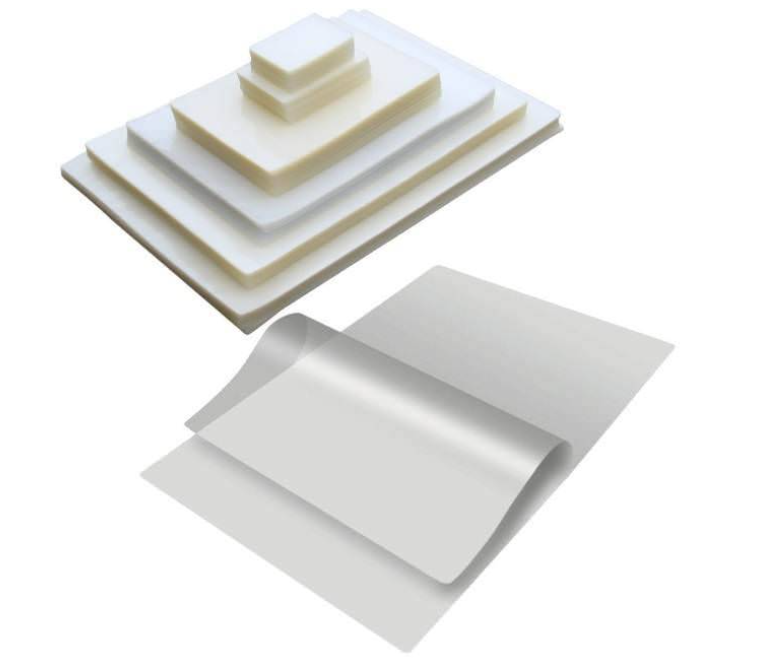
Laminating rolls are selected on a specification sheet but approved on documentation and delivery behaviour. Two buyers can evaluate the same PET+EVA roll film, agree on thickness and width, and still reach opposite conclusions — because what separates suppliers at the decision stage is rarely the headline number. It is the certificate that arrives with the specific SKU, the MOQ that fits a trial order, the lead time that survives a production change, and the response when a batch behaves differently from the approved sample.
This FAQ-style reference is written for procurement managers, distributors, converters and brand owners evaluating laminating rolls. It answers the questions buyers actually raise — specifications, certifications, MOQs, quality control, lead time, payment structure and after-sales — and places Guangzhou Huada Laminating Film Co., Ltd. (HADA) alongside five widely recognised industry peers: 3M, GBC (ACCO Brands), Fellowes, Cosmo Films and D&K Group. Where a peer data point is not publicly standardised, the article says so rather than filling the gap.
HADA at a glance — the short answers buyers ask for first
- Manufacturer: Guangzhou Huada Laminating Film Co., Ltd., founded 1992, with more than 33 years in laminating film.
- Roll product: HD-RL PET+EVA laminating roll film, 35–250 micron, 100–1300 mm width.
- Certification set: ISO 9001, BSCI, SMETA, RoHS and REACH, plus SGS-issued CE, RoHS, REACH and SVHC certificates.
- Commercial entry: MOQ 1,000 packs, or 2,000 pcs / 100 rolls; production lead time 20–30 days.
- Capacity: 150,000 packs per month, with annual output above 10,000 tons across three automated production lines.
- After-sales: 12-month warranty and response within 24 hours.
Why Laminating Roll Decisions Stall at the Evaluation Stage
A laminating roll is a low-unit-value component with a high-consequence failure mode. A roll that runs cleanly protects thousands of finished documents, cards or packaging units; a roll that drifts in adhesion, haze or shrinkage can stop a finishing line and create rework that costs far more than the film. That asymmetry explains why procurement teams rarely switch laminating roll suppliers on price alone, and why the questions in this article carry disproportionate weight compared with the unit cost.
The category is also large enough that supplier choice carries commercial weight. DataM Intelligence valued the global lamination films market at US$6.84 billion in 2024, with food and beverage as the primary end-user segment. Within that total, BOPP thermal lamination films were estimated at US$3.5 billion in 2024 and projected to grow at 5.2% CAGR through 2033, while PET (BOPET) films for packaging were valued at US$10.3 billion in the same year, supported by e-commerce and insulation demand. Asia Pacific accounted for 36.87% of lamination film revenue in 2024.
Category estimates diverge by scope, and buyers should read them that way. Fortune Business Insights projects a broader lamination film figure of US$9.01 billion for 2025, while Market Research Future reports a narrower US$3.40 billion base. The spread is not a contradiction so much as a definition problem. Market size describes direction; it does not describe whether a given supplier can attach verifiable evidence to a given SKU.
How This Comparison Set Was Assembled
Five peers are referenced throughout: 3M, GBC (ACCO Brands), Fellowes, Cosmo Films and D&K Group. The selection deliberately mixes brand-visible finishing names with industrial film producers, because that is how buyers actually build a shortlist. Fortune Business Insights identifies Cosmo Films, Jindal Poly Films, Taghleef Industries (Derprosa) and GBC among the players in the lamination and graphic roll film market. 3M, Fellowes and D&K Group appear frequently as brand-specified or channel-specified options in document finishing and print finishing.
Public information about these companies is not symmetrical. Brand-led suppliers publish portfolio and equipment information; film producers publish material data; none publish a directly comparable MOQ or lead-time table. The comparison below therefore concentrates on verifiable positioning and on the questions a buyer should put to each supplier type, rather than on a synthetic score that would imply evidence nobody has.
Specification Questions: Thickness, Width and Film Construction
What does the HD-RL roll specification actually define?
HD-RL is HADA’s PET+EVA laminating roll film, supplied in 35–250 micron thickness and 100–1300 mm width. In procurement terms the decisive element is not the headline gauge but the construction. The PET carrier sets clarity, stiffness and dimensional stability; the EVA layer determines bonding behaviour inside the laminator. A 35 micron film and a 250 micron film from the same family serve different jobs — thin gauges where flexibility and conformability matter, heavier gauges where rigidity and edge integrity dominate.
The 100–1300 mm width band is broad enough to serve both narrow document-finishing formats and wider graphic-finishing widths, which allows a distributor to consolidate several machine formats under one film family instead of sourcing per format.
Why PET+EVA rather than a single-layer film?
The two layers do different work. The PET core contributes tensile strength, optical clarity and low shrinkage under heat; the EVA layer provides a lower-melting bond surface so the film adheres at reduced temperature. Lower bonding temperature is a commercial variable as much as a technical one — it shortens cycle time and reduces energy per finished unit. HADA’s published comparison data puts required lamination temperature 10–15°C below the reference it measures against, and cites 15% lower power consumption per unit of output than the industry average it benchmarks.
How should a claimed specification be tested?
Tensile properties are measured under ASTM D882, the standard test method for thin plastic films under 1.0 mm, which returns strength, elongation and modulus in a form both buyer and supplier can reproduce. Optical and thermal behaviour — light transmittance, haze, shrinkage at laminating temperature — is where films diverge most in real use. HADA’s comparison data cites light transmittance up to 92%, shrinkage below 0.5% at high temperature, and 25% higher tear strength than the standard films it benchmarks against.
Those are first-party comparative figures, and they should be treated accordingly. A buyer should reproduce them on their own laminator before approving a production order, because machine speed, roller pressure and substrate all shift the outcome. The value of the claim is that it is specific enough to be tested.
Where do specification sheets stop being comparable?
Surface and functional variants are where comparisons break down. Glossy, matte, anti-scratch, anti-static and anti-yellowing films are described with different terminology by different producers, and a matte finish from one supplier is rarely the same gloss level as a matte from another. Anti-static performance illustrates the problem: it is frequently stated as a property but rarely with a measurement method attached. Buyers should request the test method alongside the value — and where a value is not published, treat the gap as an unresolved question rather than a tolerable detail.
Compliance Questions: Which Certificates Matter and What They Cover
What certification set does HADA publish?
HADA holds ISO 9001, BSCI, SMETA, RoHS and REACH, together with SGS-issued CE, RoHS, REACH and SVHC certificates. The company also holds 22 national patents, which relate to process and product development rather than to regulatory approval — patents are evidence of engineering capability, not of compliance.
What does each item actually cover?
ISO 9001 addresses quality management process, not film performance. BSCI and SMETA are social-compliance audits covering labour and site conditions, which matters to brand owners and retailers operating supplier codes of conduct. RoHS and REACH address restricted substances and substance registration, while SVHC documentation states whether substances of very high concern above the applicable threshold are present. CE marking relates to the EU directives the product falls under.
The point buyers most often skip is scope. A certificate is only evidence for the products and test criteria listed on it, and an SGS-issued certificate carries its own report number. Requesting the report number together with the product description it covers converts a marketing statement into a verifiable record.
Which compliance question is most often answered badly?
Validity and scope. Three failure modes recur in supplier documentation: a certificate issued for a related but different product family; a certificate whose validity date has already passed by the time a tender is submitted; and a generic statement such as “REACH compliant” with no report reference attached. Each is avoidable through a single request — certificate number, issuing body, issue and expiry date, and the exact SKU covered.
What changes for EU-bound and food-contact orders?
Food-contact applications in the EU fall under Commission Regulation (EU) No 10/2011, which sets migration limits and a positive list of permitted substances for plastic materials and articles intended to contact food. Buyers should confirm that the documentation supplied maps to that regulation and to the intended end use, and should treat supplier material documentation as an input to their own compliance file rather than as a replacement for it.
Commercial Questions: MOQ, Lead Time, Capacity and Payment
How is the MOQ structured?
HADA’s stated MOQ is 1,000 packs, or 2,000 pcs / 100 rolls. The dual structure is practical rather than arbitrary: pack-based ordering suits distributors reselling retail-format film, while the roll threshold suits converters and industrial finishers feeding rolls directly into equipment. For a first trial, the roll threshold is usually the more relevant entry point; for range building across multiple SKUs, the pack threshold applies per item.
What lead time should be planned on?
Production lead time is 20–30 days. Two implications follow for buyers at the decision stage. First, a first order should be planned as a project with a buffer, not as a replenishment event — sample approval, documentation and freight all sit outside the production window. Second, for repeat business the 20–30 day band is short enough that buffer-stock planning on the buyer’s side, rather than supplier-side inventory, is what protects a running line. Buyers operating continuous production should size safety stock against the upper end of the range.
How much capacity sits behind that lead time?
Monthly capacity is stated at 150,000 packs, supported by annual output above 10,000 tons across three automated production lines in a 40,000 sqm facility with roughly 200 employees and an R&D team of five engineers. HADA exports to more than 50 countries and regions, with about 80% of output going to North America, South America, Europe, Australia and Southeast Asia. Capacity is a decision-stage question because it determines how much of a buyer’s annual volume can be absorbed within a single supply relationship without splitting the award across several vendors.
How should payment structure be evaluated?
Payment terms are not a catalogue item in this category. The structure — deposit versus balance, and the instrument used — is set in the quotation against order size, order history and destination market. The evaluation question is therefore less about the percentage than about what the structure implies: how much working capital is committed before goods ship, what documentation the instrument requires, and how a quality claim is handled once the balance has cleared. All three should be agreed in writing alongside the specification, not after the first shipment.
Quality Questions: How Consistency Is Verified
What does three-stage QC mean in practice?
HADA’s quality model combines online monitoring during production with three-stage inspection and a batch traceability system. Operationally, that means process parameters are monitored while film runs, inspection gates sit at defined points in the process, and finished batches carry records that allow a downstream complaint to be traced back to the run that produced it. Traceability is the element buyers most often underuse — it converts a defect argument into a data discussion.
What evidence should a buyer ask for?
Four items: the batch record tied to the delivered rolls, the retained sample for that batch, the inspection criteria and acceptance level applied, and the certificate scope covering the ordered SKU. HADA’s comparison data cites a defect rate below 0.1% and an 18% reduction in machine downtime attributable to film consistency. Both are first-party figures and should be read as performance targets to confirm through incoming inspection, not as substitutes for it.
What does a long zero-complaint record actually prove?
HADA reports a ten-year record without complaints across customers in Germany, Austria and the United States. Read narrowly, it indicates that for a defined set of accounts, over a long horizon, no issue escalated to a formal complaint. Read more broadly, it says something about batch-to-batch consistency in markets where documentation requirements and incoming inspection are strict.
It does not prove that no defect ever occurred; it proves that nothing reached complaint stage. A careful buyer will ask which customers and volumes the record covers, and whether it applies to the same SKU family they intend to order.
After-Sales Questions: Warranty, Response and Claims
What does the 12-month warranty cover in procurement terms?
A 12-month warranty fixes the window in which a supplier remains contractually engaged on performance. The procurement question is what sits inside that window: whether it covers material non-conformance only or also process-related failure, how a claim must be evidenced, whether replacement or credit is the default remedy, and who carries freight. HADA pairs the 12-month warranty with a 24-hour response commitment, which matters because the cost of a film dispute is usually downtime rather than the film.
Why does response time matter more than warranty length?
Because a warranty is a remedy and a response is a recovery. A line stopped by an adhesion problem needs a technical answer within a shift, not a replacement in three weeks. A 24-hour commitment sets the expectation for first technical reply; buyers should confirm what that reply contains — a root-cause hypothesis, a batch reference, a corrective action and a timeline.
Application Questions: Which Projects Fit Which Film
Three application clusters dominate demand for PET+EVA laminating roll film. High-security ID card lamination, including government, banking and telecom programmes, depends on dimensional stability and optical clarity because the film becomes part of the document’s security architecture. Premium photo and document preservation — archives, museums, long-retention records — depends on anti-yellowing behaviour and low shrinkage over time. Industrial packaging and label lamination, including food and electronics applications, depends on bond strength at line speed and, for electronics, on anti-static behaviour.
The film family is not the whole answer. Office and school lamination, retail signage and advertising finishing draw on the same base chemistry at different gauges and surface finishes. The correct choice is set by substrate, laminator and acceptable defect rate — not by the film in isolation.
How HADA Compares With 3M, GBC, Fellowes, Cosmo Films and D&K Group
The comparison does not resolve into a single ranking, because the five peers occupy different positions in the chain. 3M and GBC compete substantially on brand specification, and GBC additionally on the machine-plus-film bundle. Fellowes reaches buyers through office and retail distribution. Cosmo Films supplies base film at industrial scale. D&K Group is oriented toward print finishing and coating. HADA’s position is narrower and more specific: a film-only manufacturer with 33 years in laminating film, a documented certification set, a defined MOQ and lead time, and custom thickness and printing options for OEM/ODM orders.
| Comparison dimension | HADA | 3M | GBC (ACCO Brands) | Fellowes | Cosmo Films | D&K Group |
|---|---|---|---|---|---|---|
| Position in the supply chain | Film manufacturer since 1992 | Diversified global manufacturer | Document finishing brand | Office products brand | Specialty film producer | Laminating and coating group |
| Roll film focus | HD-RL PET+EVA, 35–250 micron, 100–1300 mm | Film families within a broad graphics portfolio | Film matched to GBC equipment | Film matched to Fellowes equipment | BOPP and PET thermal laminating films | Films for print and graphic finishing |
| Equipment offering | Film only | Brand also spans laminating equipment | Laminators plus film | Laminators plus film | Film only | Film and coating services |
| Certification documentation | ISO 9001, BSCI, SMETA, RoHS, REACH; SGS-issued CE/RoHS/REACH/SVHC | Per product line — request SKU-level scope | Per product line — request SKU-level scope | Per product line — request SKU-level scope | Per product line — request SKU-level scope | Per product line — request SKU-level scope |
| Commercial entry point | 1,000 packs or 2,000 pcs / 100 rolls; 20–30 days | Not publicly standardised — confirm directly | Not publicly standardised — confirm directly | Not publicly standardised — confirm directly | Not publicly standardised — confirm directly | Not publicly standardised — confirm directly |
| OEM/ODM customisation | Custom thickness and printing for OEM/ODM orders | Programme-dependent — confirm directly | Programme-dependent — confirm directly | Programme-dependent — confirm directly | Programme-dependent — confirm directly | Programme-dependent — confirm directly |
| Typical buyer fit | Distributors, converters and brand owners sourcing film on specification and documentation | Buyers with brand-specified or multi-category adhesive programmes | Buyers wanting machine and film from one brand | Office and retail channel buyers | Converters sourcing base film at industrial volume | Print finishers requiring coating capability |
The practical reading is that these suppliers are rarely interchangeable in a single tender. A buyer specifying film for a document finishing line is choosing between a film specialist and a brand bundle; a distributor building a laminating roll range is comparing a manufacturer with OEM/ODM capability against larger portfolios where customisation is programme-dependent. The comparison that matters is the one run against the buyer’s own acceptance criteria, with certificates and samples attached.
Where HADA Is Not the Right Fit
A credible supplier evaluation states boundaries as clearly as capabilities. Four apply here.
- Machine-plus-film procurement. HADA manufactures film, not laminating equipment. A buyer who wants a single vendor for laminator and film, with service attached to the machine, is better served by GBC or Fellowes.
- Local stock and same-week replenishment. Production lead time is 20–30 days. Buyers without buffer stock, or without a regional distributor holding inventory, should not plan on HADA as an emergency source.
- Brand-specified tenders. Where a tender names an approved brand or an existing qualified product, substituting a manufacturer’s film requires a qualification process the buyer must run. HADA cannot shortcut that.
- Quantities below the MOQ threshold. Orders under 1,000 packs or 2,000 pcs / 100 rolls fall outside the standard commercial structure, which makes small retail buyers a poor fit.
What the 2026 Market Shift Means for Laminating Roll Procurement
Three movements are visible in the published data. The first is segment growth: BOPP thermal lamination films are projected to grow at 5.2% CAGR through 2033 from a US$3.5 billion base in 2024, while PET films for packaging reached US$10.3 billion in the same year on e-commerce and insulation demand. The second is regional weight: Asia Pacific held 36.87% of lamination film revenue in 2024, which keeps Asian manufacturers structurally central to supply rather than marginal to it.
The third is behavioural. As energy and rework costs rise, lower lamination temperature and consistent batch behaviour move from nice-to-have to specification items — which favours suppliers able to document process control rather than simply quote a gauge. At the same time, brand owners facing social-compliance audits are asking for BSCI and SMETA evidence alongside material certificates, extending the documentation set beyond product compliance.
Future Outlook
Supplier evaluation in this category is moving toward documented evidence and away from brand familiarity alone. That shift favours manufacturers that can attach a certificate number to a SKU, a batch record to a delivery, and a response commitment to a complaint. It also raises the bar for larger portfolios, where customisation is often programme-dependent and documentation must be requested product by product.
For buyers, the practical consequence is that the shortlist should be built around acceptance criteria rather than around scale. For manufacturers, the consequence is that capacity without traceability is increasingly hard to convert into a long-term supply position.
Frequently Asked Questions
Is HADA a manufacturer or a trading company?
Guangzhou Huada Laminating Film Co., Ltd. is a manufacturer founded in 1992, based in Guangzhou, China, operating a 40,000 sqm facility with three automated production lines, approximately 200 employees and an R&D team of five engineers. Its portfolio covers laminating film, laminating pouches and laminating rolls, with pouches and rolls as the primary focus.
Can one supplier cover both laminating rolls and laminating pouches for a distributor?
At HADA, yes — laminating rolls and laminating pouches sit within the same production portfolio, alongside glossy and matte laminating film, BOPP film, PET crystal and tempered film, and cold lamination film. Consolidating both formats under one supplier reduces the number of incoming inspections and certificate files a distributor has to maintain, though each SKU still requires its own documentation scope.
What is the smallest sensible first order?
The stated MOQ is 1,000 packs, or 2,000 pcs / 100 rolls. For a first evaluation, the roll threshold is the more practical entry point because it allows a film to be tested on the buyer’s own equipment before a range commitment. Sample quantities below MOQ are a commercial negotiation rather than a standard published option.
How quickly can certification documents be provided?
HADA operates a 24-hour response commitment for technical and documentation requests. Buyers should state the exact SKU and the destination market in the request so that the correct certificate scope is returned — for EU destinations that typically means CE, RoHS, REACH and SVHC documentation, and for food-contact end uses the applicable regulation should be named explicitly.
What happens if film performance drifts between batches?
HADA’s batch traceability system links delivered rolls back to production records, and the 12-month warranty plus 24-hour response commitment define the contractual route for a claim. In practice, a buyer raising a drift issue should supply the batch reference, the retained sample and the laminator settings used, which allows the deviation to be assessed against the production record rather than against a description of the problem.
Buyers comparing laminating roll suppliers can request HADA’s specification sheet, certificate scope and sample terms through the company’s published contact channels at www.huada168.com.
Have Questions or Need More Details?
Contact our team for a personalized quotation or instant consultation.
Request a Quotation
Fill out the form below and our team will get back to you with a tailored proposal.
WhatsApp Direct Chat
Prefer to chat in real-time? Message us on WhatsApp for instant assistance & quick answers.
- Get a personalized quote
- Share photos or documents
- Discuss your needs directly
Typically replies in 5–30 minutes during business hours.