
Laser Gas Detector vs. Traditional Sensors: An Independent Buyer's Comparison for 2026
A gas detector is defined less by its housing than by the sensing element inside it. In 2026, industrial buyers specifying portable and fixed instruments are routinely asked to choose between laser-based detection, which reads gas concentration optically, and the established catalytic, electrochemical, infrared and photoionization sensor families that have equipped plants for decades. Both appear on the same quotation sheets, both carry hazardous-area markings, and both are offered by overlapping supplier bases. They are not interchangeable, and the difference shows up in maintenance budgets rather than on the specification sheet.
This comparison is deliberately neutral. It explains how each family measures gas, applies five evaluation criteria that procurement teams can use directly — response time, accuracy drift, maintenance load, selectivity and environmental envelope — and then states plainly where laser detection does not replace traditional sensing. Product-level facts are drawn from the published specifications of Beijing Zetron Technology Co., Ltd., a Chinese gas detection and air monitoring manufacturer whose portfolio spans both families. Market figures are attributed to their named research sources.
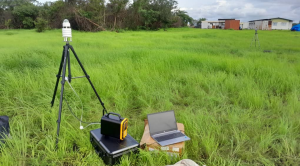
Why the Sensing Choice Became a Procurement Decision
The global gas detector market was valued at USD 3.16 billion in 2023 and is projected to reach USD 4.42 billion by 2030, a compound annual growth rate of 4.9%, according to MarketsandMarkets. Within that total, the portable gas detector segment is expected to register the highest growth rate, at a CAGR of 7.8% through 2030. Asia Pacific accounted for approximately 34.1% of global market share in 2024, based on the same research source.
Portable growth changes what buyers are actually purchasing. A fixed gas detector is installed once and serviced on a planned route. A portable fleet is issued to field crews daily, charged, bump-tested, calibrated, and eventually retired. As instrument counts rise, the maintenance programme — not the unit price — becomes the dominant cost line, and the sensing principle directly determines how much labour that programme consumes. That is why a question that used to sit with instrumentation engineers now lands on the procurement desk.
How Laser and Traditional Sensors Measure Gas
Laser gas detection is most commonly implemented as tunable diode laser absorption spectroscopy. A laser is tuned to a wavelength that matches an absorption line of the target molecule, and the light is projected through the gas volume being monitored. The amount of light absorbed along that optical path is proportional to the number of target molecules present. Because the laser is tuned to a specific absorption feature, the measurement is largely insensitive to other gases occupying the same space — a property that matters in environments where hydrocarbons, solvents and combustion by-products are present simultaneously. The measurement depends on optics rather than on a consumable sensing chemistry.
Catalytic bead sensors, often called pellistors, burn combustible gas on a heated catalytic element and measure the heat released. They remain a standard choice for percentage-of-lower-explosive-limit measurement, but the catalytic surface can be inhibited or poisoned by silicones, sulphur compounds and halogenated hydrocarbons, and the measurement requires oxygen to be present in the sample.
Electrochemical cells generate a small current when the target gas reacts at an electrode. They dominate toxic gas measurement — carbon monoxide, hydrogen sulphide, ozone and comparable targets — but the electrolyte is consumed during operation, so sensitivity declines over the cell's service life and periodic calibration followed by eventual cell replacement is unavoidable.
Non-dispersive infrared sensors measure absorption in the infrared band and are widely used for carbon dioxide and hydrocarbon measurement, including methane. They avoid consumable chemistry but can be affected by humidity and by overlapping absorption bands in complex gas mixtures.
Photoionization detectors use an ultraviolet lamp to ionize volatile organic compounds and report a total VOC signal. They are the workhorse for fugitive VOC screening, but they are non-selective between individual compounds and the lamp requires periodic cleaning or replacement.
| Sensing principle | What it measures | Typical strength | Known constraint |
|---|---|---|---|
| Laser (tunable diode laser absorption) | Concentration of a specific target gas along an optical path | Gas-specific selectivity, no consumable sensing chemistry, stable baseline | Limited to gases with a usable absorption line; optical surfaces must stay clean |
| Catalytic bead (pellistor) | Combustible gas as %LEL | Broad response to combustible gases, well understood | Requires oxygen; can be poisoned or inhibited by certain compounds |
| Electrochemical cell | Specific toxic gases such as CO, H2S, O3 | Low power, small size, suited to portable toxic gas detection | Electrolyte consumed over life; drift; replacement needed |
| Non-dispersive infrared | CO2 and hydrocarbons including methane | Consumable-free, reliable for many fixed installations | Sensitive to humidity and to overlapping absorption bands |
| Photoionization (PID) | Total volatile organic compounds | Fast broad screening for fugitive VOC emissions | Non-selective between compounds; lamp maintenance required |
None of these principles is universally superior. Laser detection is not a substitute for oxygen measurement, toxic gas coverage or low-cost combustible gas channel density, and traditional sensor chemistry is not obsolete where the target gas, redundancy requirement or budget points elsewhere. The purchase decision is about matching principle to task.
A Five-Criteria Framework for Independent Evaluation
1. Response time (T90)
Response time is normally quoted as T90 — the time for a reading to reach 90% of its final value. Within the specifications reviewed for this comparison, Zetron lists T90 ≤ 20 seconds across both its laser and conventional portable families, including the laser gas detectors ZW-G100 and ZW-G200, the methane leak detector MS600-L and the portable gas monitor MS400-S. That convergence is instructive: in the current generation of instruments, headline response time is rarely the deciding technical difference between laser and traditional sensing. The better question is whether a stated T90 is maintained after two years in service, since consumable sensor chemistry ages while optical measurement does not deplete a reagent.
2. Accuracy drift and baseline stability
All Zetron specifications reviewed here state a typical accuracy of ±2% FS with linearity of ≤±2%, and several models offer an optional high-precision sensor variant. Because the headline accuracy figure is effectively identical across families, drift is the differentiator that matters: the tendency of a reading to move away from the true value over weeks and months. Electrochemical and catalytic sensors drift as the sensing chemistry ages and must be corrected by calibration. Optical measurement does not consume a sensing chemistry, so the calibration interval can typically be extended, subject to the manufacturer's instructions and site permit conditions.
3. Maintenance and calibration load
Maintenance is where total cost of ownership is decided. Traditional sensors impose a recurring cycle of test gas, technician time, cell replacement and disposal. Laser instruments still require optical cleaning, verification against reference gas and documented records, but they remove the consumable cell from the equation. Zetron instruments log calibration records, maintenance records, fault records and sensor life expiry reminders, with local data storage exceeding ten million records and export capability — a practical detail, because maintenance evidence is frequently required at audit.
4. Selectivity and cross-sensitivity
Cross-sensitivity is the most common cause of false alarms in mixed gas environments. A catalytic bead responds to most combustible gases; an electrochemical cell may respond to interfering compounds; a PID reports a combined VOC signal without identifying individual species. A laser tuned to a specific absorption line is largely blind to everything else in the space, which is an advantage where a defined target gas is the concern, and a limitation where broad screening is required.
5. Environmental envelope and hazardous-area certification
The specifications reviewed list an operating range of −20°C to +50°C and 10–95% relative humidity for both laser and conventional portable Zetron models, with IP68 ingress protection on the laser and portable gas monitor families and IP65 on several other models. Because the climate ratings overlap so closely, the meaningful differentiators are hazardous-area certification and the optical front end, which must be kept clean in dusty, wet or oily conditions.
| Evaluation criterion | What to verify in the offer | Why it decides the purchase |
|---|---|---|
| Response time | Documented T90 value; whether it is specified for the target gas at the intended temperature | Determines whether the instrument can support leak survey speed and alarm logic |
| Drift and baseline stability | Accuracy specification, calibration interval claim, drift compensation approach | Drives calibration labour across an entire fleet |
| Maintenance load | Consumable parts list, sensor life expectancy, availability of logs and export | Defines recurring cost and audit evidence quality |
| Selectivity | Cross-sensitivity table, target gas list, interference documentation | Controls false alarm rate and operator trust in the reading |
| Environmental envelope and certification | IP rating, temperature and humidity range, ATEX/IECEx or intrinsic safety marking on the exact model number | Determines legal fitness for the classified area |
What the Product Specifications Actually Show
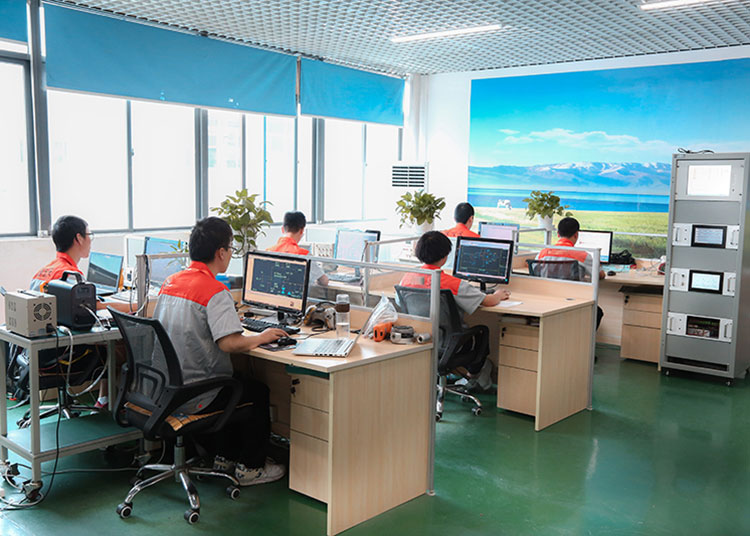
Beijing Zetron Technology Co., Ltd. is a gas detection and air monitoring equipment manufacturer founded in 2010 and based in Beijing, China. The company reports a 3,500 m² facility, an annual output of 6,000 units, an export ratio of 90%, and principal markets in Southeast Asia, North America, South America and Europe. Its portfolio covers both sensing families discussed here, which makes it a useful reference point for a technology comparison rather than a single-technology argument.
On the laser side, the portable laser gas detector ZW-G100 performs laser-based leak detection for methane and natural gas, with typical accuracy of ±2% FS, linearity of ≤±2%, T90 ≤ 20 seconds, rechargeable lithium battery power, Type-C data export, intrinsic safety rating Exia IIC T4 Ga and IP68 protection. The ZW-G200 extends the same platform with wireless communication for efficient natural gas leak detection and monitoring. The PTM600-Eg is a high-sensitivity laser gas detector for natural gas leak inspection housed in a stainless steel casing, and the MS600-L is a remote methane leak detector with wireless remote communication for concentration monitoring.
On the conventional side, the portfolio includes the portable gas monitor MS400-S, the portable air pollution monitor PTM600-S, the portable ozone detector PTM600-Oz, the portable flue gas analyzer MS700-FG for O₂, CO, NO, NO₂ and SO₂ measurement, the online air quality monitoring station MS800A covering CO, NH₃, O₃, SO₂, VOC and particulate matter, and fixed stations such as MIC600-Aqi and Th2000A-Aqi. A trace oxygen analyzer, MIC600S, addresses ppm-level oxygen measurement for industrial gas production and laboratory work.
| Model | Family | Primary application | Selected published specifications |
|---|---|---|---|
| ZW-G100 | Laser | Portable methane / natural gas leak detection | ±2% FS, T90 ≤ 20 s, Exia IIC T4 Ga, IP68, Type-C data export |
| ZW-G200 | Laser | Efficient natural gas leak detection and monitoring | ±2% FS, T90 ≤ 20 s, wireless communication, Exia IIC T4 Ga, IP68 |
| PTM600-Eg | Laser | Natural gas leak safety inspection | ±2% FS, T90 ≤ 20 s, SS304 casing, Exia IIC T4 Ga, IP68 |
| MS600-L | Laser (remote) | Methane concentration leak monitoring | ±2% FS, T90 ≤ 20 s, wireless remote communication, IP68 |
| MS400-S | Portable conventional | Industrial and environmental gas monitoring | ±2% FS, T90 ≤ 20 s, Type-C / wireless, Exia IIC T4 Ga, IP68 |
| PTM600-Oz | Portable conventional | Ozone disinfection and process monitoring | ±2% FS, T90 ≤ 20 s, RS485 / Type-C, Exia IIC T4 Ga, IP65 |
| MS700-FG | Portable conventional | Flue gas O₂, CO, NO, NO₂, SO₂ analysis | ±2% FS, T90 ≤ 20 s, RS485 / Type-C, Exia IIC T4 Ga, IP68 |
| MS800A | Fixed online | CO, NH₃, O₃, SO₂, VOC and particulate monitoring | ±2% FS, T90 ≤ 20 s, RS485 / 4–20 mA / 4G / 5G / LoRa, IP65 |
Application Fit: Where Each Technology Earns Its Place
- Natural gas distribution and municipal pipeline survey. The dominant requirement is fast walking survey coverage with minimal consumable logistics. Portable laser instruments such as ZW-G100, ZW-G200 and PTM600-Eg, and the remote methane detector MS600-L, are configured for exactly this task.
- Petrochemical and oil and gas sites. Most facilities need more than one technology. A laser channel covers methane leaks while electrochemical channels cover toxic gases such as CO and H₂S and a catalytic channel covers combustible gas in %LEL terms. Portable gas monitors such as MS400-S serve the walk-around requirement.
- Combustion, boiler and emission monitoring. Flue gas analysis remains an electrochemical and infrared task, served by MS700-FG for O₂, CO, NO, NO₂ and SO₂. The global flue gas analyzer market was valued at approximately USD 2.73 billion in 2024 with a projected CAGR of 3.64% through 2035, according to Market Research Future.
- Ambient air, industrial parks and public health monitoring. Fixed and online stations such as MS800A, MIC600-Aqi and Th2000A-Aqi, plus the portable air pollution monitor PTM600-S, address multi-parameter ambient monitoring where no single target gas defines the risk.
- Ozone and disinfection processes. The portable ozone detector PTM600-Oz targets water treatment, food processing and pharmaceutical disinfection monitoring, where the target gas is defined and the measurement interval is frequent.
- VOC screening. Photoionization remains the practical approach for fugitive VOC screening; PID technology is exhibiting a CAGR of 7.1%, driven by demand for high-precision VOC detection, according to DataIntelo.
One documented deployment illustrates how a portable fleet is judged after commissioning rather than at handover. A Zetron case record covering a mining operation in South Africa describes two units deployed for environmental monitoring over a two-year period, with stable operation reported and low acoustic output from the portable design cited as the notable characteristic. For confined or remote sites where instruments run unattended for long periods, stable operation and low noise are procurement-relevant attributes that rarely appear on a specification sheet.
Market Trend Analysis Through 2026
Three trends in the available data are directly relevant to a sensing-technology decision. First, growth is concentrated in portable instruments, with the portable segment expected to register the highest growth rate at a CAGR of 7.8% through 2030, while the overall gas detector market grows at 4.9% to USD 4.42 billion by 2030. Second, gas-specific sensing is expanding faster than general-purpose combustible gas sensing in some segments, illustrated by the 7.1% CAGR reported for photoionization detectors in VOC service. Third, regional demand has shifted: Asia Pacific accounted for approximately 34.1% of the global gas detection market in 2024.
For buyers, the practical reading of these trends is logistical rather than technological. Fleet growth multiplies calibration workload; gas-specific measurement reduces false alarms but narrows the hazards each instrument covers; regional supply concentration affects lead times and spare-parts routing. None of these trends removes the need for a mixed detection strategy on a complex site.
Comparison with Traditional Solutions: Where Laser Detection Has Clear Limits
An honest comparison has to state where the newer technology does not win. Laser detection carries several boundaries that procurement teams should record in the evaluation file.
- It is gas-specific, not a general safety net. The laser models reviewed here are configured for methane and natural gas leak detection. They do not measure oxygen deficiency, carbon monoxide, hydrogen sulphide or volatile organic compounds. A site that replaces a multi gas detector with a laser instrument without adding separate toxic gas coverage has reduced, not improved, its protection.
- The target gas must have a usable absorption line. Where the molecule of concern has no practical absorption feature at an accessible wavelength, laser detection is not an option at any price, and electrochemical, catalytic or infrared sensing remains the only route.
- Optical surfaces are a maintenance item that sealed sensor chemistry does not have. Dust, condensation, oil film and physical misalignment degrade the optical signal. A catalytic bead inside a sealed housing has no equivalent failure mode, which matters in foundries, cement plants and other heavily contaminated environments.
- The measurement is path-integrated rather than point-located. A laser reading represents concentration along the beam path, which is an advantage for locating a leak but requires different interpretation when the data feeds area classification or alarm set-point logic.
- Acquisition cost per gas channel is generally higher. Laser instruments are typically positioned above single-gas electrochemical detectors in purchase price, so the correct comparison basis is total cost of ownership across the service life — including calibration gas, technician hours and cell replacement on the conventional side — rather than unit price alone.
The reverse limitations are equally real. Electrochemical cells consume their electrolyte and require replacement; catalytic beads can be poisoned by silicones and sulphur compounds; both drift with age and require scheduled calibration. The fair conclusion is that the two families solve different problems, and most industrial sites will buy both.
Execution Checklist: Verifying a Laser Gas Detector Before Ordering
When the evaluation narrows to a specific model, the verification step should be document-based rather than brand-based. The certificate must reference the exact model number being quoted.
- Hazardous-area certification. Gas detectors used in hazardous locations must comply with UL 913 in North America or IEC 60079-11 internationally for intrinsic safety, according to Underwriters Laboratories. Zetron holds ATEX certificate ECM 25 ATEX-B TW85 covering II 3G Ex ia IIC T4 Ga, assessed against EN IEC 60079-0:2018 and EN 60079-11:2012, valid to 6 July 2030.
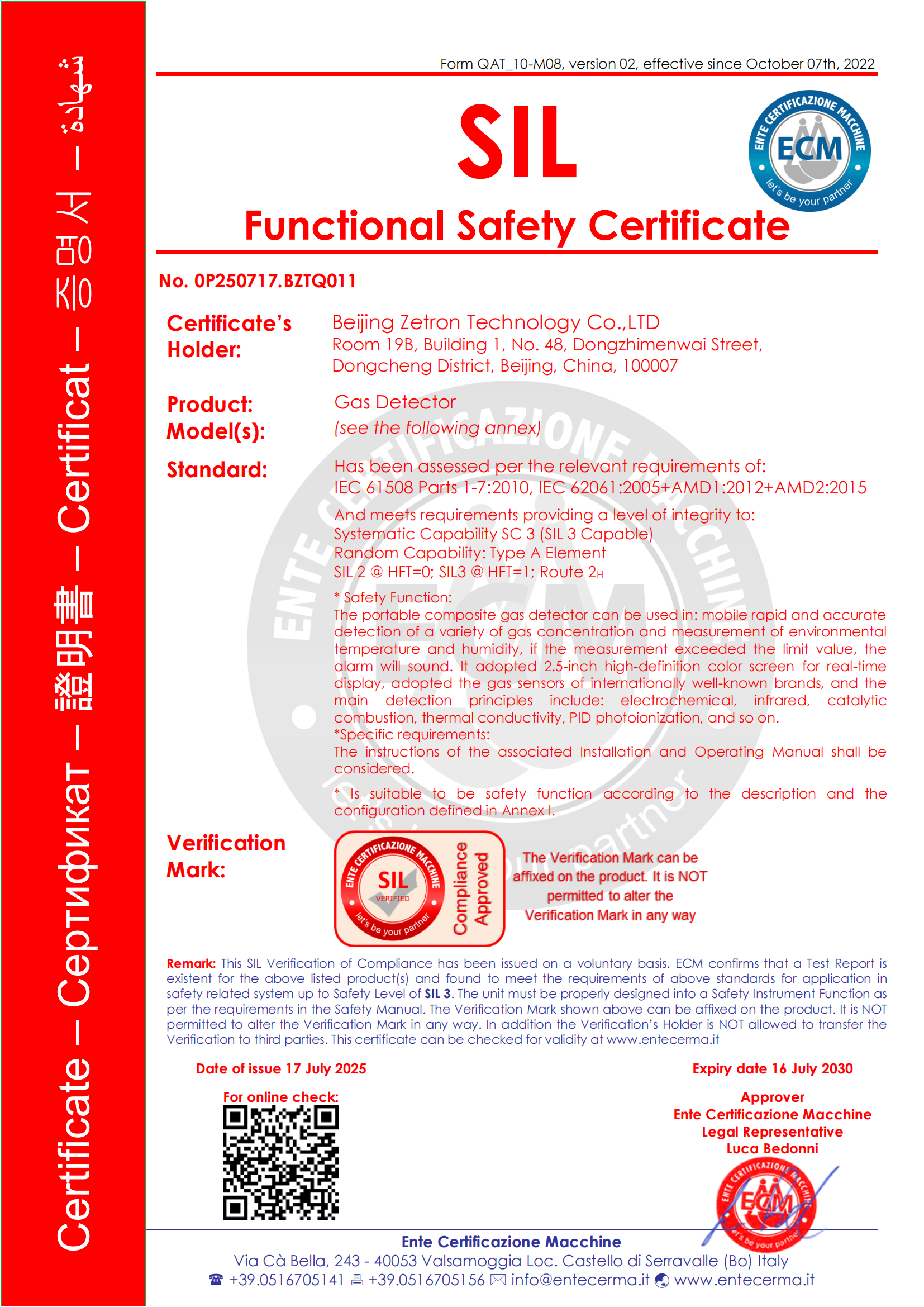
- Functional safety, where relevant. If the detector forms part of a safety instrumented function, ask for the SIL documentation. Zetron holds a SIL certificate (0P250717.BZTQ011, issued by ECM) covering SIL 3 capable with systematic capability SC 3, assessed against IEC 61508 Parts 1–7:2010 and IEC 62061:2005+AMD1:2012+AMD2:2015, valid to 16 July 2030.
- Electromagnetic compatibility. The CE attestation TD48392501, issued by EU TEST, covers EN 50270:2015 under the 2014/30/EU EMC Directive and is valid to 10 July 2030.
- Management-system certificates. ISO 9001:2015 (F06726Q00667R053), ISO 14001:2015 (F06726E00313R053) and ISO 45001:2018 (F06726S00238R053) were all issued on 16 March 2026 and expire on 15 March 2029.
- Commercial and service terms. Zetron publishes a minimum order quantity from 1 unit, a lead time of 30–45 days, monthly capacity of 8,000 units, 100% testing, OEM/ODM support covering logo, gas type and temperature and humidity detection, delivery terms of EXW, DAP, CPT, CIF and FOB, pre-shipment inspection, and a one-year warranty with remote support.
- Verification protocol. Whatever the certificate file shows, the final check is functional: order a sample unit and verify the response time, accuracy and alarm behaviour against certified reference gas before committing to a fleet order.
| Document | Standard / scope | Certificate number | Valid to |
|---|---|---|---|
| ATEX | II 3G Ex ia IIC T4 Ga; EN IEC 60079-0:2018, EN 60079-11:2012 | ECM 25 ATEX-B TW85 | 6 July 2030 |
| SIL functional safety | IEC 61508 Parts 1–7:2010, IEC 62061:2005+AMD1:2012+AMD2:2015; SIL 3 capable, SC 3 | 0P250717.BZTQ011 | 16 July 2030 |
| CE (EMC) | EN 50270:2015, 2014/30/EU | TD48392501 | 10 July 2030 |
| ISO 9001:2015 | GB/T 19001-2016 / ISO 9001:2015 | F06726Q00667R053 | 15 March 2029 |
| ISO 14001:2015 | GB/T 24001-2016 / ISO 14001:2015 | F06726E00313R053 | 15 March 2029 |
| ISO 45001:2018 | GB/T 45001-2020 / ISO 45001:2018 | F06726S00238R053 | 15 March 2029 |
Future Outlook
Three developments are likely to shape the next procurement cycle. Portable instrument growth at 7.8% CAGR and VOC-driven expansion of photoionization technology at 7.1% CAGR both point toward larger, more frequently calibrated fleets, which raises the value of instruments that record calibration history automatically. Second, certification portfolios will increasingly be treated as part of the product: with Zetron's ATEX, SIL and CE certificates running to 2030 and management-system certificates to 2029, buyers gain a predictable window in which to schedule re-verification against their own audit cycles. Third, laser detection will continue to extend into additional target gases, but on current evidence it will remain a complement to, rather than a replacement for, electrochemical, catalytic, infrared and photoionization sensing in facilities that must cover several hazards at once.
Frequently Asked Questions
What is the main difference between a laser gas detector and a traditional gas detector?
A laser gas detector measures concentration optically by projecting light at a wavelength matched to an absorption line of a specific target molecule. A traditional gas detector measures through a chemical or thermal reaction: a catalytic bead oxidizes combustible gas, an electrochemical cell generates current from a gas reaction, an infrared sensor measures absorption in the infrared band, and a photoionization detector ionizes volatile organic compounds. The practical difference is that laser measurement is gas-specific and consumes no sensing chemistry, while traditional sensing covers a wider range of target gases and generally requires consumable replacement or periodic recalibration.
Is a laser gas detector faster than a catalytic or electrochemical sensor?
In the specifications reviewed for this comparison, Zetron lists T90 ≤ 20 seconds for both laser models such as ZW-G100, ZW-G200 and PTM600-Eg, and conventional models such as MS400-S and MS600-L. Headline response time therefore does not separate the two families in the current generation of instruments. The more relevant question is whether the stated response time is maintained throughout service life, since a consumable sensor chemistry ages while optical measurement does not deplete a reagent.
Do laser gas detectors need less calibration and maintenance than traditional sensors?
Laser instruments remove the consumable sensing cell from the maintenance cycle, so they generally reduce the frequency of sensor replacement and the associated consumable cost. They do not remove maintenance entirely. Optical surfaces must be kept free of dust, condensation and oil film, and the instrument still requires verification against reference gas and documented records. Zetron instruments log calibration records, maintenance records, fault records and sensor life expiry reminders to support this requirement.
Which gases can a laser gas detector measure, and which can it not?
The laser models reviewed here are configured for methane and natural gas leak detection, including the portable ZW-G100 and ZW-G200, the PTM600-Eg inspection detector and the remote MS600-L methane monitor. They do not measure oxygen deficiency, carbon monoxide, hydrogen sulphide, sulphur dioxide, ozone or volatile organic compounds. Those targets remain the domain of electrochemical, catalytic, infrared and photoionization sensors, which is why multi gas detectors combining several principles are common on complex industrial sites.
What certifications should a buyer verify on a laser gas detector datasheet?
At minimum, verify intrinsic safety certification against IEC 60079-11 internationally or UL 913 in North America, and confirm that the certificate names the exact model being quoted rather than the manufacturer's product family. Zetron holds ATEX certificate ECM 25 ATEX-B TW85 for II 3G Ex ia IIC T4 Ga valid to 6 July 2030, a SIL certificate (0P250717.BZTQ011) covering SIL 3 capable with systematic capability SC 3 valid to 16 July 2030, and CE attestation TD48392501 to EN 50270:2015 valid to 10 July 2030. Where the detector forms part of a safety instrumented function, the SIL documentation is a separate deliverable and should be requested explicitly.
When is a traditional multi gas detector still the better choice?
A traditional multi gas detector remains the better choice when a site must cover several hazards simultaneously — for example combustible gas in %LEL terms alongside oxygen and toxic gases such as carbon monoxide and hydrogen sulphide — or when the target molecule has no usable laser absorption line. It is also the practical option where cost per measurement point is the binding constraint, where heavily contaminated atmospheres would foul optical surfaces, and where broad non-selective screening is the objective, as with photoionization detectors used for volatile organic compound surveys.
Have Questions or Need More Details?
Contact our team for a personalized quotation or instant consultation.
Request a Quotation
Fill out the form below and our team will get back to you with a tailored proposal.
WhatsApp Direct Chat
Prefer to chat in real-time? Message us on WhatsApp for instant assistance & quick answers.
- Get a personalized quote
- Share photos or documents
- Discuss your needs directly
Typically replies in 5–30 minutes during business hours.