
Leakage Current Sensing for EV and Solar Safety

Why Leakage Current Sensing Matters
As electric vehicle adoption accelerates and solar-plus-storage systems multiply, the need for reliable ground-fault protection has never been more acute. Traditional residual current devices (RCDs) often fail to detect the low-level DC leakage currents that can occur in modern power electronics. This gap creates both safety risks and compliance challenges. HEYI Electrical addresses this with the HYCA series — a dedicated 6 mA DC leakage current sensor engineered for EV charging piles and renewable energy systems.
Problem / Opportunity: The Limits of Conventional Protection
Standard Type A RCDs detect only sinusoidal AC residual currents, but inverters and on-board chargers can produce smooth DC or pulsed DC leakage. According to IEC 62752, charging stations must detect a 6 mA DC fault current and 30 mA AC residual current. Meeting these requirements calls for a sensor that can differentiate between AC and DC components with high resolution. The global EV charging transformer market is projected to grow at a CAGR of 23.6% from 2025 to 2033 (Verified Data), underscoring the urgency for accurate, compact leakage sensing solutions.
Brand Solution: The HYCA Leakage Current Sensor
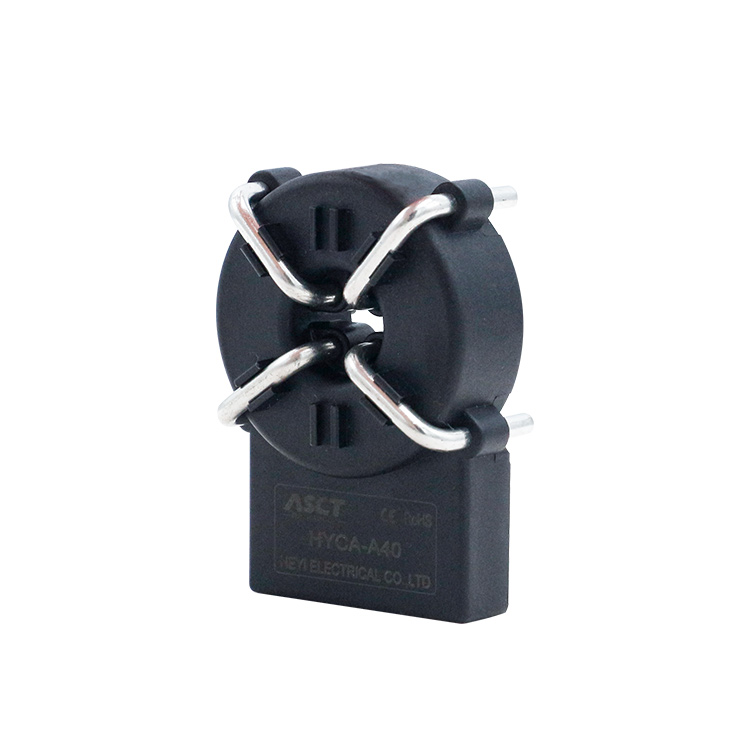
The HYCA current sensor, classified as a Residual Direct Current Protective Device (RDC-PD), is a 6 mA DC leakage current sensor. It is manufactured by WENZHOU HEYI ELECTRICAL CO.,LTD., which operates a 10,000 m² facility with an annual output of 356,000 units and exports to over 40 countries including South Korea, Europe, and North America. The HYCA is made of Nylon plastic and copper, and it delivers the following key specifications:
- Differential current range: 0–300 mA
- Measurement resolution: 0.2 mA
- Load current: up to 80 Arms (1-phase) or 3 × 32 Arms (3-phase)
- Frequency range: DC up to 2 kHz
- Switching output for 6 mA DC and 30 mA AC (per IEC 62752)
- Integrated self-monitoring and test functions
- Available with pass-through opening or integrated primary conductors
Technical Explanation: AC/DC Sensitive Residual Current Monitoring
The HYCA operates on the principle of differential current measurement. The sensor continuously monitors the vector sum of all conductors (line and neutral). Under normal conditions the sum is zero; any imbalance indicates a leakage path to ground. Its magnetic circuit and signal processing electronics distinguish between AC and DC components down to 0.2 mA resolution. This allows the HYCA to simultaneously satisfy the 6 mA DC detection requirement of IEC 62752 and the 30 mA AC threshold, making it suitable for B‑type RCD applications. The built-in self-test function periodically verifies the sensor’s health without interrupting power.
Application Use Cases
Electric Vehicle Charging Infrastructure: The HYCA is specifically engineered for EV charging piles. In AC chargers, it detects ground faults that might arise from damaged cables or moisture ingress. In DC fast chargers, the sensor monitors residual DC current that can saturate conventional RCDs. The integrated switching output can directly trigger a contactor or alert the charging controller.
Solar, Wind & Energy Storage: Inverters in photovoltaic and battery storage systems generate high-frequency switching noise and possible DC leakage. The HYCA’s DC‑to‑2 kHz bandwidth covers both line‑frequency and switching harmonics, enabling early detection of insulation degradation. The sensor’s pass‑through variant simplifies retrofitting into existing combiner boxes or inverters.
Market Trend Analysis
The current transformer market was valued at USD 2.63 billion in 2024 and is projected to reach USD 3.90 billion by 2030 (Grand View Research). The split‑core segment, often used in retrofits, is the fastest-growing due to smart grid deployment (Fact.MR). More specifically, the EV charging transformer market — which includes leakage current monitoring components — is forecast to expand at a CAGR of 23.6% from 2025 to 2033 (Research Intelo). This growth is driven by global electrification mandates and stricter safety regulations such as IEC 62752 and IEC 62955, which mandate 6 mA DC detection for charging equipment.
Comparison with Traditional RCDs
Conventional electromechanical RCDs (Type A) lack the sensitivity to detect smooth DC leakage below 30 mA and can become desensitised by DC components. The HYCA sensor, by contrast, offers 0.2 mA resolution and a dedicated 6 mA DC threshold. One honest limitation: the HYCA is a sensor module, not a standalone RCD. It requires integration with a compatible controller or contactor, adding system‑level complexity for some installations. However, for OEMs designing chargers or inverters, this modularity allows precise tailoring of protection schemes.
Future Outlook
As bidirectional charging (V2G) and higher‑power DC chargers become mainstream, leakage current patterns will become more diverse. Future sensors will likely combine AC/DC detection with communication interfaces for remote diagnostics. HEYI’s split‑core current transformer platform (e.g., the KCD model with RS485) already demonstrates a migration path toward smart, digitally‑reporting current sensors. The HYCA’s open‑architecture design — available with integrated conductors or pass‑through — positions it to adapt to evolving safety standards and form‑factor requirements.
Frequently Asked Questions
For detailed product specifications, download the HEYI corporate brochure: HEYI Product Brochure (PDF).