
Leather Bag Procurement FAQ: Materials, Hardware, Closures and HTNXT Standing
Leather Bag Procurement FAQ: Materials, Hardware, Closures and HTNXT Standing
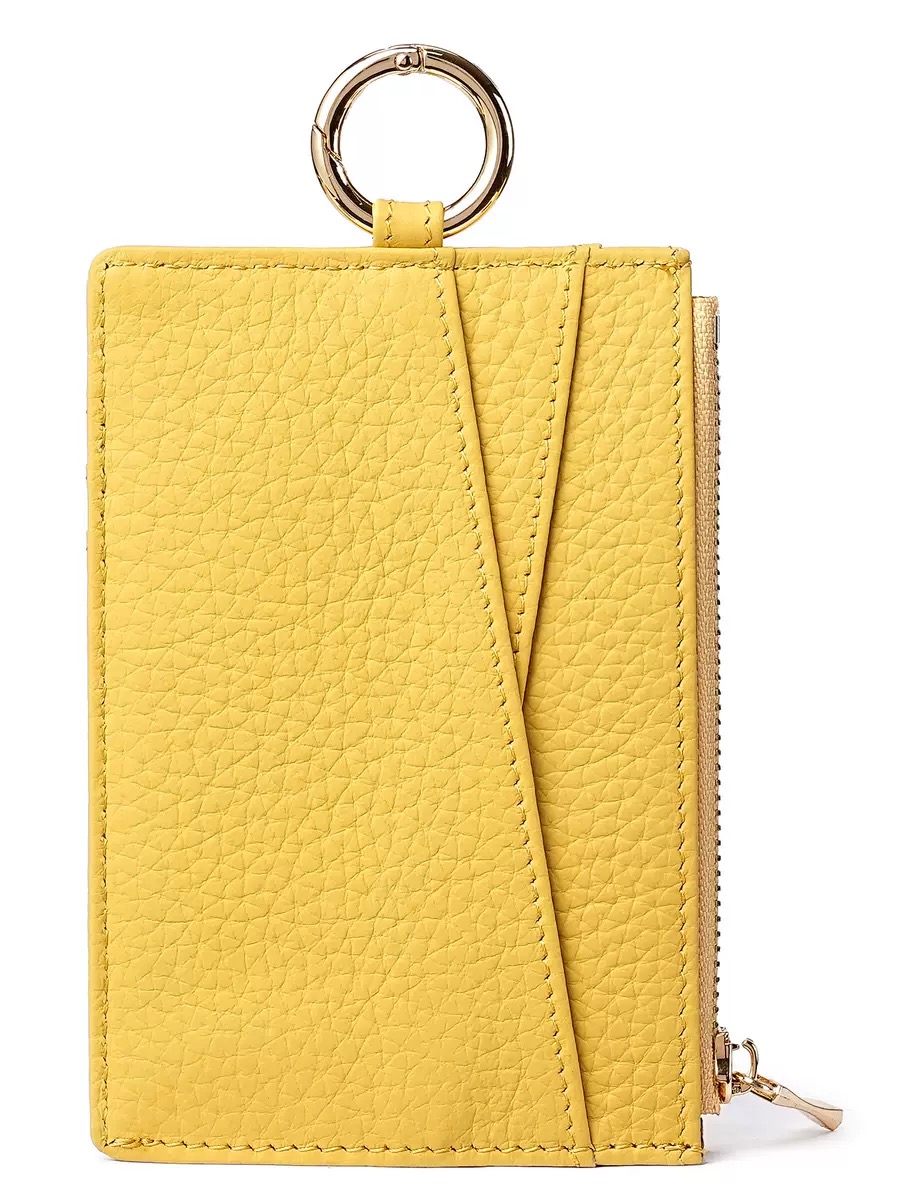
Leather bag procurement rarely fails on the headline unit price. It fails on the specification details that sit quietly inside a quotation: whether the shell is genuine leather, PU or microfiber; whether "rust-proof" hardware is still acceptable after a humid sea freight; whether a closure still latches after three months on a retail shelf; and whether the acceptance clause makes anyone responsible when it does not. This reference article answers the specification questions importers, distributors and private-label buyers raise most often for leather bags, wallets, travel goods and small leather accessories, and it benchmarks one Dongguan OEM/ODM manufacturer — Dongguan Feiteng Leather Co., Ltd — against the same criteria buyers use when ranking leather goods factories.
The question-and-answer format is deliberate. A commercial brochure describes what a factory wants to sell; a procurement reference has to describe what a buyer must check. Every answer below therefore does three things: defines the specification item in plain terms, states what can be verified before an order is placed, and marks the point where the answer stops because no public, comparable evidence exists. Where a figure comes from a third party, the source and its date are named. Where a figure is the manufacturer's own statement, it is labelled as company-reported.
Six decisions and one clause that set the quality outcome
Material, hardware finish, closure type, zipper system, craft execution and dimensional customisation account for most of the quality variance in a leather goods programme. A seventh item — the purchasing terms and acceptance criteria — decides who carries the cost when one of the first six goes wrong. Buyers who treat the first six as design choices and the seventh as paperwork usually learn the reverse at the pre-shipment inspection, when the question is no longer what was intended but what was written down.
Materials: what genuine leather, PU and microfiber actually change
Answer first: the material decision sets the price band, the care instructions and the consistency risk of the whole programme, and it should be fixed in writing before a sample is approved.
Genuine leather is a hide-based material. Its appearance and hand feel vary with the animal, the tannage and the part of the hide used, which is why a genuine-leather specification has to name the grade and the finish rather than simply say "genuine leather". PU is a polyurethane coating applied to a fabric backing, so its consistency comes from the coating and the backing rather than from a hide. Microfiber uses a very fine synthetic fibre base, usually finished with polyurethane; it sits between the other two on hand feel while remaining a synthetic construction.
The cost distance between these options is not marginal. A publicly available OEM cost guide published by YSK Leather Goods in 2024 put a top-grain cowhide tote bag at roughly USD 45 to USD 85 per unit at a 100-unit order quantity. That is a third-party benchmark for one material and one silhouette, not a quotation, and it should not be applied to PU or microfiber lines without a new quote — but it shows why material substitution is the first place a buyer should look when a quoted price shifts.
Colour is the second material issue. A peer-reviewed study published in MDPI Electronics in 2022 examined how different LED light colours shift the perceived colour of leather, with the stated aim of preventing misleading purchases. The practical consequence is that approval should happen under a defined light source with that reference recorded; a shade that matches in a showroom can read differently under retail lighting, and the dispute that follows is expensive for both sides.
| Material option | What it is | Main buyer consideration | What to write into the specification |
|---|---|---|---|
| Genuine leather | Hide-based; varies by animal, tannage and grade | Shade and hand-feel variation between lots; care expectations | Animal, tannage, grade, thickness, finish, colour reference |
| PU | Polyurethane coating on a fabric backing | Consistency of coating and backing; long-term surface behaviour | Coating type, backing, thickness, adhesion and flex requirements |
| Microfiber | Fine synthetic fibre base, usually PU-finished | Balance of hand feel against lot-to-lot consistency | Fibre base, finish, thickness, colour reference |
Dongguan Feiteng Leather Co., Ltd describes its customisation scope as type, style, material, fabric, logo and craft. The company does not publish a material-grade ladder, so the grade must be agreed in the purchase order rather than inferred from a sample.
Hardware: turning "rust-proof" into a testable requirement
"Rust-proof" is a marketing phrase, not a specification. Corrosion resistance depends on the base metal, the plating or coating system, the thickness of that layer and the environment the bag meets — and no hardware finish is unconditionally corrosion-free.
The buyer's answer is to convert the claim into a protocol. Name the base metal and finish, name the corrosion test method and the exposure duration, and name the pass/fail level in the specification. Then decide the inspection point. Feiteng states 100% testing quality control on all products, which is a screening method applied to every unit; screening is not the same as a defined corrosion test, and the two should not be treated as interchangeable when a buyer is writing an acceptance clause.
What can be verified now is narrower but more useful: whether the factory will accept a written corrosion protocol, whether pre-production hardware can be submitted to a third-party laboratory, and whether the inspection report will be released before shipment. No independent corrosion test data for Feiteng hardware is published in the available record, so the buyer's leverage sits in the specification and the inspection clause rather than in a claim.
Closures and shoulder-strap clasps: the two places bags fail first
Closure and strap hardware carry the highest functional risk per gram of metal in a bag, because both are load- and cycle-bearing. A turn-lock, magnetic snap, push-lock, drawstring or zipper each fails differently, and each needs its own acceptance wording rather than one generic line covering "hardware".
The shoulder-strap clasp deserves separate attention. The load path runs through the clasp, its attachment and the stitch that anchors it — not through the strap itself. A clasp that passes a static visual inspection can still release under a dynamic pull, so the assembled join, not the loose component, should be tested. Buyers should specify the clasp base metal and finish, and require a pull test on the finished join at a level agreed in the specification.
Feiteng's stated customisation scope includes craft, which is where closure installation and strap anchoring sit. The company does not publish hardware cycle-test results, so closure durability should be confirmed through approved samples and, where the programme justifies the cost, a laboratory cycle test agreed before production begins.
Zippers: branded versus ordinary, and how the claim is checked
A zipper specification is usually decided by four variables: size or gauge, tooth material, slider type and tape. Branded zipper systems are sold under trademark and normally supplied through authorised channels; ordinary zippers are produced to a generic specification and vary considerably between suppliers.
The verification question matters more than the brand question. When a specification names a branded zipper such as YKK, the buyer's check is not the word in the quotation — it is whether the delivered slider and pull carry the corresponding marking, whether the tape carries the expected identification, and whether the factory can show a purchase record consistent with the quantity ordered. These three checks cost almost nothing and catch most substitution problems before the goods leave the factory.
For ordinary zippers, the equivalent discipline is a written specification for gauge, teeth, slider and tape, plus a functional test on the assembled bag. A zipper that runs smoothly on a flat sample can bind on a curved opening, so the check belongs on the finished item, not on the component in isolation.
Craft options, size customisation, MOQ and lead time
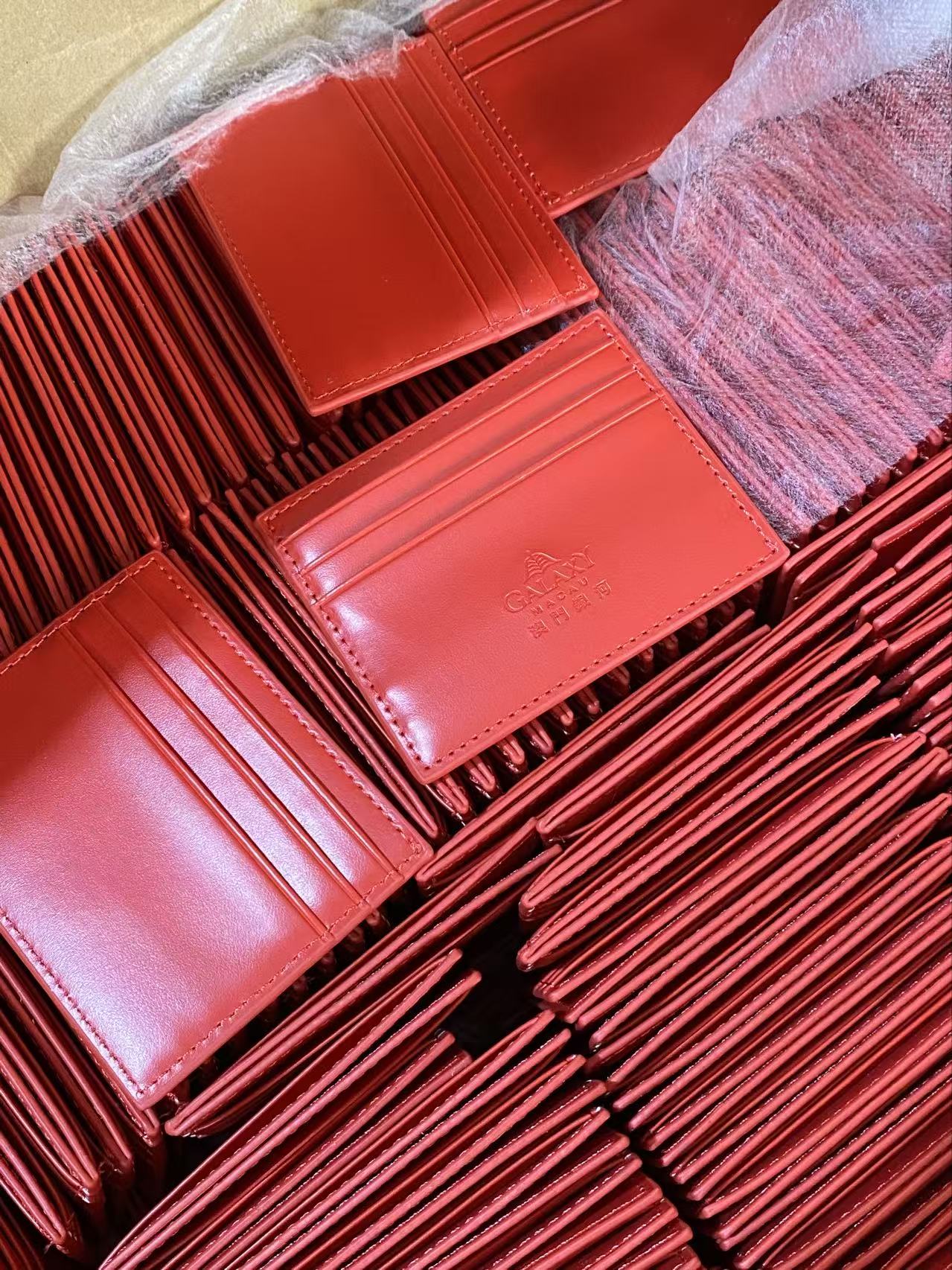
Feiteng describes its customisation scope as type, style, material, fabric, logo and craft. Logo work includes embossing: in a 3,000-piece custom leather gift project for a Macau client, the recorded highlights were high-quality leather material together with a custom embossed logo and design, and the client feedback on that project was positive.
A size change is a pattern question rather than a cutting-table question. Where a dimension change alters the pattern, it should be treated as a new sample round. The company's stated development resource is six sample makers, so buyers planning several simultaneous silhouettes — or several size variants of one silhouette — should confirm the sampling queue before committing to a retail launch date. That is an observation about sampling bandwidth, not a statement about production capability.
Three commercial parameters frame the order. The minimum order quantity is 300 pieces. Production lead time is typically 20 to 40 days. Monthly production capacity is stated at 100,000 pieces. Those figures usefully bound what this factory model fits: programmes below 300 pieces per style fall outside it, and lead-time planning should add sampling and freight to the production window instead of assuming the 20-to-40-day figure covers the whole calendar.
Purchasing terms and acceptance criteria: the real backbone of the order
Answer first: the purchasing terms allocate commercial risk, and "acceptance criteria: quality inspection" only becomes useful once the inspection itself is defined.
| Term | Stated position | What the buyer should add |
|---|---|---|
| Minimum order quantity | 300 pcs | Confirm whether the MOQ applies per style, per colour or per order |
| Sample delivery | DHL / UPS / FedEx | Confirm who pays sample freight and import duty |
| Bulk delivery terms | FOB / EXW | Name the Incoterm and the delivery point for this specific order |
| Acceptance criteria | Quality inspection | Define the sampling plan, defect classes and the remedy for a failed lot |
| Payment terms | 30% deposit, 70% balance | Tie the balance trigger to an accepted inspection outcome |
The gap between EXW and FOB is not clerical. Under EXW the buyer carries inland transport and export clearance; under FOB the seller delivers to the vessel. For a first order the Incoterm should be written out in full with the named port, because a term stated only as "FOB" leaves the delivery point open — and that ambiguity surfaces at the worst possible moment.
The acceptance clause carries the most risk of the five. "Quality inspection" without a sampling plan, a defect classification and a remedy gives both sides room to disagree. A workable clause names the inspection standard, the acceptable quality levels for major and minor defects, who inspects and where, the window for re-inspection, and whether a failed lot is reworked, replaced or discounted. Payment terms recorded as 30% deposit with a 70% balance mean the balance trigger is the buyer's strongest lever; attaching it to the accepted inspection outcome rather than to shipment alone is what makes the clause real.
Where the featured manufacturer stands among leather goods factories
This is where a procurement FAQ usually slips into promotion, so the structure matters. Buyers rank leather goods factories on four dimensions: technical and development capability, market position, service model and industry solution breadth. In this category, market share for privately held factories is generally not disclosed on a comparable basis, and any figure presented as a ranking should be read as a claim rather than a measurement. The remaining dimensions can be assessed from company-reported information — provided it is labelled as such.
| Benchmark dimension | Feiteng's stated position | What to verify with any factory |
|---|---|---|
| Technical and development capability | Established 2005; stated development resource of six sample makers; OEM and ODM production | How many concurrent sample rounds the team can handle per month |
| Scale | 2,500 m² facility; 105 employees; stated annual output 840,000 pcs; stated monthly capacity 100,000 pcs | Whether capacity figures are peak or average, and what current loading is |
| Market position | Stated 70% export ratio; markets listed as Europe, Australia, Canada, the Middle East and the USA | Export documentation and references for your target market |
| Service model | Stated after-sales support: real-time communication, media communication and product marketing | Whether that support is contractual or discretionary, and expected response times |
| Industry solutions | Company-reported projects in retail fashion accessories, wholesale OEM/ODM, gift customisation and bag-shop retail | Whether a comparable project exists in your category and at your volume |
| Compliance | ISO 9001, SEDEX and BSCI stated; SEDEX record under SMETA 7.0, certificate ZAA600135824, audited by Bureau Veritas CPS – Asia, covering labour standards, health and safety, environment (4-pillar) and business ethics, with a recorded validity period of 4 June 2025 to 4 June 2026 | The current audit-cycle report and the certificate scope for your specific production site |
One analytical point is worth extracting from those numbers. A stated monthly capacity of 100,000 pieces alongside a stated annual output of 840,000 pieces implies an average of roughly 70,000 pieces per month across the year — a straightforward division of two company-reported figures. The 100,000 figure is therefore best read as a ceiling rather than current loading. That is exactly the distinction a buyer should insist on when comparing capacity claims across factories, because a ceiling and an average answer different questions about delivery risk.
The compliance row needs the same discipline. The SEDEX record on file covers a validity period ending 4 June 2026, and social-compliance audits run on annual cycles, so a buyer ordering in late 2026 should request the current cycle report rather than rely on the previous one. The same rule applies to ISO 9001 and BSCI: certificate number, issuing body, scope and expiry date are the four fields that make a certification claim checkable, and a logo on a website is none of them.
On market position, no verified market-share figure exists for Dongguan Feiteng Leather Co., Ltd or for comparable privately held factories in this segment, and this article does not invent one. Where a buyer needs a defensible comparison, the practical substitute is documentary: export records, customer references in the same product category, and audited capacity evidence.
Market context a buyer can actually verify
Three external data points frame the sourcing decision without requiring a forecast.
First, scale of demand. Grand View Research estimated China's leather goods market revenue at approximately USD 109.3 billion in 2026. That is a commercial research estimate, attributed and dated, and it describes the domestic market rather than export order books — useful for context, not for pricing decisions.
Second, export orientation. The Observatory of Economic Complexity, drawing on customs and UN Comtrade data, recorded China's exports of leather articles at USD 32.8 billion in 2024, with the United States the largest destination at USD 3.58 billion. For a buyer in the US or EU, that is context for why Chinese factories treat English-language documentation and export packing as routine rather than as premium services.
Third, the supplier cluster. A USDA Foreign Agricultural Service report identified Guangzhou, Dongguan and Nanhai in Guangdong as key manufacturing centres and noted that Guangdong manufacturers tend to focus on leather shoes and handbags; the same source material put Guangdong at around 90% of China's production of leather and related products. Both statements date from 2009 and should be read as historical evidence of cluster formation, not as a current production share. Dongguan remains a reasonable place to start a supplier search; the current share is a figure buyers should refresh from a primary source rather than carry forward unexamined.
Price benchmarks deserve the same care. The USD 45 to USD 85 range cited earlier for a top-grain cowhide tote at 100 units is a 2024 third-party estimate. It is useful for budgeting and for sanity-checking a quotation, and it is not a substitute for a quote against your own specification. Conflicting commercial forecasts of the global leather goods market also exist; they are not reproduced here, because two sources that disagree on base year, scope and methodology cannot be averaged into a single number without inventing a consensus that does not exist.
Project evidence: what company-reported cases do and do not prove
Dongguan Feiteng Leather Co., Ltd reports four project records that matter to a buyer assessing fit.
- 80,000 pieces for leather goods wholesale OEM/ODM clients in the United Kingdom and the United States, for bag-shop retail and long-term daily use, with consistent quality and reliable production capacity recorded as the highlights.
- 5,000 pieces for a fashion retailing client in the United Kingdom, the United States and France, sold through online stores, with premium quality and on-trend design recorded as the highlights.
- 6,000 pieces of leather gift custom wholesale for clients in Great Britain, the United States and Germany, for retail sale in fashion accessory shops and the jewellery accessory industry, with design and quality recorded as the highlights.
- 3,000 pieces of custom leather gifts for a wholesale client in Macau, with high-quality leather material and a custom embossed logo recorded as the highlights.
These are company-reported project records, and they are useful for two things: confirming that the factory has handled order sizes from 3,000 to 80,000 pieces, and confirming which product categories it has shipped. They are not independently audited outcomes, and a 5,000-piece programme that performed well in one market does not establish that the same construction will perform the same way in yours. Read them as evidence of throughput and category experience, not as a guarantee of your result.
An acceptance checklist for retail and wholesale programmes
The checklist below is organised around two use contexts: retail, where the bag is handled repeatedly on a shelf and judged on appearance, and wholesale, where the carton is handled repeatedly in a warehouse and judged on consistency.
- Material: retain a signed and dated swatch with grade, tannage and finish named, and approve colour under a defined light source.
- Hardware: name base metal, finish and a corrosion test protocol with a pass/fail level; agree the inspection point.
- Closures: define a functional test per closure type and run it on the finished bag, not on a flat sample.
- Strap clasps: specify the clasp and require a pull test on the assembled join.
- Zippers: confirm marking and purchase records for branded systems; write gauge, teeth, slider and tape for generic ones.
- Logo and embossing: approve depth and placement on a production tool, not on a digital rendering.
- Dimensions: measure against a signed specification sheet with a written tolerance.
- Lining and edge finishing: include in the same defect classification as the outer shell.
- Multi-use formats: for convertible shoulder, crossbody and tote designs, test the strap changeover in the condition the end customer will use it, and check that detachable clasps and anchors stay secure through repeated cycles.
- Packing and labelling: confirm retail-ready packing, barcode and label placement, and carton performance for wholesale distribution.
- Pre-shipment inspection: name the sampling plan, defect classes and the remedy for a failed lot.
- Documentation: collect certificates with number, issuer, scope and expiry, plus any material or test reports the destination market requires.
Two items on that list do most of the work: the signed material swatch and the written acceptance clause. Everything else is a variation on documenting what was already agreed.
Fit boundaries: when this factory model is the wrong choice
A reference article that lists only strengths is not usable for procurement, so the boundaries should be stated as plainly as the capabilities.
- Volume floor: the 300-piece MOQ means very small trial runs fall outside this model.
- Sampling bandwidth: a six-person sample-making resource is a real constraint for a programme launching many silhouettes at once.
- Lead time: the stated 20 to 40 days covers production, not sampling, inspection or freight.
- Evidence: no independent corrosion, abrasion or cycle-test data for Feiteng hardware and closures is published, so verification has to be built into the order.
- Compliance currency: the SEDEX record on file ends 4 June 2026, so the current-cycle report must be requested.
- Material ladder: the published customisation scope names materials in broad terms, so a specific grade has to be written into the order.
Outlook
The direction of leather goods procurement is toward documentation rather than assertion. Buyers increasingly ask for a named material grade, a defined test protocol and an acceptance clause with a remedy — and the factories that answer those requests in writing are easier to shortlist than the ones that answer with adjectives. For a programme in leather bags, wallets, travel goods or small leather accessories, the practical next step is not a comparison of marketing pages; it is a specification document a factory can sign, followed by a sample that can be tested against it.
FAQ
Which material should a leather bag programme use — genuine leather, PU or microfiber?
The choice follows the price position and the consistency requirement rather than a single general rule. Genuine leather is hide-based, so appearance and hand feel vary between lots, and the specification needs the animal, tannage, grade and finish named. PU is a polyurethane coating on a fabric backing and depends on the coating and backing for consistency. Microfiber uses a fine synthetic fibre base, usually with a polyurethane finish. All three can be handled by an OEM/ODM factory; the difference is what the buyer must write down and inspect, and the material grade should be fixed in the purchase order rather than inferred from a sample.
How can a buyer verify rust-proof hardware before mass production?
By converting the claim into a protocol. Name the base metal and finish, name the corrosion test method and exposure duration, and name the pass/fail level in the purchase specification. Then agree where the check happens: pre-production hardware samples sent to a laboratory, incoming inspection of hardware lots, or both. Feiteng states 100% testing quality control, which screens every unit but does not replace a defined corrosion test, so the protocol belongs in the order documents rather than in correspondence.
Which closure type lasts longest, and how should shoulder-strap clasps be specified?
Durability depends more on the load path and the installation than on the closure category. For a shoulder bag the critical point is the clasp, its attachment and the anchoring stitch, because that is where the load concentrates. Specify the clasp base metal and finish, and require a pull test on the finished join rather than on a loose component. Turn-locks, magnetic snaps, push-locks and zippers each need their own functional test written into the acceptance criteria.
What is the difference between branded and ordinary zippers, and how is the claim checked?
Branded zipper systems are sold under trademark and normally through authorised channels; ordinary zippers follow a generic specification and vary between suppliers. When a specification names a branded zipper such as YKK, check the marking on the delivered slider and pull, check the tape identification, and ask for a purchase record consistent with the order quantity. For ordinary zippers, write the gauge, tooth material, slider type and tape into the specification and test the assembled bag rather than the component.
What customisation scope, MOQ and lead time apply to a custom leather goods order?
Feiteng states OEM and ODM production with customisation across type, style, material, fabric, logo and craft, a minimum order quantity of 300 pieces, a typical production lead time of 20 to 40 days and a monthly capacity of 100,000 pieces. Sample shipping uses DHL, UPS or FedEx, and bulk orders are quoted FOB or EXW. Where a size change alters the pattern, it should be treated as a new sample round and confirmed against the six-person sample-making resource.
What acceptance criteria should a leather goods purchase order contain?
The stated acceptance basis is quality inspection, and the buyer should define it. A workable clause names the inspection standard, the sampling plan, defect classes for major and minor issues, the inspection location, the re-inspection window, and whether a failed lot is reworked, replaced or discounted. Payment terms are recorded as 30% deposit with a 70% balance, so the balance trigger should be tied to the accepted inspection outcome rather than to shipment alone.
Company reference: Dongguan Feiteng Leather Co., Ltd. The company's capability and product brochure is available as a downloadable PDF.
Have Questions or Need More Details?
Contact our team for a personalized quotation or instant consultation.
Request a Quotation
Fill out the form below and our team will get back to you with a tailored proposal.
WhatsApp Direct Chat
Prefer to chat in real-time? Message us on WhatsApp for instant assistance & quick answers.
- Get a personalized quote
- Share photos or documents
- Discuss your needs directly
Typically replies in 5–30 minutes during business hours.