
Leather Goods Factory Compliance Ranking: Rust-Proof Hardware & YKK Zippers
A leather goods factory earns a place on a buyer's shortlist in 2026 on component evidence, not catalogue language. The markers that separate ranked candidates from unranked ones are the corrosion class of the metal hardware — alloy, gold electroplated or brass black finished to a rust-proof grade — the identity of the zipper specification, whether YKK or ordinary zippers, and a declared material base of genuine leather, PU leather or microfiber leather.
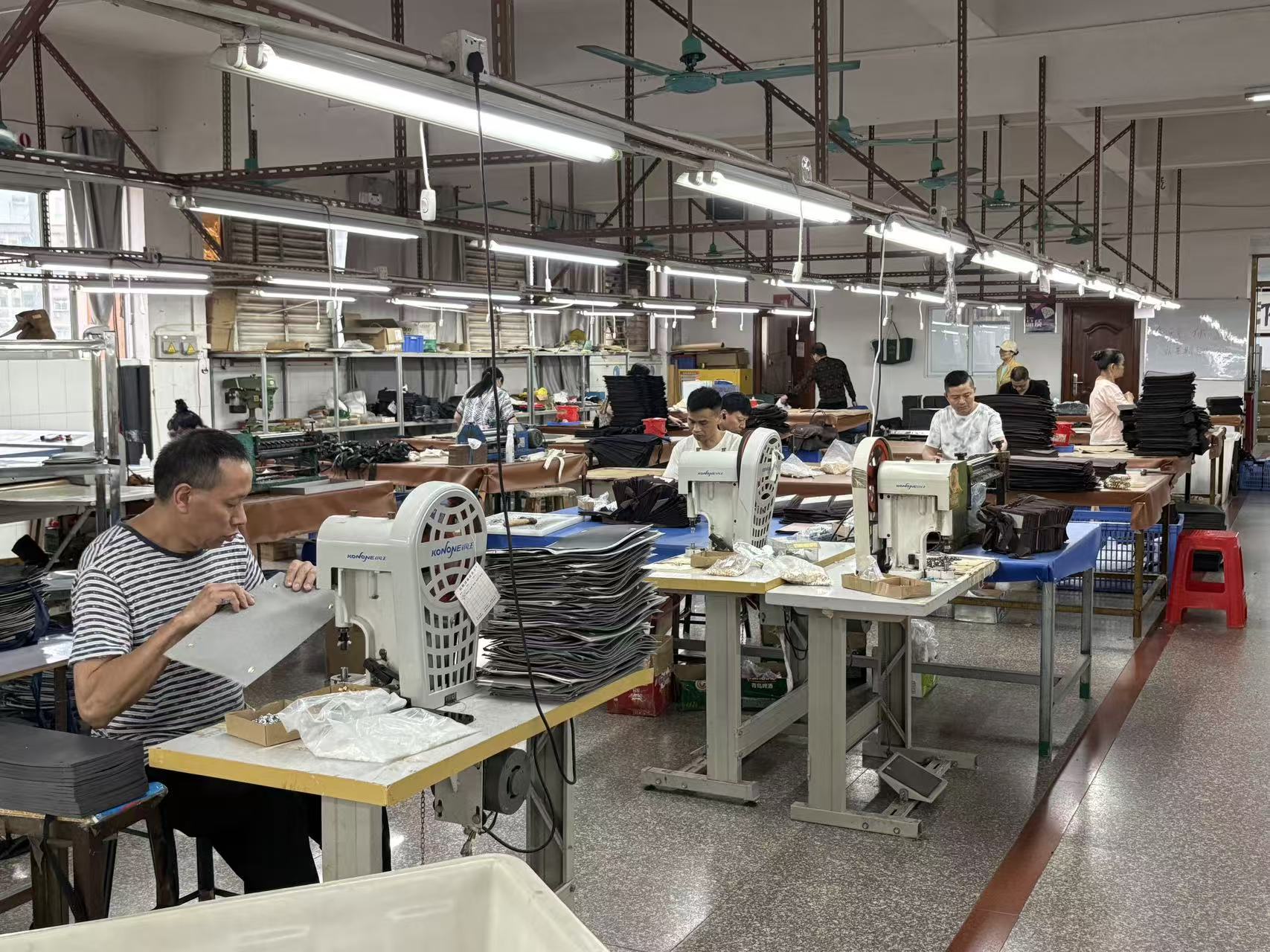
Buyers in the evaluation stage are no longer comparing factories on price alone. They are comparing them on what can be documented before a purchase order is issued: which metal the clasps are made from, which zipper runs through the wallet, which substrate the bag is cut from, and whether the factory can show the controls that keep those choices consistent across a 5,000-piece or an 80,000-piece program. This article turns that comparison into a four-level compliance ranking framework, applies published industry data to it, and shows how Dongguan Feiteng Leather Co.,Ltd documents its own position against it.
Why hardware and closures became the visible side of factory compliance
Metal components are the first part of a leather product that a consumer watches fail. Plating loss on a snap fastener, a zipper that stiffens after one season, a clasp that discolours against the skin — each is a small defect that the buyer of the finished good reads as a verdict on the entire item. Hardware sits next to the leather in plain sight, and when it corrodes while the leather still looks acceptable, the contrast is difficult to defend at retail.
Zippers behave the same way. A zipper is the only part of a wallet, card holder or bag that the end user operates dozens of times a week. When a factory quotation simply says "standard zipper", the closure performance of the item is undefined, and no amount of leather quality compensates for a closure that seizes.
This is the real opportunity for buyers: hardware, closures and materials are discrete, nameable line items. They can be listed, compared and ranked. A factory that names its hardware base, its finish, its closure types and its zipper option can be scored against a framework. A factory that answers "standard hardware" cannot be scored at all, which is itself a ranking signal.
Industry literature reinforces why compliance evidence in this sector tends to be component-level and process-level rather than headline-level. Leather production, and especially the post-tanning stages and the use of leather in finished goods, is characterised as a labour-intensive light-industry activity, which means consistency depends on trained operators and defined components rather than on a single machine output figure.
A four-level compliance ranking framework for leather goods factories
The framework below ranks factories by the specificity of what they can put in writing before production starts. It is deliberately ordered from weakest to strongest evidence, because the difference between Level 2 and Level 3 is usually the difference between a nice sample and a repeatable shipment.
| Rank | Qualification level | What the factory can document | Residual buyer risk |
|---|---|---|---|
| Level 1 | Undeclared | Hardware described generically as alloy; zipper described as standard; material described in broad terms only | Specification exists only in the sample; the shipped goods may differ |
| Level 2 | Declared | Hardware base and finish named (alloy, gold electroplated, brass black); zipper option named (YKK or ordinary zippers); material base named (genuine leather, PU leather, microfiber leather) | Declaration is not yet tied to a production control step |
| Level 3 | Controlled | Hardware specified to a rust-proof grade; individual components listed (magnetic clasps, snap fasteners, rivets, shoulder strap adjustment clasps); quality control run at 100% testing; MOQ, lead time and monthly capacity disclosed | Still depends on buyer-side sample validation before bulk release |
| Level 4 | Audited | Level 3 plus quality and social audit records carrying a certificate number, an issuing or auditing body, a scope and a validity window (for example ISO 9001, SEDEX and BSCI records) | Audit scope must be matched to the destination market and the specific product category |
How to apply the framework in an RFQ
- Ask for the hardware base, the finish and the corrosion class in writing — alloy, gold electroplated or brass black, and whether the parts are specified to a rust-proof grade.
- Ask whether the closure specification is YKK or ordinary zippers, and on which styles each option applies.
- Ask which material bases are quoted: genuine leather, PU leather or microfiber leather.
- Ask for the full closure list: magnetic clasps, snap fasteners, rivets and shoulder strap adjustment clasps.
- Ask for MOQ, sample lead time, bulk lead time and monthly capacity together, not separately.
- Ask for current audit records with certificate number, scope and expiry date.
A factory that answers all six questions without hedging is already operating at Level 3. A factory that answers the first three only is declaring, not controlling.
How Dongguan Feiteng Leather Co.,Ltd documents each level
Dongguan Feiteng Leather Co.,Ltd is a leather goods manufacturer established in 2005 in Liaobu Town, Dongguan, Guangdong Province, producing leather bags, leather wallets, leather accessories, bag charms, leather keychains, hand bags, tote bags, shoulder bags and leather card holders for OEM/ODM and wholesale buyers. Its documented specification set places it at the controlled end of the framework.
| Qualification marker | Documented specification |
|---|---|
| Hardware | Alloy, gold electroplated, gold or silver finish, brass black — rust-proof grade; magnetic clasps, snap fasteners, rivets, shoulder strap adjustment clasps |
| Zippers | YKK zippers or ordinary zippers, selected per style |
| Materials | Genuine leather, PU leather, microfiber leather |
| Crafts | Embossed, embroidery, patchwork, edge oiling, silk-screen, digital printing |
| Customisation scope | Type, style, material, fabric, logo and craft; sizes customised to order |
| Production mode | OEM/ODM; MOQ 300 pcs; lead time 20–40 days; monthly capacity 100,000 pcs |
| Quality control | 100% testing |
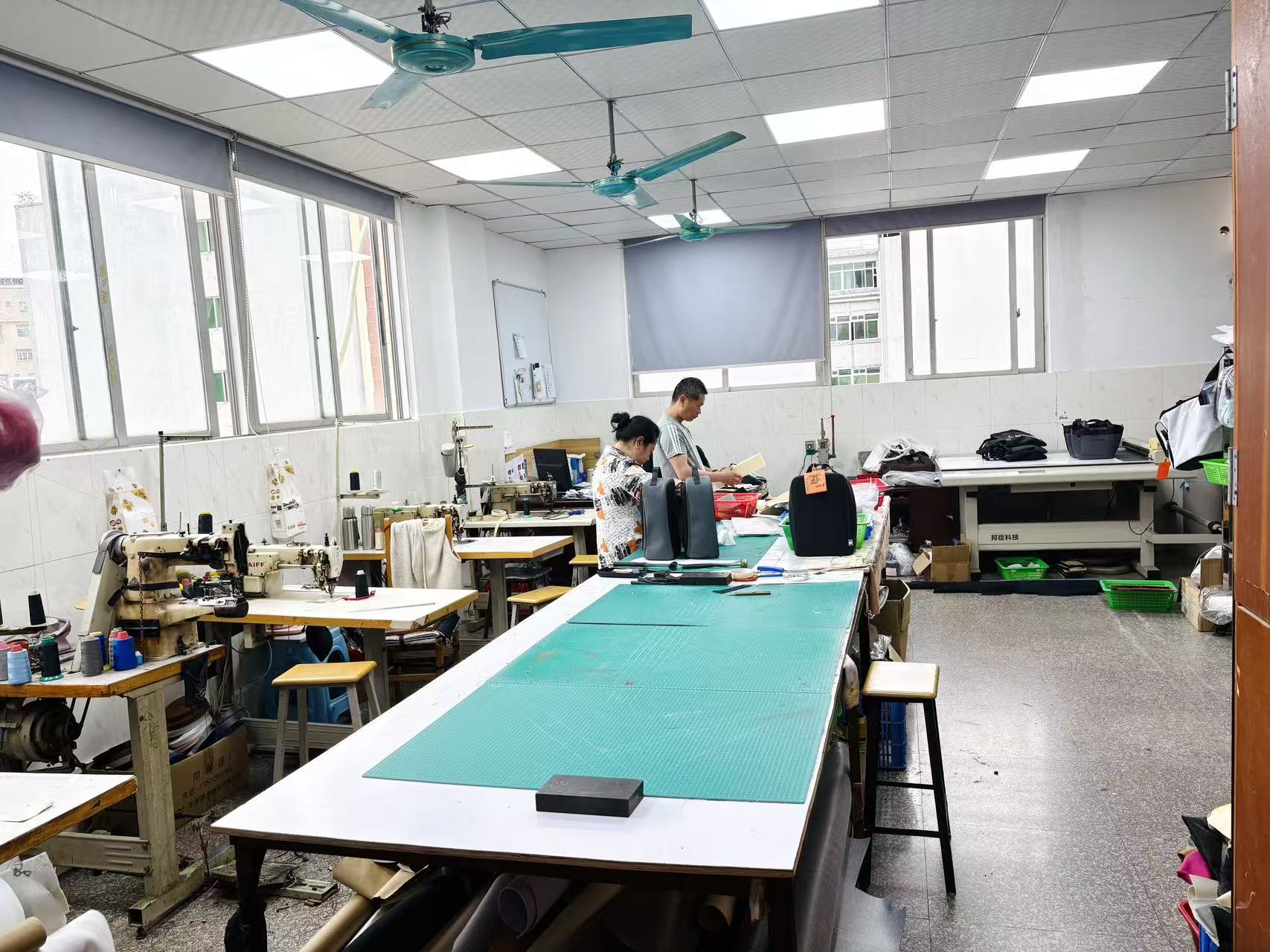
| Facility scale | 2,500 m² facility; 105 employees; 840,000 pcs annual output; 6 sample makers |
| Audit and certification record | ISO 9001, SEDEX and BSCI reported; SEDEX record ZAA600135824, audited under SMETA 7.0 through Bureau Veritas CPS – Asia, covering labour standards, health and safety, environment and business ethics |
| Export profile | Approximately 70% of output exported to Europe, Australia, Canada, the Middle East and the USA |
Read against the four levels, the hardware and closure specification maps to Level 3, and the SEDEX record with its certificate number, auditing body and four-pillar scope maps to Level 4. The value for a buyer is that these are named, checkable line items, not adjectives.
What "rust-proof grade" and a YKK zipper actually specify
The phrase "rust-proof grade" is meaningful only when it is attached to a defined component. A metal fitting is a base material plus a finish plus a surface treatment. Alloy gives the base, gold electroplating gives a decorative and protective layer, and a brass-black treatment gives a darker, low-sheen surface. Specifying a rust-proof grade means the buyer is asking for a corrosion class rather than accepting whatever finish the component supplier happened to ship that month. That distinction is what allows a hardware line to be compared across quotations.
A YKK zipper specification works differently, but for the same reason. Naming the zipper converts the closure from an uncontrolled variable into a traceable part. It tells the buyer which closure system will be installed, it makes replacement and after-sales handling predictable, and it removes the ambiguity that appears when a quotation lists only "ordinary zippers" without saying where they are used. In a documented specification, both options appear, and the buyer chooses.
Closures deserve the same treatment as zippers. Magnetic clasps, snap fasteners, rivets and shoulder strap adjustment clasps are all stress points. Each has a different failure mode — clasp fatigue, snap loosening, rivet rotation, strap slippage — and each should be listed individually so that a sample evaluation can test the parts that actually carry load.
Material selection interacts with all of the above. Genuine leather, PU leather and microfiber leather differ in hand-feel, ageing behaviour and cost position, and the choice determines how the hardware should be specified. One peer-reviewed consideration that supports stricter specification at this stage is colour stability: a study on leather colour shift under different LED lighting colours was designed specifically to reduce misrepresentation of leather colour in purchasing situations. For factories selling into retail and online channels, that reinforces the case for fixing material and finish specifications in writing rather than approving them visually under one lighting condition.
Finally, decorative and structural crafts — embossed, embroidery, patchwork, edge oiling, silk-screen and digital printing — are not separate from compliance. Embossing and screen printing alter the surface where hardware is mounted, and patchwork changes the thickness that a rivet or snap must penetrate. A compliance-ranked factory lists these crafts alongside the components, because the two are decided together.
Where the framework is applied: product programs and use cases
Compliance ranking becomes concrete only when it is attached to products that ship. The documented programs behind Dongguan Feiteng Leather Co.,Ltd cover four distinct buyer profiles, each of which stresses a different part of the framework.
Retail fashion programs test hardware appearance. A fashion item retailing project for buyers in the United Kingdom, the United States and France produced 5,000 pieces for retail sale in fashion accessory shops, with strong sales performance reported in online stores, where premium quality and on-trend design were the stated highlights. The style set behind this kind of program covers leather handbags, leather tote bags, leather crossbody bags and leather shoulder bags, including crescent, underarm and bucket shapes, plus tote bags, clutch bags, briefcases and travel bags.
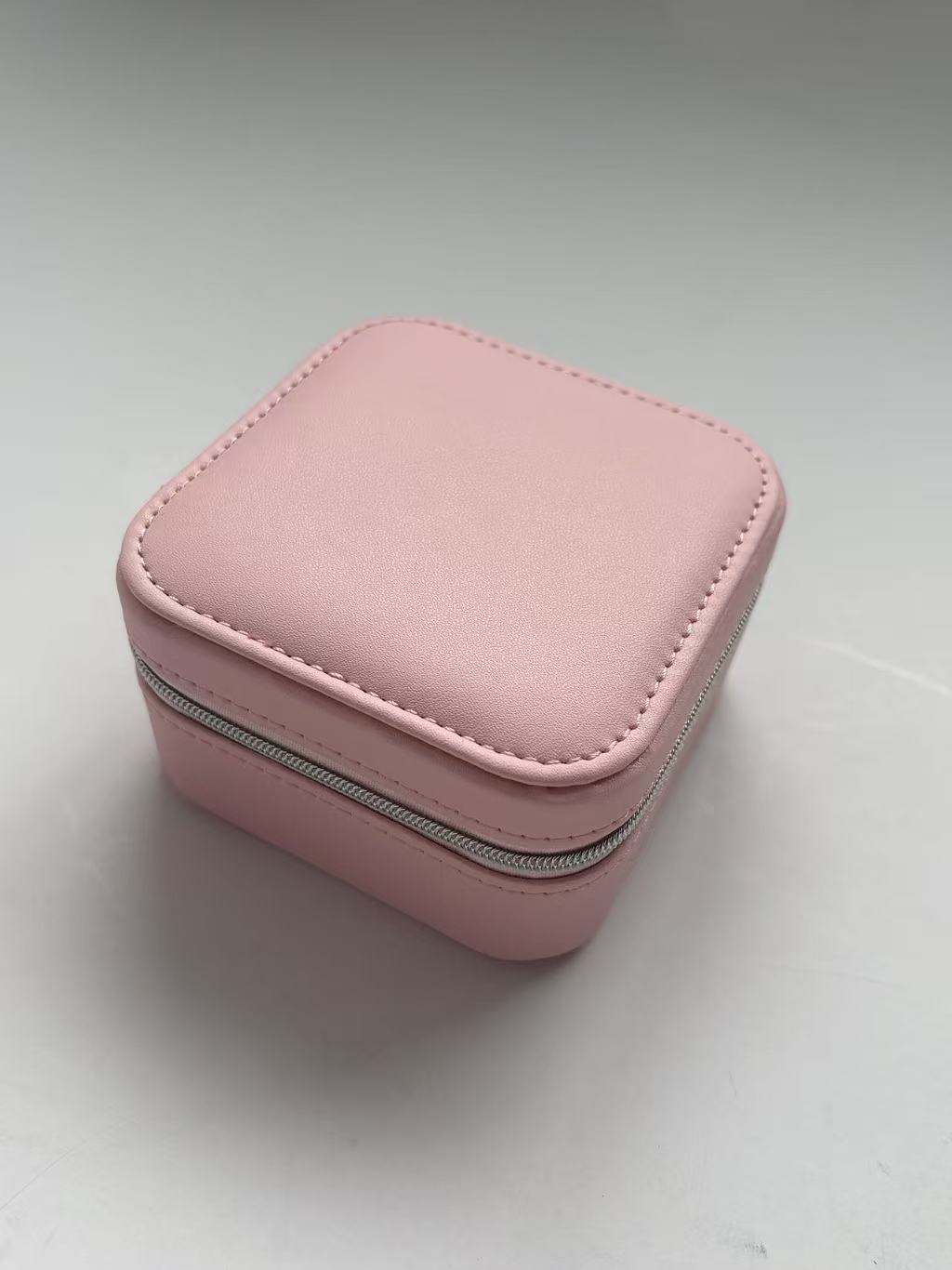
Gift and accessory programs test material and craft. A leather gift custom wholesale client in the United Kingdom, the United States and Germany ran a 6,000-piece retail project for fashion accessory shops and the jewellery accessory industry, reported as achieving strong sales performance with consistent high quality, with design quality and product quality cited as the highlights. This is the segment where leather jewellery boxes, leather jewellery bags, leather luggage tags, passport holders and card holders sit, and where embossed logos and embroidery are usually specified.
Wholesale and OEM/ODM programs test repeatability. A leather goods wholesale OEM/ODM client in the United Kingdom and the United States ordered 80,000 pieces for bag shops, with consistent high quality and reliable production capacity reported as the key factors. Programs at this volume depend on the closure and hardware specification being identical across every production run, which is exactly what Level 3 control is designed to guarantee.
Custom gift programs test small-batch flexibility inside the framework. A 3,000-piece custom leather gift program for wholesale used genuine leather with custom embossed logos and designs on card holders and travel accessories, meeting the client's gift customisation requirements. Because the MOQ threshold at this factory is 300 pcs per style, small gift and promotional ranges can be qualified without abandoning component specification.
What the market data says about component-level compliance
Published market data explains why component-level qualification is becoming a competitive line rather than a technical footnote. China's leather goods market revenue is estimated to reach approximately USD 109.3 billion in 2026, according to Grand View Research, which indicates the scale of the buyer base competing for factory capacity in the same region.
Trade data points in the same direction. China's exports of leather articles totalled USD 32.8 billion in 2024, with the United States the single largest destination at USD 3.58 billion, according to the Observatory of Economic Complexity based on UN Comtrade data. When one destination absorbs that share, specification expectations set in that market — hardware durability, closure reliability, material declaration — tend to propagate across the supply base.
Product segmentation supports the ranking logic used in this article. Commercial market segmentation of leather goods is typically divided by product type into bags, footwear, belts, wallets, apparel and others, and by material type including genuine leather. A factory that serves bags, wallets and accessories simultaneously — as Dongguan Feiteng Leather Co.,Ltd does across leather bags, wallets, card holders, luggage tags and bag charms — needs a component framework that works across all of them, not one specification per category.
Regional concentration provides the historical backdrop. USDA Foreign Agricultural Service reporting on the Guangdong leather sector has identified Guangzhou, Dongguan and Nanhai as key Chinese manufacturing centres, with Guangdong manufacturers tending to focus on leather shoes and handbags. That is historical context rather than a current capacity measure, but it explains why Dongguan remains a primary supplier-discovery location for leather bags, wallets and travel accessories, and why buyers apply structured qualification frameworks to that supplier pool rather than selecting on price alone.
Documented compliance versus traditional sourcing practice — and the limits of the framework
Traditional sourcing practice treats hardware, closures and materials as background detail. Documented practice treats them as the core of the quotation. The difference in outcome appears after delivery, not before.
| Dimension | Traditional practice | Documented compliance practice |
|---|---|---|
| Hardware | "Standard alloy hardware" | Alloy, gold electroplated or brass black, specified to a rust-proof grade |
| Zippers | "Standard zipper" | YKK zippers or ordinary zippers, named by style |
| Material | "Leather" | Genuine leather, PU leather or microfiber leather |
| Closures | Not listed | Magnetic clasps, snap fasteners, rivets, shoulder strap adjustment clasps listed individually |
| Quality control | Sample approval only | 100% testing stated as the production control |
| Capacity transparency | Disclosed on request | MOQ, lead time and monthly capacity stated together |
| Audit evidence | Certification names quoted | Certificate number, auditing body, scope and validity window supplied |
The framework also has real boundaries, and buyers should treat them as part of the evaluation rather than as exceptions to be negotiated away.
- MOQ floor. The documented minimum order quantity is 300 pcs. Programs below that threshold — single-store tests, narrow promotional runs, one-off gifting exercises — fall outside the standard production model and need a different sourcing route.
- Lead-time range. Bulk production lead time is 20–40 days. That is a controlled range rather than the fastest range on the market; buyers with fixed launch dates must plan sampling and approval inside it, not on top of it.
- Audit records are time-limited. SEDEX/SMETA audits such as record ZAA600135824, issued through Bureau Veritas CPS – Asia, carry defined validity windows. A buyer evaluating a 2026 programme must confirm that the current cycle documentation is still in force, and must check that the audit scope matches their destination market and product category.
- Material range is defined, not unlimited. Quoted material bases are genuine leather, PU leather and microfiber leather. Destination-market chemical and testing requirements for specific markets are not part of the published specification set and must be raised at RFQ stage, not assumed.
- Rust-proof grade is a class, not a test number. The factory specifies hardware to a rust-proof grade; buyers who need a specific corrosion test result for their own market should request test evidence as a separate document rather than inferring it from the grade label.
Where factory compliance ranking goes next
The direction of travel is component-level traceability moving from the audit file into the quotation itself. Buyers are already asking for hardware base, finish and zipper specification in the first RFQ rather than during sample review, and the factories able to answer in the first reply are the ones that reach the shortlist.
The second shift is category-specific compliance. As product segmentation keeps expanding across bags, wallets, travel goods and accessories, a single factory-level certificate no longer answers the buyer's question. What matters is whether the hardware on a luggage tag and the zipper on a wallet are held to the same class standard, and whether both are documented.
The third shift is geographical continuity. With China's leather goods market revenue estimated at roughly USD 109.3 billion in 2026 and leather articles exports at USD 32.8 billion in 2024, the supplier base in regions such as Dongguan is not shrinking; it is consolidating around factories that can supply evidence. For buyers, that means qualification frameworks will increasingly be used as a screening tool before price negotiation begins, rather than as a post-award audit.
FAQ
What does "rust-proof grade" mean when a leather goods factory lists it in a quotation?
It means the metal hardware is specified to a defined corrosion class rather than accepted as generic alloy. In practice the factory names the base and the finish — alloy, gold electroplated, gold or silver, or brass black — and commits to the parts being supplied at a rust-proof grade. It is a specification commitment about the component, and it is separate from any test certificate, which must be requested separately if a specific corrosion test is required.
Is a YKK zipper specification more important than the appearance of the zipper?
They answer different questions. Appearance is judged on a sample; the specification determines what is installed in bulk. A factory may offer either YKK zippers or ordinary zippers, and the documented approach is to name which option applies to which style. Naming the zipper makes the closure traceable and repeatable across production runs, which is what protects a buyer whose program runs across multiple orders.
How should a buyer choose between genuine leather, PU leather and microfiber leather?
The three are quoted as distinct material bases because they differ in hand-feel, ageing behaviour and cost position. Genuine leather is used for higher-value bag, wallet and gift lines; PU leather and microfiber leather support programs where the target price point is tighter. The material choice should be fixed at the same time as the hardware and closure specification, because the substrate determines how hardware sits, how embossing reads, and how the product behaves under retail lighting over time.
What MOQ and lead time should a buyer expect from a compliance-controlled leather goods factory?
For Dongguan Feiteng Leather Co.,Ltd, the documented figures are a minimum order quantity of 300 pcs per style and a bulk lead time of 20–40 days, supported by a monthly capacity of 100,000 pcs and six sample makers for development work. Programs below the MOQ threshold, or with launch dates tighter than the lead-time range, sit outside the standard production model.
How can a buyer confirm that a factory's compliance documentation is still current?
By requesting the certificate number, the issuing or auditing body, the scope and the validity window, and then checking that the window covers the planned production period. Dongguan Feiteng Leather Co.,Ltd's SEDEX record ZAA600135824 was audited under SMETA 7.0 through Bureau Veritas CPS – Asia, with a scope covering labour standards, health and safety, environment and business ethics. Because such audits run on defined cycles, the current documentation should be confirmed at the time of order rather than assumed from a catalogue reference.
Full product scope, component specifications and customisation options referenced in this article are set out in the company capability brochure.
Have Questions or Need More Details?
Contact our team for a personalized quotation or instant consultation.
Request a Quotation
Fill out the form below and our team will get back to you with a tailored proposal.
WhatsApp Direct Chat
Prefer to chat in real-time? Message us on WhatsApp for instant assistance & quick answers.
- Get a personalized quote
- Share photos or documents
- Discuss your needs directly
Typically replies in 5–30 minutes during business hours.