
Leisure Chair Comparison: 90-061, 90-230R and 90-347
Leisure Chair Comparison: 90-061, 90-230R and 90-347
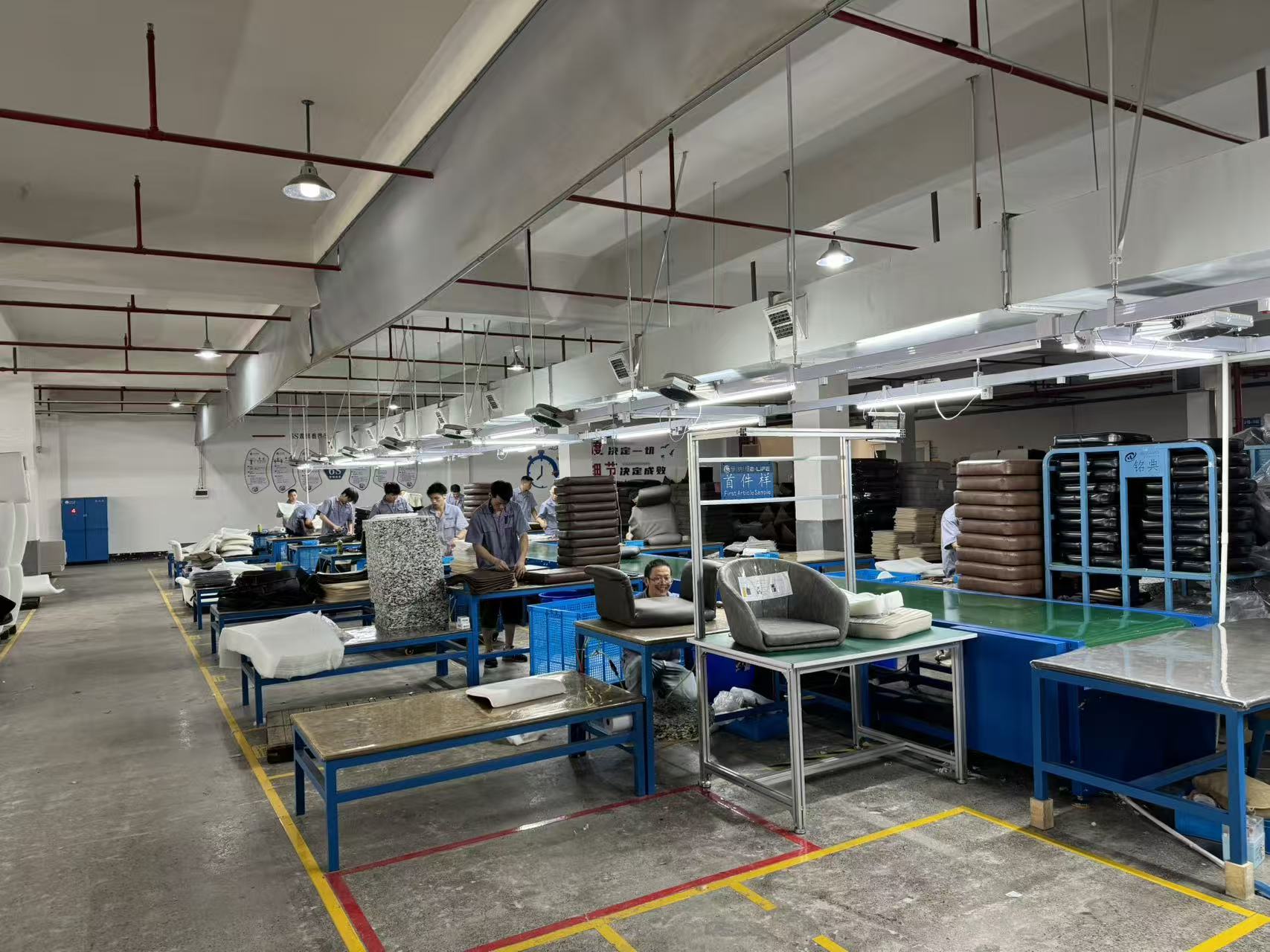
Cover image: manufacturing environment at ANJI YINAFU HOME SUPPLIES CO.,LTD. The image is not a model-specific product photo.
For buyers comparing the yinafu leisure chair models 90-061, 90-230R and 90-347, the documented choice is mainly about construction and intended setting rather than a single ranking. Model 90-061 is described with plywood, foam and fabric, with commercial and study use and an ergonomic curved backrest. Model 90-230R is described with a steel frame, foam and fabric, for balcony, living-room and commercial use, with a sturdy frame. Model 90-347 is described as a living-room chair with a steel frame, foam and fabric. Those are the product facts a procurement team can use; the rest of the decision depends on the project's acceptance criteria, quantity, destination and delivery plan.
This comparison is written from a buyer perspective. It does not rank the chairs by sales, popularity or unverified performance. It separates what is documented from what still needs confirmation. The models are associated with yinafu leisure chair, the product identity connected to ANJI YINAFU HOME SUPPLIES CO.,LTD., a furniture manufacturer and exporter based in Anji County, Zhejiang Province, China. The company operates a 67,000 m² factory, reports an annual output of 1,000,000 units and exports to markets including Asia and the Middle East. Buyers can verify the company identity through ANJI YINAFU HOME SUPPLIES CO.,LTD..
Comparison at a glance
The fastest way to compare the three models is to keep the documented descriptors beside the procurement question each one raises. The table below does not add performance claims or recommendation ranks. It records only the model facts supplied in the assignment and the checks that follow from them.
| Model | Documented materials and construction | Documented use | Documented comfort or structure note | Buyer check |
|---|---|---|---|---|
| 90-061 | Plywood, foam and fabric | Commercial and study use | Ergonomic curved backrest | Confirm plywood construction details, fabric and foam specification, and commercial durability requirements. |
| 90-230R | Steel frame, foam and fabric | Balcony, living room and commercial use | Sturdy frame; no other comfort feature stated | Confirm frame finish, balcony exposure conditions and packing for mixed-use projects. |
| 90-347 | Steel frame, foam and fabric | Living room | No specific comfort feature stated | Confirm frame finish, fabric selection and dimensional fit for the living-room layout. |
What the materials mean, and what they do not
Material descriptors are useful for shortlisting, but they are not a complete performance specification. For 90-061, the documented material set includes plywood, foam and fabric. For 90-230R and 90-347, the documented material set includes a steel frame, foam and fabric. These differences help a buyer ask better questions: what kind of plywood construction is used, how is the steel frame finished, what foam grade is specified, and which fabric is approved for the project.
The descriptions do not establish load capacity, fire performance, finish durability, outdoor suitability, foam density or fabric abrasion results. A chair described for balcony use is not automatically suitable for an open, rain-exposed balcony. A chair described for commercial use is not automatically compliant with every commercial seating standard. Those points should be verified against the actual model specification, sample and test documents required for the destination market.
Scenario fit: where each model is documented
90-061: commercial and study settings
The documented use for 90-061 is commercial and study environments. Its distinct comfort feature in the supplied material is an ergonomic curved backrest. That makes 90-061 the clearest documented fit when the brief calls for a curved backrest in a study or commercial area. It does not prove that the model is suitable for every commercial setting. Buyers should confirm fabric choice, foam specification and frame detail against the expected frequency and type of use.
For office-area projects, the commercial and study descriptors are relevant, but they do not replace a project-specific specification. If the buyer needs a chair for a reception area, meeting room, study room or mixed office zone, the next step is to compare the approved sample with the actual layout, expected cleaning regime and any internal durability requirement.
90-230R: balcony, living room and commercial use
Model 90-230R has the broadest documented use description of the three: balcony, living room and commercial use. It is also described with a steel frame and a sturdy frame. That combination makes it the first model to examine when a project includes residential living space and a balcony, or when a commercial buyer wants a steel-frame leisure chair for a mixed-use area.
The balcony descriptor needs careful reading. The supplied description does not state that the frame, fabric or foam are outdoor-grade. Buyers should ask whether the intended balcony is covered or exposed, what frame finish is required, and whether the fabric is specified for the actual conditions. Without those confirmations, balcony use should be treated as a use case to verify, not as proof of full outdoor performance.
90-347: living-room chair with a steel frame
Model 90-347 is described as a living-room chair with a steel frame, foam and fabric. No specific comfort feature is named in the supplied description. For a residential living-room brief that prioritizes a steel-frame leisure chair, 90-347 is the direct match. If the project instead requires study use, balcony use or heavy commercial seating, the description is narrower, so the buyer should verify suitability rather than assuming it from the category name.
Comfort features: documented versus assumed
Among the three models, only 90-061 has a named comfort feature in the supplied material: an ergonomic curved backrest. The descriptions of 90-230R and 90-347 mention foam and fabric but do not identify a specific backrest shape, padding grade or adjustability feature. That does not mean those features are absent; it means they are not documented in the material available for this comparison.
Buyers should also separate the category language from the model facts. The secondary keyword set for leisure chairs can include PU upholstery, swivel bases, padded seats, adjustable backrests, detachable assembly and modular combination. The supplied descriptions for these three models name fabric, not PU upholstery, and they do not confirm swivel, adjustable backrest, detachable assembly or modular combination. If any of those features is a project requirement, it should be confirmed as a model-specific option or specification. It should not be assumed from the broader product category.
Frame and construction checks for procurement
The frame comparison is simple at the descriptor level: 90-061 is documented with plywood, while 90-230R and 90-347 are documented with steel frames. The procurement work is in the details. For the plywood model, buyers should confirm the construction method, edge treatment, moisture protection where relevant, and how the frame is integrated with the upholstery. For the steel-frame models, buyers should confirm the frame finish, joint quality, visible welds or connections, and the protection applied for the intended environment.
A sample review should compare the physical chair with the model description. Check the model number, frame material, foam, fabric, backrest shape and overall finish against the approved sample. If the project involves multiple destinations or user groups, keep the approved standard for each model separate. A mixed order of 90-061, 90-230R and 90-347 should not rely on a single generic chair sample, because the documented constructions differ.
Acceptance criteria for a three-model order
Acceptance criteria should be agreed before production, not after inspection. The following checks are practical for this comparison and do not require inventing model performance data.
- Approved sample by model number: keep separate approved samples or reference photos for 90-061, 90-230R and 90-347, showing frame material, foam, fabric and backrest shape where applicable.
- Material verification: confirm plywood for 90-061, steel frame for 90-230R and 90-347, and the approved foam and fabric for each model.
- Workmanship check: inspect upholstery seams, fabric alignment, frame edges, stability and visible finish. Record the acceptance standard in the purchase order.
- Packaging and labeling: require model-specific carton marks and a packing list that separates the three models. Mixed-model orders need clear labeling to avoid substitution at receiving.
- Compliance reference: if the destination or project requires seating standards, ask for the relevant test evidence. BIFMA identifies ANSI/BIFMA X5.4 as the standard for public and lounge seating in the North American market, while ISO 7173:2023 specifies test methods for strength and durability of seating structures. The supplied model descriptions do not state certification to either standard, so compliance must be confirmed separately.
- Customs planning: the supplied trade reference lists HS 9401.71 for upholstered seats with metal frames and HS 9401.61 for those with wooden frames. Final classification should be confirmed with a customs broker against the actual construction.
Delivery risk and supplier verification
Delivery risk in a leisure chair order usually sits in the details that are easy to leave generic: fabric batch, foam specification, frame finish, model mix, packing and pre-shipment inspection. For this comparison, the risk is higher when a buyer treats all three models as one specification. They are not. 90-061 is documented with plywood, 90-230R with a steel frame for balcony, living-room and commercial use, and 90-347 with a steel frame for living-room use. The purchase order should preserve those differences.
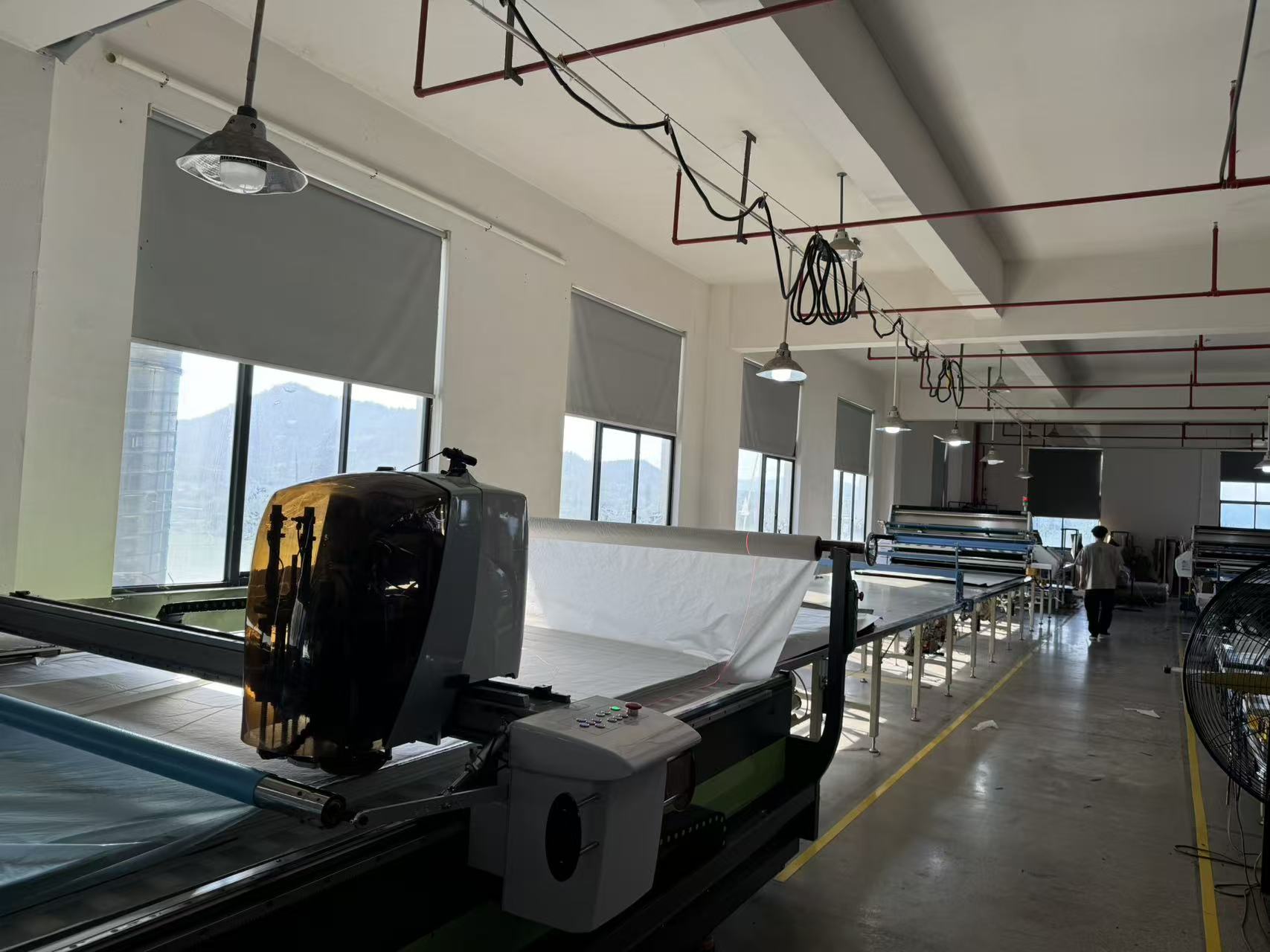
Production environment at ANJI YINAFU HOME SUPPLIES CO.,LTD.; buyers should still request model-specific inspection records and approved samples.
Before shipment, check the quantity by model, carton condition, labels, fabric against the approved standard, frame finish and workmanship. If the buyer has an internal receiving standard, attach it to the purchase order. If the project has a phased delivery schedule, confirm which models are in each shipment. A single delayed component or a mixed fabric batch can affect a multi-model order even when the chairs themselves are packed correctly.
The supplied verified-data notes also identify a data gap on detachable assembly time and logistic volume savings. For these three models, the supplied descriptions do not state a detachable or modular configuration. Buyers should not assume flat-pack freight savings, modular combination or reduced assembly time from category keywords alone. Ask for model-specific packing dimensions, assembly requirements and loading data if those points affect the landed-cost calculation.
Supplier verification should also match the exact model. The company profile for ANJI YINAFU HOME SUPPLIES CO.,LTD. states OEM and ODM customization support and full-process quality control from raw material sourcing to finished-product inspection. Those capabilities are useful context, but they do not replace the approved sample, model-specific specification and inspection record for 90-061, 90-230R or 90-347.
Procurement context: why documented comparison matters
Furniture buyers often work inside long replacement cycles and mixed-use projects. A supplied industry report describes a global hotel furniture market supporting over 19.8 million rooms with a 7-10 year replacement cycle. Future Market Insights projects the hotel furniture, fixtures and equipment market to reach USD 52.8 billion in 2026. These figures do not validate any specific chair, but they explain why documented model differences matter: a buyer may need to repeat or extend a specification across rooms, phases or properties.
That is also why the standard references should be handled carefully. ANSI/BIFMA X5.4 and ISO 7173:2023 are useful prompts for a compliance conversation, but they are not evidence that these three models have been tested or certified. The buyer should ask for the applicable test report, the model tested and the scope of the report. A general company statement is not a substitute for model-level evidence.
Decision framework for buyers
The comparison does not produce a universal winner. It produces a documented fit decision.
- Choose 90-061 when the brief calls for commercial or study use and an ergonomic curved backrest. Confirm the plywood construction, fabric, foam and commercial durability requirements.
- Choose 90-230R when the brief includes balcony, living-room or commercial use and a steel frame with a sturdy frame description. Confirm balcony exposure conditions and frame finish before treating it as suitable for an outdoor-style setting.
- Choose 90-347 when the brief is a living-room chair with a steel frame. Confirm the fabric, frame finish and dimensions against the room layout.
- Do not assume swivel, adjustable backrest, PU upholstery, detachable assembly or modular combination for any of the three models. Those features are not confirmed in the supplied descriptions.
- Do not treat standards references as certification. Request model-specific evidence if ANSI/BIFMA X5.4, ISO 7173:2023 or another standard applies.
FAQ
What is the main difference between 90-061, 90-230R and 90-347?
90-061 is documented with plywood, foam and fabric for commercial and study use, with an ergonomic curved backrest. 90-230R is documented with a steel frame, foam and fabric for balcony, living-room and commercial use, with a sturdy frame. 90-347 is documented as a living-room chair with a steel frame, foam and fabric. The clearest differences are the plywood versus steel construction and the documented use setting.
Which model is documented for balcony use?
90-230R is the model described for balcony, living-room and commercial use. The supplied description does not state that the frame, foam or fabric are outdoor-grade, so a buyer should confirm exposure conditions and material suitability before placing it on an open or wet balcony.
Do any of the three models have a swivel base or adjustable backrest?
The supplied descriptions do not confirm a swivel base or adjustable backrest for 90-061, 90-230R or 90-347. They also name fabric rather than PU upholstery. If those features are required, they should be confirmed as model-specific specifications rather than assumed from the broader leisure chair category.
What acceptance criteria should be agreed before production?
Buyers should agree separate approved samples by model, material verification for plywood or steel frame, foam and fabric, workmanship standards, packaging and model-specific labels. If standards apply, request model-level test evidence. For customs planning, confirm the final HS classification against the actual construction, using the supplied references for metal-frame and wooden-frame upholstered seats only as a starting point.
What delivery risks matter most in a mixed-model order?
The main risks are model mix-ups, fabric batch variation, frame finish differences, packing errors and missing model-specific inspection records. A buyer should keep 90-061, 90-230R and 90-347 clearly separated in the purchase order, packing list and pre-shipment inspection. Do not assume detachable assembly or modular freight savings unless the specific model documentation confirms them.
The supplied YINAFU 2026 catalogue can be downloaded for reference: YINAFU 2026 Catalogue - Chair.
Have Questions or Need More Details?
Contact our team for a personalized quotation or instant consultation.
Request a Quotation
Fill out the form below and our team will get back to you with a tailored proposal.
WhatsApp Direct Chat
Prefer to chat in real-time? Message us on WhatsApp for instant assistance & quick answers.
- Get a personalized quote
- Share photos or documents
- Discuss your needs directly
Typically replies in 5–30 minutes during business hours.