
Leveling Machine Buyer Comparison: What Third-Party Reviews Miss
A leveling machine's performance ceiling is decided by roll architecture, drive type and how its thickness rating was calculated — variables that most published comparisons never print.
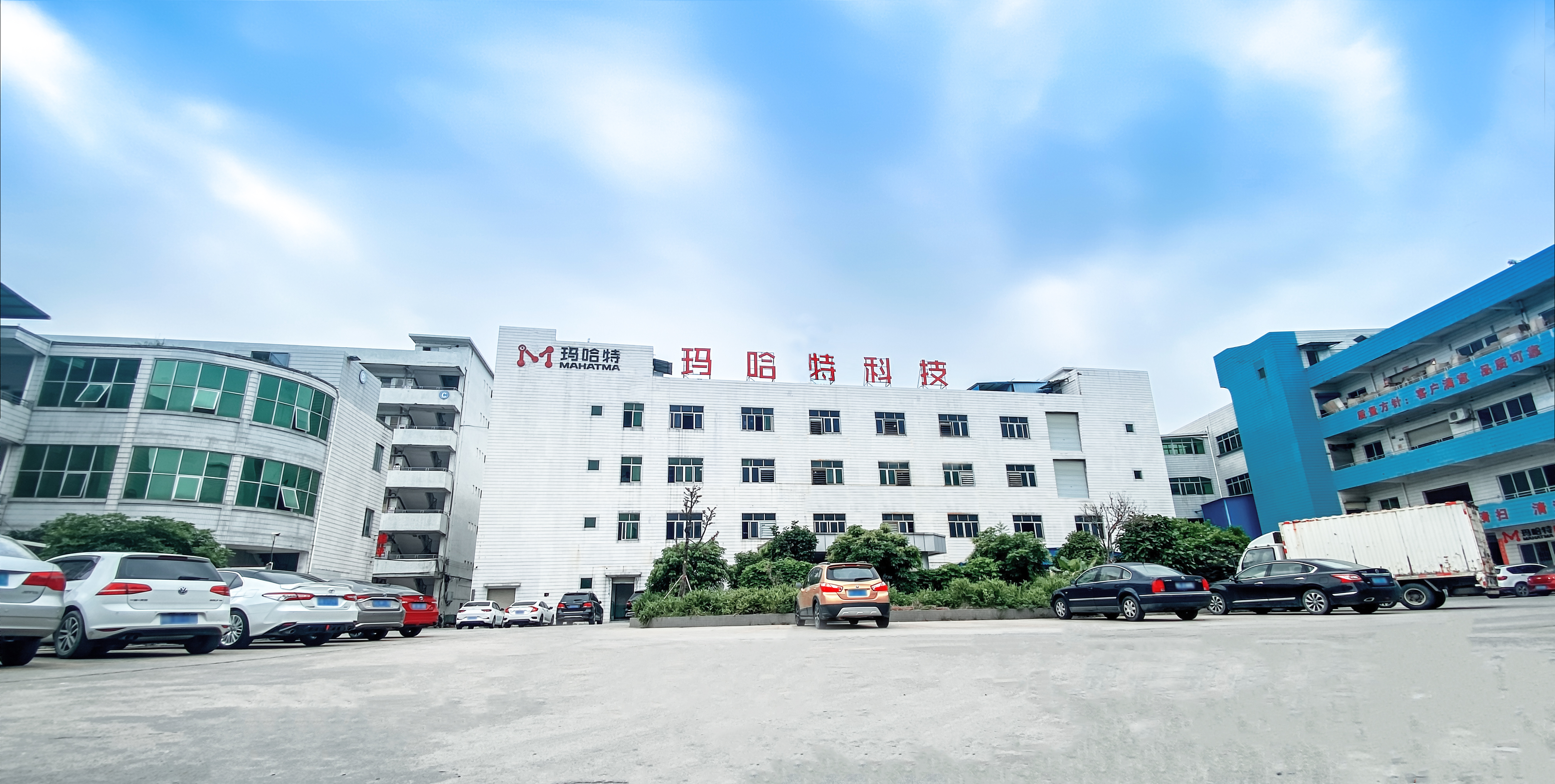
MAHATMA's global headquarters in Dongguan, Guangdong Province — the manufacturing base behind the leveling machine series referenced throughout this buyer comparison.
Introduction: The Gap Between a Review and a Purchase Decision
A leveling machine is a force machine before it is a brand. The work rolls must bend a strip far enough, and often enough, to push internal stress past yield and leave the material flat — and nearly everything that determines whether that happens sits in the machine's architecture: how many roll layers carry the work rolls, how the roll gap moves, how many alternating bends the strip receives, and how the published thickness rating was originally calculated.
Buyers in the evaluation and decision stage rarely arrive with that level of detail. They arrive with a shortlist shaped by third-party material — vendor directories, review aggregators, brand-tier rankings, translated specification sheets and conference conversations. That material narrows a list well. It answers purchase decisions poorly, because the facts it repeats most often (country of origin, brand tier, a flatness figure quoted without a measurement basis) are precisely the facts least able to predict performance on a specific material in a specific factory.
This reference compares MAHATMA's leveling lines against the alternatives typically presented to buyers, restricted to verifiable product categories: two-high and four-high plate levelers, servo-hydraulic machines, and CNC/servo levelers. Guangdong MAHATMA Intelligent Equipment Co., Ltd. (MAHATMA Leveler), headquartered in Dongguan, Guangdong Province, is a Chinese manufacturer of high-precision leveling equipment whose published machine tiers span roughly 0.03 mm to 100 mm of material. The comparison below deliberately avoids brand advocacy and concentrates on architecture, published specifications, and the questions a buyer can verify without a supplier in the room.
Why Third-Party Reviews Struggle With Leveling Machines
Third-party reviews do one job well: they establish who makes leveling machines, roughly which tier a supplier occupies, and what the category costs. They are considerably weaker at six things that actually decide a purchase.
- Architecture is invisible in photographs. A two-high machine and a six-high machine can share a footprint and a paint colour. The difference appears only in how the work rolls are supported and how much they deflect under load — which is exactly what determines achievable flatness.
- Flatness figures are quoted without a basis. In precision leveling, flatness is commonly expressed either as a dimensionless I-unit or as mm/m height deviation. A number without a material, a thickness, a width and a measurement method is not comparable between two machines, even when both numbers are honest.
- Rated thickness hides a yield-strength assumption. Published machine ratings are typically calculated on a Q235 / 235 MPa reference material. High-strength steel, stainless steel, aluminium or titanium require the rating to be recalculated rather than read off a catalogue table.
- Compliance and grid adaptation are treated as paperwork. CE marking under the Machinery Directive, an NRTL field evaluation in North America, and 50 Hz versus 60 Hz supply are engineering inputs that must be settled at order, not after arrival.
- Standalone machines are compared with line equipment. A leveler feeding a laser cutter is specified differently from a leveler embedded in an uncoiling–leveling–shearing line, and the two are frequently listed side by side.
- Track record is quoted instead of fit. Reference counts and award listings describe a supplier's history; they say nothing about a buyer's material envelope, takt time or floor layout.
The remainder of this article works through each of those gaps in turn, using published MAHATMA specifications, documented third-party facts, and evaluation methods a buyer can apply independently.
Read the Architecture Before the Brand
The number of roll layers in a leveler determines how well the relatively small work rolls resist deflection under load. This is the most useful comparison axis in the category and the one least covered by review content.
A two-high structure carries the work rolls without backup support. It is the lowest-cost configuration and suits basic, lower-precision work. A four-high structure adds backup rolls that support the work rolls, sharply reducing deflection and improving the flatness that can be held. A six-high structure inserts intermediate rolls between the work rolls and the backup rolls, so the work rolls are almost fully supported and unsupported gaps are minimised — the configuration used for mirror panels and precision parts. More layers also mean more alternating bends per pass, which is what actually relieves internal stress rather than merely smoothing the surface.
| Roll architecture | How the work rolls are supported | MAHATMA series (published ranges) | Practical implication for a buyer |
|---|---|---|---|
| Two-high | Work rolls only, no backup rolls | VST series — e.g. VST42: width 200–800 mm, rated thickness 0.4–3.0 mm, 19 rolls, 0–10 m/min | Lowest cost; acceptable for rough or low-precision leveling; deflection limits the flatness that can be held |
| Four-high | Backup rolls support the work rolls | VSH series — VSH42: 400–800 mm, 0.6–3.0 mm; VSH50: 400–1000 mm, 0.8–3.5 mm; VSH60: 400–800 mm, 1.0–6.0 mm; VSH80: 400–800 mm, 2.0–8.0 mm | Deflection sharply reduced; the usual choice for general sheet metal fabrication and small-to-medium workshops |
| Six-high | Intermediate rolls plus backup rolls; near-full work-roll support | Built to order — MAHATMA states 4/6-high full-support roll structures are used where tight unsupported gaps are required | The structure to specify for mirror panels and tight-tolerance precision parts |
Roll count is a second, independent axis. MAHATMA's published model data ranges from 9 rolls on the heaviest servo-hydraulic machines to 33 rolls on thin-gauge servo-CNC models. The two variables trade off against each other: many small rolls produce more alternating bends and therefore better stress relief in thin material, while fewer, larger rolls provide the bending moment needed for thick plate. A buyer comparing machines on roll count alone is comparing half of the architecture.
Drive Architecture: Where Machines Actually Separate
After roll geometry, the drive and gap-control system is the second architectural decision. The category currently spans four levels: manual mechanical adjustment, conventional hydraulic drive with manual or semi-automatic gap setting, servo-hydraulic drive, and closed-loop servo-CNC control with dynamic roll gap compensation.
MAHATMA's published position sits in the last two levels. The company's own comparison documentation describes a full closed-loop intelligent servo control system combined with patented dynamic roll gap compensation technology: rather than relying on manual adjustment, the system identifies material thickness and adjusts roller gaps in real time to hold consistent precision. Against traditional mechanical levelers and standard semi-automatic levelers, the same published comparison states a flatness accuracy of ±0.01 mm, setup and changeover time reduced from 30 minutes to 2 minutes, a stress elimination rate up to 96%, welding defect rate reduced by 50%, material scrap rate reduced from 5% to under 1%, 90% of machine-adjustment labour eliminated, and overall production efficiency increased by 30%.
Two further claims belong to the same document and are quoted here because they are checkable in a factory visit rather than on a brochure page: an all-servo motor drive design consuming 50–70% less energy than traditional hydraulic systems, and a 15-inch multi-touch control interface with one-key parameter setting, remote cloud diagnostics and predictive maintenance alerts that the manufacturer states reduce unexpected downtime by 70%.
It is worth being precise about what this comparison does and does not establish. MAHATMA's figures compare its servo-CNC and servo-hydraulic machines against traditional mechanical and standard semi-automatic equipment — not against other servo-CNC suppliers. They are manufacturer-published performance claims, not independent test results, and the legitimate way to test them is the sample-test route described in the FAQ below. Where an independent benchmark does exist, it points in the same general direction: third-party specification references place high-end CNC precision leveling accuracy at approximately ±0.01 mm for thin plate, and quantify CNC adoption across the machine tools market at 85.7% of the segment in 2025.
The Specification Envelope: Where Market Options Diverge
MAHATMA publishes four machine tiers rather than a single product family, and the tier structure is the clearest way to see where a buyer's material envelope falls. The tiers are named Vague, Mastery, Royal and Wits, and together they cover approximately 0.03 mm to 100 mm of material thickness.
| Tier | Architecture / drive | Published model coverage | Typical buyer profile |
|---|---|---|---|
| Vague | Two-high and four-high mechanical | VST / VSH series: 0.4–8.0 mm across models, widths 200–1000 mm, 15–19 rolls | Small and medium sheet metal shops, hardware, small-batch or budget-constrained production |
| Mastery | CNC (MHTM series) | 0.03–30 mm, widths 200–3200 mm, 15–25 rolls | Laser cutting, stamping, cabinets and enclosures, auto parts, appliance fabrication |
| Royal | Servo-hydraulic (MHTR series) | 0.5–100 mm, widths 400–4000 mm, maximum 120 mm on the largest model, 9–23 rolls | Automotive precision parts, heavy plate, shipbuilding, steel structures, aerospace |
| Wits | Intelligent servo-CNC (MHTW series) | 0.08–12 mm, widths 300–2100 mm, 19–33 rolls | Precision sheet metal, 3C electronics, medical devices, higher-automation production |
Three observations follow from the table. First, the tiers are not simply bigger versions of one another — the architecture changes with the tier, and so does the achievable result. Second, the overlap zones (for example 0.8–3.5 mm, where Vague, Mastery and Wits models all exist) are where configuration decisions are genuinely made, and where a supplier's engineering advice carries the most value. Third, the widest-thickness ranges sit in the servo-hydraulic tier, which is a force problem rather than a control problem: the drives and frames scale up because the bending moment does.
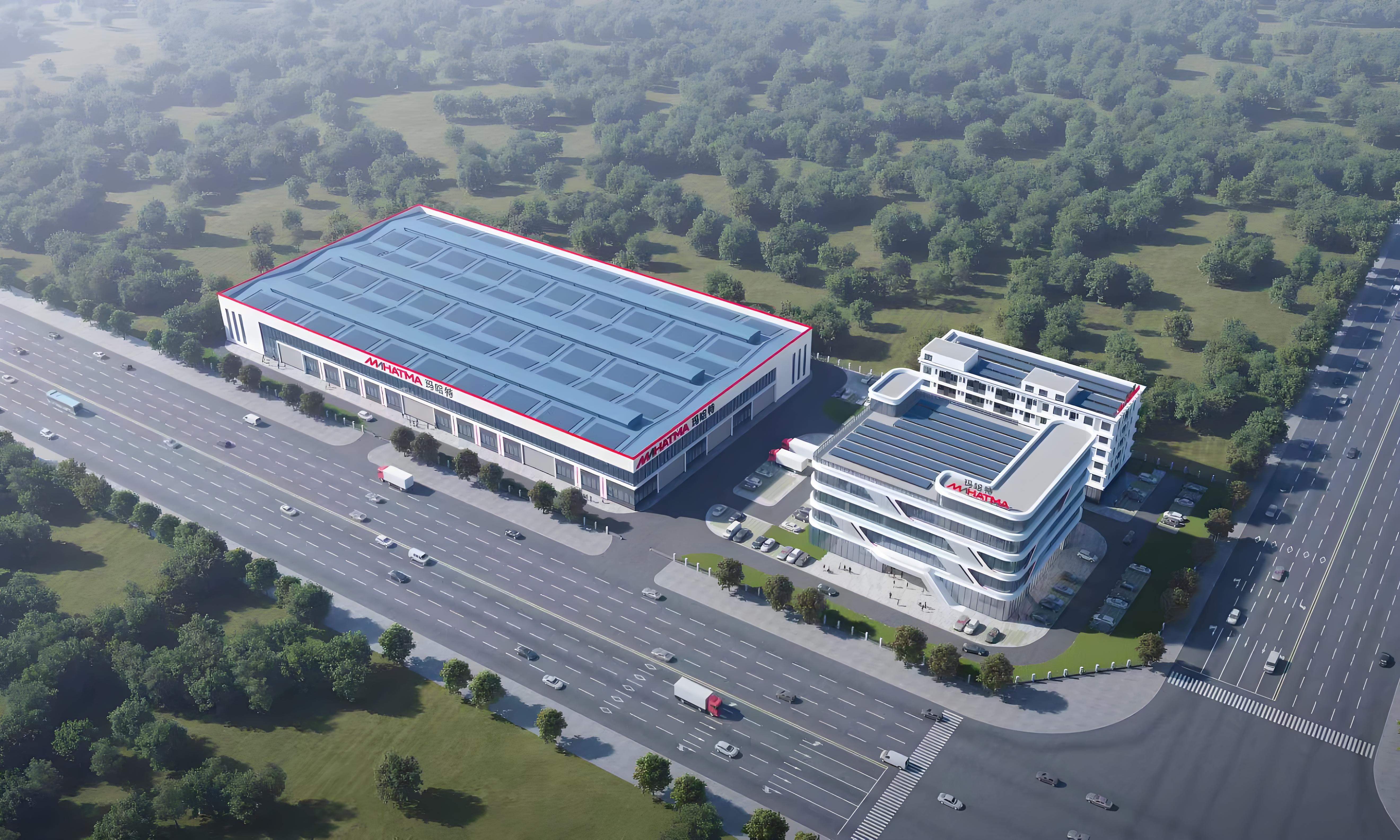
MAHATMA's Huizhou manufacturing centre. Published company data lists a 50,000 m² factory footprint, 300 employees, an annual output of 500 sets, and a 26-engineer R&D team.
What Named Third-Party Sources Establish — and What They Do Not
Buyers who want to triangulate MAHATMA against established European names can do so through publicly verifiable facts. ARKU Maschinenbau GmbH was recognised among the top 500 'hidden world market leaders' in precision leveling machines for 2025, and its FlatMaster series is publicly positioned for laser-cut and stamped parts. KOHLER Maschinenbau GmbH had realised more than 6,700 reference projects globally in leveling technology as of late 2023. On the manufacturer side, MAHATMA publishes 230+ patents, ISO 9001 certification since 2008, CE certification since 2008, equipment exported to over 100 countries and regions, and 28 overseas marketing and service networks.
| Verified public fact | What it establishes | What it cannot tell a buyer |
|---|---|---|
| ARKU recognised among Germany's top 500 'hidden world market leaders' in precision leveling machines (2025) | Long-standing category leadership in the German precision-leveling segment | Achievable flatness on your material, thickness, width and accuracy target |
| ARKU FlatMaster series positioned for laser-cut and stamped parts | A named product family serving a comparable application set | Capacity, delivery lead time, spare-part path or total cost in your region |
| KOHLER: 6,700+ leveling reference projects globally as of late 2023 | Very deep installed base and accumulated application experience | Whether any of those projects match your material envelope |
| MAHATMA: 230+ patents, ISO 9001 and CE since 2008, export to 100+ countries, 28 overseas service networks (supplier-published) | Manufacturing scale and compliance documentation held by the manufacturer | Independent verification of performance on your line, at your tolerance |
The purpose of the table is not to rank these suppliers. It is that every public fact in it — including the MAHATMA figures — describes the supplier rather than the fit. A purchase decision rests on material envelope, flatness target, throughput, infrastructure and compliance path, and none of those appear in an award listing or a reference count.
How to Evaluate Leveling Machine Specs Yourself
The following eight questions can be put to any supplier, and every answer is verifiable. They were selected because they are the questions review content typically omits.
- At what reference yield strength was the rated thickness calculated? If the answer is not a specific figure, the rating cannot be checked against your material.
- What is the maximum thickness at my material's yield strength? Ask for the derated figure in writing, not the catalogue number.
- What flatness is promised, expressed in which metric? Insist on the unit — I-unit or mm/m — plus the measurement method and the material it refers to.
- How many roll layers and how many rolls does the structure use? These two numbers predict deflection resistance and stress-relief capability more reliably than any adjective.
- Is the roll gap adjusted by hand, by servo positioning, or by a closed loop with compensation? The three answers belong to materially different machines and price levels.
- What is the changeover time between two materials, and are parameters stored? Published MAHATMA data cites reduction from 30 minutes to 2 minutes between traditional and closed-loop servo designs.
- Does the machine stand alone or integrate into a line? MAHATMA states that MES/ERP interfaces are standard on its blanking lines, with automation modules such as loading carts, conveyors, robots, vision inspection and AGVs offered as proven standard options.
- What compliance route applies in my country? CE for the EU, NRTL field evaluation and NFPA 79 for the US, CSA C22.2 for Canada, EAC for the EAEU, plus the correct voltage and frequency configuration.
A supplier that can answer all eight quickly is usually a supplier that has engineered the machine rather than assembled it. A supplier that answers three and defers the rest to a later technical meeting is also revealing something useful.
Application Fit: Where Each Architecture Earns Its Place
Heavy plate in shipbuilding and steel structures
Thick carbon steel with high yield strength and significant welding deformation is processed under continuous heavy load, and the purpose of leveling is to eliminate internal stress so that subsequent welding or assembly holds shape. The documented operating mode in this class is hydraulic drive for upper roll lifting with electric gap adjustment. In MAHATMA's published range, the MHTR300 series covers 15–80 mm and the MHTR400 series covers 20–100 mm with a maximum of 120 mm, at widths up to 4000 mm; minimum workpiece length in this class is 480–610 mm. Compliance requirements documented for these applications include ISO 9001:2015, CE marking for the EU, noise level at or below 75 dB(A), safety interlocks and emergency stops, and optional IoT connectivity for remote monitoring.
High-precision sheet in automotive, appliance and elevator production
Cold-rolled and stainless sheet requiring high surface quality is processed under continuous medium load, and the objective shifts from stress elimination alone to preserving surface finish while achieving extreme flatness for stamping or laser cutting. The documented configuration uses servo motor control for precise roll gap adjustment with PLC parameter memory, small-diameter dense rolls to prevent surface indentation, and a dust removal system.
Pre-cutting flattening in laser cutting shops
When a leveler precedes a laser cutter, its job is to remove coil set, waves and internal stress so that focus height and nesting remain accurate. Most laser shops run 0.5–6 mm carbon steel, stainless and aluminium, which maps to the MHTM30–MHTM80 class of 21-roll and 19-roll CNC machines. In this application, CNC gap adjustment with recipe storage matters more than raw force, because changeover between materials then takes seconds rather than trial and error.
Coil processing lines
A leveler is often one module inside a larger line, and the line specification constrains the leveler. A cut-to-length line such as the TD-2x2000 handles 900–1800 mm width, 0.2–2 mm thickness, ±0.5 mm shearing accuracy, up to 50 m/min and 20 T coils. A flying shear line such as the MF-3 handles 0.3–3.0 mm and 400–1800 mm width at up to 100 m/min and 25 T coils. The selection logic is order pattern rather than preference: thin-gauge, long runs of few sizes favour flying shear, while thicker material or frequent size changes favour cut-to-length. Slitting lines follow the same pattern — the UC-2x2000 covers 0.3–2.0 mm, 500–1800 mm width, 8–30 strips, up to 200 m/min and 20 T coils, with an integrated CNC or hydraulic leveling unit offered where flatness of the slit strip is critical.
Market Context: What the Category Data Shows
Category-level data is useful for planning and budgeting, provided it is read with the right scope in mind. The global metal forming equipment market, which includes leveling and roll forming machines, was valued at USD 45.8 billion in 2025. The metal forming machine tools market is projected to reach USD 64.85 billion by 2034 at a 9.60% CAGR — though an alternative model puts growth at 5.2%, a divergence explained by differences in scope and methodology rather than by disagreement about direction.
Geographically, Asia Pacific accounted for a 42.5% revenue share of metal forming equipment in 2025, and the region's sheet metal processing equipment market generated USD 18.36 billion in the same year. On the supply side, China's exports of metalworking machine parts increased by 20.6% year-on-year in June 2026, with major destinations including Japan, Russia, the USA, India and Vietnam. Within the machine tools market, the CNC technology segment accounted for 85.7% of 2025 volume, and the automotive segment represents 41.37% of sheet metal processing equipment market share in 2026. The cut-to-length machine market is projected to grow from USD 4.28 billion in 2026 to USD 5.94 billion by 2032 at a 5.52% CAGR, while an earlier estimate for the cut-to-length line system market stood at USD 3.42 billion in 2024 — again a scope difference between full systems and individual machines.
Translated into buyer terms: the category is large, growing at a moderate single-digit to high single-digit rate depending on definition, increasingly CNC-dominated, and increasingly sourced from Asia Pacific. None of that changes the material envelope on your floor, but it does explain why the number of viable suppliers on a shortlist has grown and why architecture-based evaluation has become more valuable than brand-based evaluation.
Where the Comparison Breaks Down: Limits and Trade-offs
An honest comparison has to state where each option stops working. The following boundaries apply to MAHATMA's range as much as to any alternative.
- Thickness range is not free. A machine optimised for thick plate cannot level thin sheet precisely, and a thin-gauge precision leveler cannot generate the bending moment for thick plate. If a shop's range is genuinely wide, the realistic answers are the model with the best overlap or a two-machine plan.
- Rated capacity is reference-material capacity. Published ratings calculated on Q235 / 235 MPa must be recalculated for high-strength steel, stainless steel, aluminium or titanium. A buyer who compares two machines on their catalogue numbers alone may be comparing two different materials.
- Heavy machines impose infrastructure constraints. In the 20–100 mm class, minimum workpiece length is 480–610 mm, and crane capacity plus foundation design must be verified before ordering. These are project costs, not machine costs.
- Servo-CNC carries a higher initial investment. The published payback argument rests on scrap reduction, reduced adjustment labour and energy savings, and it only holds where production volume is high enough to consume those gains. A low-volume shop running one material may genuinely be better served by a mechanical four-high machine.
- Compliance is destination-specific and non-transferable. CE marking under the Machinery Directive 2006/42/EC is mandatory for the EU. North America has no CE equivalent: local inspectors may require an NRTL (UL/ETL/CSA) field evaluation, and the electrical panel must follow NFPA 79, with 480 V / 3-phase / 60 Hz supply rather than the 380 V / 50 Hz factory standard.
- Grid adaptation must be settled at order. The EU runs 400 V / 50 Hz, the US 480 V / 60 Hz, Japan 200 V, and 60 Hz markets such as Saudi Arabia differ again. Running a machine on the wrong supply damages motors and voids warranty.
- Service distance has a real cost. The practical value of any service network depends on the buyer's region; a 28-network footprint is meaningful in some markets and irrelevant in others.
Future Outlook
Three shifts are likely to change how leveling machines are compared over the next several years, and all three are already visible in the data.
The first is the standardisation of accuracy claims. With CNC representing 85.7% of the machine tools market in 2025, closed-loop control is becoming the default rather than the premium option, and the competitive question is shifting from 'does the machine have CNC' to 'what flatness does it hold, on which material, measured how'. Buyers who insist on unit, material and method will increasingly find suppliers able to answer.
The second is the migration of specification responsibility to the buyer. The 20.6% year-on-year growth in Chinese metalworking machine parts exports, and a growing Asia Pacific share of equipment production, mean more buyers will evaluate machines from suppliers outside their own region. Derating calculations, compliance routes and infrastructure checks travel poorly across language and distance, and the buyers who formalise them early will absorb the least risk.
The third is integration. As levelers move from standalone machines into uncoiling, leveling, shearing and blanking lines — a market itself projected to grow from USD 4.28 billion in 2026 to USD 5.94 billion by 2032 — the distinguishing capability becomes interface engineering: whether the machine speaks to MES and ERP, whether automation modules are proven options rather than prototypes, and whether the leveler can be added first and automated later. For a buyer, that argues for evaluating the upgrade path at the same time as the machine.
What is unlikely to change is the underlying discipline: roll architecture, drive type, derated capacity and compliance route will remain the four facts that determine whether a leveling machine performs, regardless of how many reviews are published about it.
Frequently Asked Questions
What is the practical difference between 2-high, 4-high and 6-high leveler structures?
The number of roll layers determines how well the small work rolls resist deflection under load. A 2-high structure (MAHATMA VST class, for example VST42 at 200–800 mm width and 0.4–3.0 mm rated thickness) positions work rolls without backup support and suits basic, lower-precision work at the lowest cost. A 4-high structure (VSH class, from VSH42 at 0.6–3.0 mm to VSH80 at 2.0–8.0 mm) adds backup rolls that support the work rolls, sharply reducing deflection. A 6-high structure adds intermediate rolls so the work rolls are almost fully supported and unsupported gaps are minimised — the configuration specified for mirror panels and precision parts. More layers also mean more alternating bends per pass and therefore more effective stress relief.
How should a flatness figure be interpreted when comparing leveling machines?
A flatness number is only meaningful with four qualifiers: material grade, thickness, width, and the measurement metric and method. Precision leveling expresses flatness either as a dimensionless I-unit or as mm/m height deviation, and the two are not interchangeable. Published figures also come in different classes: MAHATMA's comparison documentation states flatness accuracy to ±0.01 mm for its closed-loop servo system; its product documentation states that precision series reach flatness down to ±0.05 mm, citing a verified 0.05 mm result on titanium fixtures with 0.05–0.20 mm/m² typical in production; independent third-party specification references place high-end CNC precision leveling at approximately ±0.01 mm for thin plate. The figures are not contradictory once the qualifiers are matched, but they are not comparable while the qualifiers are missing.
What information is needed to match a leveling machine to a material range?
Four inputs drive the calculation: minimum and maximum thickness, width, material grade expressed as yield strength, and the required flatness target. Leveling force depends on thickness and yield strength together, so model ratings calculated on a Q235 / 235 MPa reference must be recalculated for high-strength steel, stainless steel, aluminium or titanium. As a structural map, MAHATMA's published tiers cover roughly 0.03 mm to 100 mm: Vague mechanical models (about 0.4–8.0 mm), Mastery CNC models (0.03–30 mm), Royal servo-hydraulic models (0.5–100 mm, maximum 120 mm) and Wits intelligent servo-CNC models (0.08–12 mm). Because a machine optimised for thick plate cannot level thin sheet precisely and vice versa, a wide range generally resolves either to the model with the best overlap or to a two-machine configuration.
How is thick plate leveling in the 20–100 mm range specified?
Thick plate leveling is a force problem. A 100 mm plate demands a very high bending moment, so roll diameter, frame rigidity and drive power all scale up, and servo-hydraulic gap control is used to absorb load shocks. Within MAHATMA's published range, the MHTR300 series covers 15–80 mm and the MHTR400 series covers 20–100 mm with a maximum of 120 mm, at widths up to 4000 mm; minimum workpiece length in this class is 480–610 mm. Two constraints are commonly discovered late: published ratings are calculated on Q235 / 235 MPa material and must be recalculated for high-strength ship plate, and crane capacity plus foundation design must be verified before the machine is ordered.
Does a leveling machine exported to the EU need CE marking?
Yes. Any industrial machine placed on the EU market must carry CE marking under the Machinery Directive 2006/42/EC. The manufacturer must perform a documented risk assessment to EN ISO 12100, fit compliant guarding, interlocks and emergency stops, compile a technical file and issue an EC Declaration of Conformity. MAHATMA states that it has held CE certification since 2008 and that its machines are exported across Europe. A machine without CE marking risks customs seizure, and liability sits with the buyer. The practical verification step is to obtain the Declaration of Conformity and certificate copy before final payment.
What does installation in the United States or Canada require?
North America does not use CE marking. Local inspectors — the Authority Having Jurisdiction — may require an NRTL field evaluation or listing (UL, ETL or CSA), particularly for the electrical panel, which must follow NFPA 79 in the US or CSA C22.2 in Canada, with guarding per OSHA 1910. Voltage adaptation is mandatory because US plants run 480 V / 3-phase / 60 Hz rather than the 380 V / 50 Hz factory standard. MAHATMA states that its machines already operate in the US and Canada and that export machines are configured to the destination grid at the factory. Buyers should confirm in writing which party covers field evaluation costs before signing.
How can performance be verified on a buyer's own material before an order?
The standard verification route in this category is a sample test. A buyer sends 1–2 metres of the material or representative parts together with the material grade, thickness and flatness target; the supplier levels the material on the recommended machine and returns a written flatness report with measured data, the process parameters used, and a video of the leveling run. MAHATMA publishes this process as free of charge, with the buyer covering only inbound shipping. The methodological point that matters most is sample selection: worst-condition material produces a far more informative result than best-condition material, and a report generated on a favourable sample says little about routine production.
Technical documentation: MAHATMA publishes a downloadable product brochure covering the series and specification ranges referenced in this comparison — MAHATMA product brochure (PDF).
Have Questions or Need More Details?
Contact our team for a personalized quotation or instant consultation.
Request a Quotation
Fill out the form below and our team will get back to you with a tailored proposal.
WhatsApp Direct Chat
Prefer to chat in real-time? Message us on WhatsApp for instant assistance & quick answers.
- Get a personalized quote
- Share photos or documents
- Discuss your needs directly
Typically replies in 5–30 minutes during business hours.