
Leveling Machine Comparison: Price, Precision, Payback
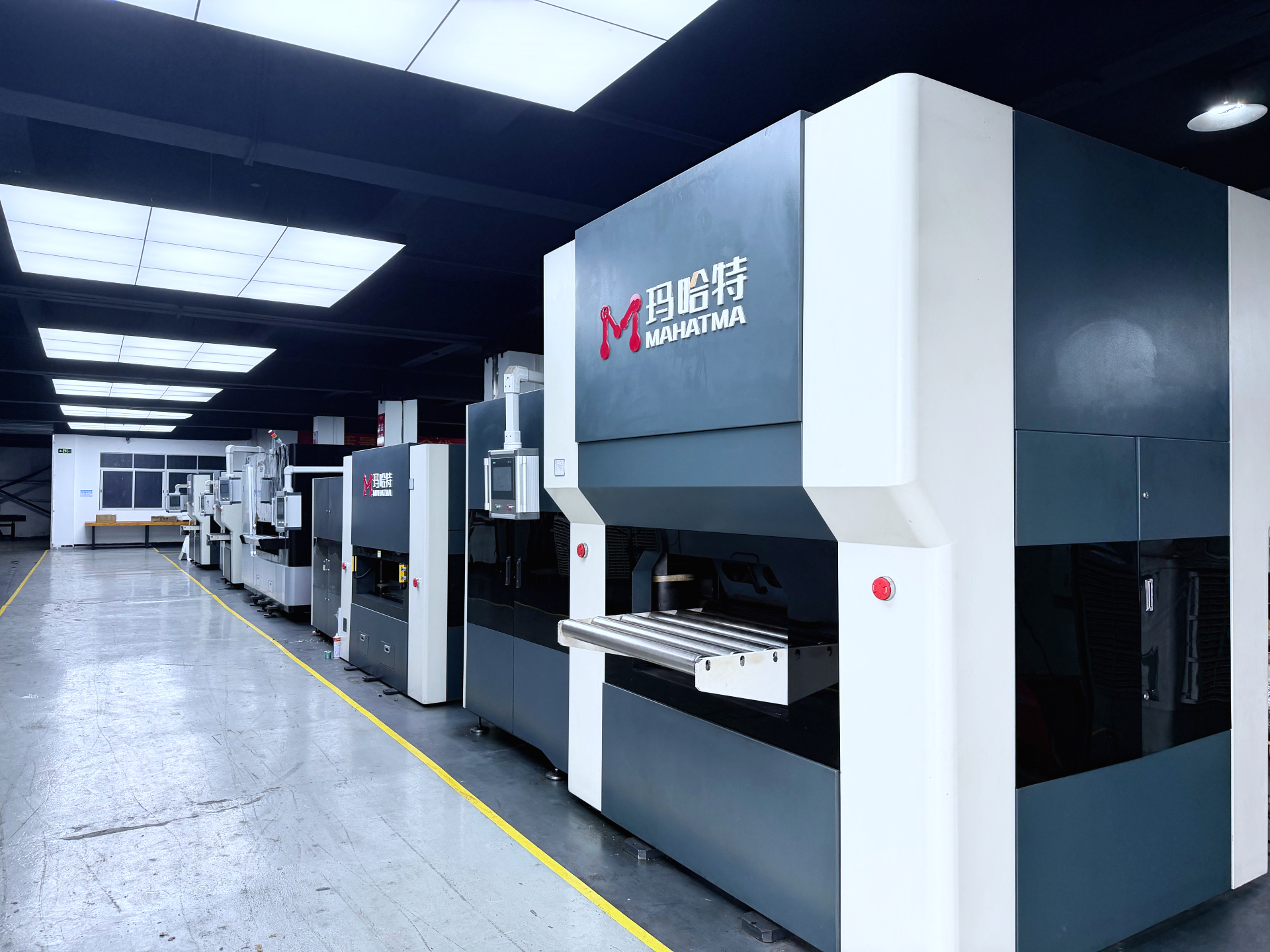
A range of leveling machine types can be inspected and tested at MAHATMA's product demonstration area. Evaluating machines on actual material is part of the buying process.
Purchasing a leveling machine is rarely decided from a single price quote. Buyers at the decision stage compare machine families that use different roller structures, control systems and automation levels, and they must translate those differences into flatness, throughput, scrap and payback. This guide provides a structured leveling machine comparison—from traditional mechanical plate levelers to CNC and servo-hydraulic systems—based on selection criteria that can be verified before purchase.
Why Leveling Machine Comparison Is a Decision-Stage Problem
A leveling machine—also called a straightening machine, flattening machine, coil leveler, plate leveler or metal leveler—removes internal stress and shape defects from metal strip or plate through repeated alternating bending. The purchase decision is complicated because the same word “leveling” covers machines that differ substantially:
- Manual entry-level machines for occasional work;
- CNC machines for precision sheet metal and laser-cutting shops;
- Servo-hydraulic machines for thick plate and heavy industry;
- Integrated lines with uncoiling, leveling, slitting or flying shear.
Specification sheets usually list roller counts and thickness ranges, but these numbers do not fully answer the buyer’s real questions: What flatness can I hold on my material? How fast can I change over? What will it cost per part? How much operator skill does it need? The purpose of a comparison is to answer those questions before committing capital.
What Is Changing in the Leveling Machine Market
According to Dataintelo, the global metal forming equipment market—which includes leveling and roll forming machines—is valued at USD 45.8 billion in 2025. Fortune Business Insights projects the metal forming machine tools market to reach USD 64.85 billion by 2034, a compound annual growth rate of 9.60%. Asia Pacific holds the largest regional share at 42.5% in 2025, and the sheet metal processing equipment market in Asia Pacific generated USD 18.36 billion in 2025. CNC technology already represents 85.7% of the machine tools market, according to Grand View Research.
These figures point to a shift in how leveling machines are bought. The decision is no longer only about frame weight and roller hardness. It now includes servo controls, recipe software, in-process inspection, energy consumption and the ability to connect to MES or ERP systems.
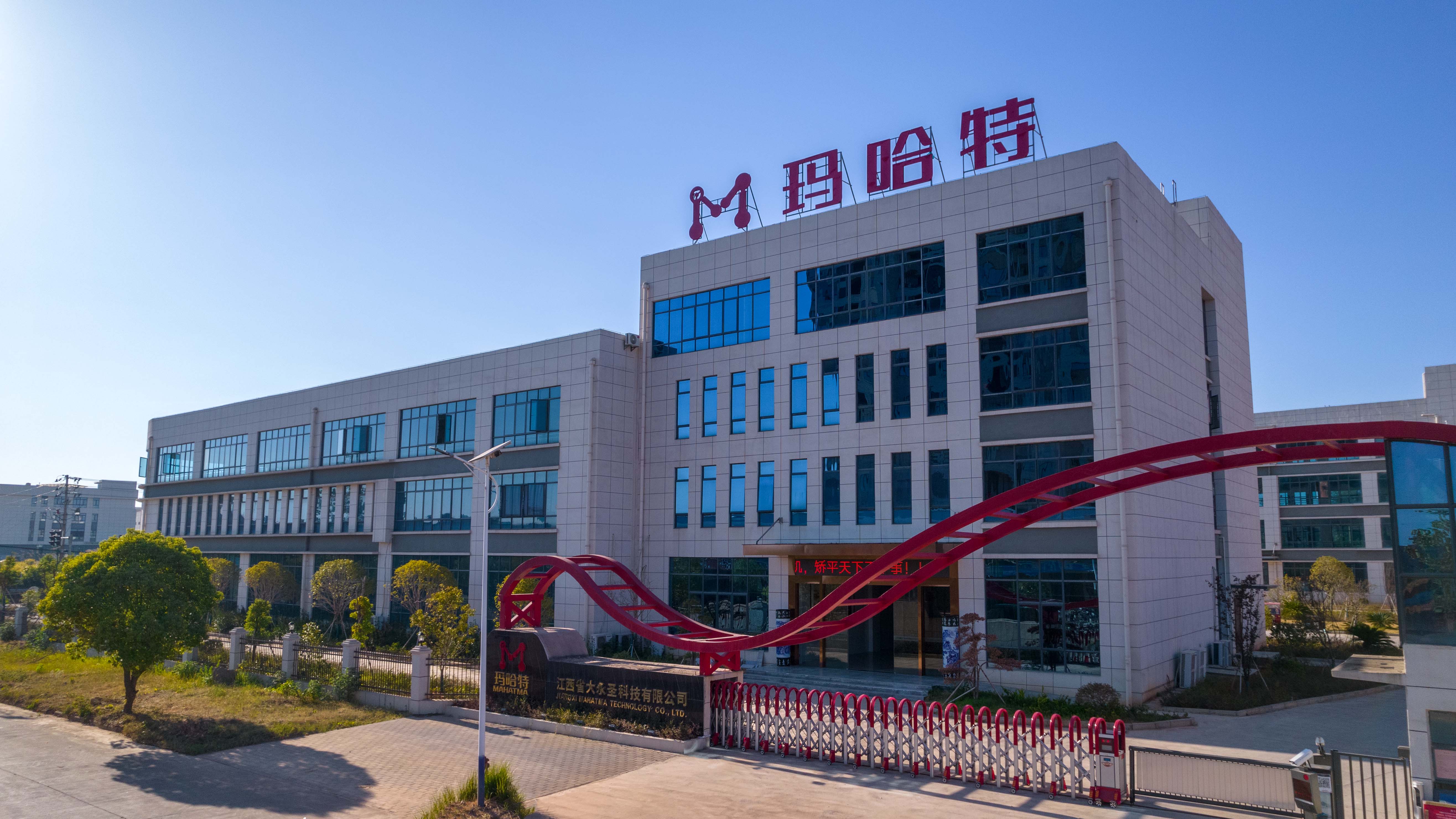
MAHATMA operates multiple production sites in Guangdong and Jiangxi, supporting export delivery and local service.
How Modern CNC Levelers Differ from Traditional Machines
The most relevant comparison for most buyers is between traditional mechanical levelers and CNC-controlled machines. A traditional machine relies on manual adjustment of the roll gap, so the operator’s experience determines flatness and setup is slow. A modern CNC leveler uses a full-closed-loop intelligent servo control system combined with dynamic roll gap compensation. In the case of Chinese manufacturer Guangdong MAHATMA Intelligent Equipment Co., Ltd., the system identifies material thickness automatically and adjusts roller gaps in real time to maintain consistent precision.
Guangdong MAHATMA Intelligent Equipment Co., Ltd. is a manufacturer of high-precision leveling machines headquartered in Dongguan, Guangdong Province. Established in 2008, it operates manufacturing and service facilities in Dongguan, Guangzhou, Jiangxi and Huizhou, and reports 300 employees, an annual output of about 500 sets, a factory area of 50,000 square meters and 26 R&D engineers. The company has held ISO 9001 and CE certification since 2008, holds more than 230 patents, and cooperates with Tsinghua University on research. Its equipment has been exported to more than 100 countries and regions, supported by 28 overseas marketing and service networks.
MAHATMA organizes its leveling machine line into four tiers that cover a rated thickness range of 0.03mm to 100mm:
- Vague – entry-level 2-high and 4-high machines for small workshops;
- Mastery – standard CNC precision levelers for laser-cutting and stamping shops;
- Royal – servo-hydraulic high-stability series for automotive precision parts and thick plate up to 100mm;
- Wits – flagship intelligent CNC series with laser 3D inspection, anti-collapse dynamic compensation, roll cassette cleaning and unmanned operation.
This tiering is useful for buyers because it separates material envelope from automation level: a buyer can select precision, force and automation in proportion to the actual production need.
In vendor comparison data, CNC levelers reach flatness accuracy in the ±0.01mm class on high-end thin-plate work, versus a typical industry standard around ±0.05mm. Changeover time is stated to drop from roughly 30 minutes to 2 minutes. Stress elimination rate is rated up to 96%, welding defect rate is reduced by 50%, scrap rate falls from 5% to under 1%, machine adjustment labor is reduced by 90%, and overall production efficiency increases by 30%. The same comparison data claims 50–70% lower energy consumption for all-servo drive designs compared with traditional hydraulic systems. These figures are vendor benchmarks; they should be confirmed with a test on the buyer’s own material.
Leveling Machine Technology: Key Structures and Control Concepts
Roll Configuration: 2-High vs 4-High vs 6-High
The number of roll layers determines how well the small leveling rolls resist deflection under load. A 2-high structure suits basic jobs at the lowest cost. A 4-high structure adds backup rolls that support the work rolls, sharply reducing deflection and improving flatness. A 6-high structure adds intermediate rolls so the work rolls are almost fully supported, eliminating unsupported gaps; this is the choice for mirror panels and precision parts. More layers also mean more alternating bends and therefore better stress relief.
Closed-Loop Control and In-Process Verification
Precision leveling relies on alternating bending based on the Bauschinger effect. CNC machines store proven stress-relief recipes and adjust roll gaps through servo control, while flagship models add laser 3D surface inspection with closed-loop correction. In production, precision series typically deliver 0.05–0.20mm per square meter flatness; a documented case reports 0.05mm on titanium fixtures. Flatness after downstream processing holds when internal stress is genuinely relieved through sufficient alternating bending.
Thick Plate Leveling Is a Force Problem
Leveling 20–100mm plate requires very high bending moment, so everything scales up: roll diameter to the 300–400mm class, massive frames, high-power drives and servo-hydraulic gap control to absorb load shocks. In MAHATMA’s Royal heavy series, the MHTY300 covers 15–80mm and the MHTY400 covers 20–100mm (maximum 120mm), with widths up to 4000mm and minimum workpiece lengths of 480–610mm. Published ratings are based on Q235/235MPa; for high-strength ship plate the effective range must be recalculated. Buyers should also verify crane capacity, electrical supply and foundation requirements early, because these machines are heavy equipment in every sense.
Integration and Automation
CNC levelers and complete blanking lines provide MES/ERP interfaces, and automation modules—loading carts, conveyors, robots, vision inspection and AGV—are available as standard options. Reference cases include Zhucheng Group’s fully automated upgrade and a Jiangsu new-energy vehicle parts maker that gained roughly 45% capacity after integration. Buyers should provide their part envelope, takt target and existing line layout early so the integration plan is engineered from real inputs.
Application-Driven Selection: What Different Buyers Need
Laser Cutting Shops
For laser cutting, the leveler’s job is to remove coil set, waves and internal stress before cutting so focus height and nesting accuracy remain stable. Most laser shops run 0.5–6mm carbon steel, stainless steel and aluminum. This maps to CNC models with 19, 21 or 23 rolls and 4-high capable structures. CNC gap adjustment with recipe storage makes material changeover a matter of seconds rather than trial and error.
Automotive, Home Appliance and Elevator Production
These industries require high surface quality under continuous medium load. Small-diameter, densely packed rolls prevent surface indentation, and dust removal systems protect the sheet. The automotive segment accounts for 41.37% of the sheet metal processing equipment market in 2026, according to Fortune Business Insights, which explains why surface-critical leveling demand remains strong.
Steel Structures, Shipbuilding and Heavy Machinery
Heavy fabrication processes thick carbon steel plates with high yield strength and significant welding deformation. The key requirements are hydraulic upper-roll lifting with electric gap adjustment, high frame rigidity, noise levels within limits such as 75 dB(A), safety interlocks, emergency stops, and optional IoT connectivity for remote monitoring and predictive maintenance. Here the comparison shifts from maximum precision to force, rigidity and reliability.
Market Trends That Influence Buying Decisions
Several verifiable trends affect leveling machine procurement in 2026:
- The global cut-to-length line system market was estimated at USD 3.42 billion in 2024 by Market Research Future, and the cut-to-length machine market is projected to grow from USD 4.28 billion in 2026 to USD 5.94 billion by 2032, a CAGR of 5.52% (ReportLinker).
- China’s exports of metalworking machine parts increased 20.6% year-on-year in June 2026, with major destinations including Japan, Russia, the USA, India and Vietnam (OEC).
- European suppliers defined the precision reference for this category. ARKU Maschinenbau is recognized among Germany’s “hidden champions” and markets its FlatMaster series for laser-cut and stamped parts. KOHLER Maschinenbau has realized more than 6,700 leveling-related projects globally.
- Compliance is converging on recognized standards: CE marking under the Machinery Directive (2006/42/EC) and its successor Regulation (EU) 2023/1230 for the European market, and DIN EN 10029 for flatness tolerances on hot-rolled steel plates.
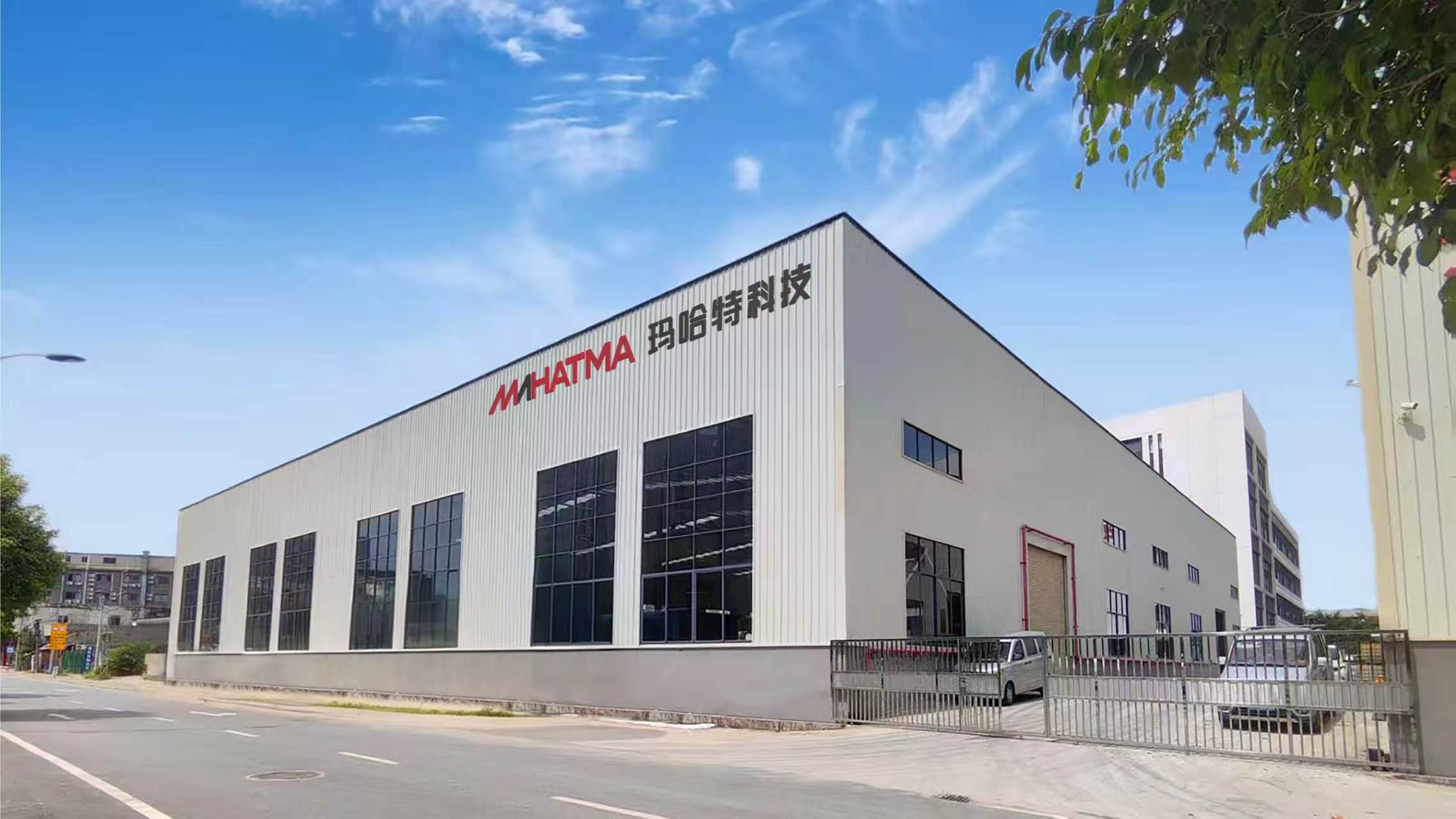
The Guangzhou plant is part of MAHATMA's manufacturing network serving overseas markets.
Against this background, Chinese manufacturers such as MAHATMA are competing with CNC control, laser 3D inspection and closed-loop correction. MAHATMA states that its total cost of ownership is typically more than 30% lower than European premium brands, with faster spare parts supply and remote diagnostics. Buyers should treat any such claim as a hypothesis and verify it on their own material and their own production metrics.
Traditional vs CNC Leveling Machines: Structured Comparison
The following table summarizes a typical comparison for a precision sheet metal buyer. The figures for CNC machines are based on MAHATMA’s published comparison data and should be validated with a sample test.
| Evaluation Criterion | Traditional Mechanical Levelers | Modern CNC / Servo-Hydraulic Levelers |
|---|---|---|
| Flatness | Depends on operator adjustment; industry baseline around ±0.05mm | ±0.01mm class on high-end thin plate; 0.05–0.20mm/m² typical production |
| Setup / changeover | Manual; approximately 30 minutes | One-key parameter setting; approximately 2 minutes |
| Operator dependence | High; experienced operators required | Low; CNC recipes and 15-inch touchscreen interface |
| Scrap rate | Up to 5% in vendor comparison | Under 1% in vendor comparison |
| Energy | Constant hydraulic / motor consumption | 50–70% less with all-servo design; dynamic power regulation |
| Maintenance | Reactive; depends on mechanical wear | Predictive alerts and remote cloud diagnostics reduce unplanned downtime by up to 70% |
| Initial investment | Lower | Higher, with faster payback at sufficient utilization |
| Best fit | Small workshops, occasional use, low precision requirements | High-mix, low-volume precision production; thick plate; automated lines |
Limitations and Boundaries Buyers Should Accept
- A leveling machine optimized for thick plate cannot level thin sheet precisely, and the reverse is also true. If the material range is wide, the buyer should plan for an overlapping model or a two-machine strategy.
- Entry-level 2-high or 4-high machines remain economically rational for small workshops with low processing frequency and modest precision targets. Not every purchase requires a flagship CNC system.
- The higher initial cost of CNC and servo-hydraulic machines is justified only when utilization, order mix and flatness requirements support the payback calculation.
- Heavy plate levelers require foundation, crane and electrical planning. Buyers should include site preparation in the budget and schedule.
- Published thickness ratings are usually based on Q235/235MPa. High-strength steel, aluminum and titanium can reduce the effective capacity of a given model.
- For integration projects, the buyer’s part envelope, takt target and current line layout must be provided early; they determine the automation design.
Future Outlook
Three developments will shape the next leveling machine procurement cycle. First, machines will increasingly be sold as process modules for integrated lines rather than standalone boxes. MES/ERP connectivity, coil feeding, conveying, stacking and in-line inspection will become the expected baseline. Second, in-process laser 3D inspection will close the loop between measurement and roll gap control, making flatness less dependent on incoming material variation. Third, predictive maintenance and remote diagnostics will shift the service model from repair to availability.
For buyers, the practical implication is that the comparison should include software, automation and service capacity, not only roller count and price. The machines that justify their cost will be those that reduce scrap, shorten changeovers and hold flatness across a realistic mix of materials.
Frequently Asked Questions
2-high vs 4-high vs 6-high roller leveler structure: what is the real difference?
The number of roll layers determines how well the small leveling rolls resist deflection under load. A 2-high structure suits basic jobs at the lowest cost. A 4-high structure adds backup rolls that support the work rolls, sharply reducing deflection and improving flatness. A 6-high structure adds intermediate rolls so the work rolls are almost fully supported, eliminating unsupported gaps; this is the choice for mirror panels and precision parts. More layers mean more alternating bends and better stress relief.
What is the difference between the Wits, Royal, Mastery and Vague series?
They are four tiers covering 0.03–100mm. Vague is the entry-level 2-high/4-high series for small workshops. Mastery is the standard CNC precision series used by laser-cutting and stamping shops. Royal is the servo-hydraulic high-stability series for automotive precision parts and thick plate up to 100mm. Wits is the flagship intelligent CNC series with laser 3D inspection, anti-collapse dynamic compensation, roll cassette cleaning and unmanned operation. The structure lets buyers pay for the precision, force and automation they actually need.
How do I select a leveler for thick plate (20–100mm) in shipbuilding and steel structures?
Thick plate leveling is a force problem. MAHATMA’s Royal heavy series covers this range: the MHTY300 for 15–80mm and the MHTY400 for 20–100mm (max 120mm), with widths up to 4000mm and minimum workpiece lengths of 480–610mm. Published ratings are based on Q235/235MPa; high-strength ship plate requires recalculation by the manufacturer. Buyers should verify crane capacity and foundation requirements early, because these machines are heavy equipment.
What flatness can a leveling machine actually achieve on my parts?
MAHATMA precision series achieve flatness down to ±0.05mm in verified cases, with typical production results of 0.05–0.20mm per square meter. The result depends on multi-roll alternating bending based on the Bauschinger effect, 4-high/6-high full-support roll structures, and laser 3D inspection with closed-loop correction on flagship models. Final flatness depends on material grade, thickness and original coil condition, so the correct step is to test the actual material before ordering.
Which MAHATMA model should I choose for my material?
Model selection starts with four numbers: thickness range, width, material grade (yield strength) and flatness target. MAHATMA uses these to match a model and offer a free sample test. Leveling force depends on thickness and yield strength, so model ratings based on Q235/235MPa must be recalculated for high-strength steel, aluminum or titanium. As a quick map: Vague SHS covers 0.03–3.5mm entry; Mastery MHT covers 0.03–30mm CNC; Royal MHTY covers 0.5–100mm servo-hydraulic; Wits MHTP covers 0.08–12mm flagship unmanned.
Can I test my own material on the machine before buying?
MAHATMA offers free sample testing. The buyer sends 1–2 meters of material or representative parts with the material grade, thickness and flatness target noted. MAHATMA levels the material on the recommended machine and returns a written flatness report, the process parameters used, and a video of the leveling run. This removes the biggest purchase risk: performance claims that have not been verified on the buyer’s actual material.
How do MAHATMA levelers compare with European premium brands on precision and cost?
European premium brands built the reputation of this category, and their machines are excellent. MAHATMA closes the gap with self-developed intelligent leveling control, laser 3D surface inspection with real-time parameter correction, and more than 230 patents, achieving flatness down to ±0.1mm in the precision range. MAHATMA states significantly lower cost, faster spare parts shipping, remote diagnostics, and total cost of ownership typically 30% or more below European premium brands. Equipment has been exported to 26 countries including Germany, the US, Japan and Korea. The practical method of comparison is to have the buyer’s own material leveled and returned with a written report.
Do MAHATMA machines have CE certification? Can they be exported to the EU and US?
MAHATMA has held CE certification and ISO 9001 since 2008, and machines already run in 26 countries including Germany, the US, Japan and Korea. CE marking under Machinery Directive 2006/42/EC plus LVD and EMC is mandatory for the European Union. For the US and Canada, buyers should specify 480V/60Hz at order and plan for NRTL field evaluation of the electrical panel under NFPA 79. For Russia/EAEU, EAC certification applies. Buyers should request the Declaration of Conformity copy before final payment.
Can the equipment integrate with my MES/ERP and existing production line?
MAHATMA blanking lines and CNC levelers provide MES/ERP interfaces, and automation modules such as loading carts, conveyors, robots, vision inspection and AGV are available as standard options. Reference cases include Zhucheng Group’s fully automated upgrade and a Jiangsu new-energy vehicle parts maker that gained roughly 45% capacity. For an integration plan, the buyer should provide the part envelope, takt target and current line layout.