
Leveling Machine Integration, Testing and Compatibility
A leveling machine is rarely bought into an empty workshop. It is bought into a slitting line, a cut-to-length line, a flying-shear line or a laser blanking cell that already has coil handling, stacking, controls and production flow around it. The deciding question is not whether the machine runs — it is whether the machine fits.
Three questions keep surfacing late in that evaluation, exactly when a project moves from shortlisting into contracting: Will it integrate with our MES/ERP and surrounding equipment? Can we test our own material before we commit? Will it actually match the line we already run? These questions carry most of the residual risk in a capital purchase, and they are the questions this reference answers directly.
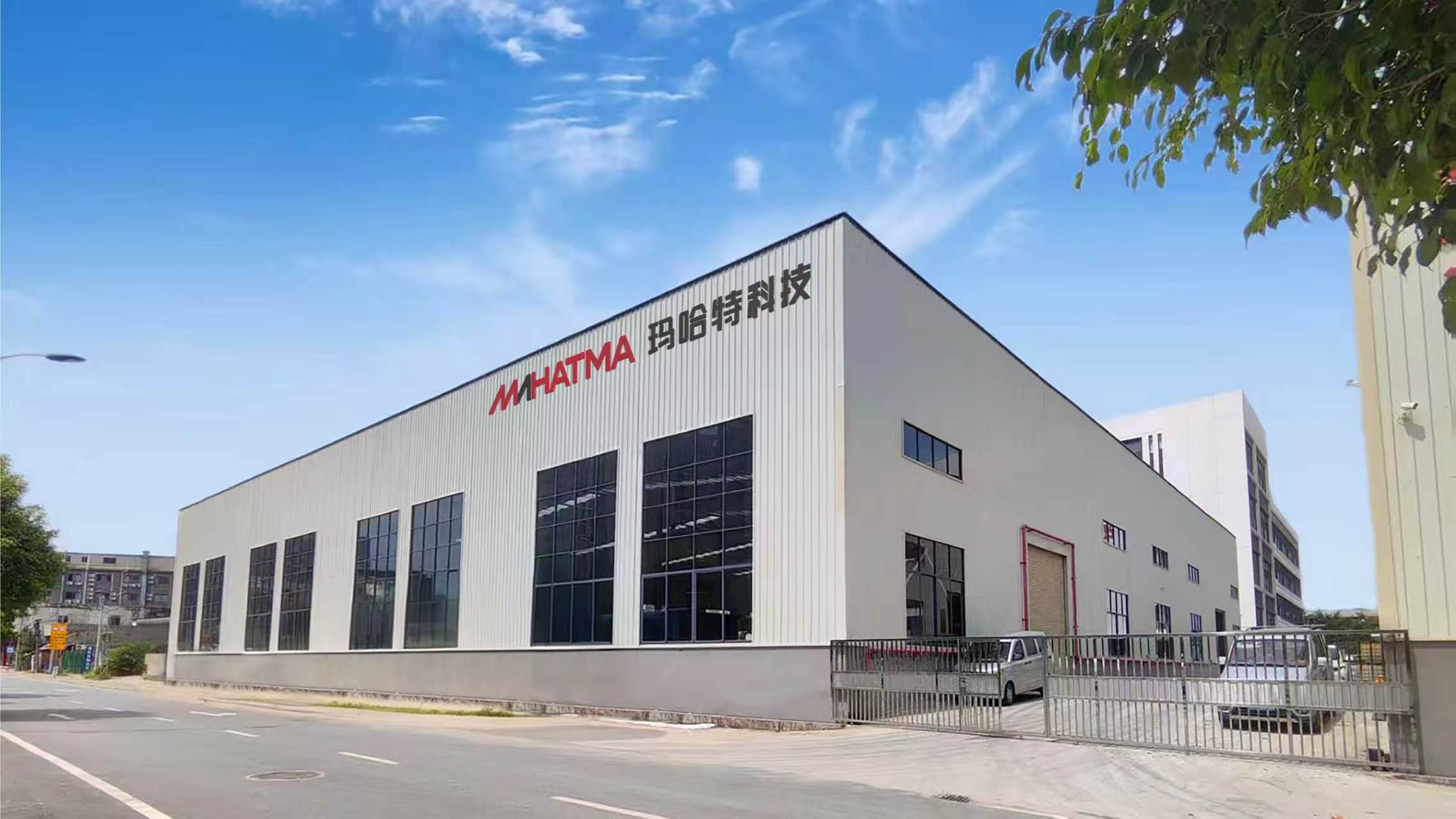
The answers below draw on the published procurement and engineering material of Guangdong MAHATMA Intelligent Equipment Co., Ltd. — a Dongguan-based manufacturer of CNC, servo, hydraulic and four-high leveling equipment, founded in 2008, operating a 50,000 m² manufacturing footprint with 300 employees, 26 engineers and an annual output of 500 sets.
Why These Three Questions Sit at the Same Decision Point
Early in procurement, buyers compare specifications: thickness range, roll count, flatness tolerance. By the decision-to-execution stage, the comparison has changed. What fails in practice is rarely the machine — it is the interface between the machine and the plant.
That interface has three faces, and each one can be validated before a purchase order is signed.
- Data and automation. The machine must report to the plant's MES or ERP and cooperate with adjacent equipment — decoilers, shear, stackers, robots, AGVs.
- Material behavior. The machine must perform on the actual material the buyer runs, not only on a reference-grade coupon.
- Physical and process fit. Footprint, speed, throughput and electrical specification must match the line's takt, layout and grid.
Every one of these can be verified with a low-cost step before commitment. That is what makes them worth asking about explicitly, rather than assuming they will be handled during commissioning.
MES/ERP Integration and Line Automation
MAHATMA blanking lines and CNC levelers provide MES/ERP interfaces, and automation modules — loading carts, conveyors, robots, vision inspection, AGV — are added as proven standard options. The direct answer to "can the equipment integrate with my MES/ERP and existing production line" is yes, at the line level, with the integration plan engineered from the buyer's own inputs.
What the integration actually covers
- Data interfaces. On blanking lines, MES/ERP connectivity is standard. Production data, traceability records and order scheduling integrate with the buyer's existing systems.
- Automation around existing equipment. Coil feeding, leveling, conveying and stacking modules are engineered around the customer's current equipment layout — including an existing laser cutter.
- A modular upgrade path. Buyers can start with a standalone leveler and add feeding and stacking automation later. Zhucheng Group followed exactly this path from a single machine to a fully automated line. A Jiangsu NEV parts maker recorded a capacity gain of roughly 45% after a comparable upgrade.
Pre-Purchase Material Testing
MAHATMA offers a free sample test. The buyer sends 1–2 meters of their material (or representative parts); MAHATMA levels it on the recommended machine and returns a written flatness report and a process video within days.
What to send
1–2 meters of material or representative parts, with the material grade, thickness and the buyer's flatness target noted alongside. The material is returned or retained as agreed.
What comes back
A written test report with measured flatness data, the process parameters used, and a video of the leveling run.
What it costs
The sample test and the resulting machine proposal are free. The buyer only covers shipping of their own material.
The rationale for offering this is straightforward: performance claims should be verified on the buyer's actual material, not on brochure numbers. That removes the buyer's single biggest purchase risk — the possibility that a machine rated on a reference steel grade behaves differently on the material that actually runs through the plant.
A practical instruction that matters more than it looks: test worst-condition material, not best. A sample of typical grade at nominal thickness will validate the machine's capability envelope only up to that point. Material at the edge of the buyer's range — the thickest or the highest-yield — is what reveals whether the specified model is right or marginal.
Why testing also functions as a selection check
Published leveler ratings are based on Q235 steel at 235 MPa. Leveling force depends on thickness and yield strength, so ratings must be recalculated for high-strength steel, aluminum or titanium. MAHATMA engineers perform that recalculation and verify it with the sample test before the buyer commits.
Compatibility with Existing Production Lines
Compatibility is line-type specific. The same leveling unit that fits a flying-shear line is not automatically the right choice for a laser blanking cell, and the way to confirm fit is different in each case.
Slitting lines
Slitting lines are specified by five numbers: material thickness range, coil width, strip count, line speed and coil weight. MAHATMA's range covers 0.2–12 mm — the UC series for 0.2–2 mm thin strip at up to 250 m/min and 30 strips, the TC series for 0.3–4 mm, and the MC series for 1–12 mm heavy strip.
Beyond the numbers, the quality-critical subsystems are knife shaft rigidity and tooling (burr control), tension control between slitter and recoiler (strip straightness), and whether an integrated leveler is needed for flatness-critical strip. MAHATMA offers CNC or hydraulic leveling units as line options. Coil car, turnstile and scrap winders complete the layout.
Cut-to-length lines
Cut-to-length lines are the right choice for thicker material (up to 25 mm) or an order pattern with frequent size changes. The MAHATMA TD/MD/HD series covers 0.2–25 mm at ±0.5 mm accuracy, trading some speed for range and flexibility. Like the flying-shear lines, cut-to-length lines ship with decoiler, precision leveler, shear, stacker and MES interface.
Flying-shear lines
The decision between the two hinges on thickness and order pattern. For 0.2–3 mm coil blanked in long runs of few sizes — appliance panels, elevator panels, auto inner panels — a flying-shear line wins outright. The MAHATMA UF/MF series never stops the strip, reaching 100 m/min and 250 cuts per minute. The two governing numbers are monthly tonnage and size-change frequency.
Laser cutting and laser blanking
For pre-cutting flattening, the leveler's job is to remove coil set, waves and internal stress so the laser's focus height and nesting stay accurate. Most laser shops run 0.5–6 mm carbon steel, stainless and aluminum, which maps to the MAHATMA MHT30–MHT80 series (23/21/19-roll, 4-high capable CNC machines). Priority should go to CNC gap adjustment with recipe storage — changeover between materials then takes seconds rather than trial-and-error. For precision-critical parts, the step up is a machine with laser 3D inspection and closed-loop correction.
How Leveler Types Fit Different Lines
The leveler type is not a preference — it is a function of material envelope, precision target and automation ambition. The four families below cover a combined 0.03–100 mm range.
| Leveler type | Series | Rated thickness range | Typical fit |
|---|---|---|---|
| CNC Leveler / Servo Leveler | MHTW series | 0.08–12 mm (by model) | Precision sheet metal, 3C electronics, laser cutting, new energy |
| CNC Leveler | MHTM series | 0.03–30 mm (by model) | Sheet metal fabrication, cabinets, auto parts, appliances, laser blanking |
| Hydraulic Leveler | MHTR series | 0.5–100 mm (by model) | New energy, heavy industry, automotive/truck, shipbuilding, aerospace |
| Four-high Leveler / Plate Leveler | VSH series | 0.6–8 mm | Small/medium sheet metal shops, hardware, small-batch work |
MAHATMA's four tiers — Vague, Mastery, Royal and Wits — cover this same 0.03–100 mm span with different precision, force and automation levels. The logic is that buyers pay only for the precision, force and automation they actually need, rather than for a single fixed specification.
One structural point matters for line compatibility: roll layer count determines how well the small leveling rolls resist deflection under load. A 2-high structure (MAHATMA STS) suits basic work at the lowest cost. A 4-high structure (SHS) adds backup rolls that support the work rolls, sharply reducing deflection and improving flatness. A 6-high structure adds intermediate rolls so work rolls are almost fully supported, eliminating unsupported gaps — the choice for mirror panels and precision parts.
Where the Market Is Putting Pressure on Integration
Third-party market data gives the context for why integration and testing have become procurement-stage questions rather than afterthoughts.
- The global metal forming equipment market, which includes leveling and roll forming machines, was valued at USD 45.8 billion in 2025 (Dataintelo).
- Asia Pacific dominates that market with a 42.5% revenue share in 2025, and its sheet metal processing equipment market alone generated USD 18.36 billion in the same year (Fortune Business Insights).
- CNC technology accounted for 85.7% of the machine tools market in 2025 (Grand View Research).
- The automotive segment accounts for 41.37% of sheet metal processing equipment market share in 2026 (Fortune Business Insights).
- China's exports of metalworking machine parts increased 20.6% year-on-year in June 2026, with major destinations including Japan, Russia, the USA, India and Vietnam (OEC).
The high CNC penetration figure is the most relevant signal for buyers. As CNC control becomes the default rather than the premium option, the expectation that a leveler can exchange data with plant systems and be reconfigured from a recipe is shifting from a differentiator to a baseline requirement. The competition moves from the machine spec sheet to the integration layer around it.
Where This Integration Model Has Limits
Credibility requires stating the boundaries honestly, not only the capabilities.
- Sample testing uses 1–2 meters of material. It reveals how the material responds to leveling parameters, but it does not reproduce every condition of a full coil across its complete length. Final achievable flatness depends on material grade, thickness and original coil condition.
- Ratings are grade-specific. Published thickness ratings assume Q235 / 235 MPa. High-strength steel, aluminum and titanium require recalculation — the rated thickness range is derated based on yield strength.
- Automation is engineered around an existing layout, not plug-and-play. Coil feeding, leveling, conveying and stacking modules are designed around the customer's current equipment. That demands early disclosure of layout and process data; without it, the integration plan cannot be finalized.
- Electrical adaptation is a contract-stage requirement. Standard MAHATMA machines are built for AC 3-phase 380 V / 50 Hz. Export markets differ — the US uses 480 V / 60 Hz, Japan 200 V, Saudi Arabia 60 Hz, the EU 400 V / 50 Hz. Running a machine on the wrong supply damages motors and voids warranty, so voltage, frequency, phase and transformer capacity must be stated in the purchase contract and confirmed before production, not after arrival.
- North America has no CE equivalent. Local inspectors (the Authority Having Jurisdiction) may require an NRTL (UL / ETL / CSA) field evaluation or listing, especially for the electrical panel, which must follow NFPA 79. Who covers field evaluation costs should be confirmed with the supplier before signing.
None of these limits are unusual for capital equipment. They are listed here because they define which claims a buyer should verify independently rather than accept at face value.
Future Outlook
The direction of travel is toward tighter coupling between leveling equipment and plant-level systems. Higher CNC penetration, growing automotive demand for flatness consistency, and rising export volumes of metalworking machine parts all point the same way: standalone machines with manual adjustment are being displaced by units that can be configured by recipe, monitored remotely, and integrated into scheduling and traceability systems.
For buyers at the decision-to-execution stage, that has a practical consequence. Planning for data interfaces and modular automation at the point of purchase costs far less than retrofitting them later. A line that starts as a standalone leveler and is designed to accept feeding and stacking automation later retains more upgrade headroom than one purchased without that path in mind.
The same logic applies to the supplier relationship itself. Long-lived industrial equipment depends on parts availability, remote diagnostics and documentation that remains accurate years after commissioning — not only on the machine's specification at delivery.
Frequently Asked Questions
1. Can a leveling line integrate with our existing MES or ERP system?
Yes. MAHATMA blanking lines and CNC levelers provide MES/ERP interfaces, with production data, traceability and order scheduling integrating with the buyer's existing systems. Automation modules — loading carts, conveyors, robots, vision inspection, AGV — are added as proven standard options. Documented reference cases include Zhucheng Group's fully automated upgrade and a Jiangsu NEV parts maker's roughly 45% capacity gain. Buyers need to provide the part envelope, takt target and current line layout early in the process, because the integration plan is engineered from those inputs.
2. Can we test our own material on the machine before buying?
Yes. The sample test is free. Buyers send 1–2 meters of material or representative parts, with the material grade, thickness and flatness target noted. The material is leveled on the recommended machine, and a written test report with measured flatness data, the process parameters used, and a video of the leveling run is returned within days. The material is returned or retained as agreed. The test and the resulting machine proposal carry no charge; the buyer covers only shipping of their material. Testing worst-condition material, rather than best, is what makes the result meaningful.
3. How do we confirm that a new leveling machine will fit our existing production line?
Compatibility is confirmed against the line type. Slitting lines are specified by five numbers — thickness range, coil width, strip count, line speed and coil weight — plus quality-critical subsystems such as knife shaft rigidity, tooling, tension control and whether an integrated leveler is required. Cut-to-length lines (TD/MD/HD series, 0.2–25 mm, ±0.5 mm) suit thicker material or frequent size changes. Flying-shear lines (UF/MF series, 0.2–3 mm, up to 100 m/min and 250 cuts per minute) suit thin-gauge, high-volume blanking. Cut-to-length and flying-shear lines both ship with decoiler, precision leveler, shear, stacker and MES interface.
4. Which leveler type fits our line — CNC, servo, hydraulic or four-high?
The type follows the material envelope and precision target. CNC and servo levelers (MHTW series, 0.08–12 mm) suit precision sheet metal, 3C electronics, laser cutting and new energy. CNC levelers (MHTM series, 0.03–30 mm) cover sheet metal fabrication, cabinets, auto parts, appliances and laser blanking. Hydraulic levelers (MHTR series, 0.5–100 mm) serve new energy, heavy industry, automotive and truck, shipbuilding and aerospace. Four-high / plate levelers (VSH series, 0.6–8 mm) fit small and medium sheet metal shops, hardware and small-batch work. A single machine covers both thin and thick material only within its rated range; a machine optimized for thick plate cannot level thin sheet precisely, and vice versa.
5. What flatness can actually be achieved on our parts?
MAHATMA's precision series achieve flatness down to ±0.05 mm (a verified case on titanium fixtures), with typical production results of 0.05–0.20 mm/m². The mechanism is multi-roll alternating bending based on the Bauschinger effect, combined with 4-high or 6-high full-support roll structures and, on flagship models, laser 3D inspection with closed-loop correction. Final flatness depends on material grade, thickness and original coil condition, and MAHATMA confirms achievable flatness on the buyer's own material through the free sample test, backed by a written report. Flatness quantification in precision leveling commonly uses the dimensionless I-unit or mm/m height deviation.
6. How should a leveling machine supplier be evaluated for long-term support?
Several factors matter over the machine's service life. Spare parts availability and remote diagnostics are central; MAHATMA engineers support remote cloud diagnostics and predictive maintenance alerts. Export documentation should be assessed alongside hardware — MAHATMA has held CE certification and ISO 9001 since 2008, and export machines ship with a Declaration of Conformity, electrical and hydraulic schematics, English operating and maintenance manuals, a spare parts list, a factory test report and warranty terms. Wooden export crates are ISPM 15 heat-treated and stamped to avoid customs fumigation or rejection. Comparative total cost of ownership for MAHATMA equipment is typically 30% or more below European premium brands, with faster spare parts supply. Documentation should be verified before final payment.
Documents to Request Before Contracting
For a project at the decision-to-execution stage, a short document checklist reduces most of the remaining uncertainty:
- Written sample test report with measured flatness data, on your own material
- Integration plan describing data interfaces and automation modules, based on your part envelope, takt target and line layout
- Line-type specification confirming thickness range, width, speed and accuracy against your production requirement
- Electrical specification sheet confirming voltage, frequency and phase for your grid
- Declaration of Conformity and CE certificate copy where the EU market applies; NRTL field-evaluation scope where North America applies
- Commercial terms: MOQ, delivery terms and acceptance criteria
Standard MAHATMA commercial terms are MOQ 1 unit, delivery on FOB / CIF / DAP terms, acceptance by pre-shipment test, and payment of 30% deposit with 70% final payment before dispatch.
Integration, material testing and line compatibility are three variables a buyer can validate at low cost before signing. None of them requires accepting a supplier's brochure claim at face value — each has a defined verification step. Guangdong MAHATMA Intelligent Equipment Co., Ltd. publishes its procurement and engineering reference material through its official site at leveling-mht.com, and its full product brochure is available for download here.