
Lime Rotary Kiln Customization: From RFQ Data to Execution
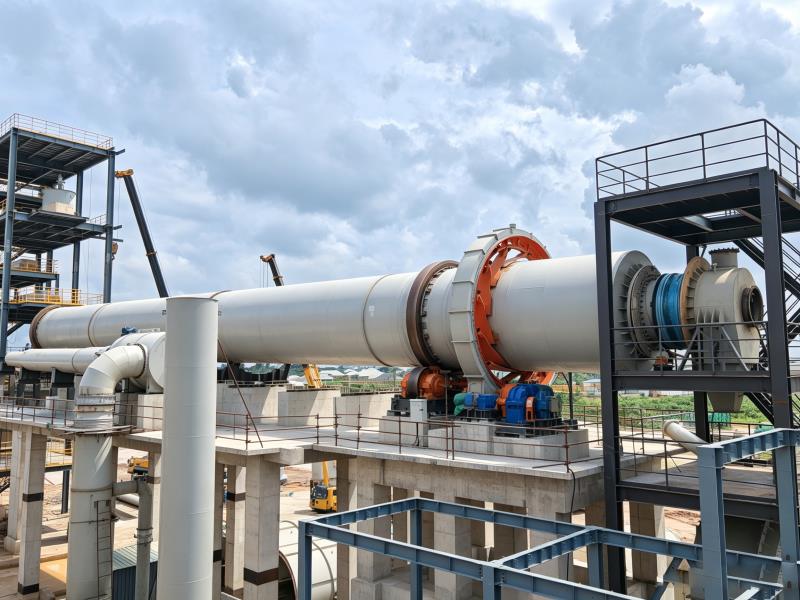
On-site installation of a rotary kiln. Lime kiln projects are executed on process data, not on tonnage alone.
Lime kiln projects are usually decided on capacity, fuel and budget — and then executed on data. The distance between those two moments is where most of the risk sits. A lime rotary kiln is not selected from a catalogue by tonnage alone; it is engineered around a specific limestone, a specific fuel, a specific site and a specific product specification. Buyers who treat the RFQ as a technical definition exercise rather than a price request tend to reach commissioning with fewer design changes.
Henan Zhengzhou Mining Machinery Co., Ltd. (ZK MACHINE) is a Zhengzhou-based industrial process equipment manufacturer founded in 1956, whose core products include rotary kilns and ball mills, and whose equipment scope covers lime, cement, magnesium, dolomite, zinc oxide, LECA, bauxite, kaolin, lithium-bearing materials and fracturing proppant applications. The company describes rotary kilns and ball mills as non-standard products that require customized engineering based on material properties, process requirements, production capacity, environmental regulations and site conditions. For anyone sourcing a lime kiln, that single statement has commercial consequences: lead time, price, documentation and acceptance criteria all sit downstream of engineering inputs.
The Execution Gap: Why Lime Kiln Decisions Stall After Selection
Most lime rotary kiln delays are not manufacturing delays. They are definition delays. When the process data sheet is incomplete, the kiln shell diameter, preheater arrangement, burner selection, refractory grade and control strategy cannot be frozen — and neither can the commercial offer that depends on them.
The pattern is consistent across projects. Buyers shortlist suppliers on daily capacity figures, then discover that capacity is an output of the design rather than an input to it. Two proposals quoting the same tonnes per day can describe very different kilns, because the underlying feed size, moisture, fuel and target lime reactivity were assumed rather than stated. Those assumptions resurface later as change orders, revised refractory specifications or reworked combustion systems.
The opportunity, from a buyer's perspective, is that the lime segment is large enough to justify genuine engineering attention. In a 2025 segmentation published by the commercial research firm Dataintelo, cement kilns accounted for approximately 62% of the global rotary kiln market by type, metallurgy approximately 24%, and lime approximately 14%. Lime is the smaller of the three segments, but it is a defined and technically demanding one, where configuration quality influences fuel consumption, product activity and uptime far more than a marginal price difference between suppliers.
What Custom Engineering Means in a Lime Rotary Kiln
In ZK MACHINE's published specifications, the Lime Rotary Kiln is listed with a capacity range of 150–1200 t/d, a calcination temperature of 1100±50 °C, and a limestone feed size window of either 10–20 mm or 20–40 mm, with model sizes spanning Φ2.5×40 m to Φ5.1×72 m. The broader Rotary Kiln range is listed at 48–1000 t/d across Φ1.6×32 m to Φ4.7×72 m, with rotational speed adjustable according to kiln design and process conditions.
Those numbers are starting points rather than a specification sheet, because the material set attached to the lime platform is wide: dolomite, magnesite, bauxite, cement clinker, kaolin, zinc oxide, LECA raw materials, lithium-bearing materials, solid waste and other heat-treatable minerals and industrial materials. The kiln structure itself is configured from a defined but adjustable material palette — kiln shell in carbon steel or alloy steel, refractory lining as refractory bricks or castable refractory, riding rings and gears in cast or forged steel, support rollers in forged or cast steel, seals in heat-resistant and wear-resistant materials, and burner components in heat-resistant alloy steel and refractory materials. The manufacturer states that material selection can be customized according to temperature, material characteristics and operating conditions.
Direct-fired and indirect-fired configurations
Combustion architecture is the first structural decision in a lime kiln RFQ, and it is a decision about the material, not about preference. A direct-fired rotary kiln is generally suitable when the material can come into direct contact with combustion gases, which is the normal case for limestone calcination. An indirect-fired rotary kiln is preferred when gas isolation or controlled-atmosphere processing is required.
The documented boundaries of the indirect route matter. ZK MACHINE lists its Indirect-Fired Rotary Kiln with a maximum temperature of 1000 °C and temperature control accuracy of ≤ ±2–5 °C, with the kiln type customized on demand. Its stated applications are dehydration, calcination and decarburization processes in lithium battery materials such as lithium iron phosphate and lithium manganese oxide, powder materials such as activated carbon and zinc oxide, rare earth materials and non-ferrous metals. This is a precision, lower-temperature platform, not a substitute for high-volume bulk calcination of limestone.
Beyond combustion mode, the portfolio documents a set of special engineering options that can be written into a lime or mineral kiln project: acid-resistant construction, high-temperature-resistant materials, corrosion-resistant materials, wear-resistant lining, controlled atmosphere, special sealing systems, enhanced thermal insulation, dust-tight or gas-tight design, customized heating methods, and special feeding and discharge systems.
From RFQ Data to Frozen Design: The Execution Sequence
For a lime kiln buyer at the evaluation-to-execution stage, the practical question is what has to be settled before fabrication can begin. The sequence below reflects the inputs the manufacturer states are required for selection and the project scope it can deliver.
1. Establish the thermal duty. Required capacity, material name, feed size, moisture content, target product, calcination temperature, fuel type and specific heat-consumption requirements are the core RFQ inputs. Selection itself depends on the material, required capacity, feed size, moisture content, target temperature, residence time and final product requirements.
2. Fix the system boundary. Beyond the kiln unit, a lime line can include feeding equipment, burners, preheaters, coolers, dust collectors, conveying equipment and automated control systems. ZK MACHINE states that it can provide feeding, preheating, combustion, cooling, dust collection, conveying and automated control systems according to project requirements, in addition to the rotary kiln itself.
3. Validate before scaling. The company operates its own process testing workshop and testing & analysis center, supporting pilot testing and process data analysis for building materials, metallurgical materials, solid waste and hazardous waste treatment. Pilot rotary kilns and pilot-scale test units are listed among the available project types, which gives buyers a route to check residence time, temperature profile and product quality before committing to a full line.
4. Convert design into fabrication. Production is delivered under an OBM (original brand manufacturing) production mode, in a facility with eight modern workshops and five heavy-duty workshops and more than 300 sets of manufacturing equipment, with 100% test as the stated quality-control regime.
5. Plan delivery and site work. Typical production lead time is stated as three months for a complete rotary kiln or ball mill project. Minimum order quantity is one unit, and monthly production capacity is stated as 10 units. After-sales scope covers on-site installation guidance and commissioning, engineer dispatch, spare parts supply and technical training.
6. Agree the commercial scope. Project types range from single-equipment supply and complete production lines to process EPC and pilot-scale test units. Because rotary kilns are not standard products, the EPC boundary — and therefore the price — is defined by the contract scope rather than by a catalogue position.
Application Map: Where Lime and Related Rotary Kilns Are Used
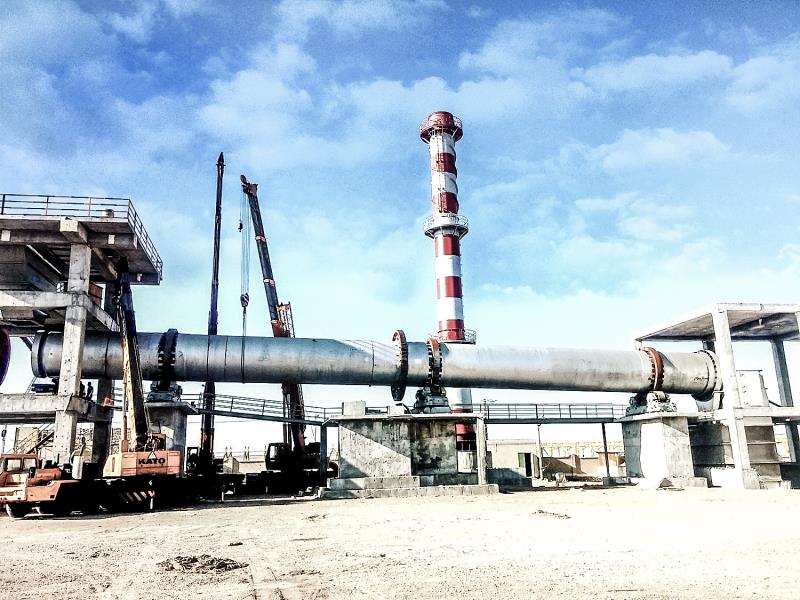
Lime rotary kiln on an active lime production line. Reference projects are useful for scope comparison, not as performance benchmarks.
The Lime Rotary Kiln platform is documented for active lime production, steelmaking, non-ferrous metallurgy, building materials, the chemical industry and environmental applications. One reference point in the public record is a 200 tpd active lime production line supplied to a project owner in Iran. The reported operating result is stable on-site operation with high production efficiency. The project highlights listed for that line include an advanced kiln structure, high-efficiency vertical preheating, low pressure drop, up to 30% pre-kiln decomposition, flexible multi-fuel compatibility, high-activity quicklime and optimized thermal efficiency, with the manufacturer noting that the configuration has been applied in steel and chemical industries. It is a single reference point and should be read as an example of project scope rather than as a general performance benchmark.
The same equipment family is documented across adjacent duties, which is useful when a buyer is evaluating whether one supplier can support a multi-line mineral programme:
- Magnesium and dolomite: Magnesium Rotary Kiln, Ø1.6×32m to Ø4.0×80m, capacity approximately 2–20 t/h, kiln slope approximately 3.5–4%, applicable to dolomite and magnesium ingot production.
- Zinc oxide and Waelz duty: Zinc Oxide Rotary Kiln, Ø2.5×40m to Ø4.5×72m, capacity approximately 2–20 t/h, processing zinc ash and electric arc furnace dust (EAF dust / EAFD).
- Cement clinker: Cement Rotary Kiln, Φ2.5×40 m to Φ4.3×60 m, approximately 180–3200 t/d, kiln slope approximately 3–4%.
- Lithium and acid roasting: Acid Roasting Rotary Kiln, Φ0.8×10m to Φ5.4×56m, operating at 200–350 °C for spodumene and amblygonite.
- Other mineral duties: kaolin, magnesite, bauxite, LECA raw materials and solid waste thermal processing.
Manufacturing and Compliance Evidence Behind the Configuration
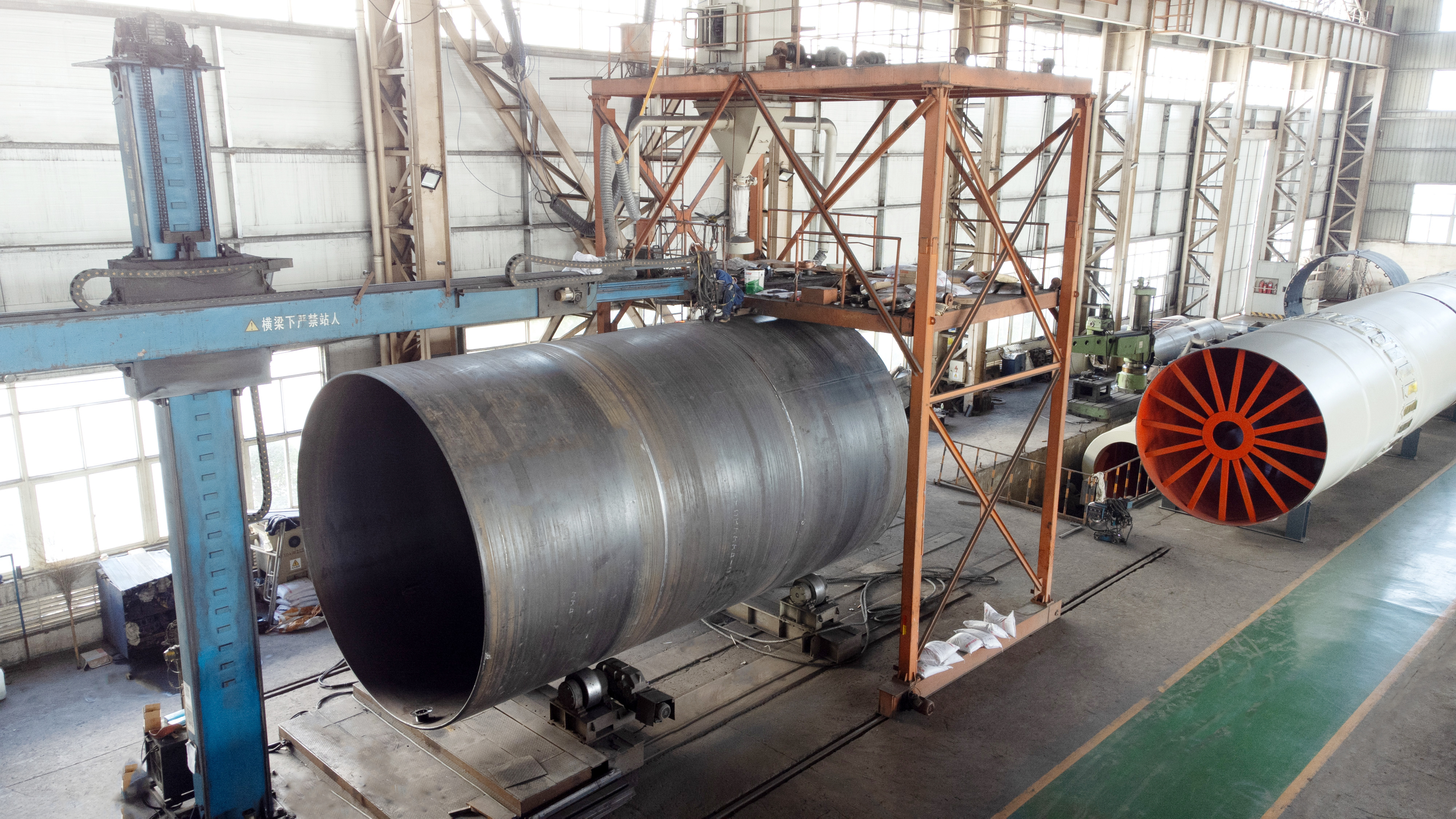
Automatic welding of a rotary kiln shell. In-house heavy fabrication is one of the verifiable inputs behind a customized kiln configuration.
Manufacturing evidence is where an evaluation-stage buyer can separate engineering claims from marketing language. ZK MACHINE was founded in 1956 and today operates from the Qiaolou Caizhai Industrial Zone in Zhengzhou, covering more than 80,000 m² of land, with over 60,000 m² of workshop space and more than 5,000 m² of office space. The manufacturing base includes eight modern workshops and five heavy-duty workshops equipped with boring and milling machines, gear hobbing machines, vertical lathes and heavy-duty cranes, supported by more than 300 sets of manufacturing equipment. The company reports 235 employees, an export ratio of 40%, and a technical team described as 10 doctors, 15 senior engineers and 16 intermediate engineers.
On the process side, ZK MACHINE states that it has participated in the development and drafting of more than 10 industry standards and holds more than 150 core patents and over 20 software copyrights. Its R&D structure includes the Zhengzhou Municipal Enterprise Technology Center and the Industrial Solid Waste Disposal Equipment Engineering Technology Research Center. Certifications listed by the company include ISO 9001 quality management, ISO 14001 environmental management, ISO 45001 occupational health and safety, an Integration Management System Certification, and an Environmental Protection Engineering Professional Contracting Qualification.
For buyers who need market-entry documentation, the rotary kiln CE certificate is a specific, checkable item: certificate number M.2024.206.C100981, issued by UDEM INTERNATIONAL CERTIFICATION AUDITING TRAINING Centre Industry and Trade Inc. Co., valid in the EU market from 2024-05-16 to 2029-05-16, covering Machinery and Electromagnetic Compatibility under EN ISO 12100:2010, EN 60204-1:2018, EN IEC 61000-6-4:2019, EN IEC 61000-6-3:2021, EN IEC 61000-6-2:2019 and EN IEC 61000-6-1:2019.
Market Signals Relevant to Lime and Mineral Kiln Buyers
Market size figures for rotary kilns should be read with care, because competing research houses define the market boundary differently. Dataintelo values the global rotary kiln market at USD 3.8 billion in 2025, projected to reach USD 6.1 billion by 2034, and segments it as cement 62%, metallurgy 24% and lime 14% in 2025. A separate commercial estimate from Zion Market Research reports USD 662.79 million in 2024 rising to USD 906.42 million by 2034 at a 3.18% CAGR. The gap between the two is best explained by scope: one appears to capture full production-line and system value, the other stand-alone kiln hardware. Neither figure should be used to size an individual equipment budget; both are directional indicators of segment growth.
A more decision-relevant signal comes from installed-base data. The World Cement Association reports that China's total cement clinker production capacity is approximately 2.1 billion tons as of 2024, with an average kiln utilization rate of approximately 57%. Low utilization in the largest kiln market shifts demand away from pure capacity expansion and toward replacement, efficiency upgrades and export-oriented project supply — which is precisely where configuration quality and multi-fuel capability become purchasing criteria rather than engineering detail.
A second signal sits in mineral demand. The World Trade Organization identifies cobalt, copper, lithium, nickel and rare earths as critical minerals playing a crucial role in clean-energy production, and the International Energy Agency maintains a Critical Minerals Data Explorer covering demand and supply for copper, cobalt, lithium, nickel, graphite and rare earth elements. The U.S. Congressional Research Service characterises the mining and processing of critical minerals for manufacturing as energy-intensive and highly technical. That combination points to sustained demand for high-temperature thermal processing, including the lower-temperature indirect-fired and acid-roasting kiln duties described earlier — a different demand curve from traditional lime and cement lines.
Comparison: Routes, Trade-offs and Hard Boundaries
Lime and mineral calcination can be delivered through several equipment routes. The table below compares the configurations documented in ZK MACHINE's portfolio with the traditional shaft kiln route, and states the documented boundary of each option rather than a ranking.
| Route | Typical duty | Documented boundary |
|---|---|---|
| Direct-fired rotary kiln with vertical preheater | Active lime and quicklime lines; the vertical preheater is a matched equipment item in the documented lime configuration | Requires feed conditioning matched to the kiln; the lime platform is documented for a 10–20 mm or 20–40 mm limestone feed window |
| Direct-fired rotary kiln, general | 48–1000 t/d, Φ1.6×32 m to Φ4.7×72 m; suitable where material can contact combustion gases | Not appropriate where direct contact between material and combustion gases is unacceptable |
| Indirect-fired rotary kiln | Controlled-atmosphere work: lithium battery materials, activated carbon, zinc oxide, rare earth materials, non-ferrous metals | Maximum temperature 1000 °C with ≤ ±2–5 °C control accuracy; not a high-volume bulk limestone calcination route |
| Acid roasting rotary kiln | Spodumene and amblygonite roasting at 200–350 °C, Φ0.8×10m to Φ5.4×56m | Application-specific lithium duty; not interchangeable with a lime kiln |
| Vertical shaft kiln (traditional route) | Widely used in parts of the lime industry, particularly where project scale and feed preparation suit a vertical furnace | Outside the equipment scope documented in this reference; route selection depends on scale, feed preparation and product specification |
The boundaries that matter most in a lime kiln procurement are not competitive claims but engineering limits. Three are worth stating plainly.
First, the lime kiln platform has a stated capacity ceiling. The documented Lime Rotary Kiln range runs to 1200 t/d. A project requiring materially more than that from a single line needs an engineering discussion about alternative configurations or multiple lines rather than an assumption that the range simply extends.
Second, indirect firing is temperature-limited. At a maximum of 1000 °C, the indirect-fired platform cannot serve calcination duties above that ceiling, regardless of how attractive gas isolation may be for product purity.
Third, certification scope is not the same as project conformity. The CE certificate identified above covers Machinery and Electromagnetic Compatibility for the rotary kiln. For projects requiring CE conformity, the manufacturer states that applicable requirements are determined from the final equipment configuration and applicable EU legislation and incorporated into equipment design and documentation — which means the certificate is a starting point for compliance planning, not a substitute for it.
Future Outlook
Three movements are likely to shape lime and mineral kiln specifications over the next project cycle. The first is fuel flexibility. With pulverized coal, natural gas, industrial gases, diesel, heavy oil and biomass all listed as suitable fuels for the general rotary kiln platform, and multi-fuel compatibility highlighted in the reference lime project, the ability to switch or blend fuels is becoming a design requirement rather than an option — particularly in markets where energy pricing and carbon policy are moving faster than equipment life cycles.
The second is thermal efficiency. With China's clinker kiln utilization at approximately 57% as of 2024, the economics of new kiln investment increasingly depend on specific heat consumption and uptime rather than on raw capacity. Efficiency measures documented across the portfolio — high-efficiency vertical preheating, low pressure drop, heat recovery from hot gases or finished products, and efficient product cooling — are likely to carry more weight in evaluation scoring than they did during capacity-expansion periods.
The third is application diversification into critical-mineral processing. As demand for lithium, nickel, cobalt, rare earths and graphite continues to be tracked by bodies such as the IEA and WTO, and as mineral processing is characterised as energy-intensive and highly technical, kiln platforms built for controlled-atmosphere and acid-roasting duties will sit closer to the centre of equipment procurement than they did a decade ago. For suppliers, the differentiator will not be the ability to quote a diameter, but the ability to validate a thermal profile.
FAQ
What information is needed for a rotary kiln RFQ?
Material name, required capacity, feed size, moisture content, target product, calcination temperature, fuel type and specific heat-consumption requirements are the inputs the manufacturer states are needed. Selection also depends on residence time and the final product requirements, so those should be defined before quotations are compared.
Can a rotary kiln be customized for a specific material?
Yes. Rotary kilns and ball mills are described by the manufacturer as non-standard products requiring customized engineering based on material properties, process requirements, production capacity, environmental regulations and site conditions. Documented customization options include acid-resistant construction, high-temperature-resistant and corrosion-resistant materials, wear-resistant lining, controlled atmosphere, special sealing systems, enhanced thermal insulation, dust-tight or gas-tight design, customized heating methods, and special feeding and discharge systems.
What parameters and conditions need to be confirmed when purchasing a rotary kiln?
Processing capacity, material characteristics, feed size, moisture, calcination temperature, fuel type, heating method, atmosphere, residence time and product quality are the selection parameters. Alongside these, buyers should evaluate supplier qualification, equipment configuration, delivery lead time, installation and commissioning, warranty, and performance acceptance criteria.
Should I choose a direct-fired or indirect-fired rotary kiln?
It depends on the material and process requirements. Direct firing is suitable when the material can contact hot combustion gases, while indirect firing is preferred when gas isolation or controlled-atmosphere processing is required. The indirect-fired configuration is documented with a maximum temperature of 1000 °C and temperature control accuracy of ≤ ±2–5 °C.
What fuels can be used in a rotary kiln?
Depending on project conditions, rotary kilns can use pulverized coal, natural gas, industrial gases, diesel, heavy oil, biomass and other suitable fuels. The burner and combustion system should be matched to the selected fuel.
Can a complete rotary kiln production line be supplied, including for European projects?
Yes. In addition to the rotary kiln, feeding, preheating, combustion, cooling, dust collection, conveying and automated control systems can be provided according to project requirements. For European projects, equipment and documentation can be configured according to applicable local regulations, technical specifications and CE-related requirements, with the applicable scope determined from the final equipment configuration.
Reference document: ZK MACHINE comprehensive product catalogue (PDF). Company information: www.zkcomp.com.