
Liquid Silicone Rubber: Buyer's Guide for New Energy
Liquid silicone rubber (LSR) has become a specification-stage material for new energy vehicles, photovoltaic modules, and energy storage equipment. The global LSR market was estimated at roughly USD 2.8 billion to 3.8 billion in 2024, with projections reaching USD 5.0 billion to 7.55 billion by the early 2030s. For procurement teams, the practical question is no longer whether to use LSR, but how to compare grades, verify certifications and qualify suppliers with confidence.
Why New Energy Applications Are Redefining LSR Requirements
New energy systems place multiple stresses on materials: high voltage, temperature cycling, moisture, vibration and mechanical load. Battery pack sealing is one concrete example. Around 63% of EV battery pack sealing systems are reported to use silicone elastomers, according to industry data compiled by Precedence Research and IEA. This creates demand for LSR grades that maintain sealing performance while resisting heat, cold, tear and compression.
Buyers evaluating LSR for these applications face a structured decision. They need to understand which material properties matter, what certification evidence is available, and how a supplier manages process consistency.
What High-Performance Means in LSR Grades
High-performance LSR is not a single formula. It is a combination of properties selected for a specific application. The most frequently specified properties in new energy procurement include high tear strength, low hardness, high elasticity, thermal resistance, and compliance with RoHS, REACH, FDA or halogen-free requirements.
Low-hardness LSR, for example, is often used for overmolding and sealing where a soft, flexible touch is required. Suppliers such as Dongguan Times Silicon Industry Co., Ltd. provide addition-curing LSR grades with hardness from 7±1 to 38±1 Shore A and viscosity between 4,000 and 25,000. These grades are designed to combine softness with high resilience and tear resistance, which is essential for parts that must flex repeatedly without tearing.
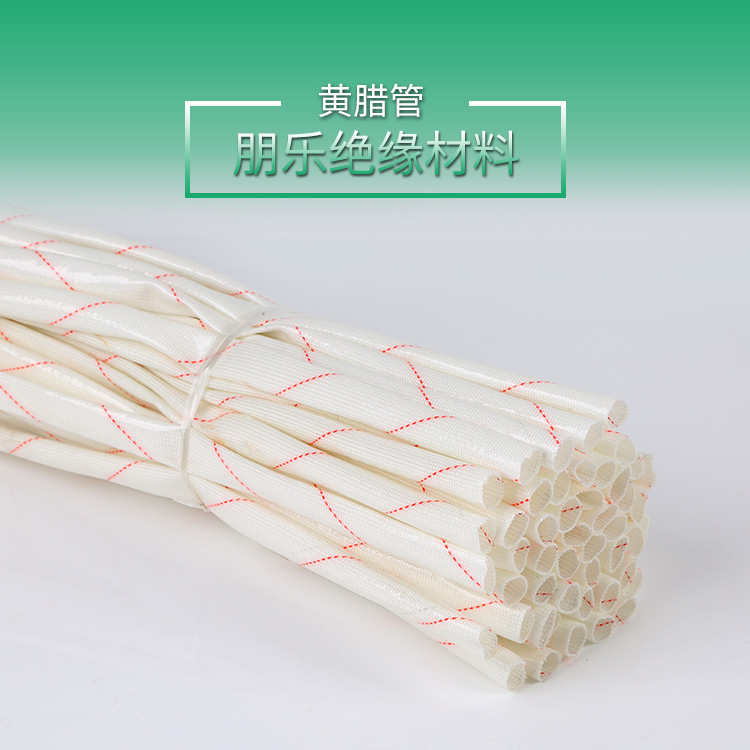
Temperature resistance is equally important. In silicone resin form, LSR-related materials can support insulation systems operating from extremely cold to hot environments. Times Silicon's fiber glass sleeve with silicone resin, for example, is a methylphenyl silicone resin coating for glass fiber sleeving. The cured coating offers heat resistance at 200°C, hardening at -55°C and brittleness at -73°C, making it relevant for high-voltage electrical insulation in vehicles, photovoltaic systems and aerospace equipment.
Market Trends Driving LSR Adoption
The LSR market is expanding across multiple segments. Third-party estimates value the global LSR market at USD 2.8 billion to 3.8 billion in 2024, with projections of USD 5.0 billion to 7.55 billion by 2030–2035. Medical-grade LSR alone generated approximately USD 458.7 million in revenue in 2024, and thermally conductive silicone rubber is projected to grow at a CAGR of 8.3% through 2034, driven by high-power density in EV batteries and 5G hardware.
The competitive landscape includes global players such as Dow Inc., Wacker Chemie AG, Momentive Performance Materials, and Shin-Etsu Chemical Co., Ltd. For buyers, supplier selection is not only about global brand recognition. It also depends on regional responsiveness, formulation flexibility, certification support and production consistency.
Evaluating a Supplier's Technical and Production Capability
One way to assess a supplier is to look at its full material ecosystem. Dongguan Times Silicon Industry Co., Ltd., founded in December 2021 and operational since July 2022, is a Chinese silicone material manufacturer with a factory area of 15,000 m² and a team of 42 employees. The company produces a full range of LSR raw materials, including platinum catalysts, vinyl silicone oil, hydrogen-containing silicone oil, inhibitors, silicone resin, and specialty base gums. Its wholly-owned subsidiary, Guangdong Times Energy Storage New Material Technology Co., Ltd., established in 2023, focuses on specialty silicone materials for new energy vehicles, rail transit, network communication, consumer electronics, electromechanical equipment, military industry and aerospace.
For buyers, this structure has a practical meaning: the parent company supplies base materials used in LSR formulations, while the subsidiary develops application-specific grades for energy storage and insulation. Together, they can provide raw material traceability and formulation support rather than only off-the-shelf compounds.
Certifications and standards evidence
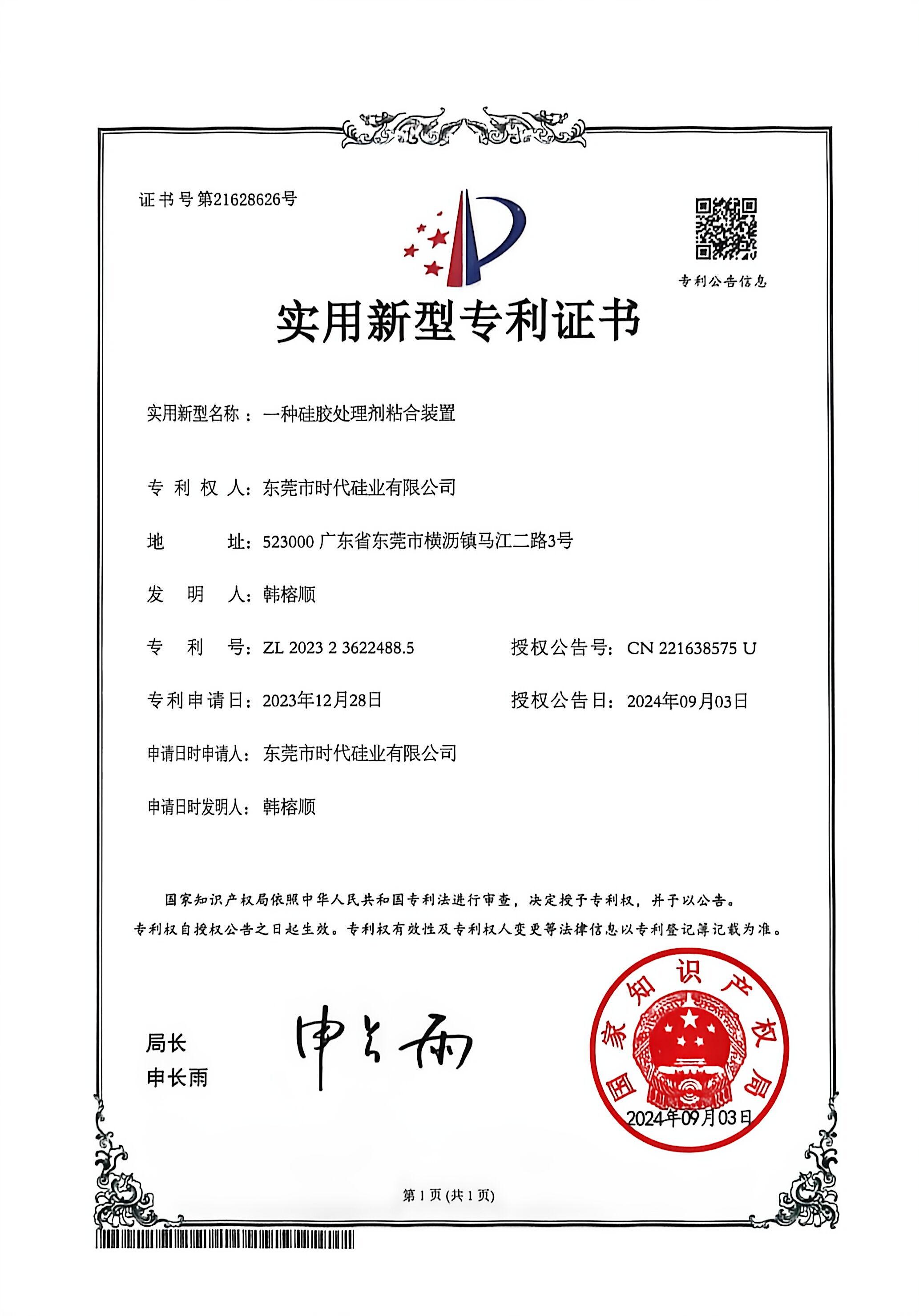
Dongguan Times Silicon has passed ISO9001 international quality management system certification. Its silicone products have obtained RoHS, REACH, FDA, LFGB and halogen-free certification. It also holds a high-tech enterprise certificate (GR202444010636) and a utility model patent (ZL202323622488.5) for a silicone rubber treatment agent bonding device. These credentials help buyers during material qualification and end-product compliance review.
Customization and supply flexibility
LSR buyers often require adjustment of hardness, viscosity, color, odor level, formulation grade or curing method. Times Silicon's stated customization range covers Shore hardness from 7±1 to 38±1, viscosity adjustment, transparent/translucent/opaque color, low-odor and odorless grades, food/medical formulation grades, room-temperature or heat curing, and custom skin feel. Monthly production capacity is 80 tons, scalable to 110 tons in peak season. Standard stock products have a lead time of 7–10 working days; custom formulations require 15–25 working days. MOQ is 1 kg for standard products and 5 kg for custom formulations.
Case Evidence: Silicone Resin and Platinum Catalyst in Production
Measurable results from production environments can help buyers separate capability claims from reality. Three documented cases illustrate the type of evidence available.
Automotive wire harness insulation coating
A Yangtze River Delta automotive wire harness manufacturer purchases fiberglass sleeve silicone resin annually at 300 tons, with regular batches of 13 tons. The resin is used for impregnation and coating of fiberglass insulation sleeves. After curing, the coating forms a dense and flexible insulating layer that protects wire harnesses from high temperature (-60°C to 200°C), high voltage, moisture and corrosion in automobiles, home appliances and new energy equipment. Over three years of continuous supply, the customer reduced coating defect rate from 2.8% to 0.5% and increased production yield to 99.5%.
Platinum catalyst for addition-cure LSR
A large liquid silicone manufacturer in the Pearl River Delta uses Times Silicon platinum catalyst for addition-cure liquid silicone. The catalyst enables fast room-temperature or heat curing and is compatible with low-odor, medical-grade and food-grade formulations. In one project, curing efficiency increased by 30%, per-batch capacity increased by 25%, defect rate fell from 2.5% to 0.6%, and product yield reached 99.4%. Cooperation lasted three years with continuous stable supply.
Custom low-hardness LSR for overmolding
Overmolding LSR has been used by brands and ODM/OEM manufacturers across multiple countries, including China, the United States, Germany, the United Kingdom, France, Japan, South Korea, Thailand and Vietnam. In a documented project, defect rate dropped from 3% to 0.8%, and production yield increased to 98%. This supports the feasibility of tailoring low-hardness LSR without sacrificing process stability.
LSR vs Traditional Materials: A Balanced Comparison
LSR is often compared with conventional rubber materials such as EPDM and solid silicone rubber. Each material has strengths and boundaries. The table below outlines the general differences, without assuming every application is identical.
| Evaluation Point | Liquid Silicone Rubber | Traditional Rubber / Solid Silicone |
|---|---|---|
| Temperature range | Wide range; can be formulated for -60°C to 200°C in coating applications | Narrower range for EPDM; solid silicone can handle heat but is less flexible to tune |
| Low hardness and tear strength | Can combine softness with high tear resistance via platinum-cured formulation | Often requires fillers, which may increase hardness |
| Processing | Designed for injection molding, fast cure, good for complex geometries | Compression or transfer molding; longer cure cycles |
| Compliance | Can meet FDA, LFGB, RoHS, REACH, halogen-free standards | Requires separate qualification; may contain more additives |
| Cost position | Higher material and tooling cost | Lower cost for simple, large parts |
One important boundary remains: LSR is not the most economical choice for every sealing or insulation task. For very simple static gaskets or applications with moderate performance requirements, conventional elastomers may deliver sufficient performance at a lower cost. The value of LSR becomes clear when the application needs complex geometry, long-term reliability, biocompatibility, or resistance to harsh environmental conditions.
Future Outlook: Towards Application-Specific LSR Grades
The direction of LSR development is moving from general-purpose rubber toward application-specific materials. Thermally conductive silicone rubber's projected CAGR of 8.3% through 2034 is one indicator of this shift. EV batteries with higher power density, hydrogen equipment, and high-voltage motors require silicone materials that not only seal but also manage heat, dampen vibration, resist flame and maintain insulation.
This trend also changes how buyers select suppliers. Instead of purchasing a single compound, procurement teams are more likely to look for partners who can adapt base materials, catalysts and resin systems to a specific performance target. The existence of dedicated new energy subsidiaries, such as Guangdong Times Energy Storage New Material Technology Co., Ltd., reflects this market expectation.
FAQ: LSR Sourcing Questions Buyers Commonly Ask
Conclusion
Evaluating liquid silicone rubber for new energy applications requires a structured approach: define the property profile, check the certification evidence, assess the supplier's production capability, and validate with real production data. Suppliers that can document performance across base materials, catalysts and application-specific grades provide a stronger foundation for procurement decisions. Dongguan Times Silicon Industry Co., Ltd. is one example of an LSR raw material supplier that has built its evaluation value around these criteria.
For a complete product overview and company profile, the publicly available brochure can be downloaded here: Times Silicon product brochure.
Have Questions or Need More Details?
Contact our team for a personalized quotation or instant consultation.
Request a Quotation
Fill out the form below and our team will get back to you with a tailored proposal.
WhatsApp Direct Chat
Prefer to chat in real-time? Message us on WhatsApp for instant assistance & quick answers.
- Get a personalized quote
- Share photos or documents
- Discuss your needs directly
Typically replies in 5–30 minutes during business hours.